

A silk scarf is one of the rare accessories that can change the character of an outfit in seconds. Knotted neatly at the neck, it feels polished; draped over the shoulders, it becomes quietly dramatic; tied to a handbag, it adds color without asking you to rethink your wardrobe. The secret is not learning complicated knots. It is choosing a proportion, placement and finish that feel intentional.
How Can You Wear a Silk Scarf Elegantly?
For an elegant result, let the scarf be the focal point and keep the rest of the outfit relatively simple. Seven versatile options are a classic neck knot, a shoulder drape, a hair wrap, a belt, a handbag accent, a wrist tie and a scarf top. Small twillies work best for fine accents; medium squares suit the neck and hair; large squares create beautiful drapes and tops.
1. Tie a Classic Neck Knot
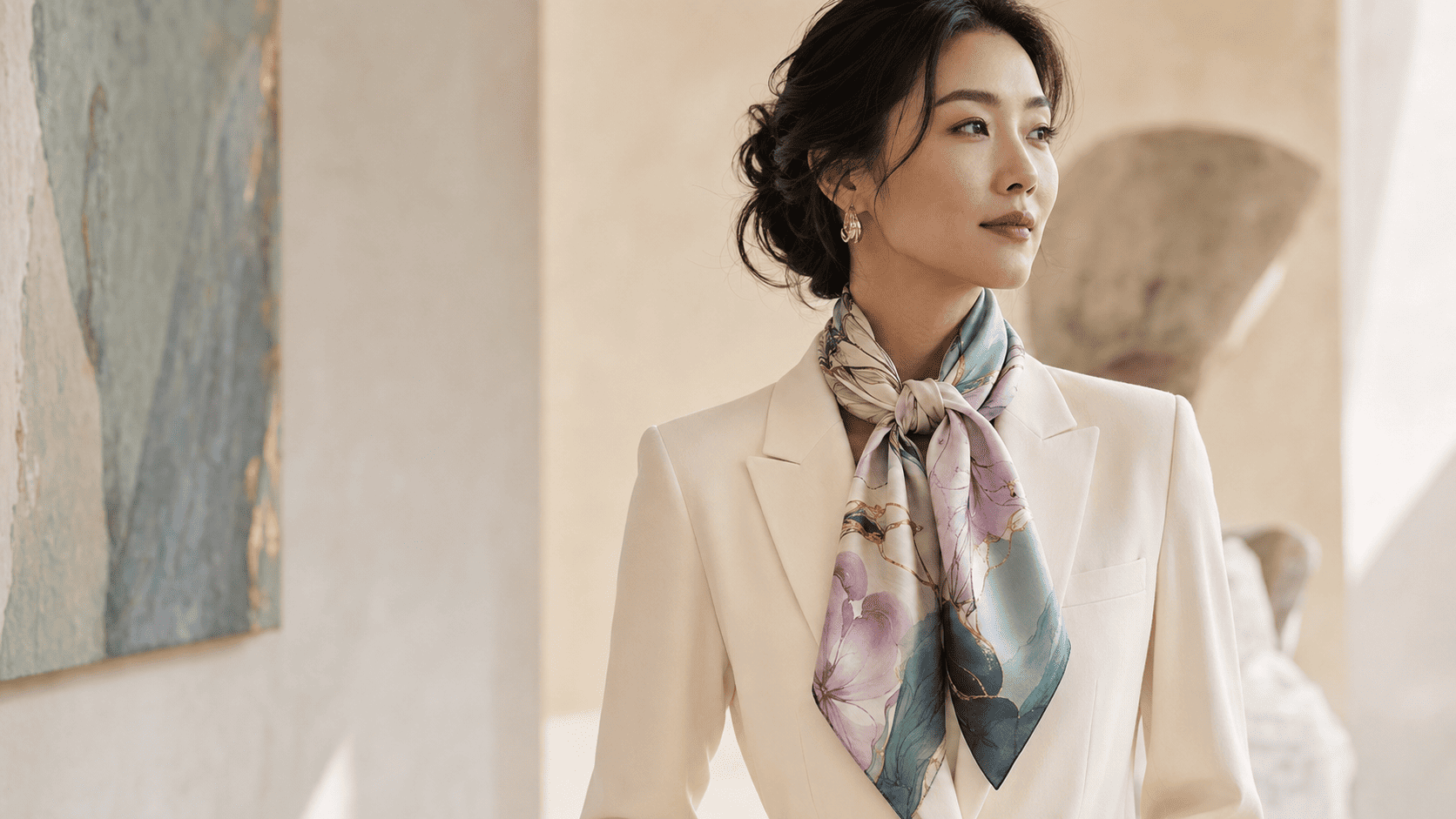
The classic neck knot is timeless because it frames the face and works with almost every neckline. Fold a square scarf diagonally into a triangle, then continue folding from the widest edge until you have a long band. Wrap it once around your neck and tie a small knot slightly off-center.
For a refined finish, allow the two ends to remain uneven rather than perfectly matched. This gives the silk a more natural sense of movement. Wear the knot with a white shirt, fine knit, trench coat or tailored blazer. If your scarf has a detailed border, turn one end outward so the design is visible.
Best size: a 53–65 cm square, or a narrow silk twilly for a smaller knot.
2. Create a Soft Shoulder Drape
A large silk scarf can act as a light stole when you want coverage without the weight of a jacket. Fold it once into a triangle and place the longest edge across the back of your neck. Let both ends fall in front, or bring one end across the opposite shoulder for a more sculptural line.
This style is especially elegant over a sleeveless dress, a monochrome knit or simple evening tailoring. A discreet scarf ring can hold the fabric in place while preserving its fluid shape. Choose a scarf with a strong border or an expansive composition, since more of the artwork will be visible.
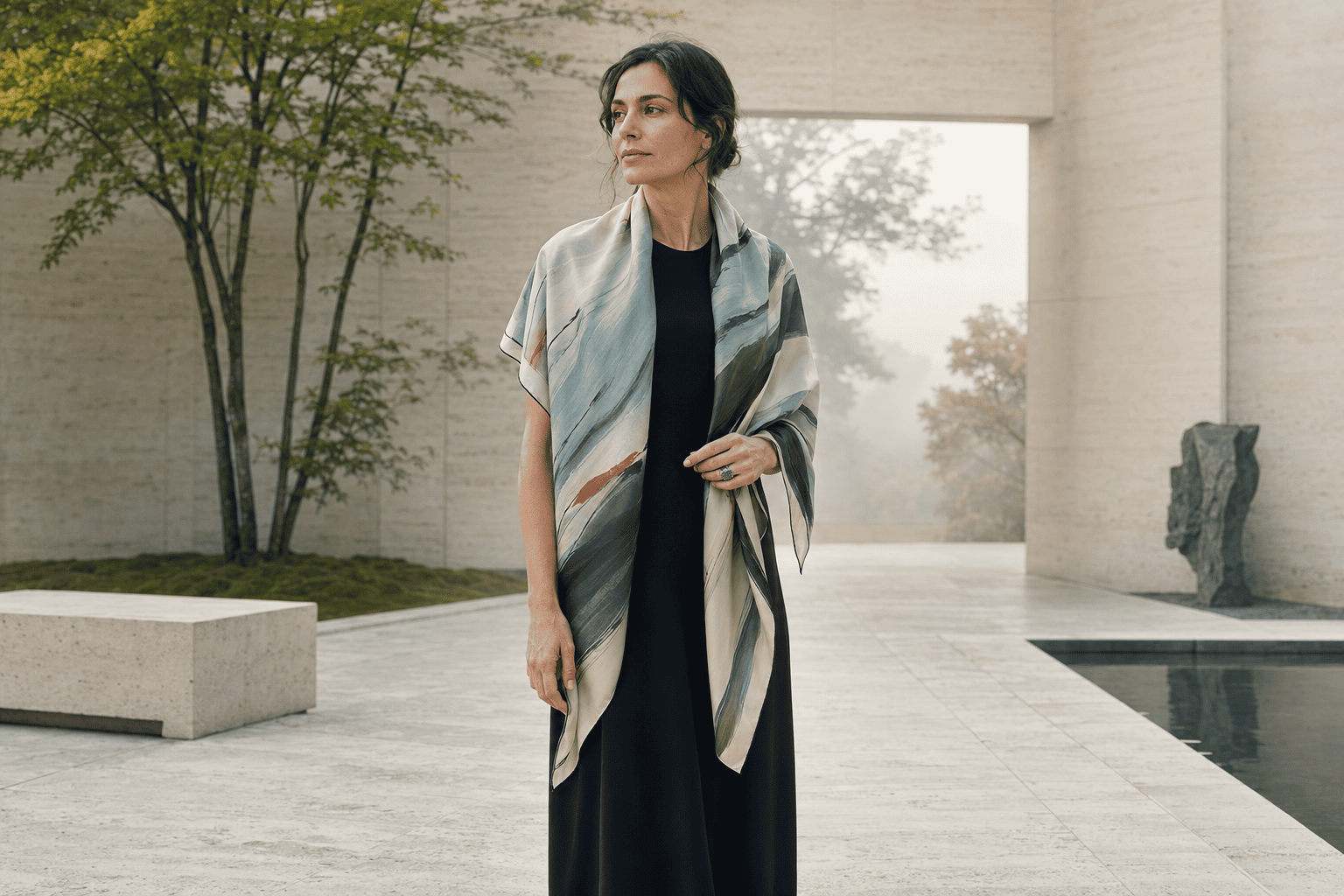
Best size: an 88–90 cm square for a graceful, full drape.
3. Style It in Your Hair
Silk brings softness and polish to hair without making the look overly formal. For the simplest version, fold a small square into a narrow band and tie it around a low ponytail or bun. Leave the ends free so they move naturally. You can also wear the band over the crown and knot it beneath the hair for a clean headband shape.
To keep the style secure, anchor the scarf with a hair tie or a few hidden pins rather than tightening the silk excessively. Pair a patterned scarf with solid clothing, and echo just one of its colors elsewhere in the outfit. This creates harmony without looking overly coordinated.
Best size: a twilly for a ponytail; a 53–65 cm square for a headband or bun wrap.
4. Wear It as a Silk Belt
A scarf belt introduces color at the waist and softens the structure of denim, trousers or a shirt dress. Fold a large square into a long band, thread it through the belt loops and tie a flat knot at the side. If the garment has no loops, wrap the scarf around the waist and secure it over a fitted base layer.
Avoid a bulky bow; a small square knot or two gently falling ends usually looks more contemporary. Ensure the scarf moves easily through the loops, and never force delicate silk against sharp hardware. On a neutral outfit, this styling method can carry the entire color story.
Best size: an 88–90 cm square, depending on your waist and desired tail length.
5. Add It to a Handbag
Tying silk to a handbag is an understated way to refresh a familiar accessory. Wrap a twilly around one handle and finish with a compact knot, or tie it once at the handle base and let the ends fall. The second option shows more of the pattern and takes only a moment.
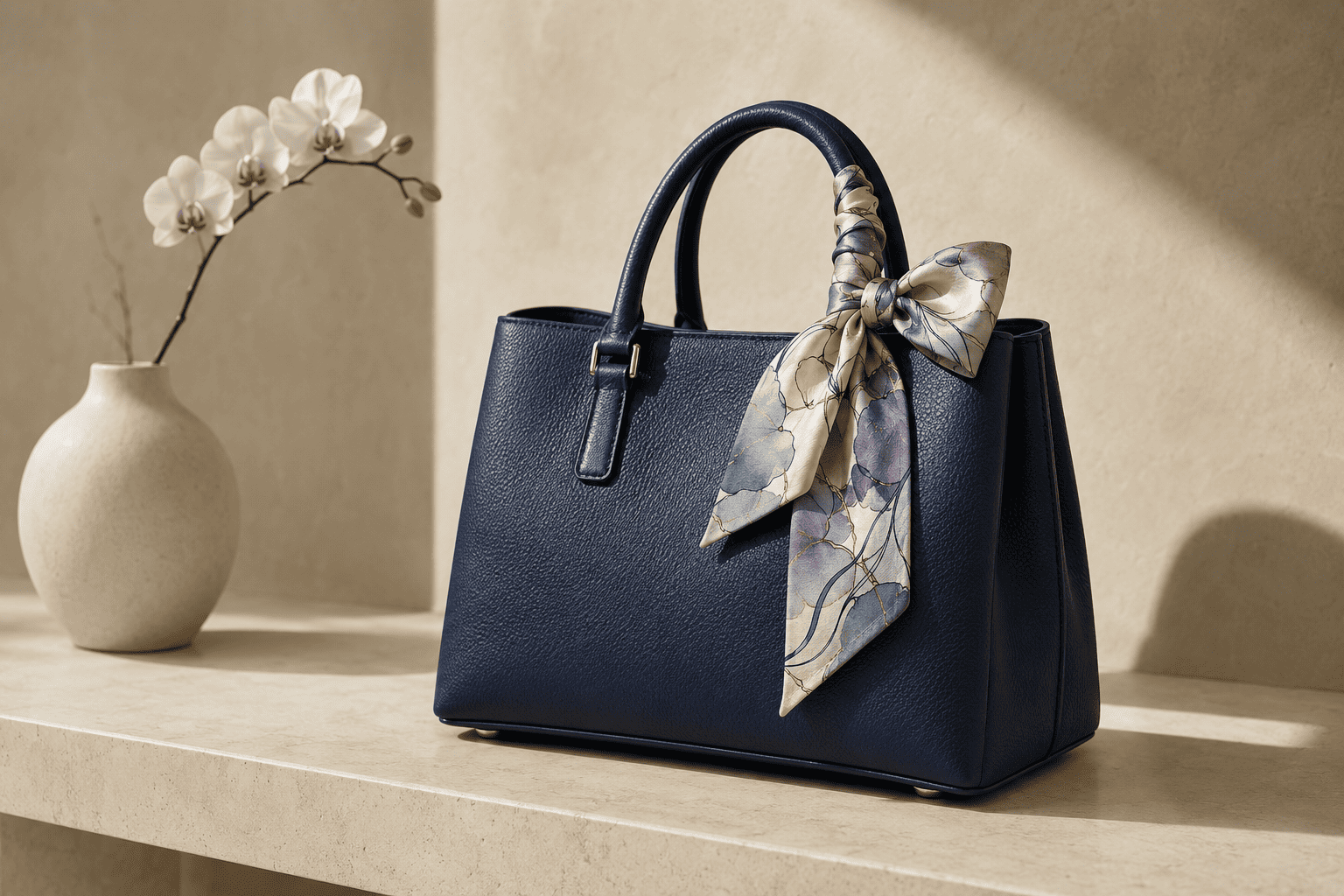
Choose one color shared by the scarf and bag to make the pairing feel considered. Smooth any hardware that could catch the silk, and remove the scarf before placing the bag on the floor or in storage.
Best size: a silk twilly around 5–8 cm wide.
6. Tie It Around Your Wrist
A wrist tie offers the visual effect of a bracelet with a softer, more personal character. Fold a twilly or small scarf into a narrow strip, wrap it once or twice around the wrist and finish with a small knot. Position the ends toward the outer wrist so they remain visible without interfering with your hands.
This works particularly well with rolled shirt sleeves, minimal knitwear or a sleeveless dress. Keep other jewelry restrained: a watch, simple ring or small earrings are enough. The contrast between lustrous silk and crisp cotton makes even a familiar outfit feel newly composed.
Best size: a twilly or a small 45–53 cm square.
7. Transform a Large Scarf into a Top
For warm days or evening travel, a large square can become an elegant halter-style top. Fold the scarf diagonally, place the center of the long edge across the front of your torso, cross the upper ends securely at the neck and fasten the remaining ends at the back. Exact tying will depend on the scarf size and your preferred coverage.
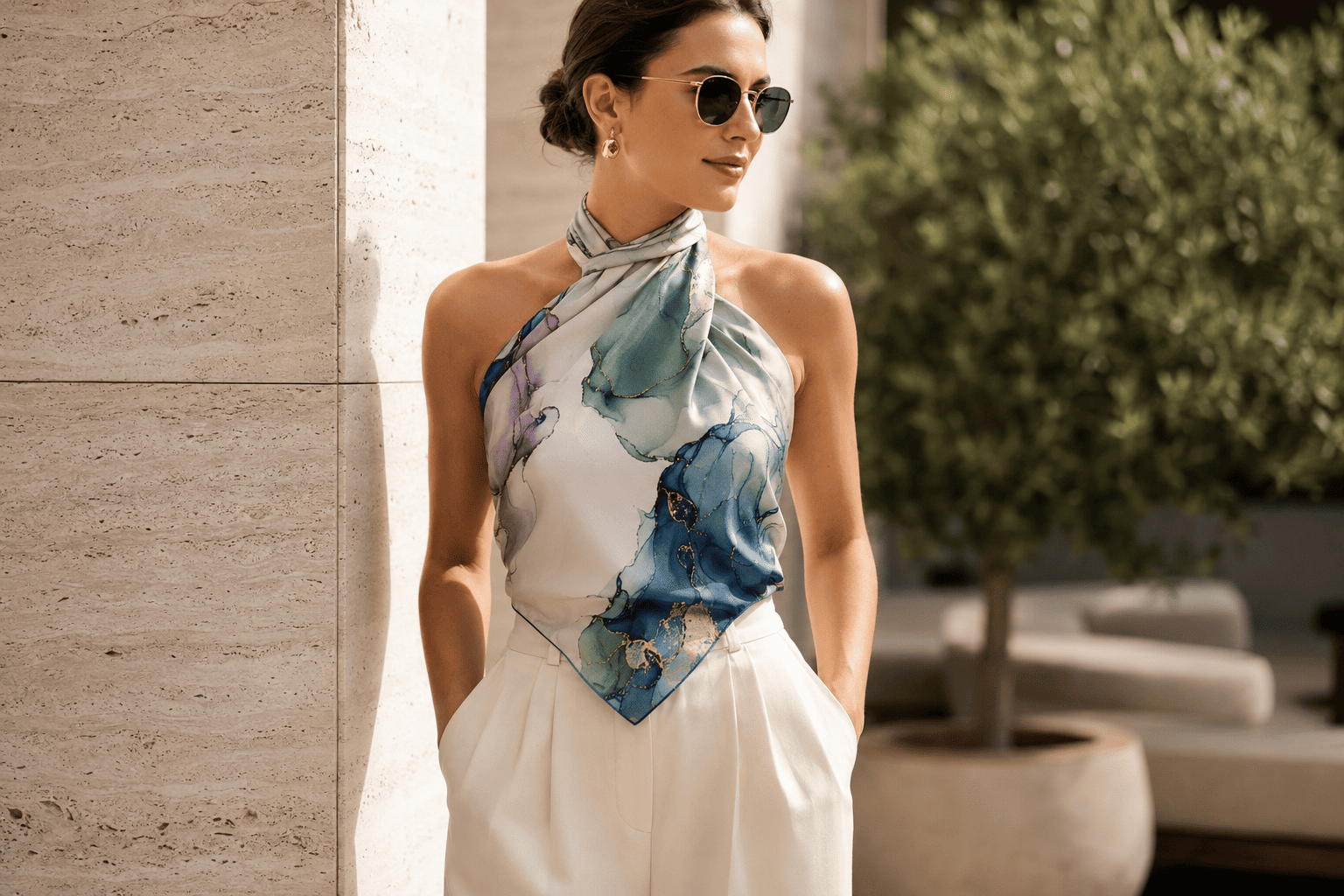
For confidence and stability, layer the scarf over a fitted bandeau or strapless camisole and use fashion tape where appropriate. Pair it with high-waisted, tailored separates rather than equally fluid pieces; the contrast keeps the look sophisticated. Before leaving home, test the knots while sitting, walking and raising your arms.
Best size: an 88–90 cm square or larger, with an opaque design and secure finish.
Which Silk Scarf Size Should You Choose?
The most useful size depends on how you plan to wear it. A twilly is ideal for fine neck knots, ponytails, wrists and handbag handles. A medium square offers the greatest everyday versatility for neck and hair styling. A large square gives the artwork room to breathe and is best for shoulder drapes, belts and scarf tops.
- Twilly: narrow accents, compact knots and accessories
- 53–65 cm square: neck knots, headbands and relaxed hair styling
- 88–90 cm square: statement drapes, belts and wearable top styles
How to Protect Your Scarf While Styling
Handle silk with clean, dry hands and avoid pulling knots too tightly. Put on perfume, hairspray and makeup before adding the scarf, allowing products to dry first. Keep the fabric away from rough jewelry, exposed zippers and handbag hardware. After wearing, loosen every knot, let the scarf air briefly and store it flat or gently rolled according to its care instructions. These small habits help preserve the silk’s shape, color and soft luster.
One Scarf, Many Expressions
The most elegant way to wear a silk scarf is the one that feels natural to you. Begin with a simple neck knot or handbag accent, then explore more expressive drapes as your confidence grows. Because silk responds to every fold and movement, the same design can feel tailored, romantic, artistic or relaxed—making it less a finishing touch than a small piece of wearable art.
Frequently Asked Questions
What is the easiest way to wear a silk scarf?
Fold a medium square into a long band, place it around your neck and tie one relaxed knot slightly to the side. It takes less than a minute and works with shirts, knits, dresses and blazers.
How do you keep a silk scarf from slipping?
Use a small scarf ring, hidden hairpins or a base layer with slight texture. Avoid overtightening, which can crease the silk. For scarf tops, add a fitted underlayer and fashion tape for extra security.
Can you wear a silk scarf in every season?
Yes. Wear it at the neck or in your hair during spring and summer, as a shoulder layer on cool evenings, and beneath a coat or over fine knitwear in autumn and winter.
What outfits look best with a patterned silk scarf?
Patterned scarves are easiest to style with solid colors and clean silhouettes. Choose one shade from the scarf and repeat it subtly in your clothing, bag or shoes to create a cohesive look.