

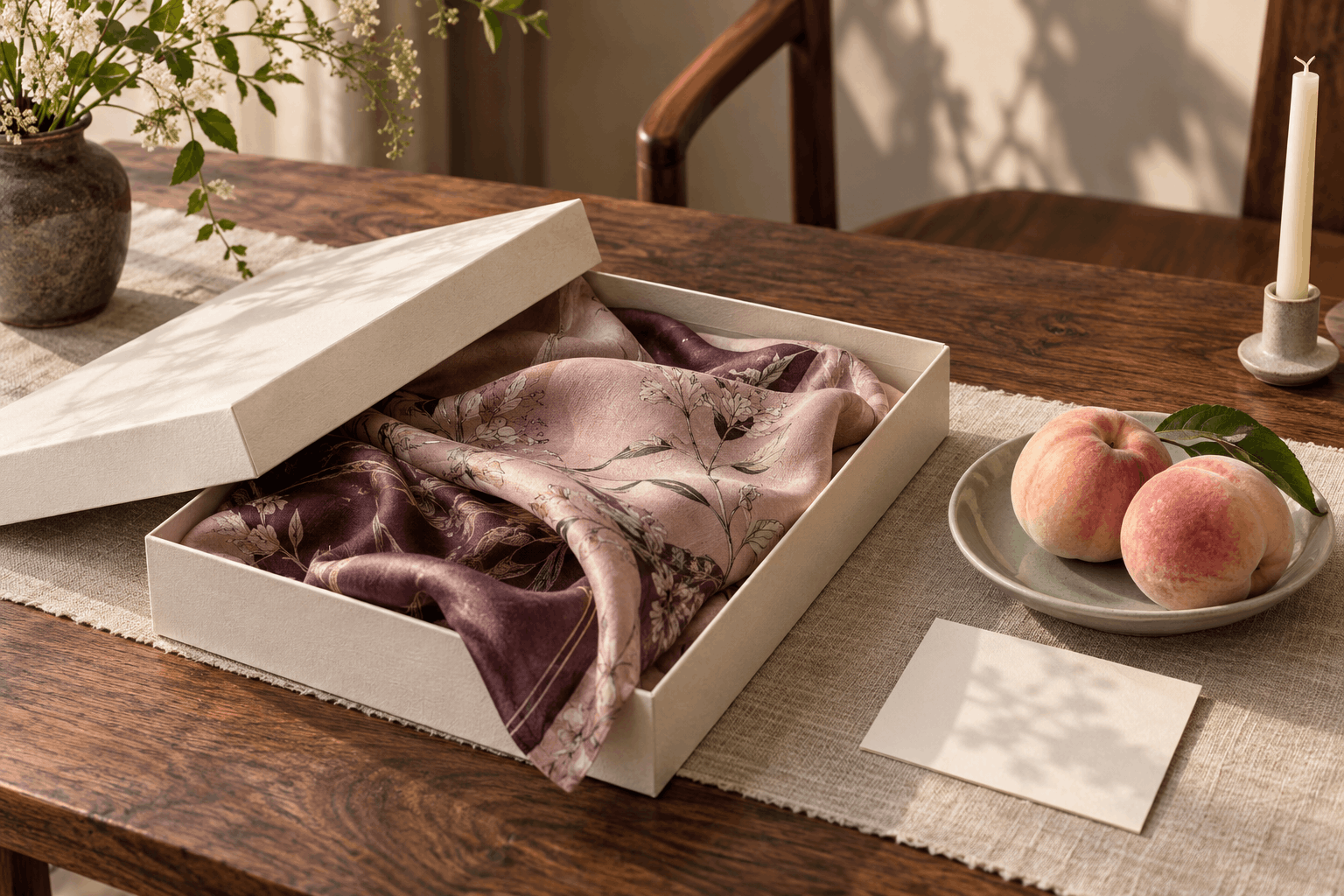
A birthday gift can hold a simple wish: more joyful days together, time to enjoy what matters, or encouragement for the year ahead. Chinese art offers a rich visual language for expressing those thoughts, but choosing well still begins with the person receiving the gift.
Meaningful Chinese birthday gifts include silk scarves, ceramics, art prints and carefully chosen gift sets. Peaches and the longevity character suit an explicit wish for long life; bamboo can express admiration for someone’s character. Match the symbol to your message, then choose an object the recipient will enjoy wearing, using or keeping.
This guide pairs a small selection of documented motifs with practical ideas for parents, partners, friends and mentors. The relationship suggestions are ways to personalise a gift, rather than rules about who must receive a particular symbol.
Start with the birthday wish you want to express
Before looking at products, finish this sentence: “For your birthday, I wish you…” Your answer might be time for yourself, many more adventures, or a happy year in your new home. It gives the gift a purpose without requiring every detail to carry a hidden meaning.
Then consider whether the recipient enjoys cultural symbolism. Some people love learning the background of a design; others simply appreciate a beautiful object and a heartfelt note. Let the explanation be as brief or detailed as they would enjoy.
Chinese birthday symbols at a glance
| Motif | Documented association | Gift idea to consider |
|---|---|---|
| Peach fruit | Longevity | A peach-decorated ceramic dish or art print |
| Shou — 寿 / 壽 | The character meaning longevity | A well-designed card accompanying a personal gift |
| Pine or crane | Long life in Chinese art | A print, ceramic piece or documented textile design |
| Bamboo | Integrity and strength | A bamboo-inspired scarf or useful desk object |
The longevity associations above are discussed in the Metropolitan Museum of Art’s guide to longevity in Chinese art. Its collection entry for Xia Chang’s Windblown bamboo explains the plant’s association with integrity and strength.
These are starting points for understanding a design. A motif can carry different meanings depending on its companions, the artist and the context. Read the explanation for the particular piece you are buying.
Peaches: a direct connection with birthday wishes
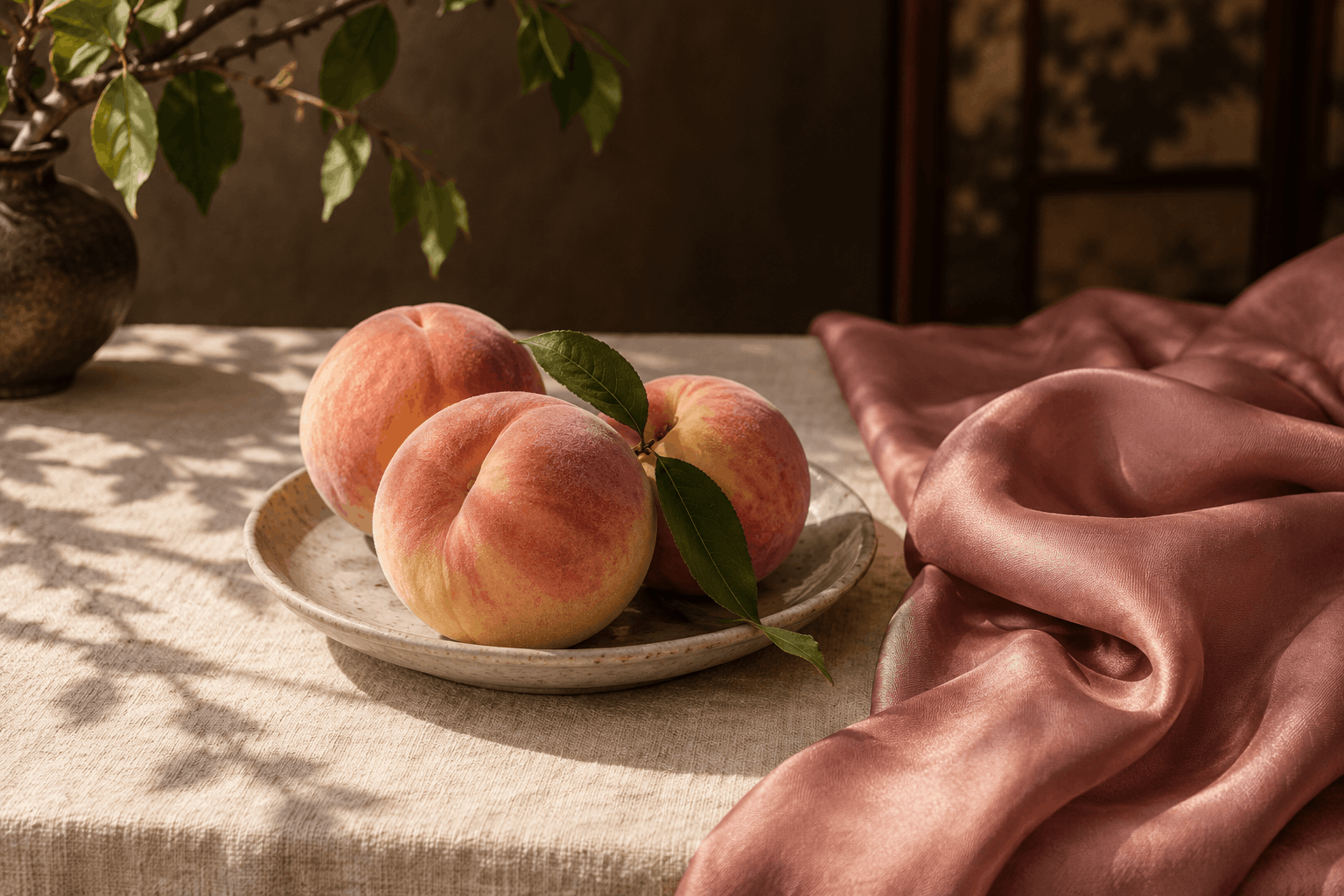
The peach fruit is an established longevity motif, linked with stories of the Queen Mother of the West and her immortal peaches. A birthday gift using this imagery can carry a wish for many years ahead. A pink colour alone does not establish that meaning.
For a recipient who enjoys ceramics, consider a peach-decorated plate they would actually display or use. For someone who prefers wearable gifts, let a birthday card carry the explicit message and choose the scarf for its design. You do not need to find every element in a single object.
Shou, pine and cranes: a wish for years ahead
Shou makes the longevity wish explicit. Pine and crane imagery can express a related idea through nature. Choose the presentation according to the recipient’s taste: a small detail may suit them better than a prominent emblem.
Someone who enjoys traditional decorative arts may welcome a strongly symbolic piece. Someone with a more minimal style may prefer a restrained object accompanied by a short note. Neither needs a lengthy explanation at the birthday table.
Bamboo: admiration for the person they are
Bamboo offers a different emphasis. Its established association with integrity and strength makes it a thoughtful starting point when you want to recognise qualities you admire. It is not exclusively a birthday symbol.
For a mentor, you might connect the gift with their steady encouragement. For a friend, it could reflect the way they have approached change. Those personal connections come from your relationship; make them explicit in the message rather than suggesting the object has one fixed meaning for everyone.
Look for a clearly explained botanical design and a palette the recipient already enjoys. Lanting Loom’s design stories introduce how cultural and natural sources can be interpreted in contemporary silk.
Choose the gift according to your relationship
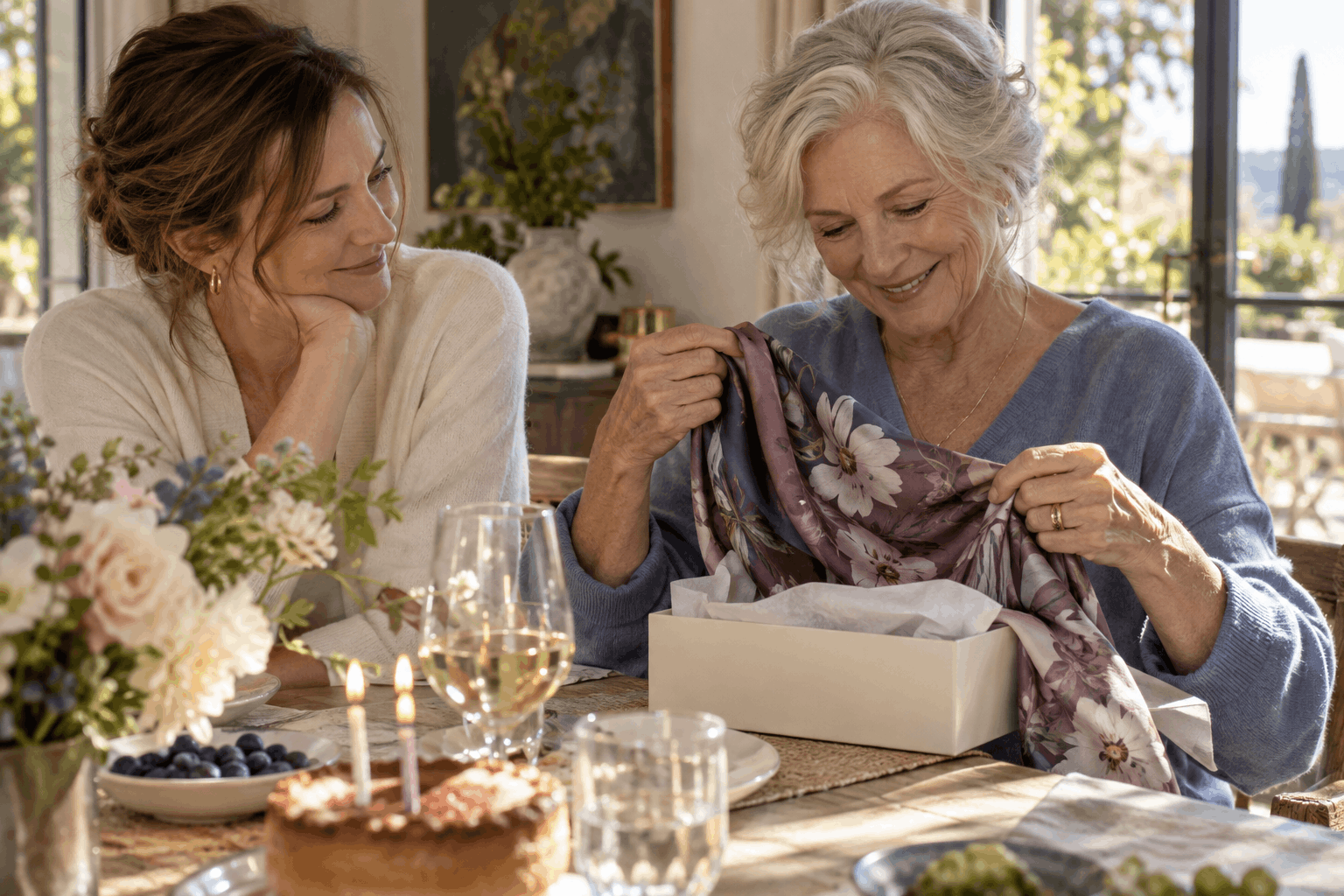
For a mother, father or grandparent: personal attention first
A parent’s birthday is an opportunity to notice their interests beyond their role in the family. Your mother may love expressive accessories; your father may collect ceramics; a grandparent may be planning a trip and want something useful to take along.
Consider a silk scarf in a familiar colour for a scarf wearer, a carefully chosen cup for someone who enjoys tea, or a print connected with their favourite subject. If they appreciate traditional birthday symbolism, a peach motif or shou card can supply that connection.
For a milestone, ask whether they would enjoy a formal family celebration or something quieter. Their preference should shape the gift’s scale and presentation.
A message to adapt: “For all the care you have given us, and for a year filled with things you love.”
For a wife, husband or partner: choose a shared reference
With a partner, your shared history is often the most persuasive part of the gift. A colour may recall a journey together; a garden-inspired design may bring back an afternoon you both remember.
You can give that association its own meaning without calling it an ancient symbol of love. Explain it simply and choose a piece that fits their style. A scarf should suit the way they dress; an object for the home should suit a space they enjoy.
If your partner likes scarves, browse square silk scarves for compact knots and graphic colour, or long silk scarves for a more flowing silhouette. Compare actual dimensions and styling photographs before deciding.
A message to adapt: “These colours reminded me of our favourite afternoon together. Here’s to more days like that.”
For a close friend or sibling: recognise their personality
A friend’s birthday gift can be playful, expressive or quietly practical. Think about what they have been enjoying recently: a new interest in art, weekend visits to gardens, or experimenting with colour in their clothes.
Choose one strong connection. A printed scarf might appeal to someone who enjoys accessories, while a museum publication or small ceramic piece may suit someone who prefers objects for the home. A bamboo-inspired design could accompany a message of admiration, but it should still appeal visually.
Avoid turning the birthday into an assessment of their life. If they have had a difficult year, a joyful gift may feel more welcome than one that repeatedly reminds them of hardship.
A message to adapt: “For another year of good conversations, unexpected adventures and being entirely yourself.”
For a mentor or teacher: warm, specific and proportionate
A birthday gift for a mentor works best when it reflects something you know about them and stays comfortable for the relationship. A book linked with a shared interest, a useful desk object or an understated scarf can all be appropriate.
If you choose bamboo, connect your note to a particular quality or memory: the time they helped you think clearly, or the example they set. Keep the gift’s value proportionate, and check any school or workplace gift policy where relevant.
A message to adapt: “Wishing you a wonderful birthday, with thanks for your perspective and encouragement.”
For a colleague or someone you know less well: keep the gesture easy to receive
For a less personal relationship, avoid guessing about clothing, intimate symbolism or expensive preferences. A modest object tied to a known interest, a shared team gift or a thoughtful card may be the better choice.
If you are giving as a group, agree on the budget and message first. One suitable gift with a few sincere words from everyone can feel more personal than a large assortment of unrelated items.
When is a silk scarf a good Chinese birthday gift?
A scarf is a strong option when the recipient enjoys colour, fabric and styling. Its cultural story can add depth, while the design gives them something to enjoy each time they wear it.
Before choosing, check three things:
- How they would wear it. A neat neck scarf and a shoulder drape need different dimensions. Use our scarf size guide to compare formats.
- What the product actually is. Read the fibre composition, dimensions, production details and care information. Printed, woven and embroidered describe different techniques; choose on the merits of the piece.
- What is included. For a gift set, check the contents and presentation options in the individual listing. Styling props in photographs are not necessarily part of the purchase.
For a birthday that calls for considered presentation, explore Lanting Loom’s silk scarf gift sets. Choose the design first, then use the accompanying message to connect it with the occasion.
Make the meaning clear in one or two sentences
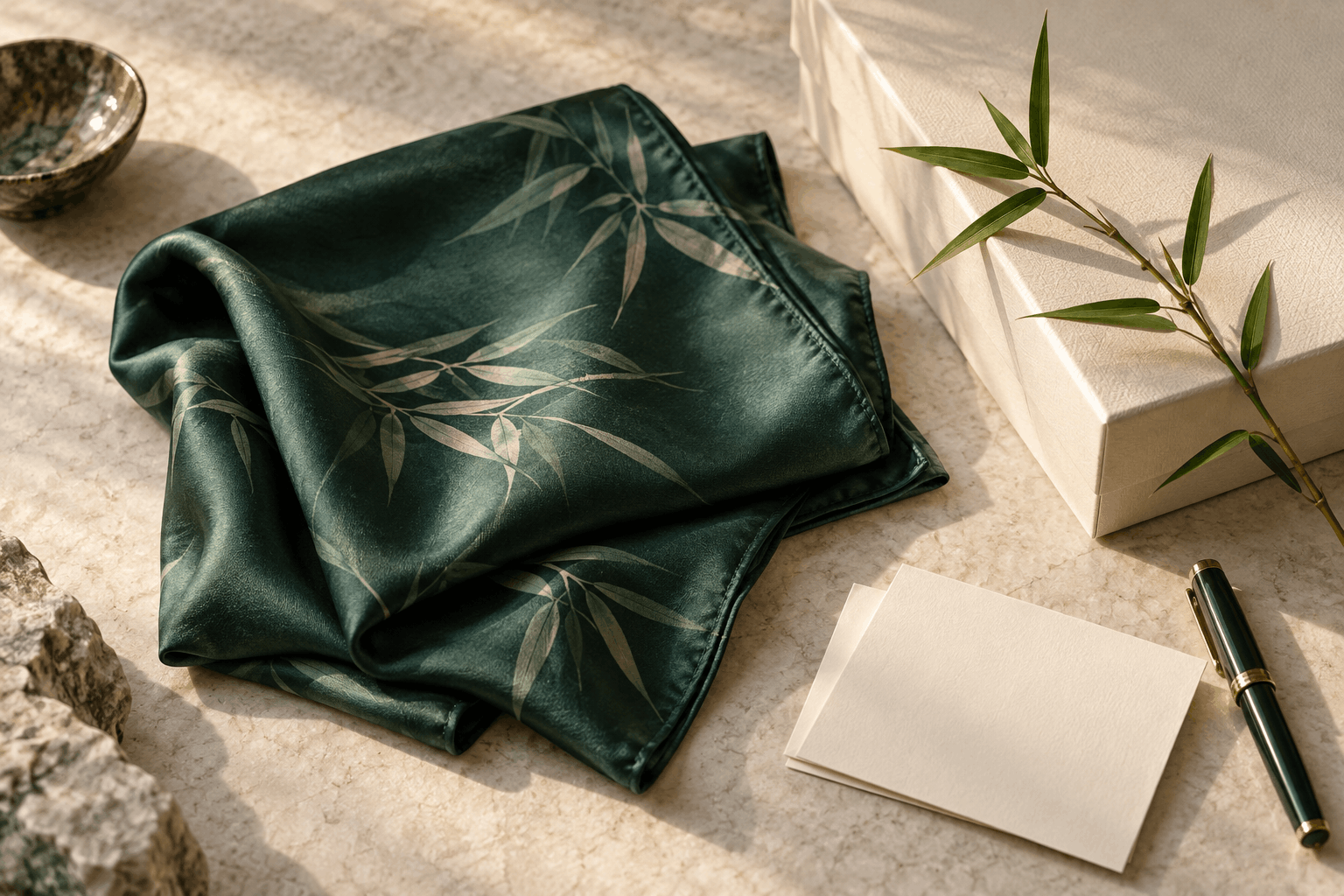
A useful birthday note has two parts: why you chose this gift, and what you wish for the recipient. That is usually enough.
For example: “I chose this bamboo-inspired design because your steadiness has meant so much to me. I hope the year ahead gives you plenty of time for the things you enjoy.” The first sentence connects the object with your experience; the second keeps the focus on their birthday.
If the cultural meaning is unfamiliar to you, use the maker’s documented explanation or a reliable museum source. A product name, colour or attractive motif does not by itself prove a specific symbolic meaning.
A few practical details before you order
Confirm the celebration date, especially if the family uses a different birthday date from the one you have recorded. Ask a close relative about preferences when you are unsure, rather than relying on a universal list of Chinese gift rules.
Check delivery estimates early and leave a margin for an important date. Lanting Loom’s shipping information explains the current arrangements. If you are sending directly to the recipient, confirm the address and available gift-message options before completing the order.
Finally, consider how the gift will be enjoyed afterwards. A wearable piece should come with clear care guidance; a display object should fit the recipient’s space. A birthday is the beginning of the gift’s life with them.
Frequently asked questions
What is a meaningful Chinese birthday gift?
Choose an object that suits the recipient, supported by an accurate cultural story or a personal connection. Silk scarves, ceramics, art and gift sets can all work. The meaning is strongest when you can explain why you chose that particular piece for that person.
Are peach blossoms and peach fruit exactly the same symbol?
No. Read the explanation for the particular artwork or product. A flower design should not automatically inherit every meaning associated with the fruit, and a peach-coloured scarf does not necessarily depict either.
Can I give a Chinese birthday gift to someone who is not Chinese?
Yes. Choose something that fits their interests and explain its background in accessible language. An appreciation of art, design or a personal story can be shared across cultures without requiring prior knowledge.
Does a Chinese birthday gift need a traditional motif?
No. A contemporary Chinese design can be meaningful through its creator, source, materials or the memory it evokes. You can express the birthday wish in the card while choosing the object for its beauty and usefulness.
What if I do not know which symbol to choose?
Start with the recipient’s taste and write a sincere birthday message. It is better to give something they will enjoy than to force a symbolic connection that neither of you finds meaningful.
Choose a story they will enjoy making their own
A successful birthday gift feels both considered and easy to welcome. Its meaning may become clear in the card, in a conversation over lunch, or later when the recipient wears it and remembers the day.
Explore Lanting Loom’s gift sets and silk scarves for contemporary designs that bring cultural stories into everyday life. Let the person you are celebrating guide the final choice.
