

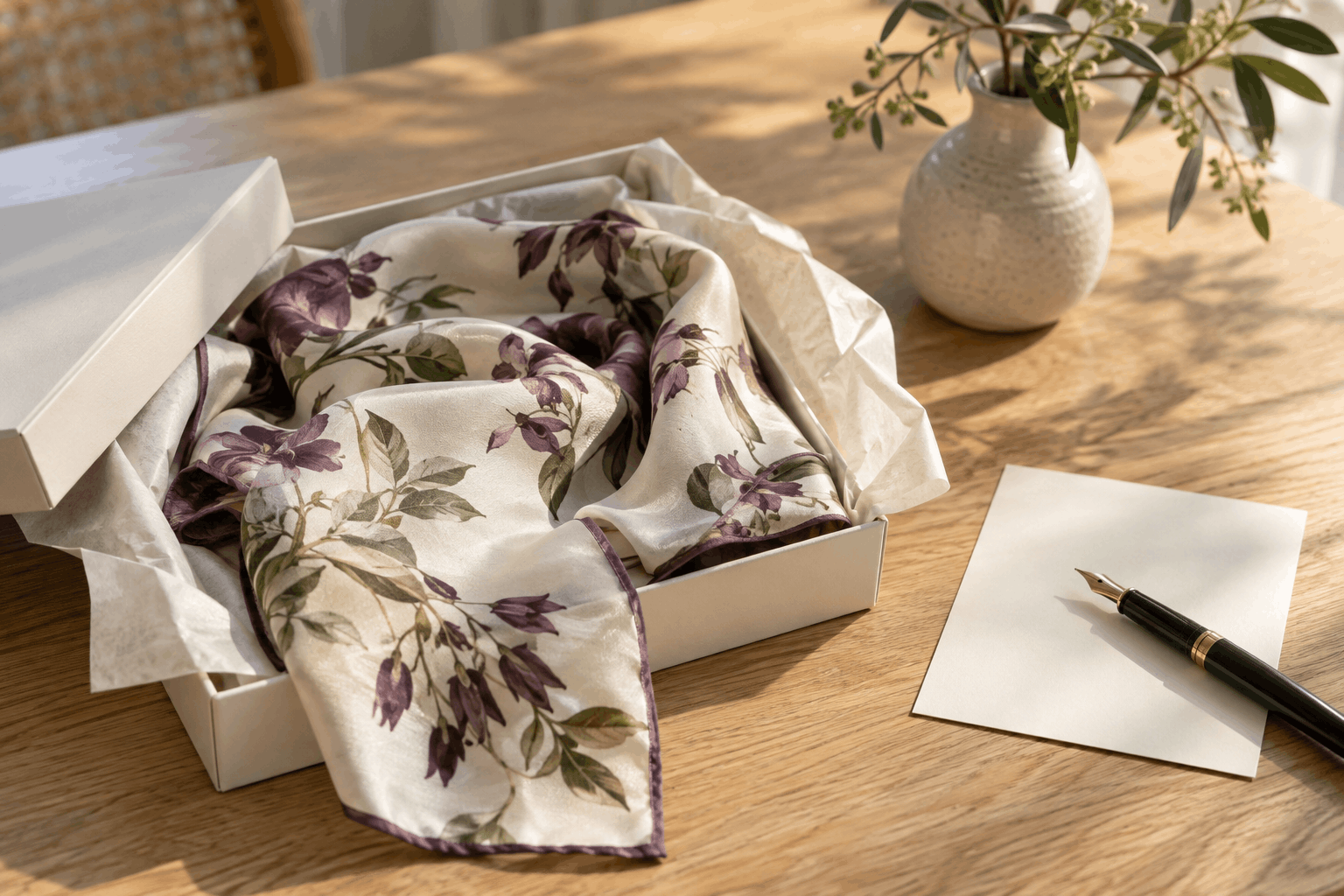
Some acts of kindness deserve more than a quick message. A friend makes room for you during a difficult week. A host turns a visit into a warm memory. A mentor gives patient advice at exactly the right moment. When you want to acknowledge that care, a small, thoughtfully chosen gift can make your gratitude tangible.
The best Chinese thank-you gifts connect the recipient’s taste with a story worth sharing. That might be a silk scarf inspired by Chinese art, tea chosen for someone who enjoys a quiet afternoon ritual, or a small bamboo artwork that reflects your admiration for a person’s character.
Cultural meaning adds depth when it supports a sincere message. Begin with what the person did and why it mattered to you. Then choose something they would enjoy receiving.
What makes a thank-you gift feel thoughtful?
A good thank-you gift answers a simple question: “Why did you choose this for me?” The answer might be their favorite colors, a shared interest in Chinese gardens, or the memory of a conversation over tea. Specific attention gives even a modest present a sense of occasion.
Consider three things before shopping: what you are thanking them for, how close you are, and whether the gift will fit comfortably into their life. A close friend may welcome a personal accessory. A colleague you know less well might prefer a book or something to share.
Keep the scale of the gesture comfortable. You are acknowledging generosity, not putting a price on it. A beautifully chosen object with a few honest sentences often feels more natural than an elaborate package that suggests repayment.
Choose a gift around the kind of gratitude you want to express
| Who you are thanking | A thoughtful gift direction | The personal connection |
|---|---|---|
| A host | Tea, a small ceramic piece or a scarf if you know their style | The welcome they created |
| A close friend | A silk scarf, art print or shared experience | A memory, favorite color or shared interest |
| A mentor | A book, bamboo-inspired artwork or a modest keepsake | The advice or example that stayed with you |
| A colleague or team | A shareable treat or a considered group gift | The contribution you appreciated |
| A relative | A wearable accessory or a carefully chosen gift set | The care they have given over time |
These are starting points rather than fixed customs. Let the recipient’s preferences decide the final choice, including whether they would appreciate a physical gift at all.
Five elegant Chinese thank-you gift ideas
1. A silk scarf with a design story
A silk scarf can be a thoughtful way to thank someone who enjoys color, clothing and art. It is light enough to send or carry, yet personal enough to show that you noticed their taste. Choose a design they can imagine wearing, rather than selecting a motif solely for its explanation.
Look at the colors they repeat in their wardrobe. Soft neutrals might suit a restrained botanical composition; someone who enjoys vivid accessories may prefer a stronger contrast. A scarf that complements their favorite coat or blouse has a clear place in their everyday life.
For a compact accessory, explore Lanting Loom’s square scarves. If they prefer a looser drape, consider the long scarf collection. Check the measurements and individual product details before deciding.
The accompanying story can be brief: “The garden-inspired colors reminded me of the afternoons we spent together.” For Lanting Loom, cultural sources become contemporary compositions through line, movement and color, an approach explained in our design stories. Your personal connection gives that design another layer of meaning.
2. Chinese tea for someone who enjoys the ritual
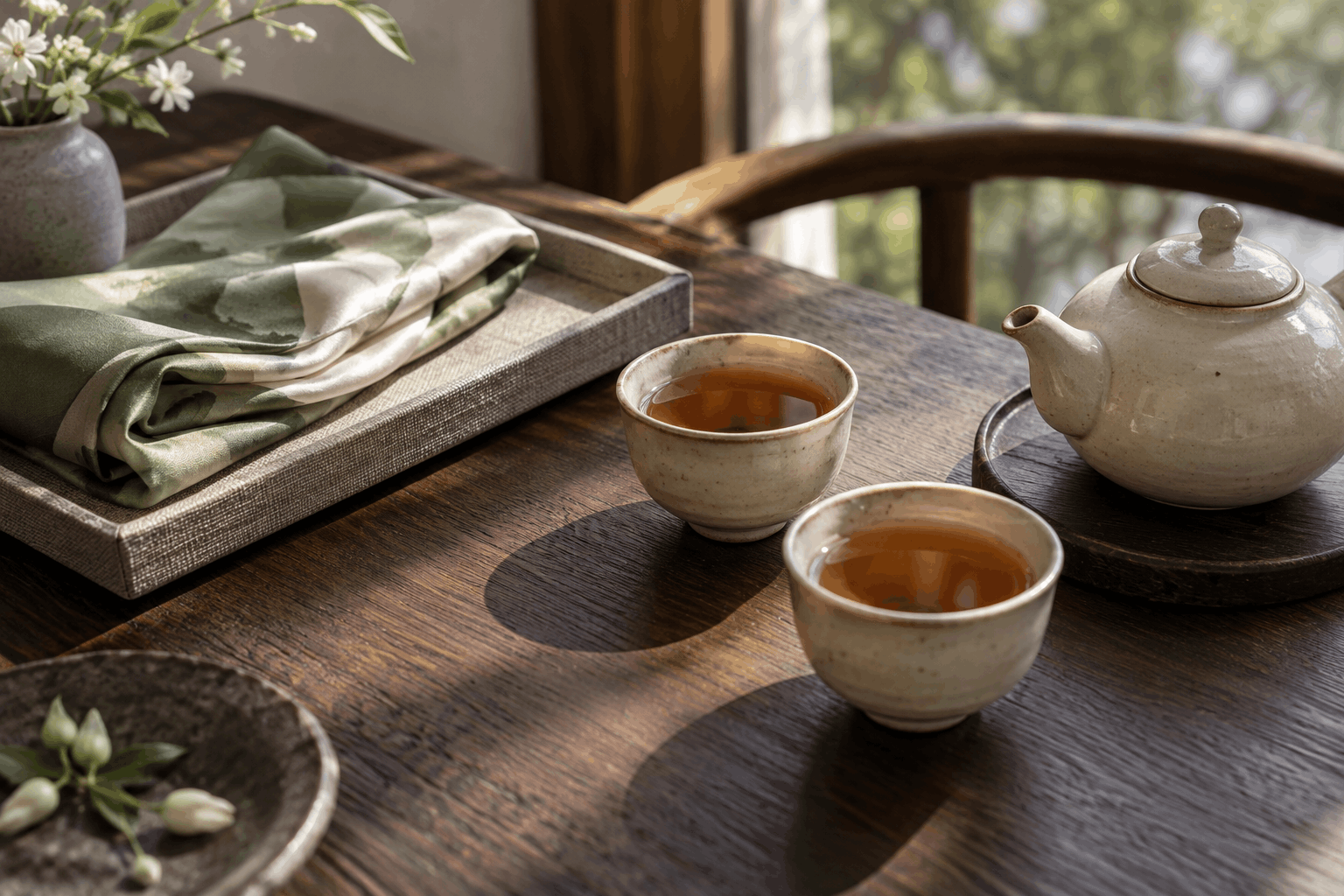
Tea is an appealing choice when you know the recipient enjoys it. A carefully selected Chinese tea can become an invitation to pause, or a reminder of conversations you have shared. The gratitude comes from your choice and message; the tea does not need to carry a fixed symbolic meaning.
Start with what they already drink. Someone who likes delicate flavors may enjoy a different selection from a person who prefers a fuller cup. If you are unsure, ask a knowledgeable tea seller for a small, accessible introduction and include the brewing directions.
Choose sealed packaging with clear information about the tea. Think about whether the recipient has a strainer or teapot and whether loose leaves fit their routine. A gift should be easy to enjoy without requiring several additional purchases.
3. A small ceramic piece they will use
For someone who loves objects with texture and form, a cup, small dish or vase can be a quiet expression of thanks. Choose a Chinese maker or a documented Chinese design source if that cultural connection is important to your gift.
Read the maker’s description carefully. A piece being made in China does not, by itself, establish a particular historical technique or handmade process. Accurate details about the maker, material and design are more interesting than a vague claim of ancient craftsmanship.
Consider the recipient’s space. A small cup may fit naturally into a crowded kitchen; a large decorative vessel requires more commitment. For anything intended for food or drink, check the stated use and care instructions.
4. A bamboo-inspired artwork for someone you admire
Bamboo offers a cultural reference when your gratitude includes respect for someone’s character. In its account of Xia Chang’s Windblown bamboo, The Metropolitan Museum of Art describes bamboo as a symbol of integrity and strength.
A small print can therefore accompany a message about a mentor’s steadiness or a friend’s support. That application is your own interpretation: bamboo does not simply mean “thank you.” Explain the connection in ordinary words, such as “This reminded me of the calm strength you brought to a difficult time.”
Choose a work the recipient would enjoy looking at, and include the artist’s name when available. Be clear about whether you are giving an original work, a print or a reproduction.
5. A coordinated gift set for a more substantial gesture
A gift set can suit an occasion when you want a fuller presentation: thanking a relative for sustained support, or acknowledging a friend who has hosted you for an extended stay. The strongest combinations feel connected through use, color or a shared theme.
A scarf with a complementary keepsake may work for someone who loves accessories. Tea and a cup may suit someone who enjoys a daily tea break. Avoid adding items simply to make the box appear more generous.
Explore Lanting Loom’s gift sets and check the exact contents of the set you choose. The recipient’s enjoyment should guide the combination, while your note explains the reason for giving it.
How to make cultural meaning feel natural
You do not need to find a single Chinese symbol that translates directly as gratitude. A gift can communicate appreciation through a documented artistic reference, a personal association or the pleasure of using it. These are different kinds of meaning, and each can be valuable.
For example, bamboo has an established association with strength and integrity. A garden-inspired design might remind you personally of a host’s home. A blue scarf might simply be the color your friend loves most. Describe each connection honestly rather than presenting all three as traditional symbolism.
One sentence is usually enough. “I chose this because…” gives the recipient a way into the gift’s story without turning the exchange into a lesson. If they enjoy learning more, include a link or a short design note.
Match the gesture to your relationship
Thanking a host
Think about what made the visit special: a thoughtful meal, a comfortable place to stay or the time they set aside for you. A gift sent afterward allows you to mention a specific memory and avoids adding something for the host to manage while guests are arriving.
If you bring it with you, choose something easy to put aside and enjoy later. Tea or a small packaged gift can work well. An accessory is more personal, so reserve it for a host whose style you know.

Thanking a friend or relative
Here, the strongest guide is often shared history. Choose a design that recalls a trip, a book connected to a conversation, or a scarf in a shade they admired. Small observations help the gift feel unmistakably theirs.
When someone has supported you through a difficult period, keep the message warm and direct. You do not need to describe every detail or make promises about repaying them. Recognizing their care can be enough.
Thanking a teacher, mentor or colleague
Choose a proportionate gesture that feels comfortable within the relationship. Where a school or workplace has gift rules, follow them; a thoughtful letter may be the most suitable option. For a team, consider something everyone can share rather than singling out one person unintentionally.
A mentor’s note becomes especially meaningful when it names the impact of their help. Explain which piece of advice changed your approach, or which encouragement gave you confidence. The gift can be modest while the message is substantial.
What to write in a Chinese thank-you gift card
A useful structure is simple: name the kindness, say what it meant, and explain your choice if the connection is meaningful. Write in the language you and the recipient share most comfortably.
- For a host: “Thank you for making us feel so welcome. I especially loved our long conversations after dinner. I hope you enjoy this tea during a quiet afternoon of your own.”
- For a close friend: “You made a difficult week feel much lighter. These colors reminded me of you, and I wanted you to have something beautiful just because.”
- For a mentor: “Thank you for taking my questions seriously and giving such thoughtful advice. Your encouragement helped me take the next step with confidence.”
- For a relative: “I notice how much care you put into the small things. Thank you for always making time for me. I chose this with those moments in mind.”
- For a colleague: “Thank you for your patience and practical help with the project. Your contribution made a real difference, and I appreciated working alongside you.”
Replace a general phrase with one real detail wherever possible. The card is often the part that makes an otherwise lovely gift feel personal.

Presentation and timing: keep the gift easy to receive
Neat wrapping, a well-fitting box and a legible note are usually enough. Choose colors that suit the object and recipient. A culturally inspired gift does not require every part of the presentation to carry a separate symbolic meaning.
Thank the person promptly, even if the physical gift will arrive later. A short message now can acknowledge the kindness while you take time to choose something suitable. When ordering for a particular visit or occasion, check the current shipping information before making plans.
Include useful care details discreetly. For a scarf, the silk care guide can help the recipient look after it. For tea or ceramics, retain the supplier’s brewing or care information. These small details help the gift become part of daily life.
Questions about Chinese thank-you gifts
What is a good Chinese thank-you gift?
A silk scarf, Chinese tea, a small ceramic piece or an art print can all be thoughtful choices. Match the gift to the recipient’s interests and add a note explaining what you appreciate.
Is a silk scarf too personal for a thank-you gift?
It depends on the relationship. A scarf can suit a friend, relative or host whose style you know. For a more formal acquaintance, a book or shareable gift may be easier to choose.
How much should I spend?
Choose an amount that feels comfortable for both of you and proportionate to the relationship. There is no universal price that makes gratitude more sincere. A small gift with a specific, thoughtful message can be entirely sufficient.
Can I give a Chinese-inspired thank-you gift to someone from another culture?
Yes. Choose an object they would enjoy and share its story clearly. An interest in art, design, travel or textiles can provide a natural connection without assuming prior knowledge of Chinese symbolism.
Let the gift carry your own words
A meaningful thank-you gift says, “I noticed what you did, and it mattered.” Cultural inspiration can deepen that message, while the recipient’s taste gives it a practical form.
For someone who loves wearable art, discover Lanting Loom’s silk scarves or explore our curated gift sets. Choose a piece with them in mind, and let your own words complete the gesture.
