

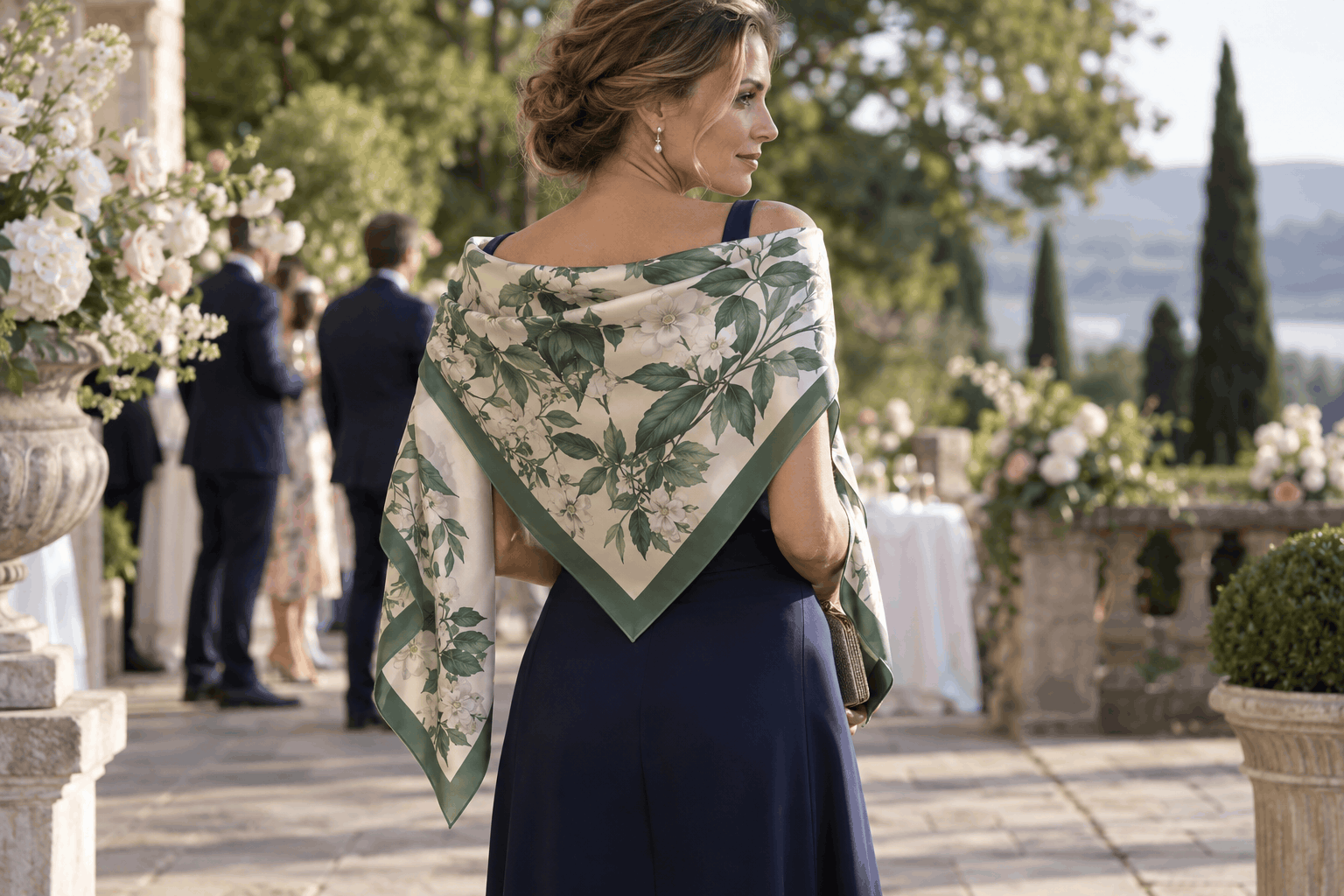
A large square silk scarf can soften the lines of an evening dress, add colour to a simple outfit and provide a light layer over bare shoulders. The key is to give the fabric enough room to fall naturally rather than pulling it tightly around your arms.
To wear a large square silk scarf as a shawl, fold it diagonally into a triangle, place the long folded edge across your shoulders and let the point fall down your back. Leave the front corners loose, tie them gently together or sweep one end over the opposite shoulder.
Start with the simplest drape, then adjust it to suit your neckline, the occasion and the amount of coverage you need.
Choose a square large enough for the coverage you want
“Large square” does not describe one standard size. An approximately 88–90 cm square can work as a light shoulder accent, while an oversized square around 120–140 cm generally gives more fabric for wrapping and tying. These are starting points, not guarantees of fit.
Your shoulder width, the depth of the fold and the position of the scarf all affect the result. Check the actual dimensions and try the scarf over your outfit. If the corners barely meet, choose a loose drape or a larger piece instead of forcing a knot.
A fine silk scarf provides light coverage; it is not a substitute for a warm coat at an outdoor winter wedding. For more generous coverage with long front ends, a rectangular stole may suit your needs better.
Our silk scarf size guide explains how different formats change the styling possibilities.
1. The classic triangular shoulder drape
This is an easy starting point for wedding ceremonies, seated dinners and occasions when you want the print to remain visible.
- Lay the scarf on a clean, smooth surface with the side you want to display facing down.
- Bring one corner to the opposite corner to form a triangle, with the chosen display side facing out.
- Lift the triangle by its two side corners and place the long folded edge across your shoulders.
- Centre the downward point along your back and bring the two side corners forward.
- Spread the fabric gently over your shoulders and upper arms, leaving the ends loose.
Check the back in a mirror. If the point falls lower than you prefer, turn a narrow section of the long edge under before putting the scarf on again. This shortens the back drape but also reduces the fabric available for coverage.
Keep the edge resting on the shoulders rather than balanced only on the upper arms. A low drape can look attractive for photographs, but it is less dependable when you move.
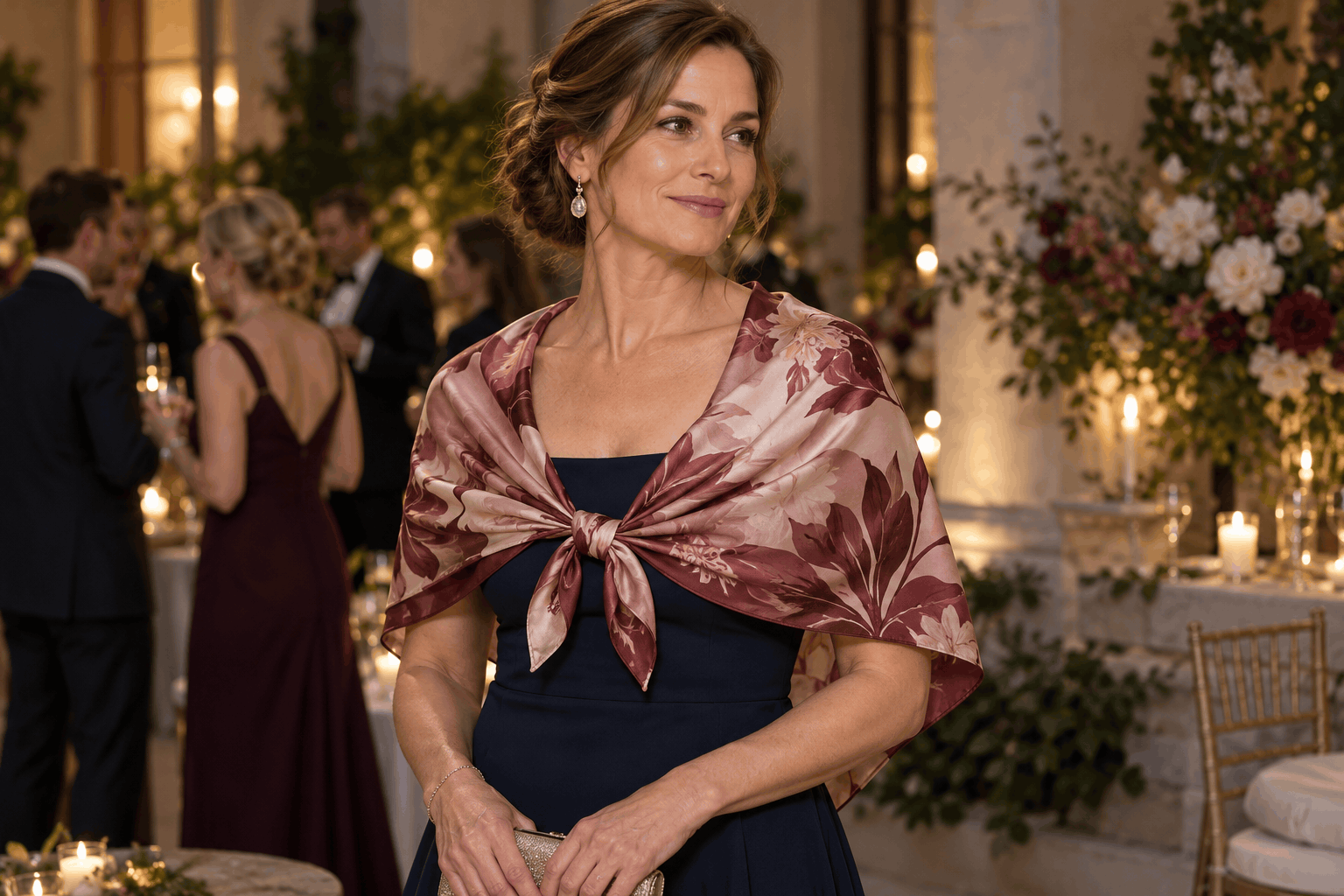
2. A loose front knot for a more secure finish
A front knot can help keep the two sides together when you are greeting guests or carrying a clutch. It works best when the scarf has enough length to tie without tightening across your back.
- Begin with the triangular shoulder drape.
- Bring the two front corners together below your collarbones.
- Cross one corner over the other and pass it through to make a loose overhand knot.
- Arrange the small tails and spread the shoulder fabric so it sits comfortably.
- Raise your arms, sit down and take a few steps to check the fit.
A single knot can loosen in smooth silk. If it does, a second gentle crossing may help, provided there is enough fabric and the knot remains comfortable. Never pull the corners hard to make a too-small scarf reach.
Keep the knot away from a statement pendant or decorated neckline. If the front looks crowded, return to an open drape.
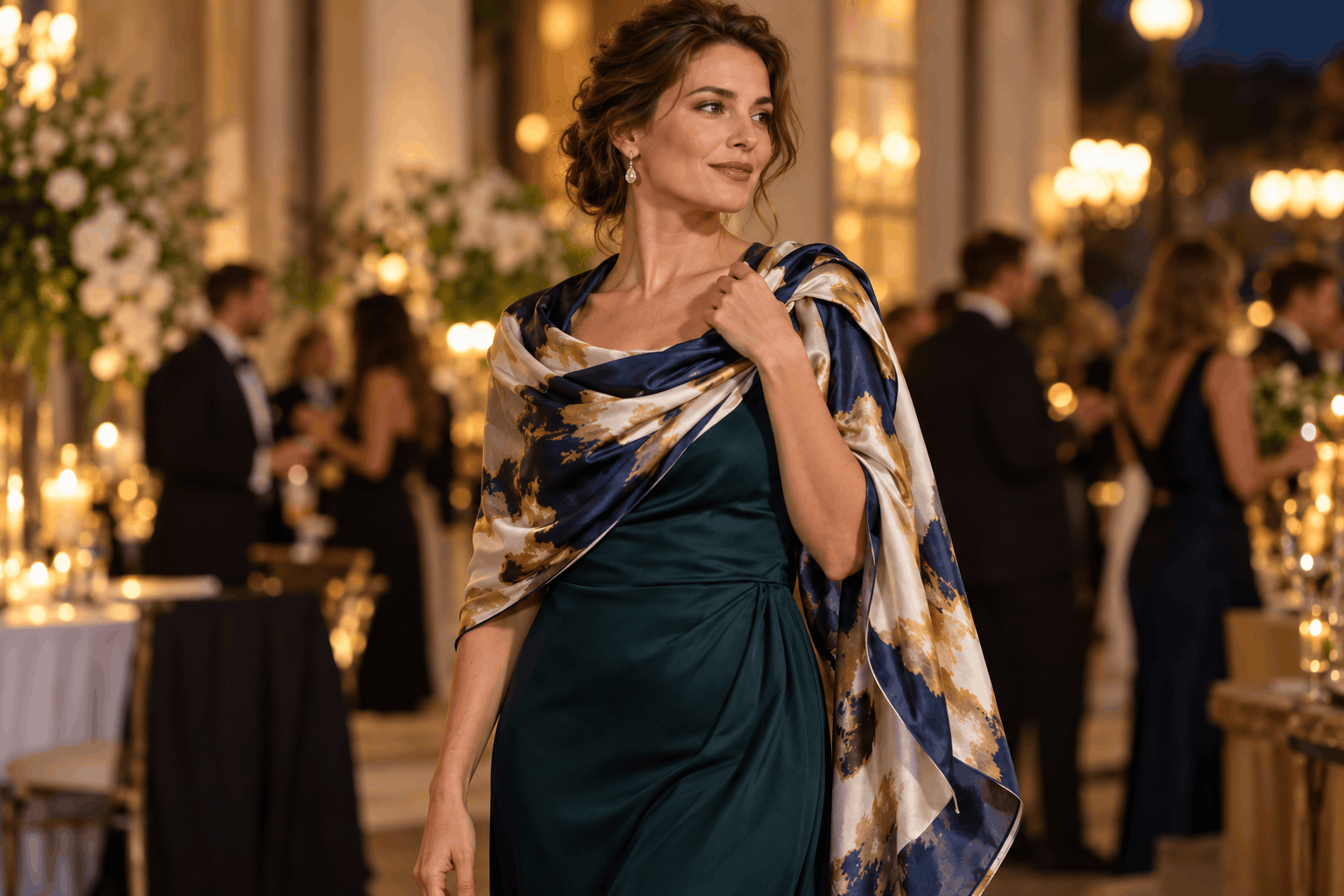
3. An asymmetric drape for evening events
Sweeping one end over a shoulder creates a flowing line across a plain dress or evening jumpsuit. It is particularly useful when you prefer an open neckline without a central knot.
- Fold the square into a triangle and drape it across your shoulders.
- Adjust it so one front end hangs slightly longer than the other.
- Take the longer end across your upper chest and lay it loosely over the opposite shoulder.
- Leave enough ease for the fabric to fall in soft folds.
This is a relaxed styling option rather than a fixed fastening. The swept end may need adjusting, especially on satin or while dancing. If it repeatedly falls, use the front-knot style or remove the scarf for the dance floor.
Match the drape to your neckline
With a simple sleeveless or strapless dress: spread the triangle across both shoulders for light coverage. Check that the scarf stays where you need it when you reach forward or sit down.
With a V-neck dress: try loose front ends that frame the neckline. A knot can work too, but position it deliberately rather than letting it cover a pendant.
With a high neckline: an open or asymmetric drape can avoid extra bulk at the throat.
With a one-shoulder or embellished dress: decide whether the scarf is a temporary layer or part of the full look. It may obscure the dress detail, and beading or sequins can catch delicate silk.
If dependable shoulder coverage is required throughout a ceremony, test the scarf carefully beforehand. A fitted jacket or bolero may be more practical than a loose wrap.
Choose colours that connect with the outfit
Start with one colour already present in your dress, shoes or bag. A printed scarf can repeat that shade while adding softer or brighter accents.
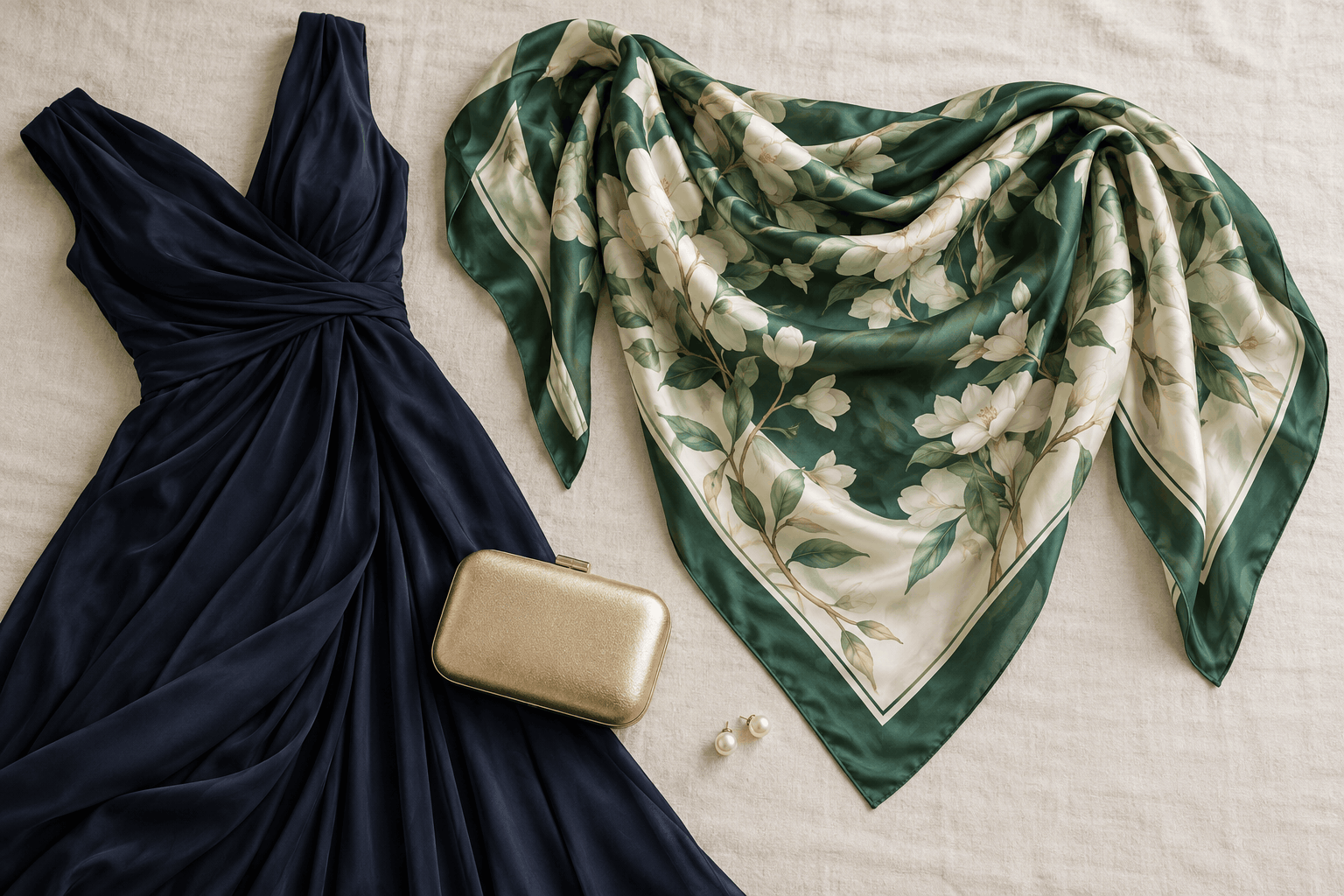
- Navy dress: try jade and ivory, muted rose or a navy-based botanical print.
- Black evening outfit: consider burgundy, jewel tones or a restrained light-and-dark pattern.
- Soft neutral dress: use a print with a related neutral ground and one distinctive accent colour.
- Patterned dress: choose a quieter scarf or repeat a dominant colour to keep the outfit balanced.
These are styling suggestions rather than rules. Look at the scarf folded and worn: its border may become more prominent than the centre of the print.
Follow the wedding or evening-event dress code
Choose the outfit around the invitation and the hosts’ guidance, then use the scarf to complete it. A silk layer does not by itself make a casual dress suitable for a more formal event.
For help interpreting the occasion, consult Emily Post’s wedding guest attire guide. Venue, time of day and any ceremony-specific requirements should inform your choice.
If you are considering a very pale wrap, assess the whole outfit rather than the accessory in isolation. Where you are unsure whether the result looks too bridal or conflicts with the couple’s requests, choose another colour or ask.
Keep silk comfortable and protect it from snags
Try the complete outfit before the event, including jewellery and your bag. Smooth silk may slide against smooth dress fabric, and a chain strap or rough clasp can catch it.
A smooth scarf ring designed for delicate fabric can be an alternative to a knot if it fits the scarf without forcing or bunching. Test it first; it is not guaranteed to hold every fabric securely.
Avoid piercing fine silk with an ordinary brooch or safety pin. If you want a brooch in the outfit, fastening it to a suitable part of the dress or jacket can be a better option than pinning through the scarf.
Put the scarf on after perfume and hairspray have dried. Keep hanging ends away from food, drinks and candles, and lift the back point clear before sitting so you do not trap it beneath you.
Pack and care for the scarf after the event
Carry the scarf loosely folded in a clean pouch, separate from jewellery and exposed zips. If you take it off during dinner, keep it protected rather than letting it trail from the back of a chair.
After wearing, undo any knots and let it air before storage. Follow the care label for cleaning and pressing; do not apply heat to a stain. Our silk care guide covers handling, storage and what to do after spills.
Find a scarf you will wear beyond one occasion
A wedding scarf can also bring colour to a simple jacket or evening top later. Choose a palette you enjoy, a manageable size and a print that works both open and folded.
Explore Lanting Loom’s square silk scarves, checking each product’s dimensions before choosing it for shawl styling. For a scarf selected as a present, our meaningful scarf gifting guide can help you match the design to the recipient.
Frequently asked questions
Can a 90 cm square silk scarf be worn as a shawl?
It can work as a light shoulder drape, depending on your proportions and the coverage you want. It may not leave enough fabric for a comfortable front knot. Try it with the actual outfit before relying on it for an event.
What size square scarf gives more shawl coverage?
An oversized square around 120–140 cm generally offers more fabric for draping and tying than an 88–90 cm square. Check the finished measurements, fabric and fit rather than relying only on the word “large.”
How do I stop a silk shawl slipping off?
Position the folded edge across your shoulders, leave enough ease and try a loose front knot if the ends reach comfortably. Test the combination with your dress fabric. For dancing, removing the scarf may be simpler than repeatedly adjusting it.
Is a silk scarf warm enough for an outdoor wedding?
A fine silk scarf is a light layer. Its warmth depends on the fabric and conditions, so bring suitable outerwear if you expect cold weather, wind or a long time outdoors.
Can I wear a printed scarf with a formal dress?
Yes. A printed scarf can work well with a simple formal dress, especially when one of its colours connects with the outfit. Keep the overall look consistent with the dress code and check how the pattern appears when draped.
