

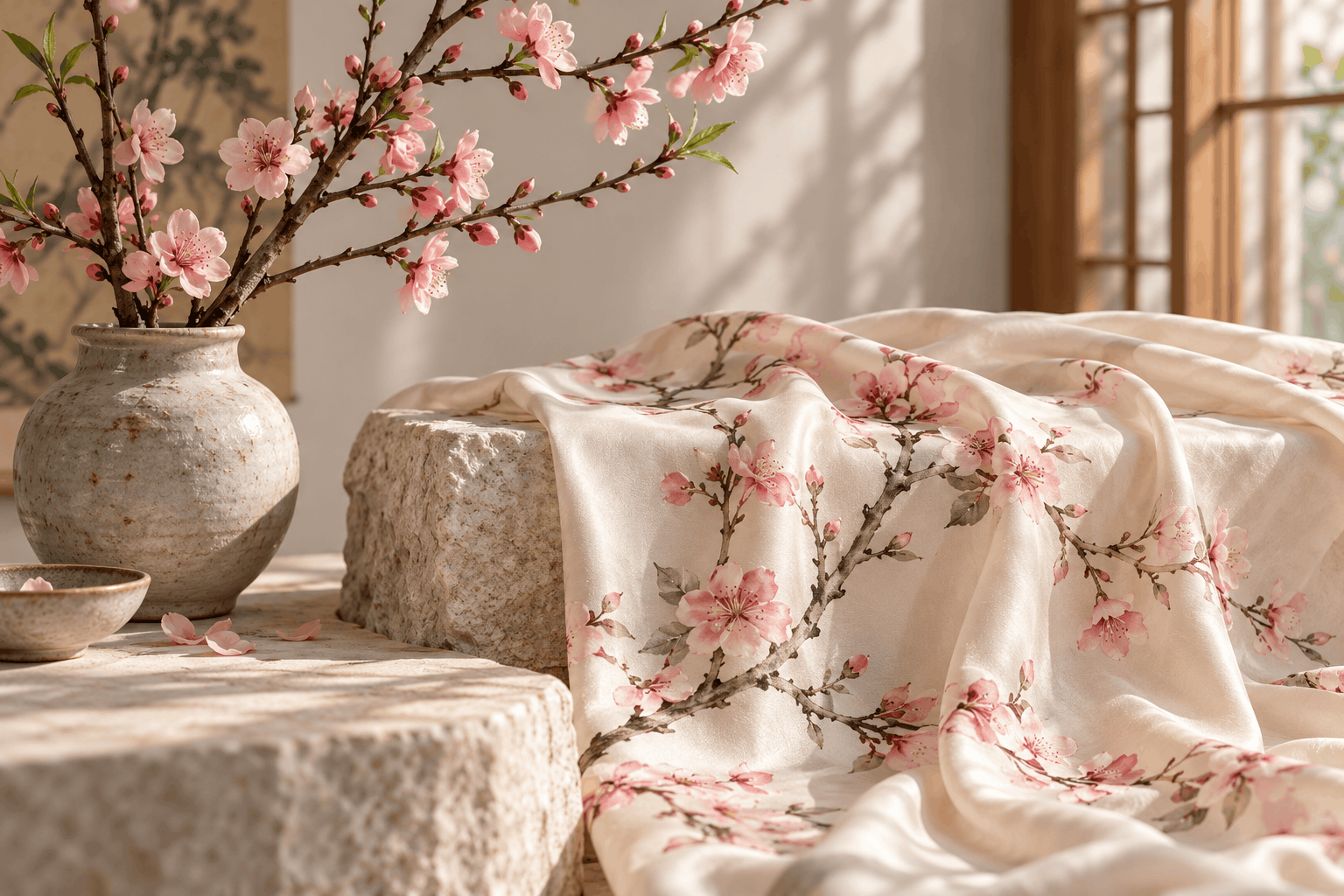
Peach blossoms bring a particular kind of optimism to Chinese art. Their pale pink flowers suggest spring arriving, life beginning again and happiness still to come. They can also carry associations with beauty, marriage and affection, making them a thoughtful motif for a gift.
Peach blossom meaning in Chinese art depends on context. A flowering branch can evoke spring; blossoms in a wedding-related composition can suggest love and a happy union; a landscape may refer to the literary world of Peach Blossom Spring. The peach fruit has its own strong association with longevity, which should not automatically be assigned to every blossom.
What Do Peach Blossoms Symbolise in Chinese Art?
Peach blossom, written 桃花 and pronounced táohuā, is best understood as a motif with several related meanings rather than a single fixed message.
- Spring and renewal: flowering branches can evoke the return of growth and a fresh season.
- Beauty and marriage: literary associations connect peach blossoms with youthful beauty and the beginning of married life.
- Peace and retreat: a landscape of peach blossoms may recall an imagined community sheltered from the troubles of the outside world.
- Good wishes: these associations can inspire a personal message of affection, happiness or hope for a new beginning.
These readings can overlap, but the surrounding imagery, title, inscription and purpose of an artwork help determine which is most relevant. A floral design does not need to express all of them at once.
Peach Blossoms, Love and Marriage
The connection between peach blossoms and marriage has roots in Chinese poetry. The University of Michigan Museum of Art discusses this association in its collection entry for Butterflies and Peach Blossoms, linking the flowers to a marriage poem in the Book of Songs, or Shijing.
The museum also interprets the combination of butterflies and peach blossoms in that work as appropriate for a wedding or engagement gift. This is a useful example of how motifs work together: the whole composition matters as much as the individual flower.
For a contemporary gift, peach blossoms can therefore offer a gentle connection to affection and the beginning of a shared life. That does not mean every peach blossom design is exclusively romantic. A friend or family member can equally appreciate its springtime character.
How to Express the Meaning in a Gift Note
Keep the message personal and modest. For a wedding, you might write:
I chose these blossoms as a wish for a happy beginning and many lovely seasons together.
For an anniversary, a more personal approach could be:
These flowers reminded me of our first spring together. With love for everything we have shared and all that is still ahead.
These are contemporary messages inspired by the motif, rather than translations of an ancient blessing.
Spring, Renewal and New Beginnings
A flowering peach branch can also mark the season directly. The Metropolitan Museum of Art holds a Chinese decorative panel titled Rocks and Flowering Peach, Representing Spring, part of a set depicting the four seasons. Here, the seasonal meaning is explicit.
Renewal is a natural way for a modern viewer to respond to this imagery: buds opening, branches coming into flower and a landscape changing after winter. It offers a thoughtful starting point for gifts marking a graduation, a new home or a change in direction.
The recipient’s own circumstances should guide the wording. Someone celebrating a new job may welcome an enthusiastic message, while someone moving through a difficult period may prefer a quiet expression of care.
Wishing you a fresh season filled with things to look forward to.
A message like this expresses your wish without suggesting that the object itself promises good fortune.
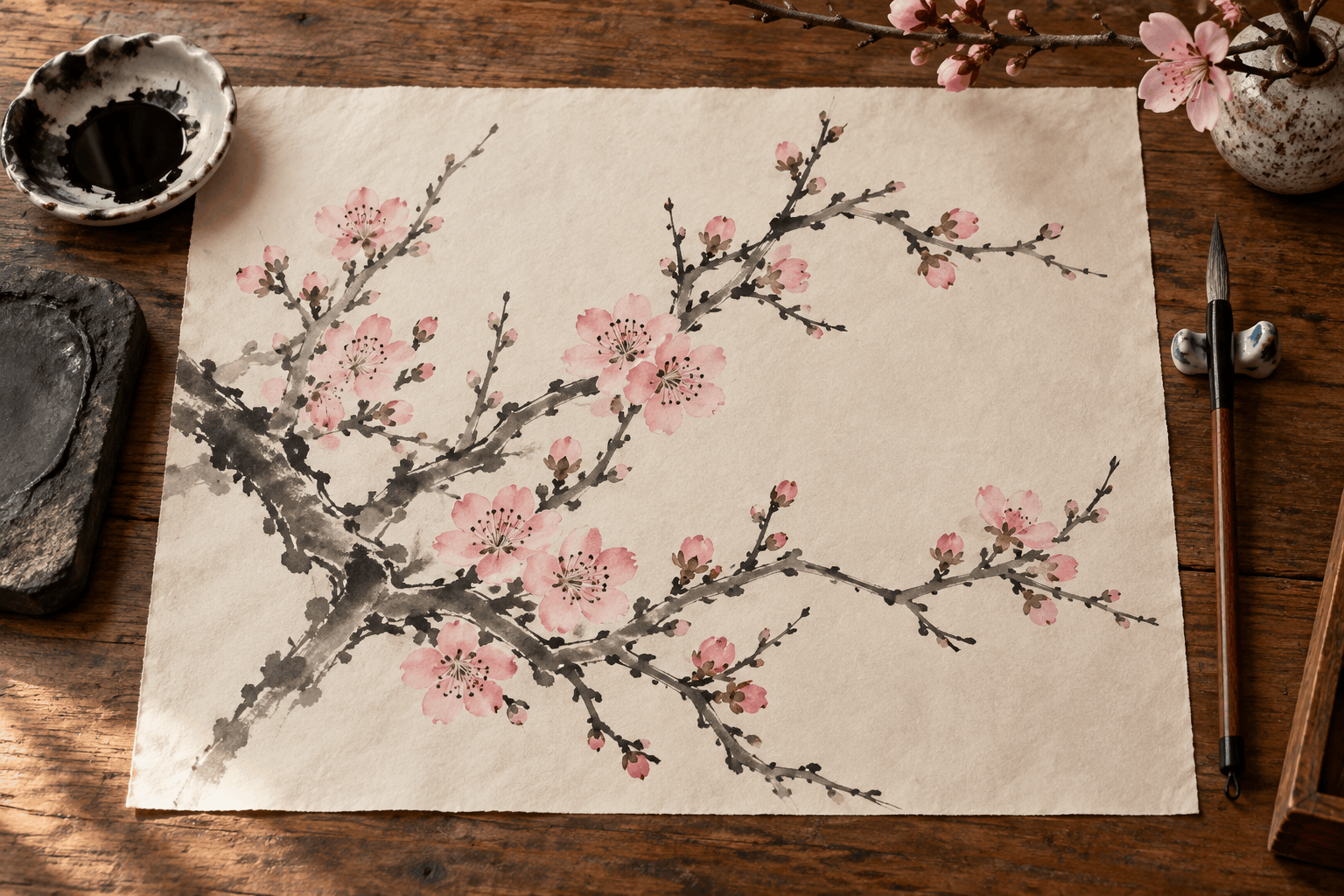
The Story Behind Peach Blossom Spring
Peach blossoms also belong to one of the most enduring imagined landscapes in Chinese literature. In Tao Yuanming’s story, also associated with his name Tao Qian, a fisherman follows a stream through flowering peach trees and discovers a secluded community living apart from the upheavals of the outside world.
After leaving, he cannot find the place again. The story offers a vision of peace that is both inviting and elusive.
In its discussion of Zhang Hong’s Peach Blossom Spring, dated 1638, the Metropolitan Museum of Art describes how the painting leads the viewer towards this sheltered world and its everyday rural activities.
This is a different reading from romantic love. In a landscape, peach blossoms can point towards refuge, harmony and the longing for a quieter life. A floral scarf might remind its wearer of that story, but a scattered blossom pattern alone does not establish that the designer intended the reference.
Peach Blossoms and Peach Fruit Have Different Emphases
The flower and the fruit come from the same tree, but they should not be treated as interchangeable symbols.
The peach fruit is especially associated with longevity and immortality. The Metropolitan Museum of Art’s essay on longevity in Chinese art explains the mythological peaches associated with Xiwangmu, the Queen Mother of the West.
When choosing or describing a gift, use this distinction:
- A design of flowering peach branches: begin with spring, beauty or the relevant marriage and literary associations.
- A design featuring peaches: consider the fruit’s established connection with wishes for long life.
- A composition containing several symbols: look for the artwork’s description before deciding what the combination means.
A blossom gift can still be suitable for a birthday. The reason might simply be the recipient’s love of flowers, your wish for a happy year or a colour they enjoy wearing.
How to Look at a Peach Blossom Design
Rather than starting with a list of symbols, spend a moment looking at how the design is arranged.
Look at the Whole Composition
A single branch against an open background feels different from a flowering grove beside a river. The first draws attention to the blossoms themselves; the second may invite a landscape or literary reading.
Notice the Other Motifs
Butterflies, figures, buildings and fruit can change the emphasis. Their presence gives you more to investigate, but it is still worth checking a reliable collection entry or the designer’s explanation.
Read the Title and Design Story
Peach, plum and cherry blossoms can look similar in stylised artwork. Pink petals alone are not enough to identify the flower. A title, catalogue description or documented design story is a better starting point than guessing from colour.
For a contemporary scarf, explore the Lanting Loom design stories and the individual product description to understand the inspiration behind the composition.
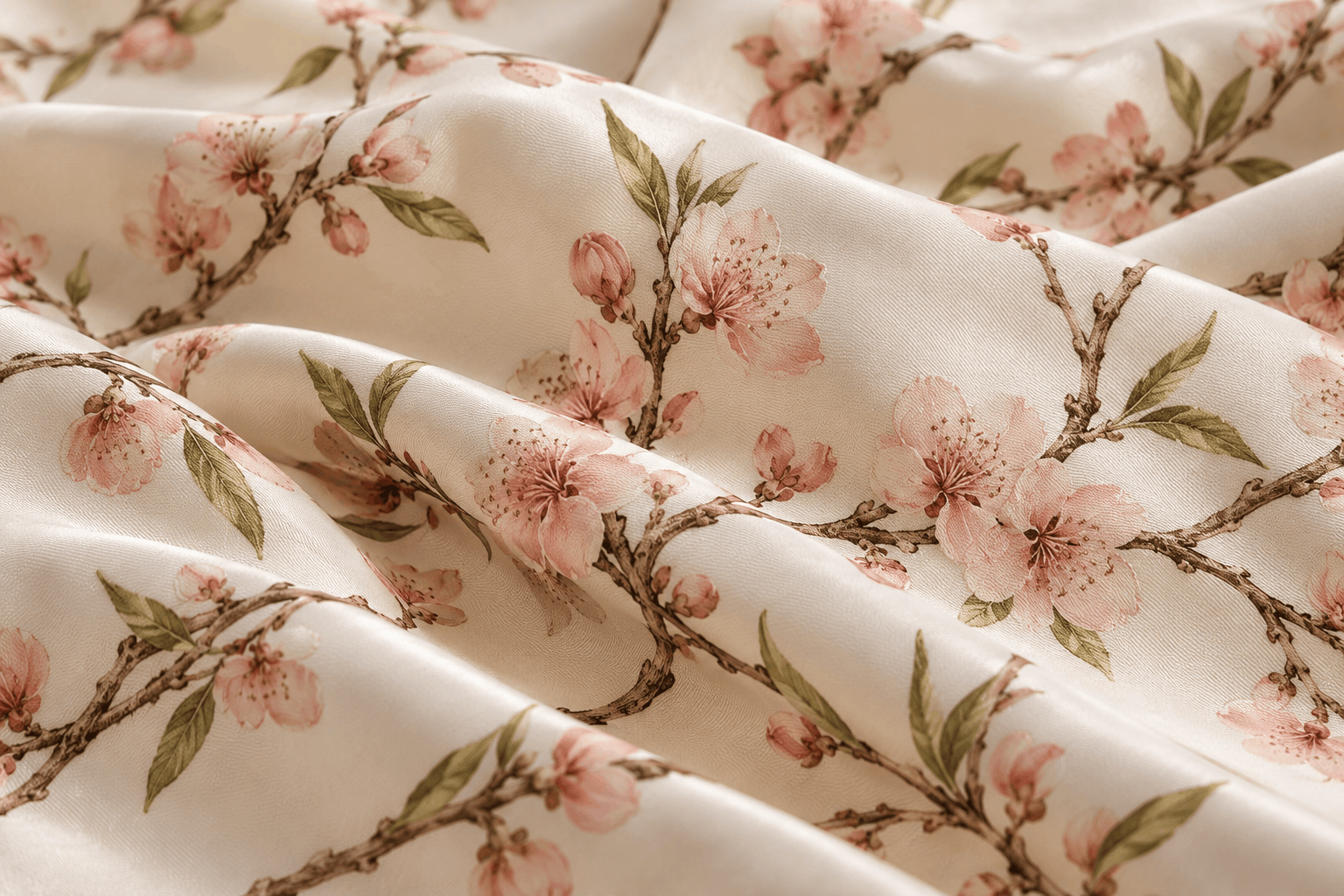
Choosing a Peach Blossom-Inspired Silk Scarf as a Gift
Symbolism adds interest, but the recipient should still be the starting point. A scarf becomes a more useful gift when its palette, size and style fit the way that person dresses.
Choose Colours They Already Enjoy
Soft pink and ivory can feel gentle and light, while darker branches or a contrasting border can give a floral design more definition. Picture the scarf beside a coat, blouse or knitwear the recipient already wears.
Think About How They Will Wear It
A smaller square may suit someone who likes a neat neck tie or a handbag accent. A larger square offers more room for the artwork and more draping possibilities. Our guide to choosing the right silk scarf size can help you decide.
Explain Why You Chose It
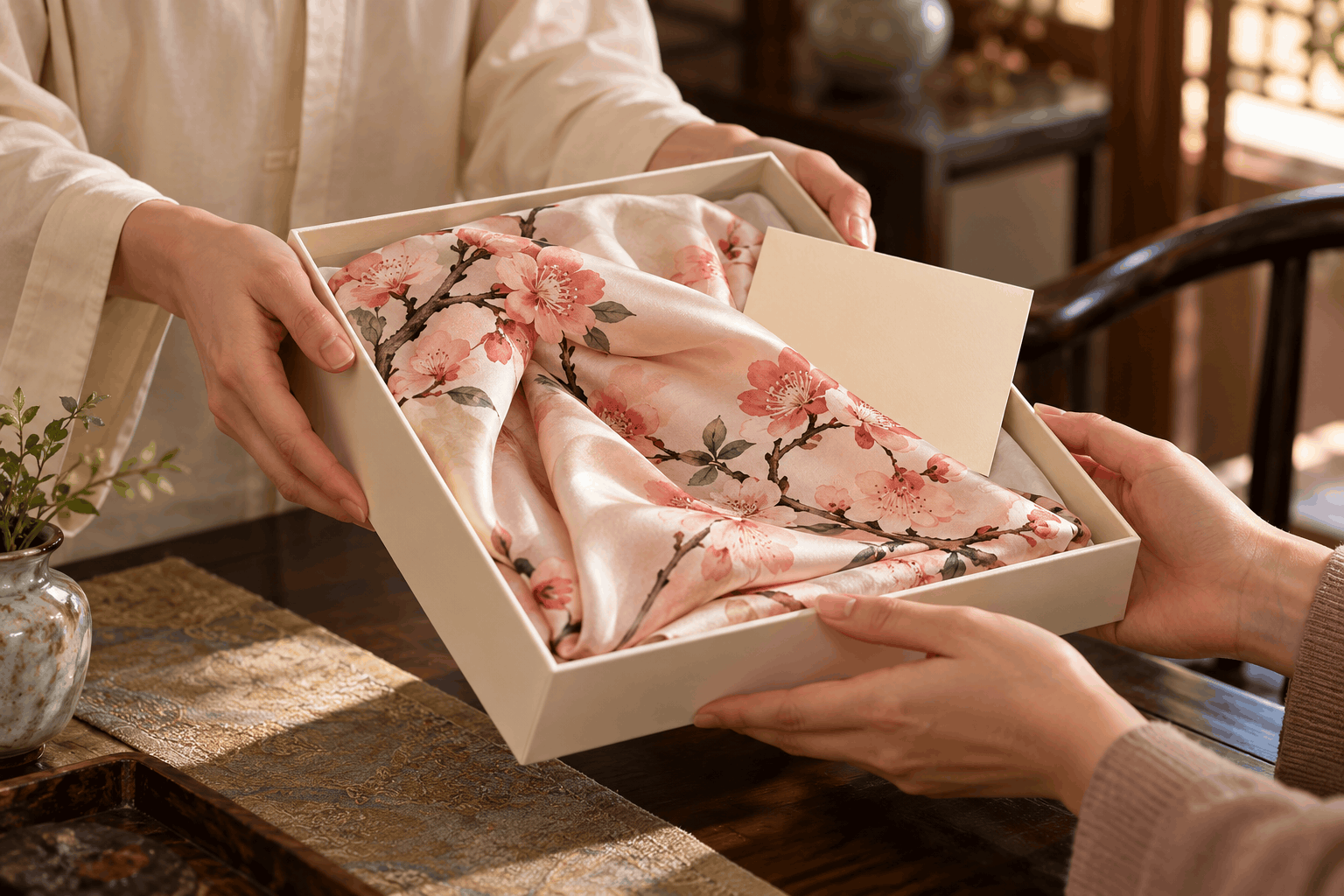
One sentence about the motif is usually enough. The rest of the message can be about your relationship or the occasion. For broader guidance, read how to choose a meaningful scarf as a gift.
The scarves shown in this article are illustrative concepts. Check the shop and each product’s description for available designs and their documented inspiration.
Good Wishes for Different Occasions
The same floral motif can support different personal messages. These examples are suggested wording for today’s gifts, rather than fixed traditional formulas.
- Wedding: “Wishing you a joyful beginning and a lifetime of kindness towards each other.”
- Birthday: “A little spring colour for your birthday, with love for the year ahead.”
- Graduation: “For everything you have worked towards, and the possibilities still to come.”
- Retirement: “Wishing you time for the people, places and everyday pleasures you love.”
- Friendship: “These blossoms made me think of you and our walks together.”
For a professional gift, a simple wish for a positive new season may be more appropriate than language about romance. Let the relationship determine the message.
Frequently Asked Questions
Do peach blossoms mean love in Chinese art?
They can. Peach blossoms have literary associations with beauty and marriage, and some compositions make that connection especially clear. They can also express spring or refer to a literary landscape, so context matters.
Are peach blossoms a symbol of longevity?
The strongest established longevity association belongs to the peach fruit and its mythological connections. It is more precise to discuss a blossom-only design in relation to spring, beauty or its particular literary context.
Are peach blossoms suitable for a wedding gift?
They can be a thoughtful choice, especially when the recipient enjoys floral designs. Their marriage associations provide a meaningful starting point, while your personal note can explain the wish behind the gift.
Does a peach blossom gift have to be romantic?
No. You can choose it for its springtime feeling, colours or connection with a shared memory. A short note makes your intention clear.
Are peach blossoms and plum blossoms the same symbol?
No. They are different flowers with distinct artistic associations, although their meanings can overlap around spring. Avoid identifying a stylised flower solely by its pink or white petals; check the title or design description.
Peach blossoms offer several ways to make a gift personal: affection, a fresh beginning or the wish for a more peaceful season. Explore Lanting Loom’s silk scarves and choose a design whose story and everyday style both speak to the person receiving it.
