


A scarf can look beautiful in a supplier’s photograph and still arrive with work left for the boutique: missing product details, awkward packaging, inconsistent stock codes or labels that need correcting before sale.
Retail-ready silk scarves should be ready to receive, identify, display, sell and hand over to a customer. That means approving the product and the full retail presentation together, including the information attached to the scarf and the data used at the till.
This checklist helps boutique buyers define those requirements before placing an order and check them again when the goods arrive.
Define What “Retail-Ready” Includes
Suppliers may use the phrase differently. One might mean individually packed scarves; another might include hangtags, care information and barcodes. Write the agreed contents into the purchase specification.
- The scarf: approved design, colourway, dimensions, fibre composition and finishing.
- Product labels: the information and attachment required for the intended market.
- Sales presentation: agreed hangtag, story card, box, sleeve or pouch.
- Stock identification: product and variant codes that match your purchasing and till systems.
- Supporting information: accurate product descriptions, dimensions, care guidance and authorised images.
- Shipping identification: cartons and packing lists that make receiving straightforward.
Ask to see one complete packed unit. A photograph of the scarf alone will not show whether the box fits, the labels are legible or the tag attachment catches the fabric.
1. Approve Packaging That Protects the Scarf
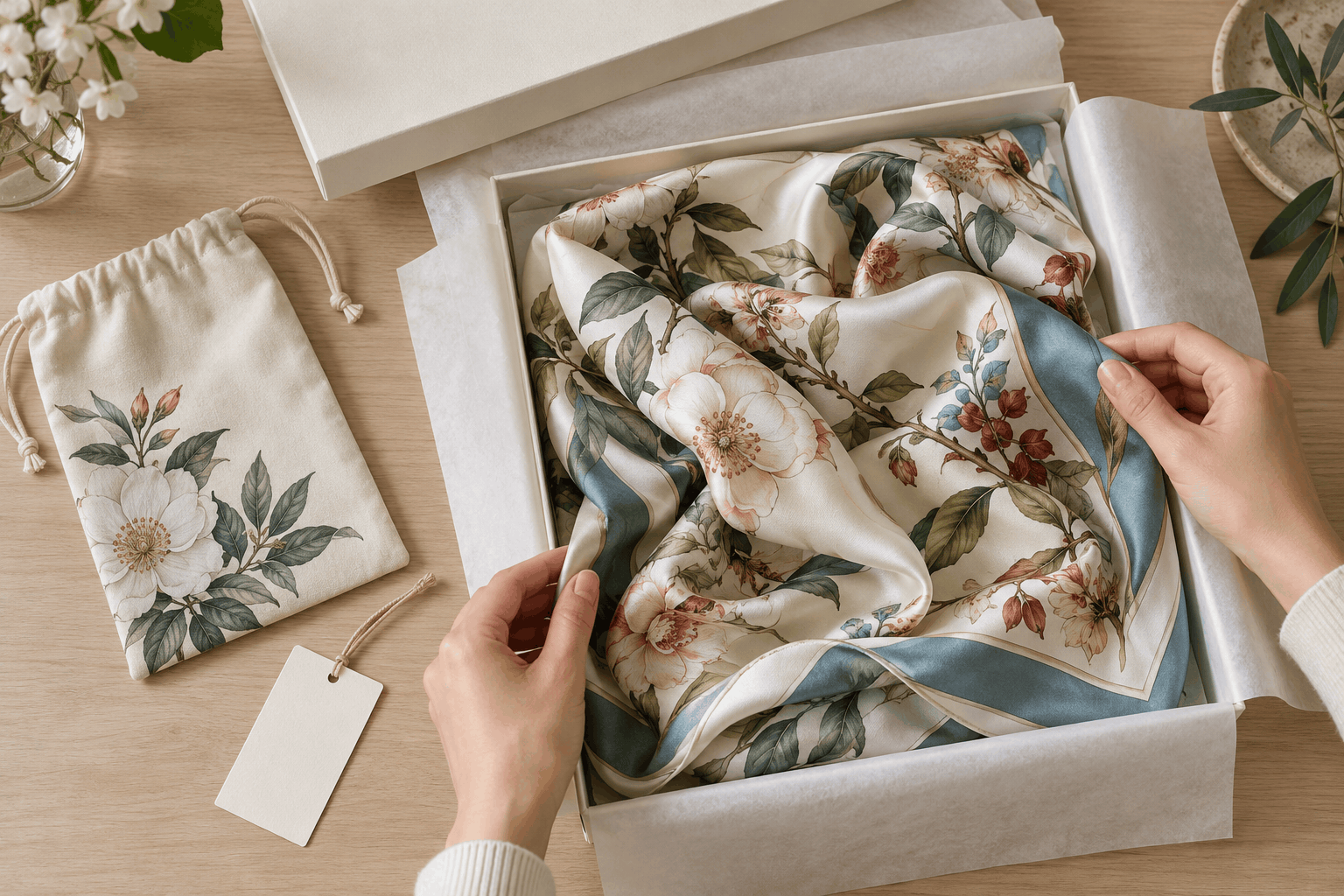
Start with the way your shop sells. A boutique with frequent gift purchases may value an included presentation box. A shop with limited storage may prefer a compact sleeve or pouch, with gift packaging available separately.
Check the Fit and Materials
- The scarf fits without excessive compression or sharply forced folds.
- Internal surfaces, closures and edges are smooth and do not snag the silk.
- Tissue and inserts are clean, suitable for contact with the fabric and free from loose fibres.
- The packaging does not transfer colour, adhesive residue or a strong scent.
- The card stays in place without pressing a hard edge into the scarf.
- The customer can open and repack the gift easily.
Inspect the packaging after it has been opened and closed several times. A box that looks good only before its first opening may be frustrating during demonstrations.
Separate Gift Presentation from Shipping Protection
A gift box is not necessarily a shipping carton. Confirm how individual units are protected during transport and how cartons are packed to reduce crushing and movement.
Ask for packed dimensions as well as scarf dimensions. Packaging affects shelf space, stockroom capacity and the cost of sending an online order to a customer.
2. Check Product Labels for the Market of Sale
Agree the countries where the scarves will be sold before approving label artwork. Requirements vary, and an attractive brand label is not a substitute for the required product information.
For the United States, the Federal Trade Commission’s textile labelling guidance explains that most covered textile products need fibre content, country of origin and the identity of the manufacturer or another responsible business.
For the European Union, the Your Europe textile-label guide explains fibre-composition labelling and language requirements. These examples are starting points for a market-specific review, not a complete international compliance checklist.
Confirm the Actual Fibre Composition
Use “100% silk” only when it accurately describes the product. A silk blend should be identified by its actual composition. “Satin” describes a fabric construction and does not, by itself, establish silk content.
Keep the supplier’s composition specification and any agreed verification documents with your buying records. The scarf label, hangtag and online description should not contradict one another.
Distinguish Design Origin from Manufacturing Origin
“Designed in” and “made in” describe different things. A design story about a country or city should not obscure where the product was manufactured. Check the exact origin wording and any applicable placement requirements before production.
Check Attachment and Readability
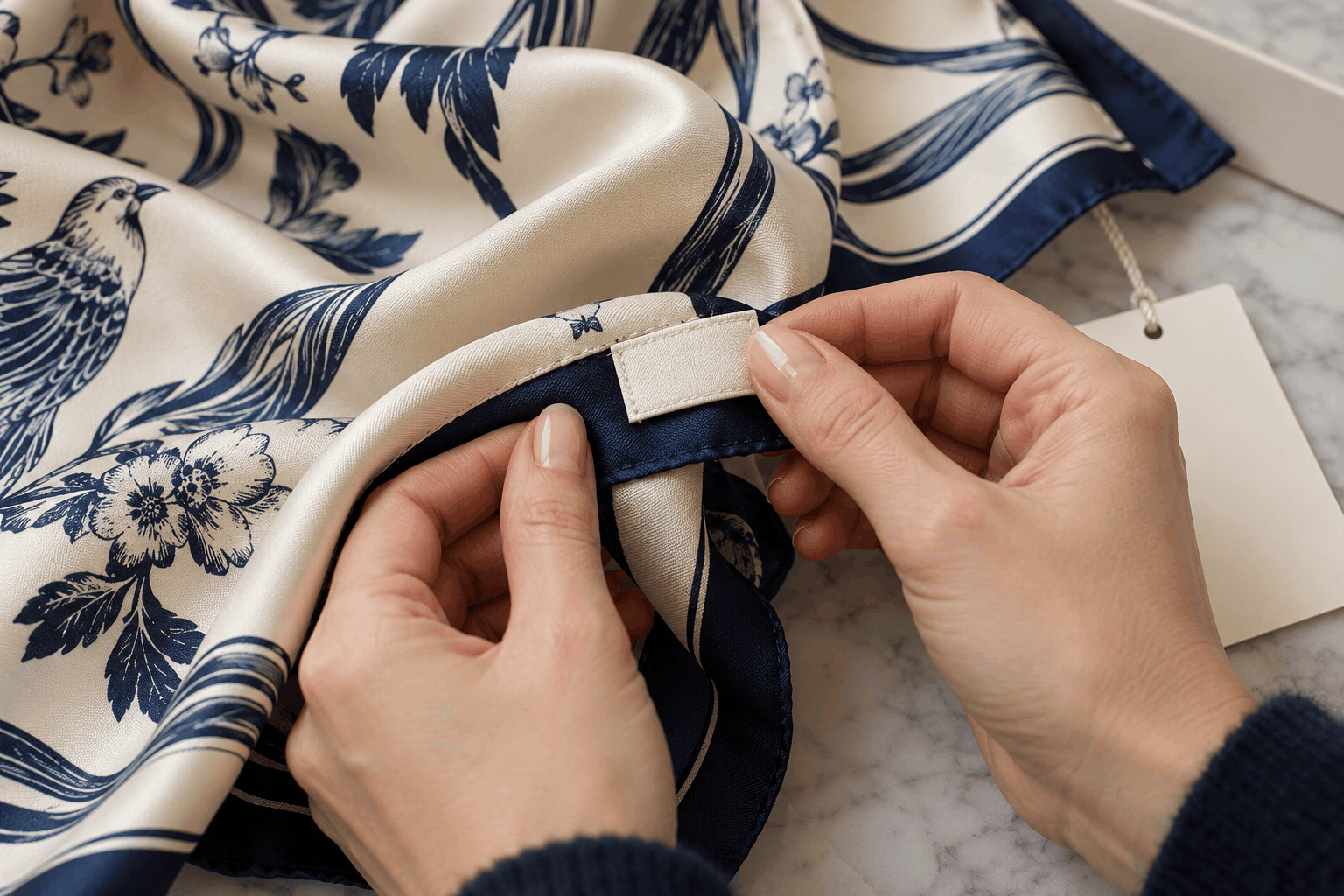
Inspect the label on the finished scarf, not just in a large artwork preview. Check text size, contrast, language, attachment and whether the label is comfortable in normal wear. Do not remove required information to make the product look cleaner on display.
3. Make Care Information Specific and Consistent
The care instructions should suit the finished product, including its dyes, print and finishing. Do not add a generic “hand wash” or “dry-clean only” instruction simply because the fabric is silk.
The FTC’s Care Labeling Rule guidance explains the need for a reasonable basis for care instructions and warnings on covered products. Ask the supplier how the proposed care method has been established.
- The product label and supplementary care card give compatible instructions.
- Any symbols and written guidance are appropriate for the intended market.
- Sales staff and online listings use the same approved care information.
- A QR code provides additional guidance without being assumed to replace required physical information.
A brand care guide can help with everyday handling, but the individual product instructions take priority. See Lanting Loom’s silk care guide for examples of general handling and storage advice.
4. Match SKUs, Barcodes and Product Data
A stock-keeping unit, or SKU, is your internal identifier. A barcode is a machine-readable way to carry an identifier. They are related tools, but they are not interchangeable terms.
Assign distinct variant records where you need to track different sizes or colourways separately. Agree whether you will use supplier identifiers or map them to your own system.
- The product name, colourway and size match the purchase order.
- The code on the unit matches the packing list and stock record.
- Any barcode scans correctly using your actual till equipment.
- The scan retrieves the correct variant and selling price.
- Price stickers can be removed from gift packaging without damaging it.
- Codes remain accessible without unfolding every scarf.
If a marketplace or retail partner requires a particular product-identifier format, confirm that requirement before tags are printed. A small independent shop should not assume every channel uses the same system.
5. Approve Hangtags and Story Cards
A useful hangtag helps the customer understand the product quickly. A story card can add context about the artwork or collection. Neither needs to carry a long sales pitch.
Check design names, spelling, dimensions, translations and any claims about materials or craftsmanship. Statements such as “hand-rolled”, “organic” or “limited edition” should have a clear factual basis.
Ask how the tag is attached. Avoid methods that pierce or pull the scarf body, and review any loops or fasteners for snagging. Keep removable retail information separate from information that needs to remain with the product.
For inspiration on concise product storytelling, explore the Lanting Loom design stories. Use the story documented for the actual design rather than assigning a generic cultural meaning to every floral or geometric motif.
6. Plan a Display Customers Can Shop
A display should help customers see the artwork, understand the size and imagine wearing the scarf. Showing only closed boxes makes that difficult.
Show the Pattern and a Wearable Fold
Use one open display sample to reveal the composition and another folded or loosely tied example to show how the colours work in use. Place a mirror nearby and keep prices easy to find.
Protect Display Stock
Choose smooth stands and hangers. Keep silk away from rough wood, sharp hardware, adhesive tape, strong sunlight, drinks and fragrance sprays. Avoid tight clips that leave marks.
Separate handling samples from pristine sale stock and establish when a display piece should be cleaned, replaced or withdrawn. Cleaning should follow its care instructions.
Make Replenishment Simple
Group boxed stock by a system staff can maintain, such as design and colourway. Keep a discreet identifier visible so the correct box can be found without opening several packages.

7. Give Staff a Short Product Guide
Staff should be able to answer five questions confidently: What is it made from? What size is it? How can it be worn? How should it be cared for? What packaging is included?
Provide a concise product sheet with the approved answers, a short design story and photographs identifying each colourway. Confirm that any supplied images are authorised for your shop’s website and marketing channels.
The silk scarf size guide can help staff explain different formats. Demonstrations should use the actual stocked size rather than promising styling options that require a larger scarf.
8. Check the Delivery Before Putting It on Sale
Use the approved specification and sample as receiving references. Agree an inspection approach and discrepancy-reporting process with the supplier before shipment.
- Count the delivery: reconcile cartons and units by design, size and colourway.
- Inspect condition: look for crushed boxes, moisture, stains, snags and finishing faults.
- Check information: verify labels, care instructions, cards and stock identifiers.
- Test checkout: scan representative variants and confirm their product records and prices.
- Record problems: photograph affected units and packaging, note quantities and identify the relevant order.
- Hold affected stock: keep unresolved items separate until the next action is agreed.
Retain enough packaging and identification to investigate transport damage or a packing error. A clear report is more useful than a general statement that “some scarves are wrong”.
Final Retail-Readiness Checklist
- Approved product specification and reference sample retained.
- Packaging fit, finish and shipping protection checked.
- Market-specific product and care labels reviewed.
- Composition and origin descriptions consistent across channels.
- SKUs and any barcodes tested in the boutique’s system.
- Hangtags, story cards and price placement approved.
- Display samples and sale stock organised separately.
- Staff product information and authorised images available.
- Receiving checks, discrepancy reporting and reorder terms agreed.
Frequently Asked Questions
Does retail-ready always mean gift-boxed?
No. A scarf can be retail-ready in a sleeve or pouch if that matches the agreed brief. Define packaging, labels and sales information explicitly rather than relying on the phrase alone.
Does every boutique need barcodes on its scarves?
That depends on the shop’s stock system and sales channels. Some use internal product codes; others require scannable identifiers. Test the agreed setup before printing the full tag run.
Can a story card replace a product label?
Do not assume it can. Required information, attachment and visibility depend on the market and product. Treat storytelling as additional content and review the labelling requirements separately.
Should the boutique remove labels before displaying scarves?
Keep required information intact. Plan the display and label placement together so customers can see the design and access the product details.
Can a boutique request its own packaging?
Ask about feasibility, quantities, development costs and timing. Approve a physical packed sample and confirm whether the request concerns packaging only or also changes the product branding.
To discuss a coordinated scarf and presentation brief, explore Lanting Loom’s gifting and collaboration options. Share your market, sales channels, quantities and packaging needs so the proposed delivery can be assessed against the way your boutique actually works.
