

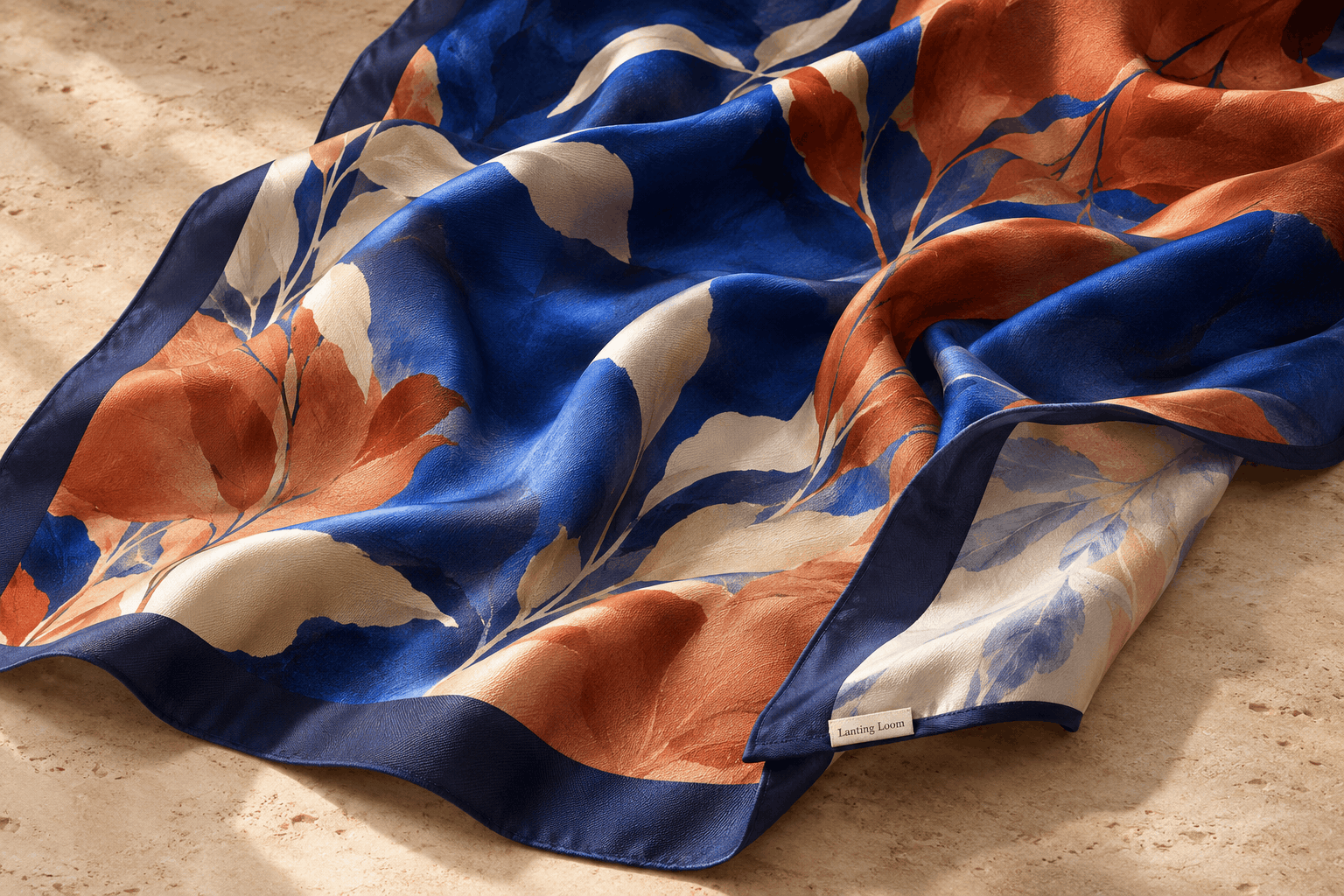
A silk scarf rarely stays perfectly flat when you wear it. A knot turns, a shoulder drape moves and the ends of a neck tie reveal both faces of the fabric. That is why the reverse deserves a closer look before you buy.
But what does “double-sided” actually mean? Does a single-sided scarf have a blank back? And is a double-sided scarf necessarily thicker or better?
A single-sided printed silk scarf receives its print on one face, although the design may show through to the reverse. A double-sided printed scarf is deliberately printed on both faces. Neither description, by itself, tells you the fabric’s thickness, fibre quality or overall workmanship.
The useful question is how the actual scarf looks, feels and behaves in the styles you enjoy wearing.
What Is a Single-Sided Printed Silk Scarf?
A single-sided printed scarf has its design applied to one face of the fabric. Colour may penetrate through the textile, so the reverse can still show a recognisable version of the pattern.
The back might look noticeably paler, slightly softer or quite close to the front. The result depends on the fabric, printing process, colours and finishing.
For example, scarf producer Scafos explains in its printing FAQ that it prints on one side while colour penetration can give the reverse a similar appearance. Visibility on both sides therefore does not, on its own, establish double-sided printing.
A lighter reverse is not automatically a defect. What matters is whether the appearance matches the description and whether you like the result when the scarf is folded and worn.
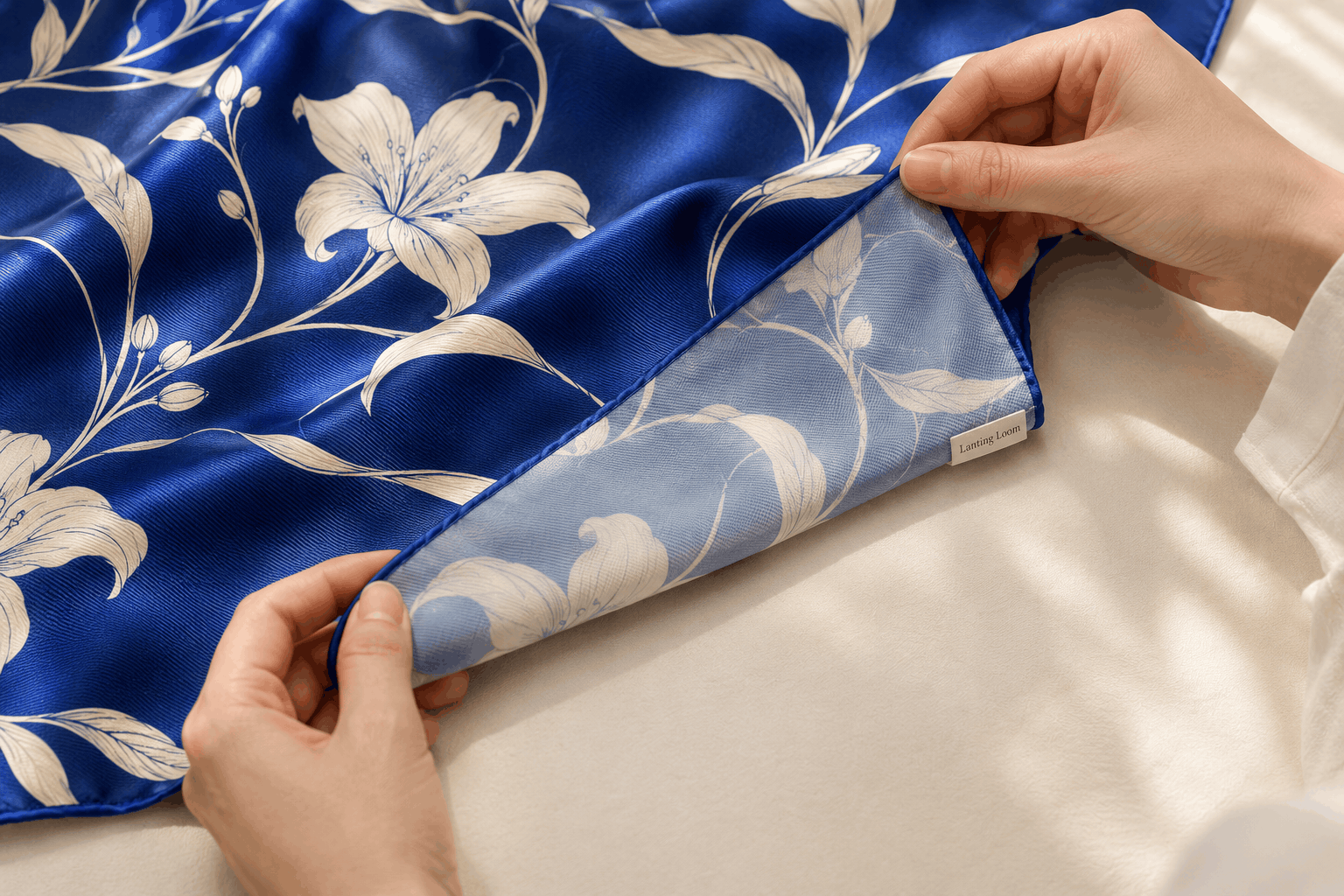
What Is a Double-Sided Printed Silk Scarf?
A double-sided printed scarf has printing deliberately applied to both faces of the fabric. Depending on the design, the two sides may show a similar pattern and colour palette, contrasting colourways or different artwork.
For example, Hermès describes its double-face scarves as using a printing technique that brings designs to both sides.
Do not assume that every double-sided scarf offers two different looks. Some are intended to give a more consistent appearance when the fabric turns; others deliberately use contrast between the faces.
Ask to see both sides of the specific design you are considering.
Double-sided printing is not the same as two layers
Printing both faces can be done on a single piece of fabric. It does not inherently mean that two scarves have been sewn together.
A lined or double-layer scarf is a different construction. It may use two separate pieces of fabric joined at the edges, with its own effect on weight and drape.
If a listing only says “double-sided” or “reversible,” check whether it means printing on both faces, a two-layer construction or simply a scarf intended to be worn either way.
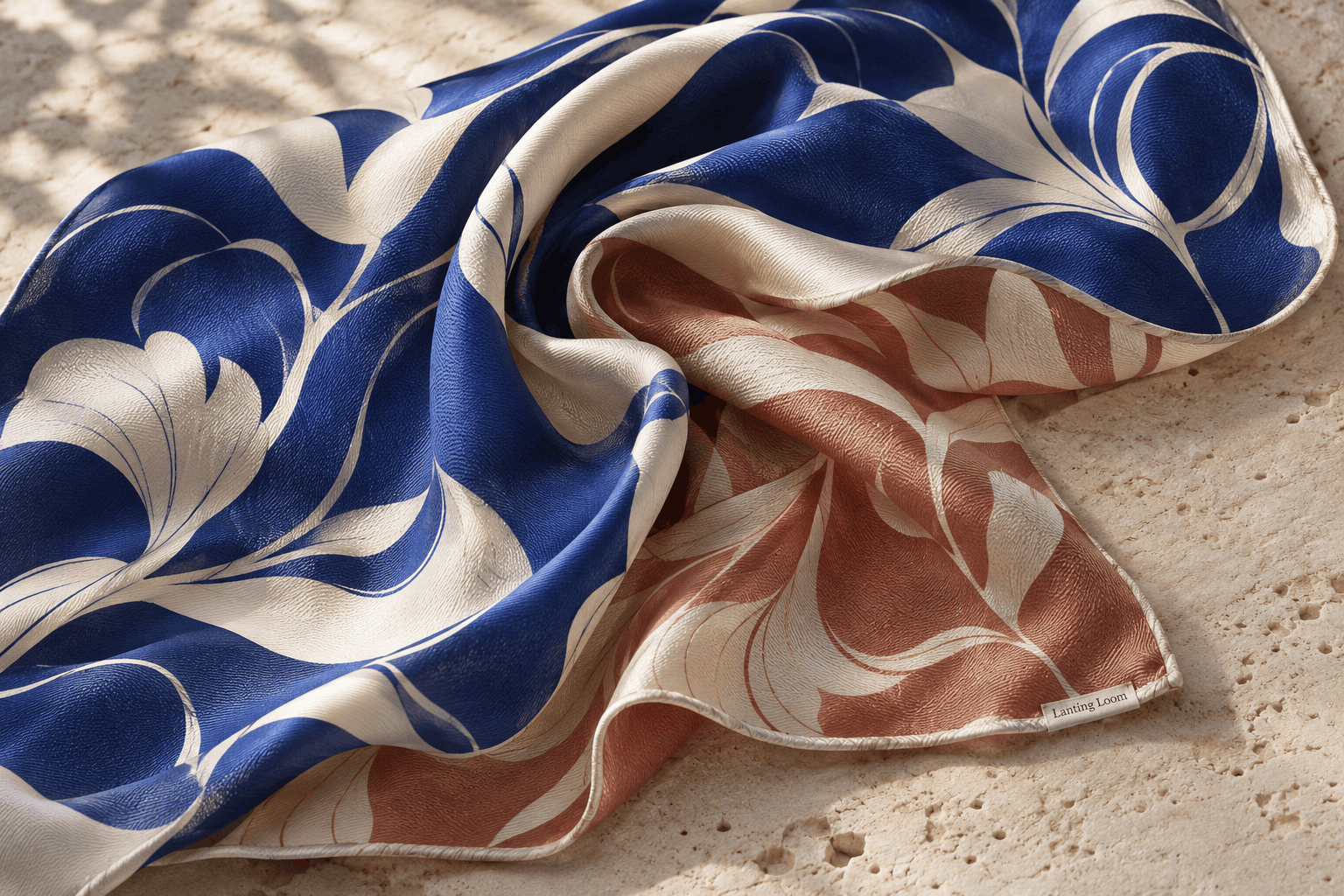
Single-Sided vs Double-Sided Silk Scarves at a Glance
| Detail | Single-sided printed scarf | Double-sided printed scarf |
|---|---|---|
| Printing | Applied to one face. | Applied to both faces. |
| Reverse appearance | May show a softer or paler version of the design through colour penetration. | Has a deliberately printed appearance; the design may match or differ. |
| When the scarf twists | A difference between front and reverse may become visible. | Both printed faces can contribute to the look. |
| Fabric layers | The printing description does not establish layer count. | Does not necessarily mean two layers. |
| Weight and thickness | Depend on the fabric and construction. | Also depend on the fabric and construction; not automatically doubled. |
| Price | May involve fewer printing operations. | Additional printing and inspection can contribute to a higher price. |
| What to assess | Both faces, fabric feel, design, hems and care instructions. | Both faces, fabric feel, design, hems and care instructions. |
Does Double-Sided Printing Mean Better Quality?
It can offer a useful styling benefit, especially when both sides remain visible. But it is one feature of a scarf, not a complete quality grade.
A single-sided scarf can have beautiful artwork, pleasing fabric and careful finishing. A double-sided scarf still needs to be judged on those same qualities.
Look at the whole piece:
- Fibre composition: check the stated material rather than inferring it from shine or colour.
- Fabric: consider the weave, weight and feel.
- Design: look at the colours and proportions both flat and folded.
- Printing: check whether details and colour transitions look intentional and well resolved.
- Finishing: examine the edges and corners for secure, tidy construction.
- Wearability: choose dimensions and a drape that suit your preferred styles.
Neither a vibrant reverse nor a double-sided description proves that a scarf is pure silk, hand-finished or made in a particular country.
How the Difference Matters When You Wear It
For neck knots and bows
Knots naturally turn the fabric, and the tails may face in different directions. If you prefer a strong colour appearance throughout, double-sided printing can be appealing.
A single-sided scarf can also look lovely this way. Try arranging the fold to show your preferred face, or let the softer reverse become part of the look.
For shoulder drapes
A broad drape displays more of the artwork, while moving edges may reveal the back. Choose a scarf whose reverse you are comfortable showing rather than expecting it to stay hidden all evening.
For hair and bag styling
Tails and twists can expose both faces. A contrasting double-sided design may create a deliberate colour change, while a single-sided print may produce a gentler variation.
For these uses, size, secure tying and protection from rough hardware are just as important as the printing method.
For a neatly folded band
A narrow band can keep much of the reverse inside the fold. If that is your usual way of wearing a scarf, double-sided printing may matter less than the colours and border that remain visible.
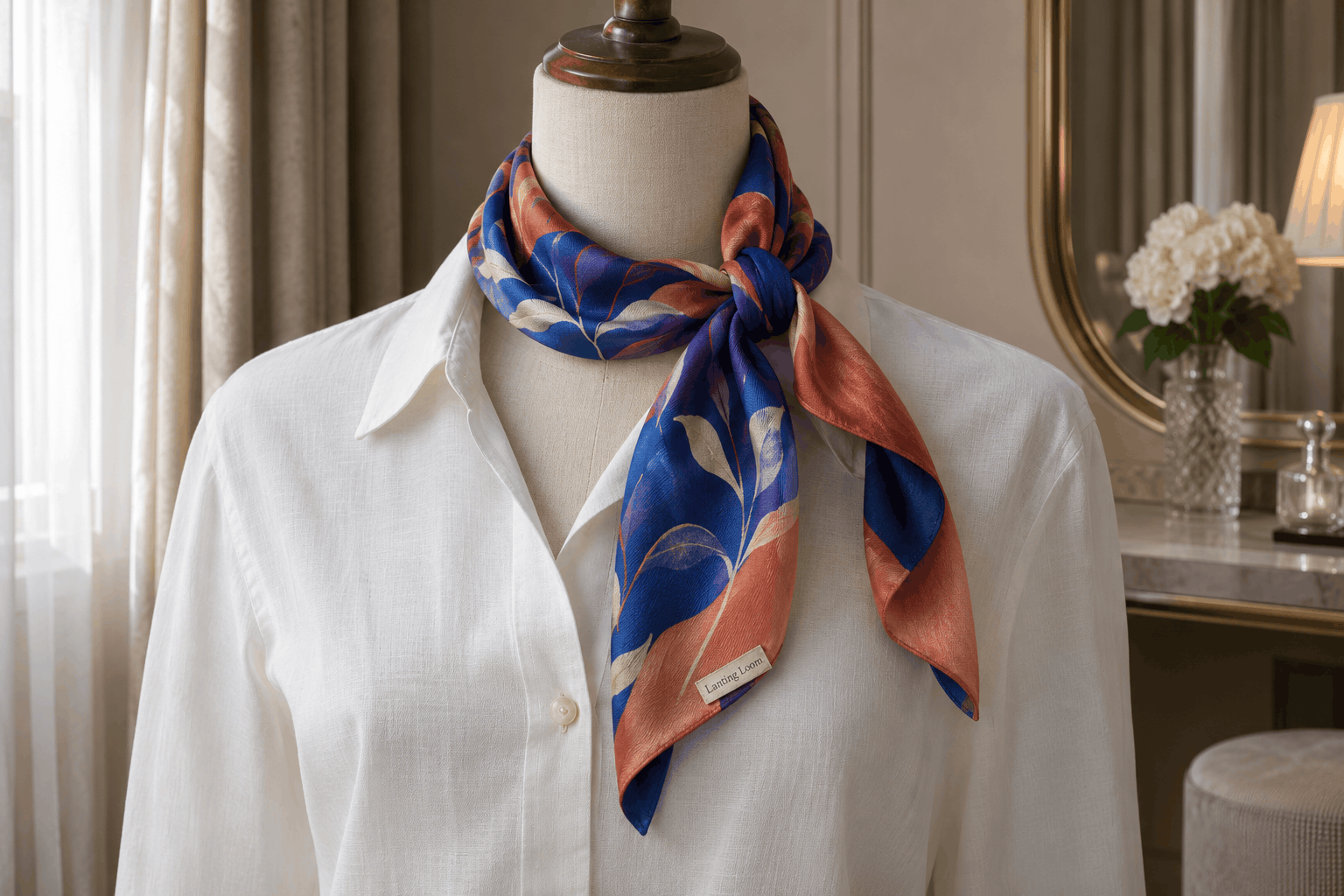
Will a Double-Sided Scarf Feel Thicker?
Not necessarily. Printing on both faces does not automatically double the fabric’s weight or thickness.
Ask about the weave and fabric weight, as well as whether the scarf contains one layer or two. If a seller provides a momme figure, treat it as information about fabric weight rather than a rating of printing quality.
Finishing can also influence how the textile feels. The most useful check is to handle the scarf where possible, or request a short video showing how it falls and folds.
Similarly, a satin surface may reflect light differently from its reverse because of the weave. A difference in sheen is not the same thing as a difference in printing method.
What to Check Before Buying Online
1. Request photographs of both faces
Look for a full view of each side and a close-up with one corner turned over. Ideally, both should be photographed under the same lighting so that the comparison is meaningful.
A product gallery showing several angles of the front does not necessarily show the reverse.
2. Read the construction wording carefully
“Double-sided print” is more specific than “beautiful on both sides.” If the description is unclear, ask whether both faces are printed or whether the reverse appearance comes from print-through.
3. Check whether the two sides are meant to match
Some designs intentionally use different colours or artwork. Where matching borders or motifs are part of the specification, ask for close-ups showing their alignment.
Do not assume a different reverse is a printing error if it is an intentional feature of the design.
4. Look at text and directional artwork
Lettering and other directional details may appear reversed through a single-sided print. If readable text on both faces matters to you, request photographs and explicit confirmation. Double-sided printing alone does not tell you how every element has been arranged.
5. Confirm dimensions and care
A beautiful reverse will not compensate for a scarf that is too small for your intended style. Check dimensions, material, care instructions and the seller’s returns information before deciding.
Is Double-Sided Printing Worth Paying More For?
It may be worth prioritising if you often wear loose knots, flowing tails or open drapes and enjoy seeing a deliberately finished print on both faces.
It may be less important if you usually fold your scarf into a narrow band, prefer the softer look of a lighter reverse or simply love a particular single-sided design.
Compare scarves with similar dimensions, materials and finishing before attributing a price difference to printing alone. There is no universal premium that proves a scarf has been printed on both sides.
A Lanting Loom Example
Azure Arabesque is described as an 88 × 88 cm scarf made from 100% mulberry silk twill with double-sided printing. Its pale aqua, cobalt, periwinkle and turquoise palette offers a cool-toned option for everyday styling.
This is a specification for that individual design, not a statement that every scarf in the collection uses the same process. Always read the details for the piece you are considering.
How to Care for Either Type
Follow the care label supplied with your scarf. Double-sided printing does not establish that a scarf is washable, more colourfast or resistant to fading.
Keep silk away from sharp jewellery and rough fasteners. Untie it gently after wearing and store it clean and dry, away from prolonged direct sunlight.
For cleaning and storage guidance, read our silk care guide.
Frequently Asked Questions
Does a single-sided silk scarf have a white back?
Not necessarily. The design may show through strongly or appear as a lighter version on the reverse. Ask for photographs of the actual scarf rather than assuming its appearance from the printing description.
Does visible colour on the back prove double-sided printing?
No. Colour can penetrate the fabric from a print applied to one face. The seller’s construction details should clarify whether both faces were deliberately printed.
Does double-sided mean two different designs?
No. The two faces may use the same design, different colourways or different artwork. Check the individual product.
Are double-sided silk scarves always reversible?
They may be intended for styling with either face outward, but ask how the term is being used. Labels, hem direction and artwork can still make the two faces look different.
Is a pale reverse a sign of fake silk?
No. Reverse-side colour is not a reliable test of fibre composition. Check the material specification and buy from a seller who provides clear product information.
Choose the Scarf You Enjoy from Every Angle
The best choice is one whose design, fabric and finish work for the way you dress. Double-sided printing offers possibilities when both faces show, while a single-sided scarf can be equally appealing when its reverse suits the design and your expectations.
Explore Lanting Loom’s silk scarves, compare the specifications and take a moment to look beyond the front photograph. A scarf is worn in folds and movement, and those details deserve consideration too.
