

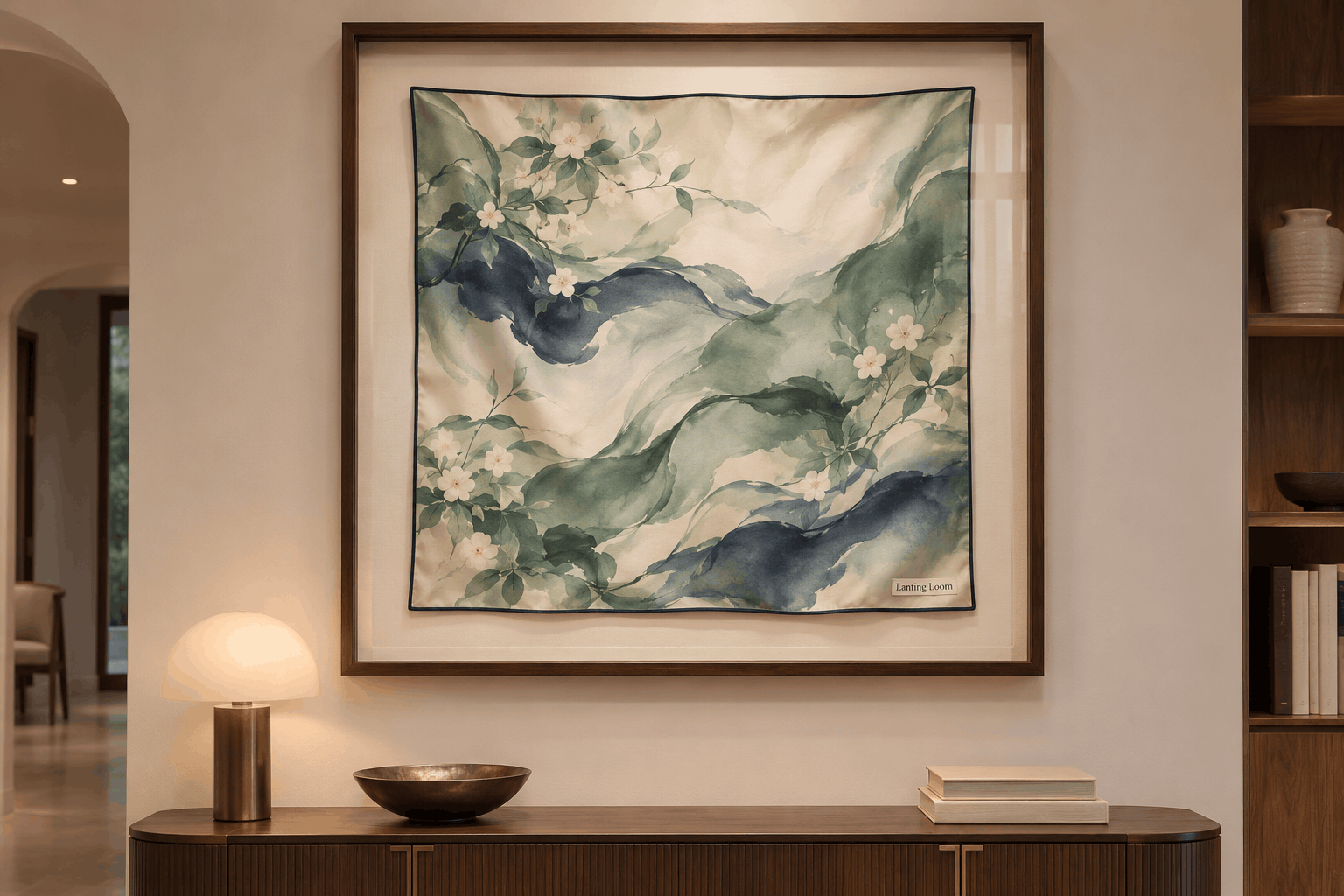
A silk scarf can be beautiful enough to live beyond the wardrobe. Opened out, its borders, colours and central composition become a complete artwork—details that may disappear when it is folded around the neck.
Framing can make those details part of your home. The challenge is to display the scarf without treating delicate silk like a paper poster or stretching it like canvas.
To frame a silk scarf with preservation in mind, have its condition assessed, choose a suitable supported mount, keep ordinary glazing away from the fabric and control light exposure. Avoid adhesive mounting, tight stretching and methods that make future removal difficult.
No display method can promise zero change over time. The aim is to reduce damage and preserve the option of removing the scarf later.
Decide Whether to Frame the Original
Start with what the scarf means to you. Is it a contemporary piece you enjoy wearing, a family keepsake, a collectible design or an already fragile textile?
For an irreplaceable scarf, consider whether displaying a photograph or a reproduction you have permission to make would meet your decorating goal. This allows the original to remain in suitable storage.
If you want to display the original, tell the framer whether you hope to wear it again. That preference should be discussed before any mounting work begins.
1. Check the Scarf’s Condition
Photograph the front, reverse, corners and any existing marks. Record its dimensions while it lies naturally, without pulling it square.
Look for tears, loose hems, brittle areas, stains or old adhesive. A textile conservator should assess a fragile or damaged scarf before framing. The Canadian Conservation Institute’s textile-framing guidance identifies these conditions as reasons to seek specialist advice.
Do not wash or steam a scarf simply because it is about to be framed. For a sound contemporary piece, follow its care label; for a vintage, stained or uncertain piece, ask the conservator what preparation is appropriate.
2. Plan the Layout Before Ordering the Frame
Decide which way the design should face and whether you want the full border and hem visible. A generous margin can give an intricate composition breathing room, while a narrower margin can suit a quieter design.
Make layout decisions with photographs or a paper template where possible. This reduces repeated handling of the silk.
For example, an 88 cm scarf with a proposed 5 cm visible margin on each side would occupy roughly 98 cm before allowing for the frame’s construction. This is a layout estimate, not a frame-ordering specification. Let the framer confirm the final measurements and depth.
Do not stretch an irregular scarf to fit a perfectly square opening. Small variations in shape can be accommodated in the presentation.
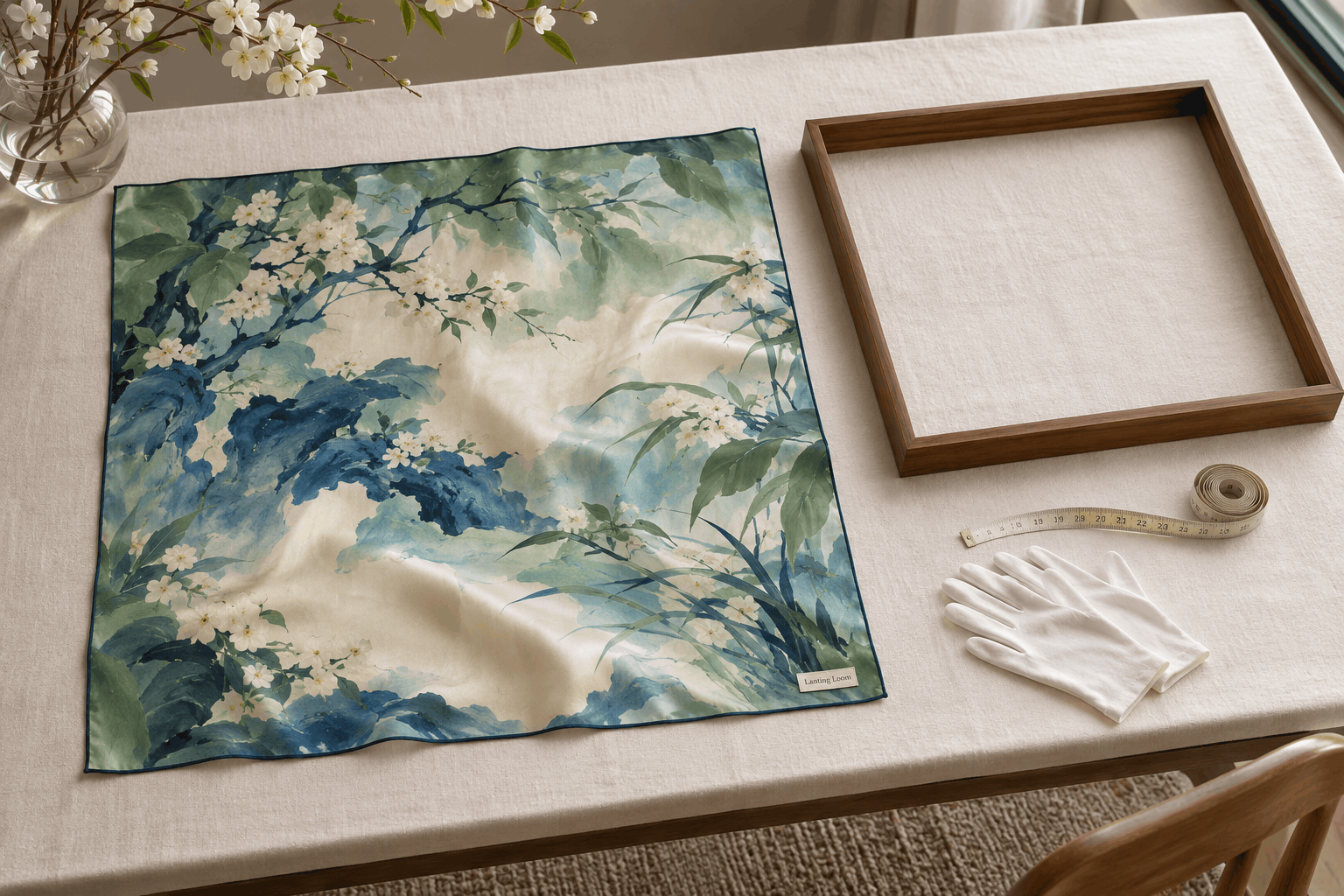
3. Choose a Supported, Removable Mount
The mounting method matters more than the colour of the frame.
A fabric-covered rigid support can distribute the scarf’s weight. For a textile in suitable condition, carefully placed stitches may attach it to the support fabric. The position, spacing and tension must suit the particular scarf; this is not simply a matter of sewing down four corners.
The Canadian Conservation Institute describes this approach in its guide to mounting small, light, flat textiles.
Discuss the following with your framer:
- How will the scarf’s weight be supported across its area?
- Is the fabric strong enough for the proposed attachment method?
- Can the mount be removed later without cutting or bonding the scarf?
- Will the mount preserve the natural shape of the border and rolled hems?
“Removable” does not mean that every intervention is risk-free. Fine silk still needs careful handling, and removal should be carried out by someone who understands the mount.
What if you do not want any stitches?
Ask a textile conservator about the options. Specialist pressure mounts exist, but they are carefully designed systems for particular textiles. They are not equivalent to sandwiching a scarf tightly between two panes in a ready-made frame.
The George Washington University Museum and The Textile Museum’s display guidance explains why mounting choices depend on the textile’s condition and why pressure mounting requires specialist assessment.
4. Specify Materials Suitable for Textile Conservation
Ask for the actual materials to be listed in the quotation. “Archival” is more useful when it is supported by a clear specification for the support, covering fabric, backing and spacers.
The scarf should not touch ordinary cardboard, unsealed wood or adhesive-coated mounting board. Avoid glue, double-sided tape, staples and tacks applied directly to the silk.
Prepared cotton or cotton-blend support fabric may be appropriate, but the colour, stability and preparation should be selected for the textile. A decorative fabric that looks attractive behind the scarf is not automatically suitable for prolonged contact.
Wood can still be chosen for the outer frame. The important distinction is between the visible frame and the materials touching or surrounding the scarf inside the mounting package.
5. Keep Protective Glazing Clear of the Silk
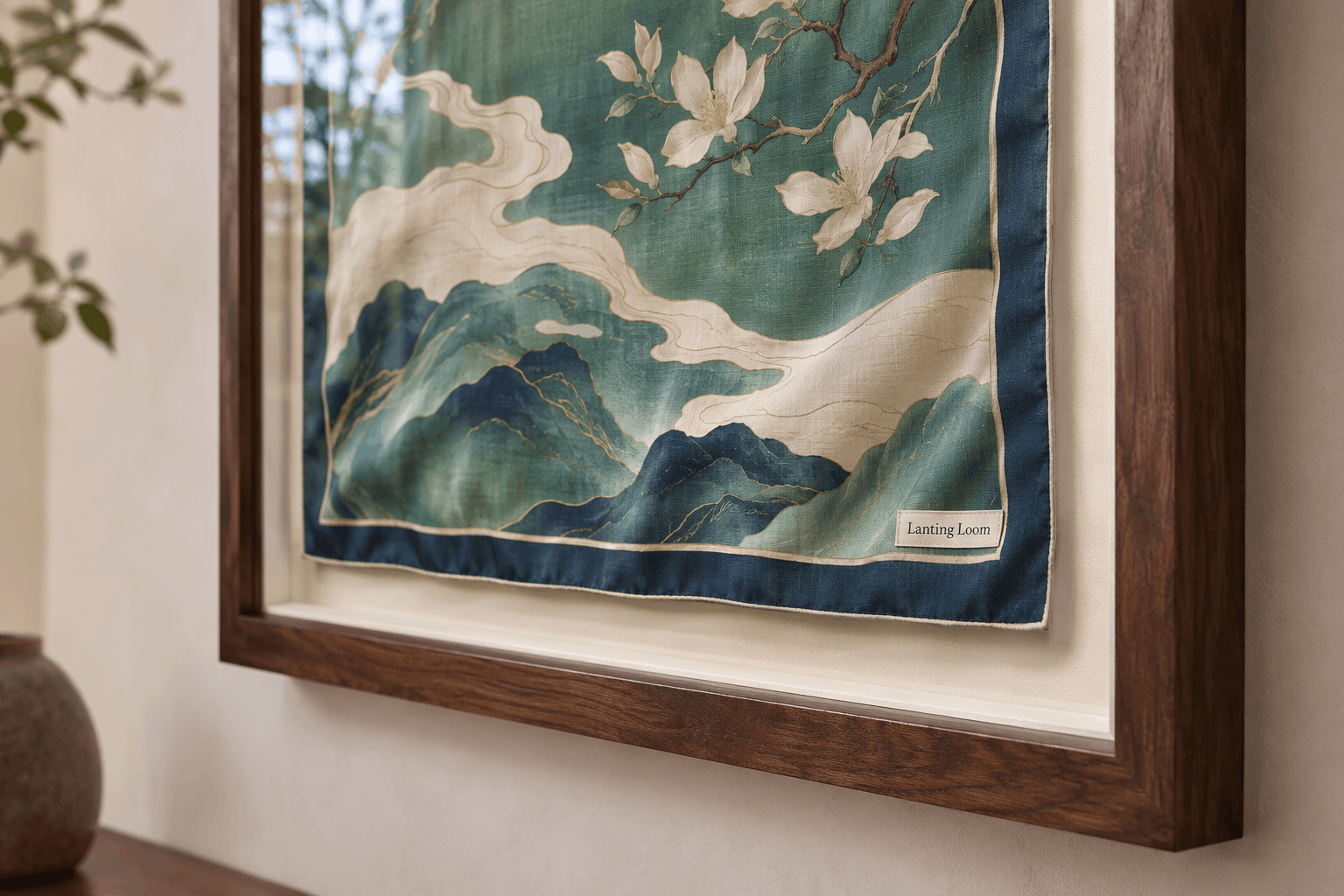
Glazing is the transparent glass or acrylic in front of the artwork. In a conventional supported mount, spacers or a suitable window mat keep it away from the scarf.
This clearance helps avoid flattening the textile and reduces problems associated with direct contact. A shallow poster frame may not provide enough room for the complete mount.
Both glass and acrylic have practical trade-offs. Acrylic is lighter and less prone to shattering, but can scratch and attract loose fibres through static. Glass is heavier and can break. Ask the framer to choose the appropriate product for the frame’s size and the scarf’s condition.
Request UV-filtering glazing, and ask for its specification. Anti-reflective appearance and UV filtration are different properties; one does not automatically establish the other.
6. Choose the Wall Carefully
Light damage accumulates and cannot be undone. UV filtration helps with part of the problem, but visible light can still fade dyes and weaken fibres.
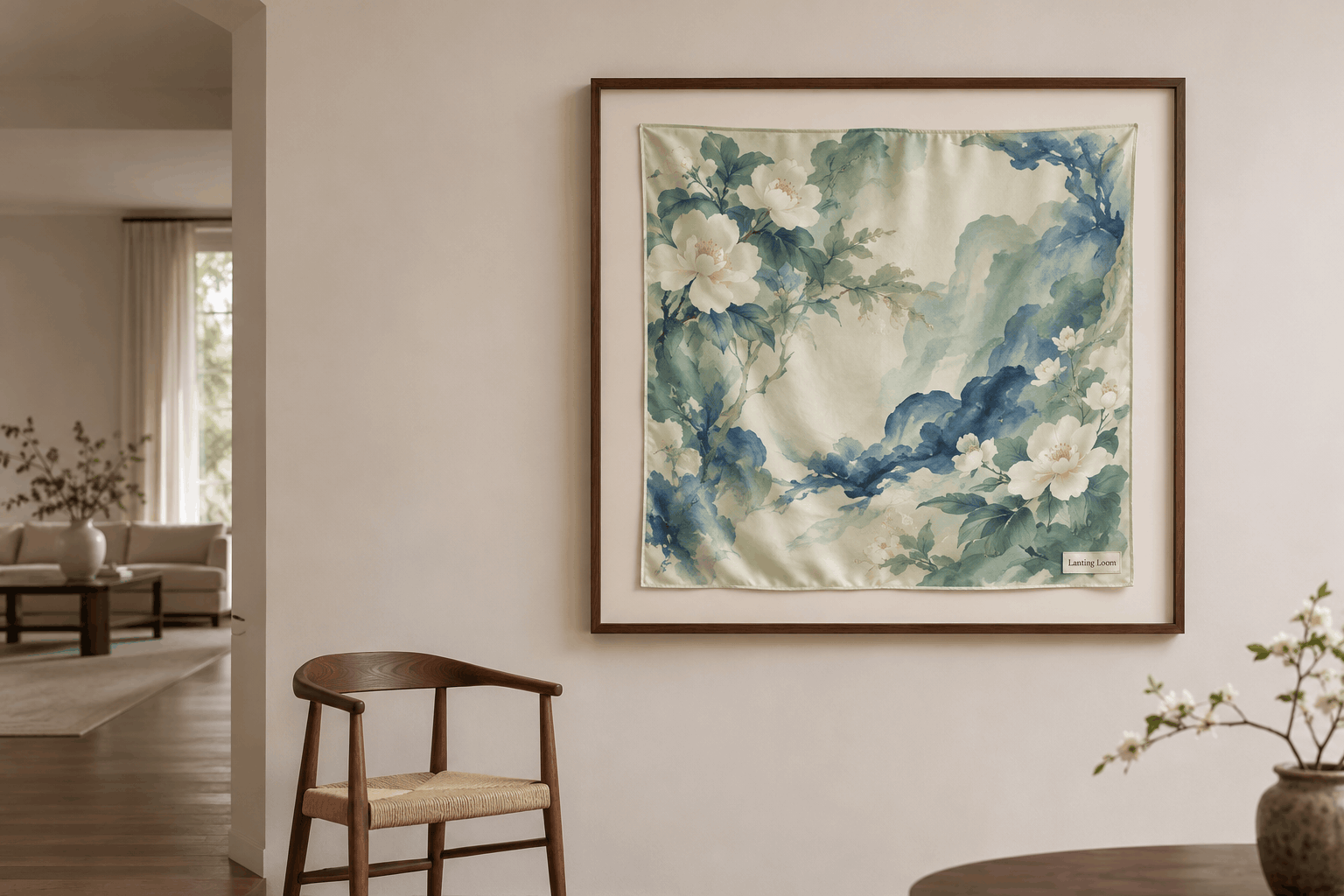
Choose a location away from direct sunlight and strong lighting. Observe the wall at different times of day before hanging the frame, and remember that the sun’s position changes with the seasons.
Keep the display away from radiators, fireplaces and damp areas. A bathroom or steamy kitchen is generally a poor setting for a delicate textile.
Turn off unnecessary lighting and consider limited display periods rather than leaving an important scarf exposed permanently. Time in dark storage reduces further exposure; it does not reverse fading that has already occurred.
The Canadian Conservation Institute’s guidance on textiles and their environment explains the relationship between light intensity and exposure time.
A Brief You Can Give Your Framer
I would like to display this silk scarf while preserving the option of removing it later. Please assess its condition, explain the mounting method and specify the support materials and glazing. I do not want adhesive applied to the scarf, tight stretching or trimming. Please allow room for its natural shape and hems, and advise whether a textile conservator should be involved.
Ask to review the proposed layout before work starts. Keep the framing specification and original condition photographs with your records.
Common Shortcuts to Avoid
| Shortcut | A better approach |
|---|---|
| Buying a frame from the scarf’s nominal size alone. | Measure the actual piece and plan the mount, margins and depth together. |
| Pulling the scarf tight to remove every ripple. | Respect its natural shape and let a specialist assess persistent creases. |
| Using self-adhesive board or tape on the silk. | Request a supported mounting method suitable for later removal. |
| Assuming a deep “shadow box” is automatically protective. | Check the attachment method and internal materials as well as the depth. |
| Choosing a sunny wall because the glazing filters UV. | Control visible light and display duration too. |
Can You Frame a Silk Scarf Yourself?
You can plan the colour scheme, photograph the scarf, measure the available wall space and prepare a layout template yourself.
Mounting fine silk is the more demanding part. If preserving the scarf matters, use a conservation framer experienced with textiles. For an antique, fragile or particularly valuable piece, start with a textile conservator.
Ask to see relevant work and request an explanation of the proposed method. Experience framing paper prints alone does not establish experience mounting silk.
After the Frame Is Hung
Have the frame installed with fixings appropriate to its weight and the wall. Periodically compare the display with your original photographs and look for slipping, new distortion, condensation or other changes.
If you notice a problem, contact the framer or conservator rather than opening the frame and adjusting the scarf yourself.
For an unframed scarf awaiting assessment or display, follow its care instructions and our silk care guide.
Frequently Asked Questions
Can I wear the scarf again after framing?
Possibly, if its condition and mounting method allow safe removal. Explain this goal before framing. Display exposure and handling can still affect the fabric, so future wear cannot be guaranteed.
Does UV-protective glass stop fading?
No. It reduces UV exposure, but visible light remains a source of damage. Placement, light levels and display duration still matter.
Should I iron the scarf before framing?
Do not press it automatically. Follow the care label for a sound contemporary scarf, and ask a conservator about a fragile or valuable piece. Avoid flattening rolled hems or forcing out creases with heat.
Is a floating frame safe for silk?
The name describes an appearance, not a conservation method. Ask how the scarf is supported and whether it is compressed between glazing or attached with adhesive.
How much does scarf framing cost?
Request a written quotation. Size, glazing, mount preparation, frame construction and any conservation work all affect the price. Compare the specifications as well as the total.
Let the Artwork Show Without Sacrificing the Scarf
A considered frame can reveal a scarf’s full composition while keeping its textile character visible. The strongest starting point is a clear mounting plan, suitable materials and a realistic approach to light exposure.
Explore Lanting Loom’s silk scarves for designs to wear and appreciate. If you choose one for wall display, arrange the framing around the actual piece rather than assuming every scarf needs the same treatment.
