

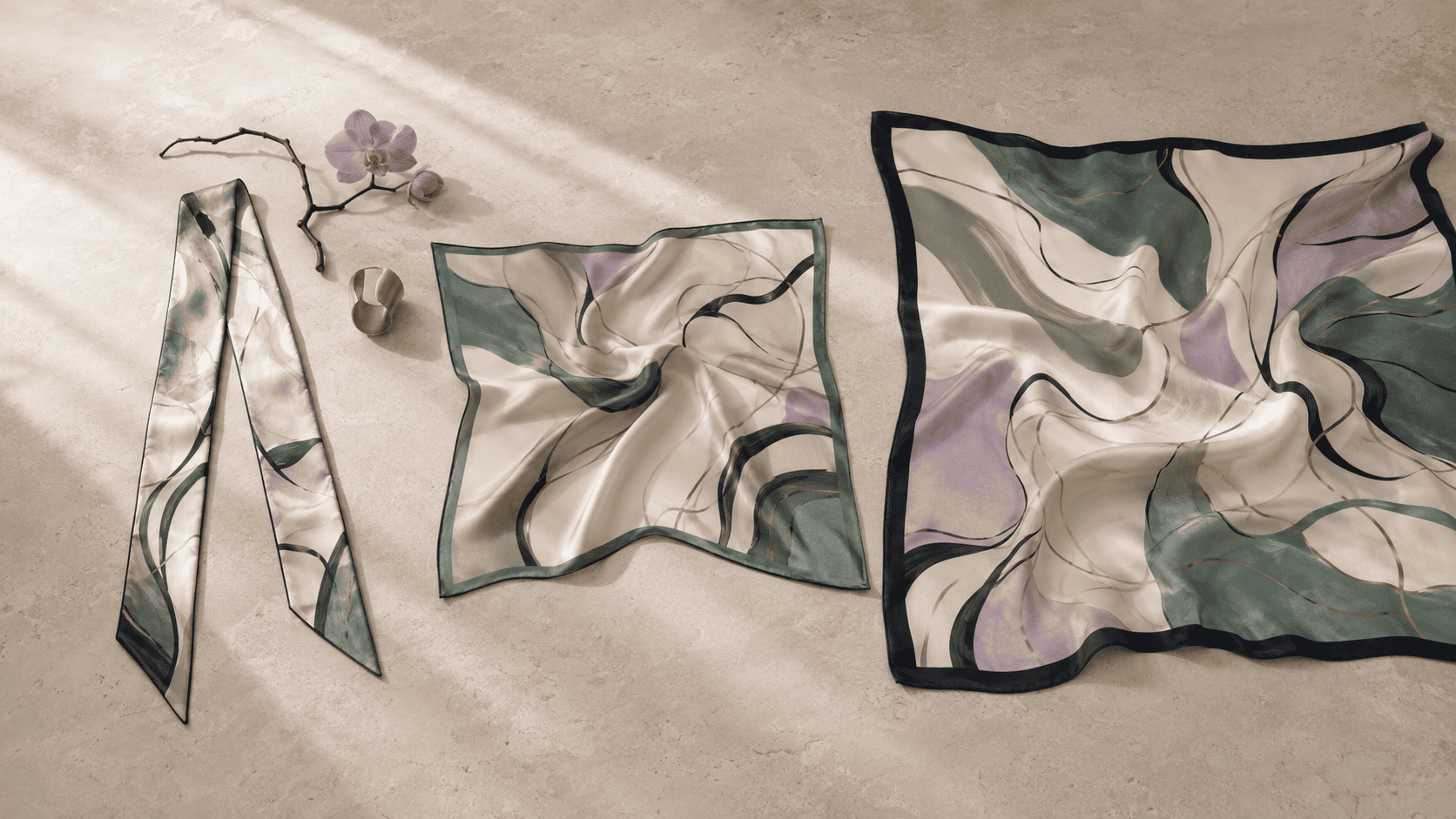
A silk scarf’s size determines far more than how much fabric you receive. It affects the knots you can create, how the design appears when folded, how the scarf balances with your outfit, and whether it feels like a subtle accent or the centrepiece of your look. The best size is therefore the one that suits how you genuinely plan to wear it.
For most first-time buyers, a medium square measuring approximately 65–70 cm (26–28 in) is the most versatile choice. A narrow twilly is ideal for small accents, while a large 88–90 cm (35 in) square offers greater styling range and visual impact.
Silk scarf sizes at a glance
| Scarf format | Common dimensions | Best for | Overall effect |
|---|---|---|---|
| Twilly or ribbon scarf | About 5 × 85 cm (2 × 33 in) | Handbags, hair, wrist and slim neck knots | Delicate accent |
| Small square | About 45–55 cm (18–22 in) | Neckerchiefs, hair ties and compact knots | Neat and understated |
| Medium square | About 65–70 cm (26–28 in) | Neck styles, headwear and everyday dressing | Balanced and versatile |
| Large square | About 88–90 cm (35 in) | Shoulder drapes, fuller neck knots, tops and belts | Expressive statement |
| Oversized square or rectangle | About 100–140 cm (39–55 in) | Wraps, travel layers and generous draping | Dramatic and enveloping |
These ranges are a guide, not a universal standard. Always check the exact product dimensions. Usable volume also depends on shape, fabric weight and finish: crisp silk twill holds a sculptural knot, while lighter silk falls closer to the body.
Choose the size according to how you will wear it
Begin with your intended styling rather than the number on the label. If you want one scarf to work in several ways, list the two or three styles you would use most often and select a size that can accommodate all of them.
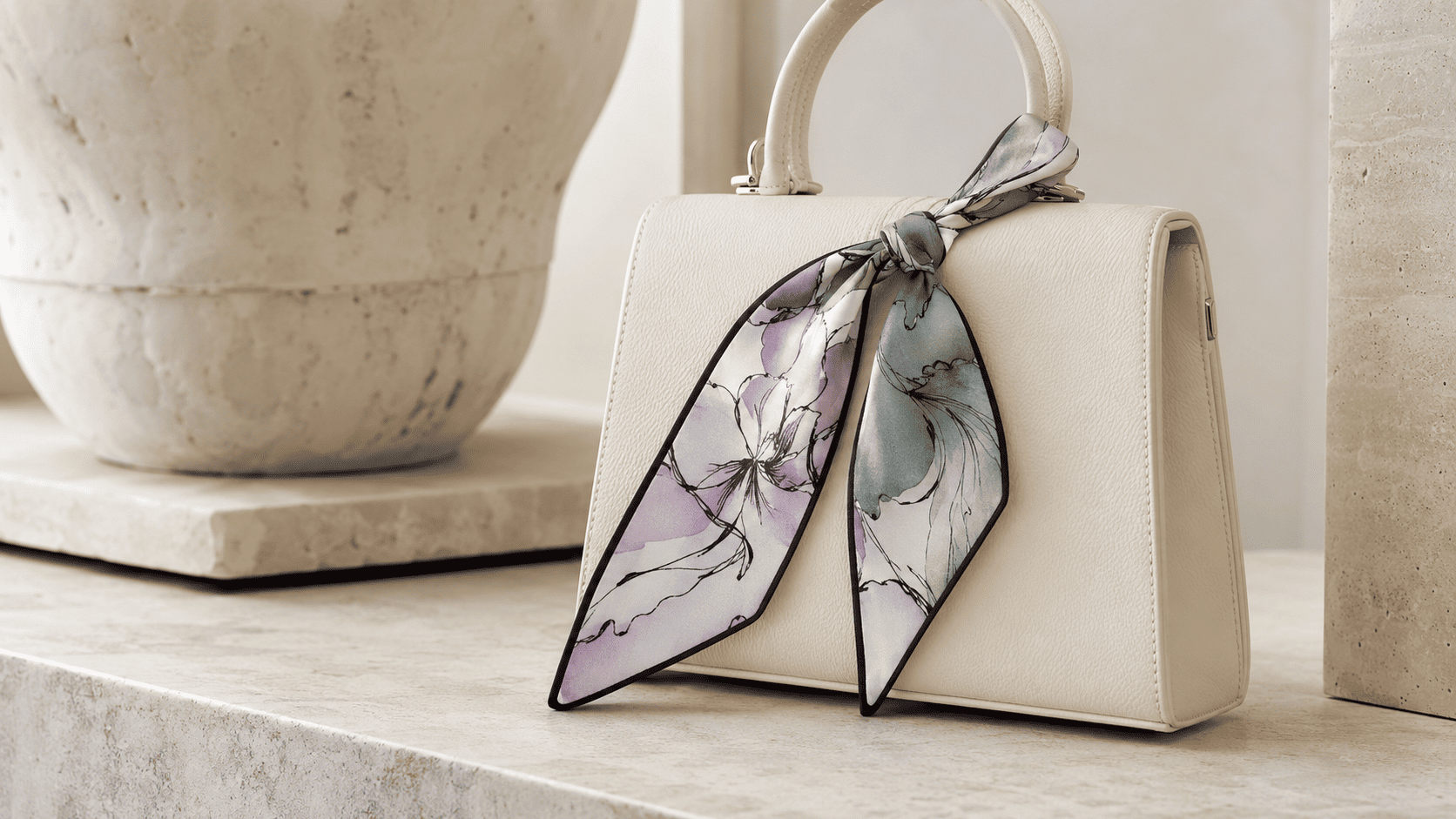
For handbags, wrists and small accents
Choose a twilly or narrow ribbon scarf. Its elongated shape wraps cleanly around a handbag handle, ties around a ponytail, or forms a slim neck bow without bulky layers. It is also a thoughtful entry point for someone who enjoys colour but is not accustomed to wearing a full square scarf.
A small square can perform some of the same roles, but its shorter corners create a different result. It is better for a compact neckerchief, a small hair tie or a decorative knot, whereas a twilly gives longer, more graceful ends.
For an easy everyday neck scarf
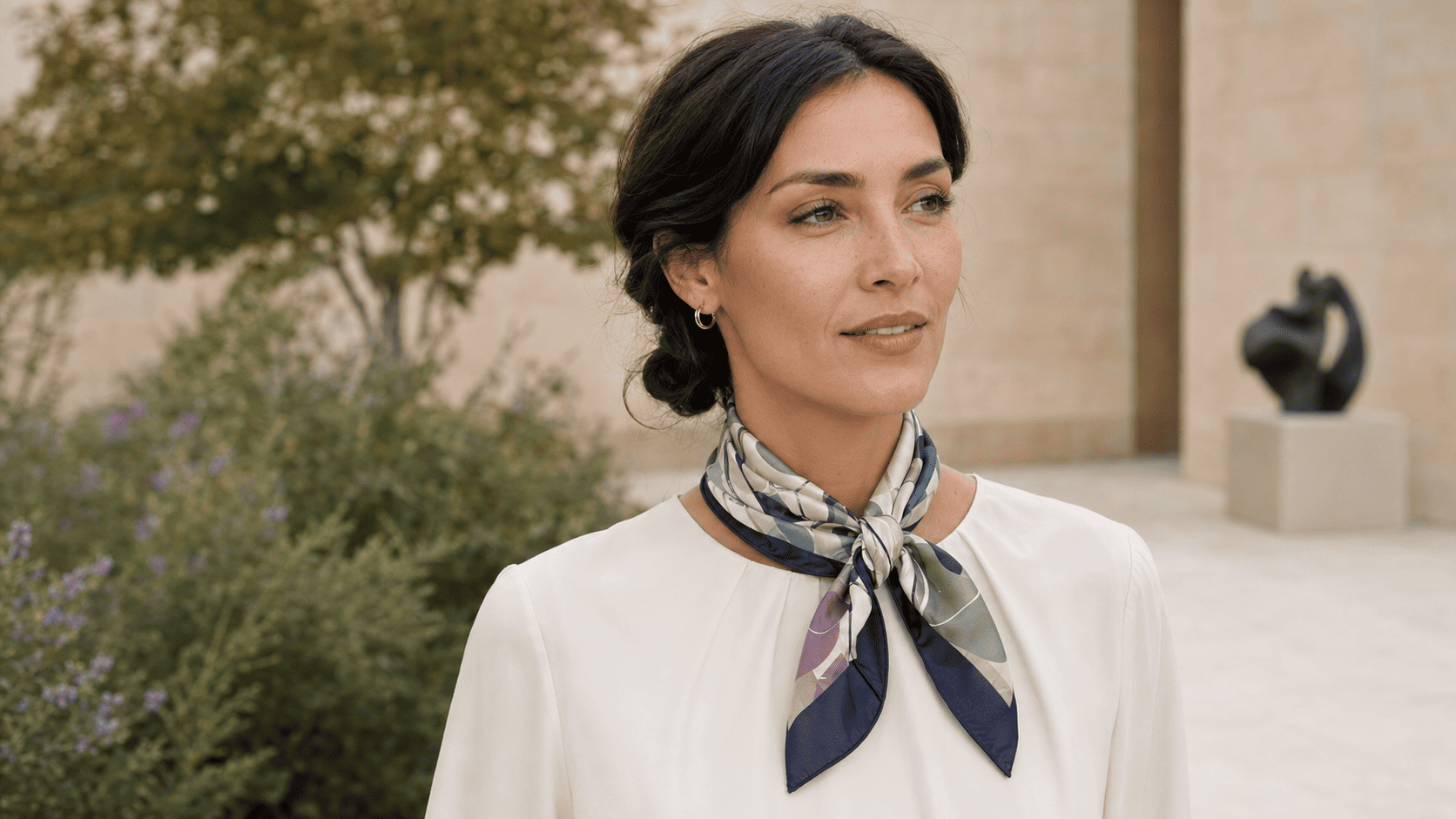
A 45–55 cm square sits close to the neck and works well with shirts, knitwear and simple dresses. Fold it diagonally, roll it into a band and finish with a small knot. The result is polished without feeling formal. Keep in mind that this size generally does not leave enough length for elaborate bows or multiple wraps.
For more flexibility, move up to a 65–70 cm square. It can be folded into a triangle, tied at the front or side, passed through a scarf ring, or worn as a relaxed band. This is why a medium square is often the best all-purpose silk scarf size.
For shoulder drapes, tops and statement styling
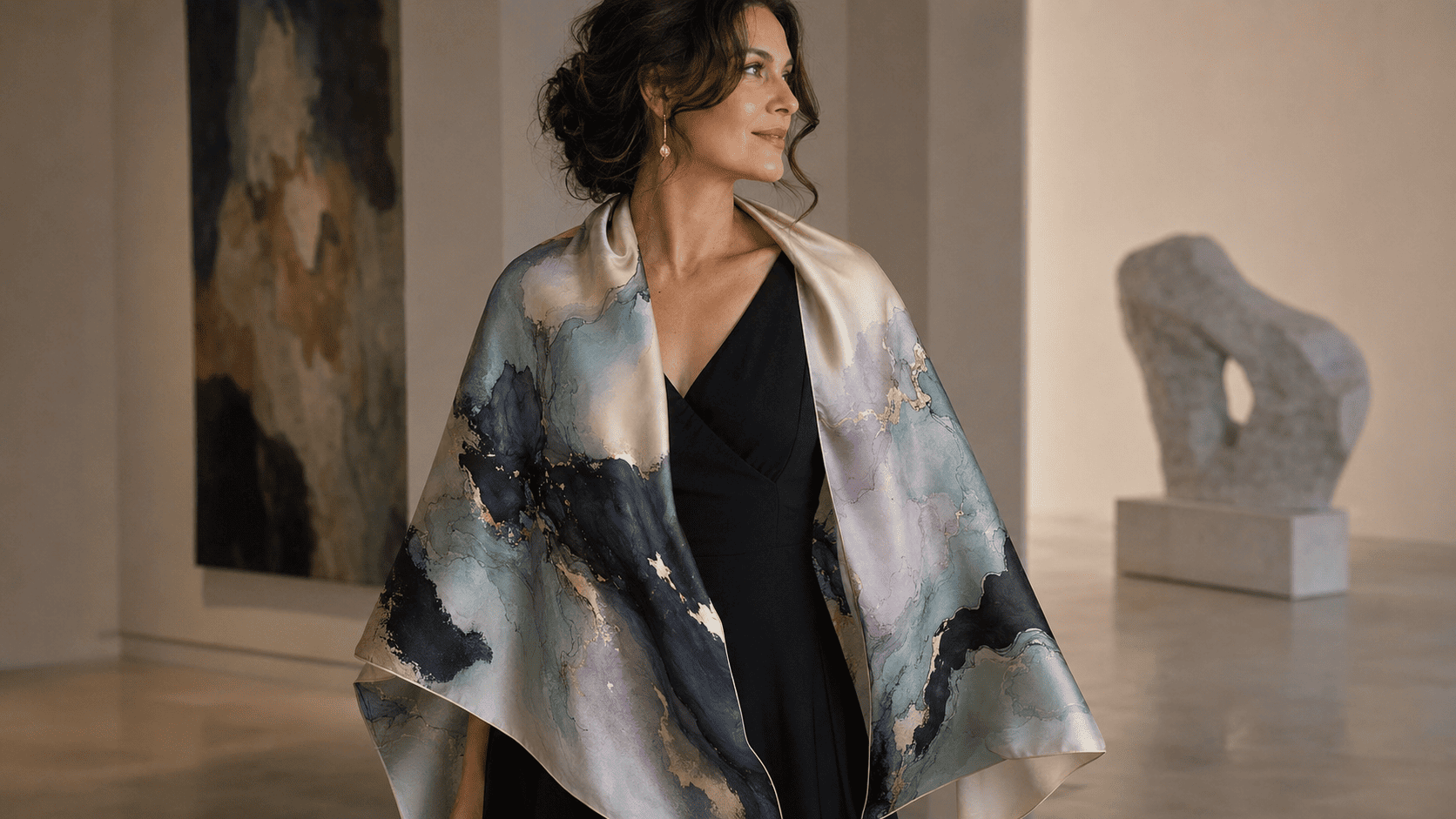
Choose an 88–90 cm square when you want the artwork and colour story to remain visible. The larger surface can drape over the shoulders, form a generous triangular front, wrap around the torso, or create fuller knots. It also gives a printed composition room to unfold instead of reducing it to small fragments.
An oversized scarf above 100 cm is closer to a light wrap. It can add coverage on a cool evening or while travelling, but the extra fabric may feel excessive for a small neck knot. If portability matters, compare the folded size and fabric weight as well as the open dimensions.
Consider your proportions—but follow your preferred effect
There is no rule that petite people must wear small scarves or that taller people need large ones. A smaller scarf creates a precise focal point; a large scarf produces movement and presence.
If you have a petite frame and want a restrained look, a small or medium square may feel naturally balanced. If you love dramatic draping, a large square can be equally elegant—keep the rest of the outfit simple and allow the silk to lead. On a taller or broader frame, a medium scarf offers a crisp accent, while a large or oversized design creates a more generous visual line.
Neck length and hairstyle can also influence comfort. A compact knot sits higher and may suit an open neckline, while a longer folded scarf can draw the eye vertically. The most useful question is not “What am I allowed to wear?” but “Do I want the scarf to whisper, balance or make a statement?”
Account for knots, folds and scarf rings
Every fold reduces the scarf’s visible width, and every knot consumes length. A flat triangular drape needs less fabric than a double wrap or full bow. If a style tutorial uses a 90 cm square, recreating it with a 50 cm square may be impossible even when the folding steps are identical.
A scarf ring can make a medium or large scarf easier to manage because it secures the fabric without using as much length as a knot. Check that the ring opening is suitable for the scarf’s thickness, and feed silk through gently rather than pulling against a tight edge. Jewellery with rough joins or sharp details can snag delicate fibres.
Think about pattern scale and the finished look
The same artwork behaves differently at different sizes. On a twilly, the border and narrow bands of colour are often most visible. On a medium square, corners, central motifs and contrasting edges can interact through a knot. On a large square, the composition can be appreciated both as wearable art and as a field of colour when draped.
Before buying, look for photographs of the scarf worn as well as laid flat. A flat product image reveals the complete design; a styling image shows which colours and motifs appear after folding. If you tend to wear neutral clothing, consider whether the folded sections provide the accent colour you want near your face.
What size is best for a silk scarf gift?
When you do not know the recipient’s styling habits, a 65–70 cm square is usually the safest gift. It feels substantial and supports several approachable styles without the volume of a large wrap.
A twilly is ideal for a smaller gesture, a travel-friendly gift or someone known for carrying structured handbags. Choose a large 88–90 cm square for a milestone, collector or confident scarf wearer, especially when the design story is central to the gift. A simple styling guide and a scarf ring can make any size feel more accessible.
A simple final checklist
- Choose a twilly for handbags, wrists, ponytails and narrow neck bows.
- Choose a 45–55 cm square for a neat neckerchief or compact hair style.
- Choose a 65–70 cm square for the strongest balance of versatility and ease.
- Choose an 88–90 cm square for shoulder drapes, statement knots and wearable-art impact.
- Choose an oversized scarf when you primarily want a wrap or light layer.
When two sizes appeal equally, choose according to the style you would wear tomorrow—not the most ambitious style you might try someday. The right silk scarf should invite use. Its dimensions should support your wardrobe, reveal the design beautifully and make tying it feel intuitive rather than complicated.
Frequently asked questions
What is the most versatile silk scarf size?
A medium square of approximately 65–70 cm (26–28 in) is the most versatile option for many people. It can be worn around the neck, in the hair, with a scarf ring or as a decorative accessory without creating too much bulk.
Is a 90 cm silk scarf too large for everyday wear?
No. A 90 cm square can be folded into a narrow band for everyday neck styling, then opened into a shoulder drape or top. It contains more fabric than a medium square, so people who prefer minimal knots may find 65–70 cm easier.
What size silk scarf is best for tying around a handbag?
A twilly measuring roughly 5 × 85 cm is usually the easiest choice. Its narrow shape wraps around a handle neatly and leaves elegant ends without requiring repeated folding.
Should I measure a square scarf along the edge or diagonally?
Product dimensions normally refer to the length of one straight edge, not the diagonal. Because handmade or hand-finished textiles can vary slightly, treat listed measurements as approximate unless the seller states otherwise.