

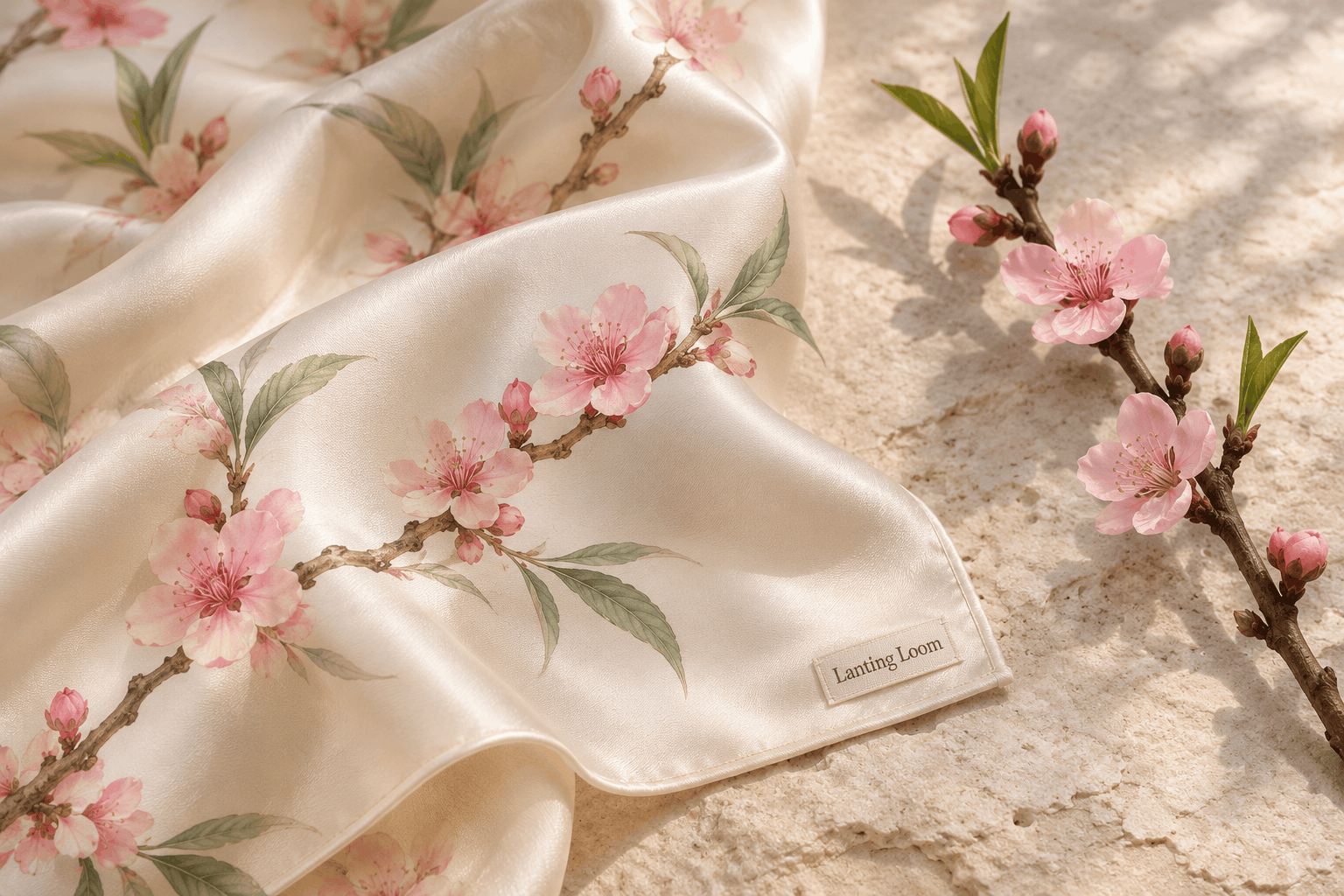
A branch of pink peach blossoms can bring a painting to life with very little: a curve of dark wood, a cluster of flowers and enough open space to suggest spring air. Yet its significance in Chinese art extends beyond its appearance.
Peach blossom meaning in Chinese art can include love and marriage, spring vitality and the imagined peace of a world apart. The interpretation depends on the surrounding imagery, the literary reference and the particular work.
For contemporary design and gifting, these associations also offer a thoughtful language of renewal and new beginnings. Understanding their sources helps us appreciate the blossom without reducing it to a single decorative message.
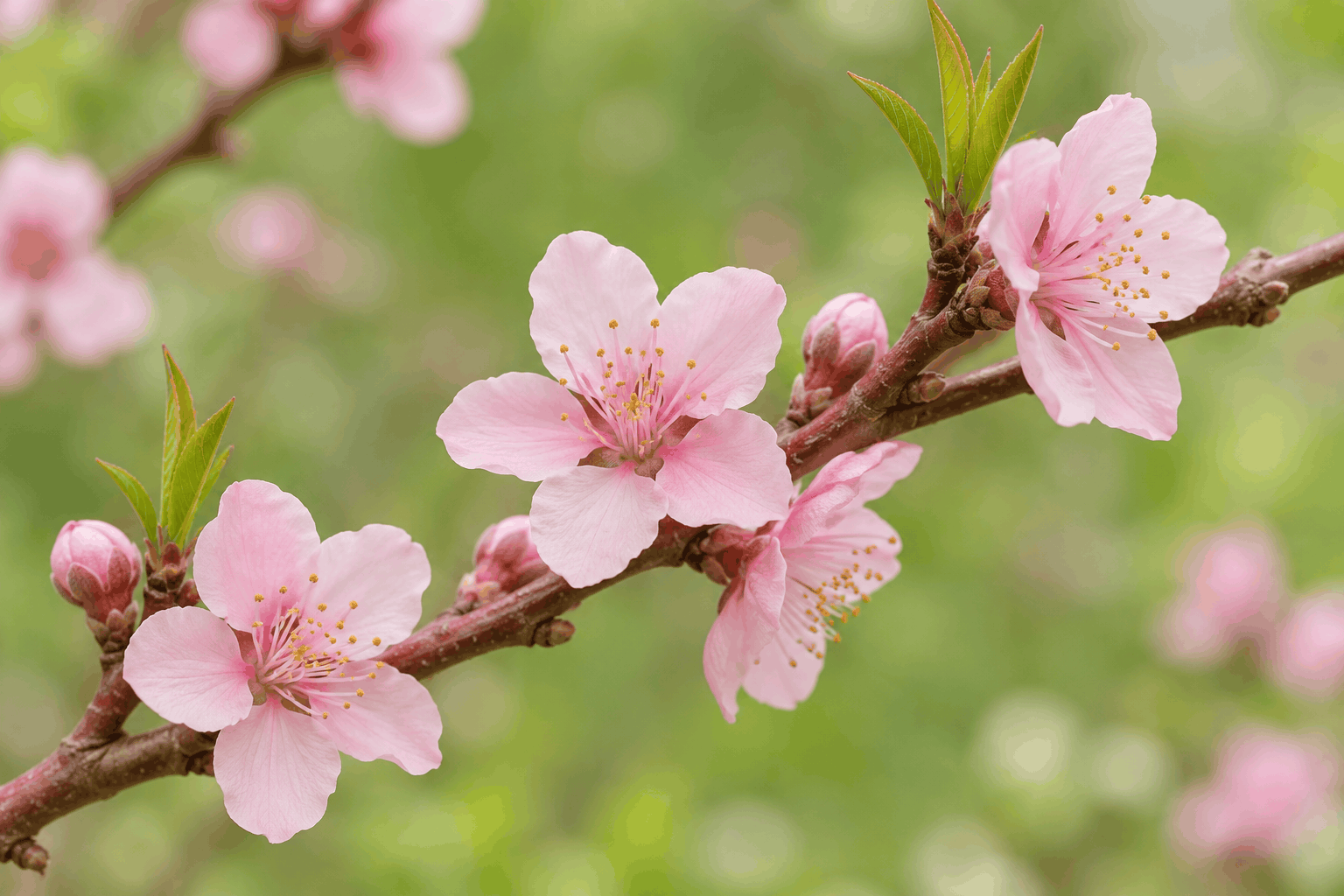
What Do Peach Blossoms Symbolise?
Peach blossoms, known as taohua (桃花), belong to several overlapping traditions. A flowering branch in a wedding-related image may suggest something different from a grove beside a mountain stream.
| Association | Cultural context | How to understand it |
|---|---|---|
| Love and marriage | The poem Tao Yao in the Book of Songs and later visual interpretations | Blossoming beauty connected with marriage and hopes for family harmony |
| Spring and vitality | The seasonal image of a tree coming into flower | A sense of life returning and the pleasure of a changing season |
| Peaceful refuge | Tao Yuanming’s Peach Blossom Spring | An imagined community sheltered from the troubles of the outside world |
| New beginnings | A contemporary interpretation of spring renewal | A personal wish for a hopeful next chapter, rather than a fixed meaning in every historical work |
| Longevity and immortality | The wider symbolism of the peach tree, especially its fruit | A related tradition that should be distinguished from blossom imagery |
Love and Marriage: The Peach Tree in the Book of Songs
One important literary source is Tao Yao (桃夭), a poem in the Shijing, often called the Book of Songs or Book of Poetry.
The poem brings together the image of a flourishing peach tree and a young woman entering marriage. Across its verses, flowers, fruit and abundant leaves accompany wishes for a harmonious household.
You can read the Chinese text alongside James Legge’s historical translation through the Chinese Text Project’s edition of Tao Yao.
This connection helps explain why peach blossoms can carry matrimonial associations in art. It is more precise than saying that every pink blossom simply means romantic love: the literary background includes marriage, household life and flourishing together.
A museum example: butterflies and peach blossoms
The University of Michigan Museum of Art holds an 1832 work titled Butterflies and Peach Blossoms, a fan mounted as an album leaf.
The museum connects its peach blossoms with the Book of Songs and explains how the combination with butterflies suits a wedding or engagement gift.
The pairing is important. A motif gains meaning through its neighbours, and the complete composition can communicate more than an isolated flower.
Spring Renewal and the Idea of New Beginnings
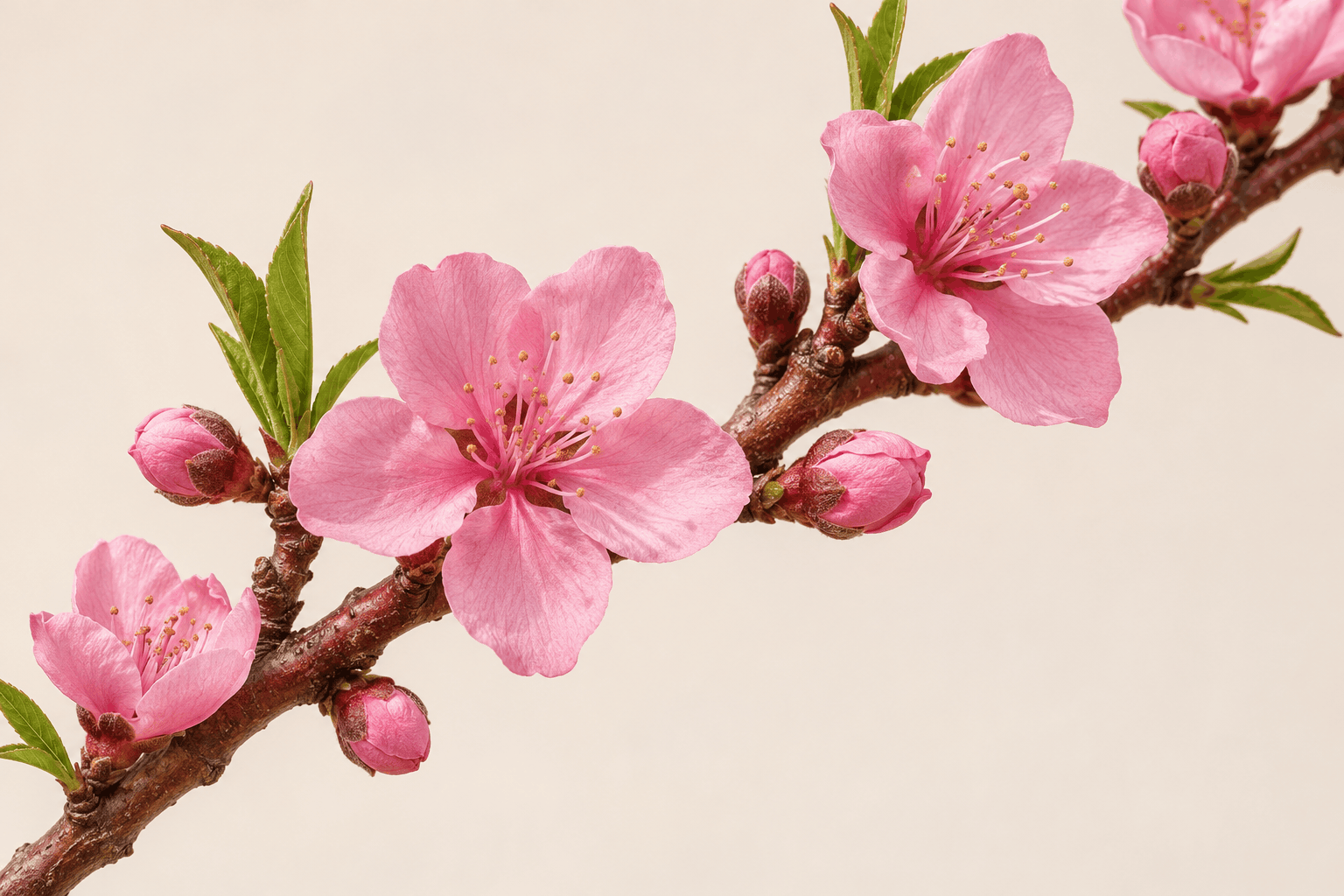
A flowering branch presents growth as something visible. Buds, open flowers and emerging leaves can suggest a season unfolding rather than a single finished moment.
For a contemporary viewer, that makes peach blossoms a natural starting point for thoughts of renewal. They can recall the pleasure of warmer days, a garden returning to life or the anticipation that accompanies change.
“New beginnings” is a useful modern interpretation of this seasonal imagery. It can make sense when choosing a gift for a graduation, a move or a new role, provided it is expressed as your own wish rather than a universal historical code.
For example, “I chose these spring blossoms to celebrate your next chapter” is both personal and clear. It gives the image meaning without claiming that every artist used peach blossoms for that exact purpose.
Peach Blossom Spring: A Landscape of Peace and Possibility
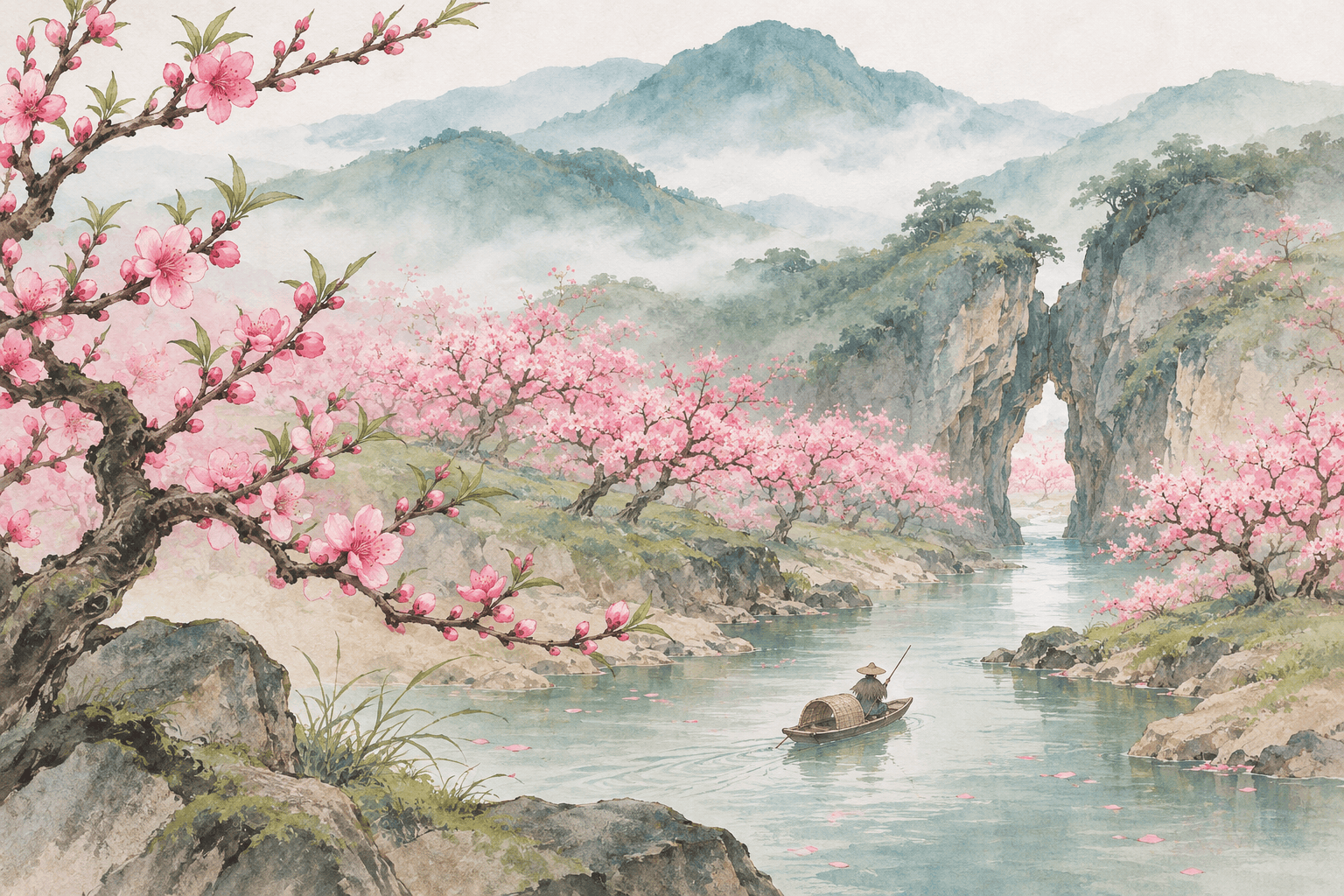
A different tradition comes from Tao Yuanming’s fifth-century tale, Peach Blossom Spring, also known as The Record of the Peach Blossom Spring.
A fisherman follows a waterway into a grove of flowering peach trees. Beyond a narrow passage, he discovers a secluded community living apart from the outside world. After leaving, he is unable to find his way back.
In this setting, peach blossoms mark the approach to an extraordinary place. The story invites reflection on peace, belonging and the difficulty of recovering an ideal world once it has been glimpsed.
Princeton University Art Museum’s Peach Blossom Spring by Yuan Jiang, dated 1718, offers a historical example. The museum explains the painting’s connection to the tale and its vision of a paradise within a mountain valley.
A peach grove beside a stream can therefore suggest a literary journey. It should not automatically be interpreted as a romantic scene simply because the trees are flowering.
Peach Blossoms and Peach Fruit: Related but Different
The peach fruit has a particularly strong connection with longevity and immortality in Chinese art. The Metropolitan Museum of Art’s essay on longevity in Chinese art discusses peaches in relation to immortals and the Queen Mother of the West, Xiwangmu.
The same essay notes that flowering peach branches and trees can evoke both her orchard and the story of Peach Blossom Spring. These traditions overlap, but that does not make every blossom image interchangeable with a birthday peach.
When interpreting an object, notice whether it shows flowers, ripe fruit or both. Also look for figures, inscriptions and other motifs that may identify the intended theme.
For a birthday gift specifically intended to express wishes for long life, a documented peach-fruit design may communicate that intention more directly than an unspecified pink floral pattern.
How to Read a Peach Blossom Motif in Art
Rather than treating symbolism as a dictionary with one answer per flower, begin with the work itself.
- Check the identification. Read the title, catalogue entry or maker’s description. Pink flowers alone do not establish that the subject is peach blossom.
- Look at the setting. Is this a close view of a branch, a garden, a landscape or a scene with people?
- Notice accompanying details. Butterflies, fruit, boats or inscriptions may help explain the subject.
- Read the literary reference. A named poem or story can change how the image is understood.
- Allow for more than one layer. Seasonal beauty, personal expression and cultural association can coexist.
This approach also helps when looking at modern textiles. A clearly explained design story is more useful than a broad promise that a motif represents every kind of good fortune.
Translating Peach Blossoms into Contemporary Silk Design
Peach blossoms offer several possibilities for a scarf composition: the movement of a branch, the spacing of flower clusters, the contrast between wood and petals, and the quiet areas around them.
A contemporary interpretation might place a few branches across an ivory ground or combine blossom pink with muted green and ink-toned lines. A larger landscape design could draw on the idea of a journey through a flowering grove.
These are design approaches rather than claims about a particular historical object. The finished scarf should work as an accessory, with colours and proportions that remain appealing when folded, tied or draped.
The production technique should also be described accurately. A printed peach blossom design is not the same as a woven or embroidered motif, and a painting-inspired print should not be called hand-painted unless it actually is.
What Can a Peach Blossom Gift Express?
A peach blossom-inspired gift can carry a thoughtful message when its meaning suits the recipient and occasion.
- For a wedding or engagement: explain the literary connection with marriage and add your own wish for happiness together.
- For a new chapter: use spring renewal as a personal metaphor for the opportunities ahead.
- For an art lover: share the connection with poetry or Peach Blossom Spring.
- For someone who enjoys gardens: let the beauty of the flower be enough; not every gift needs an elaborate symbolic explanation.
A short message might read: “These blossoms made me think of spring and everything still to unfold. With warm wishes for your new beginning.”
When choosing from Lanting Loom’s silk scarves and gifts, read the individual design description to confirm the motif and inspiration. Explore our gift services for available presentation and personal-message options.
Frequently Asked Questions
Do peach blossoms always mean romantic love?
No. They have associations with marriage, but can also suggest spring, a literary refuge or other themes depending on the artwork.
Do peach blossoms symbolise longevity?
They can participate in wider peach-tree imagery connected with longevity and immortality. However, the peach fruit is a more direct and established motif for that theme.
Are peach blossoms the same as cherry or plum blossoms?
No. These are different subjects, even though stylised flowers can look similar. For an artwork or textile, use the title, inscription and documented design story rather than identifying the flower from pink colouring alone.
Is “new beginnings” a traditional meaning?
It is best presented as a contemporary interpretation of spring renewal unless a particular historical source or artwork supports a more specific reading.
A Blossom with More Than One Story
Peach blossoms can lead us towards a marriage poem, a spring landscape or a secluded world beyond a mountain passage. Their richness comes from these distinct stories and the way artists bring them into particular works.
In contemporary silk design, that depth can accompany something immediately beautiful: a flowing branch, a delicate colour and a piece chosen with someone in mind.
