

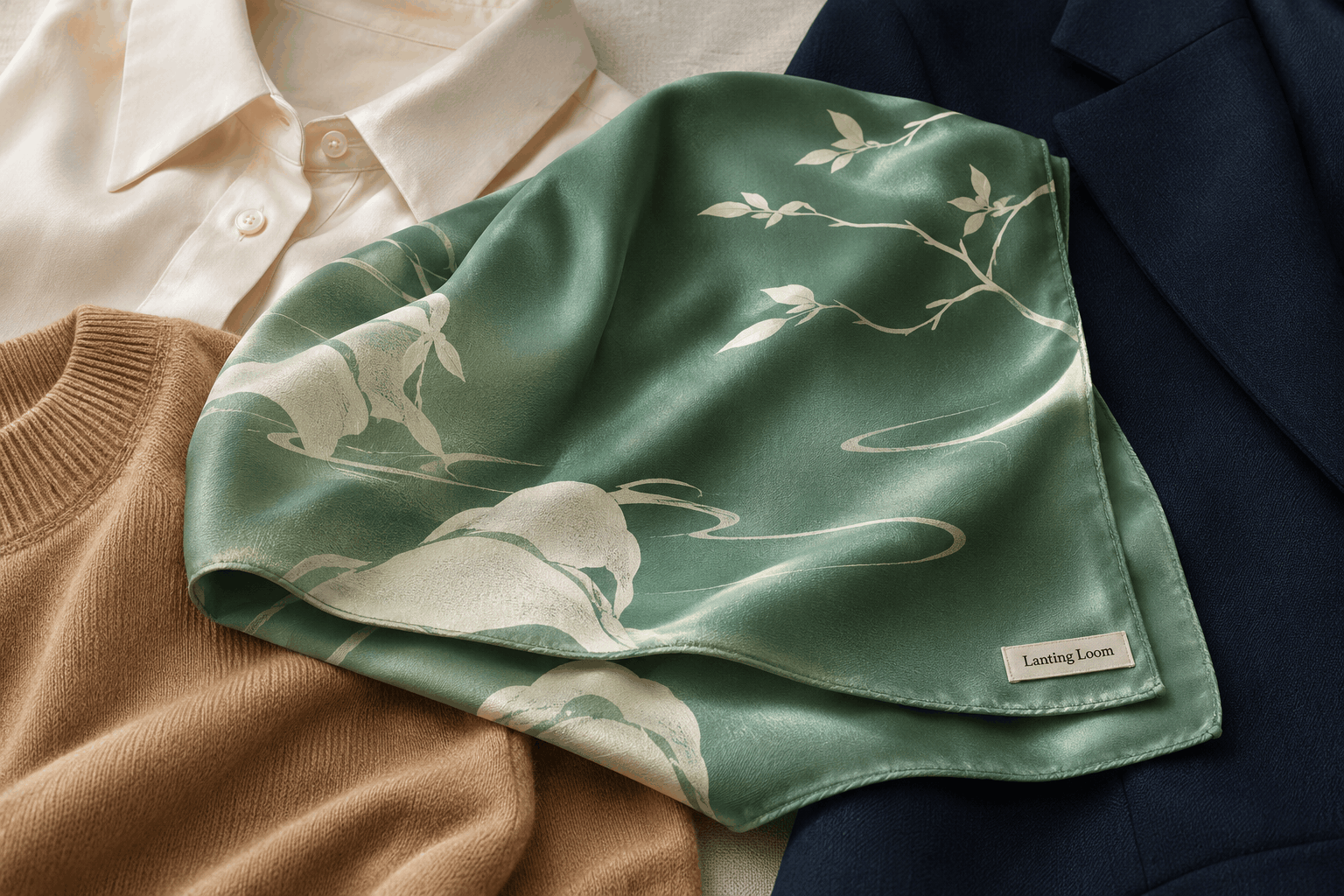
Some colours catch the eye immediately. Others invite a closer look. Jade green can do both: pale and misty in one design, richly saturated in another, or quietly luminous as light moves across silk.
The meaning of jade green draws partly on the cultural importance of jade in Chinese art, where the material has been associated with beauty, moral character and enduring value. In contemporary design, jade-inspired greens can suggest freshness, restraint or a connection with nature. These modern impressions are interpretations, however, rather than a single historical meaning shared by every green object.
Understanding that distinction makes the colour more interesting—and gives us a more thoughtful way to wear it, design with it and choose it as a gift.
What Colour Is Jade Green?
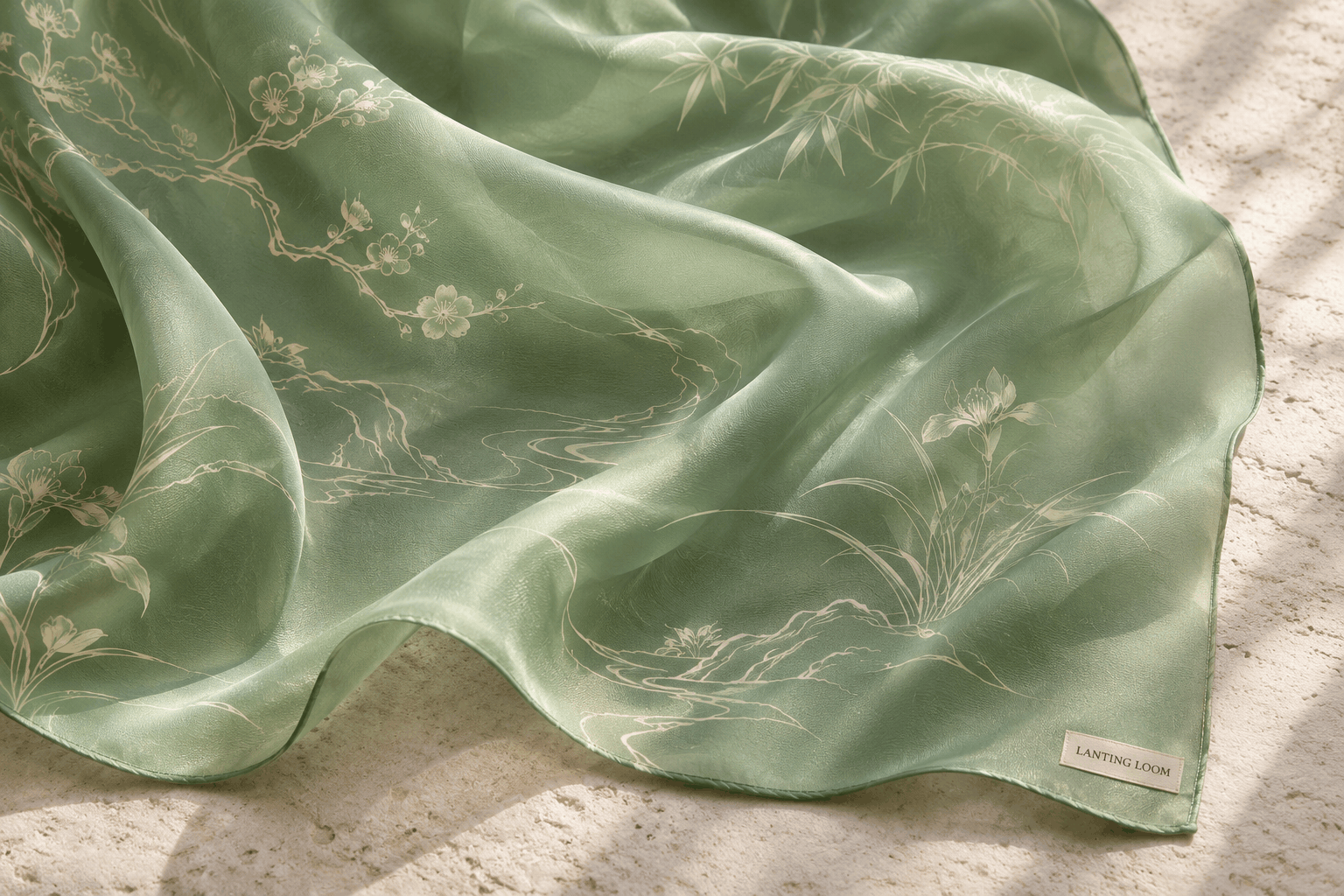
Jade green is best understood as a family of colours inspired by green jade, rather than one universally fixed shade. Depending on the designer or material, the name may describe a pale grey-green, a muted leafy green, a cooler blue-green or a deeper, more vivid tone.
The Getty Art & Architecture Thesaurus describes jade as a range of greenish colours resembling the gemstone. That range matters when shopping: two scarves described as jade green may look quite different beside one another.
Look beyond the colour name. Notice whether a shade feels warm or cool, clear or greyed, light or deep. Those qualities will often tell you more about how a scarf fits into a wardrobe than the label alone.
Jade Is Not Always Green
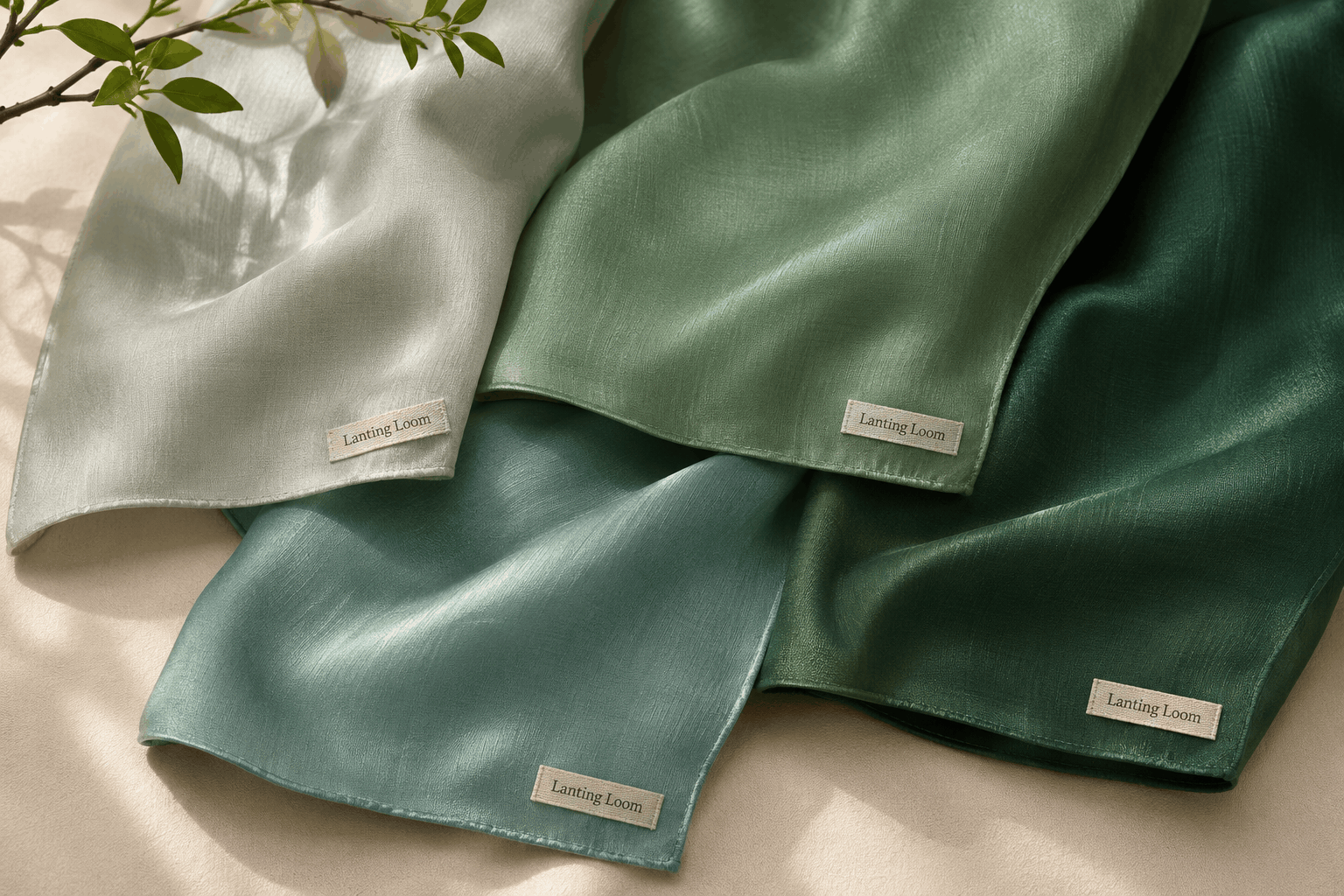
Although green is strongly associated with jade today, jade itself comes in a much wider range of colours.
GIA’s introduction to jade explains the colour variety found in nephrite and jadeite. Depending on the material, jade may be white, grey, yellow, brown, black, lavender or green, among other colours.
The Smithsonian’s guide to ancient Chinese jades also places nephrite at the centre of early Chinese jade traditions. Historical appreciation of jade cannot therefore be reduced to a preference for bright green stones.
This is an important distinction for cultural storytelling: a jade-green textile can take inspiration from the appearance of jade, but its colour does not represent the whole history of the material.
Why Jade Matters in Chinese Art
Jade has held a significant place in Chinese material culture over thousands of years. Its importance lies in a combination of physical beauty, skilled workmanship and the meanings attached to particular objects and their use.
Its polished surface and resistance to breakage helped make it a material through which people could express ideas about character. The Metropolitan Museum of Art’s exhibition A Lasting Legacy: Chinese Jades from New York Collections connects jade’s physical qualities with values including benevolence, humility and integrity.
These associations concern more than colour. They involve how jade feels, how it receives light, how it withstands wear and how it is shaped. A softly polished white jade object can participate in this cultural language just as a green one can.
Nor does every jade object communicate the same message. Its form, decoration, period and context all matter. A ritual object, a personal ornament and a decorative vessel should not be interpreted solely through their shared material.
Jade, Jade Green and Celadon: Related but Different
Chinese art offers several ways to experience subtle green surfaces. Jade stone, green ceramic glazes and green textiles may share visual qualities, but they are different materials with different histories.
| Term | What it describes | What to remember |
|---|---|---|
| Jade | A gemstone material, including nephrite and jadeite. | It is not always green. |
| Jade green | A colour description inspired by green jade. | It does not identify a material or one exact shade. |
| Celadon | A term associated with particular glazed ceramics and, in design, their greenish colours. | A jade-like glaze is still a ceramic surface, not jade stone. |
The Smithsonian’s discussion of green in Asian art includes a Longquan ceramic glaze whose texture has been compared with jade. Such comparisons show how one material can inspire appreciation of another without making them interchangeable.
What Jade Green Can Express in Contemporary Design
Today, jade-inspired palettes offer designers considerable flexibility. A pale, greyed green can create a gentle background. A clearer green can introduce freshness. A deep green can give a small accessory greater visual presence.
These effects depend on the whole composition. The same green may appear cool beside ivory, warmer beside camel, or more dramatic beside black. Texture, lighting and the amount of colour used also change the result.
For a contemporary Chinese design approach, jade green can provide a subtle cultural reference through colour and surface. It does not require an abundance of traditional motifs. A restrained border, an open composition or a flowing line may give the colour enough space to carry the design.
The strongest interpretation begins with a beautiful object, then allows cultural knowledge to deepen the experience of it.
Why Jade Green Looks Different on Silk
A colour printed or dyed onto silk will not behave visually like the same colour on paper, wool or stone. Depending on the weave and finish, silk can reflect light across folds, creating brighter highlights and deeper shadows.
This movement can make a jade-inspired green feel especially nuanced. A scarf may appear lighter where it catches daylight and richer where the fabric gathers into a knot.
When choosing a scarf online, compare close-up photographs with images showing the whole piece. Look at both the green background and the colours in its border or pattern. Screens and lighting can affect the appearance, so photographs are a guide rather than an exact colour guarantee.
How to Pair Jade Green with Your Wardrobe
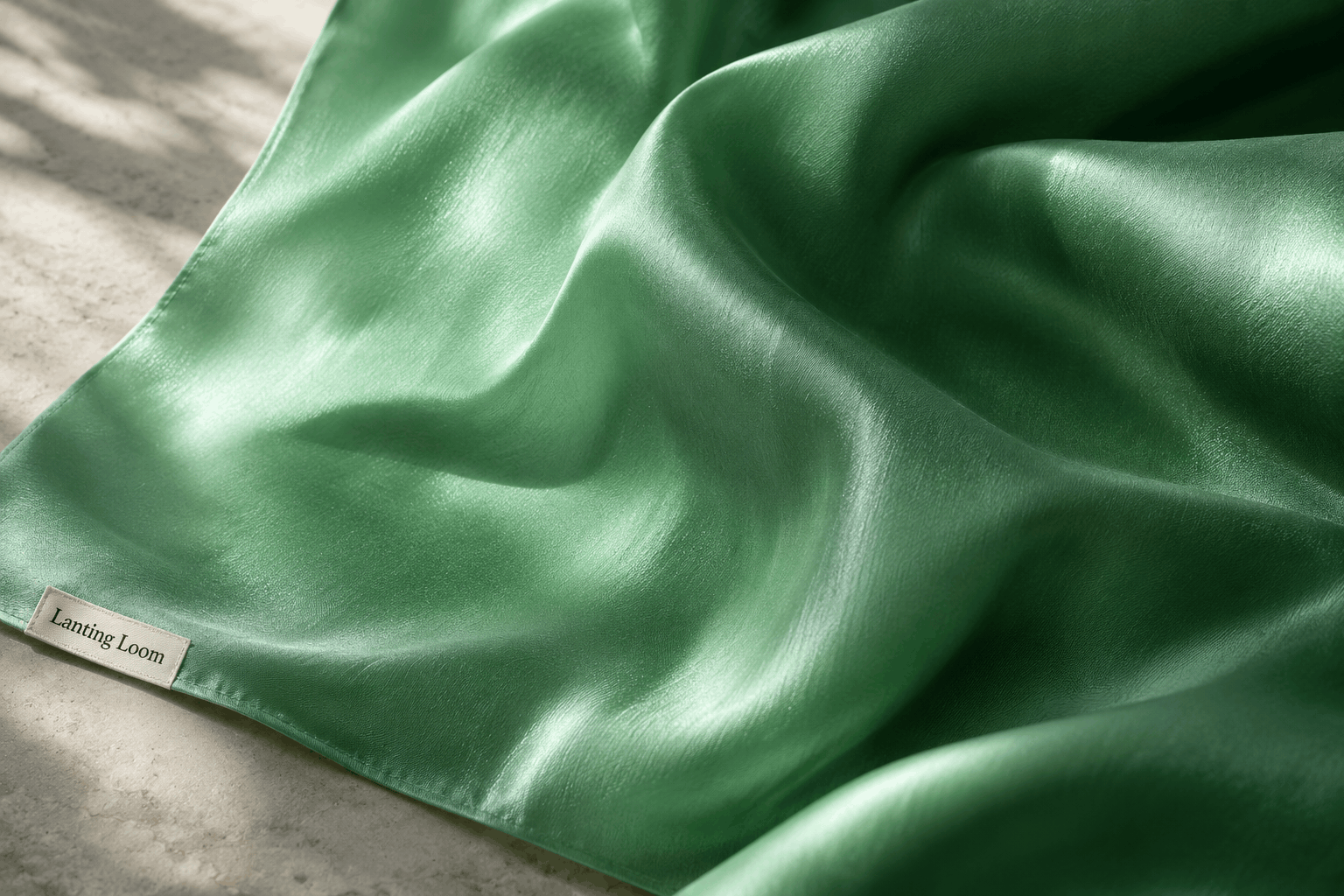
Start with colours you already wear. A scarf works hardest when it connects naturally with familiar shirts, coats and knitwear.
- Ivory or cream: gives green room to stand out while keeping the overall combination soft.
- Navy: creates a composed pairing for a jacket, dress or everyday knit.
- Camel: introduces warmth, particularly alongside a cooler green.
- Charcoal: makes a useful background for both pale and saturated greens.
- Muted pink: can echo a floral detail and bring warmth to a green-led print.
Consider the scarf’s secondary colours too. If it contains an ivory line or navy border, repeating that colour elsewhere in the outfit can make the combination feel considered without requiring an exact match.
Choosing Jade Green as a Meaningful Gift
A jade-green scarf can be a thoughtful choice for someone who enjoys green, appreciates Chinese art or prefers accessories with a quiet colour story. Begin with the recipient’s taste, then add the meaning that makes the gift personal.
You might connect jade’s associations with integrity and lasting value to your admiration for someone. Alternatively, you might choose green because it recalls their garden, a favourite landscape or an outfit they love.
A simple message could read: “I chose this green because it reminded me of your quiet confidence—and the beautiful things you make time to notice.”
Present that as your own sentiment. A green scarf does not automatically inherit every symbolic meaning associated with jade, and its colour is not a promise of luck, protection or prosperity.
Explore the Lanting Loom scarf collection for designs that suit the recipient, and consult our gift services for available presentation options.
Frequently Asked Questions
What does jade green symbolise in Chinese culture?
Its cultural resonance draws partly from jade, a material associated with beauty and moral qualities. The colour alone does not have one universal meaning; an object’s material, design and context are important.
Is jade green the same as emerald green?
Not necessarily. In fashion and interiors, these names can overlap, but jade green often covers a broader range of muted, pale or blue-toned greens. Compare the actual shades rather than relying on the names.
Is all Chinese jade green?
No. Jade appears in many colours, and non-green jade has an important place in Chinese art. White, grey and other colours should not be treated as exceptions to an exclusively green tradition.
Does a jade-green silk scarf contain jade?
A colour description does not indicate jade content. Check the product’s stated fibre composition and construction details. “Jade green silk” ordinarily describes the colour of the silk.
A Colour with Depth and Everyday Possibility
Jade green offers both visual pleasure and a starting point for cultural discovery. Its richest contemporary uses recognise the history of jade while allowing colour, texture and personal taste to guide the design.
On silk, that approach becomes something wearable: a shifting green beside an ivory collar, a soft accent against navy, or a gift chosen because it feels unmistakably right for one person.
