

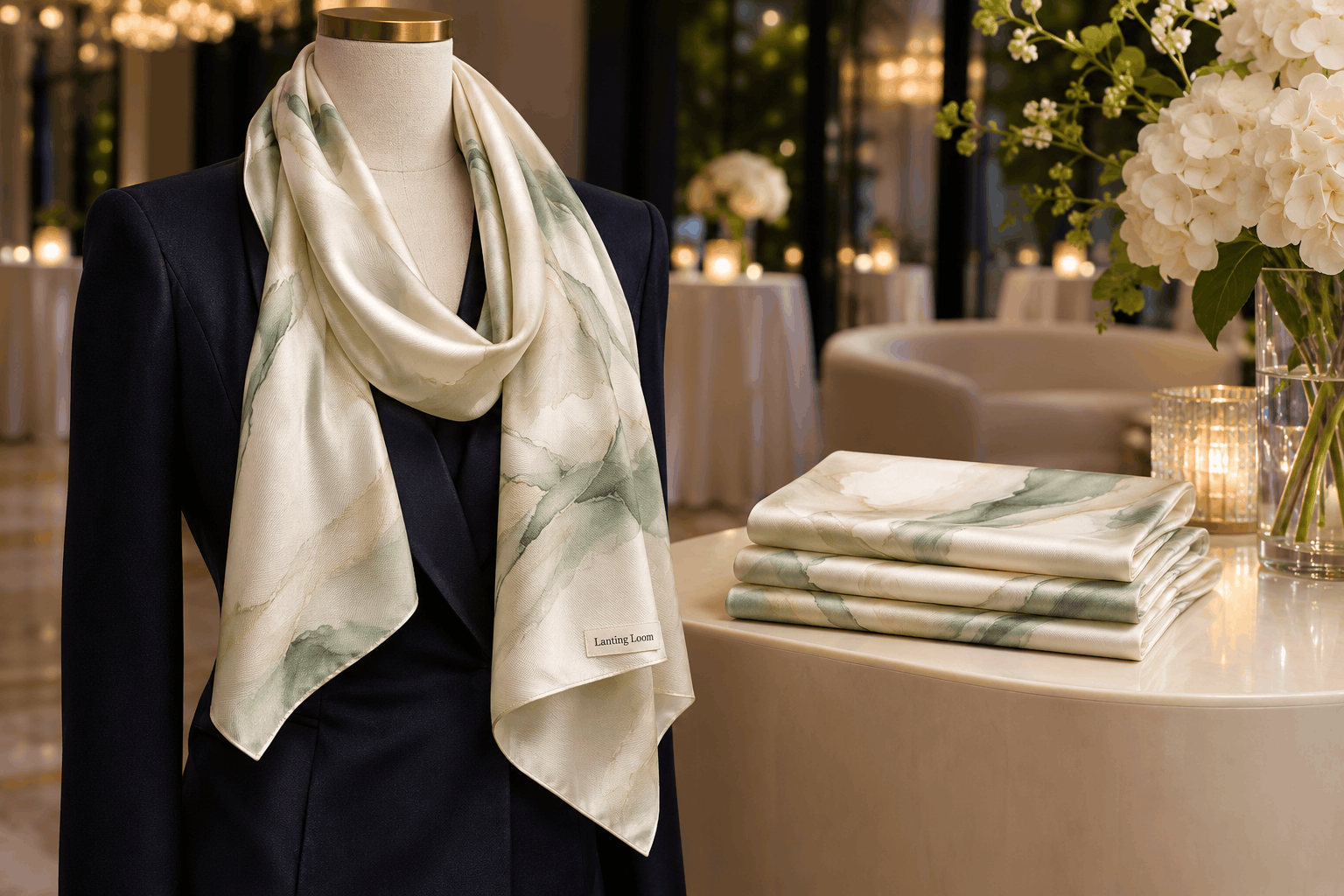
A fundraising gala brings people together around a purpose. The venue, programme and conversations carry that purpose through the evening; a thoughtfully chosen keepsake can provide a quieter connection afterwards.
Silk scarves for fundraising galas can serve as donor gifts, sponsor-funded keepsakes, auction items or part of a coordinated event identity. The right approach depends on the audience, budget and fundraising model. Begin by deciding what the scarf is meant to do, then develop the design and presentation around that role.
A beautiful accessory should remain desirable after the event date has passed. Its connection with the cause can add meaning without turning the scarf into a wearable advertisement.
1. Decide the Scarf’s Role Before Choosing a Design
A gift included with a gala ticket is different from an auction purchase or a personal thank-you. Clarifying that distinction early helps the organising team plan quantities, costs, communication and distribution.
| Approach | Purpose | Planning priority |
|---|---|---|
| Guest keepsake | Give attendees a lasting reminder of the evening. | Define eligibility, quantity and ticket inclusions. |
| Donor thank-you | Recognise a particular relationship or contribution. | Follow the organisation’s recognition policy and recipient preferences. |
| Sponsor-funded gift | Provide a keepsake with agreed sponsor support. | Confirm funding, recognition and approval responsibilities. |
| Auction item | Offer a desirable item for bidding. | Prepare an accurate description, value information and fulfilment plan. |
One event may use more than one approach, but keep the categories clear. Guests should understand what is included, what is available to purchase and what is reserved for a particular recognition programme.
2. Choose a Design That Connects with the Cause
The strongest starting point is something specific: a garden supported by the charity, an architectural feature of a cultural institution, an anniversary or an artwork used with permission.
Translate that reference into a wearable composition. A flowing border, restrained botanical motif or thoughtful colour relationship may communicate the story more naturally than a large event title.
For a cultural organisation, verify the source and explain the interpretation accurately. For beneficiary-created artwork, obtain appropriate permissions and agree attribution and any compensation before production.
Do not assume every guest shares the same taste or wears scarves. Consider a choice of colourways, a suitable alternative or a respectful option to decline the gift. Keep the experience welcoming rather than making acceptance part of participation.
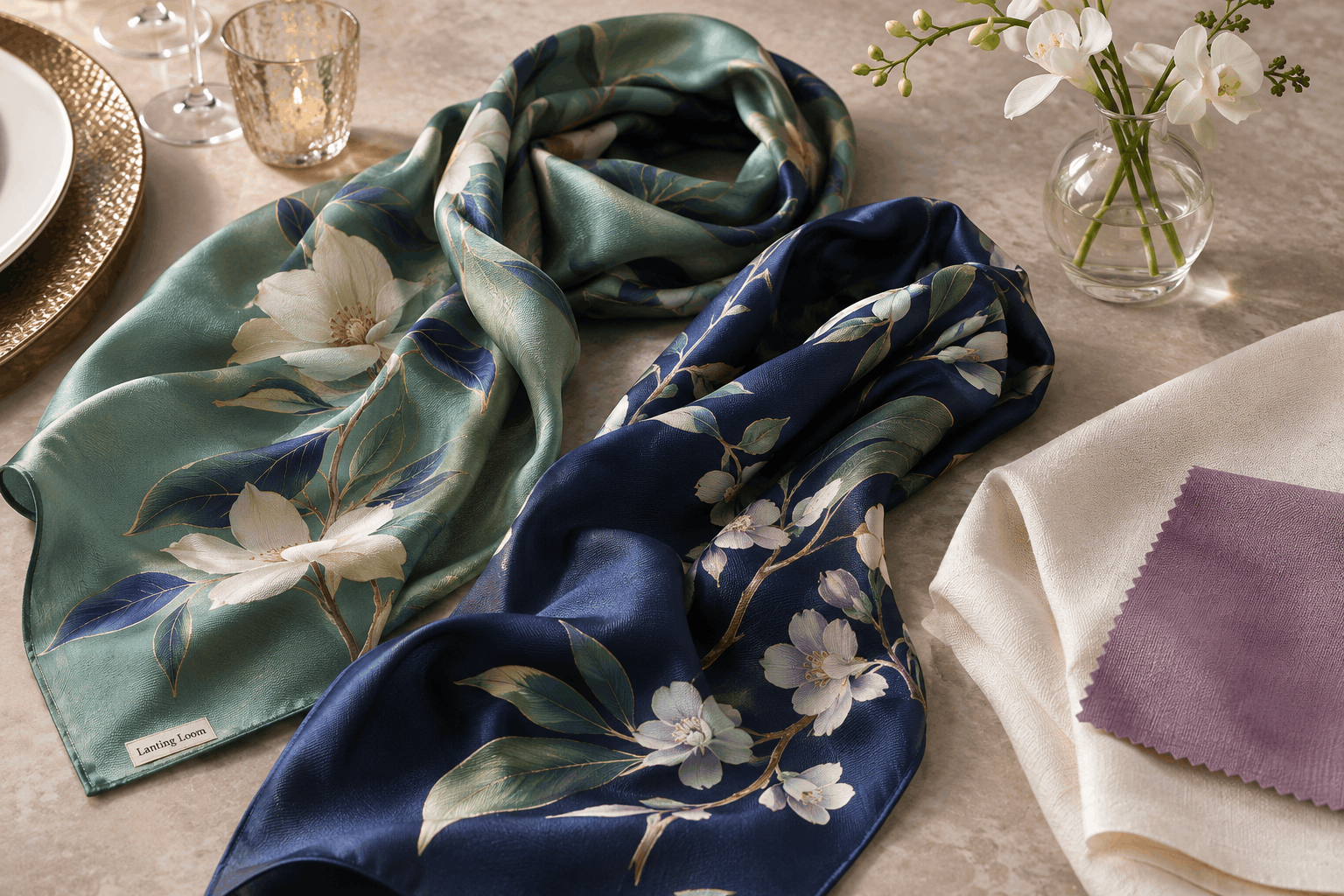
3. Recognise Sponsors Without Overwhelming the Scarf
A sponsor may fund the entire gift programme, contribute towards production or provide another agreed form of support. Record exactly what the contribution covers, including design, packaging, delivery and any additional quantities.
Discuss recognition before artwork begins. Suitable locations may include an outer sleeve, a thank-you card, the event programme or a display beside the gifts. The scarf itself can remain focused on the design.
If branding appears on the fabric, test a discreet placement within the border or corner. Use the actual approved logo files and check the result on a physical sample.
A simple acknowledgement might read: “This evening’s silk keepsake has been made possible with support from [Sponsor].” Use wording that accurately reflects the arrangement and has been approved by the charity and sponsor.
Do not promise advertising exposure, exclusivity or tax treatment without agreement. Sponsor recognition should support the event’s purpose and remain consistent with the organisation’s partnership policies.
4. Choose Between Existing Designs and Bespoke Artwork
An existing scarf with an event-specific message or presentation can suit a shorter schedule or a smaller order. It allows the team to focus on selecting a relevant design and explaining why it was chosen.
A bespoke scarf offers more scope to interpret the institution or occasion, but it requires time for research, artwork, sampling and approval. A new printed design is a different project from adding a customised sleeve to an existing product.
Compare both routes before committing. Ask what is available, what can be adapted and which changes affect minimum quantities or lead times.
Explore Lanting Loom’s gift services for presentation options and our bespoke and corporate project options for a more individual brief. Availability and specifications are agreed for each project.
5. Present Auction Scarves as Objects Worth Examining
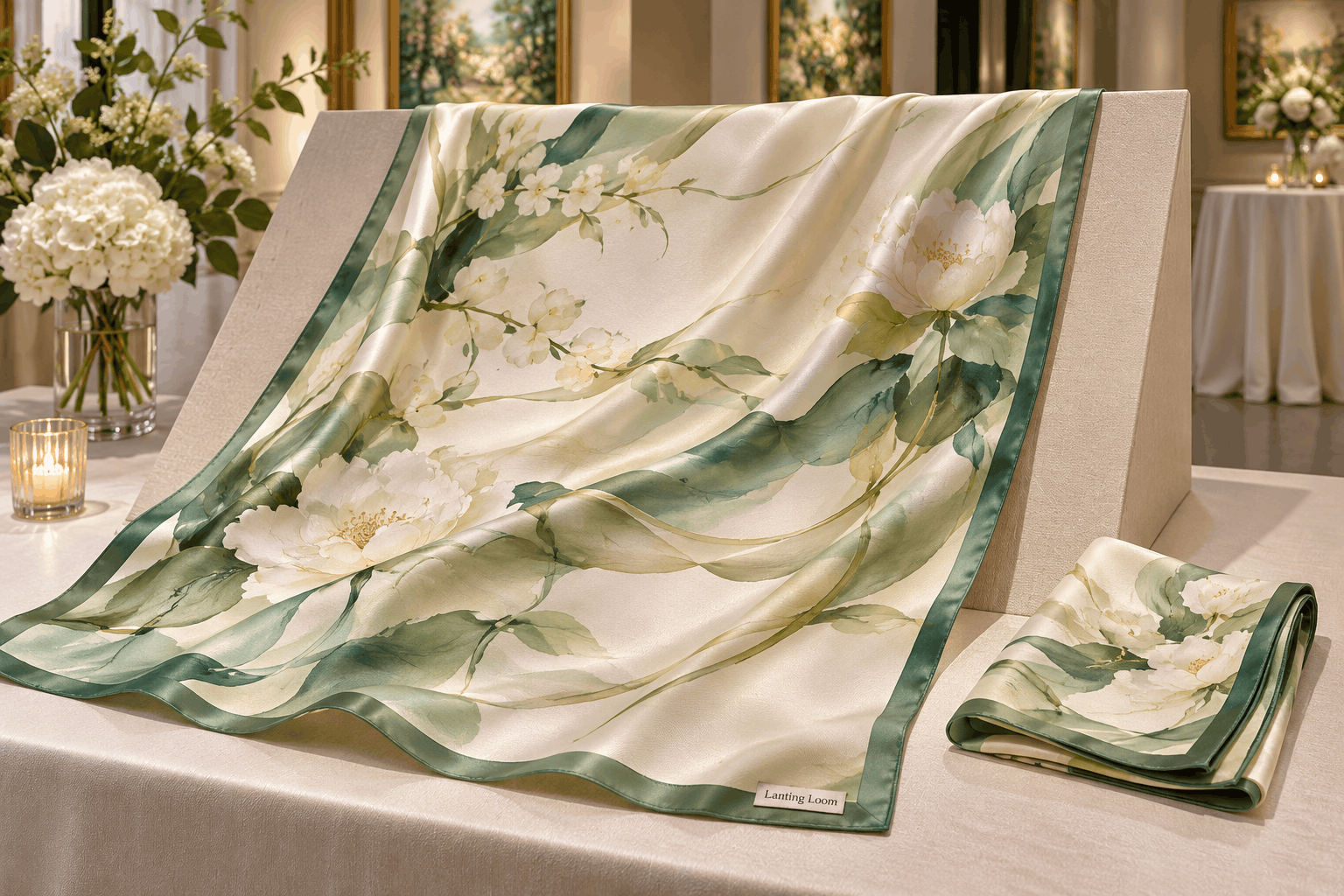
An auction item needs more than an attractive photograph. Let guests see the artwork, understand the material and imagine wearing or giving the scarf.
Display a sample opened on a clean, supported surface. Keep it away from drinks, candles and flower arrangements, and provide accurate photographs for the auction listing.
Include the fibre composition, dimensions, finishing, design story and everything supplied with the item. If the offer includes a consultation, customisation or later delivery, state the limits, timings and any additional costs clearly.
Only describe an item as exclusive, numbered or limited edition when those claims are documented. Keep a realistic value estimate separate from an aspirational fundraising target; a hoped-for winning bid is not evidence of market value.
6. Budget for the Complete Gift Programme
The scarf’s unit price is only one part of the budget. Include artwork, samples, presentation materials, assembly, delivery, applicable import costs, storage and any post-event shipping.
For illustration, 150 gifts at an all-in variable cost of $48 would total $7,200. Adding $800 in fixed design and sampling costs produces an $8,000 programme budget. These are hypothetical figures, not a quotation.
If a sponsor contributes $5,000 towards that budget, the organiser still needs to fund $3,000, assuming no other costs. Record promised support separately from confirmed funding.
Keep the gift budget distinct from the event’s fundraising target. A keepsake may support appreciation and event identity, but it does not guarantee increased donations. Evaluate the proposal against the charity’s priorities and the resources required to deliver it.
7. Check Donor Benefits and Receipt Wording
When guests receive goods or services in connection with a contribution, the arrangement may affect donation disclosures and tax receipts. Have the organisation’s finance adviser review the ticket package, gifts and auction terms before publication.
For example, in the United States, IRS Publication 1771 explains that a payment exceeding $75 which is partly a donation and partly payment for goods or services generally requires a written disclosure, subject to exceptions. The disclosure includes a good-faith estimate of the benefit’s fair market value and explains the limit on deductibility.
The threshold concerns the total payment, not just the scarf’s value. A sponsor covering the production cost does not, by itself, establish that the recipient receives no benefit.
Rules differ by jurisdiction and arrangement. Do not describe the full ticket price or auction payment as tax-deductible without checking the applicable requirements.
8. Connect the Scarf with the Event Experience
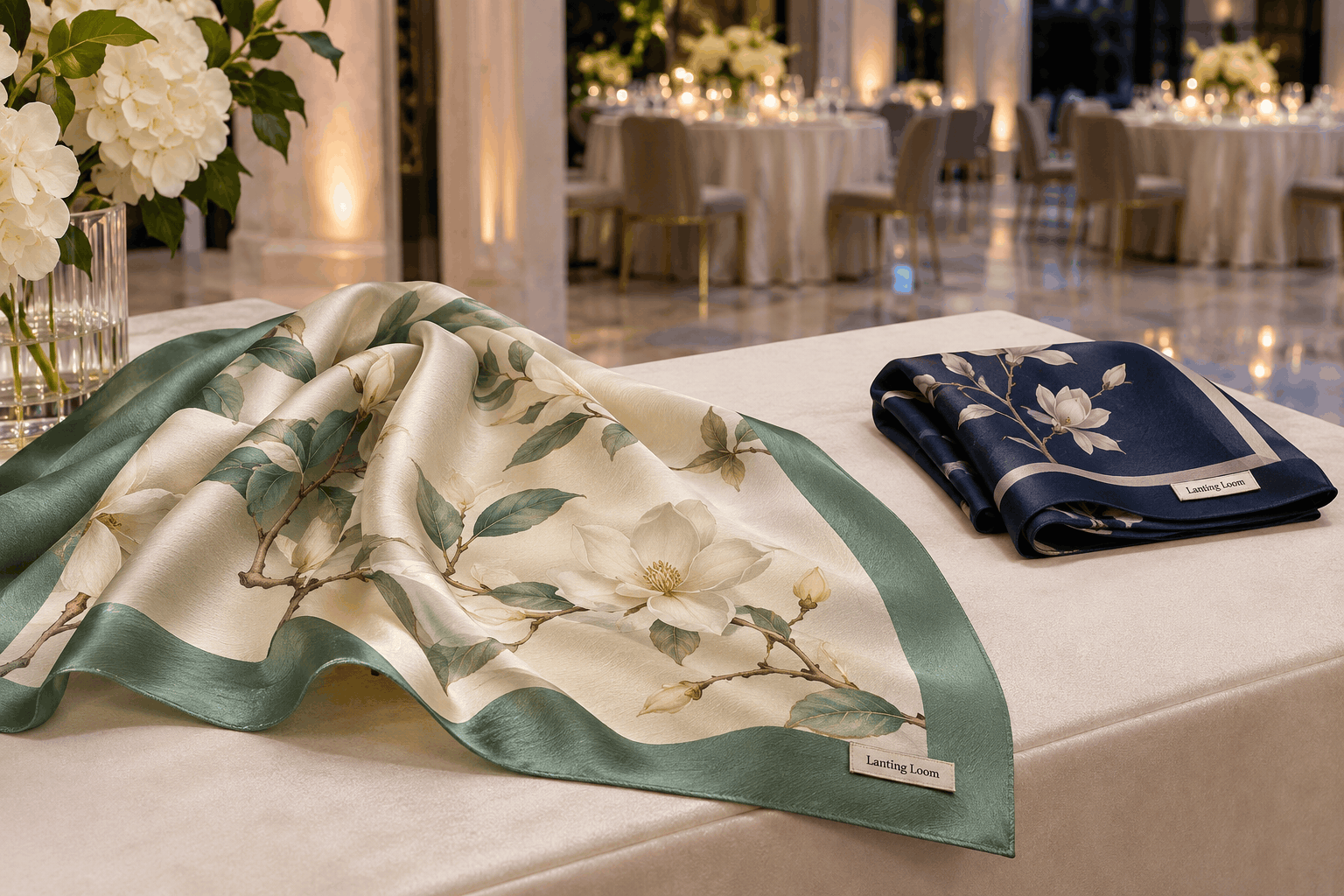
A scarf can echo the evening’s palette without being used as table decoration. A small display in the reception area allows guests to see the design, while protected gifts remain ready for distribution.
Provide a brief explanation of the artwork and its relationship with the organisation. Keep the cause central: the scarf should accompany the story rather than compete with it.
A styled example can show how the design works beyond formal eveningwear. Avoid suggesting that guests must wear it during the event or change an outfit they have chosen carefully.
9. Plan Approvals, Delivery and Distribution
Work backwards from the date the venue needs the gifts, leaving time for receiving checks and resolving any problems. Separate artwork approval, sample approval, production and transport in the schedule.
- Name one final approver: coordinate feedback from the charity, sponsor and event designer.
- Confirm quantities: account for recipients, auction stock, display samples and a justified reserve.
- Approve the complete presentation: check fabric, print, hems, labels, message and packaging.
- Plan the handover: decide between collection, table placement or post-event delivery.
- Agree the remaining-stock plan: avoid making more gifts than the organisation can use responsibly.
For named gifts, keep distribution discreet and check spellings carefully. If gifts will be mailed later, obtain the necessary delivery details and explain their intended use.
Frequently Asked Questions
Should every gala guest receive a silk scarf?
Not necessarily. The decision should reflect the audience, purpose and budget. An auction item, optional keepsake or smaller recognition programme may suit the event better.
Can a sponsor fund the gifts without putting its logo on the scarf?
Yes, if the parties agree. Recognition can appear in the programme, presentation or event display while the scarf remains focused on its artwork.
Are silk scarves suitable for charity auctions?
They can be when the design appeals to the audience and the listing explains the product accurately. Desirability, presentation and bidding interest matter; no particular selling price is guaranteed.
How far ahead should we order?
Request a project-specific schedule. Existing stock with adapted presentation may require fewer stages than bespoke artwork, but quantities, approvals and delivery destination all affect timing.
A Keepsake That Keeps the Purpose in View
A thoughtful gala scarf combines beauty with a clear reason for being there. Its design should appeal beyond the evening, its presentation should express appreciation and its cost should fit the organisation’s priorities.
Browse the Lanting Loom collection or discuss a fundraising event gifting project. Share the cause, audience, intended use, quantity, budget, sponsor requirements and delivery date so an appropriate approach can be explored.
