

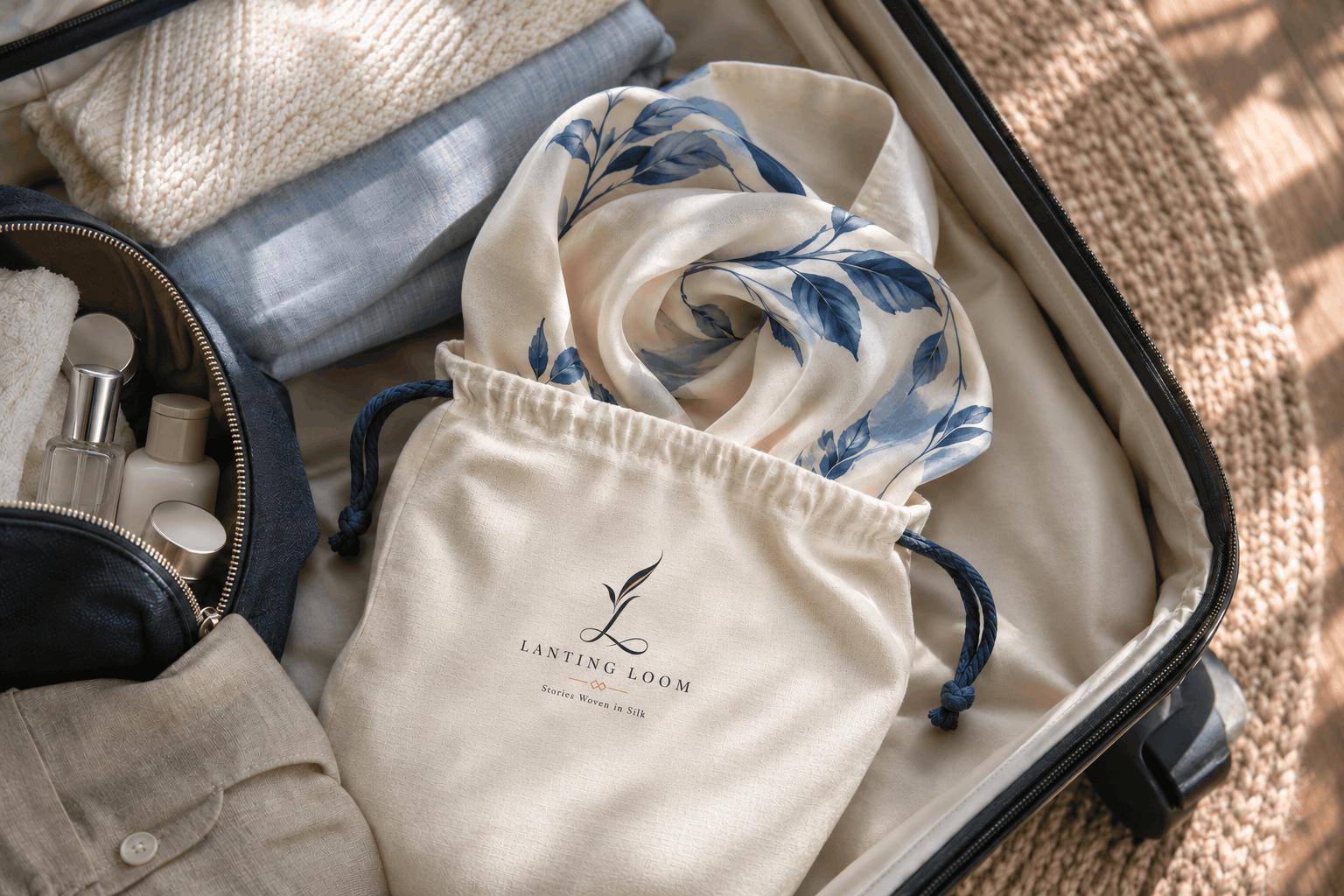
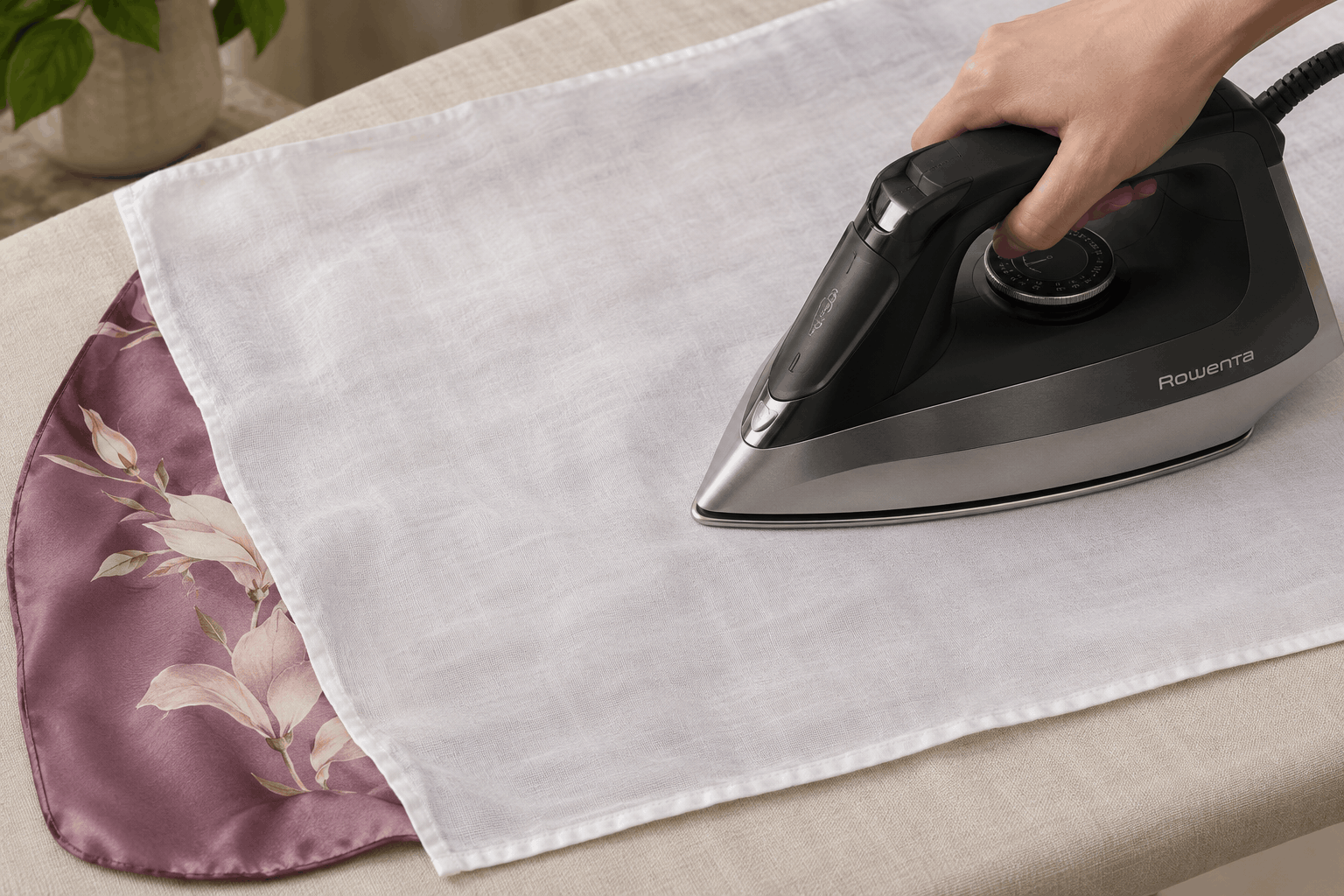
To remove wrinkles from a silk scarf, start by unfolding it completely and letting it rest. A shallow line from a gift box or suitcase may soften enough to wear without further treatment. If a sharp crease remains, check the scarf’s care label. When ironing is permitted, work from the reverse on a low setting, with a clean white cotton cloth between the iron and the silk. Keep the soleplate clear of any rolled hem.
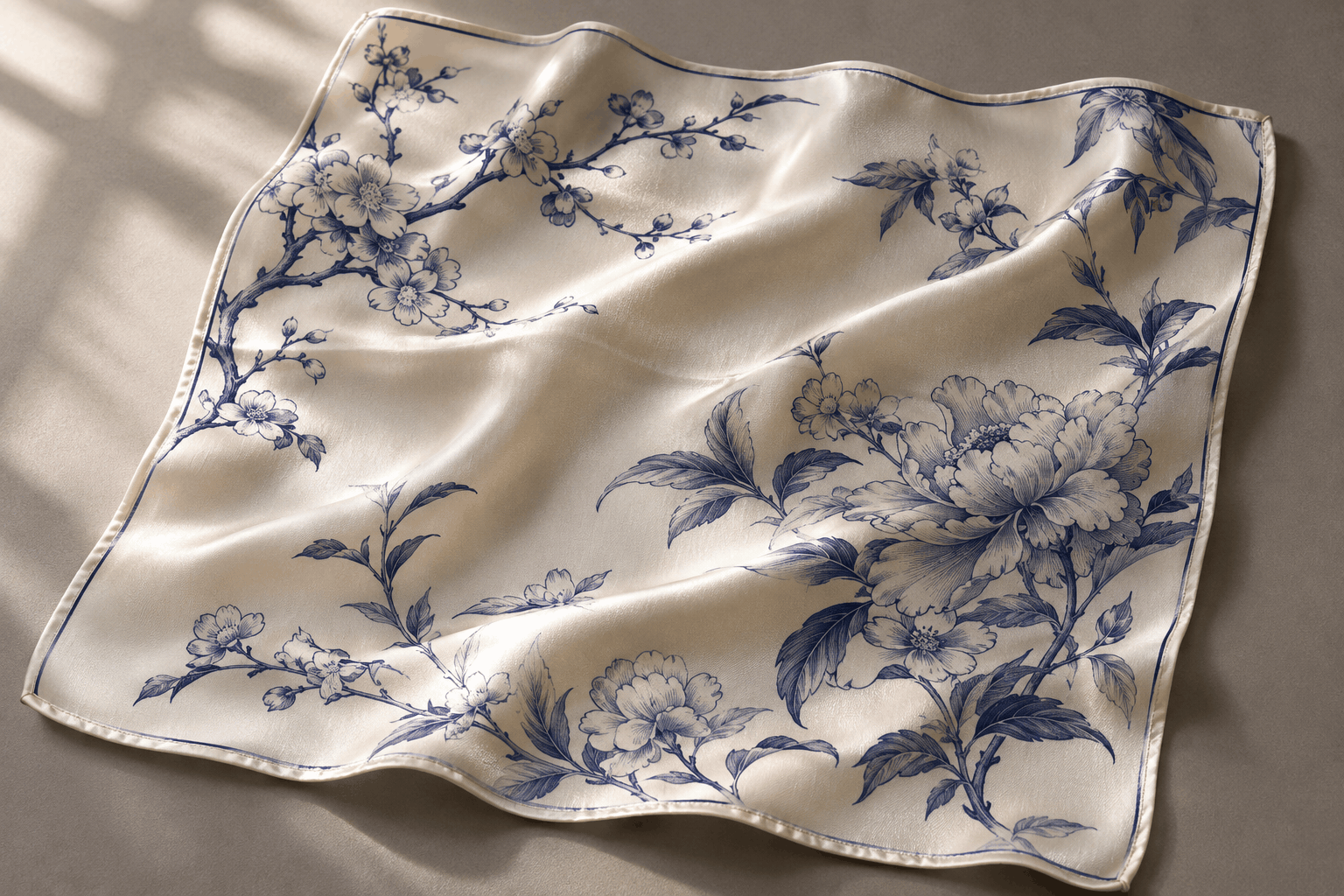
Before you take out the iron, lift the scarf and let it fall the way you plan to wear it. A fold that looks pronounced on a flat table can disappear in a loose neck tie. A line that cuts through a flower on a scarf worn open across the shoulders may be worth a little more attention.
Start with a heat-free rest for light creases
Undo any knot and open the scarf to its full width. Lay it on a clean, dry, smooth surface and ease the folded sections open with your hands. Let the corners fall naturally. Pulling the tips taut can draw a square out of shape.
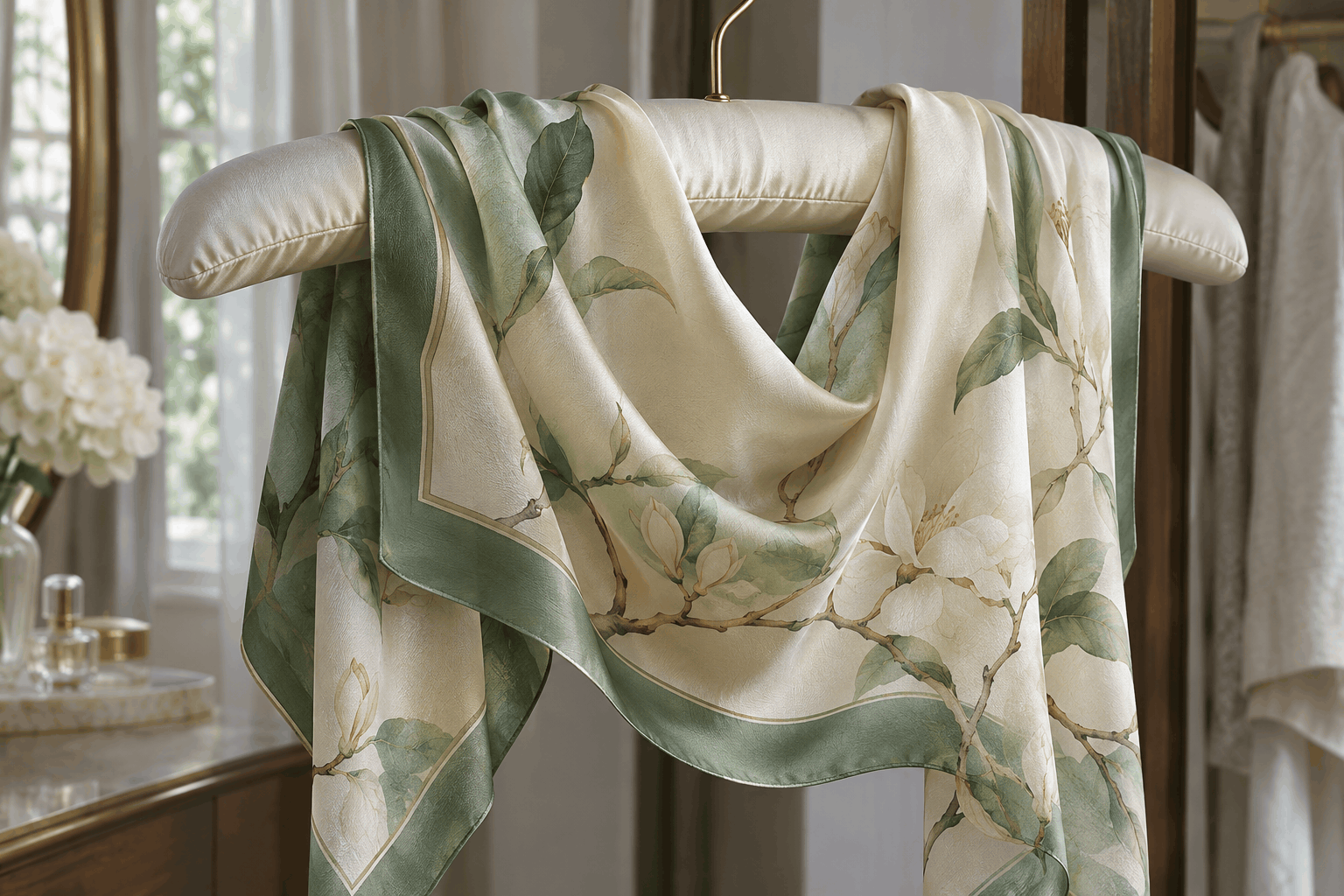
You can also drape a dry scarf over a broad, smoothly padded hanger bar. Spread the fabric across the bar so its weight is shared, and choose a spot away from direct sunlight. If you unpack in the evening, leave the scarf open and check it in the morning. A deep storage crease may remain, but the smaller ripples around it often soften enough for you to see exactly where pressing would help.
Read the care label before choosing heat or steam
Look for the iron symbol. The dots inside it indicate the permitted temperature range. A crossed-out iron means you should leave the iron aside. A separate instruction about steam also matters: permission to iron does not automatically mean the scarf can be steamed. The GINETEX care symbol guide illustrates the different markings.
If the label is missing, check the maker’s instructions for that exact design. Two scarves marked “100% silk” can have different prints, finishes or decorative details. For a vintage scarf, a permanently pleated piece or a design with raised embroidery, choose a cleaner experienced with silk if you cannot confirm the treatment. Point out which line you want removed so an intentional fold or textured detail is preserved.
How to press a silk scarf when the label allows ironing
- Inspect the crease in daylight. Check both sides for marks. If there is a splash, make-up or an oily patch on the fold, deal with the stain according to the care instructions before applying heat. Pressing can set it.
- Prepare a smooth pressing surface. Use a clean padded board and check that the iron’s soleplate is clean. Lay the scarf reverse-side up in a single layer. Position the crease on the flat part of the board and keep any raised hem outside the area you will press.
- Test the lowest permitted setting. Turn off the steam. Cover an inconspicuous part of the scarf with a clean, smooth white cotton pressing cloth. Touch the iron down briefly with light pressure, then lift it. Let the test area cool and check the face of the scarf for a change in sheen, colour or texture.
- Work along the crease in short sections. Keep the cloth between the soleplate and the silk at every point. Lift and reposition the iron as you go. Check the fabric after each pass and stop once it drapes as you want it to.
- Let the scarf cool while open. Lift it from the board after it has cooled. Drape it over your arm to see how the pressed section falls before tying or folding it again.
For a hand-rolled hem, preserve the rounded edge. If a crease runs all the way to the border, work on the flat panel and stop just before the roll. A faint line at the edge is preferable to crushing the hem under the soleplate.
Can you use a garment steamer on a silk scarf?
Use a steamer only when the instructions for that scarf permit steaming. Some steamers release droplets as they warm up, and a drop can leave a visible ring on silk. If steaming is permitted, follow the appliance instructions for delicate fabrics, direct the first burst away from the scarf, and test an inconspicuous area. Keep the head clear of the fabric. If the appliance spits water, stop.
For a single stubborn line, avoid misting that spot with a spray bottle. A damp patch can dry with a more noticeable outline than the original fold. If a hotel bathroom is your only steaming option, unpack the scarf and give it a dry rest in the bedroom instead. You have more control over moisture there.
What if the crease still shows?
Look at it from two angles. A crease casts a small shadow that changes as the cloth moves. A pale ring, patch of altered shine or mark that stays visible when the fabric lies smooth calls for a different response. Stop pressing and show the area to a silk-experienced cleaner. Tell them whether water, steam or an iron has already touched it.
If the remaining line is simply a fold and you need the scarf that evening, try changing the diagonal. On a square, bringing the opposite pair of corners together can move a line from the visible front panel into the fold of the tie.
How to pack a silk scarf so it arrives with fewer wrinkles
For travel, start with a clean, completely dry scarf. Roll it loosely or fold it broadly with clean, acid-free tissue between the layers. Slip it into a soft pouch and place it near the top of your suitcase, away from zips, toiletries and the weight of shoes. Give a rolled border room at the sides so it does not get trapped under a hard edge.
At home, open the scarf after wearing it, especially if it has spent the day in a knot. When you return it to a drawer, vary the fold from time to time so the same line is not pressed into the silk for months. For washing, stains and longer-term storage, consult the Lanting Loom silk care guide alongside the label supplied with your scarf.
