

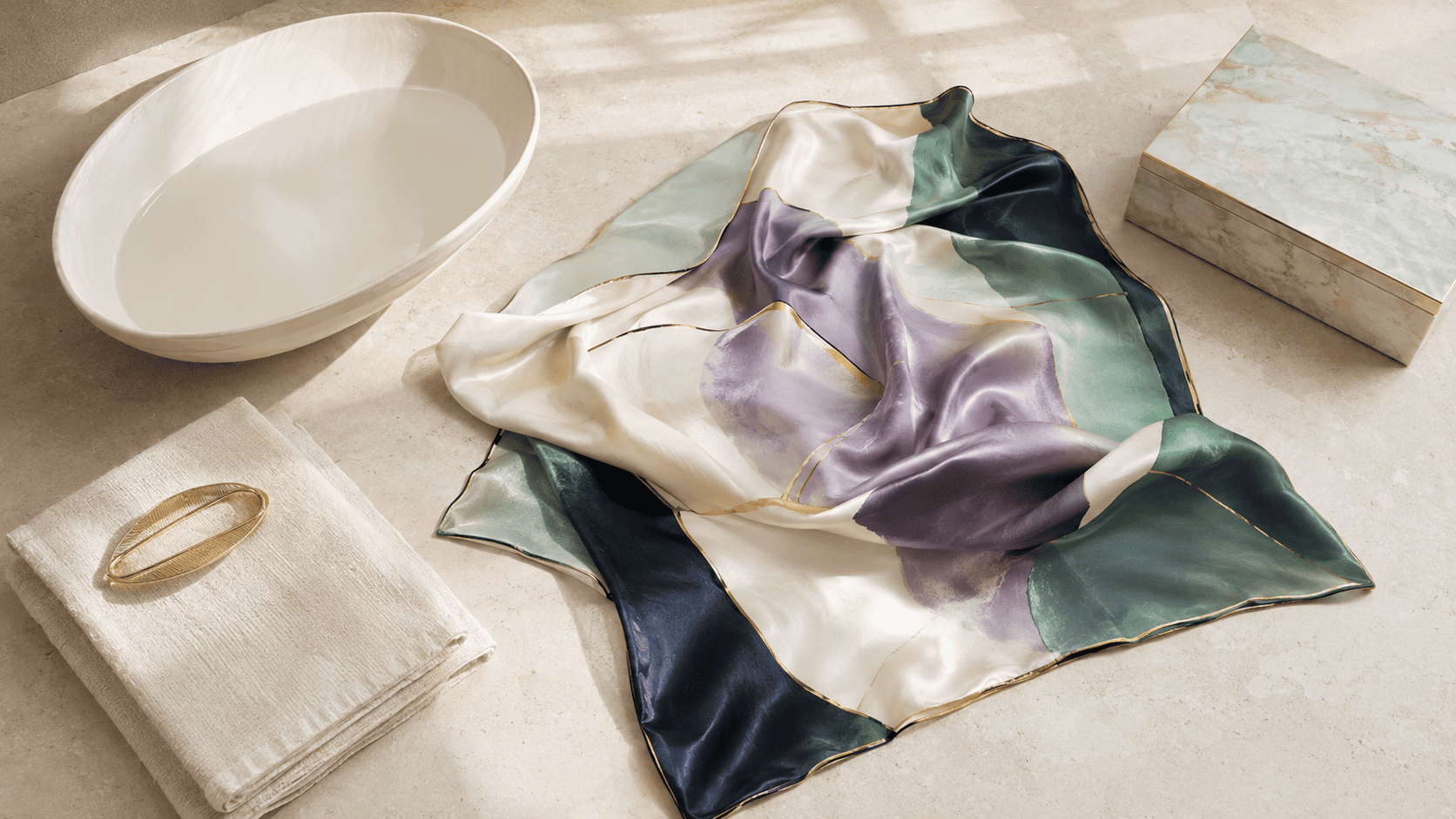
A fine silk scarf can remain luminous, soft and beautifully shaped for years when it is handled with a little care. The most important rule is simple: read the scarf’s care label before cleaning it. Some silk scarves may be gently hand-washed, while printed designs, hand-rolled edges, delicate finishes and certain dyes are safer with a specialist dry cleaner.
For everyday silk scarf care, keep the fabric away from perfume, cosmetics, rain and prolonged sunlight; untie it after wearing; and store it clean, dry and flat. If washing is permitted, use cool water and a small amount of silk-safe detergent, handle the scarf gently, and dry it flat away from heat.
Silk scarf care at a glance
- Follow the maker’s care label first.
- Choose professional cleaning for “dry clean only” scarves, unstable colours or precious hand-finished pieces.
- Never use bleach, fabric softener, biological detergent or a tumble dryer.
- Do not rub, twist or wring wet silk.
- Dry flat in the shade and store flat, clean and untied.
Why silk needs thoughtful care
Silk is a natural protein fibre. It is strong for its weight, yet its smooth surface, lustre, dyes and finishing can be affected by abrasion, harsh chemicals, heat and light. Wet silk also requires careful support: pulling, twisting or hanging it while saturated can distort the fabric or place stress on its edges.
Not every silk scarf behaves in the same way. A solid-colour silk twill, a digitally printed square, a vintage scarf and a scarf with hand-rolled hems may have different cleaning requirements. The care label reflects not only the fibre but also the dyes, print process, construction and finish. That is why “100% silk” alone does not tell you whether a scarf is washable.
Before cleaning: decide whether to wash or dry clean
Use the following guide as a starting point, then let the scarf’s own instructions take precedence.
| Condition | Safest approach |
|---|---|
| Label says “dry clean only” | Use a reputable cleaner experienced with fine silk and hand-finished edges. |
| Label permits hand washing | Wash briefly in cool water with a silk-safe detergent. |
| Vintage, embellished, heavily stained or colour-unstable | Ask a textile specialist or professional cleaner before applying water or stain remover. |
| Only lightly worn, with no marks or odour | Air briefly away from direct sun; unnecessary cleaning can be avoided. |
If you are uncertain, professional cleaning is the cautious choice. Tell the cleaner that the item is a printed silk scarf and point out any hand-rolled hems, stains or areas of dye transfer.
How to hand-wash a silk scarf safely
Only use this method when the care label allows hand washing. Before immersing the scarf, check for loose threads or damaged edges. If colourfastness is uncertain, press a damp white cloth against a discreet area near the edge. Stop if colour transfers noticeably.
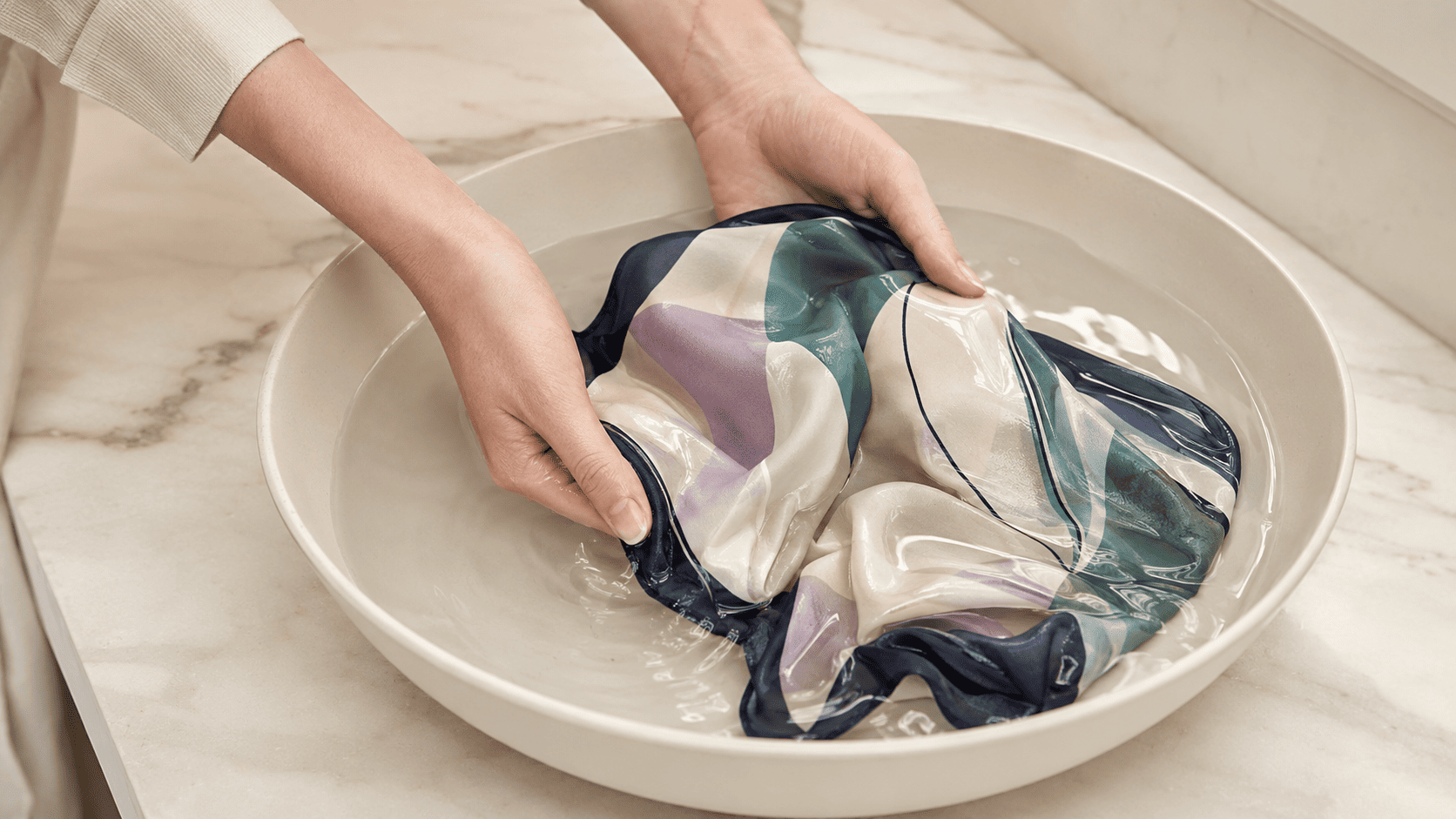
- Prepare cool water. Fill a clean basin with cool or cold water. Avoid hot water, which can affect dyes and the fabric’s finish.
- Add a silk-safe cleanser. Use only a small amount of mild, pH-neutral detergent intended for silk or wool. Avoid chlorine bleach, oxygen bleach, stain-removing powders, enzyme or biological detergents, and fabric softener.
- Wash briefly and gently. Lower the scarf into the water and support it with both hands. Move it through the water without scrubbing, brushing or rubbing one section against another. Do not leave it soaking for an extended period.
- Rinse thoroughly. Drain the wash water and rinse in clean, cool water until no detergent remains. Keep supporting the fabric rather than lifting it from one corner.
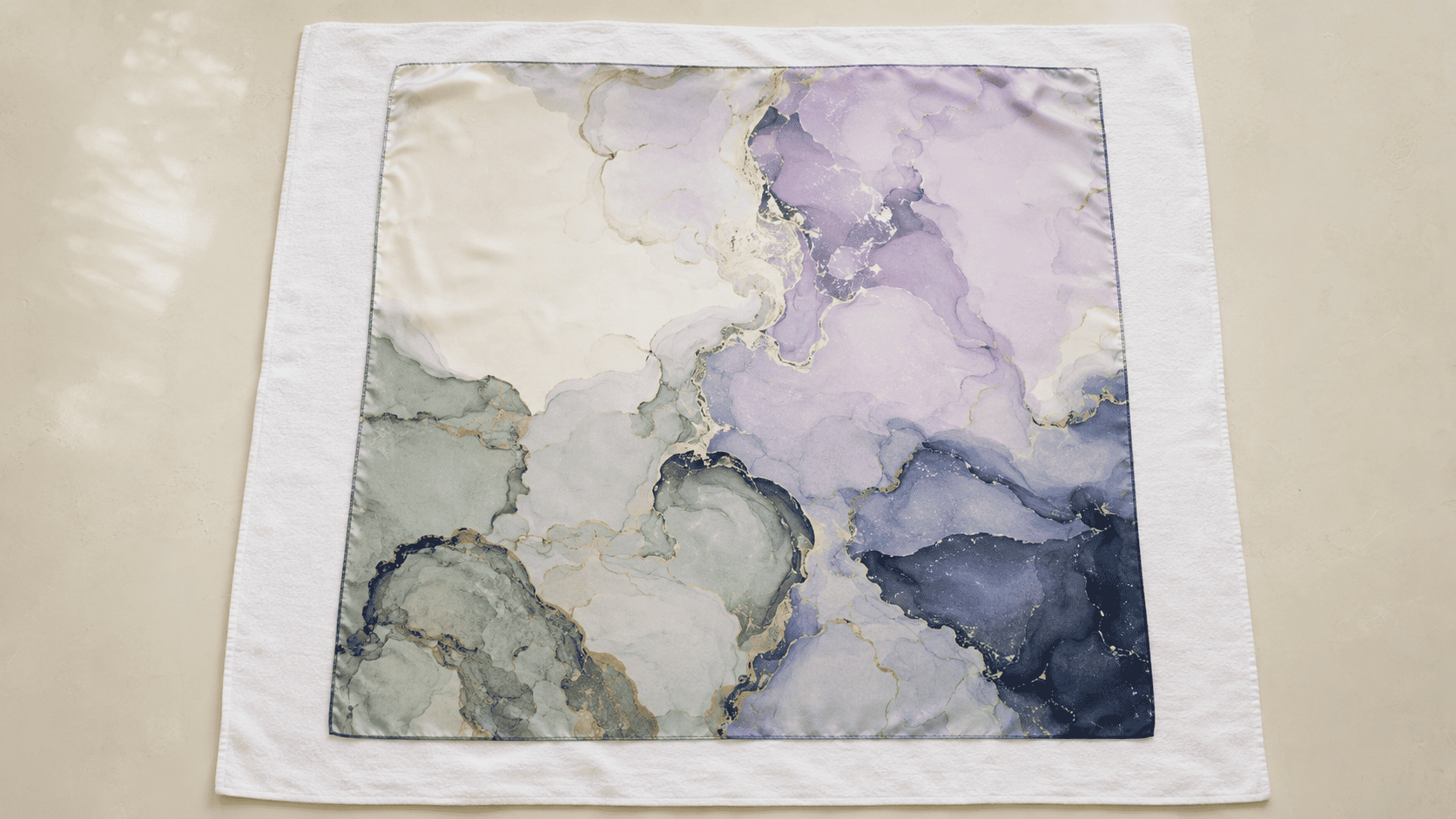
- Remove water without wringing. Gather the scarf carefully, place it on a clean white towel, and roll or press the towel gently to absorb excess moisture. Never twist the scarf.
Do not wash a silk scarf in a washing machine unless the manufacturer explicitly says machine washing is suitable. Even a delicate cycle can create abrasion, tangling and stress along a rolled hem.
How to dry a silk scarf without losing its shape
After towel-blotting, spread the scarf flat on a second clean, dry, colourfast towel. Smooth it into its natural square or rectangular shape with your fingertips, without pulling the corners. Leave it to air-dry in a well-ventilated place away from direct sunlight, radiators and other heat sources.
Avoid hanging a wet scarf from a narrow hanger or fixing it with clothes pegs, as concentrated pressure can leave marks or stretch the edge. Never tumble-dry silk. Strong sunlight is also unsuitable: repeated exposure can fade dyes and gradually weaken textile fibres.
How to remove wrinkles from a silk scarf
First check the care label. If ironing is allowed, turn the scarf to the reverse side and use the lowest silk setting. Place a clean, undyed cotton pressing cloth between the iron and the scarf, keep the iron moving, and avoid pressing directly onto a hand-rolled edge. Ironing while the scarf is still very slightly damp may help release creases with less heat.
A steamer can be useful only when the maker permits it. Keep the nozzle at a safe distance so hot droplets do not spit onto the silk, and allow the scarf to cool and dry completely before folding. If the scarf is valuable, vintage or finished with sensitive dyes, ask a specialist rather than experimenting with heat or steam.
How to store silk scarves correctly
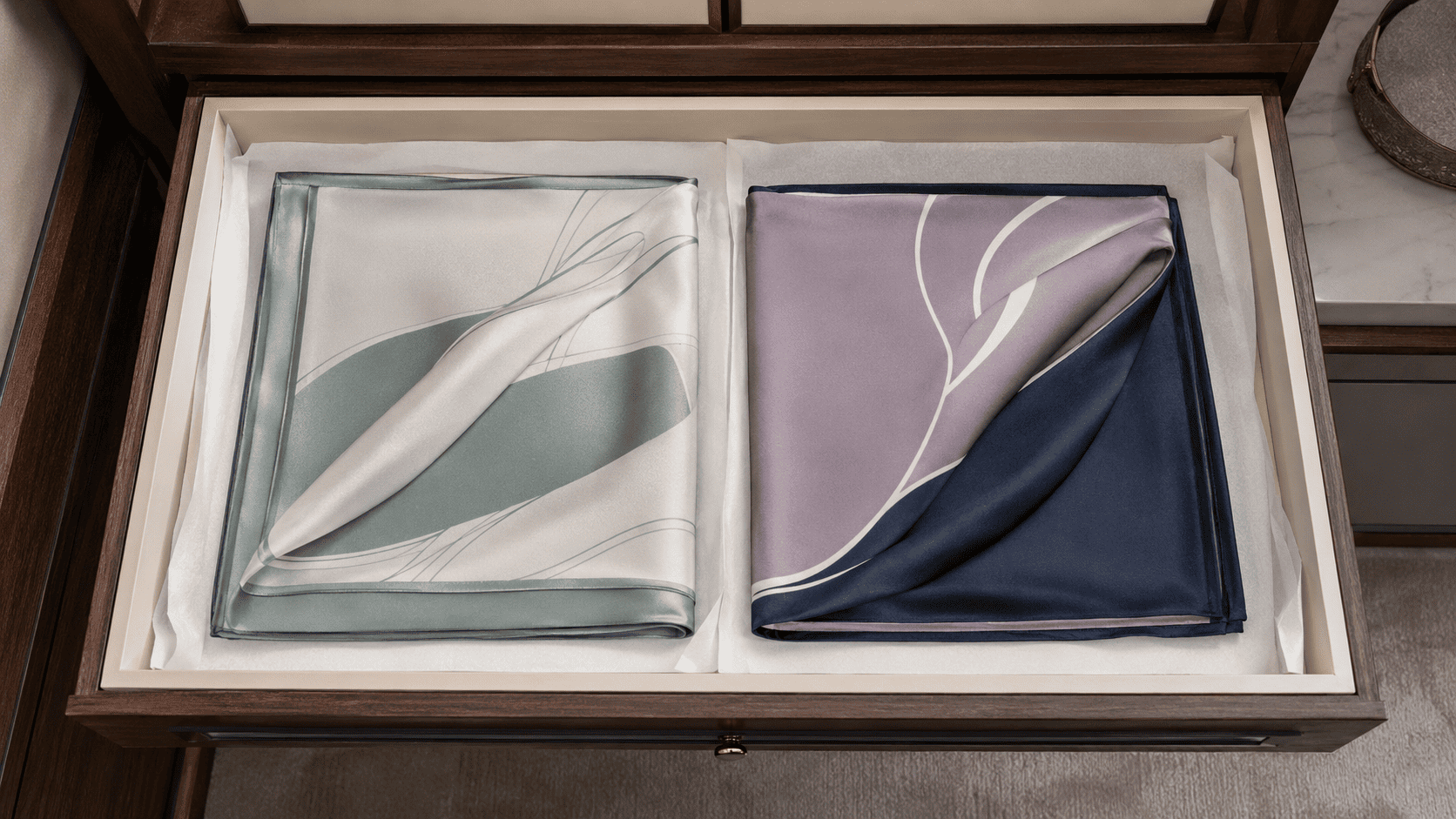
Store a silk scarf only when it is completely clean and dry. Perfume, skin oils and food traces may become harder to remove over time and can attract pests. Untie every knot after wearing; leaving a scarf tightly knotted creates persistent creases and stresses the same fibres repeatedly.
For regular use, fold the scarf loosely and keep it flat in a clean drawer or its presentation box. Acid-free tissue can be placed between folds, especially for long-term storage. Avoid overfilling the drawer or stacking heavy objects on top. Refolding the scarf along different lines occasionally helps prevent one crease from becoming permanent.
Choose a cool, dry, dark space with stable conditions. Keep scarves away from windows, damp wardrobes, plastic bags that may trap moisture, and direct contact with untested paper, wood finishes or fragranced pest products. If using a scarf ring, brooch or clip, remove it before storage so it cannot snag or mark the silk.
What to do when a silk scarf gets stained or wet
Act calmly. Blot a fresh spill from both sides with a clean white absorbent cloth; do not rub, scrub or spread the mark. Avoid applying water, vinegar, hairspray, alcohol, soap bars or general-purpose stain removers unless the care instructions specifically approve them. Home remedies may change the dye, leave a ring or damage the finish.
If the scarf is caught in rain, open it fully as soon as practical, blot gently and allow it to dry flat away from heat. For oil, makeup, ink, wine or an old stain, take the scarf to a professional cleaner and explain what caused the mark. The more precise the information, the better the cleaner can choose an appropriate treatment.
Everyday habits that protect silk
- Apply perfume, hairspray, lotion and makeup before putting on the scarf, then allow them to dry.
- Keep silk away from rough jewellery, hook-and-loop fasteners and abrasive handbag hardware.
- Use a smooth scarf ring rather than repeatedly tying an extremely tight knot.
- Rotate scarves instead of wearing and folding one piece in exactly the same way every day.
- When travelling, fold the scarf around acid-free tissue or place it in a breathable fabric pouch.
Frequently asked questions
Can you wash a 100% silk scarf?
Sometimes, but fibre content is not the only factor. The dyes, print, finish and edge construction also matter. Wash a 100% silk scarf at home only when its care label permits hand washing; otherwise choose professional cleaning.
Can silk scarves go in the washing machine?
Usually, hand washing or professional cleaning is safer. A washing machine can abrade the surface, tangle the scarf and strain delicate hems. Use a machine only if the manufacturer expressly recommends it.
How often should a silk scarf be cleaned?
Clean it when it is visibly marked, has absorbed an odour or has had significant contact with perspiration or cosmetics. A lightly worn, unmarked scarf can often simply be aired briefly and stored. Avoid cleaning more often than necessary.
Should silk scarves be hung or folded?
Flat, loose folding is the dependable choice for long-term storage. Hanging may be acceptable for short periods on a broad, smooth, padded support, but narrow hangers and clips can create pressure marks. Never store a scarf in a tight knot.
How do you keep a silk scarf shiny?
Protect its surface from rubbing, harsh detergent, high heat and prolonged sunlight. Gentle handling preserves the smooth fibres that create silk’s natural lustre; fabric softener or aggressive polishing is neither needed nor recommended.
A silk scarf is made to be worn, not hidden away. Thoughtful handling, restrained cleaning and calm storage are usually all it needs to keep telling its story beautifully.