

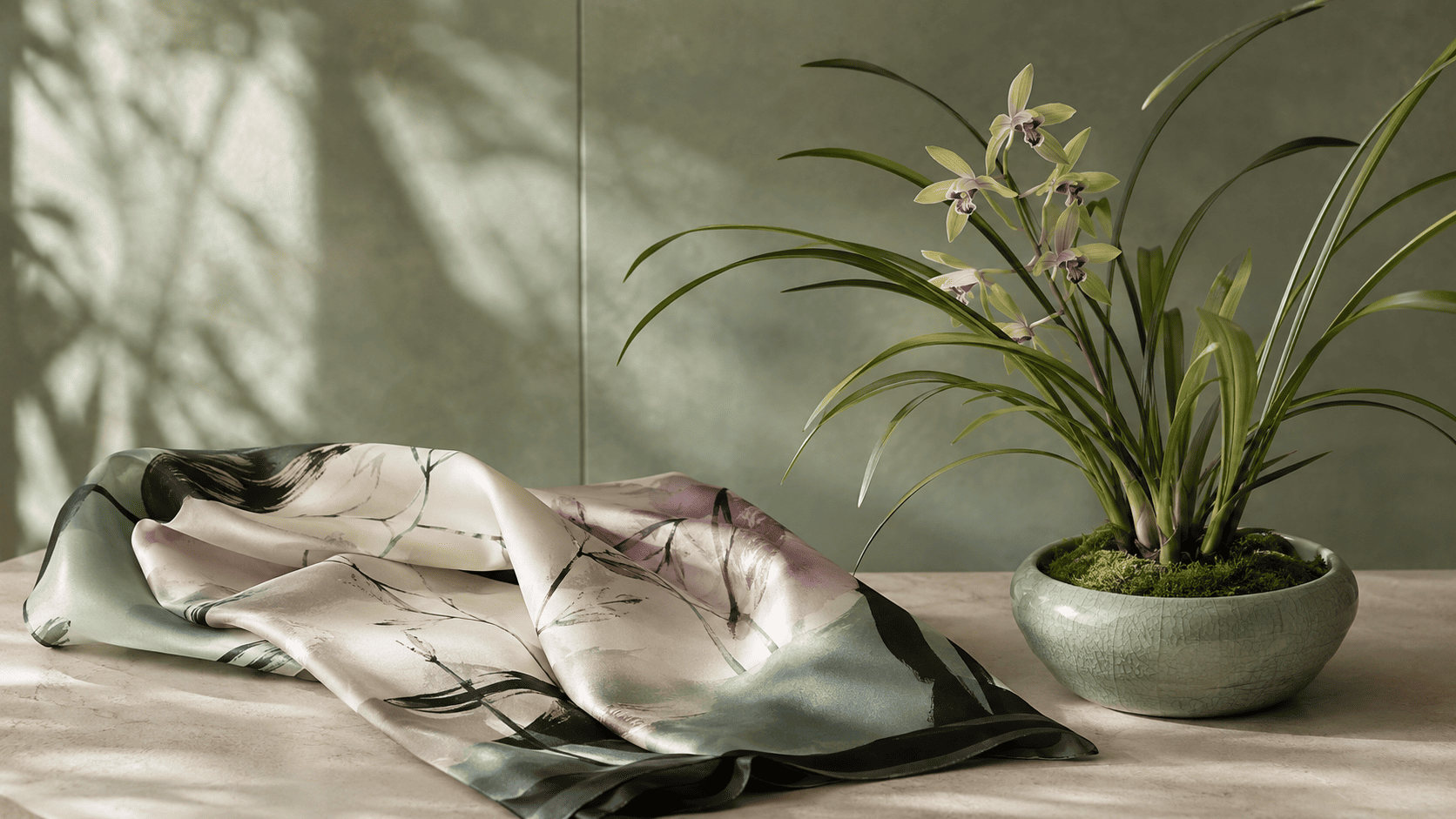
In Chinese art, the orchid is more than an emblem of beauty. It has long suggested cultivated character, integrity, modesty, loyalty and refined friendship. Its fragrance is subtle, its flowers are often small, and its slender leaves appear naturally suited to the movement of an ink brush. These qualities made the orchid a powerful subject for poets, scholars and painters—and they still give an orchid-inspired gift a thoughtful message today.
The meaning is not entirely fixed. Different artists and periods placed different emphasis on the flower, from principled character to political loyalty or the bond between friends. Understanding those layers helps us appreciate why the orchid remains one of the most quietly expressive motifs in Chinese visual culture.
What does the orchid symbolize in Chinese culture?
The shortest answer is that the orchid commonly represents virtue, integrity, humility, refinement, loyalty and friendship. These associations grew through centuries of literature and art rather than from one universal rule.
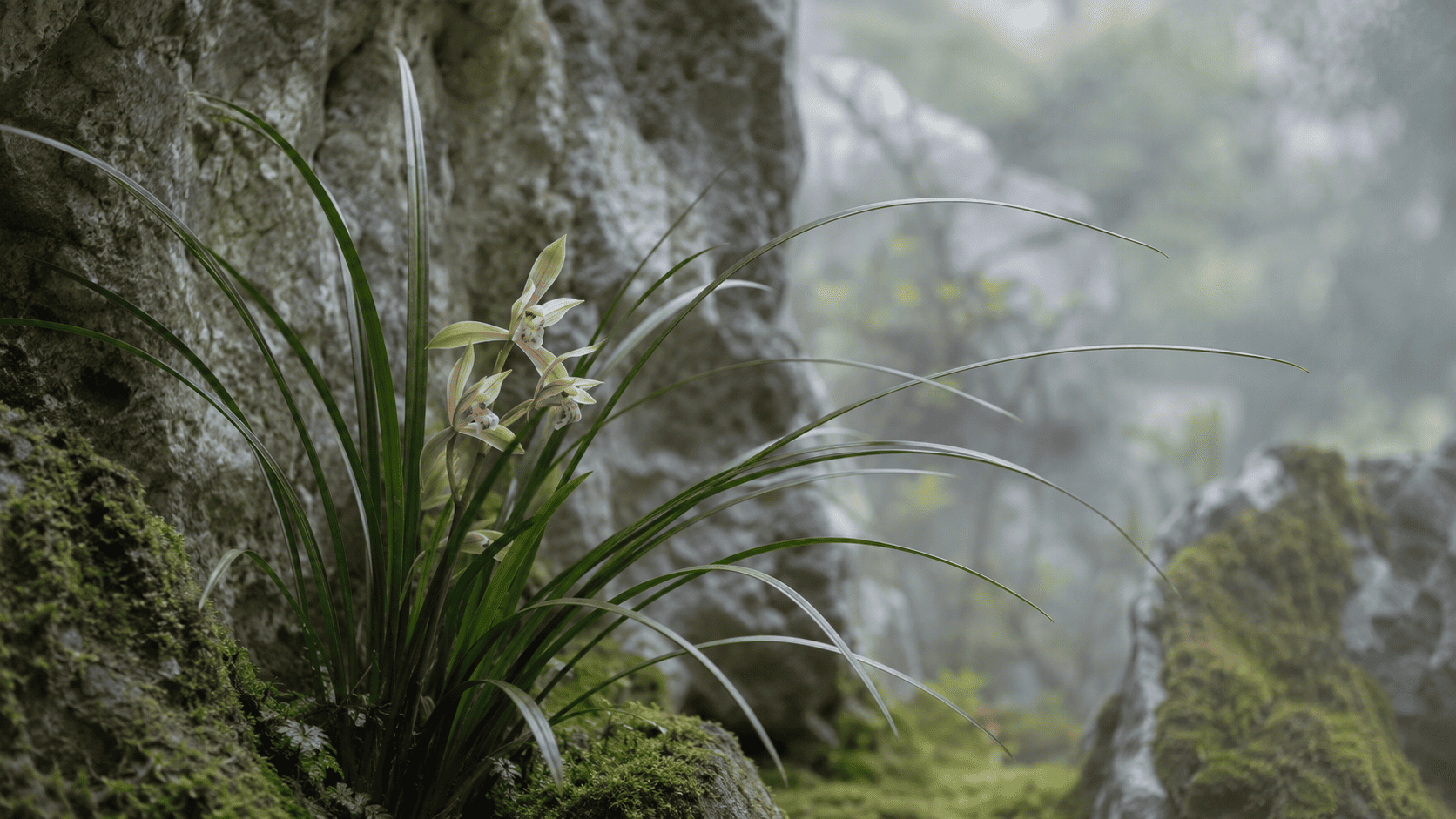
The orchid discussed in much of classical Chinese culture is lan (兰 or 蘭), especially the cymbidium. This is important because many international readers picture the large, brightly coloured phalaenopsis sold in contemporary flower shops. The traditional Chinese orchid is usually more restrained: long, narrow leaves, modest blossoms and a fragrance that may be noticed before the flower itself commands attention.
The Smithsonian’s National Museum of Asian Art explains that the cymbidium orchid became associated with principled gentlemen whose ability and integrity were not recognised by those in power. Over time, friendship, loyalty and patriotism also became part of its cultural language.
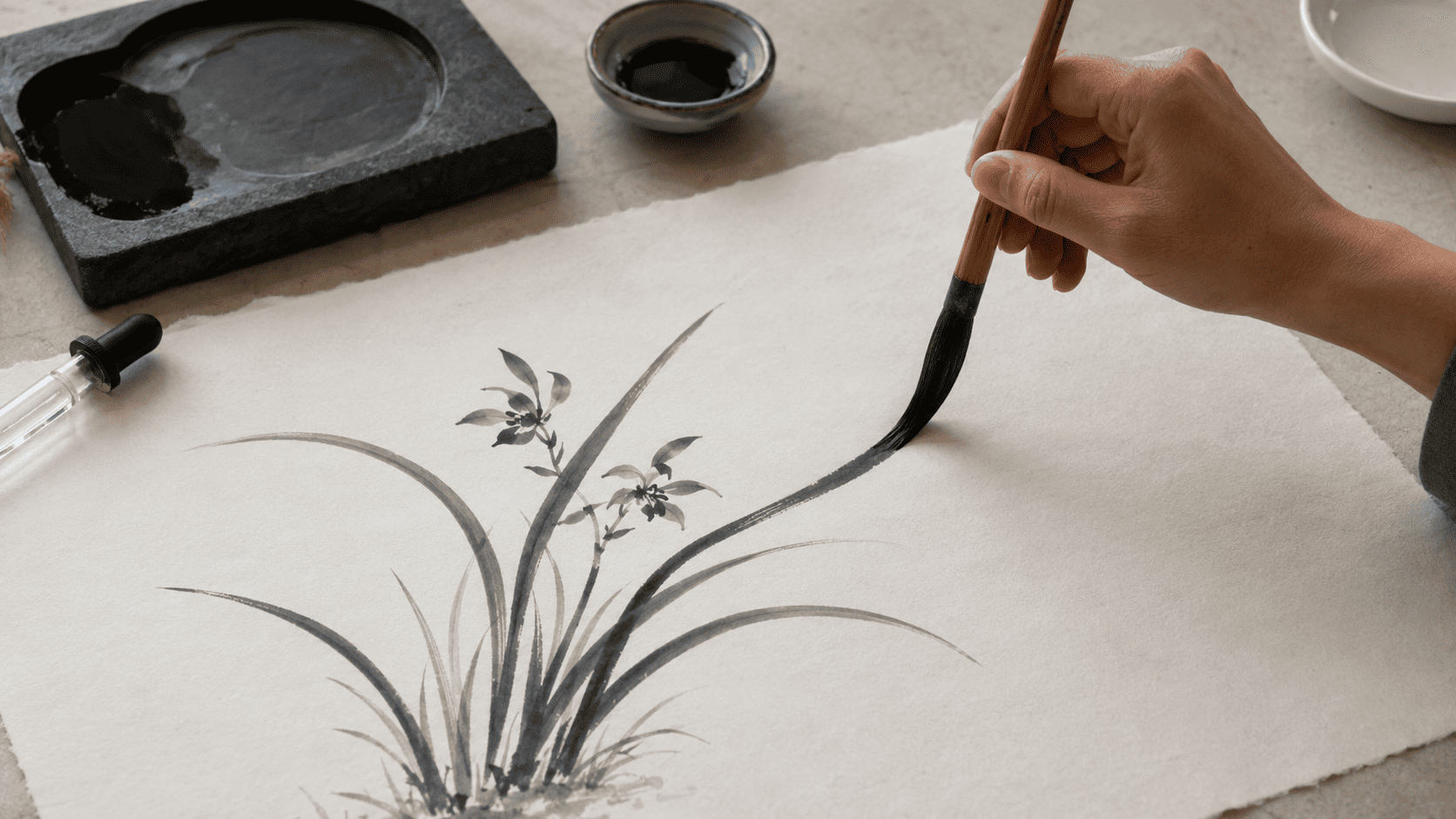
Why did the orchid become a symbol of character?
Quiet fragrance and unadvertised virtue
An orchid does not need to be visually loud to make its presence felt. Its restrained fragrance became an apt metaphor for good character that exists whether or not it receives public praise. This helps explain the orchid’s connection with the person who remains principled even when overlooked.
That idea is more nuanced than “orchid equals success.” The flower can instead honour the qualities beneath achievement: discipline, sincerity, learning and a steady sense of self. For modern gifting, it can say, “I recognise what you bring,” which may be more personal than a general wish for good fortune.
Grace without display
The orchid’s visual character also matters. Its leaves curve with economy, and its blossoms appear delicate beside stone, moss or open paper. The Denver Art Museum describes the orchid as a symbol of modesty and restraint, connecting its understated scent with the virtues of a scholar.
This is not humility understood as making oneself smaller. It is confidence without excess: elegance that does not depend on spectacle. That makes the orchid especially relevant to contemporary design, where a few purposeful lines can carry more feeling than a crowded field of decoration.
Loyalty and integrity in difficult circumstances
In some works, the orchid carried political and personal meaning. Following the Mongol conquest of the Song dynasty, for example, the ink orchid could express loyalty to the fallen regime. A celebrated handscroll by Zheng Xie is described by The Metropolitan Museum of Art as using the orchid to signify loyalty and unappreciated virtue.
Not every orchid painting should be read as political protest. Context—date, artist, inscription, recipient and historical circumstances—changes the interpretation. The broader lesson is that a natural motif could provide artists with a subtle way to speak about moral choices.
The orchid among the Four Gentlemen
The orchid belongs to the Four Gentlemen of Chinese painting, together with plum blossom, bamboo and chrysanthemum. Each plant offered both a moral association and a distinctive exercise in brushwork. As a group, they became an important part of literati art and later travelled into other East Asian painting traditions.
| Plant | Often-associated quality | Visual character |
|---|---|---|
| Plum blossom | Resilience and renewal | Blossoms emerging in winter cold |
| Orchid | Integrity, humility and refinement | Flowing leaves and restrained blooms |
| Bamboo | Uprightness and flexibility | Jointed stems and rhythmic leaves |
| Chrysanthemum | Independence and reclusion | Late-season flowering |
These are useful guideposts, not rigid labels. A painting’s meaning comes from the relationship between image, poem, calligraphy and circumstance. Lanting Loom follows the same principle in its design stories: cultural symbolism becomes richer when its source and interpretation are explained clearly.
What does an orchid mean as a gift?
An orchid-inspired gift can express admiration for someone’s character rather than only their appearance. Depending on the relationship and message, it may communicate respect, gratitude, encouragement, loyal friendship or appreciation for quiet accomplishment.
- For a mentor or teacher: recognition of learning, guidance and principled influence.
- For a close friend: an expression of refined friendship, trust and lasting regard.
- For a host: gratitude offered with grace rather than extravagance.
- For a graduation or new role: encouragement to carry integrity and confidence into a new chapter.
- For professional appreciation: acknowledgement of contribution, especially when the recipient values art, culture or understated design.
The message should remain personal rather than superstitious. A symbol does not guarantee an outcome, and it need not impose a meaning on the recipient. A short card can frame the intention gently: “For your quiet strength,” “With respect for all you have taught me,” or “In celebration of a new beginning.”
How to choose an orchid-inspired gift thoughtfully
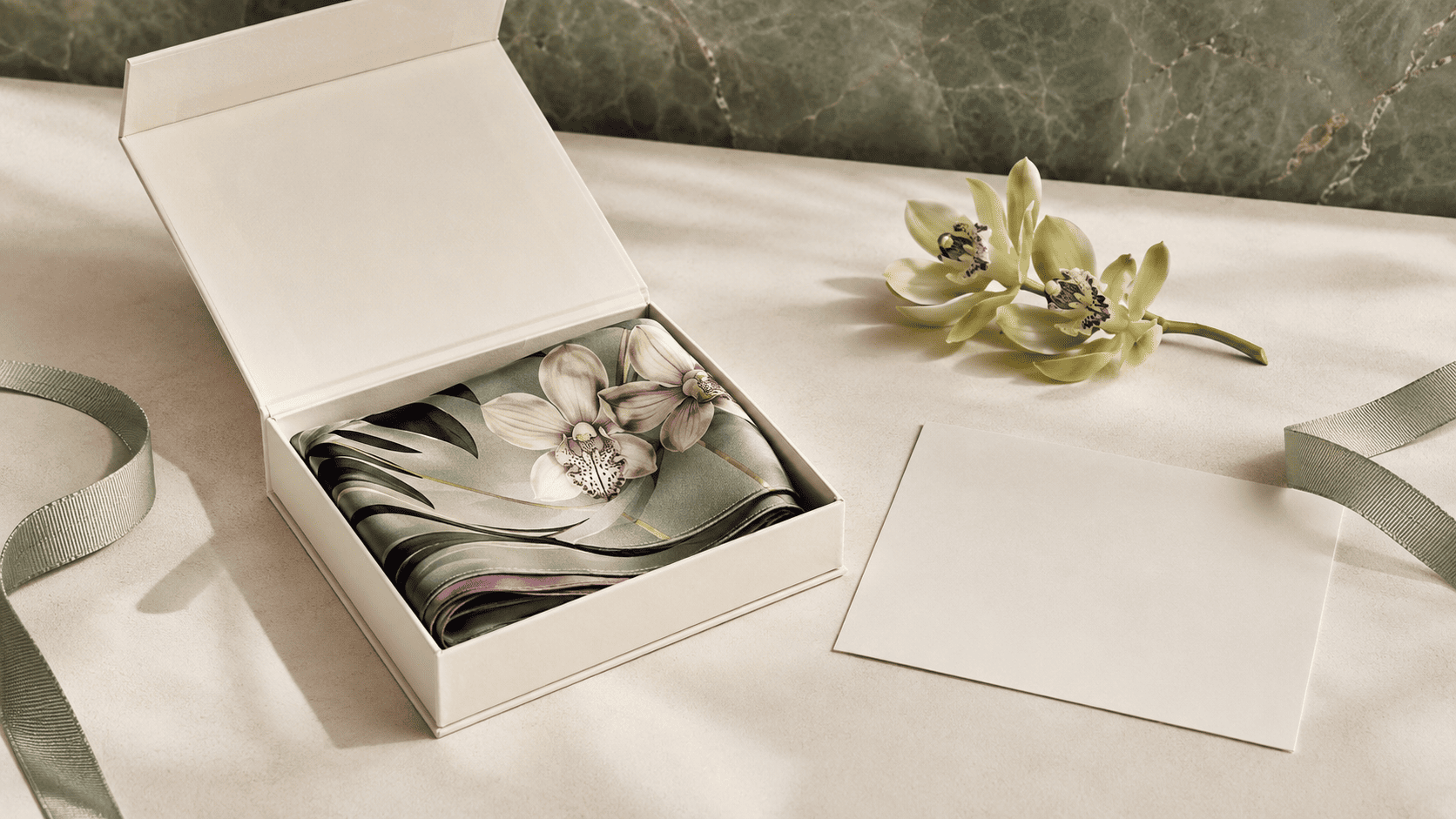
Begin with the recipient. Consider whether they prefer subtle colours, expressive patterns, small accessories or larger statement pieces. Symbolism adds value only when the object itself suits the person. The Whispering Orchid Twilly, for example, translates poised leaves and restrained blooms into a versatile ribbon of silk rather than reproducing an antique painting.
Explain the meaning with accuracy. Avoid flattening the orchid into a promise of romance, wealth or luck. A concise story card can mention cultivated character, friendship or quiet confidence while acknowledging that meanings vary across works and eras.
Let presentation support the message. A considered box, simple ribbon and personal note can make the symbolism feel intentional. Browse Lanting Loom’s silk scarf gift sets for combinations where product, story and presentation belong together.
Use cultural motifs as inspiration, not decoration alone. At Lanting Loom, the aim is to transform researched references into original, wearable design. Our approach to contemporary Chinese silk begins with beauty, then gives that beauty depth through context. For institutions or important occasions, corporate and cultural gifting can develop the story with equal care.
A symbol that speaks softly
The orchid endures in Chinese art because it holds strength and delicacy together. Its fragrance suggests influence without display; its leaves turn disciplined brushwork into movement; and its modest flower gives artists a language for integrity, loyalty and friendship. Given thoughtfully, an orchid-inspired gift carries the same quiet power: it honours not only what someone has achieved, but who they are.
Frequently asked questions
Does the orchid symbolize love in Chinese culture?
It can appear in personal or romantic contexts, but its best-established artistic associations include virtue, refinement, loyalty, friendship and modesty. The intended meaning depends on the artwork, period and relationship between giver and recipient.
Which orchid appears in traditional Chinese art?
The classical lan is commonly associated with cymbidium orchids, recognised by long, slender leaves and comparatively modest flowers. It should not automatically be equated with every modern ornamental orchid.
Is an orchid-themed gift appropriate for a mentor?
Yes. Because the orchid can suggest cultivated character, learning and principled influence, it is a thoughtful motif for thanking a teacher, mentor or respected colleague—especially when accompanied by a personal note.
Why is the orchid called one of the Four Gentlemen?
Orchid, plum blossom, bamboo and chrysanthemum became a celebrated group in Chinese ink painting. Each plant was linked with valued qualities and gave artists a distinctive way to practise expressive brushwork.