

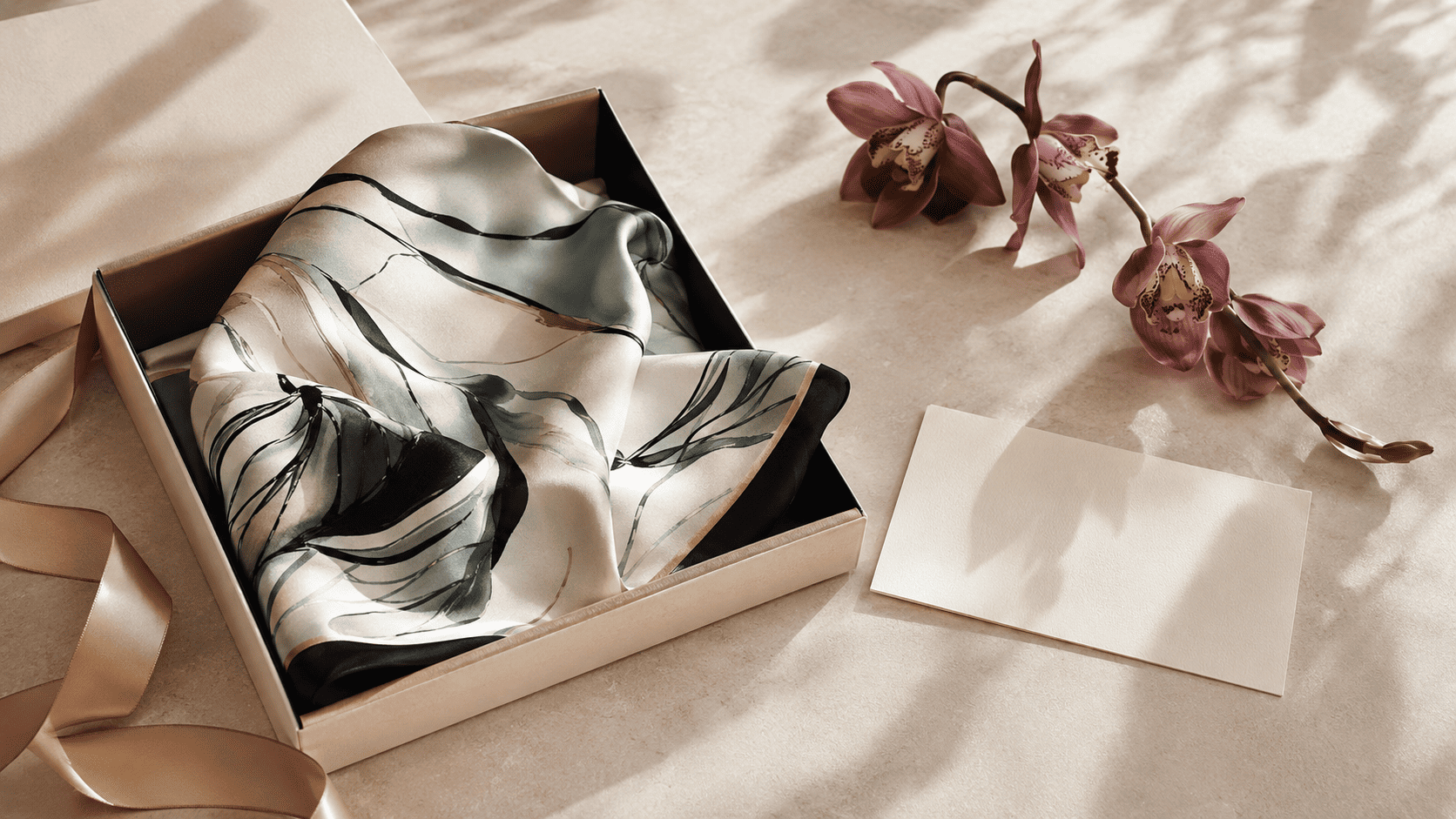
A meaningful scarf gift begins with the person, not the product. Consider what the recipient wears, the colours they return to, how they might style a scarf and what you want the gift to express. Then choose a design whose story, scale and presentation feel genuinely connected to them. The best scarf is not necessarily the boldest or most expensive one; it is the one that makes the recipient feel seen.
1. Begin with the recipient’s real style
Before thinking about symbolism, look at the recipient’s wardrobe. Do they favour quiet neutrals, saturated colour, botanical patterns or graphic lines? Do they wear tailored jackets, soft knitwear, dresses or simple shirts? A scarf should extend their style rather than ask them to become a different person.
If you can, recall photographs of outfits they wear repeatedly. Note two or three dominant colours and whether their accessories tend to be understated or expressive. Someone who lives in navy, cream and grey may appreciate a scarf in mineral green or muted orchid because it adds distinction without fighting their wardrobe. A person who enjoys strong colour may welcome deeper blue, ink black or a restrained cinnabar accent.
When you are uncertain, choose a design with a balanced ground colour and several secondary tones. It will coordinate with more outfits and reveal different details depending on how it is folded. Browse the silk scarf collection by imagining the recipient wearing each piece, not simply by choosing the image you like best.
2. Choose a size they will genuinely use
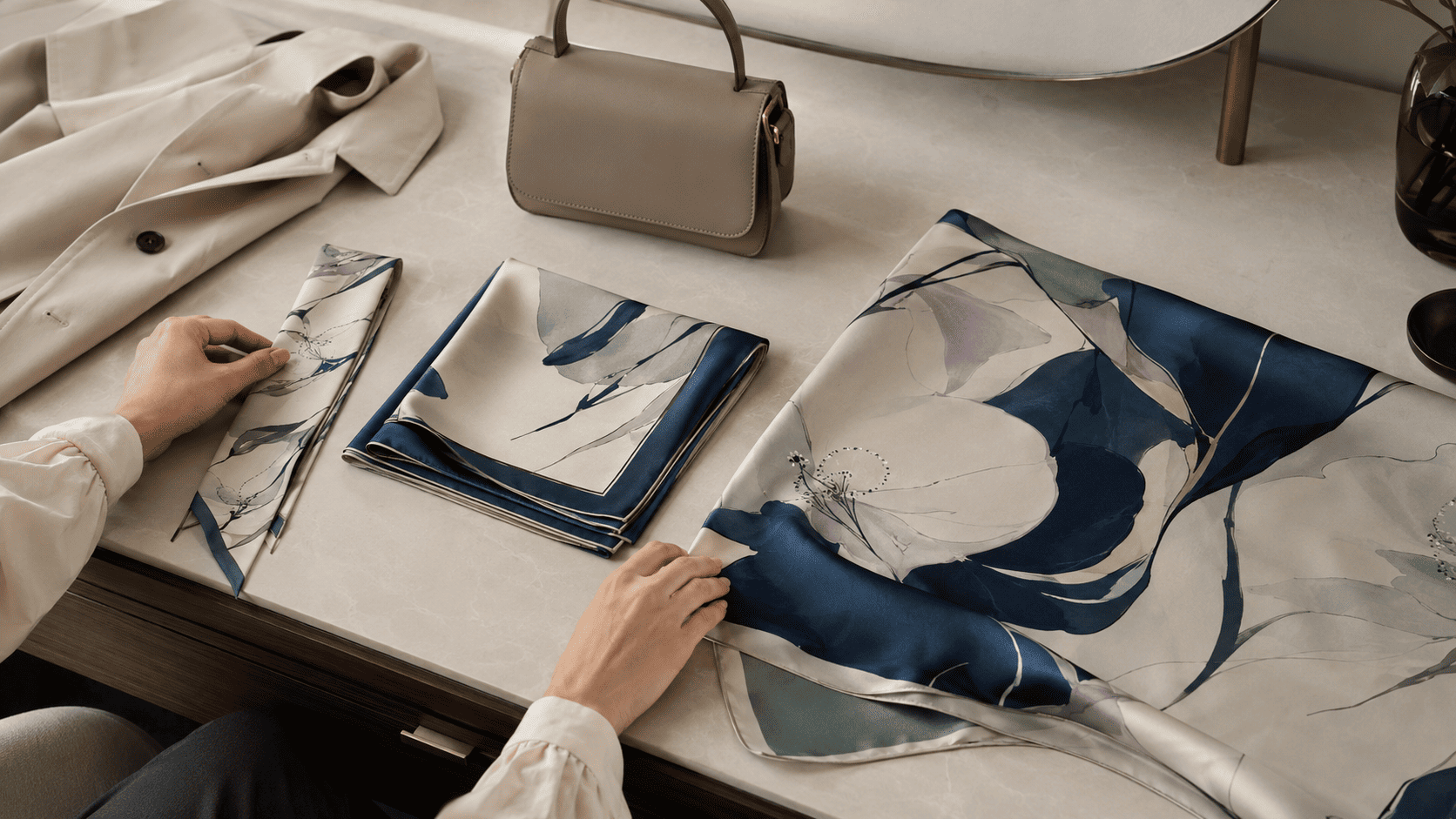
Format changes the character of a scarf. A narrow twilly is a small, approachable gift that can be tied at the neck, wrist, hair or handbag. A medium square offers more styling possibilities without feeling overwhelming. A large square creates greater visual impact and can be worn around the shoulders, over a coat or as a statement piece.
| Recipient or intention | A useful format | Why it works |
|---|---|---|
| New to scarves | Twilly or petite square | Easy to experiment with and simple to add to familiar outfits |
| Versatile dresser | Medium square | Works at the neck, in the hair or on a bag |
| Confident accessory wearer | Large square | Offers expressive drape and displays more of the artwork |
| Frequent traveller | Medium or large square | Adds warmth, changes an outfit and packs with little bulk |
If dimensions feel abstract, use our silk scarf size guide before ordering. You can also compare silk twillies with more versatile square scarves.
3. Let the design carry a personal meaning
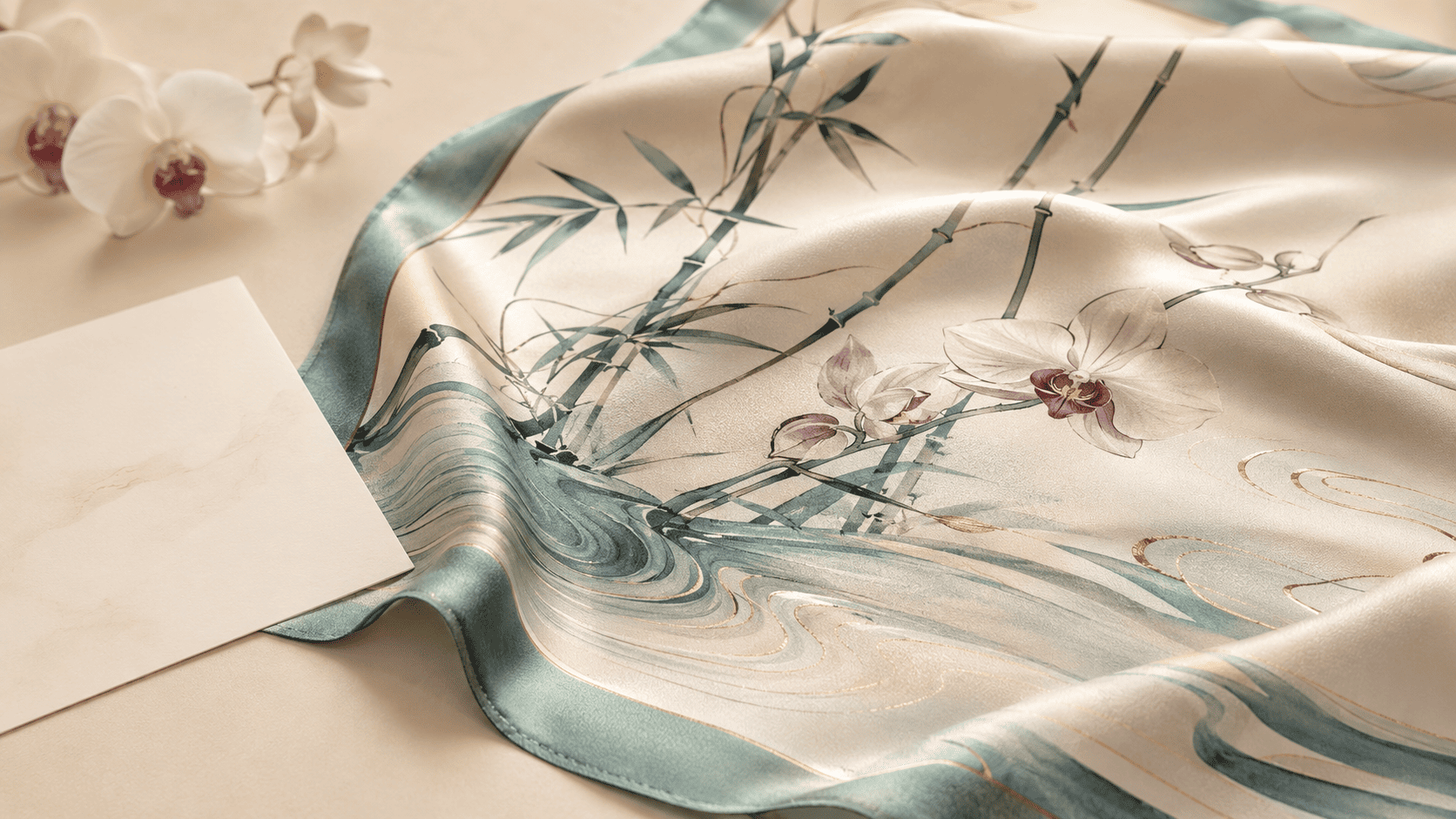
A pattern becomes meaningful when its story connects naturally to the recipient or occasion. A garden-inspired design might suit someone who finds calm in nature. Flowing water can suggest movement, connection or a new journey. Bamboo may evoke flexibility and resilience. An orchid can communicate cultivated character, friendship or quiet refinement—but symbolism should be explained with context rather than treated as a fixed promise.
For example, the Smithsonian’s National Museum of Asian Art notes that orchids have acquired associations including friendship and loyalty across Chinese literary and artistic traditions. That makes an orchid-inspired scarf a thoughtful option for a mentor or close friend, but your own message is what turns the historical association into a personal gift. You can explore the museum’s account of the orchid in Chinese painting for deeper context.
Look for product descriptions that distinguish documented cultural sources from contemporary interpretation. A responsible design story should enrich the scarf without claiming that the object itself is an antique reproduction, a heritage craft or handmade unless that is demonstrably true. Lanting Loom’s Design Stories explains how cultural and natural sources can inform an original composition for modern life.
4. Match the scarf to the occasion without making it generic
The occasion provides direction, but it should not erase the recipient’s personality. For a birthday, choose a colour or motif linked to something they love. For a graduation or career change, a design suggesting growth, resilience or an unfolding journey can acknowledge the transition. For a wedding, anniversary or family celebration, consider imagery associated with connection, harmony or shared memory.
A thank-you gift for a host, teacher or mentor benefits from quiet elegance rather than romantic symbolism. A scarf for a close friend can be more playful or specific, especially when the story recalls a shared garden, trip, season or conversation. For a mother or family member, an accompanying note may connect the design to a quality you admire in them.
Story-led scarves also show how artwork can move beyond a framed object. The Victoria and Albert Museum’s account of a scarf created from a Chinese-inspired design story is a useful example of how cultural ideas, visual research and wearable form can meet. The lesson for gifting is simple: choose a beautiful object first, then make its story relevant to the person receiving it.
5. Check material and finishing, not just the print
For a premium gift, read the product details carefully. Confirm the fibre composition, dimensions, fabric construction, edge finish, printing method when disclosed, place of origin and care instructions. “Silky” describes a feel; it does not necessarily mean the item is made from silk. Clear labelling is more valuable than vague luxury language.
Also inspect how the pattern behaves when folded. A square scarf may look striking when fully open but should still reveal pleasing colour relationships at the neck. Borders, corners and contrasting areas give the wearer more options. Good product photography should show the flat artwork, fabric texture and at least one styled view.
6. Make the presentation part of the meaning
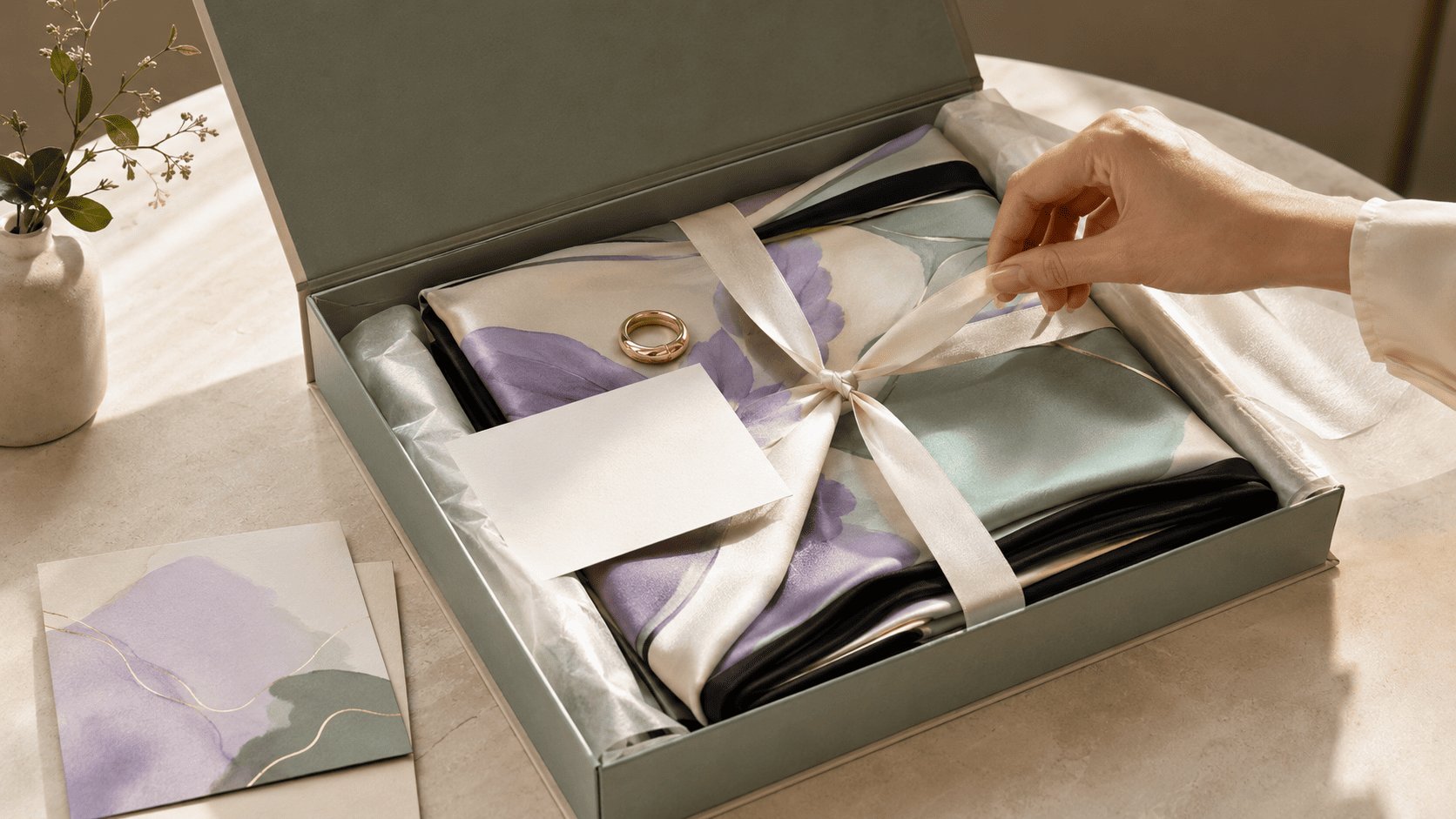
Presentation signals care before the scarf is even unfolded. A protective box, design-story card, personal message and simple styling guidance can transform an accessory into a complete experience. If the recipient is new to scarves, an optional scarf ring can make styling more intuitive.
Write a short message explaining why you chose this particular design. One or two sincere sentences are usually stronger than formal language: “The flowing lines reminded me of the journeys we have shared,” or “I chose the orchid because its quiet strength made me think of you.” The message should express your connection, not instruct the recipient what the symbol must mean.
Review the available scarf gift services and check the individual product page for exact inclusions. If the gift is being sent directly, verify the recipient’s full address and allow extra time for a fixed occasion. International shoppers should also read the shipping and delivery guidance, including information about duties and taxes.
A final checklist before you order
- Does the colour palette complement clothes the recipient actually wears?
- Is the size suitable for their experience and preferred styling?
- Can you explain in one sentence why the design made you think of them?
- Are the material, dimensions, finish, care and origin clearly stated?
- Does the presentation suit the occasion?
- Have you checked delivery timing, address details and possible import charges?
Include or share care guidance so the gift can be enjoyed for years. For a fuller understanding of how light, moisture, pollutants and physical stress affect historic fabrics, the Canadian Conservation Institute provides detailed guidance on caring for textiles and costumes. For everyday use, always follow the care label supplied with the scarf.
Frequently asked questions
Is a silk scarf a good gift for someone who does not usually wear scarves?
Yes, if you choose an accessible format. A twilly or petite square can be worn on a handbag, wrist or ponytail as well as at the neck. Include one or two simple styling suggestions and avoid an oversized design unless the recipient enjoys statement accessories.
What scarf colour is safest for a gift?
There is no universal safest colour. Start with the recipient’s most-worn neutrals, then choose a scarf that repeats one familiar tone and adds one or two complementary colours. Balanced palettes in navy, ivory, muted green, soft blue or restrained orchid are often versatile, but personal observation matters more than a rule.
Should I choose the scarf for its symbolism or appearance?
Beauty comes first. The recipient should want to wear the scarf even without knowing its story. Symbolism then adds emotional depth. Choose a design that succeeds visually and carries a meaning you can explain accurately and personally.
How can I make a scarf gift feel more personal?
Select a design connected to the recipient’s style, interests or current chapter, and add a concise handwritten or printed message explaining the connection. Thoughtful specificity makes the gift personal; a higher price alone does not.