

The story of the Orchid Pavilion begins with a spring gathering in 353 CE. Wang Xizhi—later revered as China’s “Sage of Calligraphy”—and more than forty companions met near Shanyin, in present-day Zhejiang, for a purification festival. Beside a winding stream, they drank wine, composed poems and enjoyed the landscape. Wang then wrote a preface for the collected verses. What began as an elegant day among friends became one of the most influential stories in Chinese art.
The gathering endures because it joins beauty with impermanence. Wang’s preface moves from pleasure in friendship, nature and creativity to a sober recognition that every meeting passes. Its celebrated calligraphy gave visible form to that emotional shift: animated, spontaneous and human rather than mechanically perfect.
Where and when did the gathering take place?
The event was held on the third day of the third lunar month in 353, during the Eastern Jin dynasty. The site was the Orchid Pavilion, or Lanting (兰亭), at Shanyin near modern Shaoxing. The occasion was connected with a spring purification observance traditionally associated with cleansing, renewal and time spent beside water.
Wang Xizhi was already an official and accomplished calligrapher. His guests were friends, relatives, poets and officials who shared an appreciation of writing, landscape and cultivated leisure.
The Metropolitan Museum of Art’s record for Qian Gu’s later handscroll, Gathering at the Orchid Pavilion, places Wang and his companions at Shanyin and explains the gathering’s poetry competition. The scroll was painted in 1560, more than twelve centuries after the event, showing how powerfully the story remained in the cultural imagination.
How did the floating-cup poetry game work?
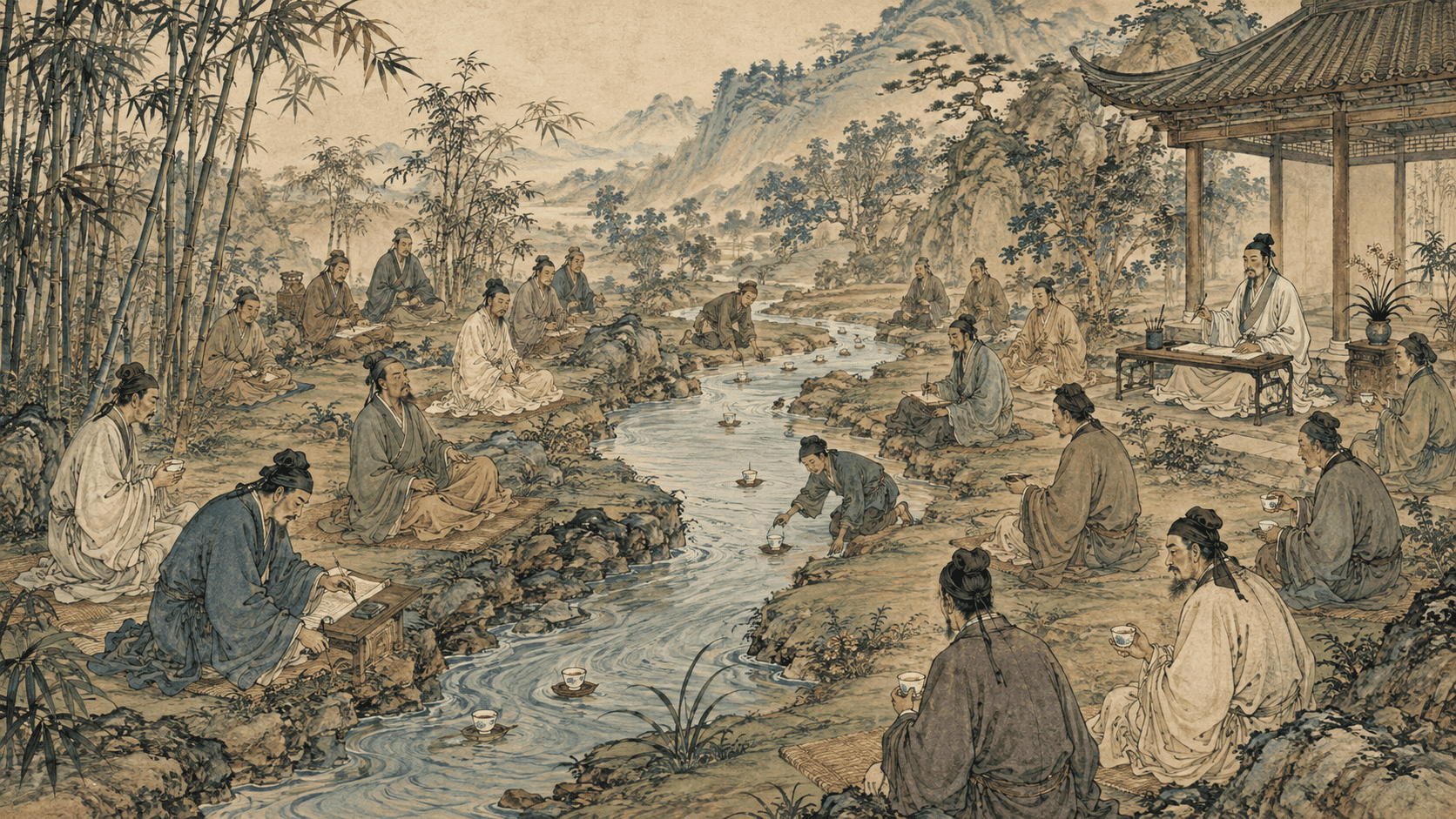
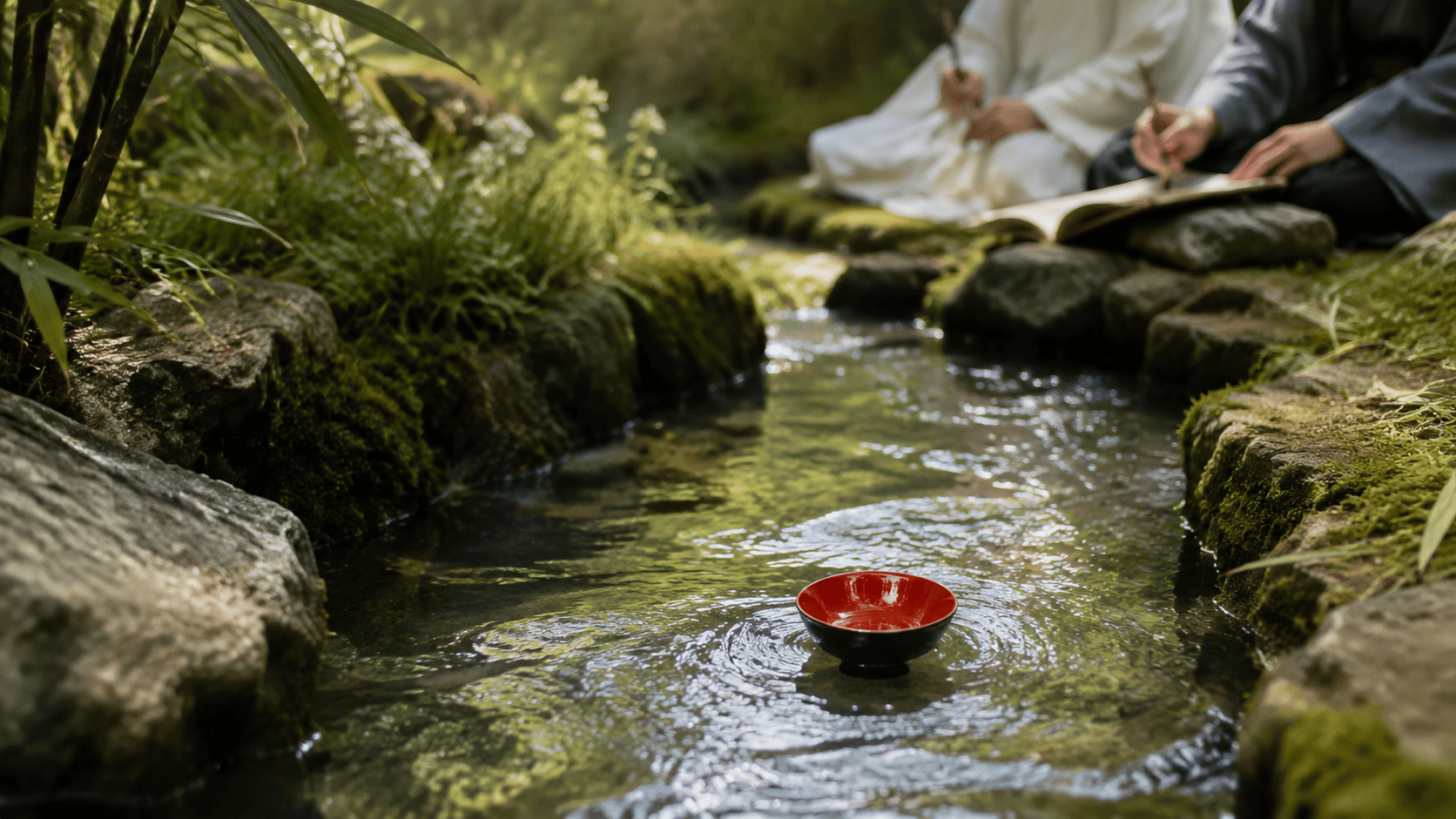
The detail most often remembered is the winding stream. Small cups of wine were set upon the water and allowed to drift past the seated guests. When a cup stopped near someone, he was expected to compose a poem within the allotted time. Those who failed faced a drinking penalty.
According to the Met’s account, eleven participants completed two poems each and fifteen completed one; sixteen failed to produce a poem and drank additional cups. The successful verses were gathered into a collection. The game made creativity social and unpredictable: water determined who would be challenged, while wine, landscape and companionship loosened the formal atmosphere.
What did Wang Xizhi write?
Wang composed a preface to introduce the poems made that day. Known as the Lantingji Xu—usually translated as the “Preface to the Poems Composed at the Orchid Pavilion”—the text begins with the date, place, guests and landscape. It celebrates clear weather, a gentle breeze and the pleasure of looking outward across the universe while allowing the mind to travel freely.
Then its mood changes. Wang reflects that people find fulfilment in different ways, yet all eventually confront ageing and death. The pleasure of the present cannot be held. Future readers, he suggests, will look back on his generation just as his companions looked back on people of the past.
This movement from delight to transience gives the preface lasting emotional depth. It does not reject the joyful gathering; it makes the day more precious because it cannot last. Friendship, art and landscape become ways of recognising a shared human condition across time.
Why is the calligraphy so celebrated?
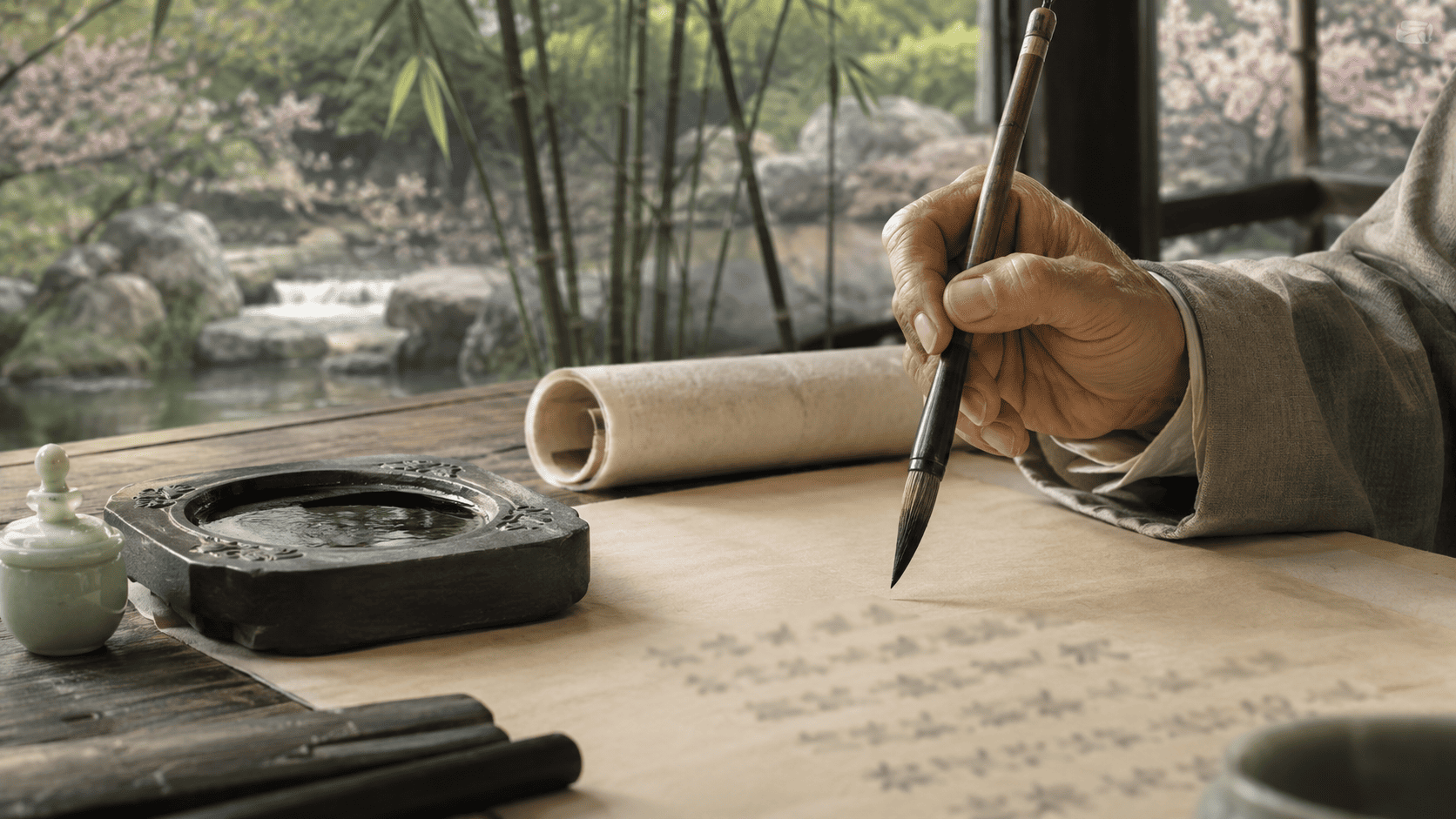
The preface is traditionally regarded as a supreme example of running script, a form that allows characters to flow while remaining legible. Later accounts describe Wang writing with unusual spontaneity, helped by the relaxed atmosphere and wine. When he tried to reproduce the piece, the story says, he could not recapture the same vitality.
Its reputation rests not only on graceful individual characters but on rhythm: changes in size, pressure, speed, spacing and connection make the text feel alive. Repeated characters are said to appear with varied forms rather than as copies of one model. For viewers trained in calligraphy, the brushwork can reveal movement, hesitation, energy and temperament.
The Met describes the preface as the greatest work in running script in its record for a later transcription of the Orchid Pavilion Preface. The British Museum likewise identifies Wang as the calligrapher most famous for the work in its biographical record of Wang Xizhi.
What happened to the original manuscript?
The original written by Wang Xizhi no longer survives. Its fame was transmitted through copies, tracings, rubbings and repeated acts of study. Tang emperor Taizong was an intense admirer of Wang’s calligraphy, and later stories describe imperial efforts to obtain the treasured manuscript. A famous tradition claims that it was buried with the emperor, but this cannot be treated as a verified account of the original’s final location.
What survives are copies that preserve different understandings of the work. Smarthistory’s introduction to Chinese calligraphy notes that the original is lost and identifies an early Tang copy associated with Feng Chengsu, now in the Palace Museum in Beijing, as the finest surviving version.
This history creates a fascinating paradox: the most famous work of Chinese calligraphy is known through transmission rather than through the artist’s own sheet. Copying did not simply reproduce the past. It became a disciplined way for generations of calligraphers to encounter Wang’s movement, decisions and spirit.
Why did the Orchid Pavilion become a lasting artistic subject?
The story offers artists several subjects at once: cultivated friendship, poetry, flowing water, garden space, calligraphy and the passage of time. A painter can unfold the gathering along a handscroll; a garden designer can build a winding channel; a calligrapher can reinterpret the preface; a decorative artist can place the scene around a brush holder or across a vessel.
Explore Lanting Loom’s Design Stories to see how historical and artistic sources can guide contemporary work without being reproduced literally. The brand’s approach to cultural translation begins with research, then carries atmosphere, movement and meaning into designs intended for modern wardrobes.
How the Orchid Pavilion inspires Lanting Loom
The name “Lanting” connects the brand to a scene where nature, art and human connection became inseparable. The inspiration is not a pavilion icon or copied characters. It lies in the curve of moving water, the pause between brushstrokes, garden shadows, bamboo rhythm and the awareness that meaningful moments deserve to be remembered.
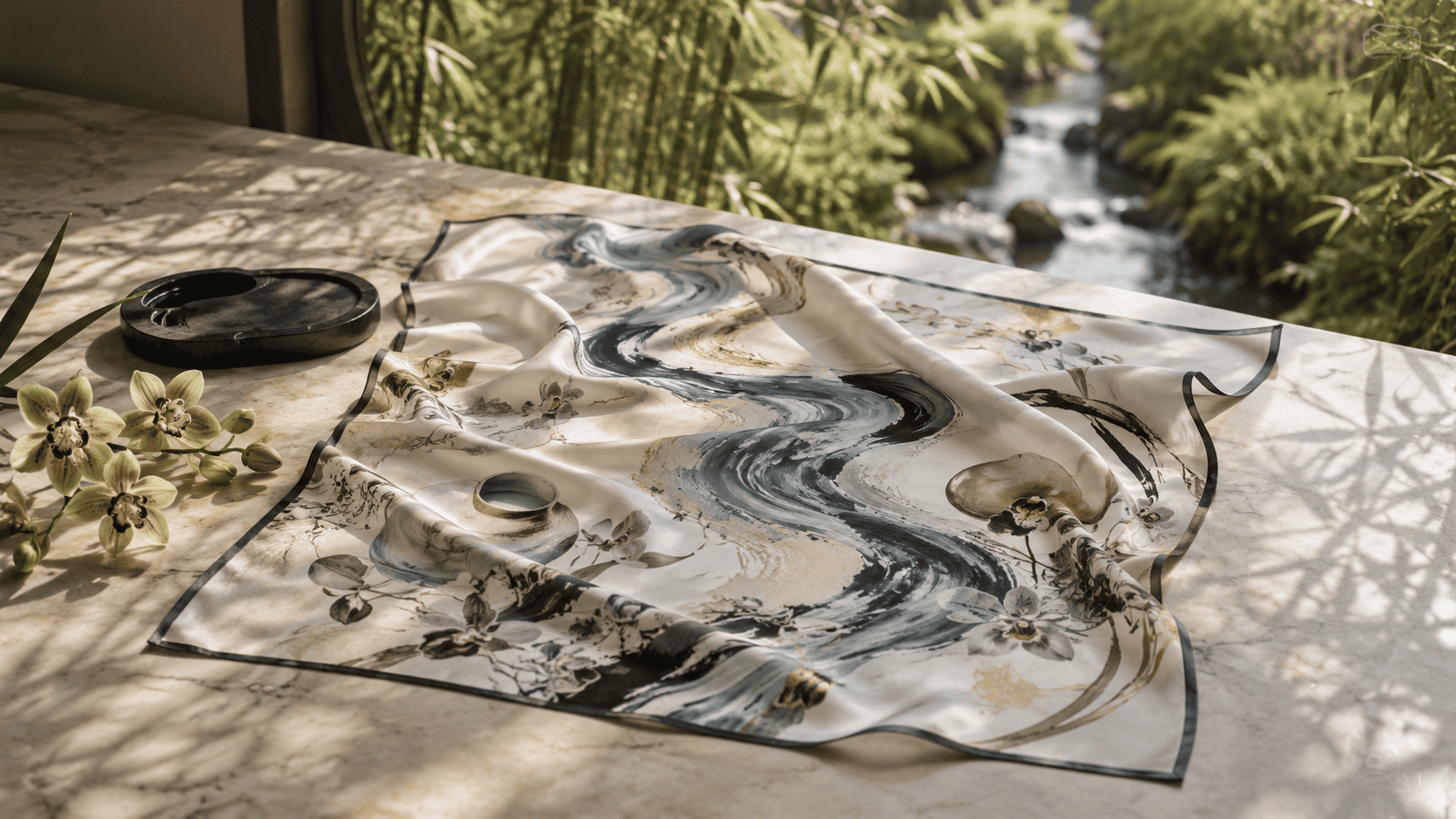
On silk, those ideas can become fluid borders, open negative space and colours that change as the scarf folds. A design may suggest the gathering without illustrating it. This follows Lanting Loom’s principle of translation: understand the source, identify its emotional core and express it through a contemporary visual language that remains beautiful to wear.
The orchid itself carries a separate but complementary history. To explore its associations with cultivated character, friendship and quiet integrity, read the meaning of the orchid in Chinese art and gifting. You can also browse square silk scarves, whose open format allows a complete composition to transform each time it is folded.
Frequently asked questions
Was the Orchid Pavilion a real event?
The gathering of 353 and Wang Xizhi’s preface belong to the established historical tradition. However, many familiar visual details come from paintings produced centuries later, and stories about the original manuscript accumulated over time. Historical event, artistic memory and later legend should therefore be distinguished.
How many people attended the Orchid Pavilion gathering?
Traditional accounts describe more than forty participants. The commonly cited poetry results—eleven men writing two poems, fifteen writing one and sixteen failing—imply forty-two men in total, including Wang Xizhi. Some museum descriptions refer to forty-one companions or eminent guests, so counts may depend on whether the host is included.
What was the main message of the Orchid Pavilion Preface?
The preface celebrates friendship, nature and creative freedom, then reflects on ageing, death and the inability to hold a perfect moment. Its enduring idea is that people across different eras can recognise the same feelings when they encounter words left by those who came before.
Where is the original Orchid Pavilion Preface today?
Its location is unknown and the original is considered lost. The work is studied through later copies, tracings and rubbings. The tradition that it was buried with Tang emperor Taizong is famous, but it should be presented as a later story rather than established fact.