

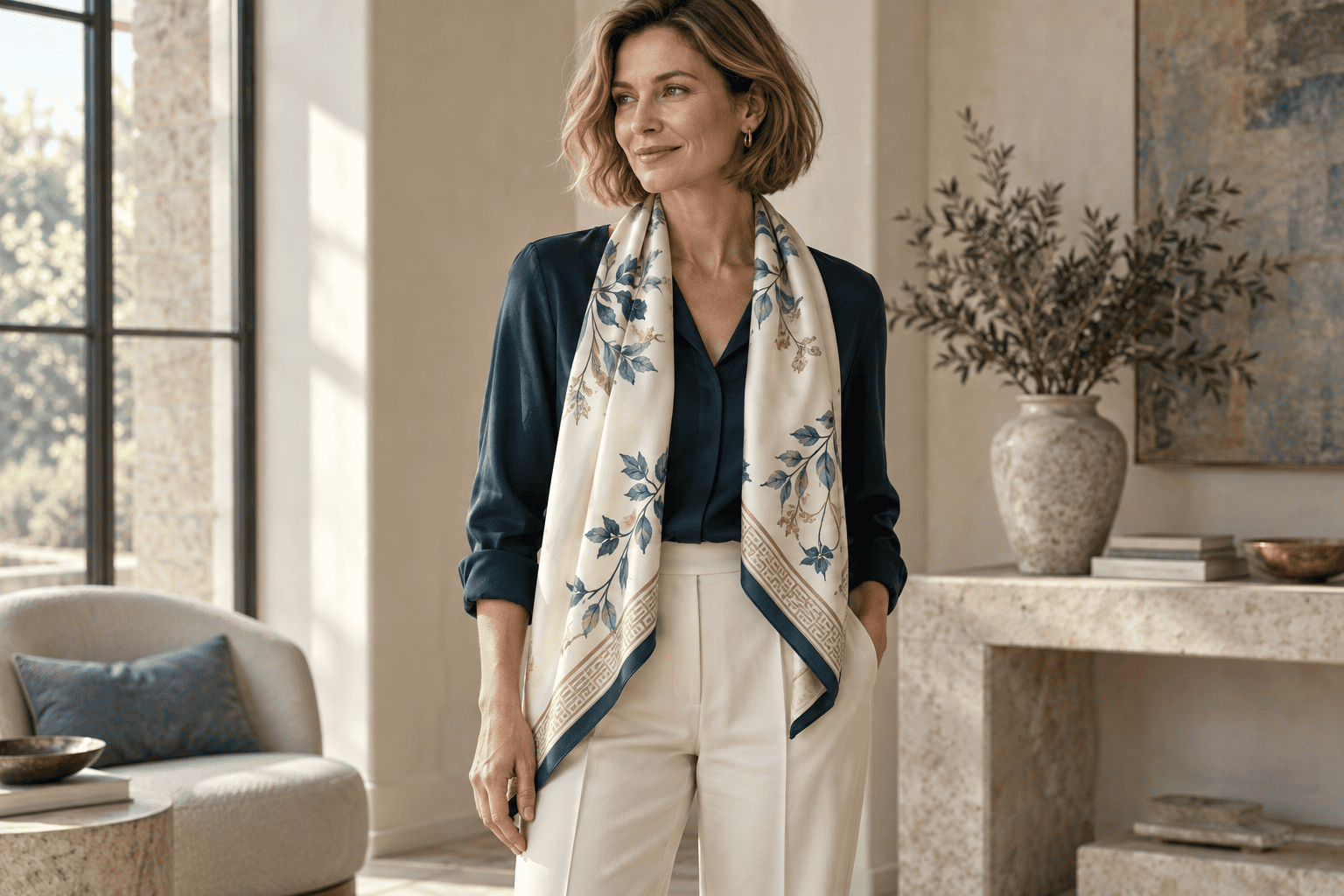
A beautiful photograph can make almost any scarf look desirable. Judging what arrives in the box takes a closer look: at the fabric, the print, the edges and the way those details work together when worn.
A high-quality silk scarf combines clearly identified fibre, well-made fabric, controlled colour and printing, secure finishing and proportions suited to its intended use. No single feature—not a high price, a momme number or a hand-rolled hem—can establish the quality of the whole piece.
Whether you are choosing an everyday accessory or a meaningful gift, these are the details worth examining before you buy.
1. Clear fibre information comes first
Start with the material description. “100% silk” identifies fibre content; “silky,” “silk feel” and “satin” alone do not. Satin describes a fabric construction and can be made from silk or other fibres. A blend should state its components and proportions so you know what you are comparing.
The US Federal Trade Commission’s textile-labelling guidance identifies fibre content, country of origin and the responsible business as core information on most textile labels. For a shopper, clear disclosure provides a more useful starting point than an attractive adjective.
Mulberry silk describes the silk’s source, but it does not grade the completed scarf. Yarn preparation, weaving, printing and finishing still matter. A fibre label is the seller’s declaration, not independent proof of every quality claim; if descriptions conflict or important details are missing, ask before ordering.
2. The fabric should be well made for its purpose
There is no single texture that all good silk scarves share. A fine twill may hold a defined fold, satin may fall in smooth, luminous curves, and a light chiffon may be intentionally sheer. Transparency or a restrained sheen is not automatically a defect.
Examine the fabric in soft, even light. Look for unexpected holes, pulled threads, isolated thin patches or distortion that interrupts the intended surface. Distinguish these from deliberate texture or woven motifs; a jacquard pattern can change appearance as the cloth moves.
The Canadian Conservation Institute explains that satin’s lustrous face comes from long floating yarns, which can be pulled out of alignment. A smooth finish therefore deserves gentle handling. Do not scratch, stretch or rub the surface to test its strength.
For a closer comparison of how construction affects the result, see our guide to silk twill, satin and habotai.
3. Momme should suit the scarf, not win a numbers contest
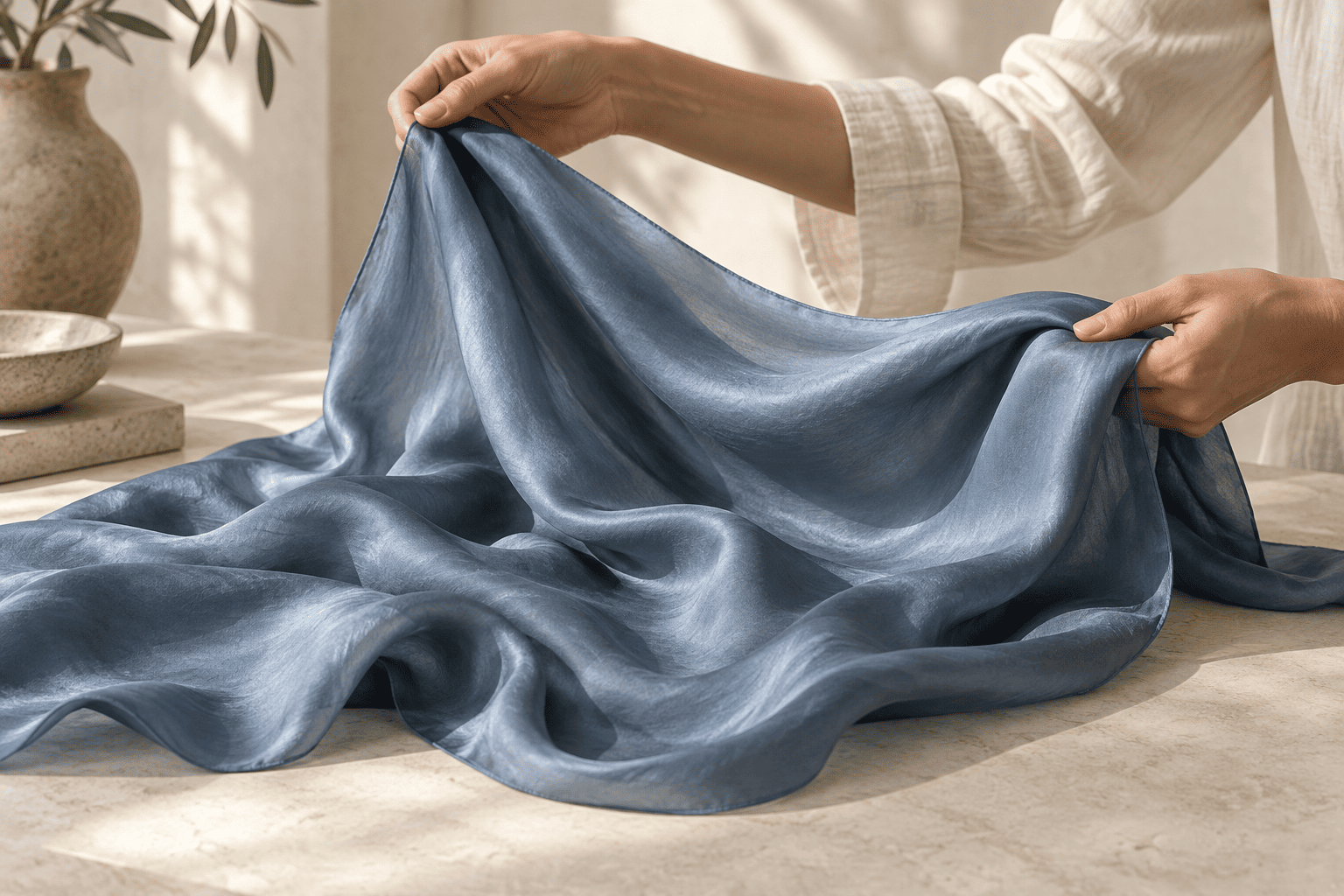
Momme measures fabric weight per unit area. When two scarves have comparable construction, a higher figure tells you that the fabric is heavier; it does not establish better printing, softer handling or more careful sewing.
A scarf intended for small neck knots has different needs from a broad shoulder wrap. Extra weight may create attractive body in one design and unwanted bulk in another. Equally, a very light fabric can be well made while offering less structure than you want.
Read what momme means in silk alongside the dimensions and fabric description. If a seller supplies no momme figure, that omission alone does not prove poor quality. Ask how the scarf drapes and request a photograph showing it loosely folded or worn.
4. Printing should look intentional on both sides
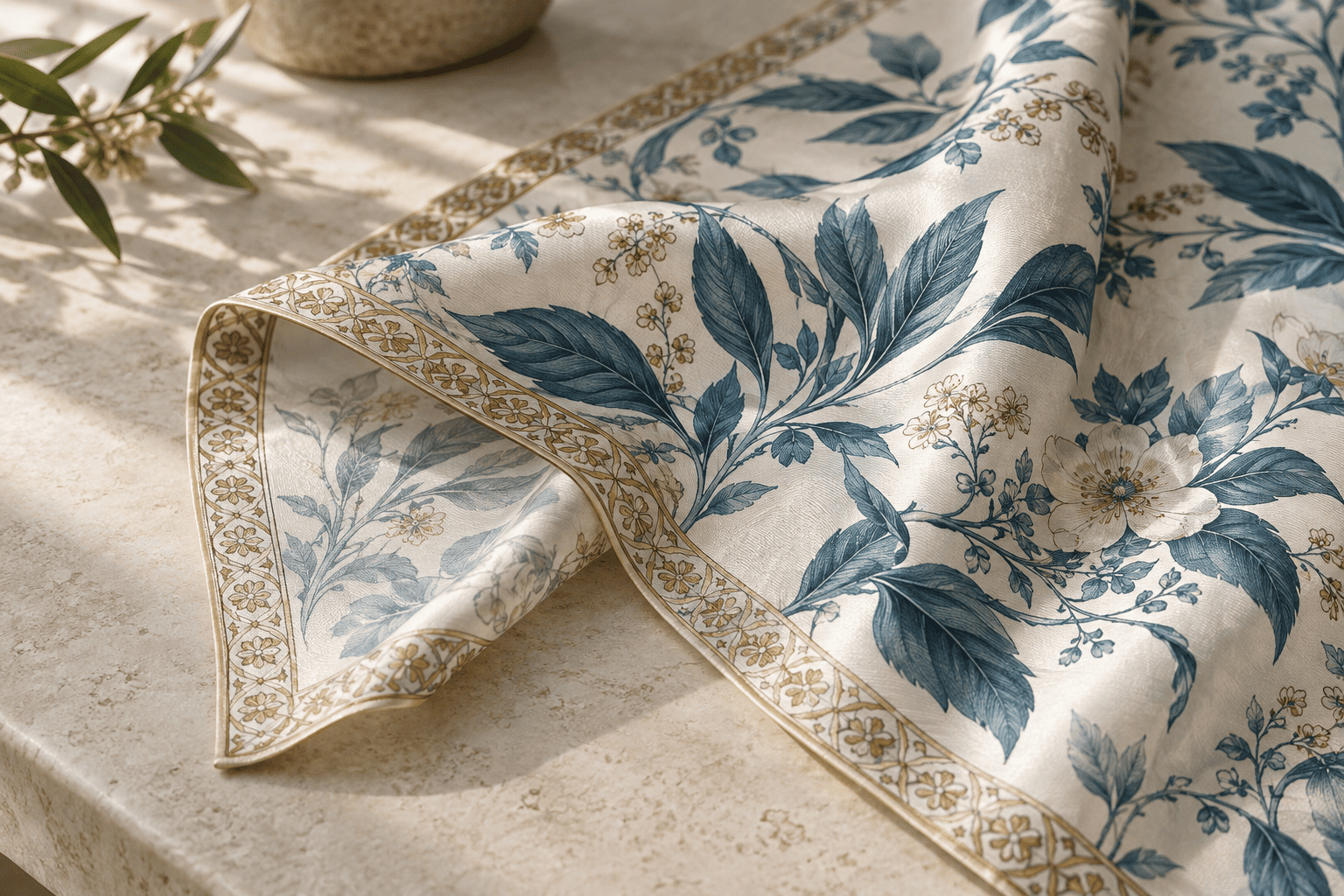
Start with the character of the artwork. Fine geometric lines should look controlled; a watercolour-inspired blossom may deliberately have soft edges. Judge the execution against the design rather than expecting every motif to be sharply outlined.
Look for unexplained streaks, misplaced colour, accidental-looking spots or blurred details where precision is intended. Check the border and corners too. A neatly framed composition should not appear carelessly cut off, although asymmetry can be a deliberate design choice.
Ask to see the reverse. A paler reverse is not automatically a flaw in a scarf printed from one side, and a double-sided description should explain what to expect. Similar colour on both faces does not necessarily mean two separate layers of silk.
Colourfastness is another part of quality, but a photograph cannot establish it. Ask about testing if this is important to your purchase. Avoid improvised wet-rubbing or washing tests on a new scarf; follow the care instructions and raise unexpected colour transfer with the seller.
5. Hems and corners should be secure and considered
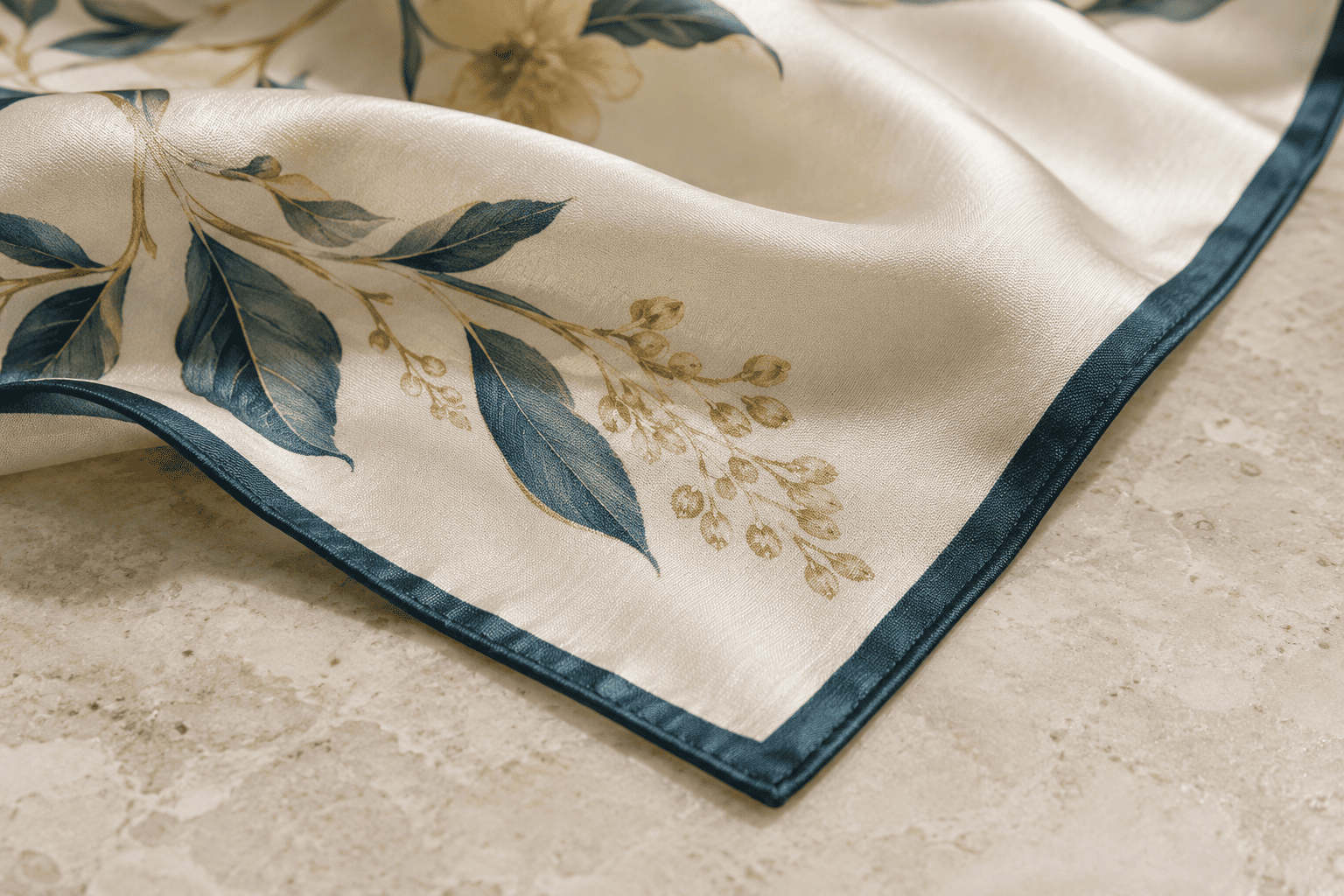
Turn your attention to the perimeter. Look for an edge that follows the intended shape without strong puckering, exposed raw sections or loose loops of thread. Corners should feel neatly finished rather than bulky or insecure.
A hand-rolled hem can be a beautiful finishing detail, with slight natural variation. It is still worth checking whether the stitching holds the edge securely. A tidy machine-finished hem can also be appropriate, particularly when a light, unobtrusive edge suits the design. The method and the execution are separate questions.
For example, Lanting Loom’s Grace Within the Lattice lists hand-rolled edges, an 88 × 88 cm format and a double-sided same-colour printed design. Those specific details help you understand what to inspect; they are more informative than the word “premium” alone.
6. The design should work when worn
A scarf is a moving piece of fabric, so assess more than its flat artwork. Do its colours remain appealing when folded? Does a useful section of the border show in a simple knot? Does the size give you the coverage or tail length you want?
A technically well-made scarf may still be the wrong purchase if it feels too bulky at your neck or too narrow across your shoulders. Look for photographs that show scale on the body, and compare the measurements with an accessory you already enjoy wearing.
At Lanting Loom, a design’s story adds another reason to choose it. That meaning should accompany a composition you love wearing. A cultural reference can enrich a scarf, but it cannot compensate for poor fabric or careless finishing.
7. Claims and care instructions should be specific
When you encounter a silk grade, certification or special finishing claim, ask what it covers and how it can be checked. A claim about one material or process should not be treated as a verdict on every aspect of the finished accessory.
For instance, OEKO-TEX STANDARD 100 concerns testing for harmful substances. It does not tell you whether you will like the drape or how carefully the artwork has been composed. If a product claims certification, check the certificate’s validity and scope with the issuing organisation.
Care advice should address the particular scarf. “Dry-clean only” does not mean inferior quality, and “washable” is not a universal badge of superiority. Choose a care routine you can realistically follow. Our silk-care guide explains everyday handling while keeping the individual product label as the priority.
A practical checklist for buying online
| Check | Useful evidence |
|---|---|
| Material | Fibre percentages and an identified fabric construction. |
| Scale and drape | Exact dimensions plus photographs of the scarf folded or worn. |
| Detailed views of the artwork, border and reverse. | |
| Finishing | Clear views of a hem and corner, with an accurate description of the method. |
| Support | Product-specific care advice, accessible contact details and a clear returns policy. |
When it arrives, inspect the scarf with clean, dry hands on a smooth surface before removing tags. Check both faces, the edges and the stated dimensions without stretching it. Photograph any concern and contact the seller promptly, following the applicable return conditions.
Is an expensive silk scarf always better?
No. Price can reflect design development, materials, finishing, distribution, packaging and brand positioning. Compare the actual specifications and visible execution. A presentation box may make a gift feel special, but the scarf should justify your choice when it is out of the box.
The strongest purchase brings together sound construction, useful proportions and a design you want to wear repeatedly. Explore the Lanting Loom silk scarf collection with those details in mind, choosing beauty and meaning supported by clear product information.
