

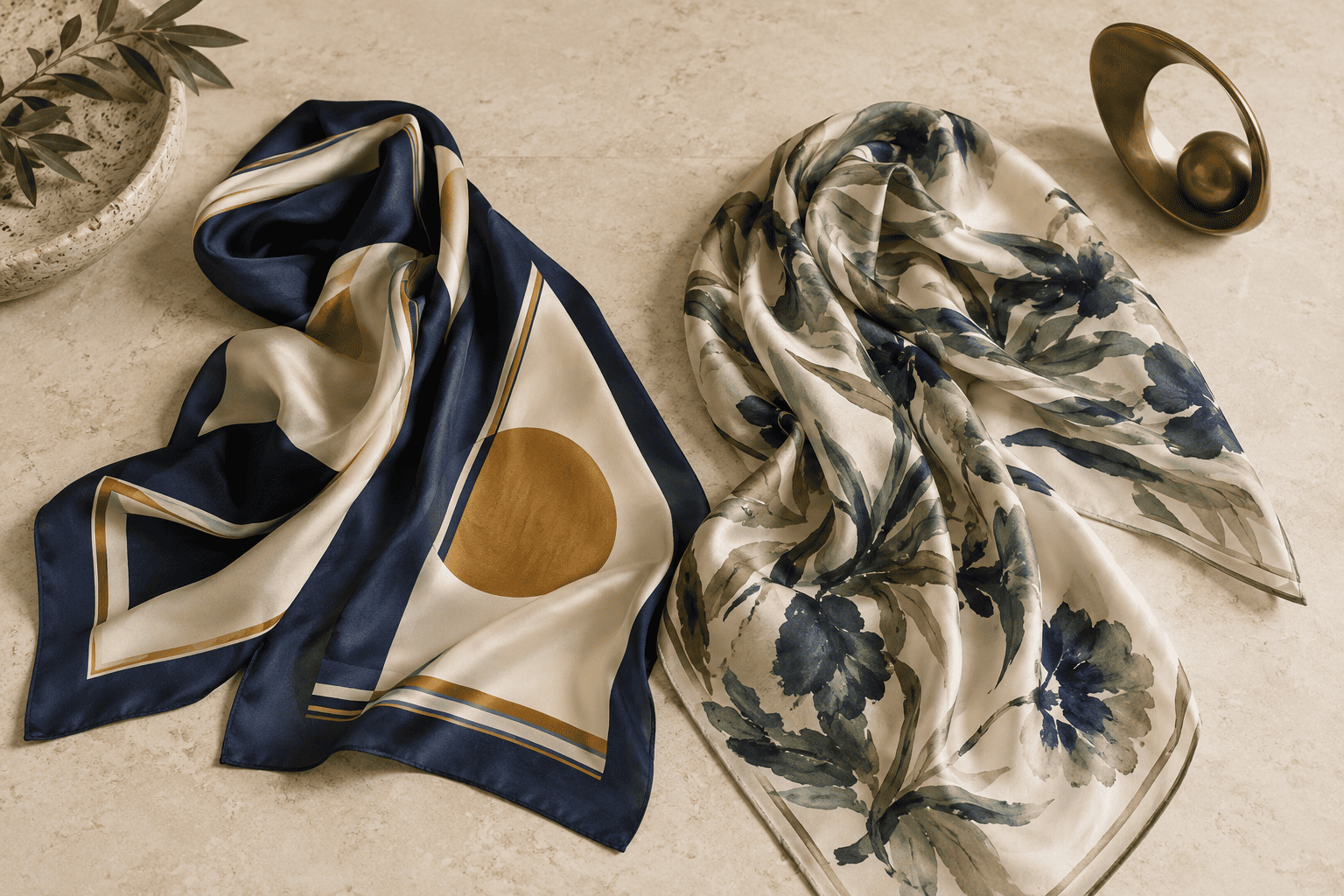
A silk scarf can catch your eye for different reasons: a familiar house signature, an unexpected painting, a beautiful colour combination or a story that feels personal. When you are comparing a designer silk scarf with an independent art scarf, the question is which combination of design, quality and meaning deserves a place in your wardrobe.
Choose an established designer scarf if a particular house, its aesthetic or its buying experience matters to you. Choose an independent art scarf if you connect with the artwork and creative voice, and the product details meet your expectations. Either can be a beautiful purchase. The label alone cannot make the decision.
What is the difference between a designer silk scarf and an independent art scarf?
For this comparison, “designer silk scarf” means a scarf from an established fashion or luxury house. “Independent art scarf” means a scarf from an independent label or artist whose artwork is central to the design.
These descriptions overlap. An independent artist is also a designer, and an established house can produce deeply artistic scarves. Hermès, for example, credits illustrator Hugo Grygkar in its history of Brides de Gala. Original artwork is not exclusive to smaller labels.
Equally, “art scarf” does not establish the fibre, production method or quality. A design may begin as a drawing and be printed onto fabric. Independent ownership does not, by itself, mean handmade production, limited editions or more responsible sourcing.
Designer silk scarf vs independent art scarf: a practical comparison
| Consideration | Established designer scarf | Independent art scarf |
|---|---|---|
| Creative appeal | A house aesthetic, archive or artist collaboration | A particular artist’s or studio’s visual language |
| Recognition | May appeal to someone who already loves the house | May appeal to someone who enjoys discovering unfamiliar design |
| Quality evidence | Check the individual scarf’s specifications and finish | Apply the same checks; originality is a separate consideration |
| Price | Assess the full purchase against your priorities | Do not assume a smaller label will cost less |
| Buying experience | Check the services available through your chosen seller | Check delivery, returns and access to product advice |
| Gift suitability | Strong when a particular brand is part of the recipient’s wish | Strong when the artwork connects with her taste or interests |
1. Begin with the artwork and its story
Look at the scarf before reading its name. Would you still choose these colours and motifs? Can you imagine enjoying them after the excitement of the purchase has passed?
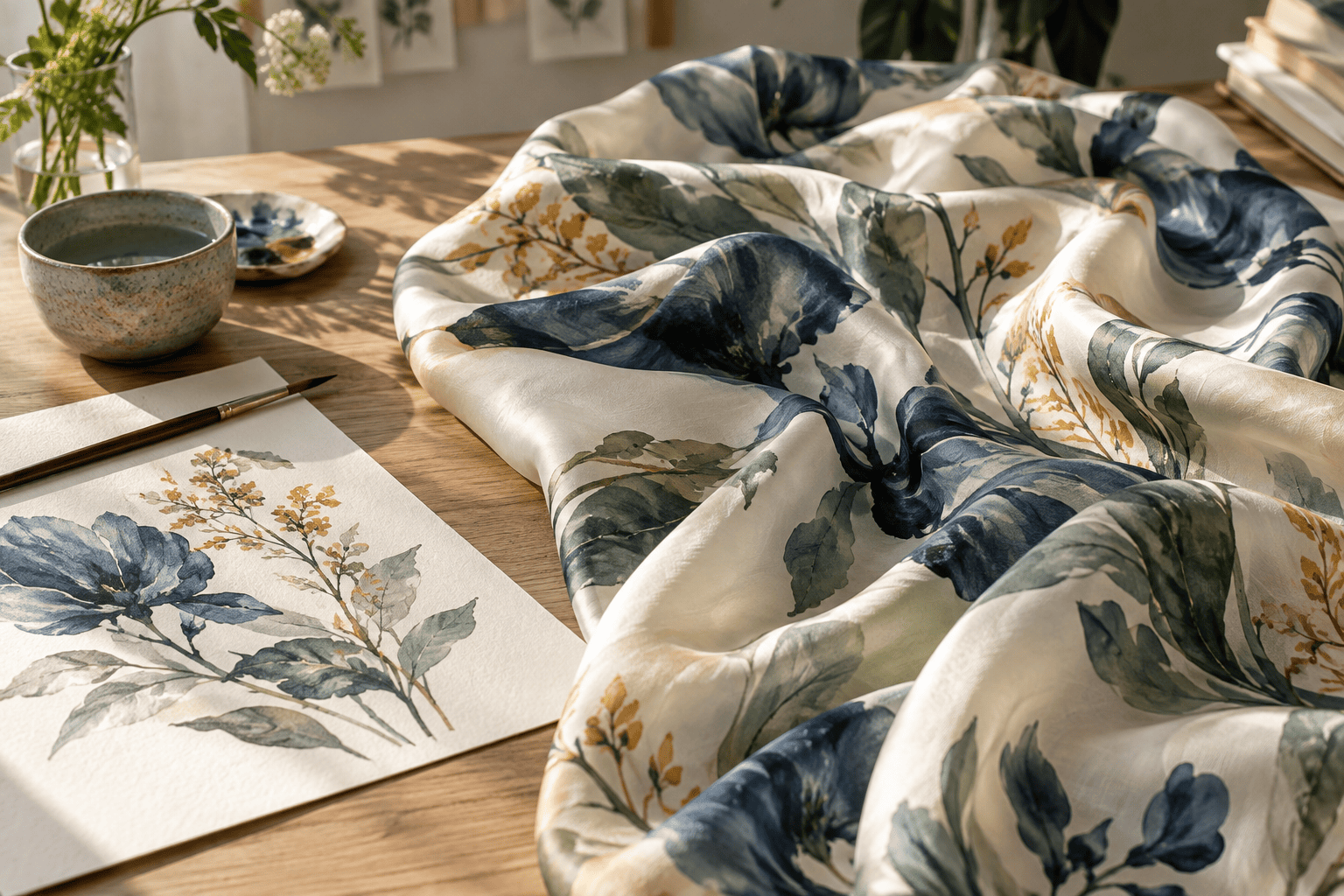
Then explore the creative background. A useful design story explains who created the artwork, what inspired it and how those ideas appear in the finished composition. For an artist-led example, Sabina Savage describes her illustration practice and the natural, historical and literary references behind her designs.
When cultural imagery is involved, look for a clear distinction between the source and the designer’s contemporary interpretation. A specific explanation gives you more to connect with than broad claims about timeless symbolism.
Ask whether the story enriches a design you already enjoy. You should feel comfortable wearing the scarf even on a day when nobody asks what it means.
2. Compare fabric and finish on equal terms
Compare the actual scarves, using the same questions for each:
- Composition: Is the fibre content clearly stated? “Silky” and “satin” do not establish that a scarf is silk.
- Dimensions: Will its length and width work for the way you want to tie or drape it?
- Fabric: Does the listing explain the weave and show how the material falls?
- Print: Can you see close views, the whole composition and the reverse?
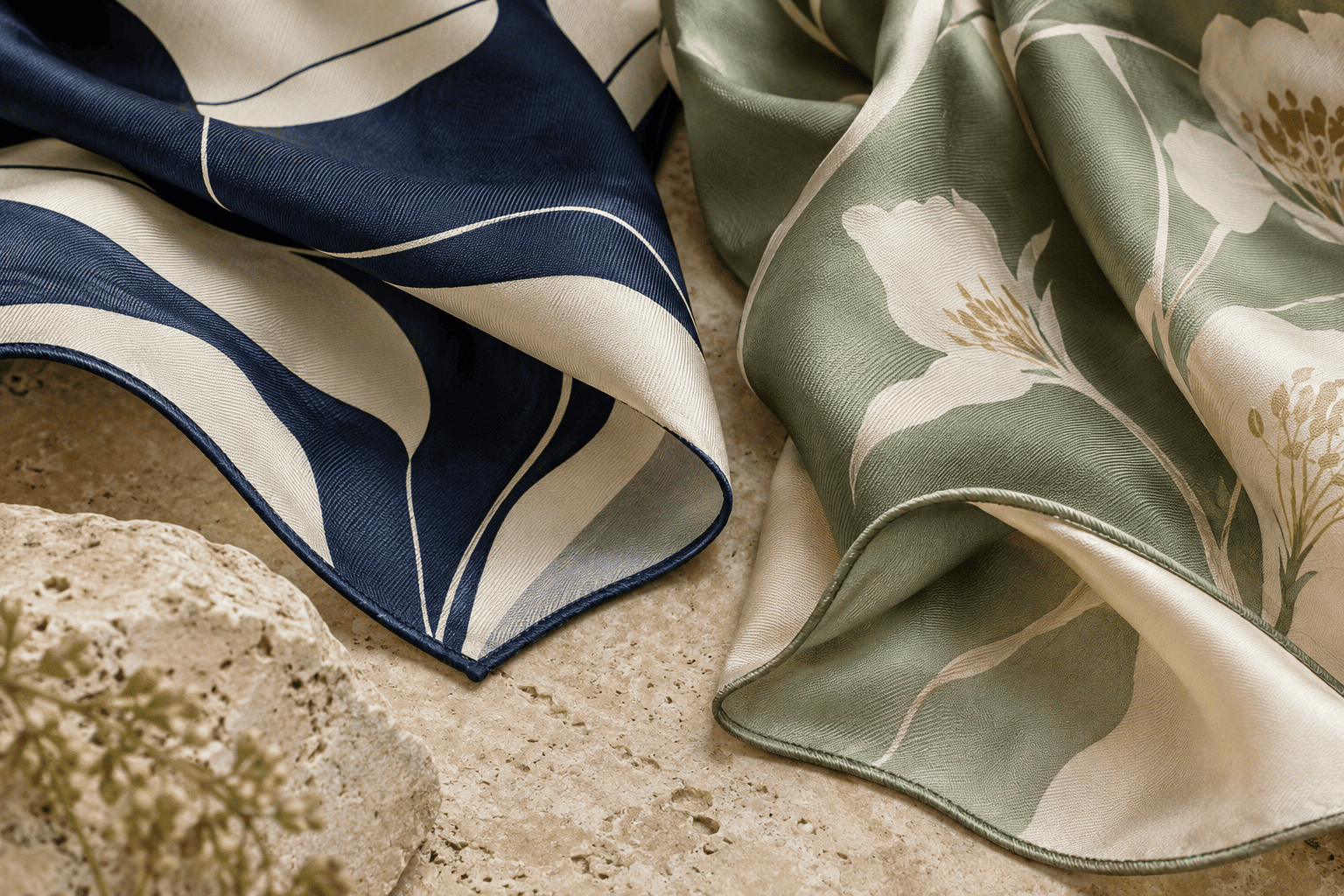
- Edges: Are the hems tidy, the corners controlled and the finishing method described?
- Care: Are there clear instructions you are willing to follow?
Specific information makes comparison easier. The Hermès City of Light scarf listing, for example, identifies silk twill, fibre composition, hand-rolled edges, dimensions and its designer, Elias Kafouros. Ask for similarly useful details wherever you shop.
A hand-rolled hem can be a lovely feature, but the words alone do not describe how neatly it is executed. Likewise, fabric weight is one characteristic rather than an overall quality score. Our guide to what makes a high-quality silk scarf explores these checks in more detail.
3. Decide what makes the price worthwhile to you
A retail price does not reveal precisely how much went into silk, artwork, production, distribution or service. Avoid assuming that a designer premium is entirely a logo charge, or that an independent label automatically offers better materials for the money.
Instead, identify what you value. Perhaps you have admired a particular house’s designs for years. Perhaps an unfamiliar artist has created the most beautiful scarf you have seen. Both are valid reasons to look more closely.
Set a comfortable budget, compare the delivered total and ask how often you will wear the scarf. Include shipping, applicable taxes and any return costs in your decision. Treat future resale value as uncertain; the purchase should make sense through ownership and enjoyment.
4. Check how the design behaves when worn
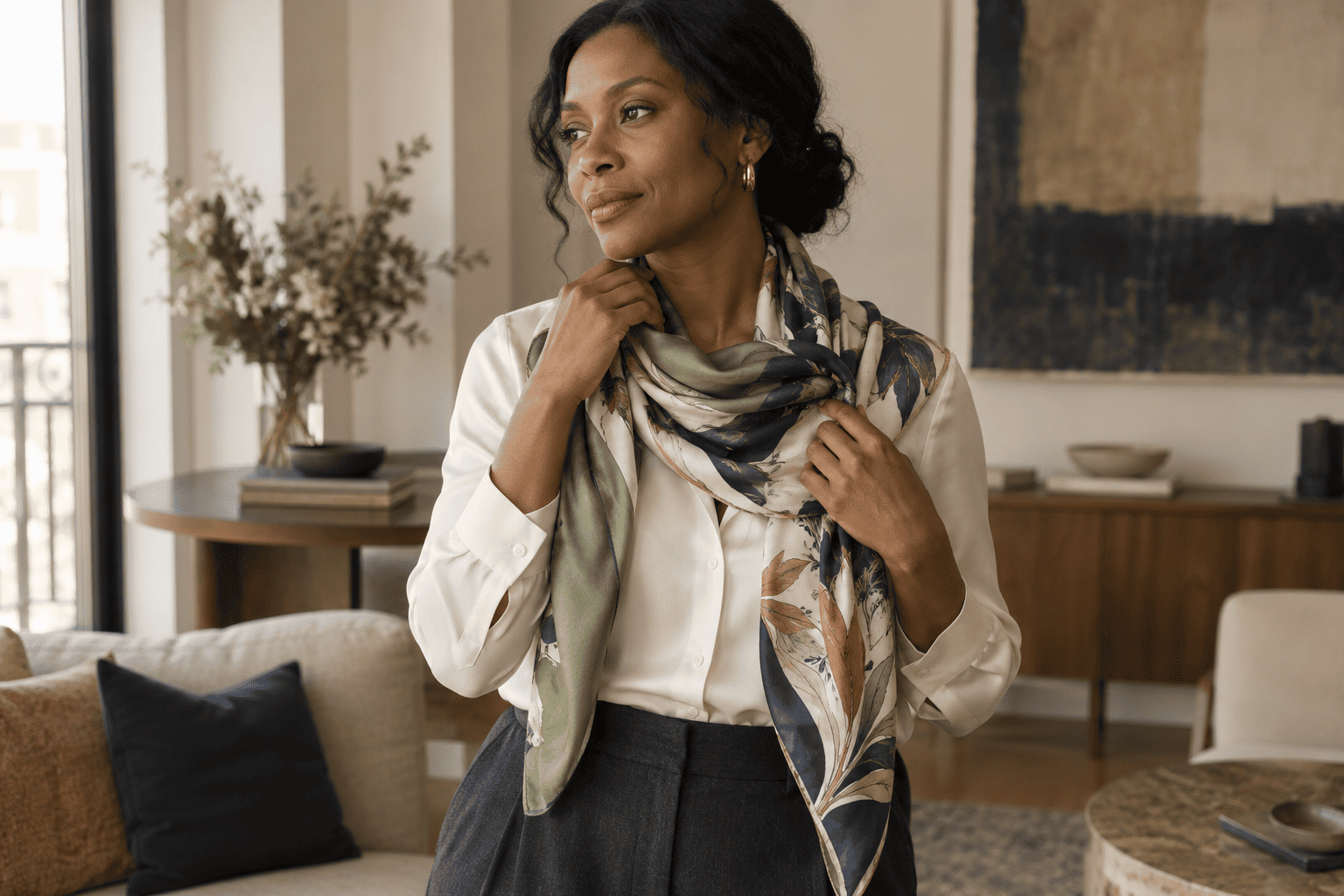
A scarf is a moving composition. A dramatic central illustration may disappear inside a neck fold, while a quiet border becomes the most visible detail.
Look for photographs showing the scarf open, folded and worn. Check which colours sit near the face and whether the ends create a combination you like. Picture it with three outfits you already own, including an everyday coat or jacket.
Shape matters as much as artistic style. A long rectangle and a square create different proportions and tying possibilities. If you are undecided, our long scarf vs square scarf comparison can help you choose a format before narrowing the artwork.
5. Consider the seller and the experience after checkout
Buy from the brand directly or a seller whose relationship to it you can verify. For a pre-owned designer scarf, examine condition information and the seller’s authentication and return process; packaging alone is not sufficient evidence of authenticity.
For either category, check dispatch timing, delivery destination, return conditions and customer support. If a photograph leaves you unsure about colour or scale, ask for clarification before ordering. Clear, specific answers are useful evidence of the buying experience you can expect.
Which makes the better gift?
If she has named a particular designer or scarf, that preference carries more weight than a general argument about originality. A carefully chosen piece from a favourite house can feel deeply personal.
An independent art scarf can be equally thoughtful when its imagery reflects something she loves: botanical painting, architecture, a remembered landscape or a meaningful cultural connection. Start with colours she wears and a format she will enjoy using.
Presentation should support the choice. Confirm what is included and add a short message explaining why the design brought her to mind. If her preferences are unclear, our guide to choosing a silk scarf when you do not know her style offers a practical starting point.
Finding your own balance of beauty, quality and meaning
Choose the scarf whose artwork you enjoy, whose specifications satisfy you and whose price feels comfortable. Recognition, creative connection and everyday usefulness can all contribute to that decision.
At Lanting Loom, Stories Woven in Silk expresses our approach: translating stories from Chinese art and culture into contemporary wearable design. Explore the Lanting Loom collection with the same thoughtful questions you would bring to any scarf purchase, and look for the piece you can imagine making your own.
