

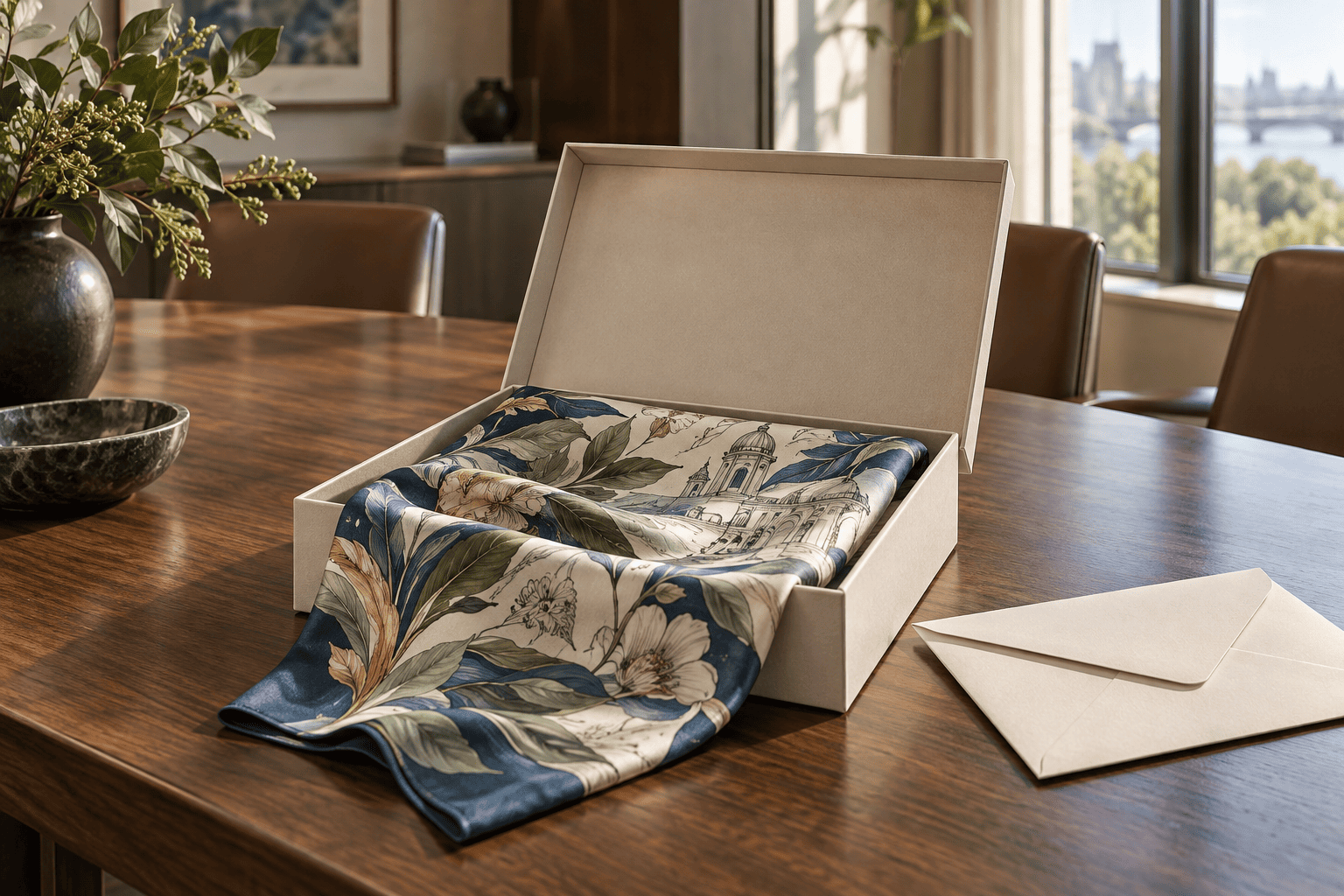
A beautiful presentation box can make a strong first impression. The more useful question is what happens a month later: is the gift being worn, used or displayed, or has it joined a collection of objects the client never chose?
The best luxury corporate gifts for clients combine personal relevance, reliable quality and a clear place in everyday life. Choose something the recipient can enjoy comfortably, keep your branding restrained and make the reason for giving it specific. A higher price cannot compensate for a poor match.
No gift can guarantee a lasting place in someone’s home or wardrobe. But a thoughtful selection process can improve the fit considerably.
1. Define who the gift is really for
“Our most important clients” describes a business category, not a shared taste. Before choosing an object, establish whether you are thanking an individual, a leadership team or an entire office. A personal accessory might suit one known recipient, while a team gift needs to be shareable or offer individual choice.
Use information that has emerged naturally in the relationship: an interest in design, a favourite museum, frequent travel or a preference for understated clothing. Avoid assuming that every executive wants desk accessories or that every woman wears scarves.
If you know little about the recipient, offer two or three suitable options at a comparable value. A discreet question about colour or preferred gift category can be more thoughtful than an elaborate surprise.
A study of gift selection for multiple recipients found that givers sometimes passed over preferred gifts to make each selection different. Although this was not a corporate retention study, it offers a useful reminder: personalisation should follow preferences, rather than difference for its own sake.
2. Apply the “will they keep it?” test
For each shortlisted gift, finish this sentence: “This client will use or enjoy it when…” A precise answer is more useful than “it looks premium.”
- Use: Does it support an existing habit or interest?
- Taste: Would they plausibly choose its colour, material and design themselves?
- Convenience: Is it easy to store, carry and care for?
- Comfort: Can they accept it without awkwardness or an unwanted sense of obligation?
- Lasting appeal: Will it still feel appropriate once the event or campaign has ended?
A decorative object may be cherished by a collector but feel like clutter to a frequent mover. A silk scarf can become a wardrobe favourite for someone who enjoys accessories, but it is not a universal solution. The same object can be an excellent or unsuitable gift depending on the recipient.

Which luxury client gifts are worth considering?
Use this shortlist to match the category to the person before comparing suppliers.
| Gift category | A strong fit when… | What to check |
|---|---|---|
| Silk scarf | The recipient enjoys wearable design and accessories | Colour, format, fibre composition, finish and care |
| Fine writing instrument | They write by hand and appreciate stationery | Grip, weight, refill availability and preferred pen type |
| Teacup or small teaware set | Tea is part of their routine | Capacity, care instructions, storage and protective delivery packaging |
| Art or design book | You know a subject, artist or place they love | Language, edition, size and whether they already own it |
| Small decorative keepsake | You understand their taste in objects and interiors | Material, dimensions, practical purpose and display space |
An experience or consumable may be the better choice for someone who prefers fewer possessions. Physical permanence is only valuable when the recipient wants the object.
3. Buy quality you can examine
Ask for product specifications and, where practical, a physical sample before committing to a larger order. Inspect the gift outside its packaging. Does it still feel special? Is the finish consistent? Does it perform its intended function comfortably?
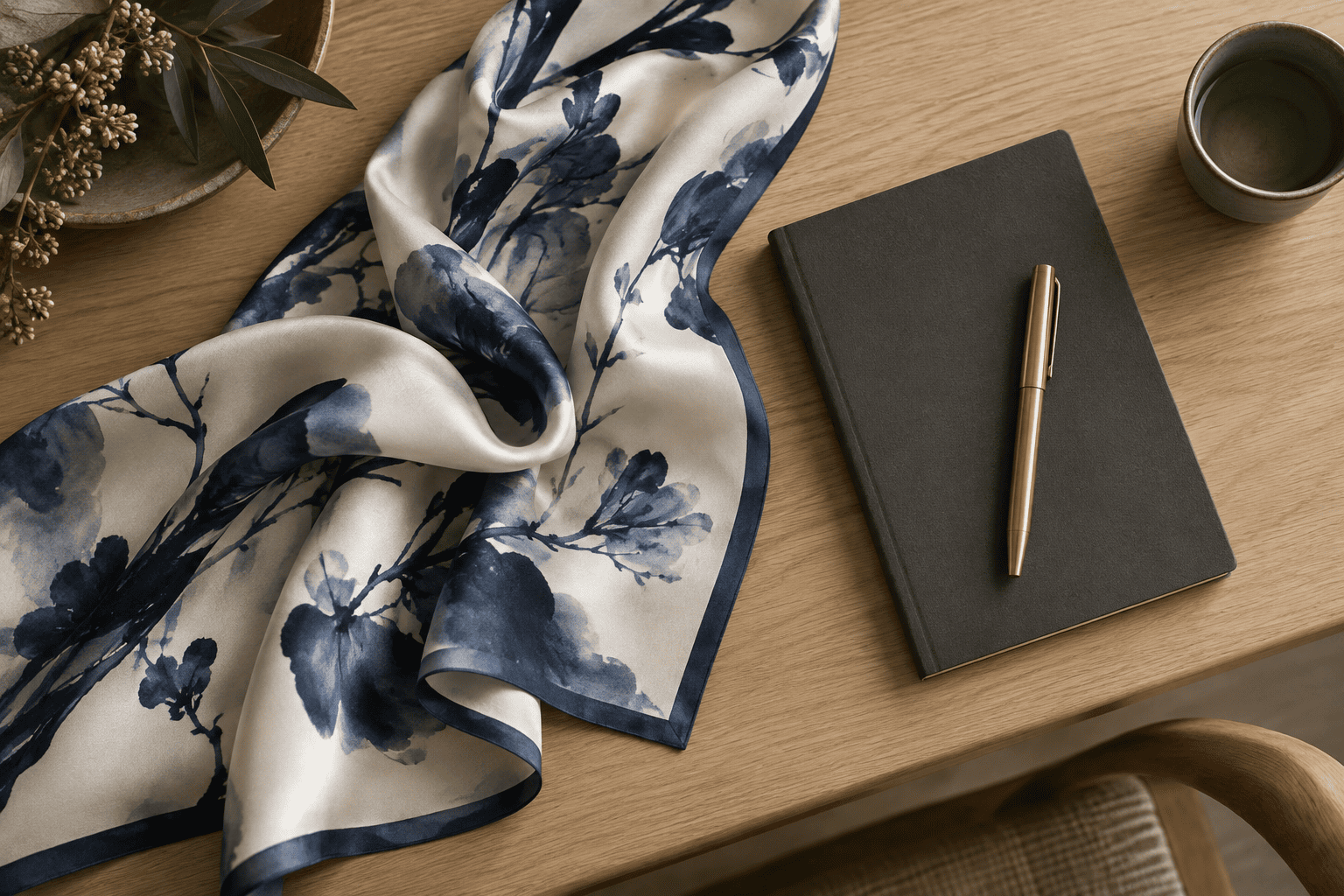
For a scarf, examine the fibre description, dimensions, print, edges and drape. Look at it folded and worn as well as fully open: the most prominent colours can change with the styling. Our guide to what makes a high-quality silk scarf explains the details to compare.
Apply equivalent scrutiny to other categories. Try the pen, handle the cup and inspect the book’s binding. A large box or impressive product name should not carry the entire impression of quality.
4. Keep branding compatible with personal use
Imagine the recipient using the gift away from work. Would a large company logo make that less appealing? For many client gifts, a signed card or removable presentation sleeve is a good place to identify the sender.
Permanent branding can work when it belongs naturally to the design or commemorates something the recipient values. Review it at actual size before approval. A logo that looks discreet on a screen can dominate a small accessory.
Personalisation can also come through colour, artwork or a meaningful reference to a shared project. A name or date deserves careful checking, especially when it cannot be corrected after production. Avoid turning the gift into a permanent advertisement the client is expected to carry.
5. Set a budget for the complete gift
Build the budget around the relationship, occasion and recipient’s organisation. Confirm applicable gift policies before ordering, including any restrictions on value or timing. An expensive gift that must be returned creates work for everyone.
Compare the full delivered cost: the item, sampling, any design work, personalisation, packaging, shipping and applicable taxes or duties. Ask who will handle delivery problems and replacements.
Spend first on the object and its suitability. Add presentation that protects it and makes the occasion feel considered. If the budget becomes tight, simplify the extras before compromising the main gift. One well-chosen item can feel more complete than a box of loosely connected additions.
6. Make the message specific and the presentation useful
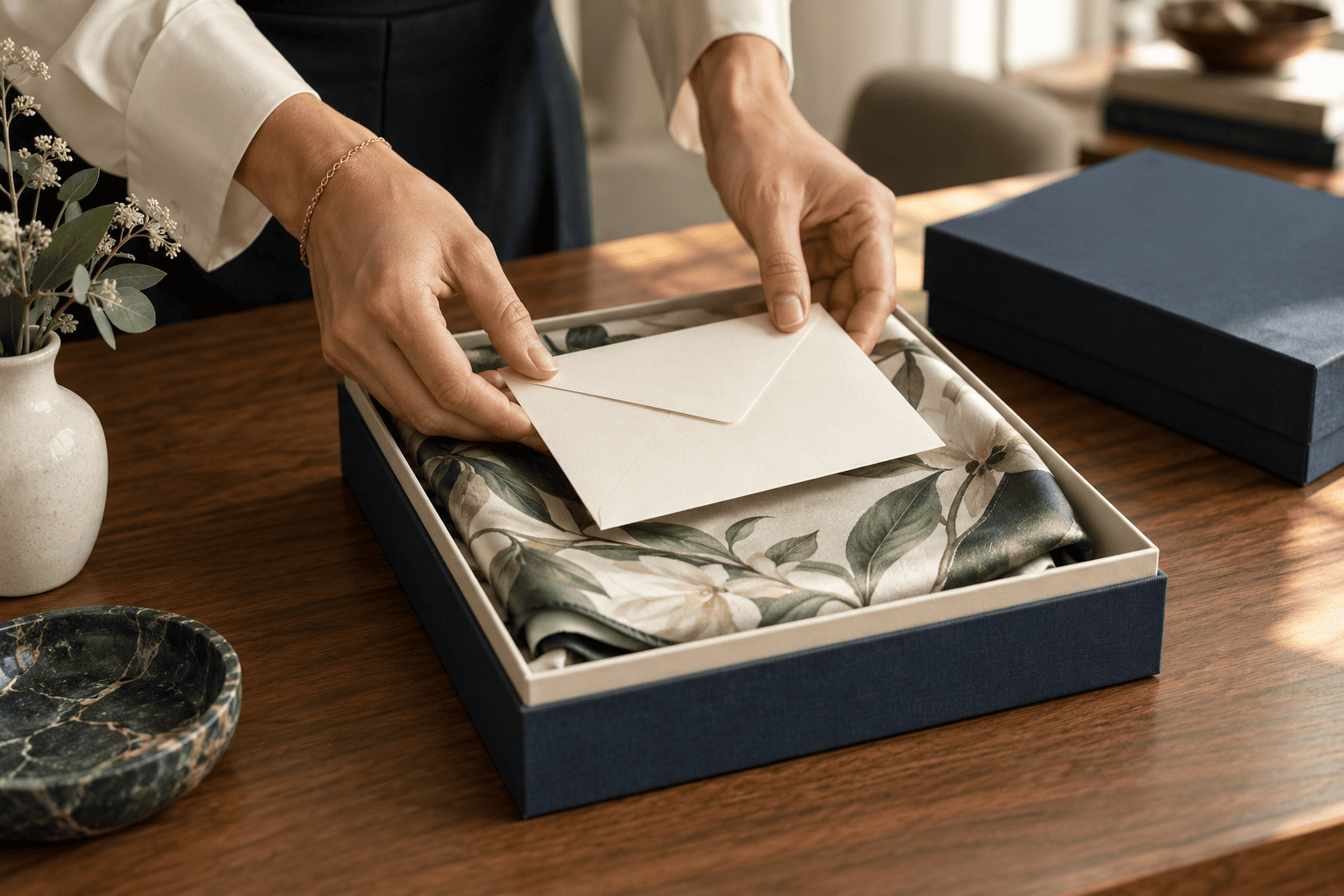
A short personal message explains why the gift exists. Mention a real contribution or shared achievement, and sign it from someone the client knows.
Thank you for the care and clarity you brought to this year’s project. We have valued working with your team and wanted to mark what we achieved together.
Keep the note free of a sales request. If the design has a relevant story, explain the connection in one sentence. Include care information where useful, and avoid filling the box with promotional leaflets.
A gift set works best when its pieces belong together in use or meaning. If an extra item adds little for the recipient, a beautifully presented single scarf may be the stronger choice. Our gift set vs scarf alone guide explores that decision.
7. Plan delivery before approving the order
Work backwards from the date the recipient needs the gift. Allow for samples, internal approval, production if required, packing, transit and a buffer for delays. A stock purchase and a bespoke project need separate timelines; ask the supplier to confirm yours in writing.
Check office closures, travel dates and whether gifts should go to one location or several. Use the recipient’s preferred delivery details and share only the information the supplier needs to fulfil the order. For international deliveries, establish how customs charges will be handled so the gift does not arrive with an unexpected bill.
A useful brief for your corporate gifting supplier
Bring a concise brief to the first conversation: recipient profile, occasion, quantity, total budget, required arrival date, destinations, preferred gift category and desired personalisation. Ask the supplier to confirm availability, minimum quantities where relevant, sample arrangements, exact contents and the approval process.
For clients who appreciate wearable art, a silk scarf offers room for colour, craftsmanship and a story that feels personal. At Lanting Loom, Stories Woven in Silk expresses our approach to translating Chinese art and cultural stories into contemporary design. Explore Lanting Loom corporate gifting to discuss your brief and confirm the options available for your project.
