

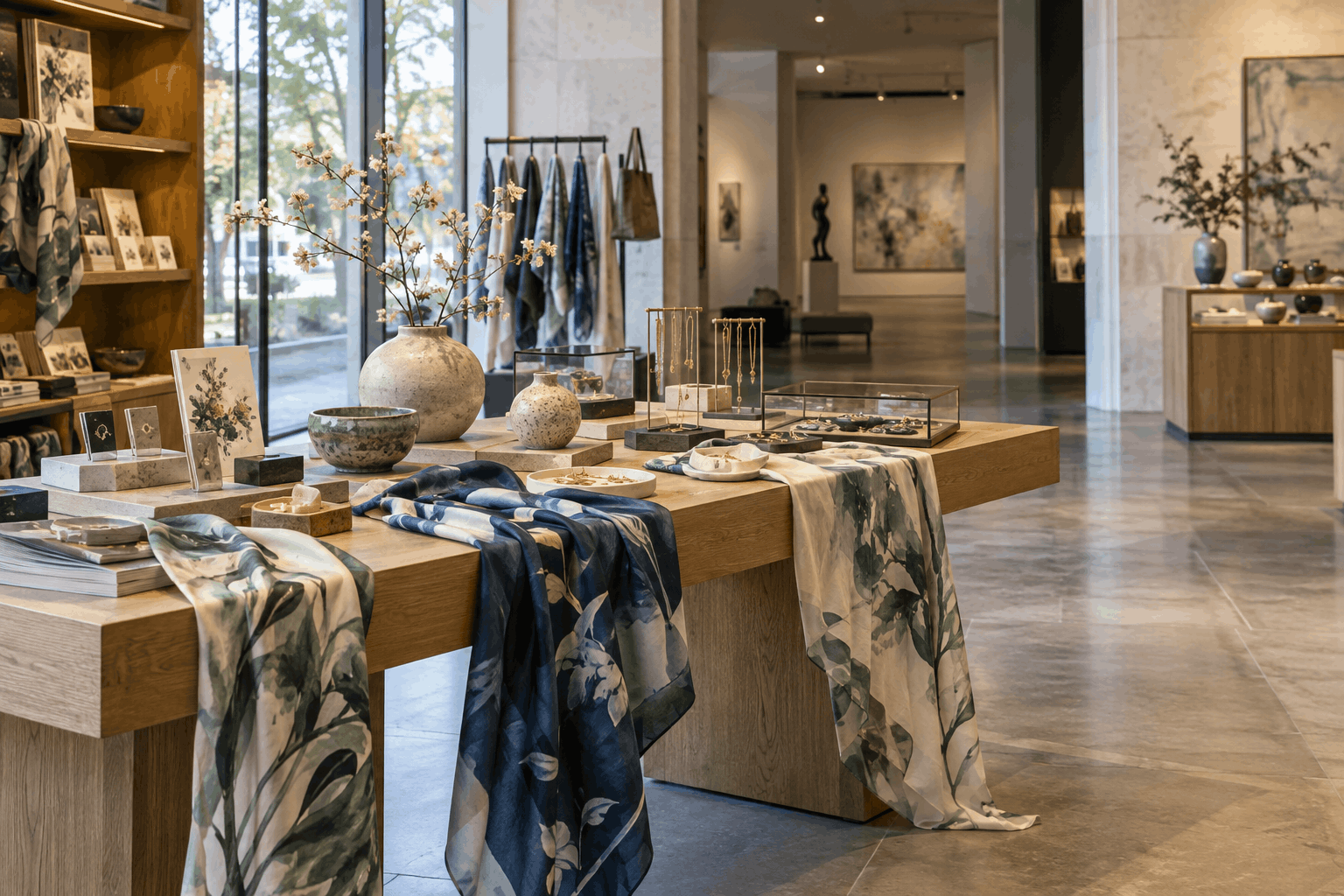
The best art museum gift shop ideas give visitors a way to carry their experience into everyday life. A scarf can translate a painting’s colours into something wearable. A small ceramic object can invite a closer appreciation of form. An artist-designed accessory can introduce a visitor to a creative practice they want to follow.
Posters, books and familiar souvenirs still have a place. The opportunity is to build a wider selection of objects that feel connected to the museum, useful beyond the visit and worth choosing as gifts.
For museum retail buyers, that means balancing cultural relevance with practical questions: who will buy the product, what makes it distinctive, how will it be displayed and can it be reordered at a workable cost?
What Makes a Product Right for an Art Museum Shop?
A museum shop has a particular advantage: visitors have just spent time looking closely, discovering stories and responding to design. Its merchandise can continue that experience.
However, placing an artwork on a product does not automatically make it a strong retail choice. The object itself must be appealing, well made and suited to its intended use.
Before adding a new line, consider five questions:
- Connection: how does it relate to the collection, exhibition, building or museum’s wider interests?
- Desirability: would someone still want it without a prominent museum logo?
- Use: can the visitor easily imagine wearing, using, displaying or giving it?
- Explanation: can staff communicate its significance in a few clear sentences?
- Commercial fit: do the price, order quantity, display needs and replenishment terms suit the shop?
A focused selection with a clear reason for each product can be easier to understand than a large assortment linked only by matching graphics.
Seven Art Museum Gift Shop Ideas Beyond the Usual Souvenirs
1. Art-Inspired Silk Scarves
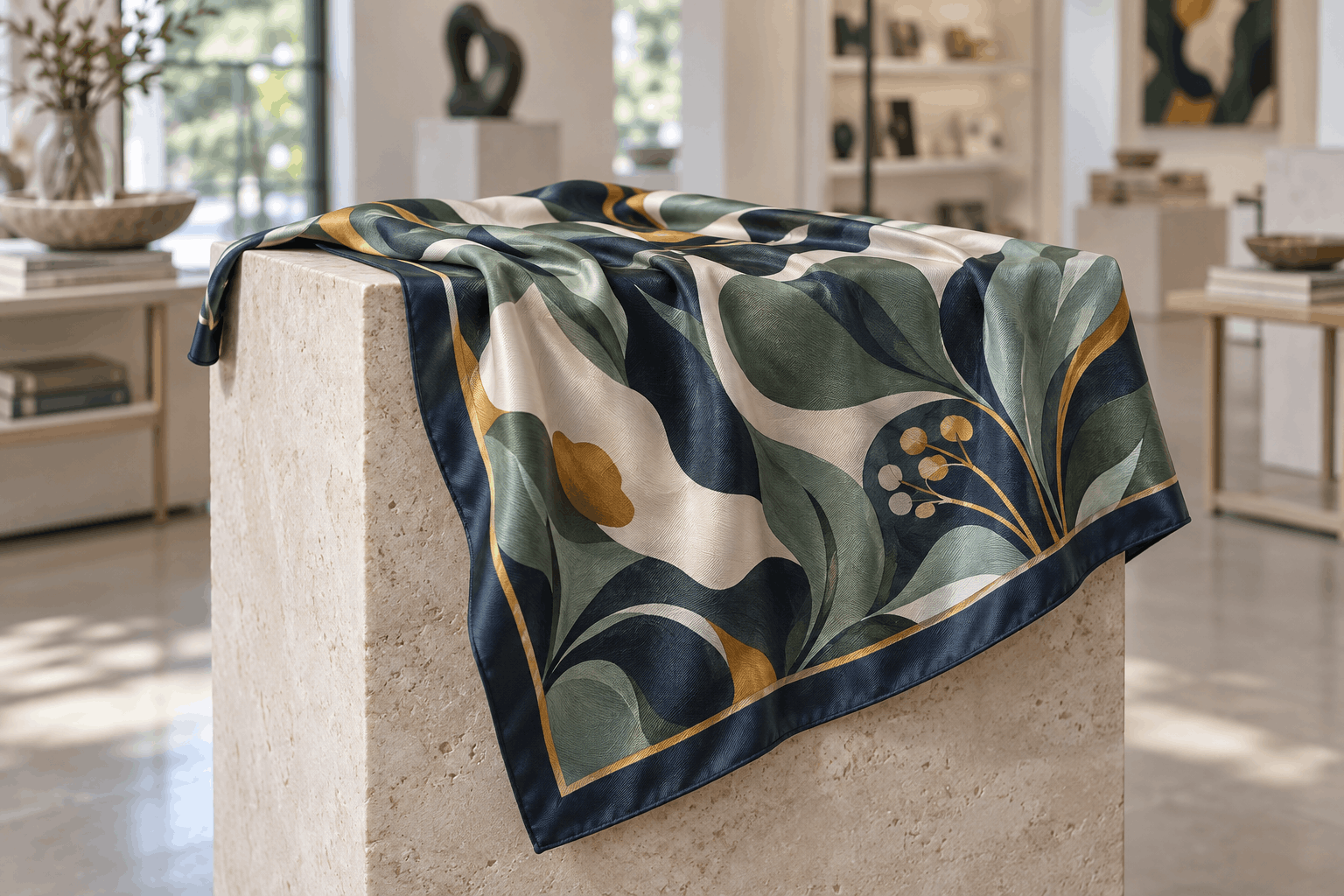
A silk scarf can turn colour, line and composition into a personal accessory. It offers a different relationship with art: the design moves, folds and changes as it is worn.
Possible starting points include botanical studies, textile collections, architectural details, landscape painting and abstract compositions. The strongest direction depends on the museum and the source material.
A successful scarf needs more than an image placed inside a square. Borders, scale and the position of key details should work when the fabric is folded or tied. A design that looks impressive laid flat may become visually confused around the neck.
Ask to see the sample both open and styled. Check the feel of the fabric, print clarity, reverse appearance, edge finish and colour balance under the shop’s lighting.
Lanting Loom’s museum and cultural institution projects offer a starting point for discussing silk scarves connected to collections, exhibitions and museum retail.
2. Sculptural Jewellery and Wearable Objects
Brooches, pendants and other small accessories can interpret ideas from sculpture, architecture or decorative arts without reproducing a whole artwork.
A curve, a repeating shape or the relationship between solid form and open space may provide a more interesting starting point than a miniature copy of a collection object.
For buyers, appearance is only part of the assessment. Consider weight, fastening quality, material descriptions, care instructions and how the piece will be presented. A beautiful brooch that is difficult to fasten may disappoint the customer after purchase.
Give the designer’s name and explain the connection accurately. Distinguish an original commission from an existing design selected because it complements the exhibition.
3. Small Ceramics and Useful Design Objects
A small vase, keepsake dish or thoughtfully designed cup can bring an interest in art and form into the home.
These products work best when their shape, surface or material has a clear relationship with the shop’s selection. That might come through a collaboration with a ceramicist, a connection to the museum’s decorative arts collection or a shared approach to colour.
Practical considerations include shelf space, protective packaging, consistency between deliveries and the needs of visitors travelling with limited luggage.
For tableware, request documentation appropriate to the intended use and sales market. Make it clear when an object is decorative rather than intended for food or drink.
4. Artist-Designed Everyday Accessories
A glasses case, textile pouch or compact bag can offer an accessible way to buy good design. The challenge is to make the object feel considered rather than simply printable.
Look for a strong relationship between the design and the format. A repeated pattern might suit a pouch; a single carefully positioned detail might work better on a case.
Test the practical features that customers will notice: the zip, lining, dimensions, closures and ease of cleaning. The story can prompt the purchase, but everyday usefulness helps sustain satisfaction.
5. Creative Kits That Continue the Visit
A thoughtfully developed creative kit can help visitors explore an idea they encountered in the galleries.
For example, an exhibition about colour might inspire a guided colour-mixing activity. A print collection might lead to a suitable introductory printing exercise. A textile exhibition could support a pattern-design activity.
The educational connection should be specific. Explain what the participant will explore and provide clear instructions, appropriate materials and an accurate age recommendation.
Include the museum’s education team in development where possible, and confirm the product requirements that apply to the intended users and market.
6. Curated Gift Sets
A gift set can help a visitor who likes the exhibition but is unsure what to choose for someone else.
Build the set around one principal item and one genuinely complementary element. Possible concepts include:
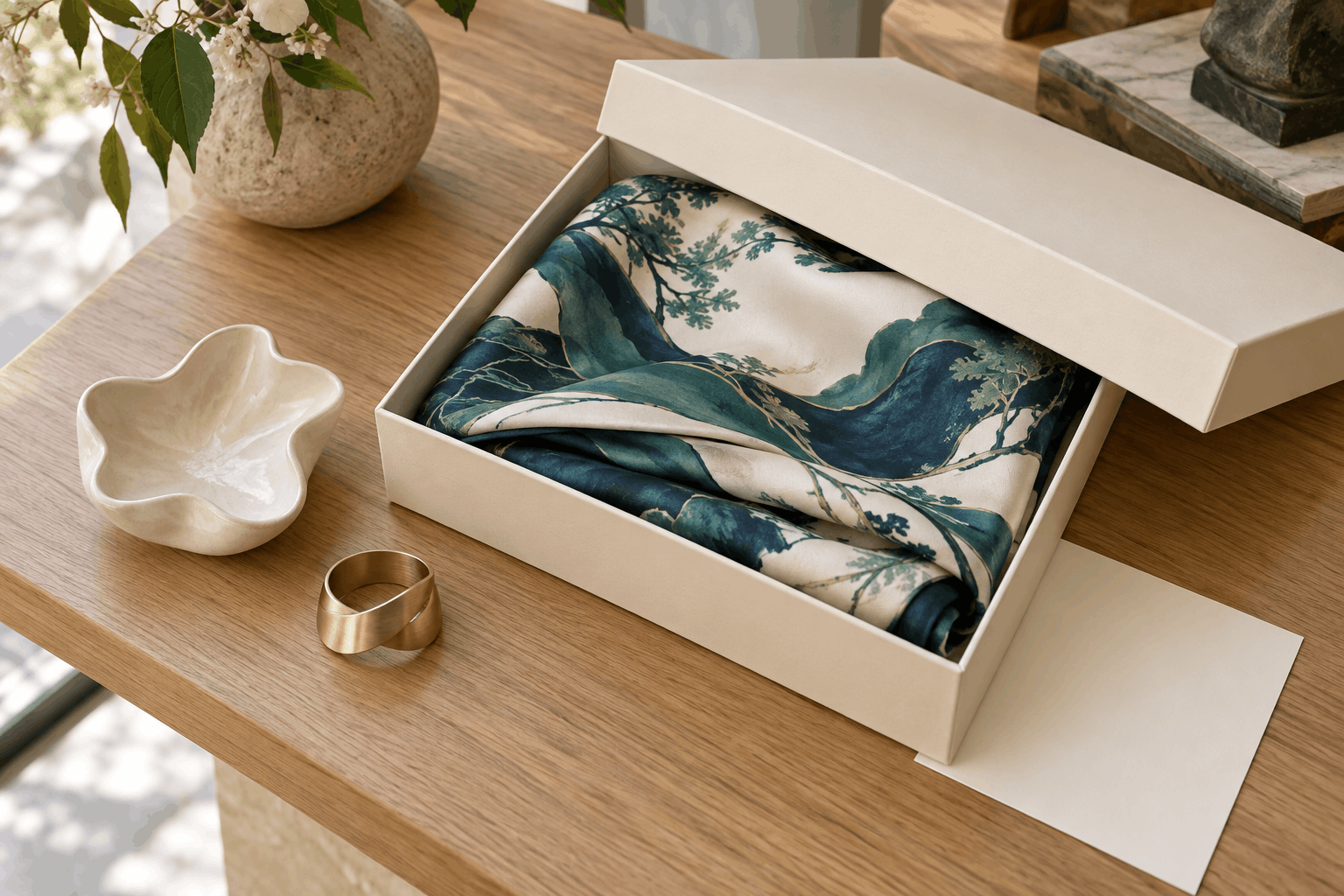
- A silk scarf with a coordinating scarf ring and a design-story card.
- A scarf with a small ceramic keepsake dish.
- An artist-designed accessory with a concise introduction to the artist’s work.
- A creative kit with an accompanying activity guide.
These are development ideas; availability and suitability depend on the supplier and project.
Keep the contents easy to understand. Customers should know what is included, why the pieces belong together and whether the presentation is ready for gifting.
For a scarf-led collection, explore Lanting Loom’s curated gifts and adapted presentation options.
7. Original Artist Collaborations
A collaboration with a living artist can introduce new work created specifically for an object or small retail collection.
This may be especially appropriate when a direct reproduction would not capture the artist’s approach. The artist could develop a pattern, choose a material or rethink the object’s form.
Agree the creative brief, approvals, payment structure, production responsibilities and intended sales channels before development begins.
Use terms such as “exclusive” and “limited edition” precisely. If a product is numbered or quantity-limited, the records and production arrangements should support that description.
Choose Between Existing Products, Adaptation and Bespoke Development
Not every museum shop needs an original product commission. There are three useful routes, each with different demands.
Curate Existing Products
Select available products that complement the museum’s collection or programme. This allows the buying team to assess an established design and discuss stock availability before committing.
The connection should be honest: a product selected by the museum is not necessarily designed exclusively for it.
Adapt the Presentation
Keep an existing product and develop an approved sleeve, message card or other presentation element. This can help explain its relevance to an exhibition while limiting the scope of product development.
Confirm what can be customized, the required quantities and whether separate packaging orders will affect replenishment.
Commission an Original Design
Develop a product around a specific collection, place or exhibition. This provides more creative freedom but adds research, artwork approval, sampling and production decisions.
For textile projects, Lanting Loom’s bespoke silk scarf page outlines a route for discussing original designs and presentation.
Check Artwork Permissions Before Product Development
Do not assume that an image found on a museum website is available for merchandise production. Confirm the status of the particular image and the intended use before approving artwork.
Open-access collections can be valuable research resources. For example, The Metropolitan Museum of Art’s Open Access programme makes designated images of public-domain artworks available under CC0.
That designation should be checked at image level. The Met’s image-use guidance also explains that other rights, including trademark or privacy rights, can still be relevant. Using an open-access artwork does not establish a partnership with the museum.
For a commissioned collection, keep a clear record of approved source material, permitted adaptations, credits and any relevant restrictions. Ask the museum’s rights team to resolve uncertainty before production.
Cultural interpretation deserves similar attention. Where imagery carries a particular cultural or ceremonial meaning, involve appropriate expertise rather than treating every motif as interchangeable decoration.
Build a Small, Coherent Opening Range
For a shop testing a new category, a manageable pilot can provide more useful information than a broad initial order.
One possible structure is:
- An accessible item: a small useful accessory that introduces the design story.
- A principal product: a scarf, jewellery piece or design object with a clear visual identity.
- A gift option: a coordinated set or enhanced presentation for visitors buying for someone else.
This is an example buying structure, not a fixed formula. Use the museum’s customer profile, existing sales and available space to decide the appropriate mix.
Avoid adding multiple colours or sizes without a reason. Every variation divides the order and creates another stock decision.
Assess the Full Retail Economics
A wholesale quotation is only part of the financial picture. Compare the expected selling price with the complete cost of bringing the product into stock.
Depending on the project, costs may include:
- Product purchase and any development charges.
- Licensing fees or royalties.
- Packaging, labels and assembly.
- Freight and applicable import costs.
- Expected damage, markdowns and other selling costs.
Compare figures on a consistent tax basis. For illustration, a product selling for £80 excluding sales tax with a landed product cost of £32 has a 60% gross margin before other selling costs and overheads. That is different from a 60% markup.
Do not treat that example as a recommended target. The appropriate economics depend on the museum, category, supplier terms and project costs.
Also ask what happens after the first order. Reorder quantities, production lead times and the availability of replacement packaging can determine whether a promising product remains practical.
Help Visitors Imagine Using the Product
A folded scarf can hide much of its design. A boxed object can conceal its scale. Display should help visitors understand what they are considering.
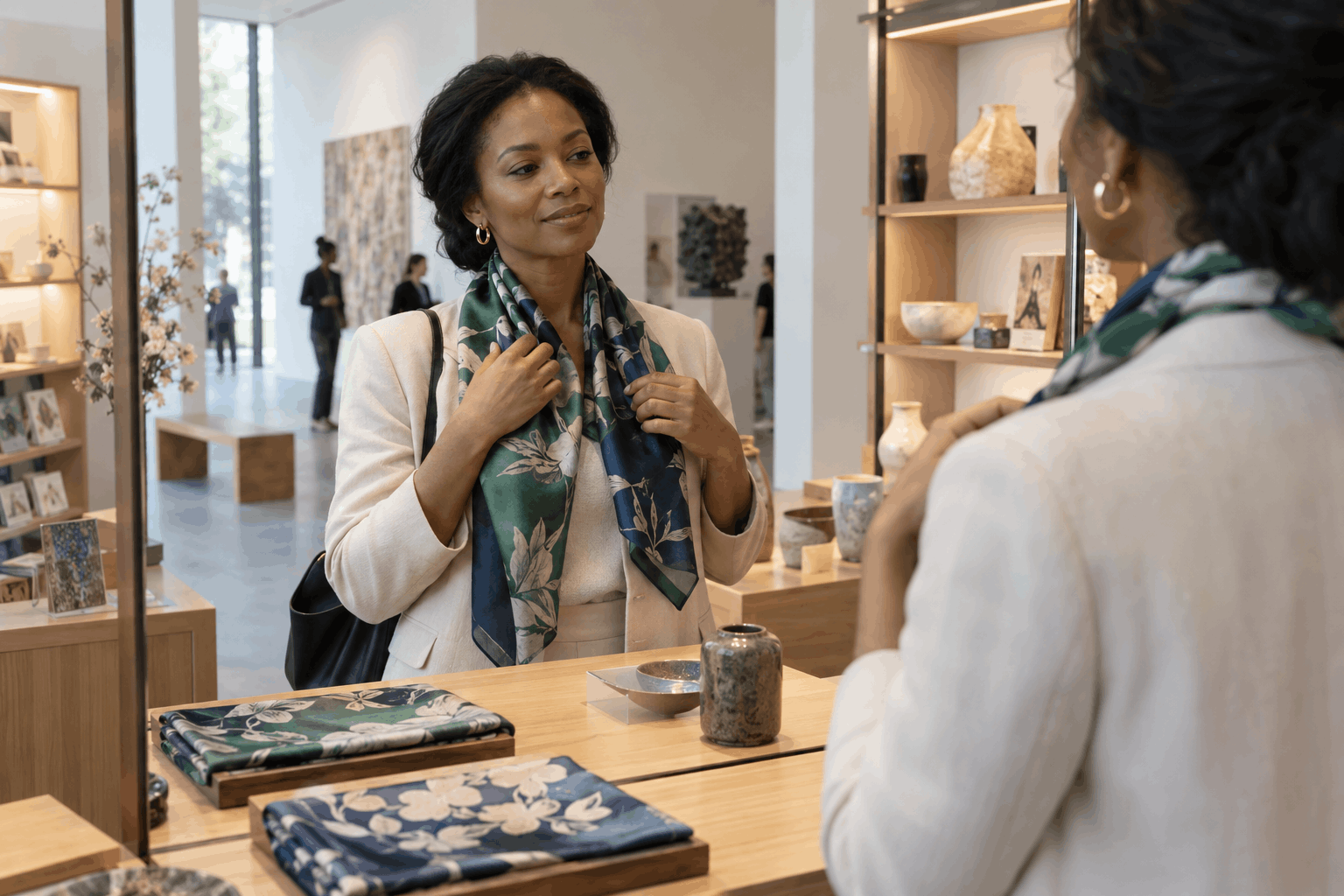
For scarves, show one piece open enough to reveal the composition and another styled to demonstrate how it wears. Provide a mirror and a designated handling sample where appropriate.
For objects and gift sets, let customers see the contents clearly. Keep dimensions, material information and price easy to find.
A short story card can answer three useful questions: what inspired the design, who created it and how it relates to the museum. More detailed background can sit on a linked product page.
Measure What Visitors Actually Choose
After launch, review both sales and the questions customers ask. An attractive display does not automatically mean a product is commercially successful.
Useful measures include:
- Units sold and stock remaining by product.
- Sales over comparable periods, with visitor numbers considered.
- Gross margin and the effect of discounts.
- Returns, defects and packaging damage.
- Requests for unavailable colours, formats or price points.
- Whether customers are buying for themselves or as gifts.
Keep exhibition-related demand in context. A product may sell well during a particular show without becoming a permanent shop staple.
Use that evidence to decide what to reorder, adapt or retire before expanding the range.
Frequently Asked Questions
What can an art museum gift shop sell besides posters and books?
Options include art-inspired silk scarves, sculptural jewellery, small ceramics, useful accessories, creative kits and curated gift sets. The strongest choices have a clear connection to the museum and work well as products in their own right.
Are silk scarves suitable for museum shops?
They can suit visitors interested in fashion, textiles and design. Assess the artwork when worn as well as laid flat, and confirm fabric composition, dimensions, finish, care information and packaging before ordering.
Does museum merchandise need to reproduce an artwork?
No. A product can explore colour, form, materials, architecture or an exhibition theme. Explain the relationship accurately and obtain the permissions needed for any source material used.
How can a smaller museum test a premium product category?
Start with a focused selection, confirm the full costs and agree workable order quantities. Where feasible, choosing an existing product before commissioning a bespoke design can help the team learn what its visitors respond to.
Should every product carry the museum logo?
No. The museum’s identity can be expressed through the design selection, a story card or packaging. For wearable products, discreet branding may help preserve versatility.
Develop a Museum Shop Collection with a Clear Point of View
A memorable museum shop gives visitors more ways to connect with art: through something they wear, an object they use or a gift they choose for someone else.
For Lanting Loom, that connection begins with silk scarves that combine contemporary design, cultural storytelling and thoughtful presentation.
If you are planning museum-shop merchandise, an exhibition collection or a scarf-led gift range, explore our museum and cultural institution offering. Share your museum, intended audience, source material, approximate quantity, target retail price and required delivery date so the project can be assessed against a clear brief.
