

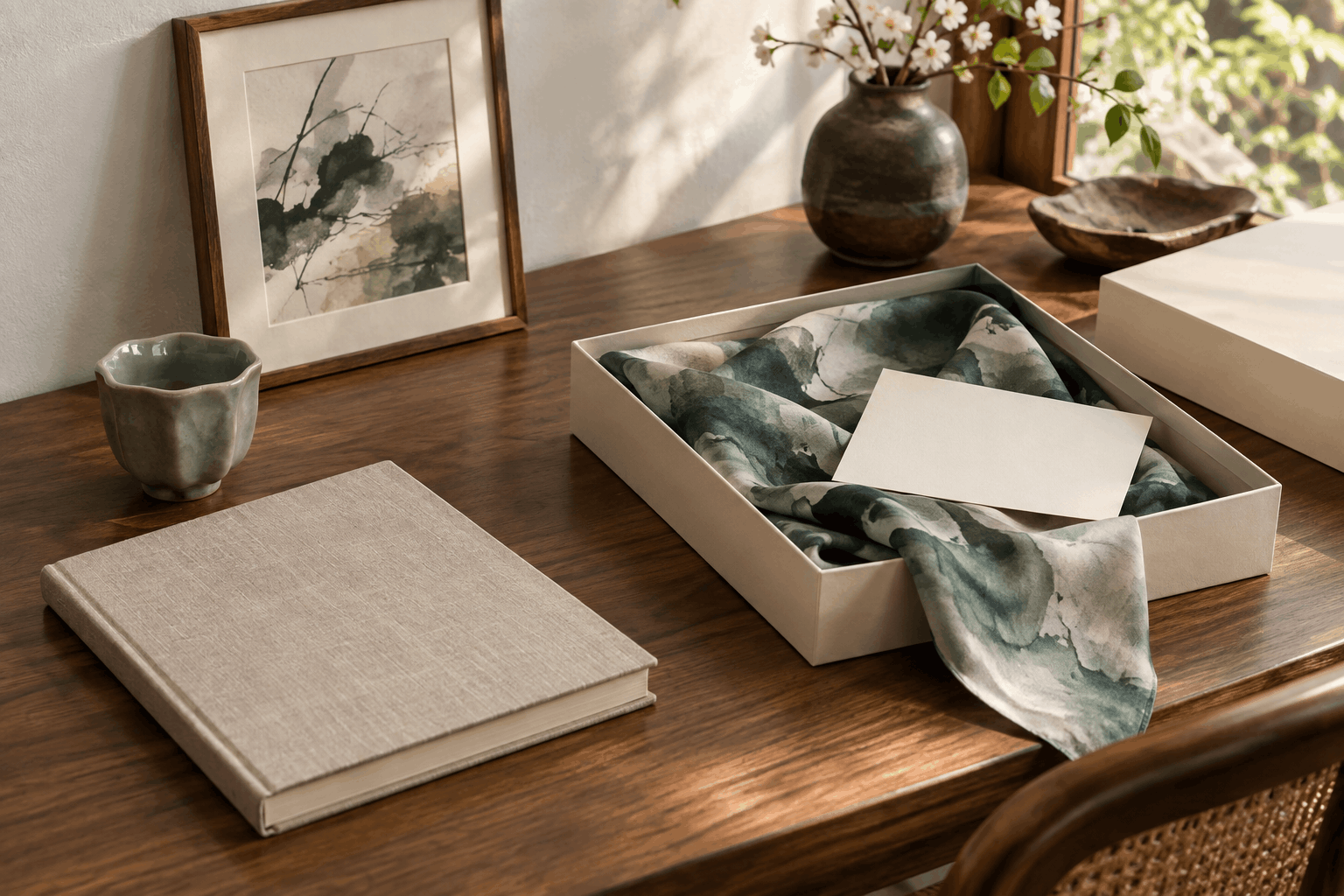
Buying a gift for someone who loves art can feel surprisingly difficult. They notice the curve of a vessel, the balance of a composition and the particular shade of green that everyone else walks past. Their taste may be thoughtful, individual and hard to summarize.
The most interesting Chinese gifts for art lovers begin with that way of looking. A silk scarf can turn line and color into something wearable. A contemporary ceramic piece can offer the pleasure of form and texture. A print or art book can introduce an artist whose work stays with them long after the gift is opened.
The aim is to find a piece they would enjoy discovering, with a cultural connection you can explain clearly. Start with what catches their eye, then look for the story behind it.
First, notice what kind of art they love
“Art lover” covers many different people. One person spends hours with ink paintings; another follows contemporary photography. Someone who collects ceramics may care more about a vessel’s silhouette than its decoration, while a textile enthusiast might be drawn to pattern, drape and color.
Think about the exhibitions they mention, the books they keep, and the objects they choose for their home. You do not need to identify their entire aesthetic. One or two reliable observations can guide a much better gift than a broad label such as “traditional” or “modern.”
| If they are drawn to… | Consider… | Look closely at… |
|---|---|---|
| Ink painting and expressive line | A brushwork-inspired scarf, print or book | Movement, contrast and the use of open space |
| Color and textile design | A silk scarf with a considered composition | Palette, scale and how the design changes when folded |
| Sculpture and ceramics | A small contemporary vessel or cup | Profile, surface, weight and intended use |
| Contemporary artists | An artist’s edition or exhibition publication | The named artist, medium and edition details |
| Museums and cultural travel | A collection-related gift or shared visit | The connection to a place or exhibition they enjoy |
If their taste is very specific, choose something that supports their interest without requiring a prominent place on the wall. A book, wearable accessory or experience can be easier to receive than a large artwork.
What gives a contemporary Chinese gift cultural meaning?
A useful design story names its source. It might refer to a particular artist, a painting practice, a landscape, a ceramic tradition or a personal experience of place. The more specific that connection is, the easier it becomes to understand what the designer has done with it.
Contemporary work can explore Chinese identity and experience in many ways, including photography, abstraction and everyday urban life. It does not have to resemble a historical object. Equally, an object manufactured in China does not automatically have a meaningful connection to Chinese art.
Ask three simple questions: Who made or designed it? What inspired it? How does that inspiration appear in the finished piece? Clear answers give you something worthwhile to share when presenting the gift.
1. A silk scarf that brings composition into daily life
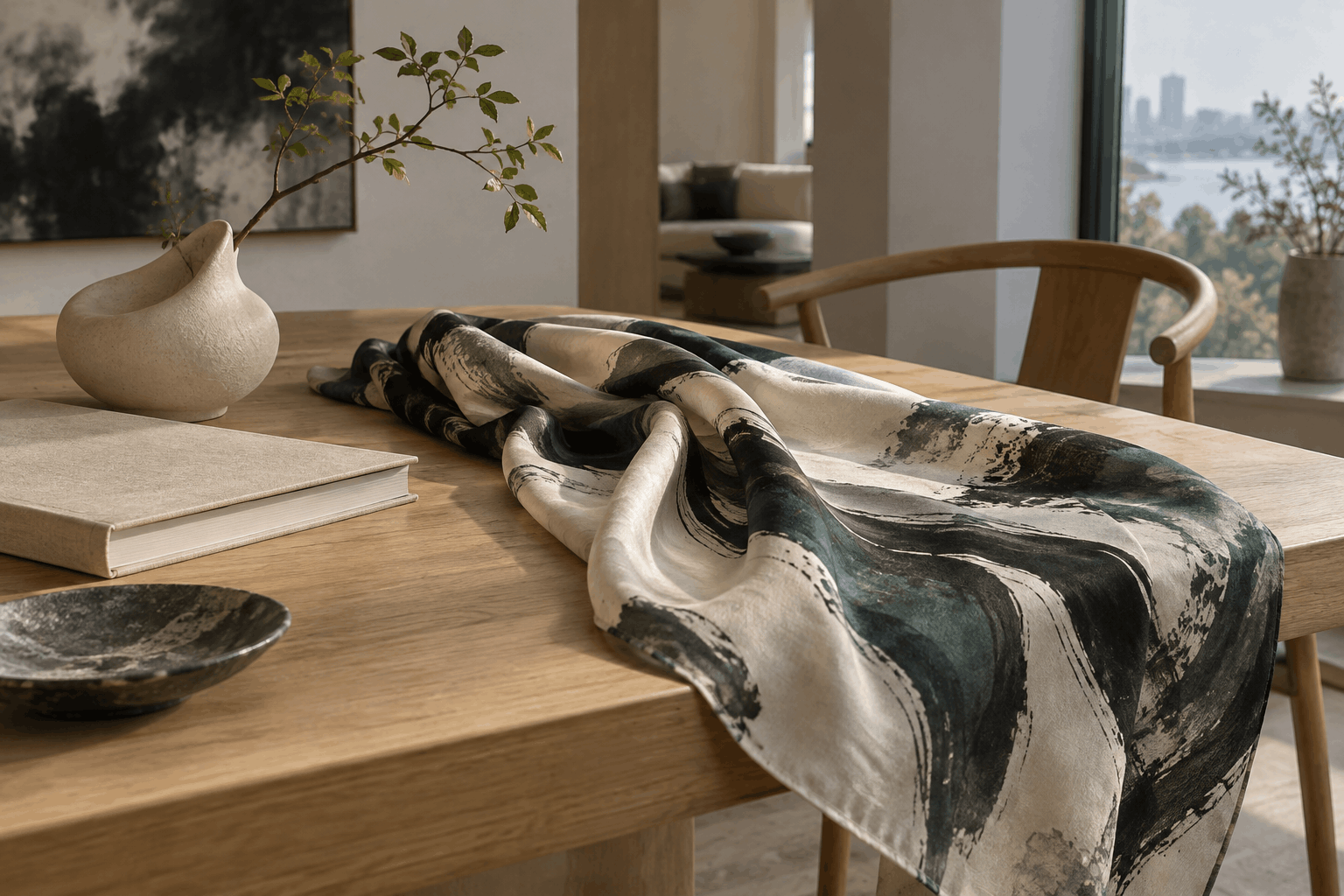
For someone who enjoys wearing color and pattern, a silk scarf offers an intimate way to live with design. Unfolded, it has the structure of a flat composition. Worn, its lines meet, its colors overlap and different details become visible with each fold.
That changing view is part of the appeal. A strong border may become a narrow accent beside a collar. A broad area of color can soften a patterned section. The recipient gets to interpret the design through the way they wear it.
When browsing Lanting Loom’s square scarves, consider both the complete design and the colors likely to show when it is tied. Choose a palette that relates to their wardrobe, with enough character to feel like a considered gift. For someone who prefers a flowing line, the long scarf collection offers a different format.
Check the fiber composition, measurements and care details on the listing. The scarf size guide can help you connect the dimensions with how the recipient might wear it.
How brushwork can become a contemporary design
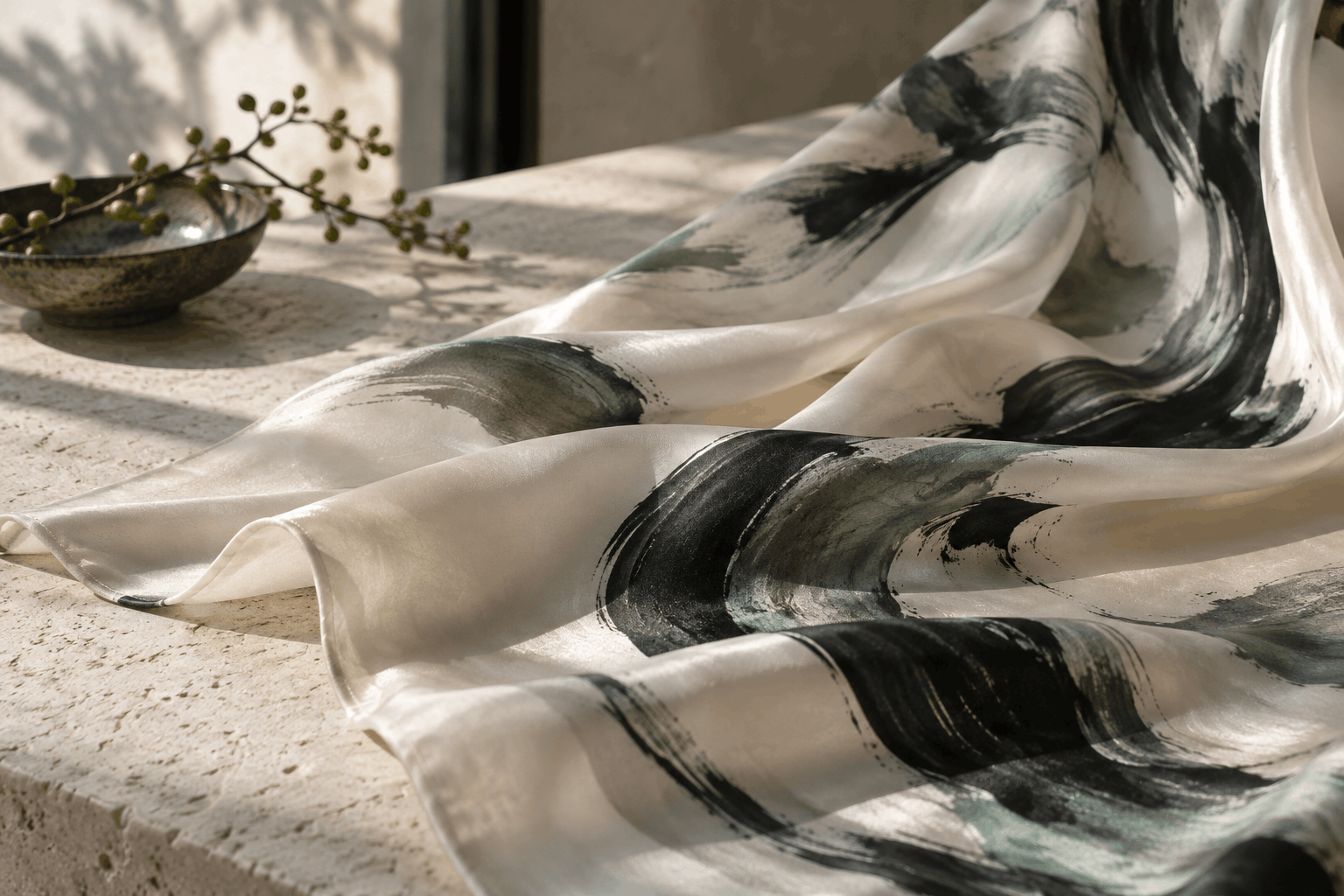
Chinese calligraphy offers a rich reference for someone interested in expressive line. The Metropolitan Museum of Art’s introduction to Chinese calligraphy explains how brush pressure, speed and ink contribute to the character of a stroke.
A contemporary designer may respond to that sense of movement through an abstract composition. A sweeping line on a scarf can be inspired by calligraphic gesture without being a written character or a reproduction of a historical work. The description should make that distinction clear.
At Lanting Loom, our design approach explores how cultural sources can become contemporary arrangements of line, color and space. For a gift, choose the particular design that appeals to the recipient and read its own story, rather than assuming every piece shares the same inspiration.
2. A print or small work by a contemporary Chinese artist
A print can introduce someone to an artist whose work connects with an existing interest. Look beyond broad categories and consider subject, medium and mood. A quiet architectural photograph and a vivid abstract work offer very different experiences, even if both artists share a cultural background.
Buy through the artist, a gallery, a publisher or another seller that clearly identifies the work. Keep the title, artist’s name, medium and purchase information with the gift. If it is described as an edition, check how the edition is documented. If it reproduces another work, it should be presented as a reproduction.
Think about framing as part of the decision. An unframed print lets the recipient choose what suits their room, but it also leaves them with an extra task and expense. For a substantial purchase, choosing the work together can make the gift more enjoyable.
A small artwork is not automatically a better investment because it is signed or numbered. Choose it for the pleasure and interest it offers, without promising future value.
3. Contemporary ceramics with a strong sense of form
For a person who enjoys sculpture, architecture or tactile objects, a ceramic piece can be especially satisfying. A small vessel invites close attention to its profile, the transition between surfaces, and the way light moves across the glaze.
Look for information about the maker and process. If a seller describes a particular regional tradition or technique, the explanation should relate to the actual object. Color alone cannot establish its provenance: a pale green glaze, for example, does not tell you who made the piece or how it was produced.
Choose scale carefully. A small cup or vessel may fit comfortably among objects they already own. A large vase has a stronger presence and asks more of their space. For functional ceramics, confirm the intended use and care instructions; for an international gift, consider protective packaging and the practicalities of transport.
4. An art book with room for discovery
A well-chosen book can be one of the most rewarding Chinese gifts for art lovers. It offers context, close looking and the freedom to return to a subject over time. Consider a focused artist monograph, a museum collection book or an exhibition catalogue connected to something the recipient has mentioned.
Match the level of detail to their interest. A newcomer may appreciate generous images and an accessible introduction. Someone already familiar with a field may prefer a publication on a single artist, period or medium.
Check the language, image quality, publication details and dimensions before buying. A large illustrated book can be beautiful but difficult to carry home from a visit. If the recipient collects books, check whether they already own it and put your message on a separate card so they can keep the volume unmarked.
5. A museum-related gift or shared art experience
A museum gift becomes more personal when it connects with an actual visit or collection. A publication from an exhibition you explored together, or a clearly credited design collaboration, can recall a specific afternoon rather than a general interest in art.
An experience is another option: an exhibition visit, a talk or a workshop that suits the recipient’s interests. Check the program, dates and booking conditions before purchasing, and give them flexibility where possible. Someone who enjoys looking at ceramics may not necessarily want to take a pottery class.
You can pair the experience with a small physical gift, such as a scarf chosen for the day or a book to explore afterward. Keep the relationship between the two simple and personal.

Use symbolism as one layer of the gift
For some recipients, an identifiable motif adds interest. Bamboo is a useful example: in its discussion of Xia Chang’s Windblown bamboo, The Met connects bamboo with integrity and strength. That association can enrich a gift for someone whose steadiness you admire.
Still, the image should appeal to them visually. A symbol’s meaning cannot make an unsuitable color palette or composition feel right. Let the object work first as a piece of design, then explain the cultural reference if it adds something meaningful.
Personal associations are equally welcome when described as your own. A landscape may remind you of a trip; a garden composition may recall their favorite place. “This made me think of our visit” is more convincing than assigning a universal meaning to every detail.
How to choose when you do not know their collection
If you are unsure what they own, ask a small question about a recent exhibition, favorite artist or current interest. Their answer may reveal more than a general question about what gift they would like.
For an enthusiastic collector, avoid guessing at a major acquisition. A publication, useful accessory or shared visit allows you to acknowledge their interest without trying to complete their collection for them. For someone discovering Chinese art, choose a piece with a clear, accessible story.
Set a budget that leaves room for the complete gift: framing, delivery or presentation where relevant. A modest object chosen attentively can feel more personal than something larger selected mainly for its price.
Present the piece with the details that matter
Include the artist or designer’s name, the title where relevant, and a short explanation of why you chose it. Keep useful information about materials and care with the gift, while letting your own note remain warm and simple.
You might write: “The movement in this design reminded me of the paintings you loved at the exhibition.” Or: “I thought you would enjoy the shape and surface of this piece as much as I did.” These observations show that you noticed how the recipient looks at things.
If you are considering a coordinated presentation, explore Lanting Loom’s gift sets and review each set’s contents. Choose a combination the recipient would enjoy using. For a scarf, include a reference to the silk care guide so that caring for it feels straightforward.
Questions about Chinese gifts for art lovers
What is a good gift for someone who loves Chinese art?
Consider a print by an artist they admire, a focused art book, contemporary ceramics or a silk scarf with a clear design story. Their preferred medium and visual taste are the best starting points.
Can a silk scarf be an art-inspired gift?
Yes. A scarf can carry a considered composition through color, line and movement. Look for a design the recipient would enjoy wearing and a description that explains its inspiration accurately.
Does a Chinese art gift need traditional symbols?
No. Contemporary artists and designers may explore Chinese culture through abstraction, photography, materials or personal experience. A specific, well-explained connection matters more than familiar decorative motifs.
What should I choose for someone with very particular taste?
A book, exhibition visit or gift chosen together can give them room to follow their own interests. For an object they will display prominently, ask about their preferences before committing.
Choose something they will enjoy looking at again
A successful art gift continues to reward attention. It may be the way light falls across a cup, a detail in a print, or a new arrangement of colors when a scarf is tied differently.
For someone who loves that connection between art and daily life, explore Lanting Loom’s silk scarves. Choose a design that speaks to their eye, learn its story, and add your own reason for giving it.
