

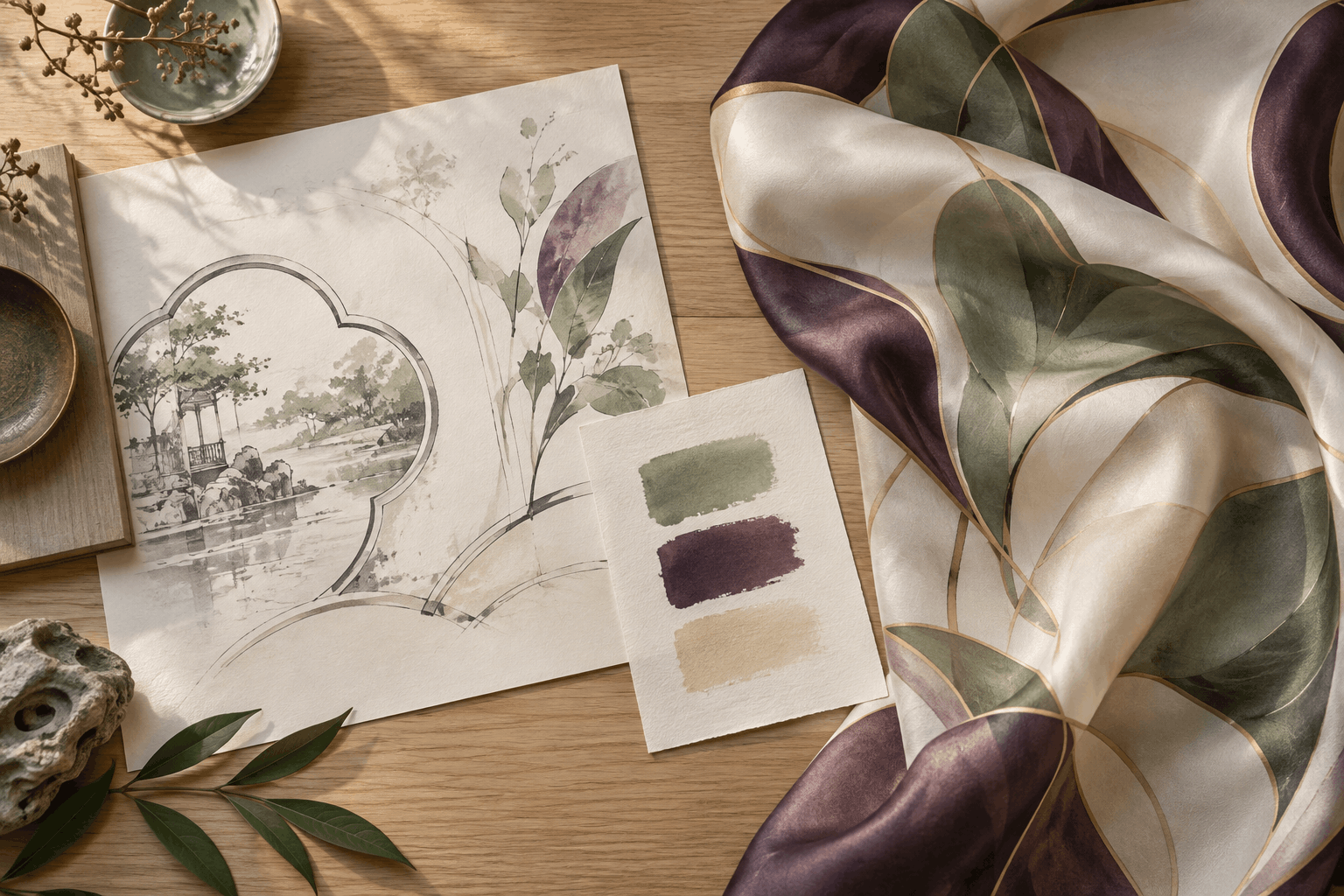
A custom silk scarf can turn a company milestone, cultural connection or shared place into something a recipient can wear. Its success depends on bringing that story into a design that feels beautiful beyond the occasion.
To choose custom silk scarves for corporate gifts, define the recipient and purpose, agree on the level of customisation, specify the fabric and size, and approve a physical sample before production. Packaging, budget and delivery arrangements should be part of the brief from the beginning.
This guide explains the decisions that help a corporate scarf project move from an initial idea to a considered finished gift.
1. Decide What “Custom” Needs to Mean
Customisation can range from a personal message accompanying an existing scarf to original artwork created for an organisation. These routes involve different design work, costs and approval stages. Ask the supplier which options are available for your quantity and deadline.
| Route | What changes | When it may suit |
|---|---|---|
| Custom presentation | An existing scarf receives an occasion-specific card, sleeve or box | When an existing design already fits the recipient and story |
| Adapted scarf design | An agreed colourway or discreet mark is added to a suitable design | When some visual connection is needed without a new composition |
| Fully bespoke artwork | A new scarf composition is developed around an approved brief | Anniversaries, cultural projects and occasions with a distinctive story |
A scarf with custom packaging is still an existing scarf design. Make that distinction clear in proposals and quotations. If original artwork is central to the project, explore bespoke silk scarves and discuss the development process.
2. Start With the Recipient and Occasion
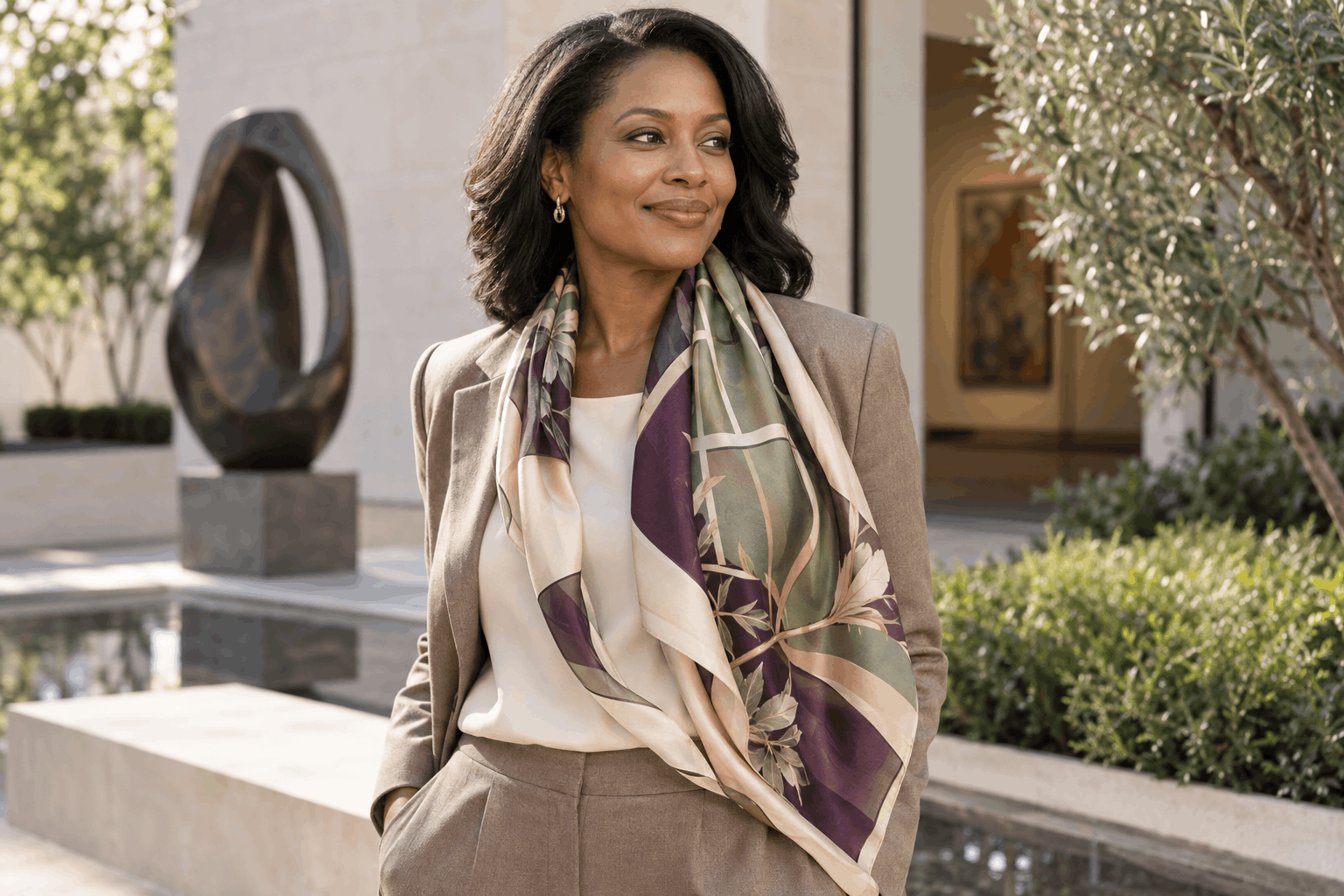
Consider who will receive the scarf, how they might wear it and why the occasion matters to them. A client appreciation gift, an employee milestone and an institutional keepsake can call for different colours, messages and levels of visible branding.
Do not assume everyone in a professional group shares the same wardrobe. Think about climate, everyday dress and whether a scarf is an appropriate choice for the audience. Where preferences vary widely, discuss a small selection or an alternative gift.
For company anniversary gifts, the strongest brief often identifies a shared achievement or meaningful place. That gives the design team more to work with than a logo and an anniversary number alone.
3. Translate the Story Into Wearable Artwork
Begin with a focused set of references: architecture, an archive image, a landscape, a collection or an idea associated with the organisation. Explain why each reference matters and identify the elements that must remain recognisable.
A garden window might inspire the scarf’s geometry; a river might suggest movement through the composition. The result can express a connection while remaining attractive to someone who does not know the story.
Review artwork both flat and folded. A central illustration may disappear when tied, while the border becomes the most visible part. Ask to see likely wearing positions before approving the layout.
For museums and cultural institutions, agree on image permissions, credits and any interpretation requirements at the briefing stage. Ask what artwork files the supplier needs, and clarify design ownership, exclusivity and future reorder use in the project agreement.
4. Choose the Scarf’s Size and Fabric Together
Shape affects both styling and artwork. A square scarf provides a balanced canvas that changes when folded diagonally. A long scarf offers flowing ends and room for a pattern to unfold along its length.
For initial discussion, a square around 63 × 63 cm can suit compact neck styling, while one around 88 × 88 cm offers more fabric for folds and ties. A long format around 180 × 50 cm can suit a loose drape. These are illustrative starting points, not a statement of custom sizes available from any supplier.
Specify fibre composition as well as the fabric construction. Silk twill, silk satin and lighter plain-weave silk can differ in surface, structure and movement. Satin is a weave, so the word alone does not confirm silk content. Momme describes fabric weight; it does not establish overall quality.
Handle a representative sample and judge whether its drape supports the intended use. Confirm finished dimensions and agreed tolerances, rather than relying only on the dimensions shown in an artwork file.
5. Give Branding a Deliberate Role
A company identity can appear as a small mark, a colour reference, an artistic detail or a message on removable packaging. Decide what the recipient would welcome on an accessory worn outside work.
If a permanent logo is needed, check its actual size, contrast and position. The scarf should still feel visually balanced when worn. Keep maker, composition and care information separate from the decision about promotional branding.
Our comparison of branded vs unbranded corporate gifts explains when a visible company connection can add meaning and when presentation alone may be enough.
6. Approve Samples Before Production
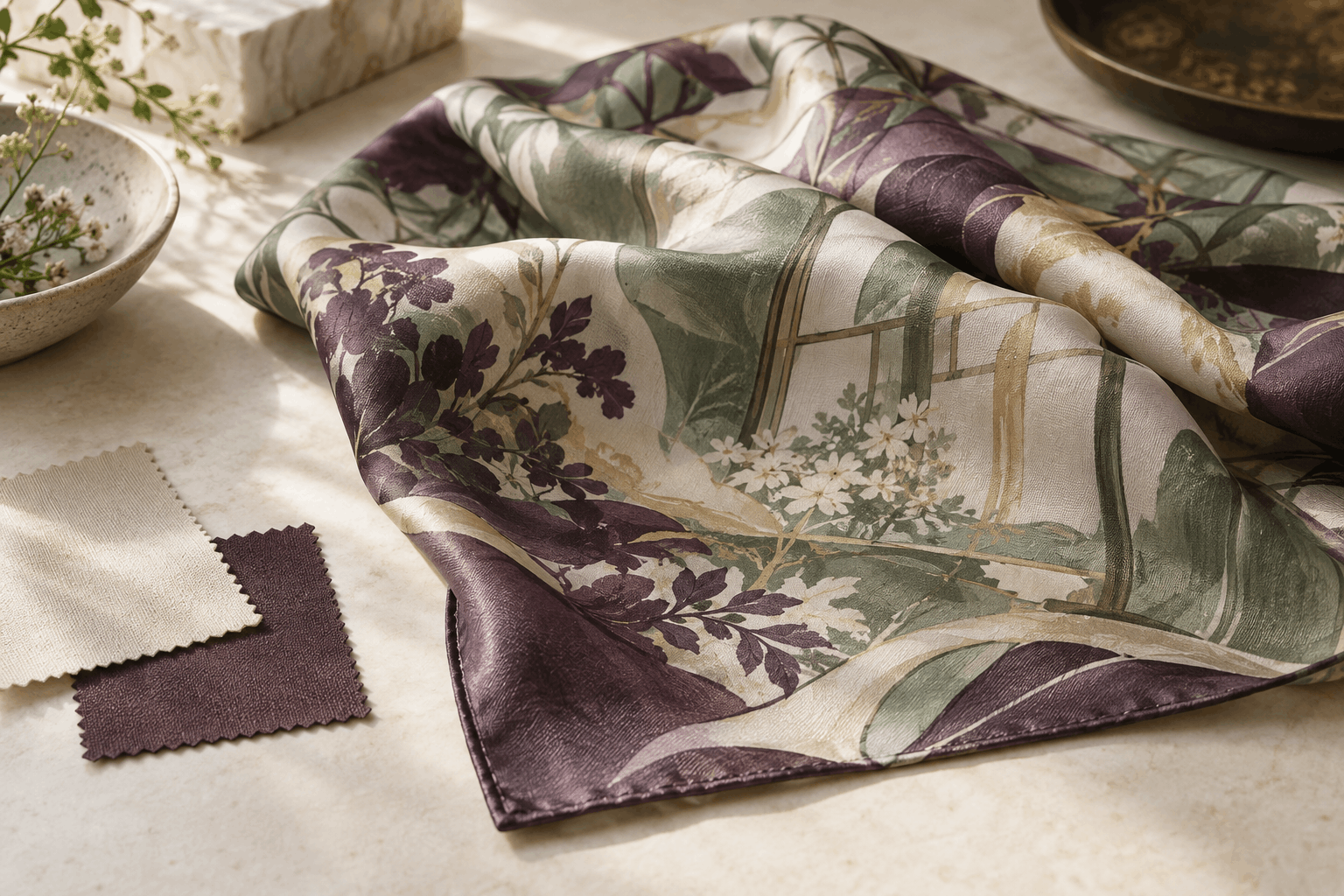
A digital mock-up helps assess composition, but a physical sample shows how the design behaves on fabric. Ask whether the sample represents the proposed production material, printing method and finishing.
- Colour: Compare important colours with agreed physical references under consistent lighting. Discuss achievable matching and acceptable variation.
- Print: Check fine details, borders and the reverse. A lighter reverse is not automatically a defect; confirm the intended result.
- Feel and drape: Fold, tie and handle the scarf in the ways recipients are likely to use it.
- Finish: Inspect edges, corners, stitching and labels for consistency.
- Presentation: Check the folded scarf inside the proposed packaging, including every card and message.
Record approval against an identified sample and artwork version. Agree on production checks and how any differences from the approved specification will be handled.
7. Build the Budget and Schedule Around the Whole Project
Request a quotation that separates artwork development, sampling, scarf production, packaging and delivery. Confirm whether revisions, additional colourways or split shipments create extra charges.
Ask about minimum quantities for each design, colourway and packaging option. There is no single minimum order or lead time that applies to every custom silk scarf project; obtain written terms for the specification you are considering.
Work backwards from the date the gifts must be in hand. Allow time for artwork review, physical sampling, possible revisions, production, inspection and transport. Nominate one person to consolidate feedback and confirm which approvals trigger the next stage.
For international deliveries, clarify who arranges import paperwork and pays any applicable charges. Confirm whether the quote covers delivery to one office or individual recipients, and include an agreed buffer before the event.
8. Finish With Thoughtful Presentation
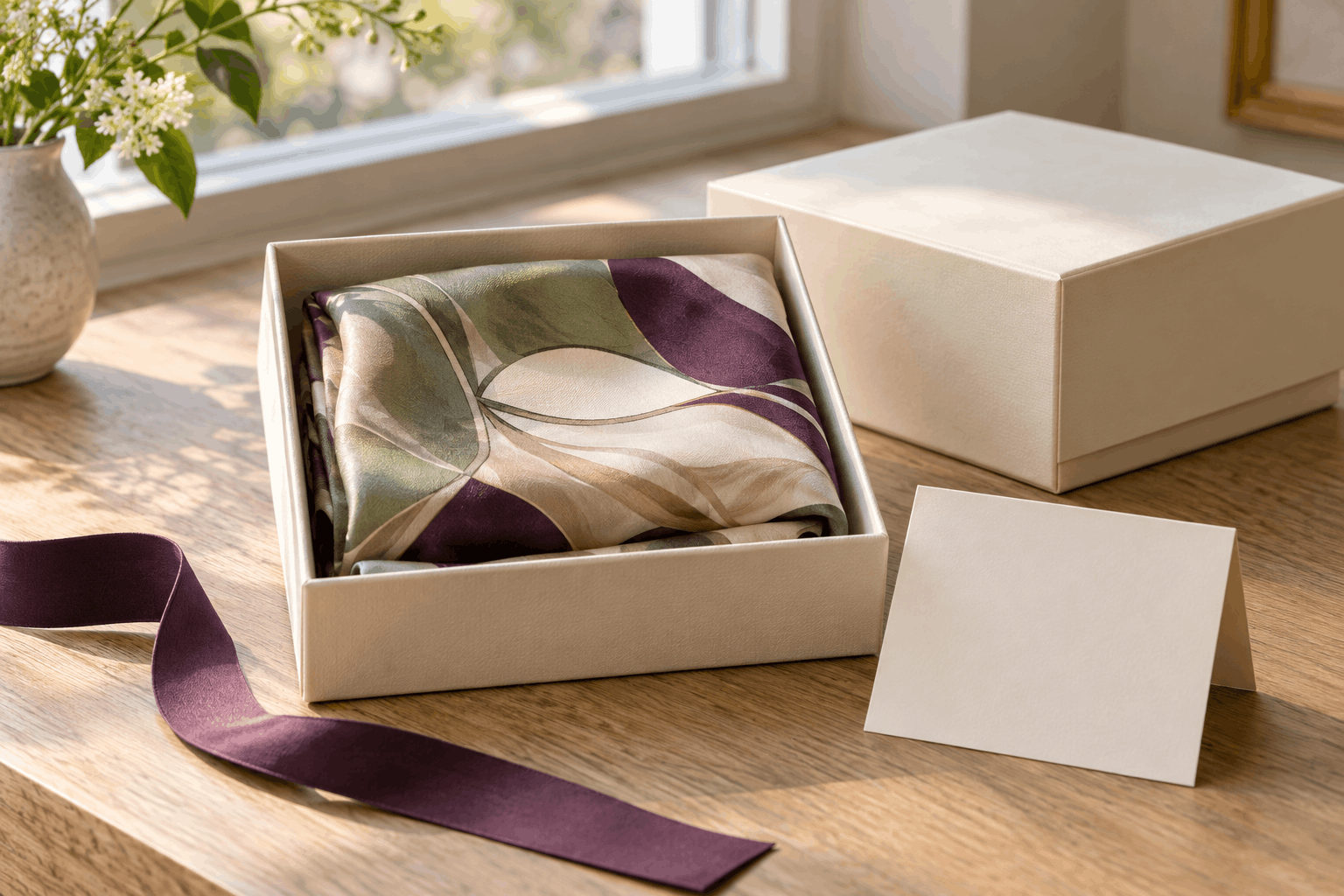
Choose packaging that protects the scarf, suits its proportions and is easy to open. A short design-story card can explain the connection behind the artwork; a separate message can thank the recipient personally.
Confirm exactly what is included, from care information to message printing. Review spelling, names and any translated copy before approval. Photograph or retain an approved packed sample so the final presentation is clearly documented.
What to Include in Your First Enquiry
A useful supplier brief includes:
- The occasion, recipient group and intended use.
- Estimated quantity and budget, stating whether packaging and delivery are included.
- Preferred shape, approximate dimensions and material expectations.
- The story, visual references and desired level of company branding.
- Packaging, message and language requirements.
- Delivery destinations, required arrival date and the person approving samples.
Frequently Asked Questions
Can we create a corporate silk scarf without a visible logo?
Yes, the design brief can focus on original artwork, colours or a shared story. Company identification can sit on a card or packaging instead. Confirm the available approach with your supplier.
How much do custom silk scarves cost?
The price depends on quantity, size, fabric, artwork, printing, finishing and presentation. Compare itemised quotations against the same specification and include development and delivery costs in the total.
Should we choose an existing scarf or commission a bespoke design?
Choose an existing scarf when its design already expresses the gesture well. Consider bespoke artwork when a particular story or visual identity is essential and the project can accommodate development and sampling.
Bring Your Corporate Gift Brief to Lanting Loom
Explore Lanting Loom’s luxury corporate gifts and share your occasion, quantity, budget and delivery date. Discuss whether an existing design with considered presentation or a bespoke scarf project best suits the people receiving it.
