


Choosing gifts for international delegates involves more than finding an attractive object within budget. Event organizers also need to consider who will receive it, whether they can accept it, how they will carry it home and what the gift communicates about the occasion.
A thoughtful delegate gift should be appropriate to the relationship, easy to understand and practical to keep. It can express the character of the host city, introduce a cultural story or acknowledge someone’s contribution without becoming an oversized advertisement for the event.
Whether you are planning an international conference, a university exchange, a business delegation or a cultural forum, the following considerations can help you select gifts with confidence.
Start with the Purpose of the Gift
Before choosing products, decide what the gift is intended to do.
A welcome gift introduces the host and sets the tone for the visit. A speaker gift recognizes a contribution. A farewell keepsake marks a shared experience. An institutional gift may be presented to an organisation rather than kept by an individual.
These purposes can lead to different choices:
- Welcome gifts: compact, easy to distribute and accompanied by a clear greeting.
- Speaker appreciation: a considered object with a personal acknowledgement of the speaker’s contribution.
- Delegate keepsakes: useful or wearable pieces connected to the event’s theme or location.
- Institutional gifts: objects selected with the receiving organisation’s protocol team.
Write the purpose into the brief. “A portable thank-you gift for visiting speakers” gives a supplier more useful direction than “something luxurious.”
Lanting Loom’s corporate gifting options include curated silk gifts, adapted presentation and bespoke projects for organisations and occasions.
1. Understand the Recipients Without Making Assumptions
An international audience is not a single customer profile. Delegates may have different tastes, professional responsibilities, personal values and travel arrangements.
Nationality alone is a poor basis for deciding what someone will enjoy. A more useful starting point is the nature of the event, the recipient’s role and any preferences they or their coordinator have shared.
For a smaller delegation, ask the host liaison whether there are relevant gift restrictions or preferences. For a larger event, consider a limited choice of comparable gifts or a discreet way to decline.
Wearable gifts deserve particular attention. A silk scarf can suit someone interested in fashion, art or textiles, but it will not be appropriate for every recipient. Some delegates may also prefer to avoid animal-derived materials, including silk.
Make product information clear and provide an alternative where needed. The aim is to make the recipient feel considered, without asking them to explain personal choices publicly.
2. Check Whether Delegates Can Accept Gifts
A delegate’s employer or institution may have rules about receiving gifts. This is especially relevant when attendees represent public bodies, purchasing teams or organisations with formal hospitality policies.
Before placing an order, ask the appropriate organiser, institutional contact or protocol team to confirm:
- Whether personal gifts are permitted.
- Whether a value limit or approval process applies.
- Whether the gift must be recorded or received by the organisation.
- Whether particular types of gifts are unsuitable.
There is no single gift value that is appropriate for every international delegation. A modest item may still be unacceptable under a recipient’s policy.
Agree a comfortable process for declining a gift. Attendance, access and hospitality should not depend on accepting it.
3. Use Cultural Context Thoughtfully
A gift can introduce the culture of the host destination without reducing that culture to a familiar symbol or decorative cliché.
Consider a specific, well-researched connection: a garden associated with the city, an architectural detail, a textile tradition or a story about gathering and exchange.
For example, a conference about dialogue might inspire a design around flowing paths or meeting points. A university visit might connect with the institution’s landscape or archive. These ideas become more meaningful when the accompanying explanation is accurate and concise.
Avoid applying universal meanings to colours, flowers or numbers. Interpretations vary between contexts and individuals. If a motif has religious, ceremonial or politically sensitive associations, ask an appropriate adviser to review it.
For Chinese-inspired gifts, distinguish contemporary interpretation from historical reproduction. A design inspired by a painting or garden should not be described as an antique pattern or heritage technique unless that description is supported.
Lanting Loom’s cultural institution gifting page introduces projects where design and cultural interpretation form part of the brief.
4. Choose Something That Works Beyond the Event
A delegate gift should have a reason to remain in someone’s life after the conference ends.
That could be the pleasure of wearing a scarf, using a well-designed object or remembering an encounter through a small keepsake.
Silk Scarves
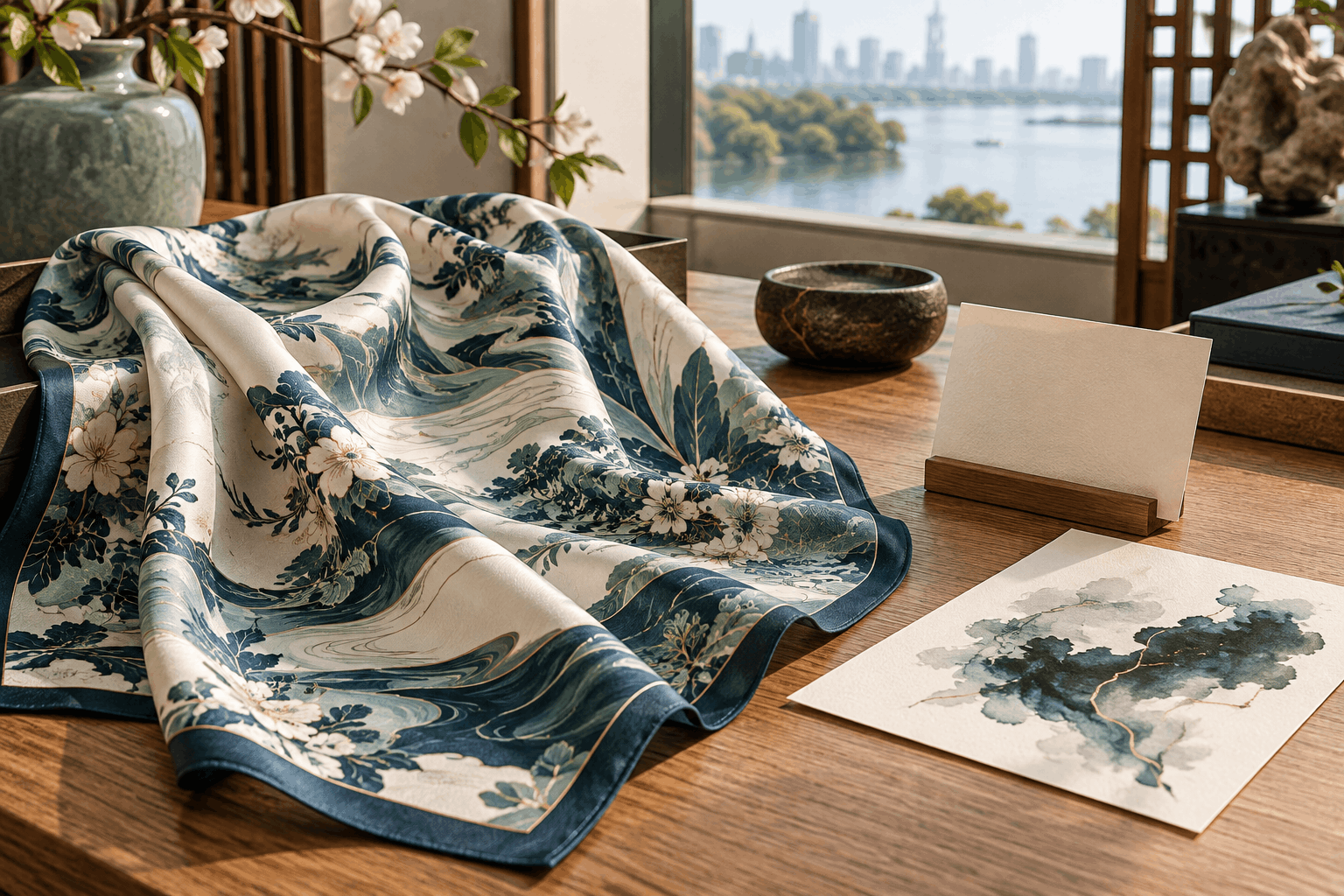
A scarf can express colour, movement and cultural inspiration in a format that folds compactly. Select it for an audience likely to appreciate wearable design, and check how the artwork looks both open and tied.
Confirm the fibre composition, dimensions, edge finish, care information and presentation. Describe printed, woven and embroidered details accurately rather than treating them as interchangeable qualities.
Small Design Objects
A compact desk or decorative object may suit recipients who would not choose an accessory. Assess whether it is useful, fragile or awkward to pack, as well as whether its connection to the event is clear.
Curated Gift Sets
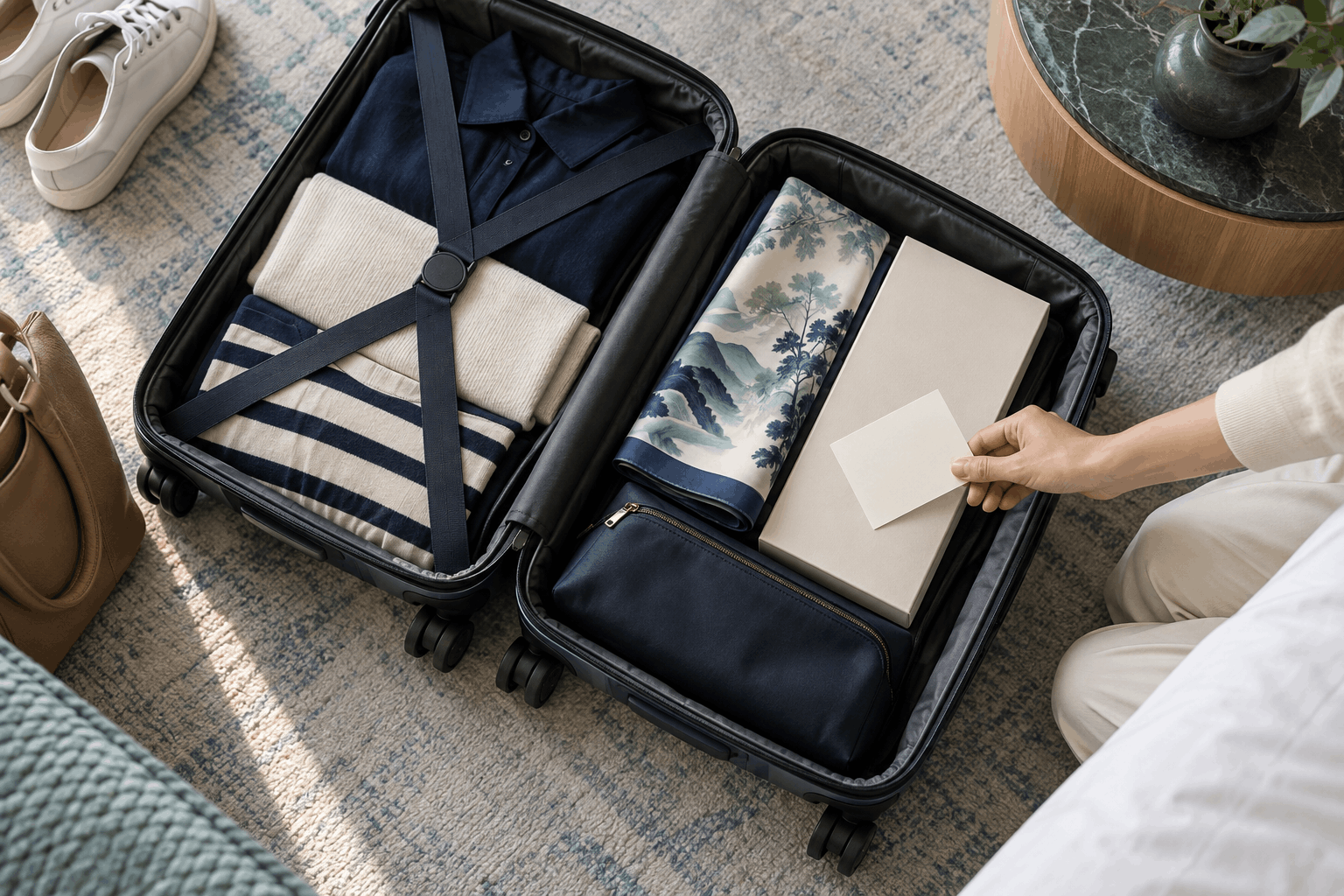
A set can work when the contents belong together and the presentation remains manageable. A scarf with a story card and an appropriate accessory may be easier to travel with than a large mixed hamper.
Adding more items is not automatically an improvement. Each component should contribute to the experience.
Food, Drink and Scented Gifts
These require closer attention to individual preferences, ingredients, storage and travel requirements. Do not assume alcohol, fragrance or a regional delicacy will be suitable for everyone.
If they are included, provide clear information and an appropriate alternative.
5. Think About the Journey Home
International delegates may be attending several events, travelling with hand luggage or continuing to another destination. Assess the packed gift rather than the product alone.
Ask these practical questions:
- What are the final package dimensions and weight?
- Will it fit comfortably into a typical cabin bag?
- Can the packaging be opened and closed without damaging it?
- Does the gift contain fragile pieces, liquids, batteries, food or plant material?
- Will the recipient need product details for a declaration?
Check official destination guidance for products that may be restricted. For example, Australia’s guidance on bringing or mailing goods explains that certain food, plant and animal products must be declared and may be assessed on arrival.
Its BICON system provides detailed biosecurity import conditions. This illustrates why an item that is easy to give locally may need additional checks before an international journey.
A finished textile gift avoids some of the practical difficulties associated with fragile ceramics or perishable food, but it should not be described as exempt from all customs requirements.
If onward shipping is offered, confirm the recipient’s preference, destination requirements and responsibility for any charges before promising delivery.
6. Keep Branding Discreet and the Message Clear
The event identity can appear on the presentation without dominating the gift itself.
For a scarf, a large central logo can limit how readily the recipient wears it. Consider expressing the connection through an approved colour palette, a small design detail or an accompanying card.
Useful places for event branding include:
- A removable presentation sleeve.
- A welcome or thank-you card.
- A discreet mark on the box.
- An approved detail within a bespoke design.
Keep the written message short and specific. Explain why the gift was selected and acknowledge the recipient’s participation.
Use clear international English where appropriate. If translated messages are needed, have names, titles and wording checked by a competent speaker before printing. Avoid idioms that may be difficult to translate naturally.
For university exchanges and academic delegations, explore Lanting Loom’s university and institutional gifting options.
7. Choose the Right Level of Customization
The best route depends on the significance of the occasion, the schedule and the resources available for development.
Existing Products
Choose a design that fits the audience and purpose. Confirm stock, quantities and presentation before committing to a delivery date.
This can be a practical route for smaller events or projects where an original design is unnecessary.
Adapted Presentation
Keep the existing product and tailor selected packaging or message elements. This can make the gift feel connected to the event without developing a new object.
Be accurate in the description: a scarf selected for an event is not the same as a scarf designed exclusively for it.
Bespoke Design
Commission an original design when the event or institution has a clear story worth developing and sufficient time for research, artwork review and sampling.
Clarify permissions for any logos, artwork or archive material involved. If exclusivity is required, agree its scope rather than assuming it follows from customization.
Lanting Loom’s bespoke silk scarf projects provide a route for discussing original designs inspired by an organisation, place or occasion.
8. Budget for the Complete Delivered Gift
The product price is only one part of the project. A useful quotation should make the complete scope clear.
- Product: agreed materials, size, finish and quantity.
- Development: artwork, adaptation, setup and sample charges.
- Presentation: boxes, sleeves, cards and protective packaging.
- Preparation: assembly, personalization and recipient sorting.
- Delivery: freight, destination arrangements and applicable import costs.
- Contingency: extra attendees, replacements and agreed changes.
Compare proposals on the same basis. A lower product price may not mean a lower completed project cost if packaging or delivery is excluded.
If there are different gift levels, connect them to clearly defined roles or occasions and plan the handover discreetly. Avoid creating an uncomfortable public comparison between delegates.
9. Work Backwards from the Required Arrival Date
The delivery deadline should leave time for the gifts to be received, inspected and organised before delegates arrive.
Confirm the following stages with your supplier:
- Brief and product selection.
- Artwork and wording approval, where applicable.
- Relevant sample review.
- Production and quality checks.
- Packing and dispatch.
- Receipt, inspection and event allocation.
Ask for timing based on the actual quantity, destination and customization. Retail shipping estimates should not be assumed to apply to a bulk or bespoke order.
For venue deliveries, confirm the named receiving contact, permitted delivery window, storage arrangements and carton identification. Gifts that arrive at the building still need to reach the right event team.
Set an internal deadline for changes to names and messages. Where possible, keep late-changing information on a separate insert rather than permanently incorporating it into the product.
10. Plan a Comfortable Handover
The way a gift is presented affects how it is received. Consider whether the delegate will be moving between sessions, carrying documents or leaving directly for the airport.
A welcome-desk collection, room placement or departure handover may each be appropriate. Choose the moment that suits the programme and the recipient.
Brief the event team on:
- Which gift goes to each recipient or group.
- How to pronounce names and use titles correctly.
- What to say about the gift’s design and purpose.
- How to handle a declined gift without drawing attention.
- What to do with gifts for absent delegates.
For formal institutional presentations, follow the agreed protocol. For other attendees, a warm explanation and an easy handover may be all that is needed.

What to Include in a Delegate Gift Brief
A clear brief helps suppliers recommend a realistic solution. Include:
- The event name, purpose and location.
- The intended recipients and approximate quantity.
- Any known gift policies or material preferences.
- The required arrival date and receiving address.
- The total or per-recipient budget and what it must cover.
- The preferred product format.
- The desired connection to the host, institution or event.
- Any branding, language or personalization requirements.
- Whether delegates will carry the gifts home or require another arrangement.
Separate confirmed requirements from optional ideas. This makes it easier to protect the essentials when choices about cost or timing arise.
Frequently Asked Questions
What are good gifts for international delegates?
Good options are appropriate to the recipient, connected to the occasion and practical to carry. Depending on the audience, these may include silk scarves, small design objects or compact curated gift sets. Check acceptance policies and individual preferences before choosing.
Should all delegates receive the same gift?
A consistent gift can simplify planning, but a small choice of comparable options can accommodate different preferences. If gifts vary by role, arrange distribution thoughtfully and avoid conspicuous differences in presentation.
Are silk scarves suitable for international delegation gifts?
They can be a good choice for recipients who appreciate wearable design and cultural storytelling. Confirm material preferences, provide accurate product information and consider an alternative for delegates who would not use silk.
How much should an organizer spend per delegate?
There is no universal amount. Start with the purpose of the gift, the recipient’s acceptance policy and the complete delivered cost. A higher price does not automatically make a gift more appropriate.
Do international delegate gifts need custom logos?
No. A thoughtful message or presentation sleeve can establish the event connection. Discreet branding may make the main object easier to use or wear after the event.
How early should organizers order?
Ask the supplier to confirm a schedule based on the product, quantity, customization and destination. Build in time for approvals, relevant samples, delivery and inspection before the event.
Choose a Gift That Extends the Welcome
A well-chosen delegate gift acknowledges the person receiving it and gives them a meaningful connection to the occasion. Its success depends on suitability, design and thoughtful execution.
Lanting Loom welcomes enquiries for silk scarves, curated gift sets, adapted presentation and bespoke designs for international events. Availability, quantities, pricing and timing depend on the project.
To discuss your event, visit our corporate gifting enquiry page and share your audience, quantity, budget, destination and required delivery date.
