

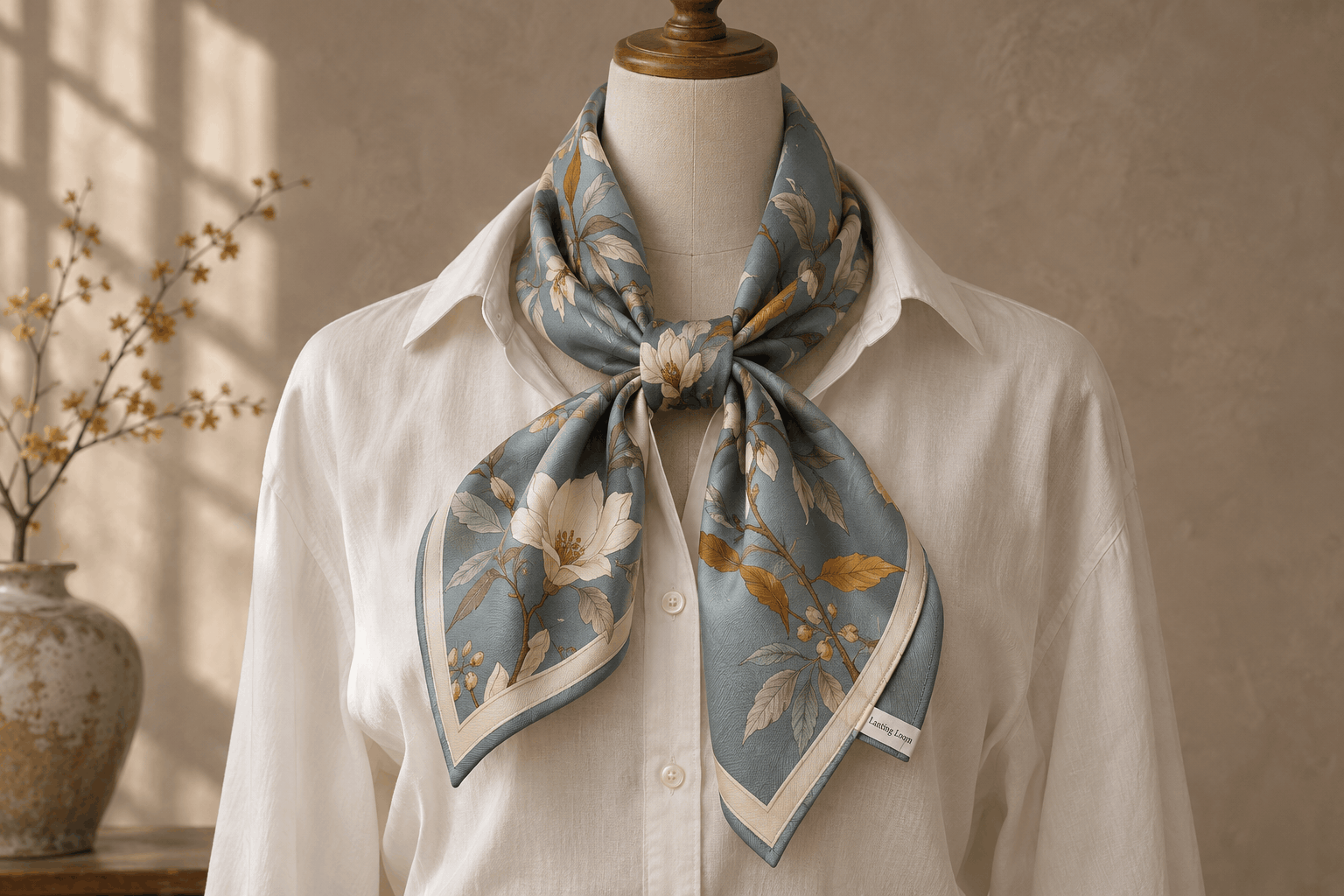
You arrange your silk scarf before leaving home, then find yourself adjusting it again a few minutes later. The knot loosens, one end grows longer, or the fabric slides away from your shoulder.
To keep a silk scarf from slipping, start with a smooth, flat fold, leave enough fabric beyond the fastening and choose a knot or scarf ring that suits its thickness. Balance the ends before making the final adjustment. For a shoulder wrap, bring the front corners together instead of relying on a loose drape alone.
The best fix depends on what is moving. A knot that opens needs a different adjustment from a ring that slides or a headscarf that travels backwards. These simple changes can make your scarf easier to wear while preserving its soft, fluid appearance.
Why Does a Silk Scarf Keep Slipping?
A scarf moves as you turn your head, walk, reach for a bag or put on a jacket. Smooth fabric can slide against itself, hair or clothing, particularly when the arrangement has little to hold it in place.
Before changing the style, notice where the movement begins:
- The knot opens: the first crossing may not be enough to hold the fabric, or the tails may be too short.
- The whole scarf rotates: one side may be longer or heavier, or a bag strap may be pulling it.
- The ring slides down: its opening may be too large for the folded silk, or its weight may be dragging the fabric.
- The wrap falls from your shoulders: the scarf may offer too little coverage or have no fastening at the front.
- The headscarf moves backwards: the fold, position or surface beneath it may need adjusting.
Slipping does not, by itself, tell you whether a scarf is good quality or genuine silk. The weave, finish, dimensions and styling method all influence how it behaves.
1. Start with a Flat Fold
If your scarf keeps rolling into a narrow rope around your neck, unfold it and begin again. A flat band is easier to arrange and keeps the layers more predictable when you tie it.
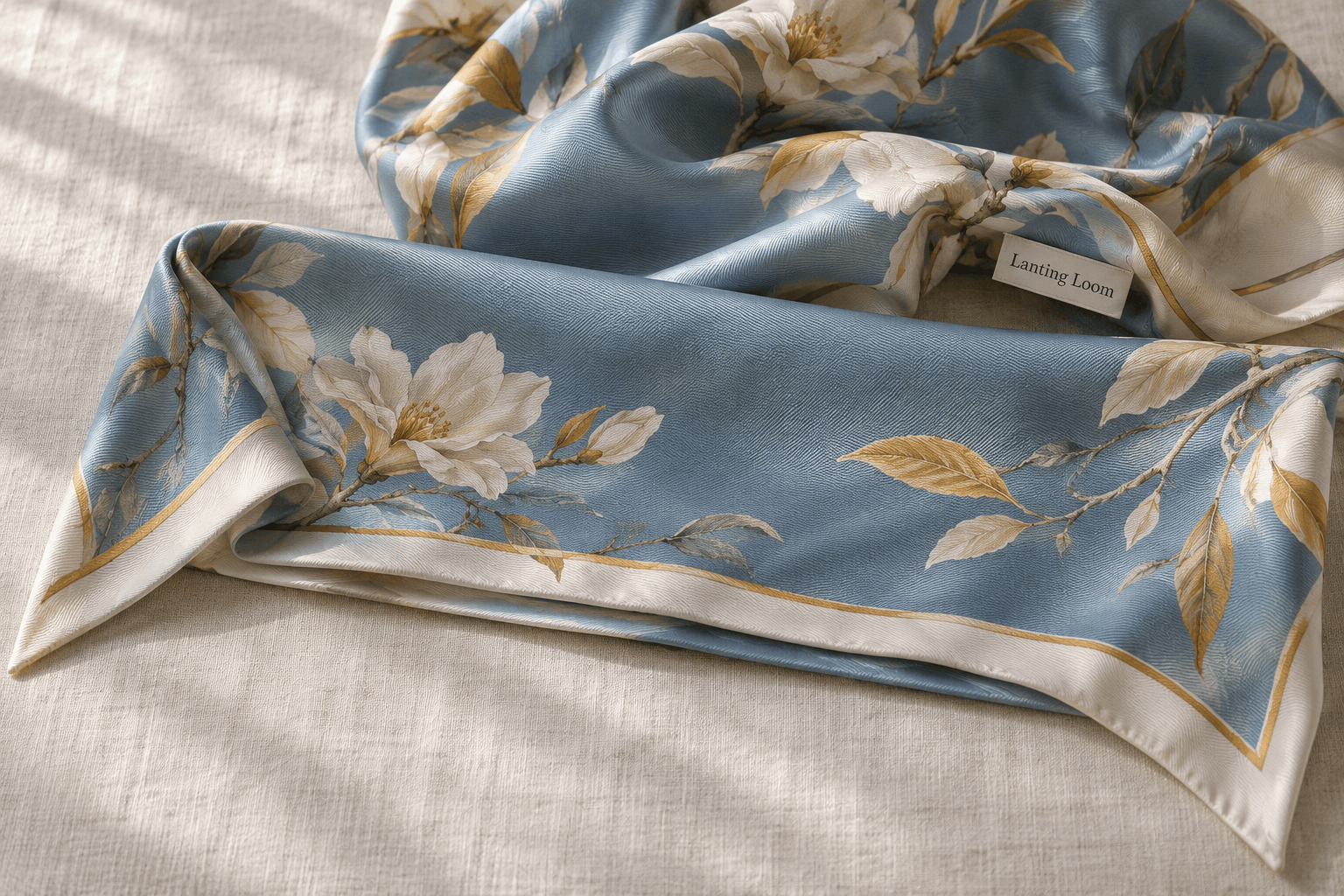
- Lay a square scarf on a clean surface in a diamond shape.
- Bring the top and bottom corners towards the centre.
- Fold those edges inwards again until you have a band of the width you want.
- Smooth the layers gently with your hands.
- Lift the scarf without twisting the band, then place it around your neck.
Try a slightly broader fold if a very narrow one keeps rotating. Keep the fabric flat at the back of your neck, where a hidden twist can pull the front arrangement out of position.
Try this first: change the fold before adding an accessory. Sometimes a more even arrangement is all you need.
2. Finish the Knot Instead of Leaving a Single Crossing
A single loose crossing can look attractive when you are standing still, but it may gradually open as you move. If that happens, try a gently tied square knot.
- Drape the folded scarf around your neck, leaving two usable ends.
- Cross the right-hand end over the left-hand end and pass it underneath.
- Cross the end now on the left over the end now on the right and pass it underneath.
- Ease the two crossings together into a flat knot.
- Arrange the tails and check that the loop around your neck remains comfortable.
The familiar sequence is “right over left, then left over right.” Practise on a table first if the movement feels unfamiliar.
A square knot is a styling option, not a guarantee against movement on every silk finish. Leave generous tails and check how it behaves during normal wear. If it still loosens, choose a different arrangement rather than pulling it increasingly tight.
Keep it comfortable: the knot can be tidy while the scarf remains loose around your neck. Secure styling should not feel restrictive.
3. Balance the Ends Before You Adjust the Neckline
A dramatic difference in tail length can pull a scarf towards one side, especially when the longer end carries more fabric. Start with roughly balanced ends, then introduce a small difference if you prefer an asymmetric finish.
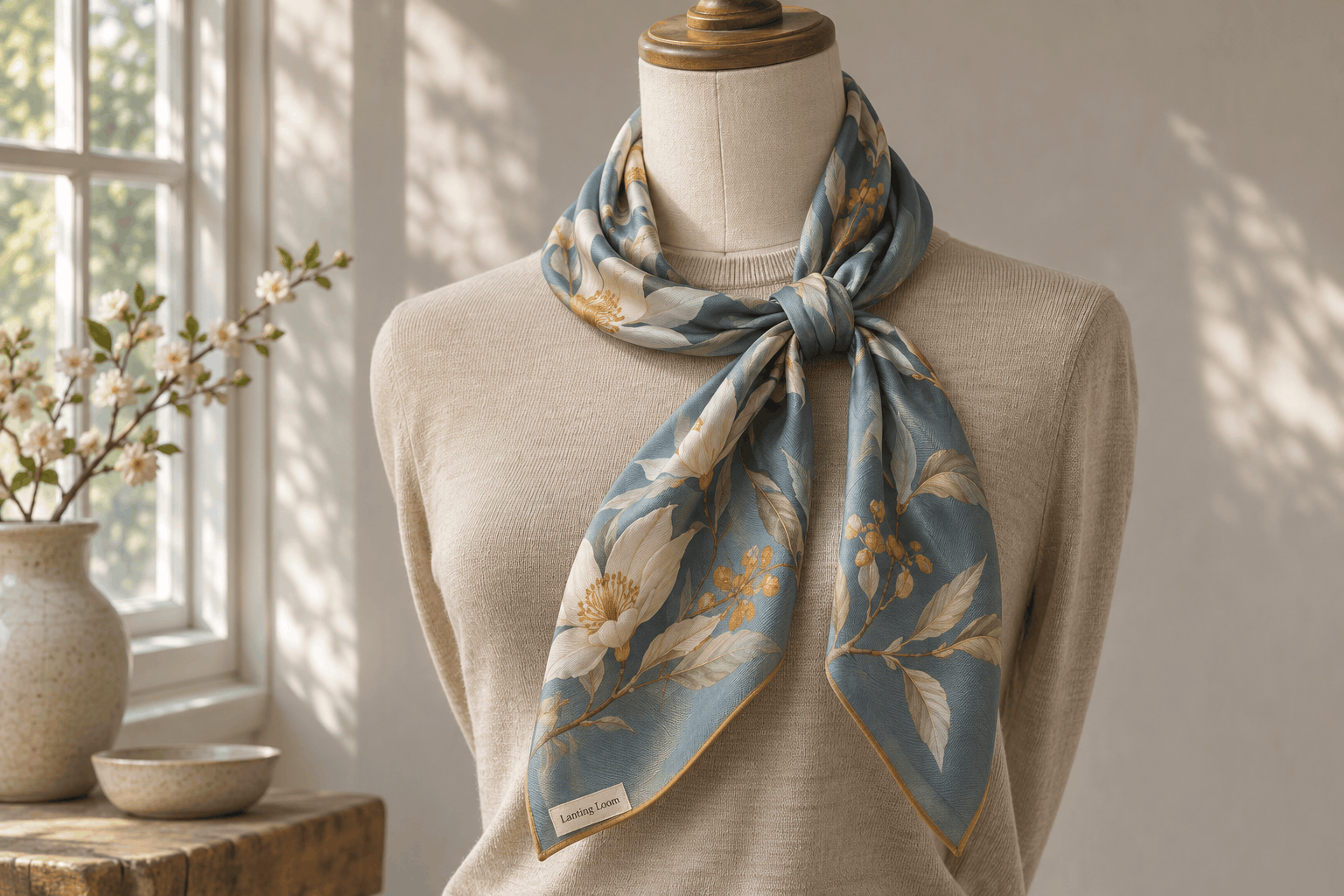
Once the scarf is tied, check that neither tail is caught beneath a jacket lapel, shoulder strap or necklace. A scarf can appear to be slipping when another part of your outfit is simply tugging it out of position.
- Put on your jacket before making the final adjustment.
- Lift your bag strap clear of the scarf rather than trapping the silk beneath it.
- Turn your head both ways to check for pulling.
- Keep enough length below the knot for the ends to remain easy to handle.
Styling detail: an off-centre knot can still look balanced. Position it deliberately near one collarbone, then arrange both tails so their weight does not continually drag it farther around.
4. Match the Scarf Ring to the Folded Fabric
A scarf ring can help gather a drape, but a simple smooth ring is not a locking clasp. If the opening is too large for the silk passing through it, the ring may slide towards the ends.
Try these adjustments in order:
- Check the surface. Inspect the ring for rough seams or edges before using it.
- Refold the scarf. Change the fold so the bundle passing through the opening fits more closely, without forcing it.
- Try a lighter or smaller ring. The fabric should move through with gentle guidance rather than hard pulling.
- Leave longer tails. Avoid positioning the ring at the very tips.
- Add a loose stopper knot if needed. With enough length available, tie the two tails together in a gentle overhand knot below the ring.
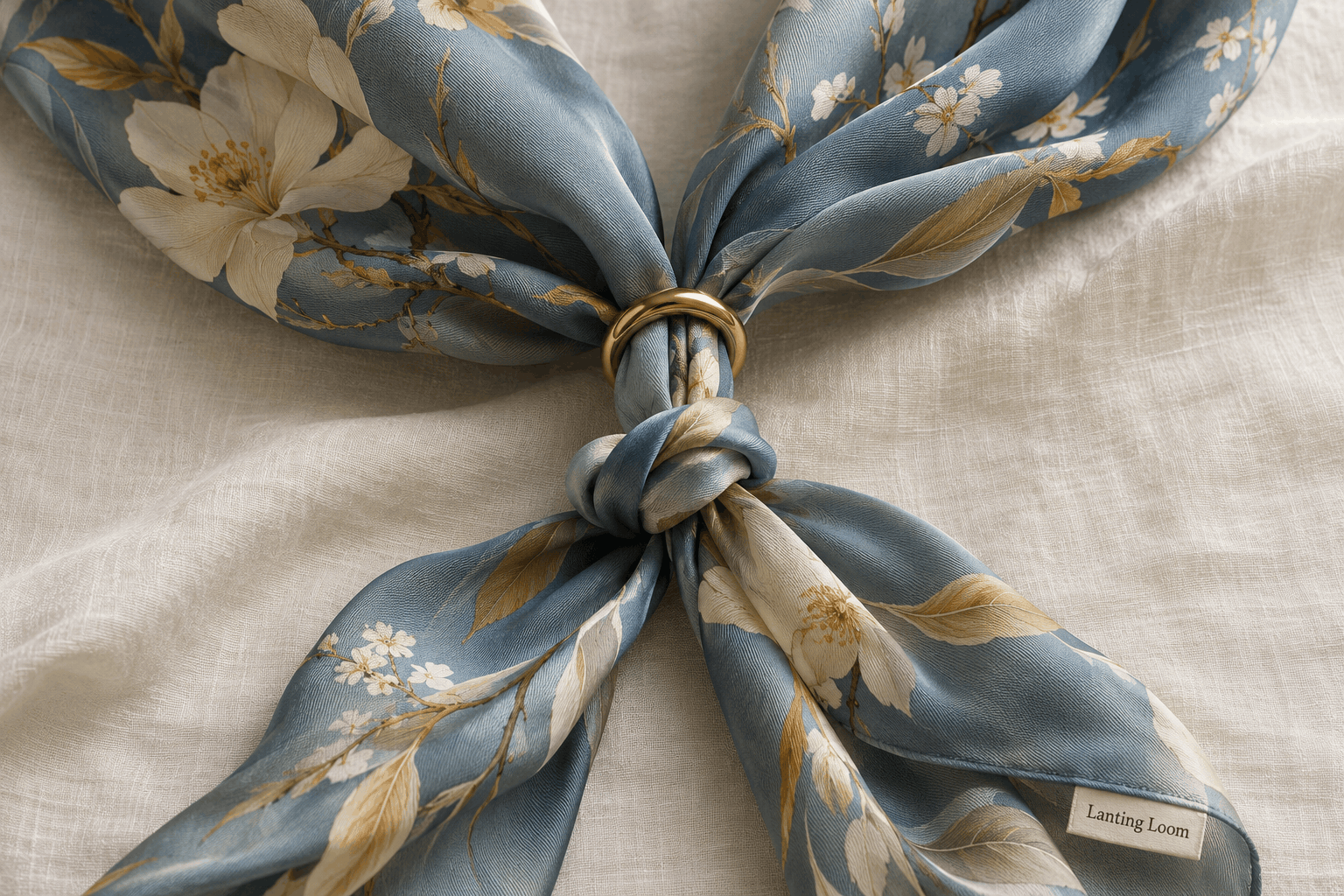
A stopper knot may help prevent the ring from falling off, but it will not necessarily stop the whole scarf from shifting. Check the neck fold and balance of the ends as well.
Rings with multiple openings or bars use different threading methods. Follow the instructions for the particular design rather than assuming every ring works the same way.
5. Check What the Scarf Is Resting On
The same scarf may behave differently over a cotton shirt, a smooth knit or a glossy blouse. If it slides freely over one outfit, try another surface before changing the scarf itself.
A smooth, matte cotton top or fine, even knit may give you a more manageable base. Avoid deliberately choosing a rough surface for extra grip: coarse fibres, sequins, hook-and-loop fasteners and sharp jewellery can catch delicate silk.
With a collared shirt, place the band beneath the collar and arrange the ends at the front. The collar can help guide its position. Check that buttons and fastenings do not trap or rub the fabric.
A useful distinction: a little support from your clothing is helpful; snagging and abrasion are not.
6. Give a Shoulder Wrap a Front Fastening
A scarf resting loosely across your shoulders will naturally move when you reach forward or raise your arms. If you want more stability, use a size that allows the two front corners to meet comfortably.
Drape the scarf across both shoulders, bring the front corners together and secure them with a loose knot or a suitably sized smooth scarf ring. Leave enough ease across your back to move without pulling.
If the corners barely reach, the scarf is too small for that particular arrangement. Use a larger piece or choose a neck style instead. Pulling the corners tightly together can distort the drape and make the wrap uncomfortable.
For an evening outfit, practise sitting down and reaching for a bag before leaving. A wrap that looks balanced in the mirror may need a small adjustment once you move.
7. For a Headscarf, Adjust the Base and Position
If a silk scarf slips off your hair, tightening the knot is not always the most useful response. A narrow, twisted band or a position too far back on the crown can be difficult to maintain.
- Try a wider, flat band. Keep the layers even rather than twisting them into a thin cord.
- Adjust its position. Move it slightly forward and test how it feels when you turn your head.
- Consider a soft underband. A comfortable cotton headband or undercap may provide a more stable base.
- Keep the fastening comfortable. Tie the ends without pulling hard against the scalp.
For a scarf tied around a ponytail, secure the hair first with a fabric-covered hair tie, then tie the scarf around that base. Let the hair tie provide the hold.
Keep styling products away from the silk. Apply them beforehand and let them dry before adding the scarf.
Quick Fixes to Avoid
The aim is to improve the arrangement without changing the silk’s surface or damaging its weave.
- Hairspray or dry shampoo on the fabric: these can leave residue or marks. They are not suitable substitutes for a better fold or fastening.
- Ordinary double-sided tape or glue: adhesive may leave residue or affect the finish. Do not assume a product marketed as fashion tape is suitable for your scarf.
- Safety pins pushed through the silk: punctures can leave visible holes or pulled threads.
- Rough clips or tight bare elastics: these may catch, compress or crease the fabric.
- Repeated hard tightening: a knot that needs constant force is a sign to change the style.
Follow the individual care label if the scarf needs cleaning. Care instructions vary: for example, Hermès recommends professional dry cleaning for its scarves. For Lanting Loom pieces, consult the supplied label and our silk care guide.
A Simple Check Before You Leave
Once your scarf is arranged, put on the rest of your outfit and move normally for a moment.
- Turn your head and relax your shoulders.
- Lift your arms and sit down.
- Put your bag on your shoulder.
- Check whether the knot, ring or entire scarf has moved.
- Adjust that specific point instead of tightening everything.
A little movement is part of wearing silk. The aim is a comfortable arrangement that stays broadly in place, with occasional small adjustments rather than constant retying.
Frequently Asked Questions
What is the easiest way to stop a silk neck scarf from slipping?
Start with a flat band fold, roughly balanced ends and a gently tied square knot. Leave sufficient tails and check that clothing or a bag strap is not pulling the scarf. This is a useful starting point, although results vary with the fabric and fit.
Will a scarf ring stop my scarf from moving?
It may help hold the arrangement, but the ring must suit the folded fabric. A large opening or heavy ring can slide. A loose knot below the ring may help keep it from falling off, while a balanced fold helps the scarf itself stay in position.
Should I buy a smaller scarf if mine keeps slipping?
Not necessarily. A smaller scarf can create a neater neck accent, but it may leave too little length for a comfortable knot. Choose the dimensions for the style you want, and try a different fold before replacing your scarf.
Can I use a brooch to hold a silk scarf?
A brooch that pierces the fabric can leave holes or pull threads. A smooth, purpose-made scarf ring is an alternative worth trying, provided its opening fits the scarf. Inspect any accessory before allowing it to touch the silk.
How do I keep a silk scarf from slipping off my shoulders?
Choose a scarf with enough coverage and bring the front corners together with a loose knot or suitable ring. Leave room to move across your back. If the corners cannot meet comfortably, use a larger scarf or a different style.
Choose a Style You Can Enjoy Wearing
A scarf should add pleasure to getting dressed. Begin with one small change—a flatter fold, a better-balanced knot or a ring that fits—and see how it behaves with your usual clothes.
When choosing your next piece, look at its dimensions as well as its colour and design. A large square such as Azure Arabesque gives you room to explore different folds, while a more compact scarf may suit a simple neckline.
Explore the Lanting Loom silk scarf collection to find a piece that fits the way you like to dress, then give yourself time to discover the fold that feels most natural.
