

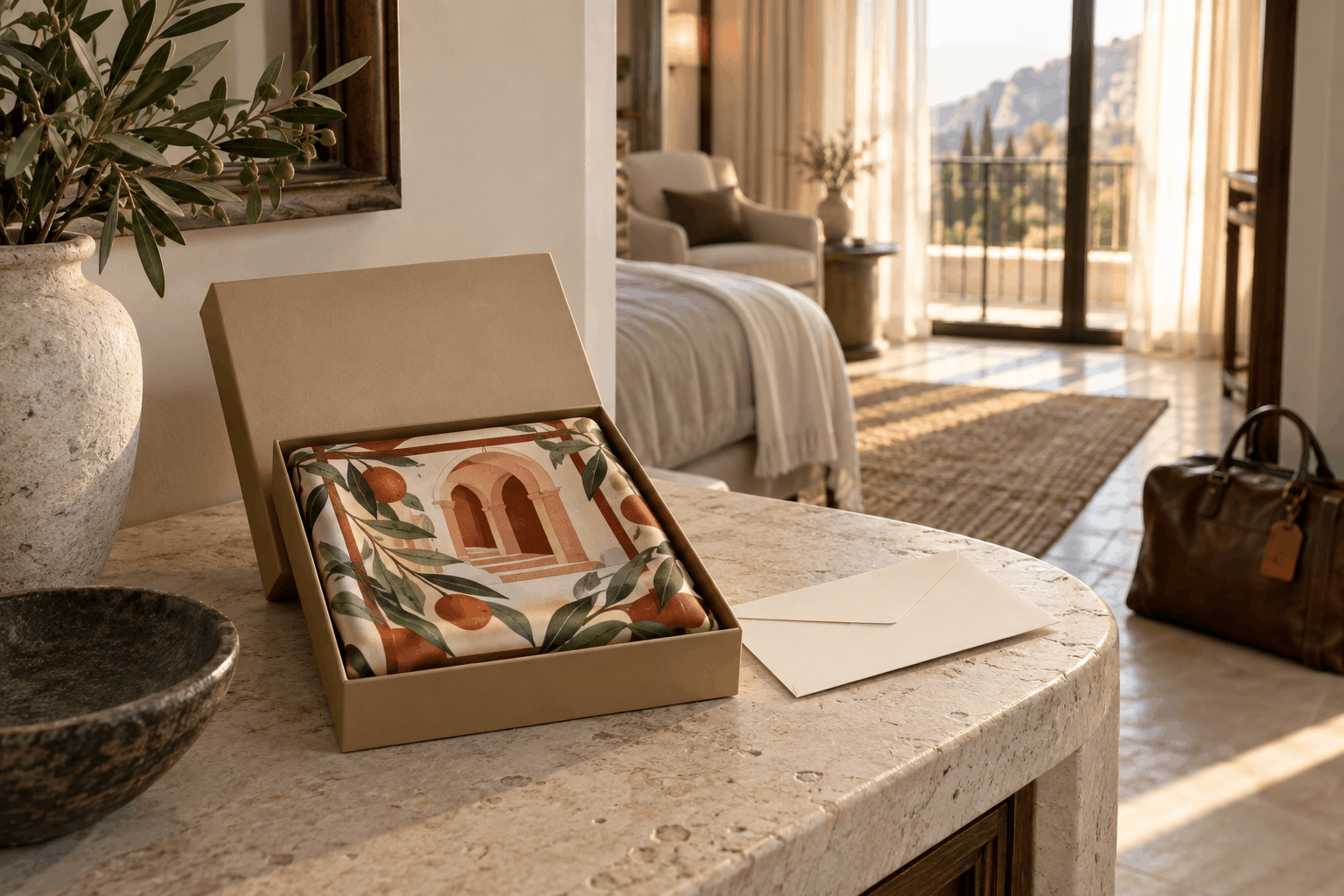
A guest opens the door after a long journey. The room is calm, their luggage has arrived, and a small gift waits beside a welcome note. Before they read a word, its scale, placement and presentation already say something about the hotel.
The best luxury hotel guest gifts feel appropriate to the person, connected to the property and easy to enjoy. They can introduce a destination, acknowledge a return visit or mark a special stay. A memorable welcome comes from the relationship between the object and the experience around it.
For hotel teams, the useful question is: what would make this guest feel comfortably expected?
Begin with the arrival you want to create
A late arrival after an international flight calls for a different approach from a leisurely check-in for an anniversary weekend. One guest wants to settle in quickly. Another may enjoy discovering the room and reading about the property.
Plan the gift around that moment. Keep any explanation short, place the package where it is easy to notice, and avoid arrangements that require the guest to clear the bed or move a large display before unpacking.
A welcome gift also needs a clear identity. Guests should be able to tell that it is complimentary and theirs to keep. An attractive object placed beside priced minibar items or hotel retail information can create uncertainty. A simple line on the card can resolve that immediately.
Decide whether the gift is part of every eligible stay, a particular room package or a discretionary gesture for a special occasion. That decision helps reservations, guest relations and housekeeping deliver the same promise.
Find a story that belongs to the property
The most distinctive starting point may already be outside the window. A courtyard, garden, coastline, architectural detail or hotel art collection can give a guest gift a connection to the place.
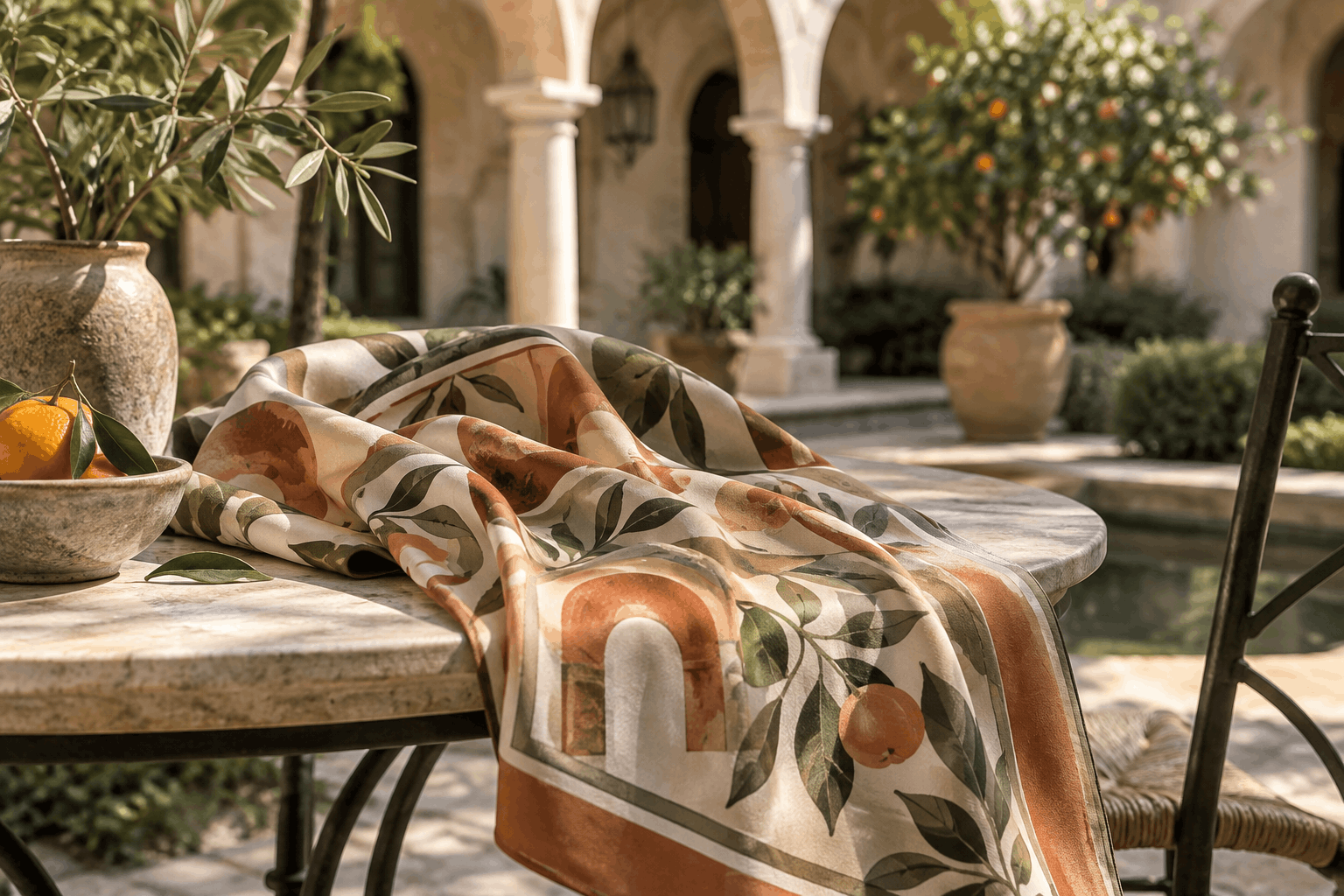
Choose one clear source and develop it thoughtfully. A scarf inspired by a courtyard might translate the rhythm of its arches and the colors of its planting into a wearable composition. A small publication might introduce the building through a few well-chosen photographs and stories.
Consider an imagined hotel built around a citrus courtyard. A terracotta, olive and ivory scarf could recall the setting without reproducing a postcard view. A short card could explain the connection, leaving the scarf itself free to become part of the guest’s wardrobe.
Keep the story accurate. A design inspired by the destination does not necessarily mean the object was made locally. Be clear about the distinction, and avoid invented heritage or craftsmanship claims.
Hotel branding can sit discreetly on the presentation or within the design. The guest should be able to enjoy the object after the stay without feeling dressed in advertising. Our guide to creating gifts with subtle branding offers practical ways to handle that balance.
Choose something the guest can enjoy during the stay or afterward
There is no single best hotel welcome gift for every traveler. A useful shortlist gives the team a few considered options, each with a clear role.
A silk scarf as a wearable memory
A silk scarf can suit guests who enjoy fashion, textiles and design. It folds compactly and can connect the property’s visual identity with something the recipient wears at dinner, on a city walk or back at home.
Assess the scarf beyond the image of it laid flat. Consider its dimensions, fabric, edge finishing and the way its colors appear in folds. A design should work with clothing as well as with the hotel’s interiors.
Offer this option when it suits a known preference or as part of a small choice. A guest’s gender, nationality or room category does not tell you whether they like wearing scarves.
A compact publication or design keepsake
A thoughtfully edited book, small print or useful design object may suit someone interested in the property’s architecture, art or surroundings. Check whether the item offers enough substance to be revisited, and whether it is practical to carry home.
Size matters here. A heavy book or fragile object may be beautiful in the suite yet inconvenient in a suitcase. Review the packed dimensions before making it a standard welcome gift.
A treat for the stay, where preferences are known
A carefully selected edible gift or tea can create an immediate moment of enjoyment. Choose it with the guest’s stated preferences in mind, keep ingredient information available and make any preparation straightforward.
A consumable welcome and a lasting keepsake serve different purposes. You may choose one or combine them, but every addition should earn its place. A crowded hamper can make a refined welcome feel difficult to unpack.

Personalize with details the guest has chosen to share
Good personalization can be quiet. It might mean remembering a preferred color, offering a different design to a returning guest or acknowledging an anniversary mentioned during booking.
Use information shared with the hotel for that purpose. A welcome should feel attentive without suggesting that the team has investigated someone’s private life. Confirm names and the nature of an occasion before printing a permanent message or arranging a surprise.
For guests traveling together, decide whether the gift is for the room, a couple or each individual. A single personal accessory may create an awkward question if it is presented as a shared gift. The arrangement should be clear before the room is prepared.
A repeat visitor may appreciate a new interpretation of the same property story, or may prefer no physical gift at all. Keep appropriate preference notes so the welcome can evolve with the relationship.
Let the presentation make the welcome easy to understand
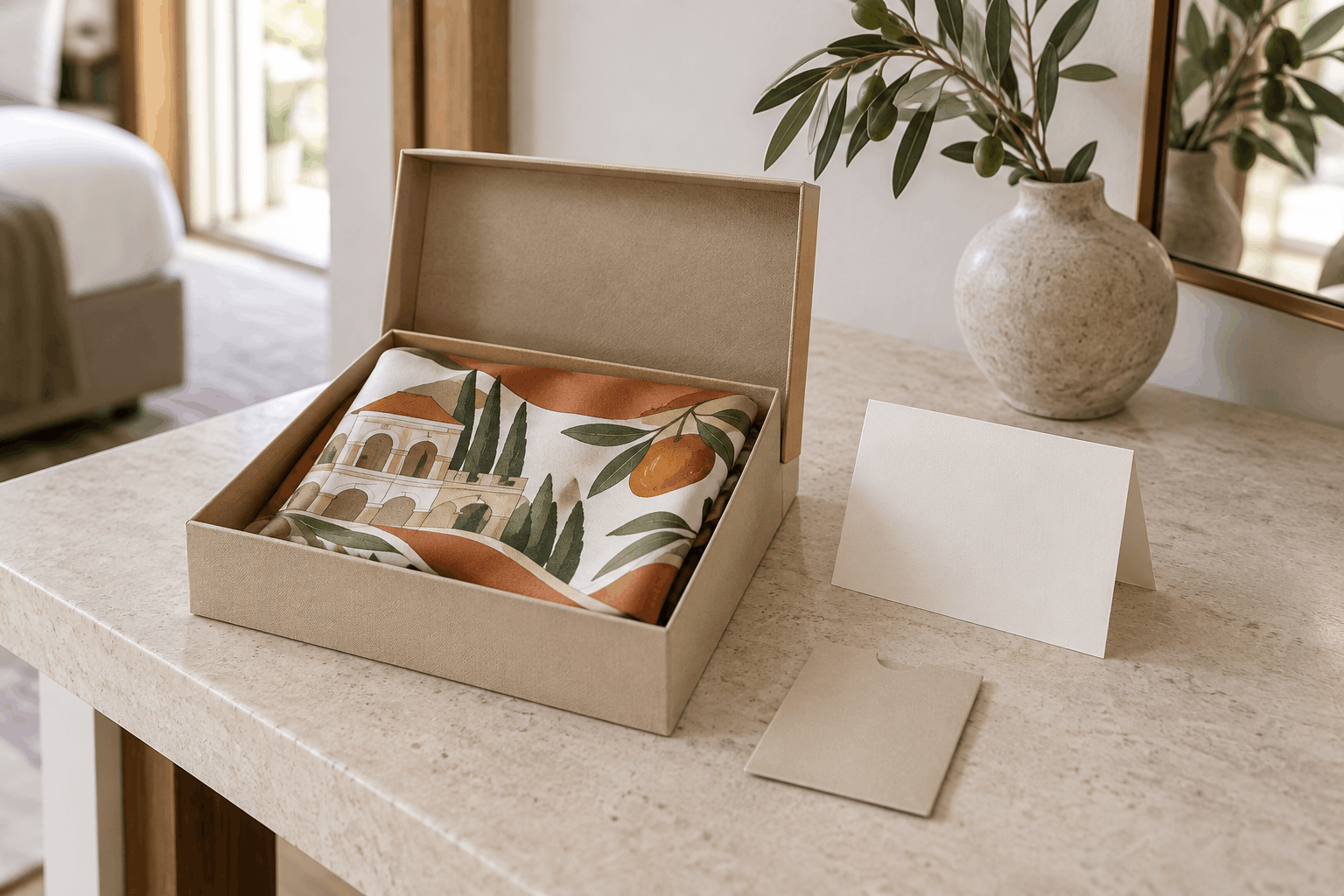
A compact protective box, a neatly folded item and a short message can be enough. Leave space around the arrangement, and keep care information or the design story easy to find without requiring the guest to sort through several inserts.
For the imagined courtyard hotel, a welcome card could read:
Welcome to your courtyard retreat. The arches and citrus leaves in this scarf’s design were inspired by the garden just beyond your room. This is a complimentary gift for you to take home, with our warm wishes for a restful stay.
The message explains the object, its connection and its status as a gift. A separate care card can handle practical information. If the hotel serves guests in several languages, use clear wording and have any translations checked.
Place the welcome where it is visible and protected from drinks, bathroom moisture or direct contact with luggage. Staff should be able to explain it naturally in one or two sentences if asked.
Build a welcome your team can deliver consistently
Before committing to a large order, test the complete arrangement in an actual guest room. Check how much space it occupies, how long preparation takes and how it looks under the room’s lighting. Ask the colleagues who will receive, store and place the gifts to review the sample too.
A practical hotel gifting brief should establish:
- Who receives it: the eligible stays and whether quantities are calculated per room or per guest.
- The complete budget: the item, any design work, samples, packaging, cards and delivery.
- The preparation process: who checks the arrival list, names, preferences and room placement.
- The stock plan: storage space, expected use, replenishment timing and a suitable alternative if an item runs out.
- The review process: guest comments, gifts left behind and feedback from the team.
Confirm availability and lead times against the planned launch date. Bespoke designs need room for artwork development and sample approval as well as production and delivery. For a fuller planning approach, see when to order bespoke gifts.
Explore a silk welcome with Lanting Loom
Lanting Loom’s corporate gifting options include existing scarves and gift sets, adapted presentation where feasible, and bespoke scarf projects inspired by a place or institution. The appropriate approach depends on your intended guests, quantities, timing and design ambitions.
Explore gifting for hotels and hospitality with a brief describing the property, guest occasion, approximate quantity, budget and required delivery date. If a custom design is important to the project, include the architectural, artistic or landscape details you would like it to express.
A memorable welcome gives the guest something to enjoy now and a reason to remember the place later. The gift works best when it feels like a natural part of the hospitality.
