

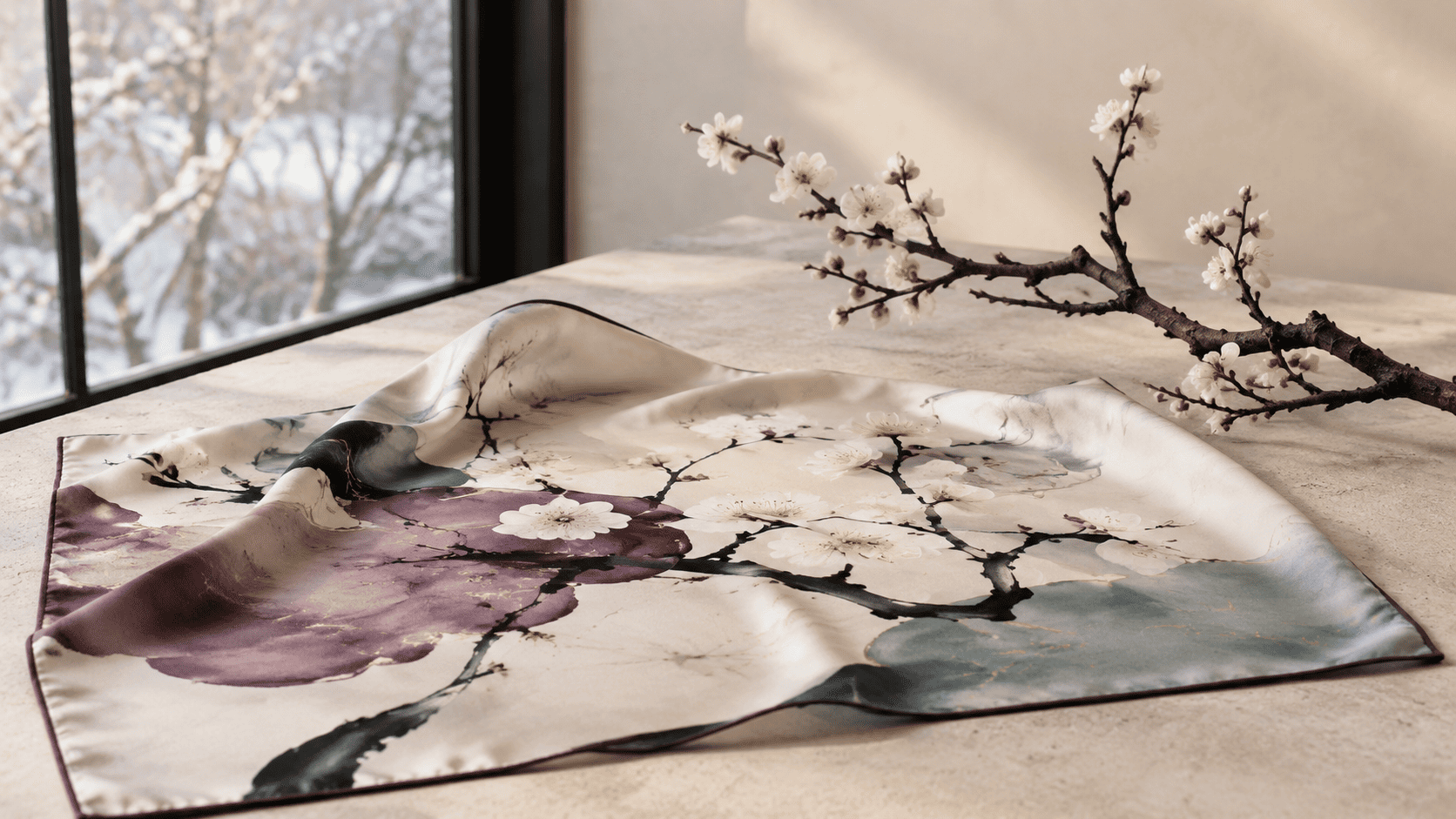
In Chinese culture, the plum blossom most strongly symbolizes resilience, perseverance, renewal and hope. It flowers while winter still holds the landscape, sending delicate blossoms from dark, apparently lifeless branches. That contrast—beauty emerging from hardship—has made the plum a lasting image of inner strength, moral integrity and the promise of spring.
Its meaning is rich rather than fixed. In different paintings, poems, objects and gifts, the plum may express survival after adversity, purity of character, longevity, friendship or an auspicious new beginning. Understanding the setting and the other motifs around it is more useful than reducing the flower to one universal definition.
Why does the plum blossom represent resilience?
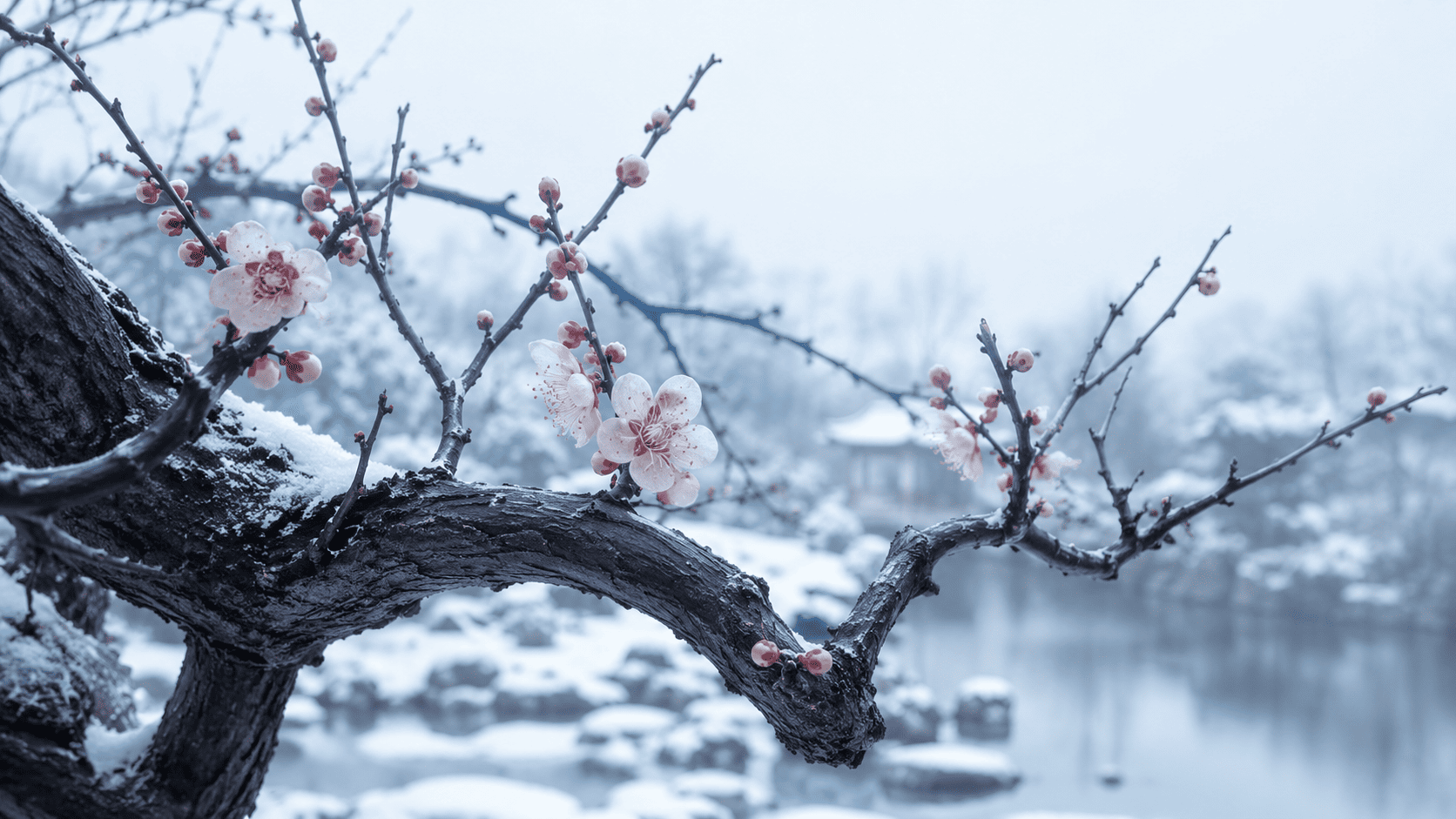
The Chinese plum, commonly called mei (梅) and botanically known as Prunus mume, can bloom in late winter or very early spring. Its flowers often appear on bare wood before the leaves. In art, this gives painters a compelling visual contrast: an old, angular branch carries small, luminous blossoms even in cold weather.
That natural habit became a metaphor. The weathered branch suggests experience and trial; the flower suggests that life, beauty and purpose endure. The plum does not avoid winter—it blossoms through it. For this reason, it can convey courage without aggression and optimism without denying difficulty.
The Metropolitan Museum of Art describes the plum as admired for its purity and hardiness and associates it with survival, rejuvenation and longevity in its record for the painting Wintry Plum. This is a useful reminder that the symbolism developed through close observation of the plant, not from an arbitrary list of flower meanings.
The plum blossom and the promise of spring
Because it is among the earliest blossoms of the year, the plum also announces seasonal change. Snow may remain, yet the flowers indicate that spring is approaching. This is why the motif can feel both wintry and hopeful at once.
In a contemporary context, that symbolism suits moments of transition: recovery after a difficult period, a new home, graduation, a career change or the beginning of a personal chapter. The message is not simply “good luck.” It is closer to: strength has carried you this far, and new life is already beginning.
This combination of endurance and renewal distinguishes plum blossom from flowers associated mainly with beauty or abundance. Its charm lies partly in restraint—few blossoms, ample space and a branch whose uneven form remains visible.
One of the Three Friends of Winter
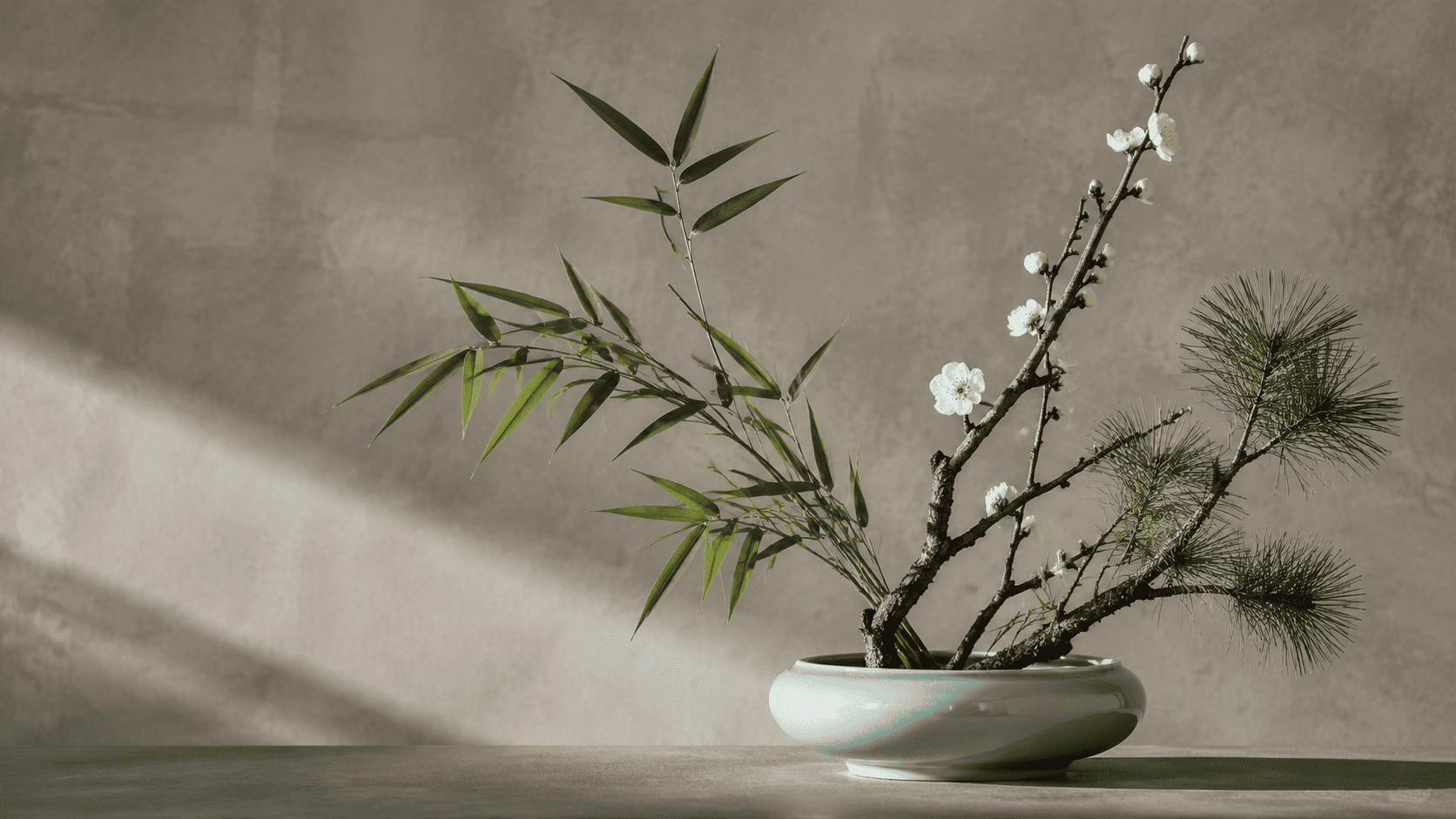
The plum often appears with pine and bamboo in the traditional motif known as the Three Friends of Winter, or suihan sanyou (岁寒三友). Pine remains evergreen, bamboo stays flexible and the plum flowers in the cold. Together they embody character that endures adverse conditions.
| Plant | Observed quality | Common association |
|---|---|---|
| Pine | Remains green through winter | Longevity and steadfastness |
| Bamboo | Bends without easily breaking | Flexibility and integrity |
| Plum | Flowers while conditions are still cold | Perseverance and renewal |
On a Ming-dynasty lacquer dish, the Met explains that the trio represents a lofty person who perseveres in a harsh environment. You can view the museum’s Three Friends of Winter object record to see how the idea travelled beyond painting into decorative art.
The plum blossom in painting and scholarly culture
Plum blossom became an important subject for painters because it suited both symbolic thought and expressive brushwork. A branch could be built with forceful, calligraphic strokes, while flowers and buds required control, rhythm and variation. The result joined botanical observation with the artist’s temperament.
The plum is also counted among the Four Gentlemen alongside orchid, bamboo and chrysanthemum. These plants became important subjects in ink painting and were associated with cultivated character. The Museum of Fine Arts Boston introduces the quartet in its guide to Chinese brush painting.
This does not mean every historic plum painting carries exactly the same message. An inscription, the identity of the artist, the season depicted and the accompanying plants can alter its meaning. Sometimes the plum becomes deeply personal: a painter may identify with a solitary blossom, an unrecognised talent or a branch surviving political and social change.
Lanting Loom’s Design Stories follows a related principle: cultural research provides the foundation, while line, colour and negative space translate the source into an original contemporary composition rather than a literal reproduction.
Is plum blossom the same as cherry blossom?
No. They are related flowering trees, but they are not interchangeable botanically or culturally. Chinese plum blossoms often emerge from bare, darker branches in colder weather. Many varieties have rounded five-petalled flowers with a noticeable fragrance. Cherry blossoms generally bloom later and are especially prominent in Japanese spring imagery, although cherries also appear in Chinese landscapes and gardens.
Visual confusion is common because both can be white or pink. When interpreting an artwork, look at the season, branch structure, flower placement, title and museum or artist description instead of identifying the motif by colour alone.
What does plum blossom mean as a gift?
As a gift, plum blossom can express admiration for someone’s quiet strength or encouragement for what comes next. It is especially appropriate for:
- graduations, promotions and new careers;
- recovery after illness or a difficult period;
- a new home, journey or personal beginning;
- mentors and friends whose integrity you admire;
- winter birthdays and Lunar New Year celebrations.
The message should remain personal rather than superstitious. You might write, “I chose the plum blossom because it flowers through winter, and it reminded me of your strength,” or, “May this mark the beginning of a bright new season.” A concise explanation gives the motif emotional relevance without claiming that the object guarantees an outcome.
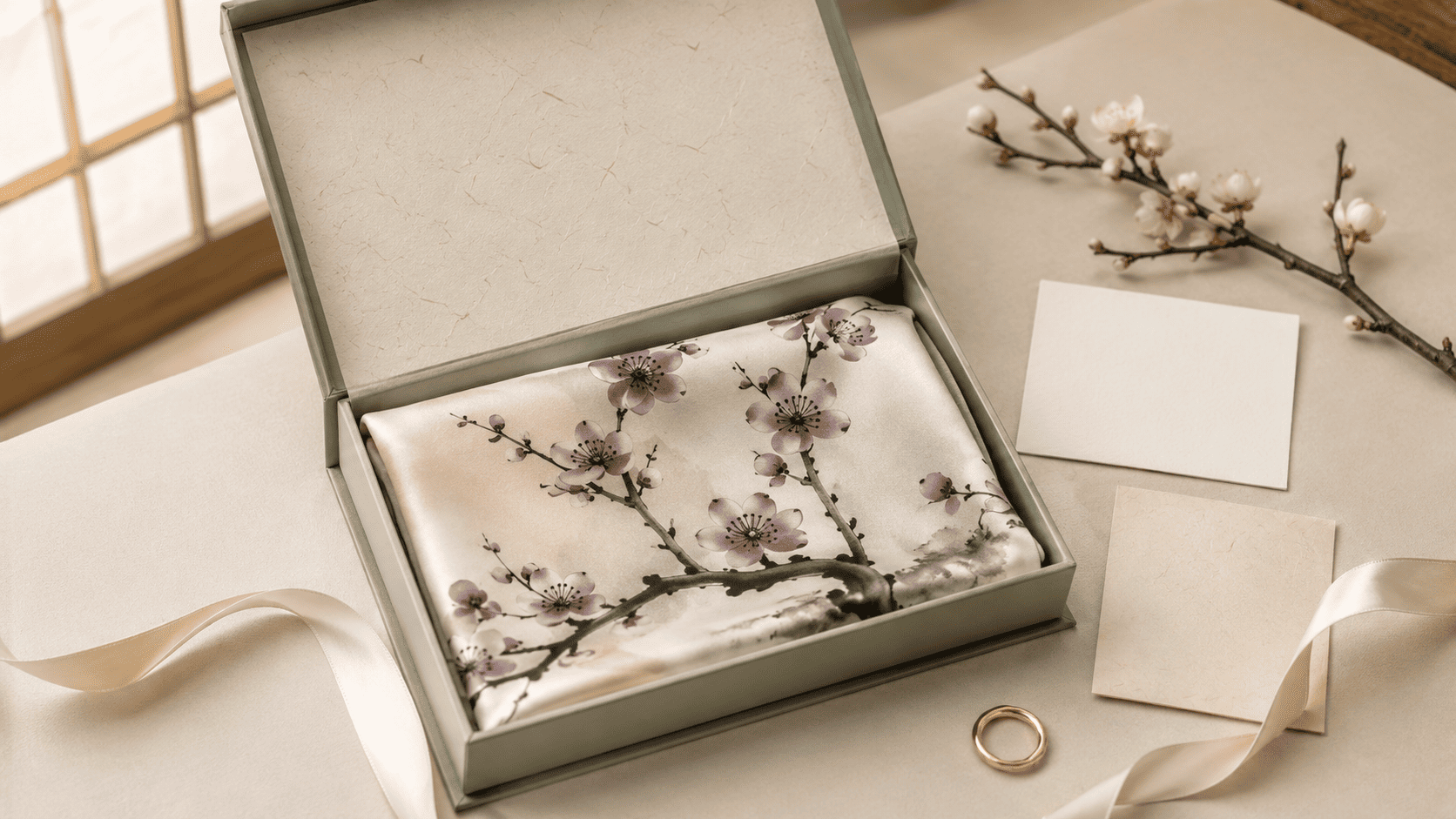
For more guidance, read how to choose a meaningful scarf as a gift. A design such as the Plum Before Spring Square can connect the symbolism to something beautiful and wearable, while the exact box, story card and message options should always be confirmed on the product page or through Gift Services.
A symbol that holds winter and spring together
The plum blossom endures because it contains two truths at once: winter is real, and spring is coming. Its old branch and new flower create a visual language for survival, dignity and renewal that has remained meaningful across centuries of Chinese art.
For Lanting Loom, this is the kind of cultural source that can be translated rather than copied. The essential idea may live in a dark line crossing open space, a restrained blush against ink or the balance between a strong border and a delicate centre. The finished scarf should first be beautiful to wear; the plum’s story then gives that beauty depth.
Frequently asked questions
What is the main meaning of the plum blossom in Chinese culture?
Its central meanings are resilience, perseverance, renewal and hope. Because the plum flowers in the cold before spring fully arrives, it also represents inner strength and beauty that survives adversity.
Is the plum blossom a lucky symbol?
It can be used auspiciously, particularly for new beginnings and seasonal celebrations. However, “luck” is only part of its meaning. In art and literature, the deeper emphasis is often moral character, fortitude, purity and rejuvenation.
What are the Three Friends of Winter?
They are pine, bamboo and plum. The three plants remain visually alive or distinctive during winter and together symbolize endurance, steadfastness and noble character under difficult conditions.
What do the five petals of a plum blossom mean?
Modern explanations sometimes connect the five petals with the Five Blessings, but this should not be assumed for every artwork. The interpretation depends on context, period and the intentions documented for the specific object or design.