

A corporate gift sent overseas has two journeys to make. It needs to arrive in good condition, and it needs to make sense to the person receiving it. Beautiful materials and thoughtful design matter, but so do the message, local context and practical experience of delivery.
Choose premium corporate gifts for international clients by balancing recipient fit, cultural sensitivity, product quality and reliable fulfilment. Begin with the relationship, select an object the client can enjoy, then confirm the destination requirements, total delivered cost and arrival date before ordering.
A well-chosen gift should express appreciation without leaving the recipient to manage unexpected charges, unsuitable contents or an awkward obligation.
1. Start with the person and the purpose
Identify what you are recognising: a successful collaboration, a visit, a company milestone or another year of working together. Then establish whether the gift is for one person, a leadership group or an entire office.
Use preferences shared through the relationship. An interest in art, a familiar tea ritual or a habit of wearing scarves gives you something specific to work with. Nationality alone does not tell you what someone will enjoy.
Check the recipient organisation’s gift policy and any internal approval requirements before selecting a value. If preferences are unclear, offer a small choice of comparable gifts. Our luxury corporate gifts page provides a starting point for exploring a considered gift brief.
2. Treat cultural context as a conversation
A local colleague or relationship manager can help you check whether the occasion, wording and presentation feel appropriate. Ask specific questions about this recipient rather than relying on broad lists of national customs.
For example, confirm whether a seasonal greeting is welcome, whether a personal gift or shared office gift is more suitable, and whether the recipient would prefer private delivery. Check names, titles and pronunciation before a presentation.
A gift with a cultural story can create a meaningful connection when that story is clearly explained. Distinguish the original source from the designer’s interpretation, and avoid assigning universal meanings to colours or motifs. A short explanation of the artwork gives the recipient room to make their own connection.
If translating the message, have a fluent speaker review tone as well as accuracy. Simple, specific thanks usually travel more comfortably than slogans, jokes or idioms.

3. Choose a gift that suits both the recipient and the journey
Compare the object’s appeal with the work involved in receiving, carrying and caring for it.
| Gift type | Why consider it? | International buying checks |
|---|---|---|
| Silk scarf | Compact wearable artwork for someone who enjoys accessories | Fibre composition, dimensions, care, protective packing and destination requirements |
| Art or design book | A connection to a known interest, artist or place | Language, weight, dimensions and protection for corners |
| Fine writing instrument | A useful object for someone who writes by hand | Preferred pen type, refill availability and rules for any included ink |
| Teaware | A thoughtful addition to an established ritual | Fragility, food-contact suitability, care and replacement arrangements |
| Curated gift set | Several pieces connected through use or design | Every component’s eligibility, declared value, packing needs and usefulness |
Food, alcohol, plants, liquids and battery-powered items deserve particular destination and carrier checks before selection. Do not assume that an item accepted on one route can travel on another under the same conditions.
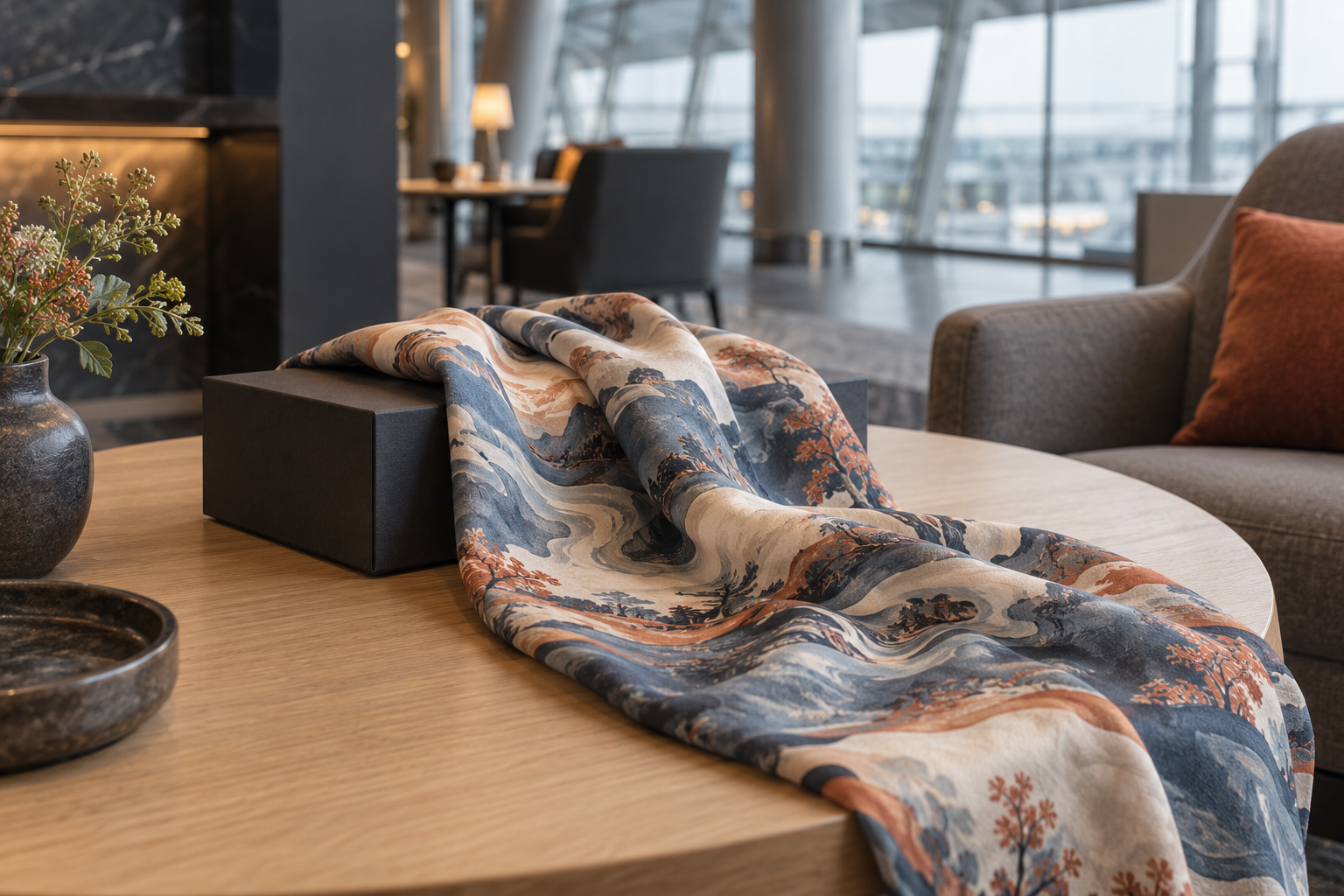
A silk scarf can be an appealing option because it folds into a compact package and offers considerable design variety. Choose it for someone who will wear it, and assess the fabric and finish using our silk scarf quality guide. A simple single-item gift can also reduce the number of components that need checking.

4. Decide how much customisation the project needs
An existing design with a personal message may express the relationship perfectly. A bespoke project is worth considering when there is a strong creative reason, sufficient planning time and a clear audience.
For a scarf, a shared landscape, architectural detail or colour story can provide a starting point. Review both the full design and its appearance when folded or worn. A large logo may look clear on a flat artwork file but dominate the finished accessory.
Before approving custom work, agree the artwork use, colour references, sample process, dimensions, materials and packaging. Explore bespoke silk scarves to discuss your brief and confirm what is feasible for the quantity and deadline.
5. Compare the complete delivered cost
Ask for a quotation that separates the gifts, design work, samples, personalisation, packaging and delivery. Establish how import duties, taxes and clearance fees will be handled. “Free shipping” on its own does not explain responsibility for all import charges.
The International Trade Administration’s guide to Incoterms explains how these terms allocate shipping responsibilities, costs and risks between buyers and sellers. If a quotation uses an Incoterm, ask the supplier to identify the named destination and explain what the arrangement means for your order.
Do not assume a corporate present qualifies for a personal-gift customs allowance. For example, UK guidance on gifts sent from abroad requires qualifying gifts to be bought and sent between individuals, rather than companies. Check the current rules for each destination instead of applying one country’s treatment to the whole project.
Ask the supplier or shipping partner to confirm the required descriptions, values, origin information and documents. Keep customer-facing gift presentation separate from the accurate information needed for customs.
6. Choose a practical delivery arrangement
Sending everything to one regional office can simplify coordination, but someone must then receive, store and distribute the gifts. Direct delivery to each client can be convenient when the supplier supports it, although every address needs checking and each shipment needs tracking.
Confirm the recipient’s preferred delivery address, local contact details and availability. Ask before sending a business gift to a home address. Share only the delivery information needed and agree how the supplier will handle it.
The presentation box also needs suitable outer protection. Request packing photographs or a sample shipment for a larger project, particularly where the gift contains fragile items. Establish who monitors delayed parcels and arranges replacements if something arrives damaged.

7. Work backwards from the occasion
Build the schedule around arrival, allowing for artwork approval, sampling, production where required, packing, transit and customs clearance. Include time to correct a sample or address issue. A courier transit estimate is only one part of the schedule.
Check public holidays and office closures at both origin and destination. For a recurring programme, explore seasonal corporate gifts early enough to confirm the project timeline. For a milestone, the company anniversary gifts page can help frame the occasion.
Keep the message warm and specific. Thank the client for something real, identify the sender clearly and avoid attaching a request for business to the gift.
A concise brief for your international gifting supplier
Prepare the following before requesting proposals:
- The occasion, recipient profile and known preferences.
- Quantity by destination and whether delivery is centralised or individual.
- The total budget and required arrival dates.
- Preferred gift types, materials and personalisation.
- Message languages, gift-policy limits and approval contacts.
- Questions about samples, import charges, tracking and replacements.
For clients who appreciate wearable art, Lanting Loom translates stories from Chinese art and culture into contemporary silk. Share your brief through Lanting Loom corporate gifting to discuss available options and confirm arrangements for your destinations. The most successful plan gives equal care to the object, the message and the experience of receiving it.
