

A silk scarf can carry an entire composition: a flowing landscape, a botanical detail, a striking border or an unexpected colour pairing. Fold it too tightly, and that character disappears. Hang too many together, and individual designs become difficult to see.
The most useful silk scarf display ideas combine three views: the artwork opened out, a manageable selection to browse and a scarf styled as it would be worn. Clear product information and thoughtful handling complete the presentation.
For boutiques, museum shops and hotel retail spaces, the aim is to make a scarf easy to understand, comfortable to explore and appealing to give.
1. Give One Scarf Space to Tell Its Story
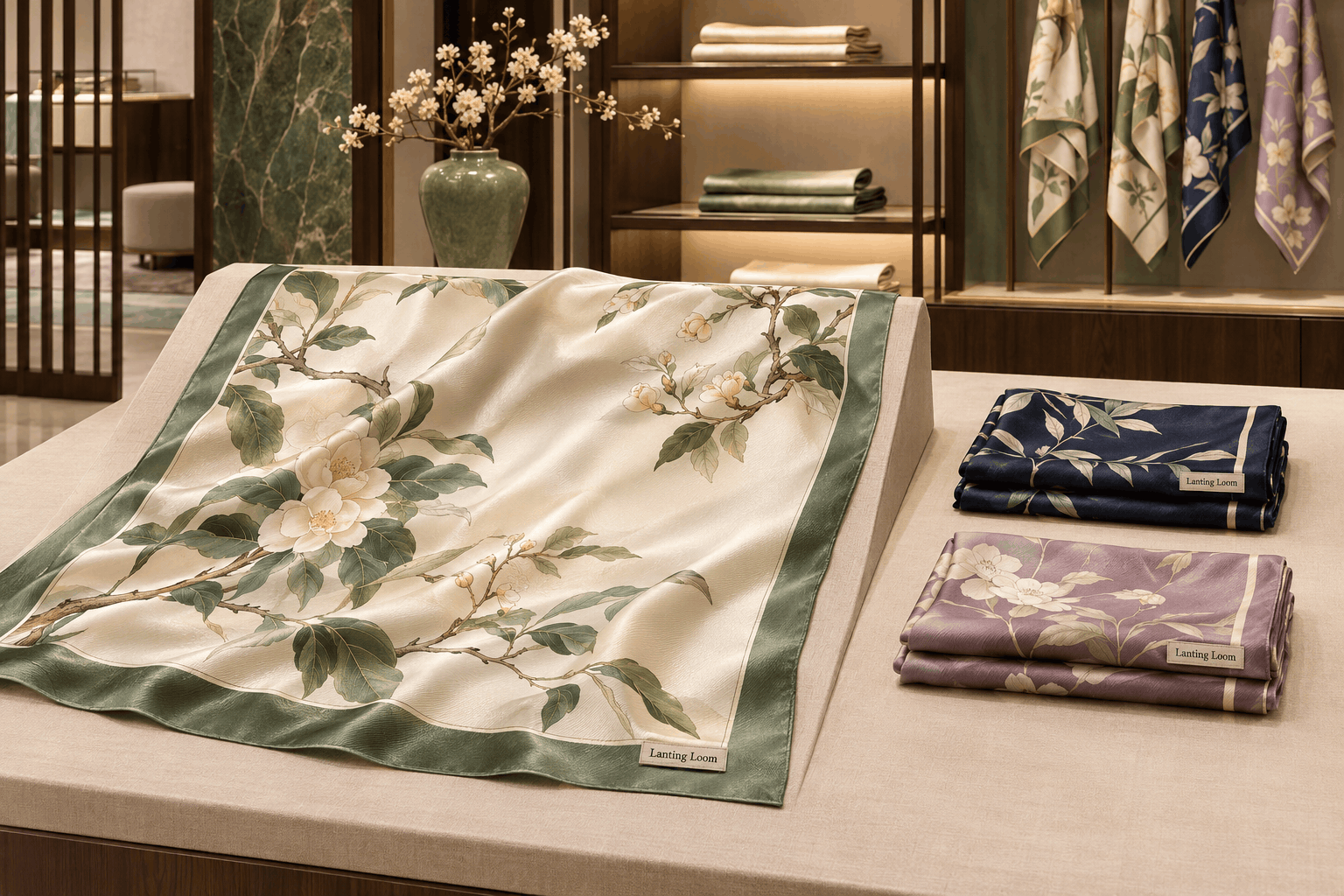
Begin with one focal design. Open it across a clean, smooth, fabric-covered surface or a gently inclined support so customers can appreciate its composition.
Show enough of the scarf to reveal both the central artwork and its border. A design that looks abstract when folded may become immediately understandable when opened.
Keep nearby props restrained. A scarf inspired by a garden does not need a miniature garden around it. Colour, space and a short explanation can communicate the connection more clearly.
If space is limited, display a photograph of the complete design beside the folded scarf. Use an accurate image of that product, with permission from the brand, and keep a sample available for customers to examine.
2. Arrange Folded Scarves in Small Colour Groups
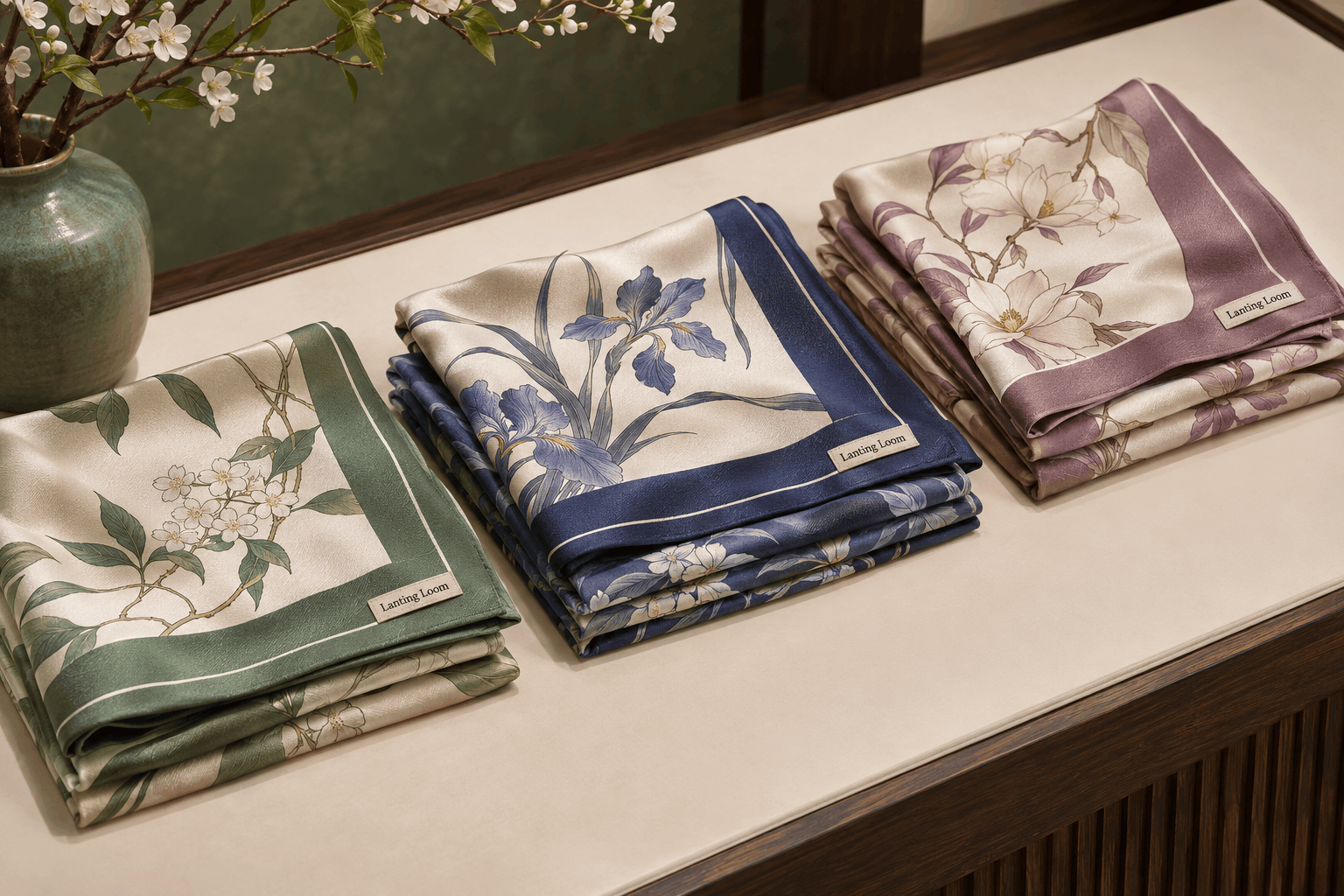
Folded displays work well on counters, shelves and shallow trays. They allow customers to compare colourways without sorting through a crowded rail.
Start with a few low groups organised by colour or collection. For example, jade and ivory might form one group, navy another and muted orchid tones a third. Treat this as a starting arrangement, then adjust it to the assortment and available space.
Fold each top scarf to reveal a recognisable motif or border. Avoid showing only a plain corner when the design’s appeal lies in its artwork.
- Leave enough space for a customer to lift one scarf without disturbing the next group.
- Keep reserve stock in clean, protected storage rather than building tall stacks.
- Separate different sizes clearly, even when their colours are similar.
- Keep each product name and price beside the correct design.
Premium presentation depends on orderly, accessible choices. An overflowing table can make even beautiful scarves difficult to appreciate.
3. Use Broad, Smooth Supports for Draped Displays
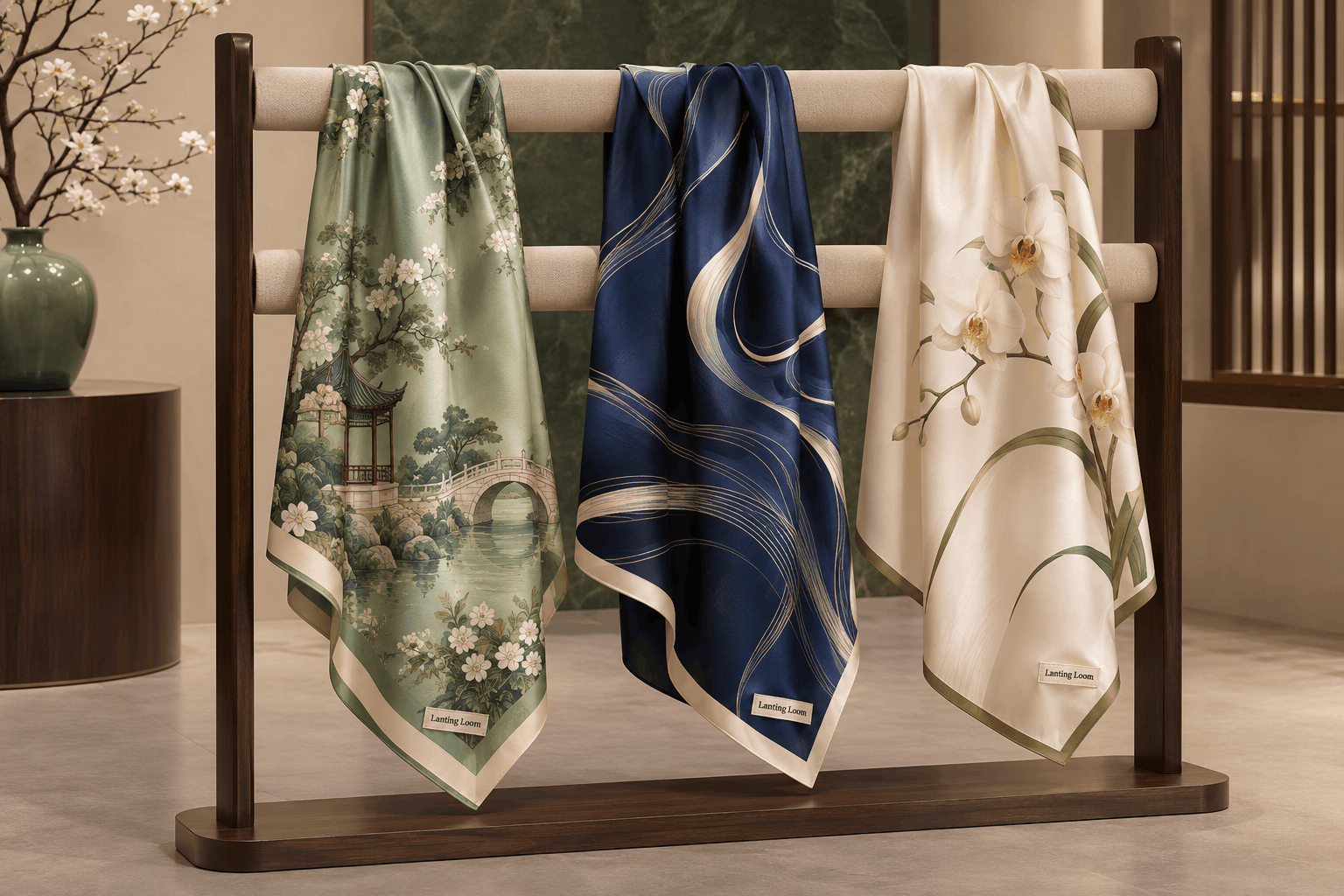
A draped scarf shows movement and gives customers a sense of its length. A stable rail with broad, smoothly covered supports can be useful for short-term display of scarves in good condition.
Inspect every surface that touches the silk. Avoid rough wood, sharp seams, exposed screws and narrow wire hangers. Keep hems clear of the floor and away from areas where bags or clothing might catch them.
Do not suspend silk by pins, adhesive tabs or clips gripping the fabric. Avoid tight knots used merely to stop a display from slipping. If a scarf cannot remain secure without concentrated pressure, choose a supported tabletop presentation instead.
Use clean, colourfast coverings on supports and inspect displayed samples regularly. Valuable historic or fragile textiles require specialist advice rather than ordinary retail fixtures.
4. Show a Wearable Look Beside the Artwork
Customers may admire a scarf without knowing how they would wear it. A simple styling example helps connect the design with everyday clothing.
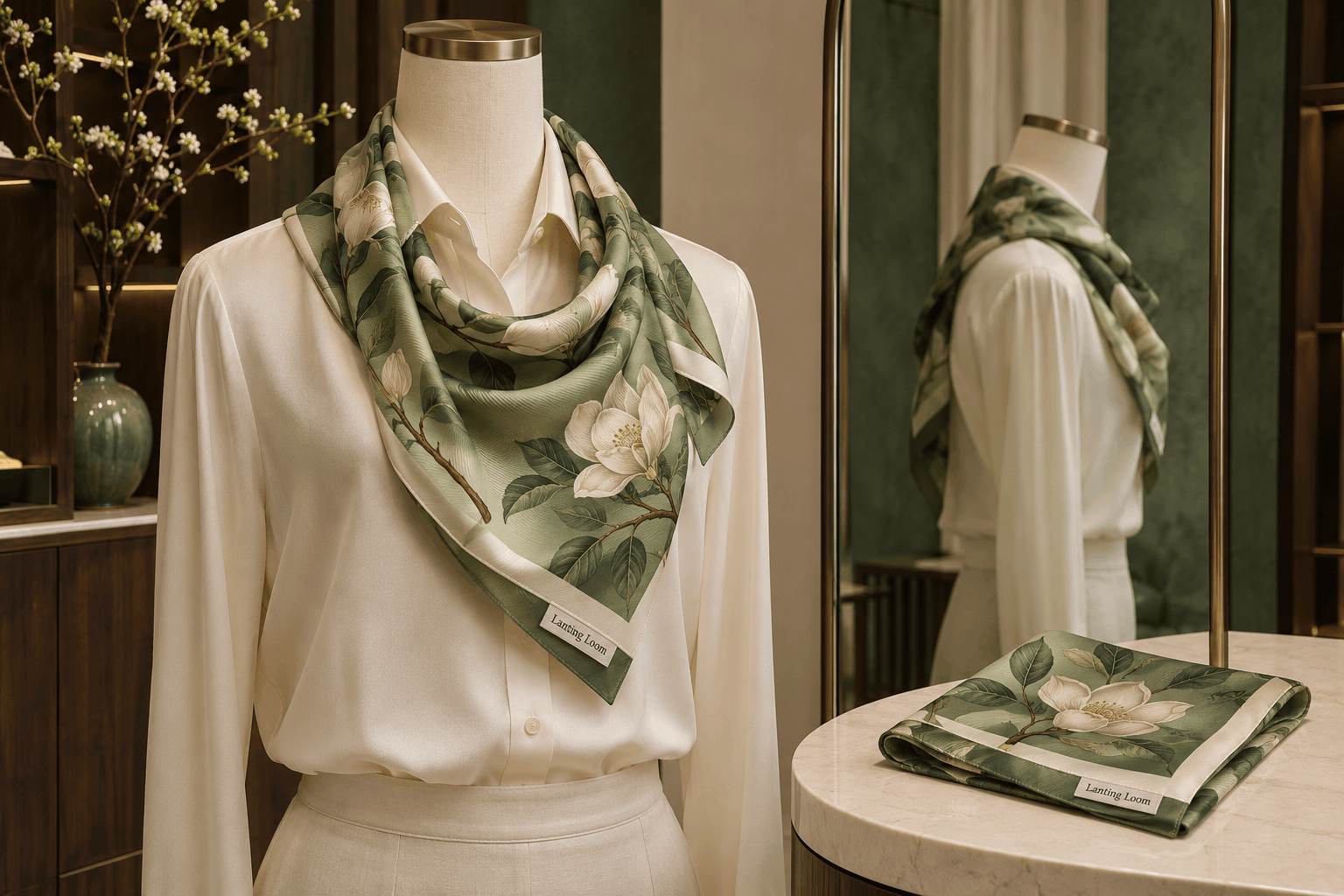
Style one scarf on a mannequin wearing an ivory shirt, a navy jacket or a neutral knit. Choose a loose neck drape, a soft fold at the collar or a shoulder arrangement that suits the actual size.
Where space allows, keep a folded example of the same design nearby. Customers can then connect the styled result with the piece they are considering.
A mirror and a clear counter create a useful try-on area. Keep it accessible, provide staff assistance and avoid surrounding it with fragile props. Use designated demonstration samples where practical, checking their condition between uses.
5. Make Gift Presentation Easy to Understand
Gift shoppers need to know what the recipient will receive. Show one complete presentation example if packaging is part of the offer, with the scarf visible enough to remain the focus.
State clearly whether the box, story card, personal message or scarf ring is included, optional or sold separately. Avoid displaying accessories in a way that suggests they come with every purchase.
Use approved brand artwork on packaging and printed materials. For a multi-brand boutique, keep the store’s signage separate from the scarf maker’s identity so customers can recognise both.
For ideas about presenting a meaningful scarf gift, explore Lanting Loom’s gift services. Available elements depend on the selected product or agreed project.
6. Keep Product Information Brief and Specific
A display card should answer the questions customers are most likely to ask before they need to find a member of staff.
- Product name: matched clearly to the scarf on display.
- Material: the verified fibre composition and, where useful, the weave.
- Dimensions: the actual measurements rather than “large” or “small” alone.
- Price: legible and unambiguous.
- Design story: one accurate sentence about the inspiration.
- Gift options: a clear distinction between included and optional items.
Keep printed pattern, woven structure and finishing method distinct. A printed silk scarf should not be described as embroidered, and a hand-rolled hem does not make the entire textile handmade.
A QR code can lead to further styling or care information, but basic details should remain readable without a phone. Staff should be able to expand on the story in natural language rather than reciting a long description.
Choose the Display Method That Fits the Space
| Display method | Useful for | Main consideration |
|---|---|---|
| Supported open scarf | Showing the complete artwork | Allow sufficient clean surface area. |
| Low folded groups | Comparing colours on a compact counter | Keep a distinctive part of each print visible. |
| Broad padded rail | Showing length and drape | Check support surfaces and prevent slipping. |
| Styled mannequin | Demonstrating a wearable look | Provide a separate sample for closer inspection. |
| Gift presentation sample | Explaining the complete gift | Identify exactly what the purchase includes. |
Protect Silk While It Is on Display
The Canadian Conservation Institute’s textile-care guidance explains that light damage is cumulative and can be irreversible. Although a boutique is not a museum, reducing unnecessary exposure is a sensible precaution.
Keep scarves away from direct sunlight and hot lighting. Switch display lighting off when it is not needed, rotate samples and inspect them for fading or wear. Rotation limits further exposure; it does not reverse existing damage.
Handle silk with clean, dry hands. Keep drinks, fresh flowers, perfume sprays and cleaning products away from the merchandise. Decorative arrangements should sit outside the handling area, where water, pollen or branches cannot contact the scarves.
Follow the supplier’s care instructions when refreshing display pieces. Do not assume every silk scarf can be steamed or pressed in the same way. Consult our silk care guide alongside the individual product label.
A Simple Starting Layout for a Small Boutique
A compact display can begin with one focal scarf, three small colour groups and one styled example. Keep a mirror within easy reach and store replenishment stock nearby.
Before opening, check that prices match the products, folds reveal the designs and fixtures are clean. During the day, reset handled pieces and note recurring customer questions.
If shoppers repeatedly ask to see the full pattern, make that view more prominent. If they admire the scarf but hesitate over styling, improve the demonstration. Adjust one element at a time so you can learn what helps your particular customers.
Frequently Asked Questions
Is it better to hang or fold silk scarves in a boutique?
Both can be useful. Folding supports compact browsing, while a carefully supported drape shows movement. Use a combination suited to the scarf’s condition, size and design, and keep protected stock separate from display samples.
How many scarves should be displayed together?
There is no universal number. Start with a selection customers can distinguish and lift easily. Add variety only while each design remains visible and the display stays manageable.
Can silk scarves be displayed in a sunny window?
Direct sunlight can fade colours and damage fibres. Consider using product photography or another display element in the sunniest position, with the silk merchandise further inside the shop.
What should a boutique ask a scarf supplier for?
Request accurate specifications, care instructions, approved product images, concise design stories and clear packaging details. Discuss display samples, replenishment and commercial terms separately rather than assuming they are included.
Present the Design, the Wearability and the Meaning
A thoughtful scarf display lets customers appreciate the artwork, understand the material and picture the piece in daily life. Space, useful information and a simple styling demonstration can achieve more than elaborate decoration.
Browse the Lanting Loom collection for contemporary silk designs. For boutique, museum or hospitality retail enquiries, explore our retail and collaboration options and share your store concept, intended assortment, quantities and timing.
