

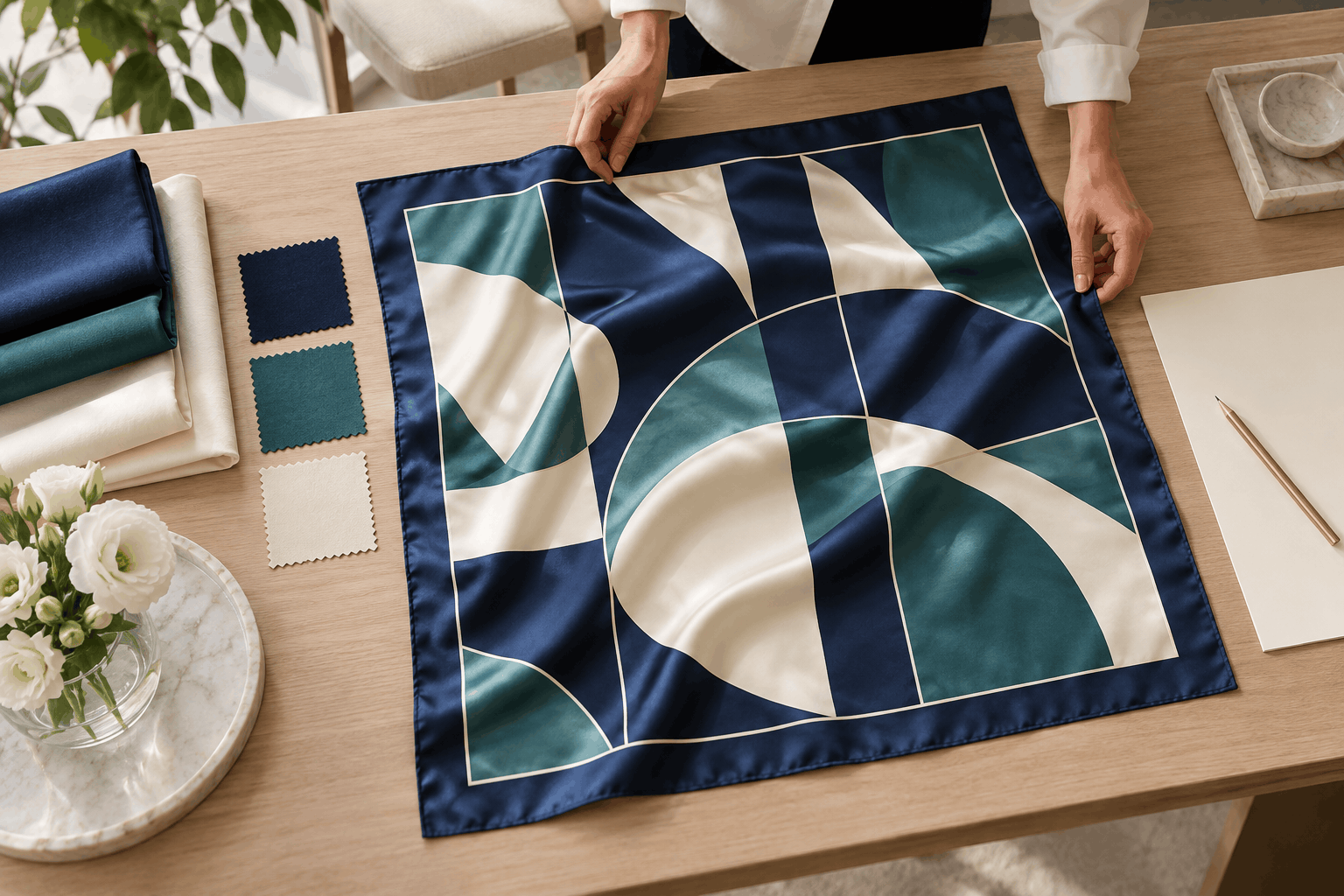
A silk scarf sample is the point where a corporate gifting brief becomes something you can hold, inspect and wear. It is also the moment to resolve questions that a digital mock-up cannot answer.
A useful silk scarf sampling checklist covers the sample’s identity, fabric specification, finished dimensions, artwork, colour, reverse appearance, hems, labels, packaging and approval status. Each decision should refer to an agreed requirement, with unresolved points recorded before production is authorised.
Use this checklist for custom corporate gifts, hotel programmes, museum collections and other bulk scarf projects. Adapt it to the intended use and the scope agreed with your supplier.
Before reviewing: identify what kind of sample you have
Not every sample represents the finished order. Ask the supplier to state what the sample demonstrates and what is still provisional.
- Fabric swatch: helps review the proposed fabric’s feel and appearance, but does not establish the finished print, dimensions or construction.
- Print strike-off: a printed test used to review selected colours and artwork details on the proposed material.
- Finished development sample: combines design and construction for review, but may still contain declared substitutions.
- Pre-production sample: intended to represent the agreed product before bulk manufacture; confirm exactly which materials and processes it uses.
- Packaging sample: may establish structure and fit without yet confirming final print, paper or finish.
Terminology varies, so confirm the scope in writing. A previous customer’s scarf can demonstrate workmanship, but it cannot approve your artwork or colourway.
For sample charges and development scope, see our guide to custom silk scarf costs.
1. Check sample identity and specification
- Record the project name, supplier, sample reference, revision and date received.
- Match the sample to the correct design, colourway, size and artwork file version.
- Confirm fibre composition, weave, fabric weight, printing treatment and finishing method.
- List any substitutions or differences from the proposed production specification.
- Identify who can approve design, quality, wording and the final order.
Do not rely on a description such as “premium silk” alone. Ask for the actual composition and construction. Visual inspection and touch cannot prove fibre content; request appropriate supporting documentation or testing where needed.
2. Review fabric feel and finished dimensions
Lay the scarf flat on a clean, smooth surface without stretching it. Measure using the agreed method and record the results against the finished-size specification and its agreed tolerance.
- Check length and width, and whether the finished shape sits as expected.
- Review drape, opacity and feel for the intended way of wearing.
- Look for visible holes, pulls, stains, uneven areas or other surface defects.
- Confirm that the sample fabric matches the production proposal.
Agree how natural fabric characteristics will be distinguished from unacceptable defects. Do not invent an acceptance tolerance after seeing the sample.
If choosing between formats, our silk scarf size guide can help explain the styling differences. More fabric or a heavier fabric is not automatically more suitable for your recipients.
3. Verify the artwork at full size
Open the scarf completely and compare it with the approved artwork version. Then inspect the areas most likely to be visible when folded.
- Correct design, orientation and colourway.
- Agreed motif scale, crop and border placement.
- Clear details without unintended gaps, smudges or visible print faults.
- Accurate logos, names, dates and any printed wording.
- Suitable distance between important details and the finished edge.
For a design inspired by an institutional collection or brand asset, confirm that the approved interpretation has been used. Resolve artwork permissions and credit requirements through the responsible project team before releasing production.
4. Assess colour against an agreed reference
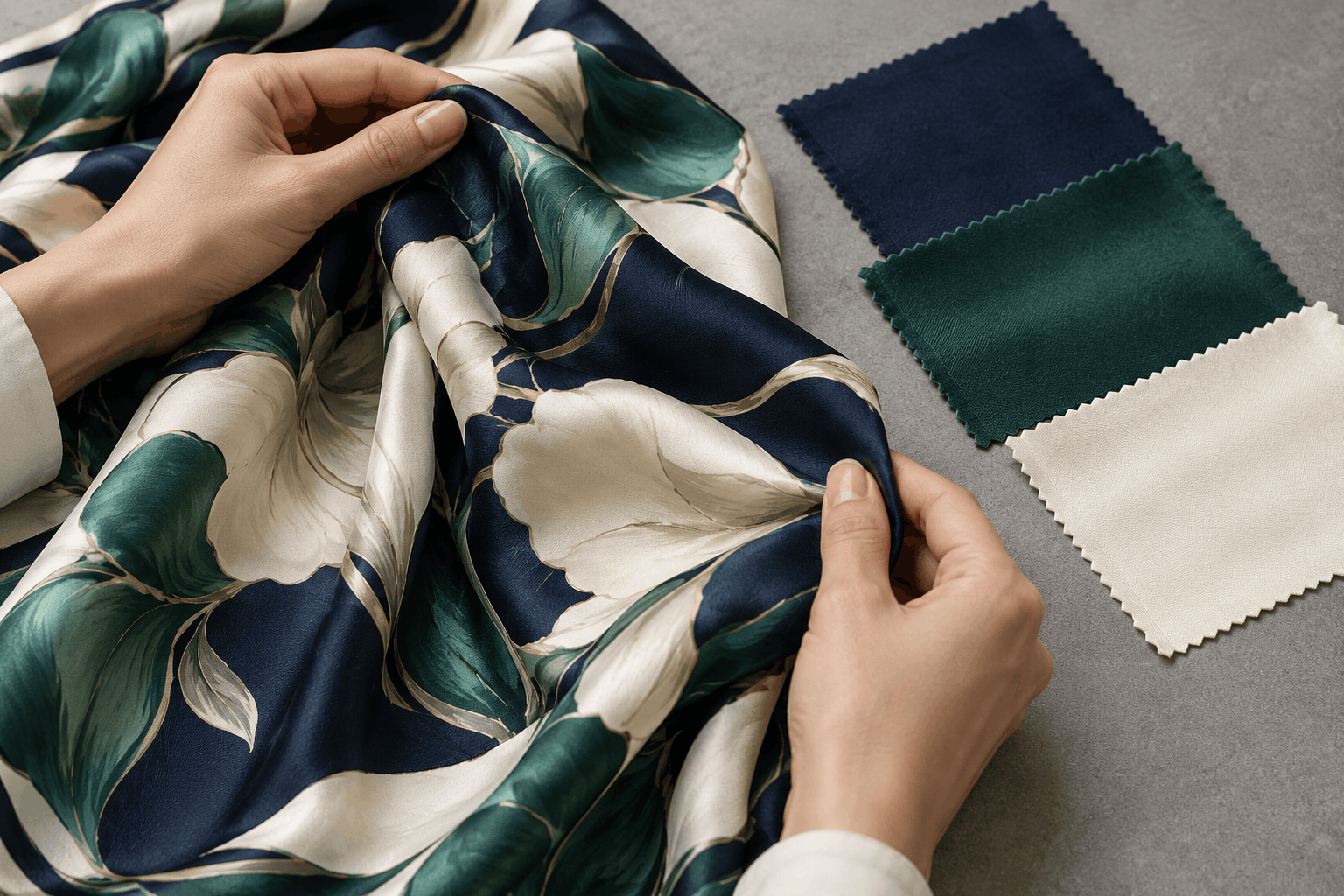
Compare the sample with the agreed physical reference under consistent lighting. Record the viewing conditions so different reviewers are not making decisions from unrelated photographs or rooms.
A screen image, office printout and printed silk can look different. Phone photographs are useful for marking the location of an issue, but should not become the sole colour approval reference.
- Check important brand colours and the overall balance of the design.
- Review pale grounds, dark areas, fine lines and transitions.
- Compare matching samples or colourways together where relevant.
- Record the approved reference and any agreed assessment method or tolerance.
Give specific feedback. “Please compare the navy border with reference swatch B” is more useful than “make it richer.” If instrumental colour measurement is required, agree the method and acceptance criteria with the supplier or laboratory rather than assuming a universal threshold.
5. Inspect the reverse, hems and corners
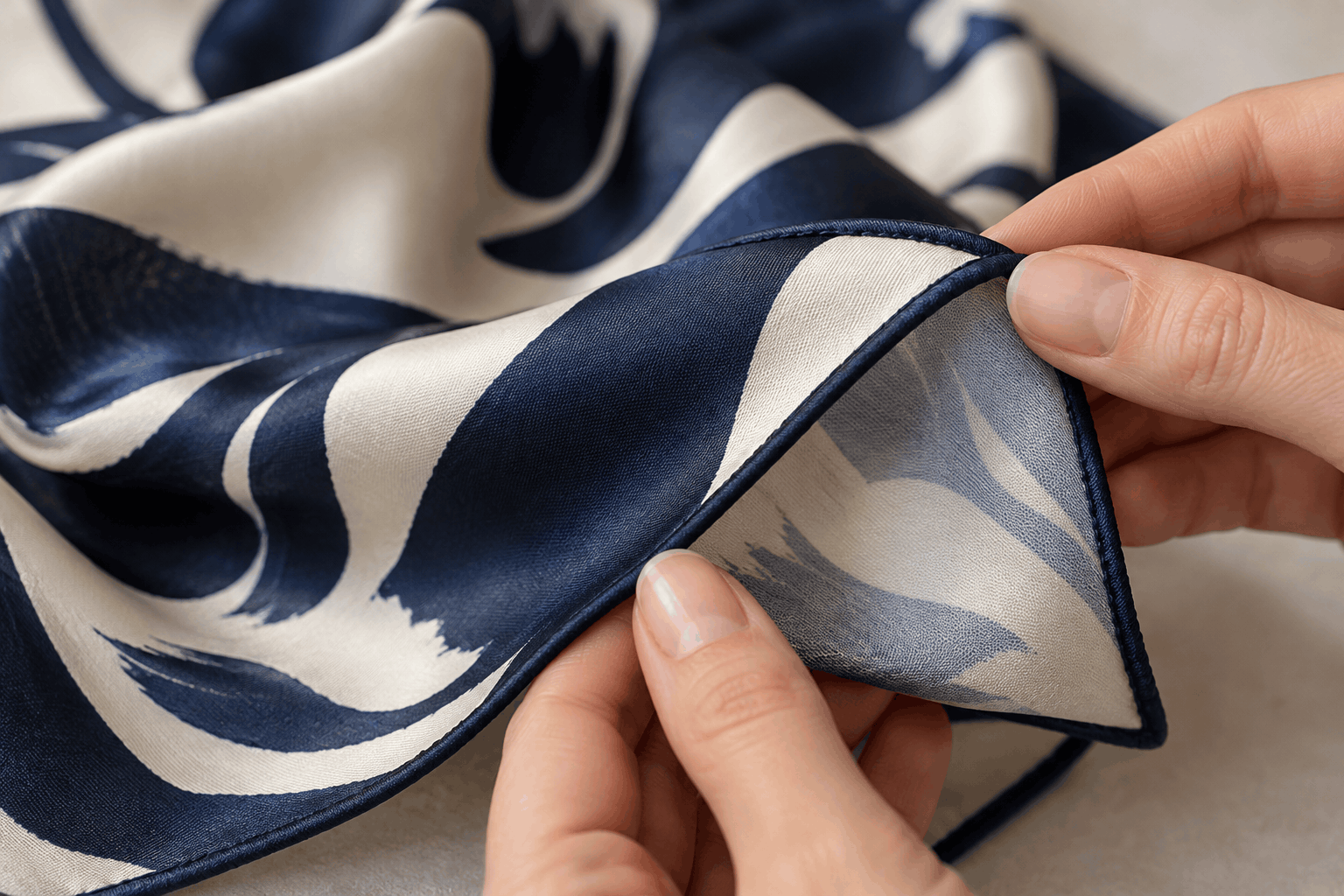
Turn the scarf over. Confirm whether the proposed printing treatment is expected to produce a lighter reverse or a deliberately printed second side. Judge it against that specification, not an assumption that every silk scarf looks identical on both faces.
- Review the reverse colour and detail in the areas visible when worn.
- Check that the hem method matches the order specification.
- Inspect edge consistency, stitching, loose threads and open sections.
- Look at all corners for bulky folds, distortion or unfinished areas.
- Check whether labels interfere with the drape or create uncomfortable contact.
A finishing method’s name does not replace inspection of the result. Record observable issues and agree the required correction.
6. Confirm wearability and care information
Use a designated handling sample to try the intended fold or knot. Check the amount of fabric, placement of the main motif and visibility of any branding.
Review the care label and accompanying instructions together. They should be consistent with the actual product and any supporting assessment. Do not assume that a scarf can be washed simply because it is silk.
For recipient-facing guidance, Lanting Loom’s silk care page emphasises following the instructions for the particular piece. Keep an untouched approval reference separate from samples used for wear trials or testing.
7. Separate visual checks from laboratory evidence
A sample review can identify visible problems, but it cannot establish every performance characteristic. Discuss which tests are relevant to the intended use, care method, destination and buyer requirements.
For example, AATCC TM8 assesses colour transfer caused by rubbing under controlled conditions, with dry and wet procedures. This is different from casually rubbing a sample with a cloth and calling it a pass.
Other questions may concern fibre composition, colourfastness to perspiration or performance after the specified cleaning process. Agree the appropriate methods and criteria with a qualified laboratory or your quality team.
- Check which sample, material and colourway the report covers.
- Review the test method, conditions, date, results and agreed acceptance criteria.
- Confirm whether the tested construction represents the proposed order.
- Resolve missing or failed results before the relevant approval is released.
Do not treat a generic supplier report as proof for every scarf, print treatment and batch. Sampling approval also does not replace agreed checks on bulk production.
8. Review the complete presentation
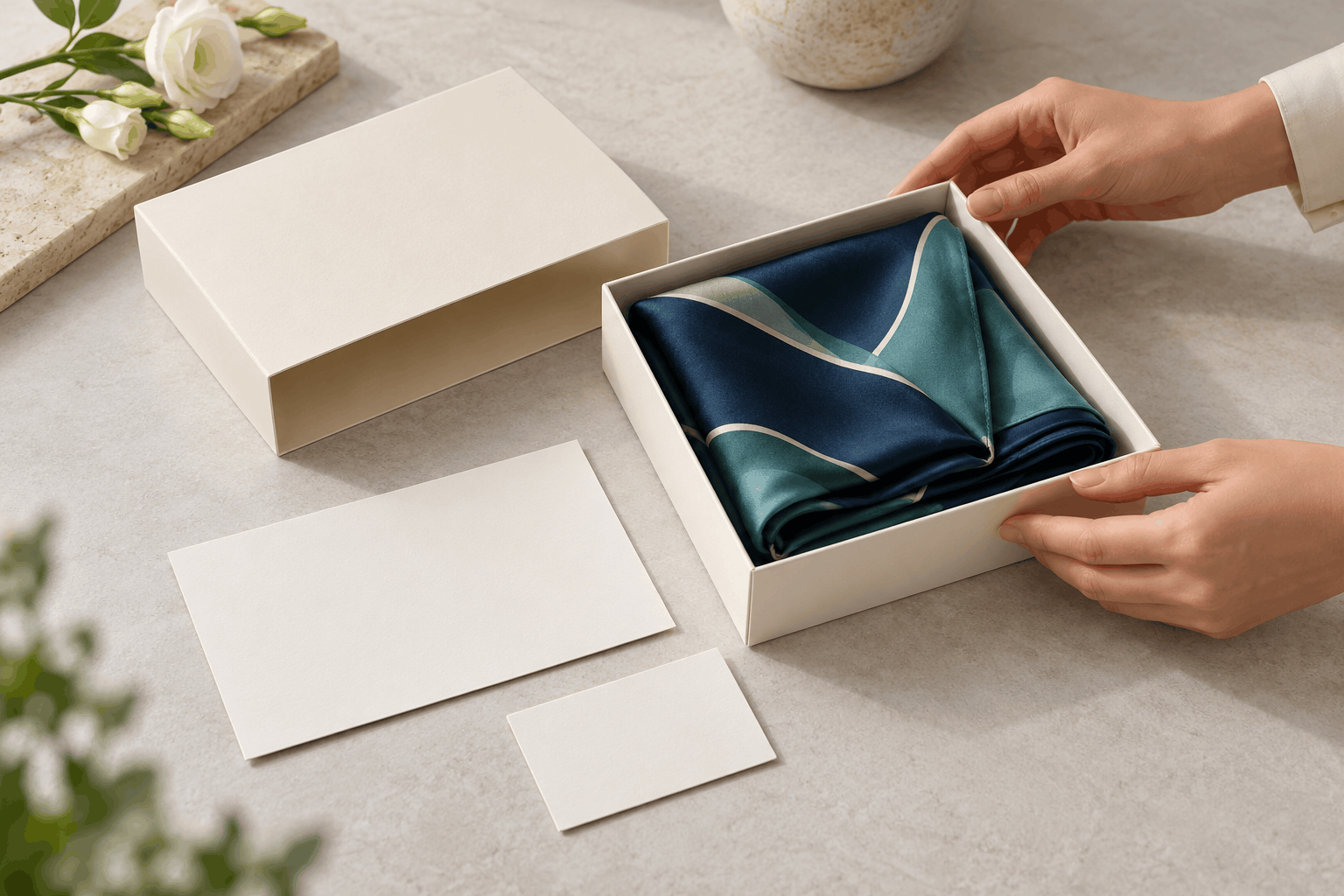
Pack the scarf as the recipient will receive it. Inspect the box, sleeve, tissue, cards and any accessories that are actually included in the quotation.
- The scarf fits without excessive compression or contact with sharp components.
- The box closes correctly and is practical to carry or distribute.
- Logos, colours, names, messages and translations are correct.
- Material, origin, care and other required information are accurate.
- Cards and accessories match the agreed contents list.
- Individual packing and outer shipping protection are clearly specified.
A blank packaging mock-up can help approve structure, but it does not approve final printing. Record those decisions separately and request final proofs or samples as agreed.
9. Give one consolidated revision list
Collect comments from procurement, marketing and other approvers before returning feedback. Use a numbered list with the location of each issue, the agreed requirement and the requested action.
Separate a defect from a change in preference. Correcting an incorrect logo differs from choosing a new palette after the supplier has followed the approved artwork; the latter may affect cost and timing.
Give every revised sample and artwork file a clear version. Identify superseded versions so they cannot accidentally become the production reference.
10. Record approval and production authorisation separately
A useful decision is more precise than “looks good.” State whether the sample is approved, requires revision or is approved only for specified aspects.
If colour is approved but packaging is unresolved, say exactly that. Do not allow a partial approval to be interpreted as permission to manufacture and pack the full order.
Keep matching approved reference samples with the buyer and supplier where agreed. Retain the final specification, artwork, approved proofs and test evidence alongside the sample record.
Copyable sample approval record
- Project and purchase-order reference: ____________________
- Supplier and sample reference: ____________________
- Design, colourway and size: ____________________
- Artwork and specification versions: ____________________
- Sample type and declared substitutions: ____________________
- Measurements and visual findings: ____________________
- Colour reference and review conditions: ____________________
- Packaging and wording versions: ____________________
- Test reports reviewed, where required: ____________________
- Decision and outstanding actions: ____________________
- Approver, role and date: ____________________
- Production authorised separately by and on: ____________________
Before production release, also confirm the final quantities, commercial terms, delivery requirements and bulk inspection arrangements. For a new project, share these expectations through Lanting Loom’s bespoke silk scarf service.
Frequently asked questions
Is a fabric swatch enough to approve a corporate scarf order?
Only for the aspects it represents. A fabric swatch does not establish the finished artwork, dimensions, hems or complete presentation. Agree which further samples are needed.
Should the sample match a digital mock-up exactly?
The design should follow the approved artwork, but screen colour is not a reliable physical colour standard. Agree the print reference and sample approval process before production.
What size tolerance should buyers accept?
Agree a suitable tolerance and measurement method for the particular product before reviewing it. There is no single tolerance that this checklist can apply to every scarf.
Does approving a sample guarantee the entire order?
No. It establishes an agreed reference. Bulk production still needs the quality checks and acceptance arrangements specified for the order.
Can a sample be ordered before a bulk purchase?
Ask the supplier to confirm sample availability, charges, revisions and any purchase commitment. Our guide to minimum order quantities for custom silk scarves explains the distinction between sampling and a production order.
