

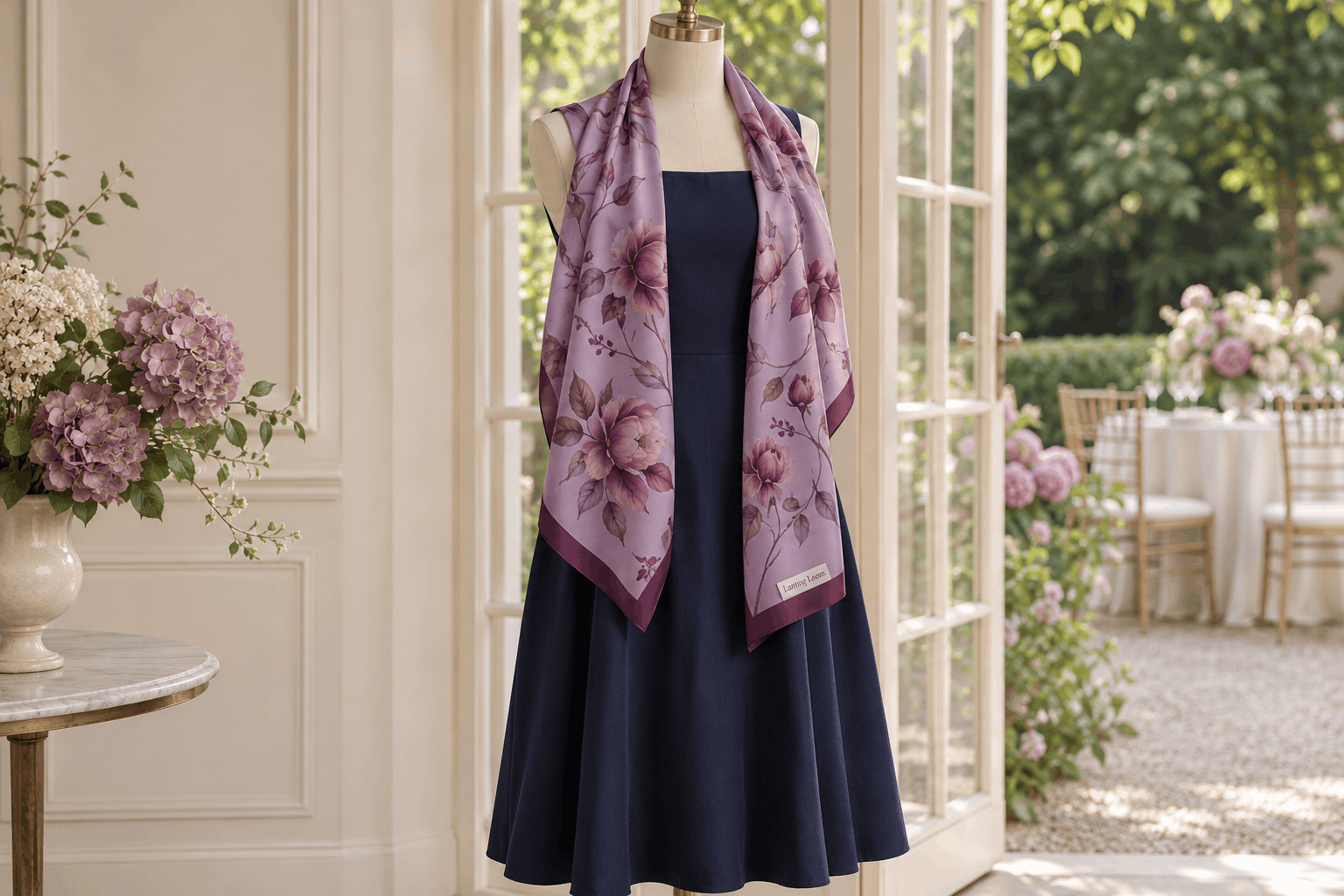
A silk scarf can bring colour, movement and a personal detail to a wedding guest dress. It can soften a simple neckline, connect the colours in your outfit or provide a light layer across your shoulders during part of the celebration.
To wear a silk scarf with a wedding guest dress, choose the arrangement around your neckline and the coverage you need. Drape a broad scarf across both shoulders, gather its front corners with a smooth scarf ring, or sweep one end over the opposite shoulder for an asymmetric finish. Keep the fabric loose enough to sit, greet people and move comfortably.
Start with a dress that suits the invitation. The scarf should complete that outfit, with a size and fastening that work throughout the day.
Begin with the Dress Code and Venue
Read the invitation and wedding website before deciding on accessories. A garden celebration, a formal evening reception and a ceremony with specific clothing expectations may call for different choices.
A decorative scarf does not change the underlying dress code of an outfit. Choose the dress first, then use the scarf to add colour, balance or suitable coverage.
- For a daytime celebration: a fluid printed scarf can complement a simple dress without needing much jewellery.
- For an evening reception: consider a restrained print, a deeper colour or a drape that leaves the dress’s shape visible.
- For a ceremony with coverage requirements: check exactly what is expected. A narrow or sheer scarf may not provide enough coverage.
- For an outdoor venue: consider wind and temperature as well as appearance. A loose silk drape may need frequent adjustment.
If the couple has provided cultural or colour guidance, follow it. For broader etiquette context, The Knot’s guide to wearing white at weddings explains why the couple’s instructions matter.
Choose Enough Fabric for the Job
A small silk square can make a lovely neck accent, but it cannot provide the same coverage as a broad wrap. Before choosing a style, decide whether you want decoration, shoulder coverage or a light additional layer.
- A small or medium square: useful for a compact neck knot or a bag accent.
- A large square: can be folded diagonally for a shoulder drape, depending on its dimensions and your fit.
- A wide, long scarf or stole: gives more flexibility across both shoulders and usually leaves more fabric at the front.
Check width as well as length. A very long but narrow scarf may create an elegant front drape while leaving most of your shoulders uncovered.
Try the scarf with the actual dress. The corners should meet comfortably if you plan to fasten them, and the fabric should not pull across your back when you move your arms.
1. The Classic Shoulder Wrap
Works well with: a simple sleeveless, square-neck or strapless dress.
A broad shoulder wrap is an easy way to show the scarf’s design while keeping the neckline relatively clear. It also lets you add or remove the layer as the setting changes.
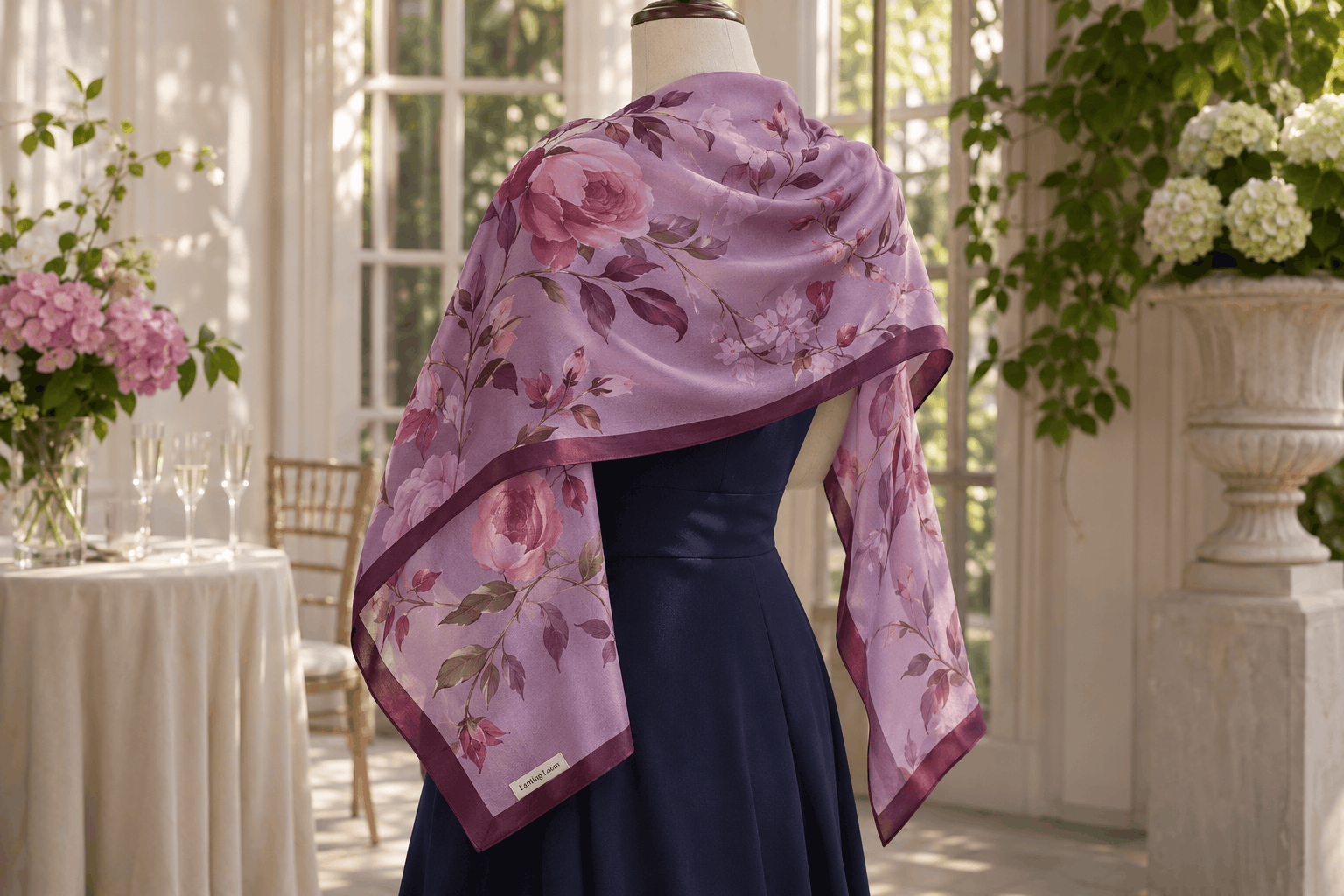
- Open a wide long scarf, or fold a sufficiently large square diagonally into a triangle.
- Place the middle across your upper back.
- Bring the fabric over both shoulders and let the ends fall towards the front.
- Adjust the upper edge so it rests comfortably without gathering tightly around your neck.
- Check the coverage from the back and sides, then sit down and move your arms.
For a triangle fold, the central point falls down your back. With a rectangular scarf, you can adjust the width to show more or less of the dress.
Styling detail: let some of the neckline remain visible where appropriate. A scarf that covers every detail of the bodice can make the outfit feel heavier than intended.
This loose arrangement will move. If you need reliable coverage throughout a ceremony, choose a more secure fastening or a suitable jacket or wrap that stays in place.
2. The Gently Gathered Scarf-Ring Wrap
Works well with: a plain dress and a neckline without heavy embellishment.
A scarf ring gathers the two front corners, giving the wrap a more defined shape. It can be useful when you want your hands free, although a simple ring does not lock the fabric in place.
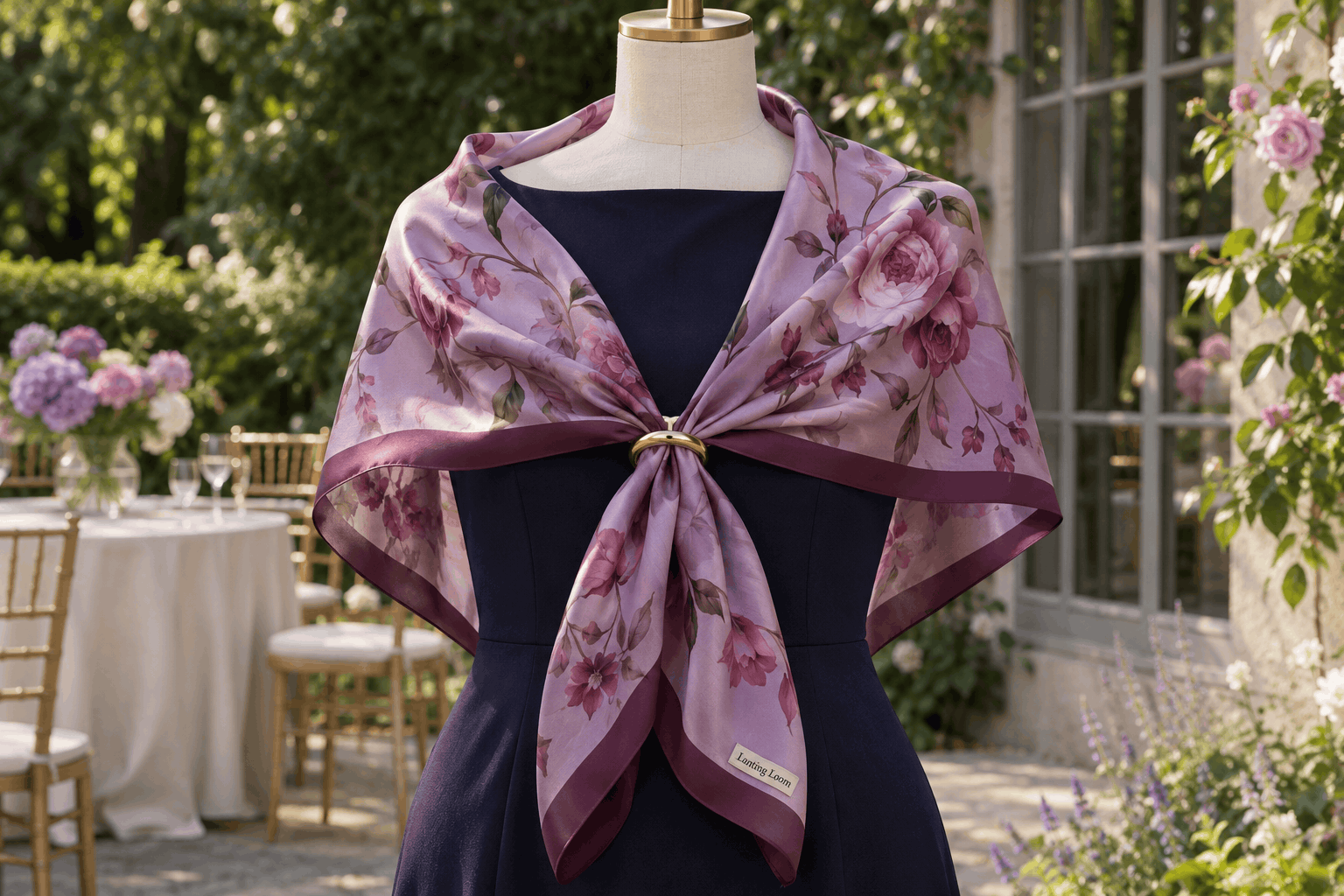
- Drape the scarf across both shoulders with enough ease across your back.
- Bring the two front corners together below the neckline.
- For a smooth, single-opening ring, pass both corners through in the same direction.
- Position the ring where it rests comfortably against the dress.
- Leave enough fabric below the ring and check whether it stays in place as you move.
Choose a ring that suits the gathered fabric. If the opening is too large or the ring too heavy, it may slide. If the silk needs force to pass through, use a larger opening or a less bulky arrangement.
Styling detail: keep the ring away from beading, raised seams and delicate lace. A simple metallic finish can be enough when the scarf itself carries a detailed print.
If the scarf corners barely reach, do not pull them together tightly. Choose a larger scarf or wear it open instead.
3. The Asymmetric Drape
Works well with: a simple dress at a reception in calm, dry conditions.
An asymmetric drape adds movement and reveals different parts of the print. It is a decorative arrangement rather than dependable shoulder coverage.
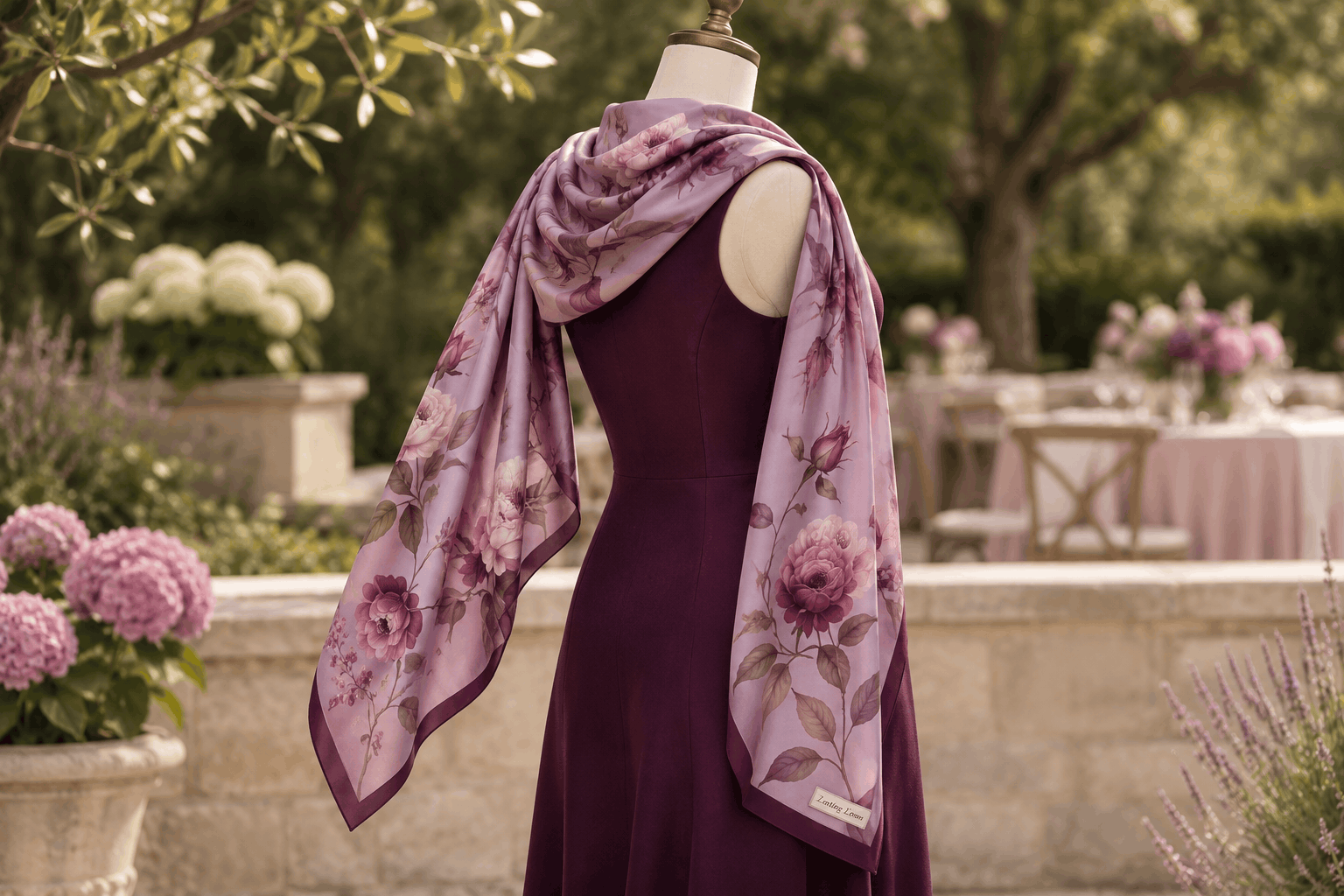
- Place a long scarf around the back of your shoulders, leaving one end longer.
- Bring the longer end loosely across the front.
- Sweep that end over the opposite shoulder so it falls behind you.
- Allow the shorter end to hang down the front.
- Adjust the fabric so it rests softly without tightening around your neck.
Check that the back end will not be trapped beneath you when seated or caught by your bag. This style is easiest when you can make an occasional adjustment.
Styling detail: with an asymmetric dress, test the scarf carefully before choosing this look. The drape may complement the neckline, but it may also hide the feature you wanted to show.
4. The Long Front Drape
Works well with: a plain dress with sleeves or a neckline that needs little additional decoration.
If you want colour rather than coverage, let a long scarf fall down the front without a knot. The two ends create a flowing vertical detail while leaving most of the dress visible.
- Fold the scarf lengthways into a loose band if it is very wide.
- Place its centre behind your neck.
- Let both ends fall down the front of the dress.
- Adjust them to similar lengths, or leave a small difference for a softer finish.
- Check that the ends stay clear of your bag clasp, seat and table setting.
Styling detail: this arrangement works particularly well when the scarf has a border or flowing design that remains visible along its length. Keep necklaces simple so the neckline does not become crowded.
Remove or secure the scarf before dancing if the loose ends are likely to catch.
Match the Scarf to Your Dress’s Neckline
| Dress neckline | Scarf arrangement to try | What to check |
|---|---|---|
| Strapless or straight neckline | Broad shoulder wrap | Coverage remains adequate when you sit and move |
| Square neck or simple V-neck | Open wrap or gathered front corners | The fastening does not obscure or pull against the neckline |
| High neck or halter | A loose wrap when needed, removed for the reception | Avoid adding excessive fabric around the neck |
| One-shoulder or asymmetric neckline | A temporary shoulder layer or carefully tested asymmetric drape | The scarf does not hide the dress’s defining detail |
| Beaded or heavily embellished bodice | A separate wrap only where it can sit clear of rough details | Beads, sequins and settings do not catch the silk |
Choosing Colours Without Matching Everything
A scarf does not need to match your dress exactly. It can repeat one tone, introduce a related shade or provide a deliberate contrast.
- With navy: try rose, lilac, mineral blue or a restrained multicolour print.
- With deep green: consider muted pink, plum or softer green tones.
- With burgundy or plum: dusty rose and mauve can create a layered colour palette.
- With a floral dress: choose a quieter scarf that picks up one colour from the print.
- With a plain dress: a patterned scarf can become the main decorative detail.
If the dress already has a large print, ruffles or substantial embellishment, try a simpler scarf and fewer accessories. With a plain dress, you have more room to show an expressive textile.
Can a Wedding Guest Wear an Ivory or White Scarf?
Customs differ, and the couple’s instructions take priority. At weddings where white is reserved for the bride, consider how the complete outfit reads rather than judging one small detail in isolation.
A small amount of ivory within a clearly coloured print is different from a large plain white wrap that dominates the outfit. If a pale scarf makes the overall look feel bridal, choose a more distinct colour. Ask the couple or organiser if the expectations are unclear.
Plan for the Ceremony, Dinner and Dancing
Try the outfit with your actual shoes, bag and jewellery before the day. Sit down, reach forward and lift your arms to check whether the scarf stays comfortable.
For a ceremony, arrange any required coverage before entering. At dinner, keep long ends clear of food and drink, or fold the scarf into a clean pouch. Before dancing, remove a loose drape if it will need constant adjustment.
A fine silk scarf can provide a light layer, but it should not be your only plan for cold weather. Bring a suitable jacket or warmer wrap if the forecast or venue calls for one.
Keep the Silk Clear of Snags and Spills
Check jewellery, bag clasps and dress embellishments for anything that could catch the fabric. Avoid pinning directly through silk or using an unfamiliar adhesive to keep the wrap in place.
Apply perfume, cosmetics and hair products before adding the scarf, allowing them to dry first. Protect it from rain and remove it before applying any additional sprays.
After the event, untie the scarf and let it air before storing it. Follow the individual care label if cleaning is needed, and consult our silk care guide before treating a mark or stain.
Frequently Asked Questions
Can I wear a silk scarf instead of a shawl to a wedding?
Yes, if the scarf is wide and long enough for the coverage you want. A small square or narrow ribbon is mainly decorative. Check the fit and opacity with the dress before relying on it for ceremony coverage.
How do I stop a silk scarf falling off my shoulders?
Choose enough fabric to reach comfortably around you and try gathering the front corners with a suitable smooth ring or a gentle knot. Test the arrangement while seated and moving. If reliable coverage is essential, a more secure garment may be easier.
Should the scarf match my shoes and bag?
It does not need to. Repeating one colour from the scarf in another accessory can bring the outfit together, but an exact matching set is optional.
Can I wear a patterned scarf with a floral wedding guest dress?
Yes, though a quieter scarf is often easier to balance. Start with a shared colour and avoid combining two equally dense patterns unless you enjoy a more expressive outfit.
Is a silk scarf warm enough for an evening reception?
That depends on the fabric, its size and the temperature. A fine silk scarf offers a light layer rather than dependable cold-weather warmth. Take a jacket or warmer wrap if you expect to spend time outside.
Choose a Scarf You Will Wear Again
A wedding can be a reason to try a new colour or a more generous drape, but the scarf can remain useful long after the celebration. The same piece may later work with a plain blouse, a jacket or an everyday dress.
Choose a design you enjoy, check its dimensions and practise one comfortable arrangement before the event. Explore the Lanting Loom silk scarf collection for pieces that bring artistry and meaning to occasion dressing and everyday life.
