

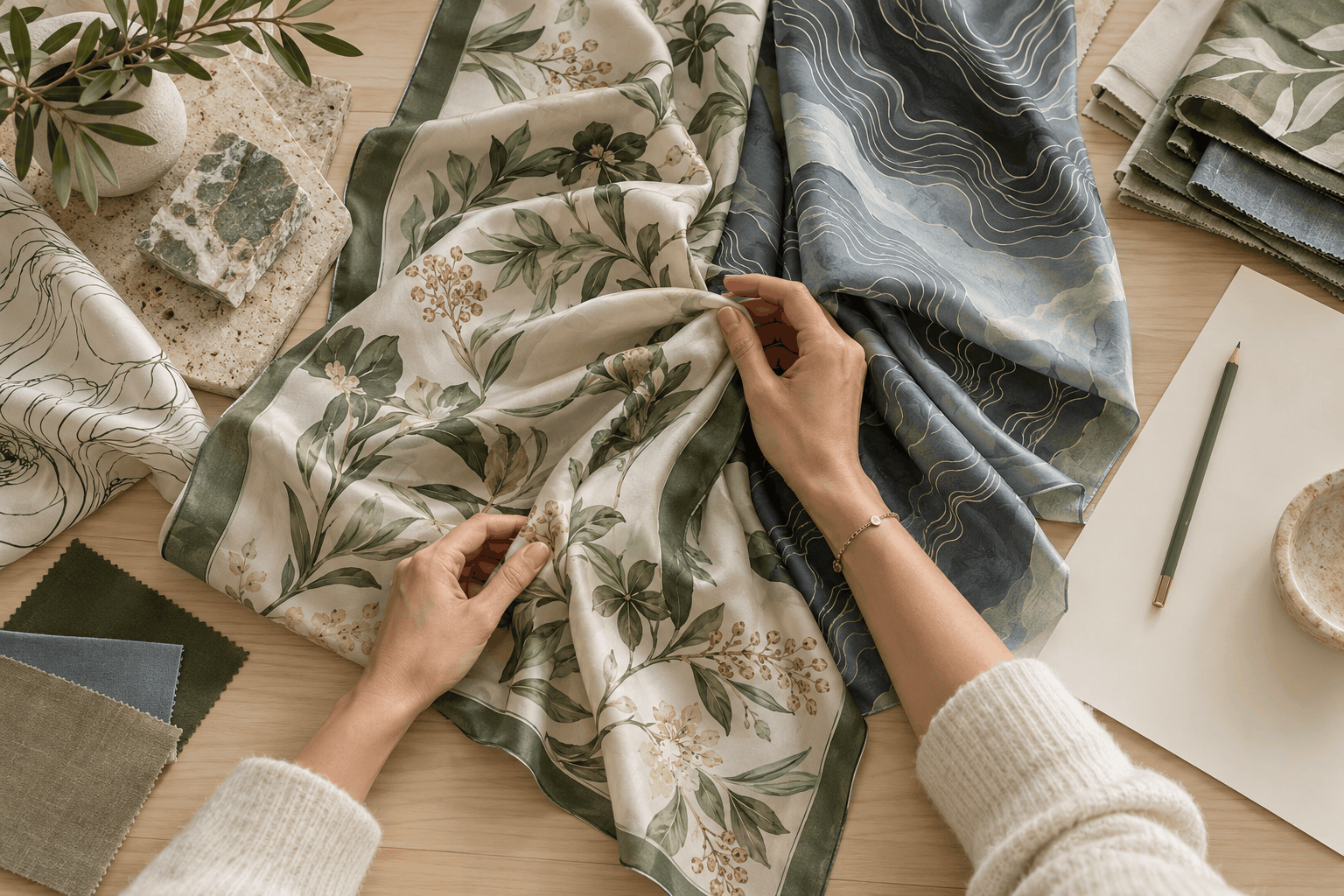
A guest leaving a wellness retreat may want something that recalls the garden, the landscape or the time they set aside for themselves. A silk scarf can carry that connection into everyday life, whether it is presented as a farewell gift or chosen from the property’s boutique.
Silk scarves for luxury spas and wellness retreats work best when the purpose is clear. A guest gift needs thoughtful timing and presentation. A retail collection needs wearable designs and viable pricing. A bespoke scarf needs a specific story, a practical brief and an approved physical sample.
This guide explains how to plan each approach, from selecting a format to reviewing packaging, managing stock and introducing the scarf to guests.
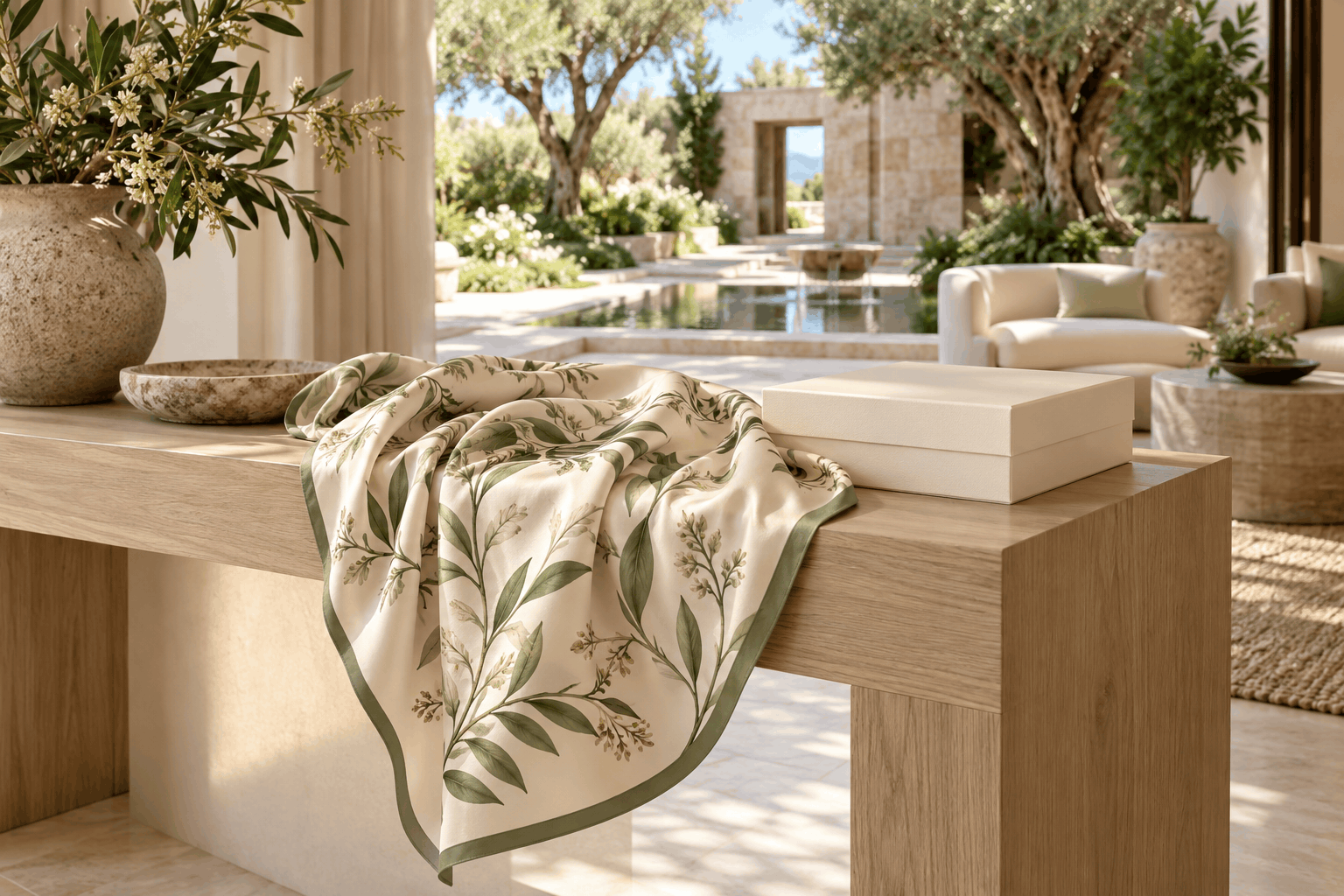
Start with the Role of the Scarf
Before choosing colours or requesting artwork, decide what the scarf is meant to do. The same product can serve several purposes, but each needs its own budget and operating plan.
- Guest gifting: a welcome, farewell or milestone gesture included in a defined hospitality programme.
- Boutique retail: an optional purchase that guests can assess, try and take home.
- A property-specific collection: a design connected to the retreat’s setting, architecture or story, used for gifting, retail or both.
For example, a retreat might begin with an existing botanical scarf for a small departure-gift programme. A property with an established shop might instead test a compact retail selection. Original artwork becomes more compelling when there is a clear design story and enough anticipated demand to support development.
Guest Gifts: Make the Moment Feel Personal
A scarf can suit a retreat anniversary, a returning guest’s visit or a special residential programme. Define who receives it and why so the experience is consistent across the reservations, guest-relations and retail teams.
Choose the Right Moment
A welcome gift can introduce the property’s design story. A farewell gift can refer back to a garden walk, a creative workshop or another memorable part of the stay. Choose the moment when a member of staff can explain the connection without interrupting the guest’s schedule.
Present the scarf in a dry lounge, guest room or reception area. It is an accessory for the guest to enjoy beyond treatments; it should not be treated as a steam-room garment, massage accessory or substitute for spa linens.
Offer Choice Where Practical
Do not assume every guest wears scarves or prefers soft floral prints. A choice between two palettes, or an alternative gift within the programme, can make the gesture more considerate. If you offer a choice, plan quantities and a fallback before promising specific designs.
Keep the Message Specific
Inspired by the garden paths you explored during your stay. With warm wishes from our team, and the hope that these colours bring back a favourite moment.
Use wording like this only when the design really has that connection. A simple thank-you is better than an invented origin story.
Retail: Build a Small Collection Guests Can Understand
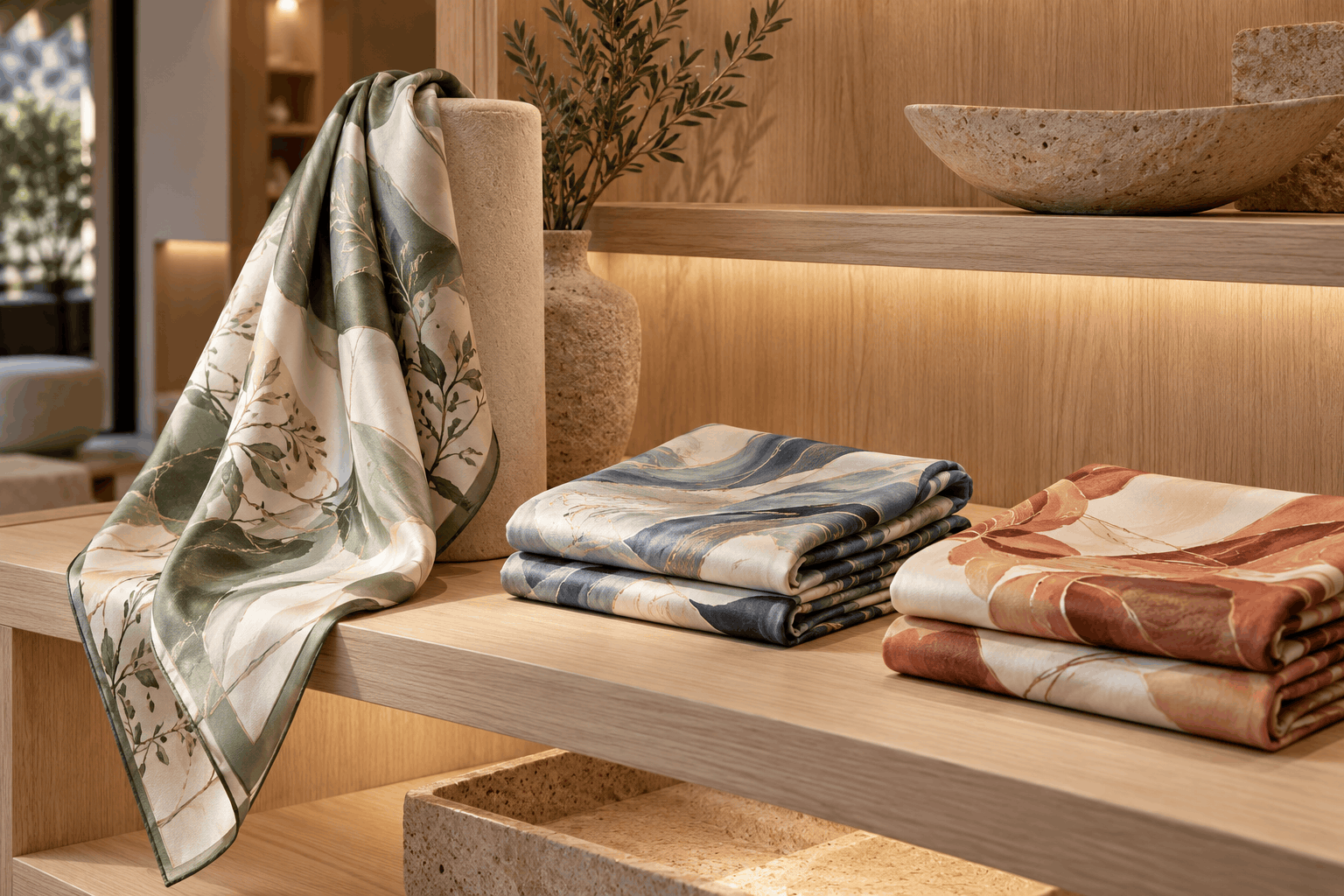
A spa boutique does not need a large scarf range to make a useful first impression. A focused selection makes it easier for guests to compare designs and for staff to learn the story, size and care requirements of each piece.
As a starting proposal, consider one scarf format in two or three colourways. This is a planning option, not an industry benchmark: the right range depends on available space, guest preferences, budget and supplier minimums.
Plan the Price Before Approving the Range
Calculate the landed unit cost, including the scarf, packaging, freight and applicable import costs. Keep any one-off artwork or sampling charges visible so they do not disappear from the project budget.
For a consistent retail calculation, compare costs and revenue on the same tax basis. Gross margin is:
Gross margin percentage = (net selling price − cost of goods sold) ÷ net selling price × 100.
As an illustration only, a scarf with a cost of 40 currency units and a net selling price of 100 has a gross margin of 60%. That is before overheads and other selling expenses; it is not a recommended price or a prediction of profit.
Give Guests a Reason to Stop and Look
Display one scarf open enough to show the artwork and another in a simple wearable fold. Provide a mirror, a clear price and a short description. Keep boxed sale stock separate from the handling sample.
A useful introduction might be: “This pattern takes its colours from the garden outside the lounge. Would you like to see how the border looks when it is folded?” Staff should also be comfortable letting the guest browse quietly.
Custom Design: Begin with Something Particular to the Place
The strongest starting point is a detail the property can explain clearly. A generic leaf pattern may be attractive, but a design based on a documented garden, a distinctive courtyard or the lines of a nearby landscape offers a more specific connection.
- Garden retreats: plant forms, paths or seasonal colours drawn from the grounds.
- Coastal properties: shoreline contours, water movement or local stone colours.
- Mountain retreats: ridge lines, forest silhouettes or architectural framing of the view.
- Urban spas: courtyard geometry, screens, tile patterns or a distinctive interior detail.
Use original or authorised source material. Where a concept draws on a local cultural tradition, involve people who can explain its meaning accurately and agree how it should be represented.
Design for Wearing as Well as Display
A square design will look different once it is folded, tied or draped. Review the centre, corners and border separately. Ask whether the main colours remain visible in a narrow fold and whether a large central motif disappears in normal wear.
A restrained signature can sit near a corner or on the presentation. Decide how much branding is needed before artwork begins, and examine it on the sample at actual size.
For an original project, explore Lanting Loom’s bespoke silk scarf approach. Confirm design scope, sampling, quantities and timing for your particular brief.
Choose the Format and Fabric with the Guest in Mind
Specify the finished dimensions rather than relying on descriptions such as “small”, “standard” or “shawl size”. A smaller square can work as a neck or bag accent. A larger square offers more display space and draping options, but its suitability as a shoulder wrap depends on its dimensions and the wearer.
The silk scarf size guide is a useful starting point for comparing intended uses.
Ask the supplier to confirm fibre composition, weave, fabric weight, printing method and hem finish. Assess these together on a sample. A weight figure alone cannot tell you whether the print is clear, the fabric drapes well or the finishing meets your expectations.
Review a Physical Sample Before Production
Digital artwork is useful for composition, but it cannot fully show the feel of the fabric or how colours appear under the property’s lighting. Review a physical sample with the people responsible for buying, guest experience and retail.
- Colour: inspect in daylight and under the lighting used in the boutique or lounge.
- Print: check fine details, borders, both sides and any signature or logo.
- Wearability: fold, tie and drape the scarf in the ways you plan to demonstrate.
- Finishing: inspect hems, corners, loose threads, marks and distortions.
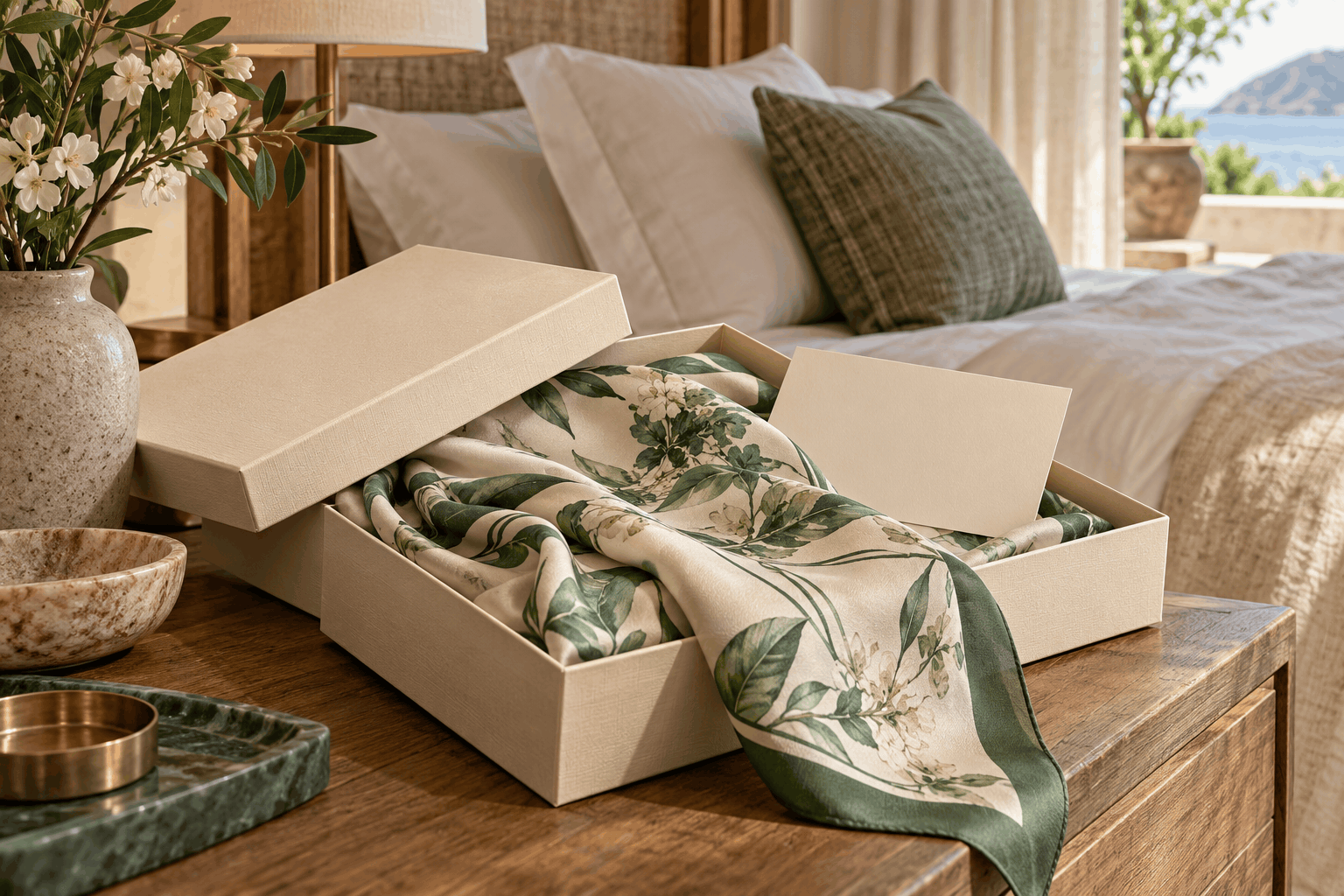
- Presentation: test the actual box or pouch with the scarf, care information and card inside.
- Specification: record approved dimensions, materials, colours and any agreed tolerances.
Consolidate feedback into one written revision list. Retain the approved sample and final specification as references for production and delivery checks.
Packaging and Care in a Spa Environment
Choose packaging that protects the scarf and fits reasonably into a guest’s luggage. A large rigid box may look impressive on a shelf but be awkward for someone travelling with limited space. Compare the packed dimensions and storage needs before committing.
Keep scarves away from treatment oils, diffusers, splashes, strong sunlight and humid storage areas. Do not spray the fabric or its tissue with the property’s signature fragrance. If a gift includes cosmetics or oils, package them securely and separately from the textile.
Provide care instructions specific to the finished scarf. GINETEX’s care-symbol guide explains the symbols used for washing, bleaching, drying, ironing and professional care. Staff should follow the product label rather than assume that all silk can be cleaned in the same way.
For everyday handling, refer to Lanting Loom’s silk care guide. Keep a separate display sample and agree how it will be cleaned or replaced.
Keep Wellness Language Accurate
A scarf’s colours, texture and design story can complement the atmosphere of a retreat. Describe those qualities directly. Avoid turning the accessory into a treatment claim: the design should not be said to reduce anxiety, improve sleep, detoxify the body or deliver other health outcomes without appropriate evidence.
Likewise, support environmental claims with information specific to the finished product and packaging. Silk content alone does not establish that a scarf is organic, cruelty-free, certified or environmentally preferable to another product.
Plan Stock, Reorders and a Measurable Pilot
Keep gifting allocations separate from retail stock, even when both use the same design. Otherwise, complimentary distribution can make a retail range appear more successful than its sales demonstrate.
For a pilot, choose a review date and record:
- Units sold at full price and at a discount, by design.
- Units issued as gifts, with the programme or occasion recorded.
- Guest comments about colour, size, packaging and wearability.
- Display damage, returns and other stock losses.
- Remaining stock and the supplier’s confirmed reorder lead time.
For retail sell-through, divide units sold by units made available for sale during the review period, using a consistent definition. Do not include gifted units as sales. Review the results alongside actual costs before expanding the collection.
What to Include in Your Supplier Brief
A clear brief helps a supplier recommend a feasible route. Include:
- Your property, location and the experience you want the design to reflect.
- Whether the scarves are for gifting, retail or both.
- The intended recipients and approximate quantities for each use.
- Preferred dimensions, palettes and reference material.
- Whether you want existing designs, adapted presentation or original artwork.
- Your budget, delivery destination and required arrival date.
- Packaging, care-card and stock-identification requirements.
- Any requested exclusivity, including design, territory, sales channel and duration.
Ask for artwork, sampling, production and delivery stages to be identified separately. Confirm minimum quantities by design and colourway, reorder conditions and any additional development charges. Exclusivity should be expressly agreed; a custom card or sleeve does not by itself make the scarf design exclusive.
Frequently Asked Questions
Are silk scarves suitable for spa guest gifts?
They can be suitable as personal accessories and keepsakes, especially when their design relates to the property and guests can choose a style they enjoy. Plan presentation in a dry area and provide clear care information.
Should a retreat start with existing or bespoke scarves?
Existing designs can help test guest interest before committing to original artwork. Bespoke development is worth discussing when the property has a distinctive story, a defined budget and sufficient time for sampling and production.
Can the same scarf be sold and given as a gift?
Yes, provided the programme is clear and stock is tracked separately. Decide which visits or occasions qualify for a gift and how staff should explain the retail offering consistently.
What is the minimum order for custom silk scarves?
There is no single minimum that applies to every project. Ask for the requirement for your chosen fabric, size, design, colourways and packaging, including the terms for later reorders.
How can a spa make a scarf collection feel distinctive?
Start with a specific feature of the place, develop a wearable composition and explain the connection briefly. Thoughtful colour, useful sizing and careful finishing matter as much as the design story.
To discuss a curated gift programme or a property-inspired collection, explore Lanting Loom’s hospitality gifting options or send your brief through the corporate gifting enquiry page.
