

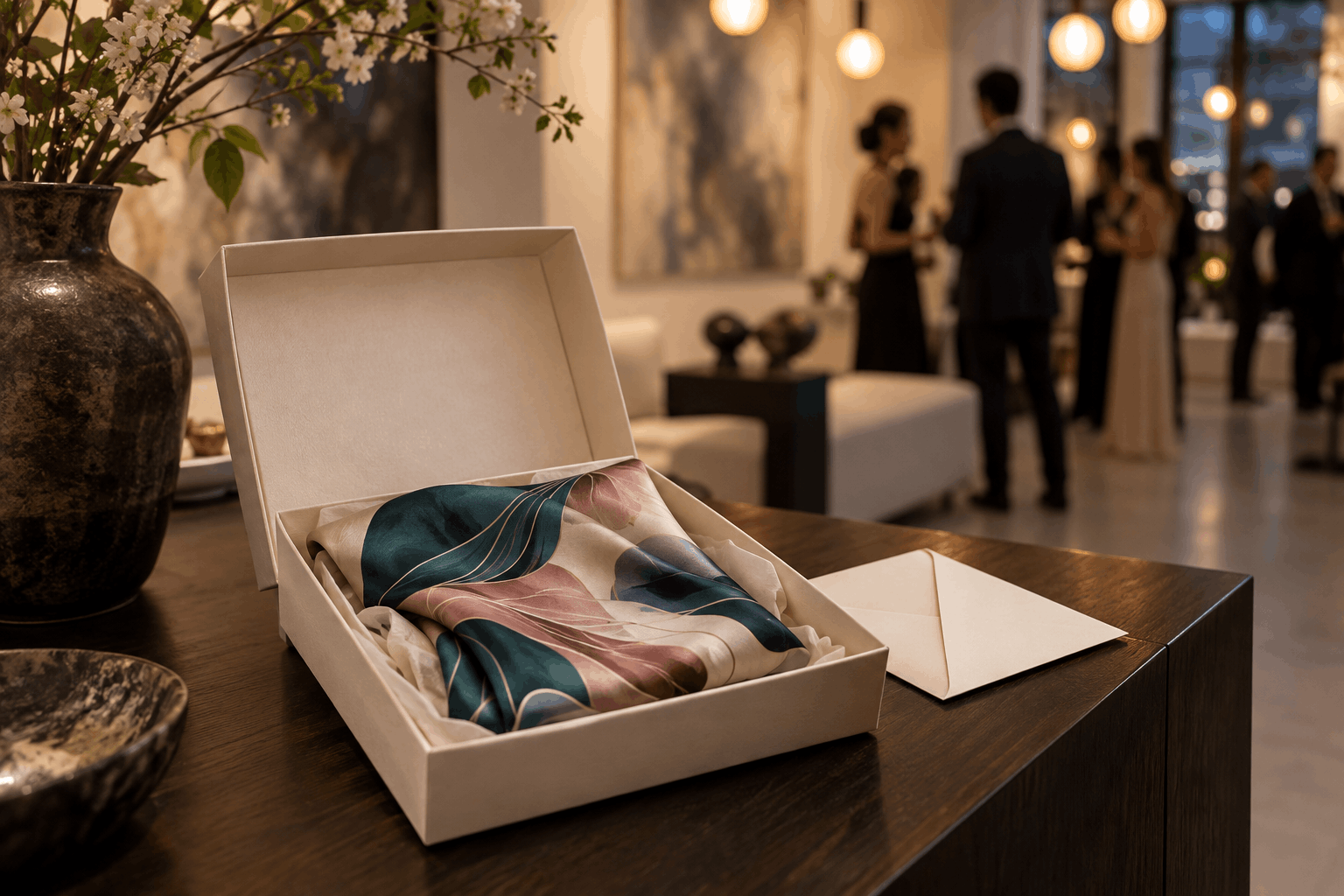
A carefully planned event brings together people with different tastes, routines and reasons for attending. A “VIP” label may tell your team how to organize the guest list, but it tells you very little about what someone would enjoy taking home.
The best VIP event gifts offer personal appeal, a clear connection to the occasion and an easy journey home. A silk scarf, an art publication or a compact design object can work when it suits the audience. The aim is to give guests something they have a reason to use or revisit after the event.
Before approving a gift, ask three questions: would someone enjoy owning it, why does it belong to this occasion, and what happens when they leave the venue?
Would guests enjoy this without the event name on it?
Imagine the object on a dressing table, bookshelf or desk a month later. If its only purpose is to display the event’s logo, reconsider what gives it lasting appeal.
Useful does not have to mean purely functional. A beautiful accessory can be useful because someone enjoys wearing it. A small publication can be worth keeping because it introduces an artist or place they care about. The point is to identify a real reason for ownership.
Review materials, finishing, proportions and the experience of using the gift. Open the sample box, unfold the item and handle it as a guest would. A polished presentation photograph cannot tell you whether a book is awkwardly heavy or a scarf’s design disappears when tied.
Build a shortlist around interests
- Silk scarves and wearable design
A scarf can suit an audience interested in fashion, art or textiles. Choose appealing colors, a versatile format and a design that works in folds. Offer it based on known interests or as a choice, rather than assuming everyone of a particular gender will want one.
- Art publications and small prints
These can connect naturally to an exhibition preview, cultural evening or destination event. Consider the content, image quality, packed size and whether guests may already own the publication. A print also needs a realistic way to be carried and displayed.
- Compact objects for everyday use
A well-made notebook or small design object can fit a professional audience when the quality and purpose are clear. Avoid choosing something simply because it has an easy surface for branding.
Where preferences are uncertain, a small selection of comparable gifts may work better than a single personal item for everyone. Present the options clearly and make choosing easy. Guests who prefer no physical gift should be able to decline comfortably.

What connects the gift to this particular occasion?
An event provides more possibilities than a date and a logo. Its location, creative theme, venue architecture or purpose can give the gift a story worth explaining.
For an imagined gallery evening exploring gardens and movement, an original scarf might use abstract petal shapes and flowing lines to echo the theme. A short story card could explain that connection. The scarf would still need to succeed as a wearable design in its own right.
A private client dinner may call for a different approach: an existing piece selected for the group, accompanied by a warm message from the host. A bespoke product is not necessary every time. What matters is that the choice has a thoughtful reason behind it.
If the design uses artwork, archive material or a venue’s identity, agree the proposed use and credit wording with the appropriate people before production. Keep any cultural or historical explanation accurate and specific.
Give sponsor recognition an appropriate place
At an event with several partners, gift presentation can quickly fill with competing marks. Decide early where sponsor acknowledgments belong and confirm the treatment before approving artwork.
A removable sleeve or card can carry event information while the object remains attractive for everyday use. A discreet mark may also work when it fits the design. Our guide to branded and unbranded corporate gifts explores how those choices affect the finished impression.
If you describe an item as exclusive or limited edition, make sure the description matches the actual arrangement. An event-specific card does not make a widely available product an exclusive design.
Can the guest take it home comfortably?
Picture a guest leaving with a coat, a phone and a small evening bag, or heading straight to the airport the following morning. The complete gift should fit that situation.
Check the packed weight and dimensions, not just the object itself. A light scarf can become cumbersome inside an oversized presentation case. A fragile keepsake needs protection that the guest can manage without special handling.
One well-chosen item may be easier to enjoy than a bag of unrelated products. If you prefer a set, give every component a clear purpose and review the complete package. Our comparison of a silk scarf gift set and a scarf alone can help you decide what the extra items contribute.
For traveling guests, consider an optional delivery arrangement where feasible. Confirm the address, timing and costs before making the offer. International deliveries need planning around the destination; guests should not receive an unexpected collection task or charge.
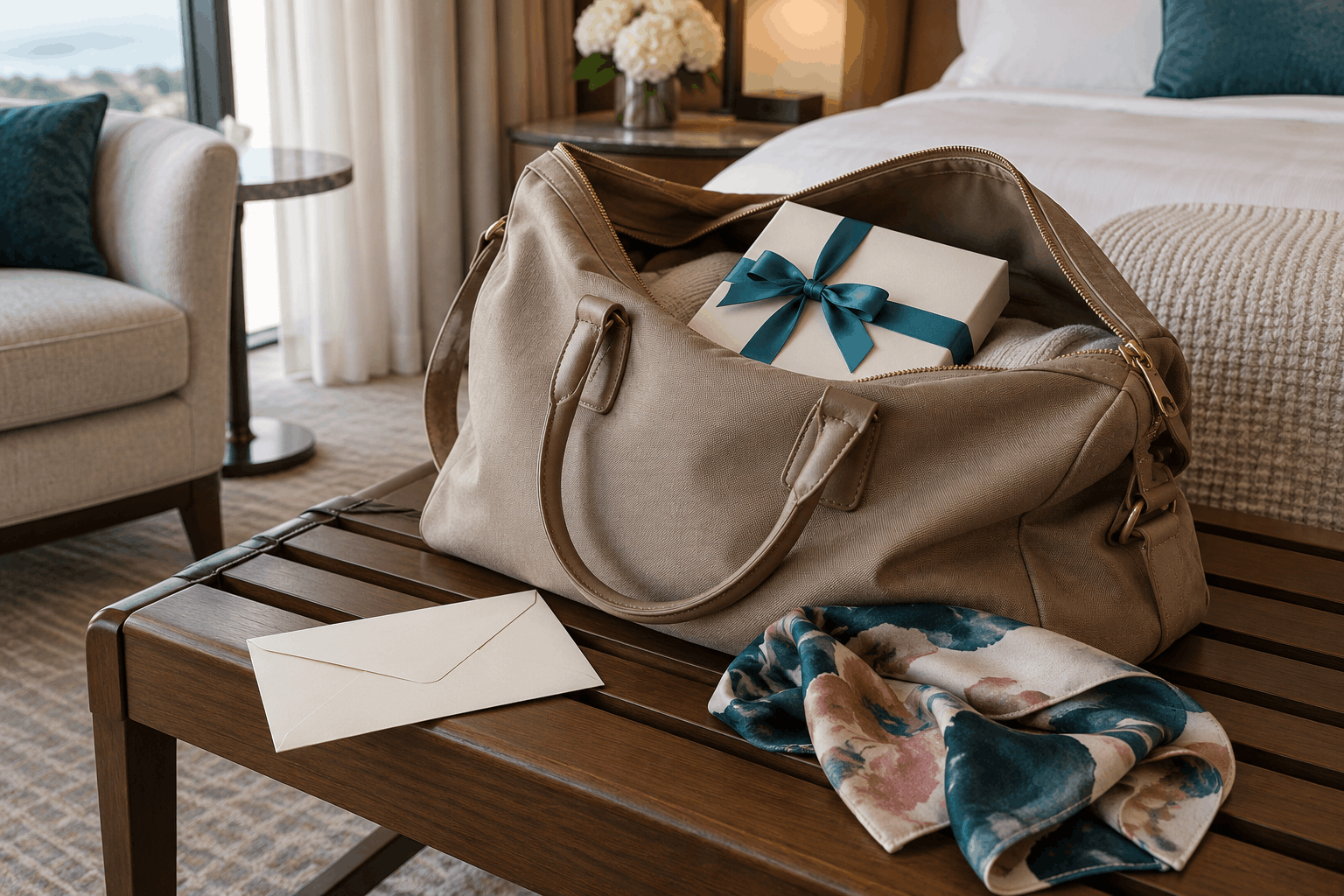
Choose when the gift becomes part of the evening
An arrival gift can establish a welcoming tone, but it also leaves the guest carrying something throughout the event. A departure gift keeps their hands free during a reception, provided collection is straightforward.
For a seated dinner, a small gift at each place may suit the table. Check that it leaves room for service and does not create confusion about whether it is for the individual or the couple. Larger items can be held for collection afterward.
Whichever approach you choose, plan for late arrivals, early departures and guests who need assistance carrying their gift. A short handover should feel like hospitality, with clear directions and no unnecessary queue.
The accompanying note can do three simple things: thank the guest, explain the choice and identify the host. Keep the message separate from a sales pitch or request for social posting. A thoughtful gift should be comfortable to accept without an implied obligation to promote the event.
Keep personal attention discreet
Personalization can mean a correctly written name, a preferred color or a message that acknowledges a long-standing relationship. It does not need to involve engraving every item.
Use preferences guests have shared, and check unfamiliar names before printing. If there are several gift options, use an internal system that helps staff find the right package without displaying guest categories or spending levels.
Keep any differences in gifting discreet. The presentation should welcome the recipient rather than invite public comparisons between guests. For a recurring event, record which design returning guests received so the next occasion can offer something fresh.
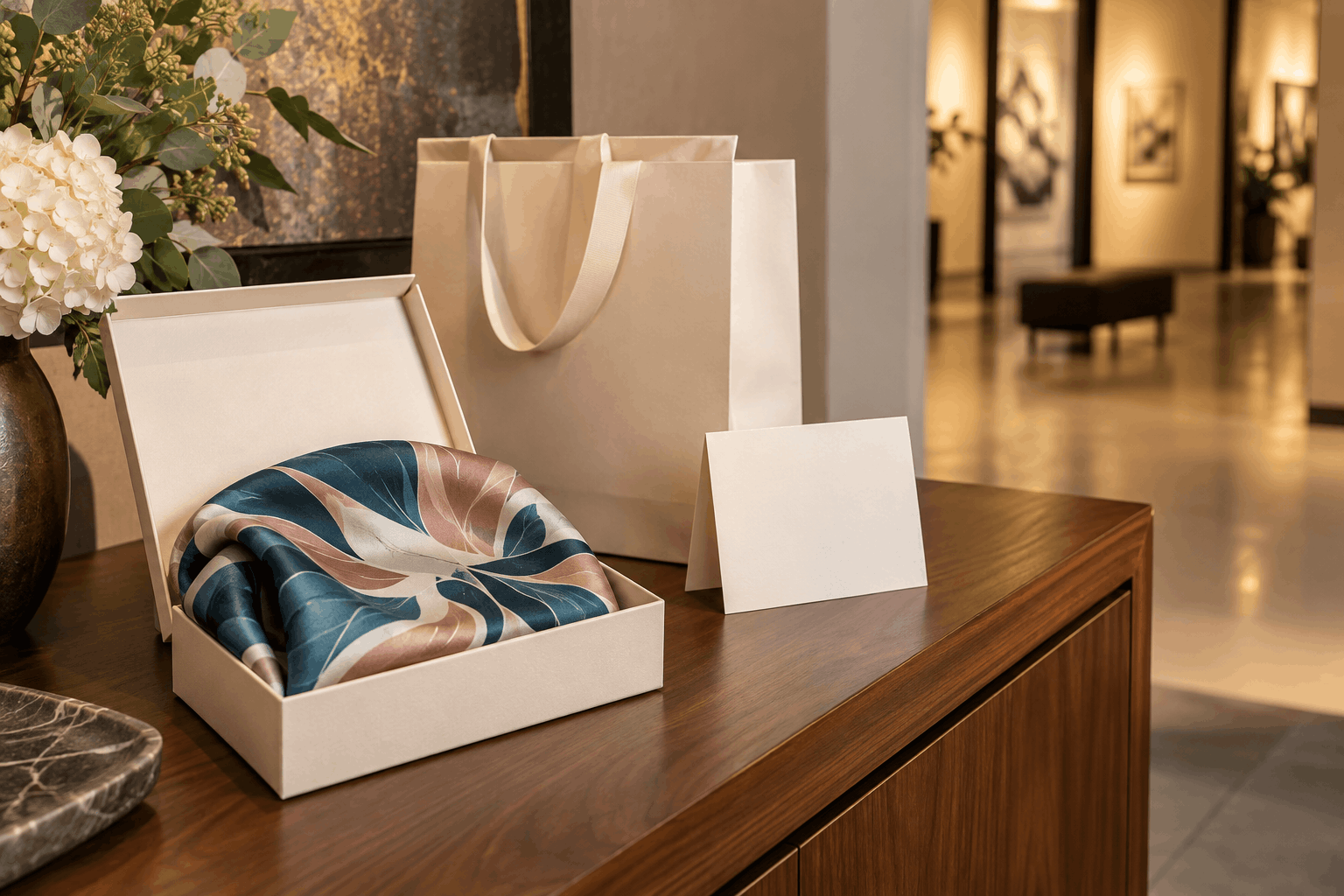
Approve the whole gift experience before ordering
Set a complete budget covering the item, design work, samples, packaging, cards, venue delivery and any onward shipping. Confirm whether your quantity is based on individuals, households or another clearly defined group.
Ask the event team to review one finished sample, including the carry bag if there is one. Check:
- The object’s quality and suitability for the intended audience.
- The accuracy of names, artwork, credits and the thank-you message
