

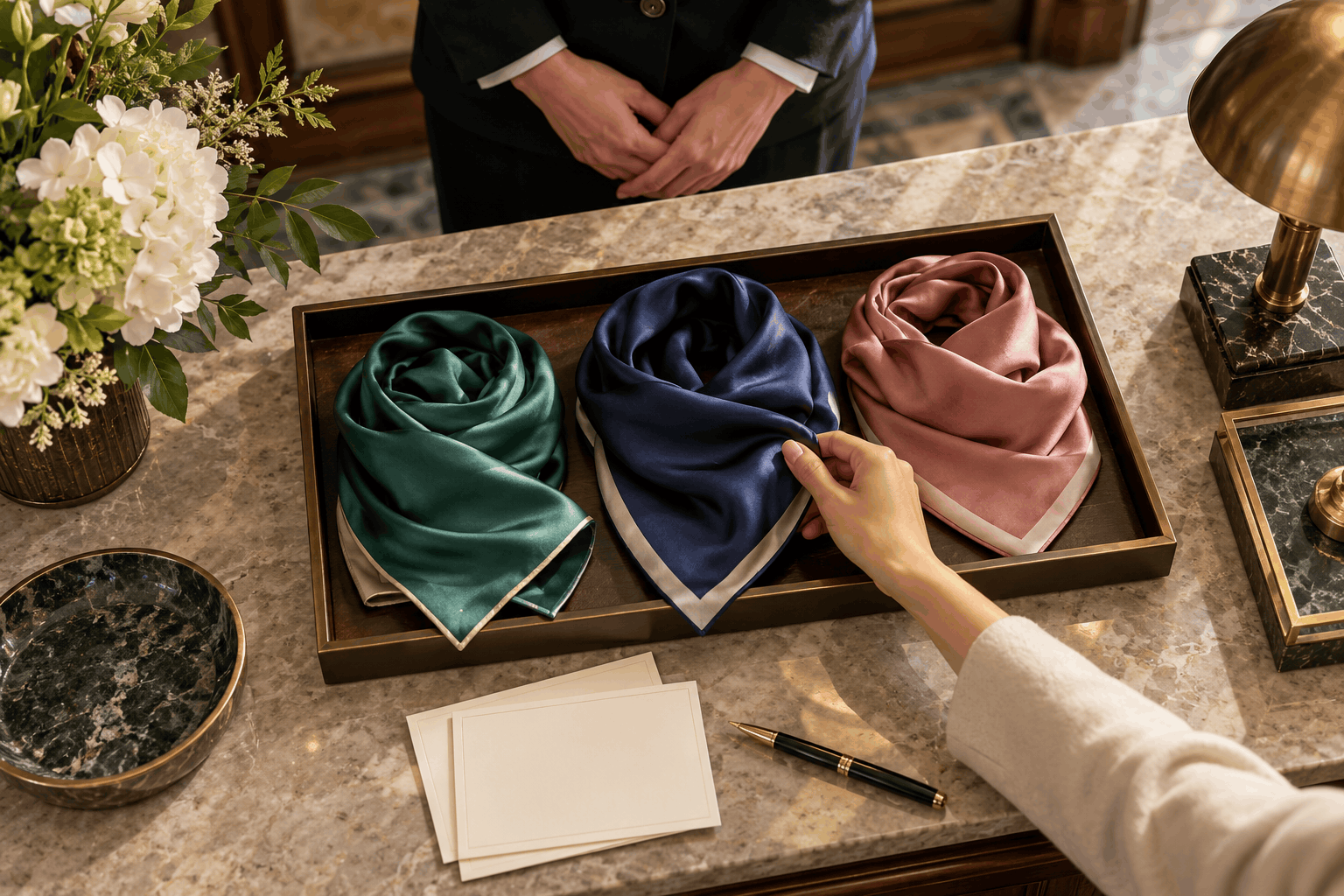
Returning guests have already chosen your hotel once. When they come back, a thoughtful welcome can show that the relationship matters beyond the reservation.
The best VIP guest loyalty gifts recognise a real preference, a shared memory or a meaningful occasion. Their value comes from the fit between the guest and the gesture—not simply the price or size of the presentation.
For luxury hotels, a silk scarf can be a distinctive keepsake when it suits the recipient. The wider task is to build a recognition programme that feels personal and remains practical for the team delivering it.
Begin with recognition, not a standard gift list
A returning guest may value a familiar welcome, a well-prepared room or an experience they enjoyed previously more than another object. Start by asking what would make this particular stay feel considered.
Mandarin Oriental’s Fans of M.O. programme, for example, describes recognition through personalised touches, flexible privileges and localised welcome gifts. It illustrates how gifting can sit within a broader service relationship. It is not a collaboration with Lanting Loom or evidence that a particular gift guarantees repeat bookings.
A keepsake should complement reliable service. If something has gone wrong, resolve the issue directly; an attractive box is not a substitute for putting the stay right.
1. Decide what the gesture is recognising
Give the team a clear reason for each gift. Useful occasions might include a first return visit, a long-standing relationship, an anniversary the guest has shared or a special stay connected to the property.
Keep discretionary gestures distinct from published loyalty benefits. Staff should know which benefits are promised and which gifts require approval, so a personal surprise does not become an inconsistent entitlement.
Set an internal budget range and approval process. Avoid automatically increasing the gift value on every visit; frequent guests may appreciate variety or a smaller gesture that better reflects their interests.
2. Use preferences the guest has actually shared
Good personalisation begins with listening. A guest may have mentioned a love of gardens, admired a scarf in the boutique or asked about a particular colour. Those details offer a natural starting point.
Do not infer taste from age, nationality, gender or room category. If you are uncertain, offer a small choice: “Would you prefer a keepsake from the property or an experience during your stay?”
Use the hotel’s approved guest-preference process and keep notes factual and relevant. Record a stated preference rather than a speculative personal profile, and respect a guest who prefers not to receive gifts.
Personalisation should feel like attentive hospitality. Avoid mentioning details in a card that the guest would not expect the hotel to remember or that could be awkward for travelling companions to see.
3. Match the gift to the guest
A wearable keepsake
A silk scarf may suit someone who enjoys accessories, textile design or a connection to the hotel’s setting. Consider the colours they like and a format they can comfortably wear.
A design inspired by the property’s garden or architecture can give the gift a clear story. Describe the inspiration and manufacturing origin accurately; a destination-inspired scarf is not necessarily made locally.
Browse square silk scarves for design ideas, and use our meaningful scarf gift guide to connect the selection with the recipient.
A local experience
For a guest who travels lightly or prefers experiences, consider an available garden tour, cultural visit or other activity connected to their interests. Check timing and accessibility with the guest rather than filling their itinerary without asking.
A food or drink gift
A consumable gift can suit some guests, but confirm dietary preferences and restrictions before choosing. Do not assume that alcohol, sweets or a standard food hamper will be welcome.
A simple personal welcome
Sometimes a sincere note and a familiar member of staff greeting the guest are enough. Recognition does not need a physical gift on every visit.
4. Make a silk scarf gift specific and useful
Choose the scarf before the packaging. Look at its full design, folded appearance, dimensions, material and care requirements. Consider whether the guest favours a neat neck accent or a more generous drape.
Keep branding proportionate to the gift. A discreet identity detail or a hotel message on the card may feel more wearable than a prominent logo across the fabric.
For a recurring programme, a small selection can provide choice without creating an unwieldy inventory. Confirm availability before promising a particular design, and keep an agreed alternative for guests whose preferences are different.
If the property needs original artwork, explore bespoke silk scarf projects. Development, sampling, quantities and lead times need a separate quotation; they should not be inferred from normal online-store dispatch times.
5. Choose the right moment to present it
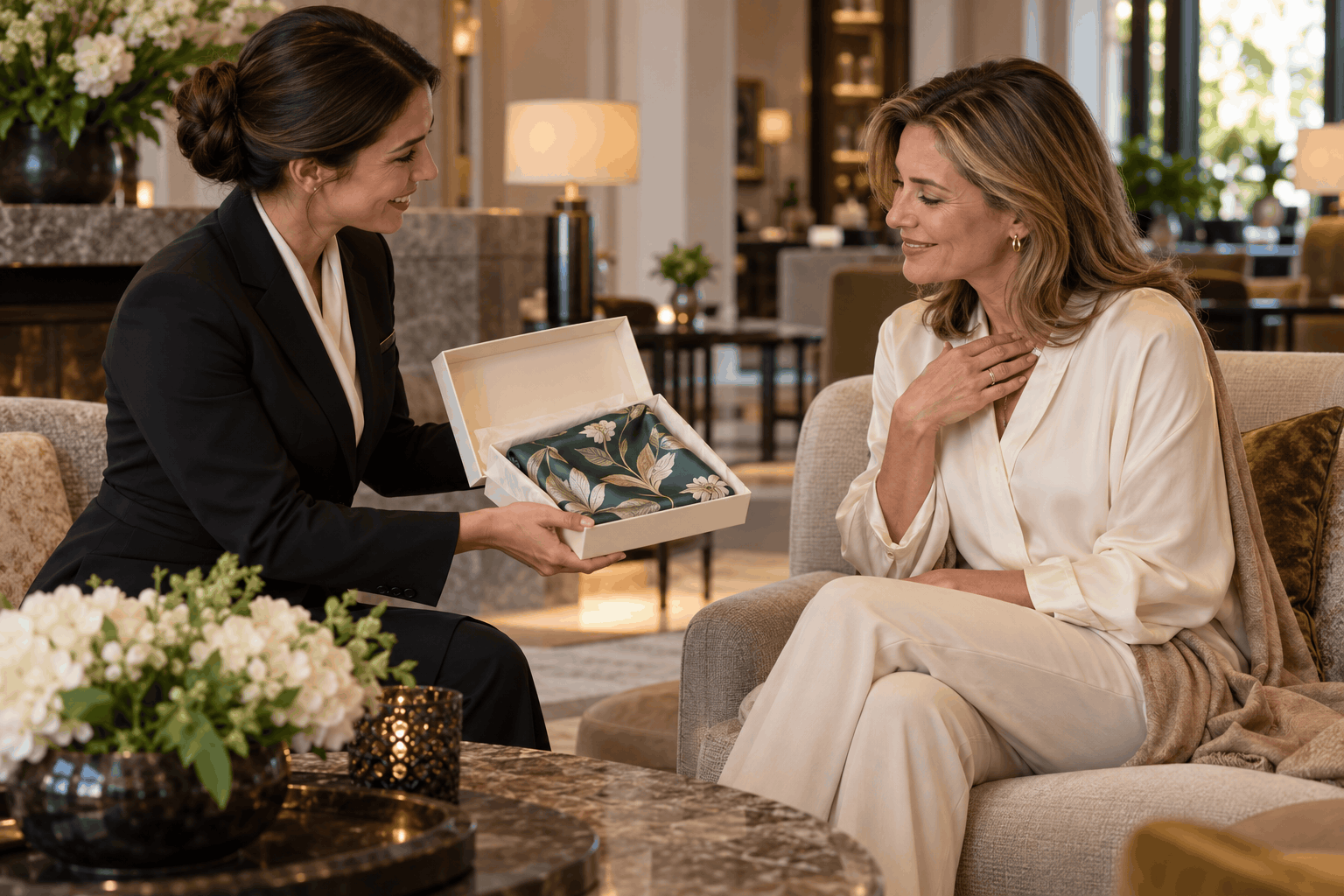
An arrival gift can feel welcoming, but a tired guest may prefer to reach their room quickly. Ask the guest-relations team to choose a moment that fits the stay: a discreet suite presentation, a brief personal handover or a departure thank-you.
Keep the packaging compact enough to travel with. Include the design story and care information, and remove retail price stickers. If the hotel offers delivery to the guest’s home, confirm the arrangements before making the promise.
Avoid turning the handover into a public ceremony unless the guest has welcomed that approach. The gift should not require a photograph, social post or visible display of gratitude.
6. Write a welcome-back message that sounds human
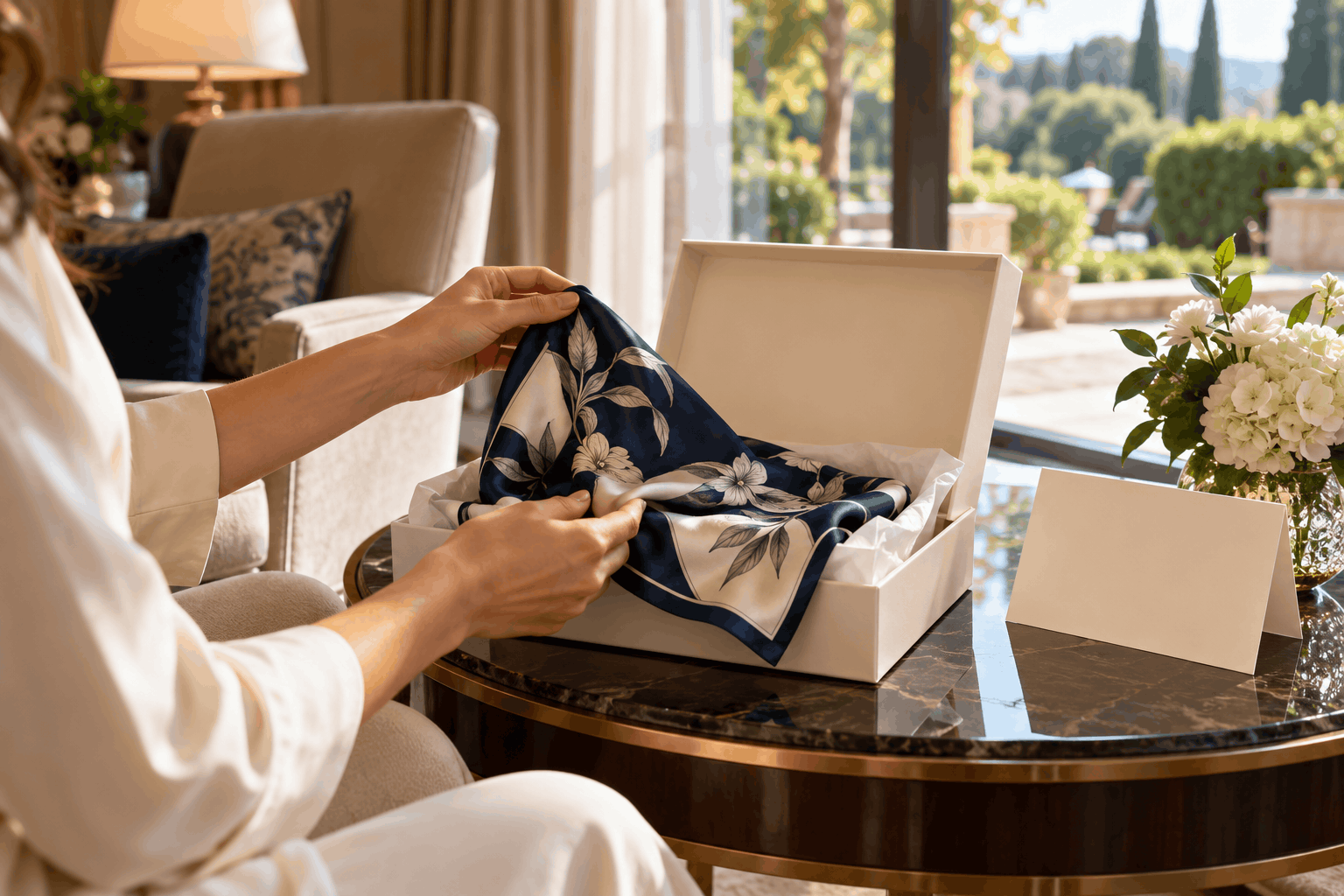
Use the guest’s preferred name and keep the note brief. Mention a genuine connection where appropriate, without reciting their spending history or internal loyalty classification.
For a returning guest
“Welcome back. It is a pleasure to have you with us again. Please accept this small keepsake with our warm wishes for a wonderful stay.”
For someone who enjoys the hotel’s gardens
“We remember how much you enjoyed the gardens on your last visit. This design reminded us of their colours, and we hope it brings back happy memories of your time here.”
For a shared celebration
“Thank you for choosing to celebrate with us again. We are delighted to be part of the occasion and hope you enjoy this keepsake long after your visit.”
Use a garden reference or celebration message only when it is accurate. Check names, spelling and the occasion before the card reaches the room.
7. Prevent duplicate gifts and missed handovers
A guest who has already received the same scarf may appreciate another colour—but the team should make that choice deliberately.
Within the hotel’s approved system, record the gift design, date, whether it was delivered and any preference the guest explicitly shared. Keep gift notes accessible only to the staff who need them through the hotel’s normal procedures.
Assign one coordinator to confirm the guest, gift, message and presentation time. Update the plan if the room or arrival changes, and confirm that the handover actually happened.
Where several properties share a recognition programme, agree how duplicate gifting will be avoided through existing authorised processes. Do not assume every hotel can see another property’s records.
8. Plan stock and budgets for a recurring programme
Forecast from expected eligible arrivals and the proportion likely to receive each gift, rather than ordering for every occupied room. Include a modest reserve suited to the property’s needs and review actual usage.
Keep complimentary gifts separate from boutique inventory. Record transfers if the same design is used in both programmes, so retail sales and guest recognition costs remain clear.
Ask suppliers about repeat availability, minimum quantities, packaging, replacement arrangements and delivery schedules. Include preparation and presentation costs in the budget, not only the scarf price.
Lanting Loom’s Hotels & Hospitality service welcomes enquiries for guest gifts and recurring programmes. Ongoing supply, pricing and timing are agreed for the individual project.

9. Review the gesture without making it transactional
Look at practical outcomes: were gifts delivered correctly, did guests welcome the selection, were alternatives requested and was the programme manageable for staff?
Use voluntary feedback to improve the offer. A polite thank-you does not necessarily mean the guest loved the item, and a future booking cannot automatically be attributed to the gift.
Do not attach a review request or booking condition to a personal thank-you. The gesture should remain a welcome expression of appreciation.
A brief for planning VIP guest loyalty gifts
Before approaching a supplier, bring together:
- The property, guest profile and occasions the programme will recognise.
- Expected quantities and frequency, with gifting separate from retail.
- Preferred scarf formats, colours and alternative gift options.
- Existing designs, adapted presentation or bespoke artwork.
- Per-gift budget, including packaging and delivery.
- Message-card, branding and language requirements.
- Storage needs, delivery destination and required arrival dates.
- Reorder expectations and the person responsible for approvals.
Explore Lanting Loom’s hospitality gifting options to discuss a suitable approach. The aim is a gift that fits the guest and a programme the hotel can deliver consistently.
Frequently asked questions
What makes a good gift for a returning hotel guest?
A suitable gift reflects a known preference, meaningful occasion or connection to the property. A personal note and considerate presentation can matter as much as the object.
Should every VIP guest receive a silk scarf?
No. A scarf suits guests who enjoy that type of accessory. Offer an appropriate alternative or a choice when preferences are unknown.
Should hotels give a more expensive gift on every return visit?
Not necessarily. Set a sustainable recognition approach and vary the gesture according to the guest and occasion. Increasing value automatically can create expectations without improving relevance.
How can a hotel avoid giving the same gift twice?
Record previous gifts through the hotel’s approved process, including the design and delivery date. Review the record before choosing the next gesture.
Do VIP gifts guarantee guest loyalty?
No. Gifts can contribute to the experience, but service, comfort, convenience and the guest’s travel needs also influence whether they return.
