

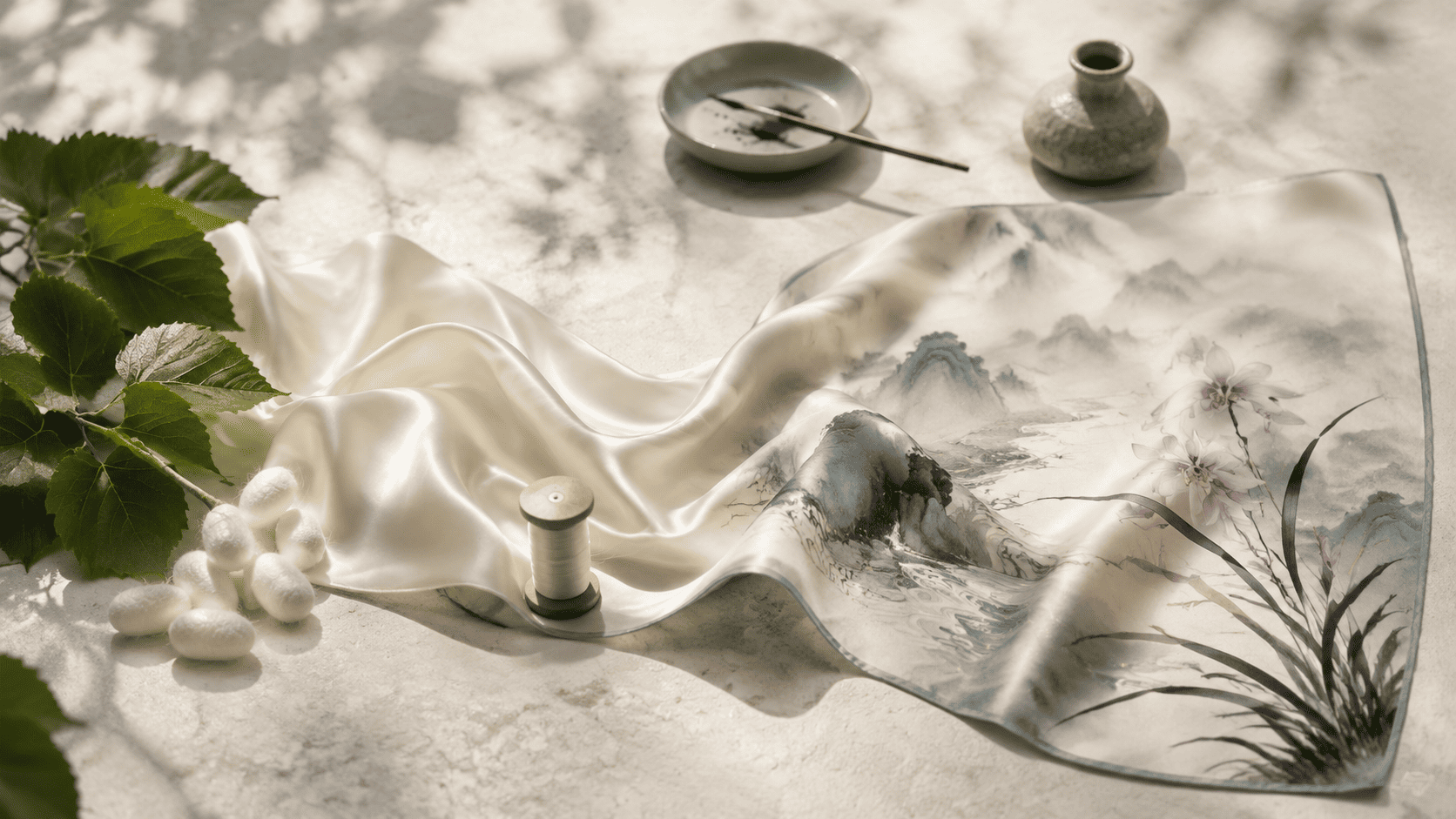
Silk holds an important place in Chinese culture because it has never been only a fabric. For thousands of years, it has connected farming and craftsmanship, family and community life, wealth and social status, diplomacy and long-distance exchange, painting and embroidery, ritual and everyday beauty. Few materials have participated in so many parts of China’s economic, artistic and cultural history.
Its significance also comes from transformation. A silkworm feeds on mulberry leaves and spins a cocoon whose filament can be reeled, twisted, dyed and woven. That journey from something almost weightless to an artistic surface helps explain why silk still carries meaning.
Why was silk so important in China?
| Cultural role | Why it mattered |
|---|---|
| Agriculture and knowledge | Sericulture linked mulberry cultivation, silkworm raising, reeling, spinning and weaving. |
| Skilled labour | Producing fine silk required timing, precision and knowledge passed through generations. |
| Status and ritual | Silk garments, banners and furnishings could communicate rank, authority and ceremonial purpose. |
| Trade and diplomacy | Silk became a valuable export and diplomatic gift within far-reaching networks of exchange. |
| Artistic expression | Its surface carried weaving, embroidery, painting, calligraphy and symbolic motifs. |
| Living culture | Silk remains a material through which designers can interpret heritage for contemporary life. |
1. Silk begins with a relationship between people and nature
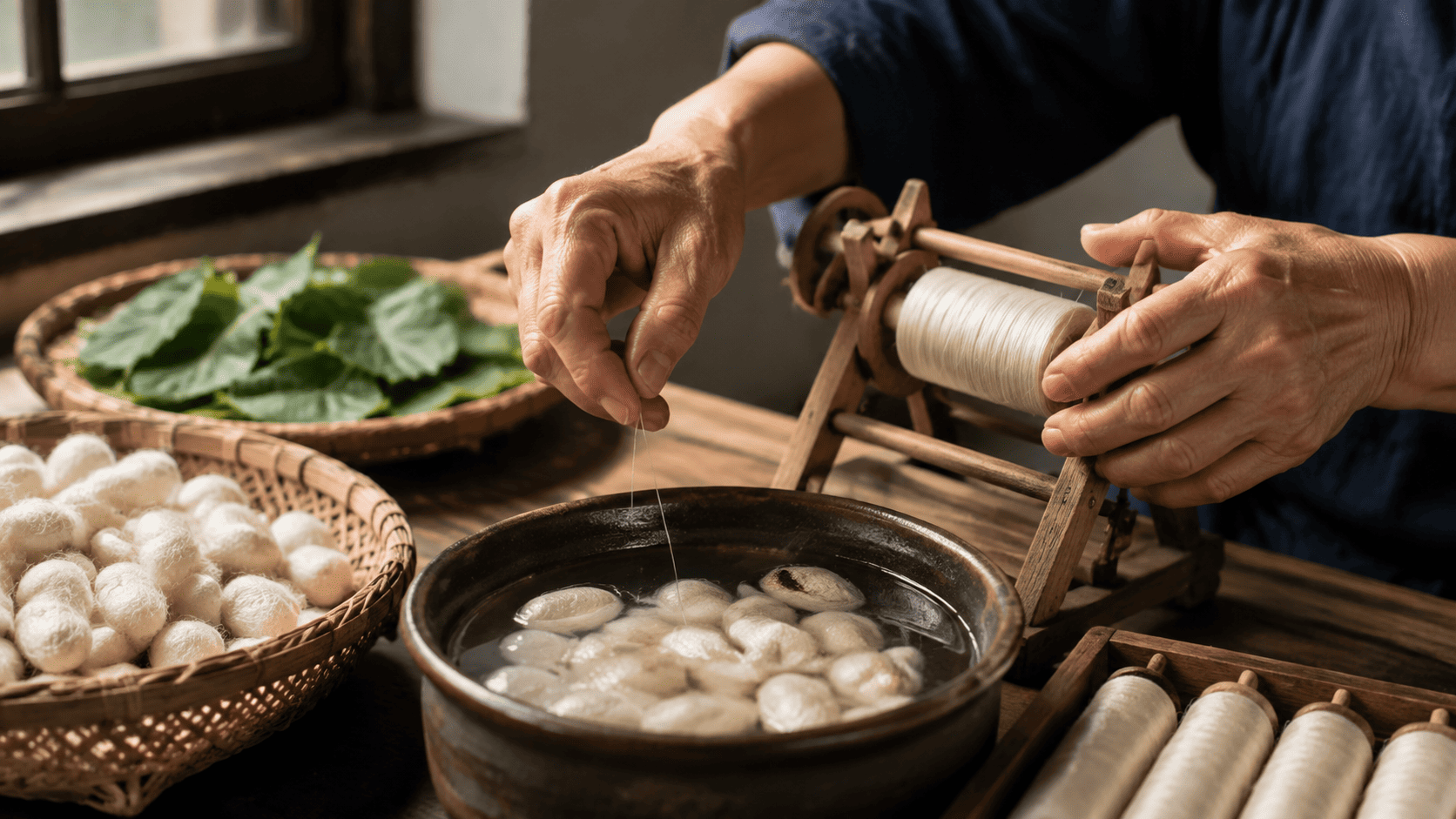
Silk production starts long before a loom. Mulberry trees must be cultivated; silkworm eggs and larvae require careful conditions; cocoons must be gathered at the right moment; and extremely fine filaments must be reeled and combined before weaving becomes possible. The finished fabric therefore concentrates knowledge of seasons, living systems and material behaviour.
Chinese tradition attributes the discovery of sericulture to Leizu, wife of the Yellow Emperor, who is said to have noticed a cocoon’s filament in hot water. It is an enduring legend, not a documented event. Archaeology confirms silk’s great antiquity in China, while its exact beginnings remain a subject of research.
UNESCO’s account of sericulture and silk craftsmanship in China describes a living system that includes planting mulberry, raising silkworms, unreeling silk, making thread, designing and weaving fabric. This makes silk culture a body of knowledge, not merely a collection of valuable finished objects.
2. It represents accumulated skill and time
Silk’s lustre can make it appear effortless, but its production is the opposite. Consistent thread depends on close observation and control. Weaving then introduces another field of expertise, from relatively simple structures to complex patterned cloth, gauze and tapestry weave. Dyeing, painting, printing and embroidery add further decisions and risks.
Historically, much of this work was closely connected with women’s labour in rural households and specialised workshops. UNESCO notes that silk-making traditionally had an important role for women in the economy of producing regions and that knowledge passed through families and apprenticeships. Recognising that labour prevents silk from becoming an abstract symbol of luxury detached from the people who made it possible.
Not every modern silk item is handmade, handwoven or produced through an unbroken heritage process. Those claims require evidence. Cultural respect begins with describing each stage accurately and valuing skilled production without exaggeration.
3. Silk communicated wealth, rank and ceremonial order
Because fine silk demanded knowledge and resources, it became associated with prestige. It appeared in court clothing, furnishings, banners, religious objects, tombs and diplomatic gifts. Colours, structures and motifs could indicate rank or occasion; the fabric was part of a visual system.
A surviving Qing court garment at the Smithsonian’s National Museum of Asian Art demonstrates this clearly. The formal summer robe for a top-rank prince is made from silk gauze with silk and metallic-thread embroidery, while its dragon decoration identifies the wearer’s position within the imperial hierarchy.
Yet silk should not be understood only as an elite court fabric. Quilts, fans, umbrellas, clothing and festival objects also brought it into community and domestic life where circumstances allowed. Its cultural importance lies partly in this range—from state ceremony and burial to household production and personal dress.
4. Silk connected China with a wider world
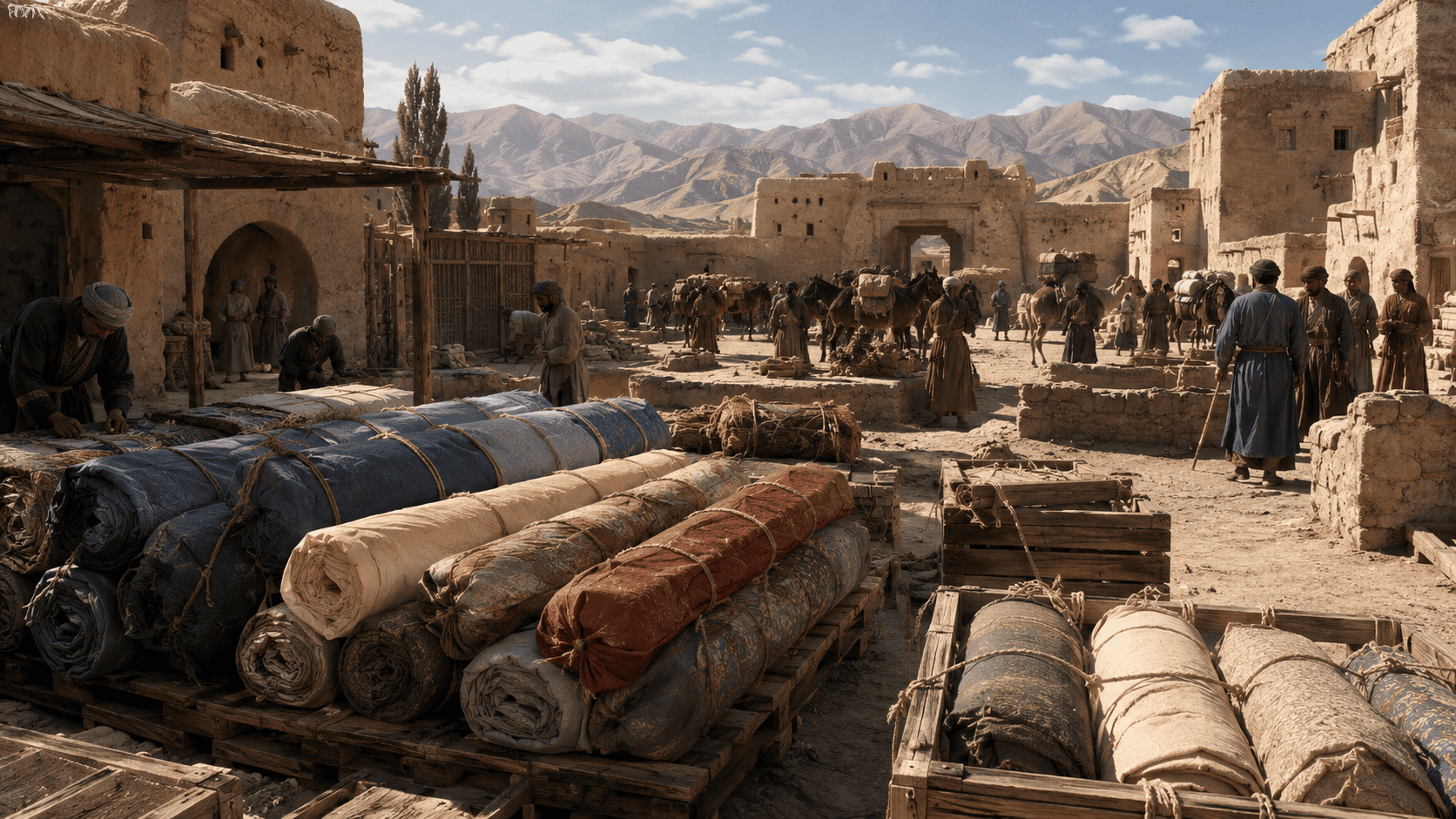
Silk became a recognisable high-value export and helped give the Silk Roads their modern name. These were shifting land and maritime networks—not one road—through which goods, people, technologies, religions and artistic forms moved.
UNESCO’s introduction to the Silk Roads as networks of trade and cultural exchange explains that Chinese silk travelled far beyond the empire and served as both a commodity and diplomatic gift. Individual merchants usually covered particular sections, exchanging cargo through cities and ports rather than completing a single legendary journey from China to Europe.
Exchange worked in more than one direction. Patterns, materials and tastes also entered China, while textile makers adapted designs for new audiences. The Metropolitan Museum of Art notes that Chinese artisans combined established techniques with influences from Europe, India and the Middle East in silks for global textile exchange. Silk’s history is one of cultural encounter, not isolation.
5. Silk became a surface for art and storytelling
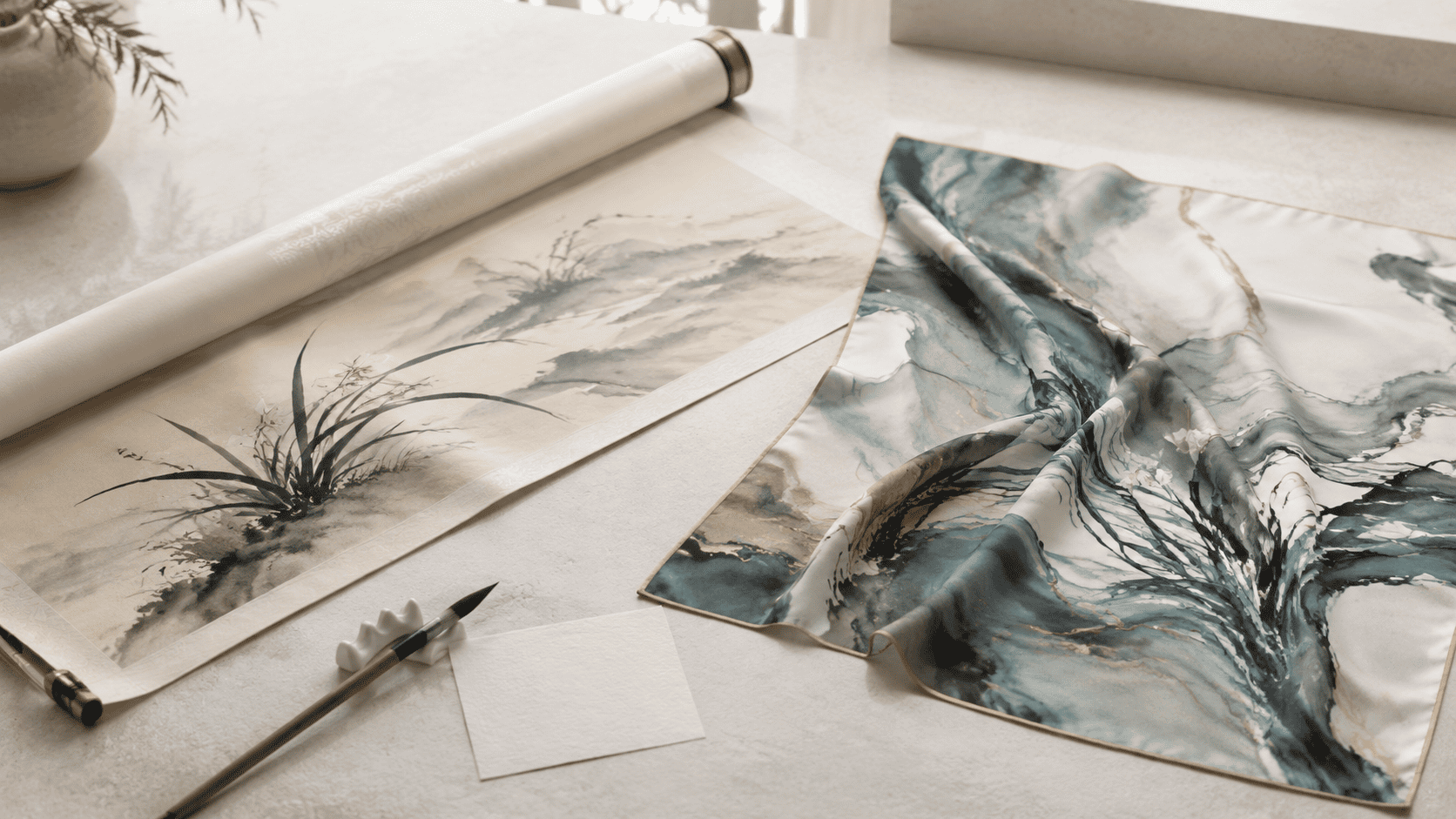
Silk could be woven into patterns, embroidered with coloured or metallic thread, printed, dyed or painted. Its smooth surface and quiet reflectivity allowed line and colour to behave differently from paper or heavier cloth. Courtly scenes, landscapes, flowers, birds, religious images and auspicious symbols could all be carried in silk.
The handscroll is one of the clearest examples of material shaping experience. The Met describes Chinese handscrolls as continuous rolls of paper or silk viewed gradually, with ceremony and anticipation built into the act of unrolling a Chinese painting. The viewer encounters time, movement and sequence rather than seeing the entire work at once.
Silk also carried stories through dress. A robe or furnishing could combine material, colour and motif into a message about identity, values or hopes. Orchid, bamboo, plum blossom, clouds and flowing water did more than fill space; their meanings depended on artistic and social context. To explore how one cultural episode continues to inspire art, read the story behind the Orchid Pavilion.
6. Its physical qualities made meaning wearable
Silk is light, strong for its weight and responsive to movement. Its reflection allows colour to change as fabric folds. A design can appear complete when opened, then reveal new relationships when tied or draped.
Different silk fabrics behave differently because silk names the fibre, not one universal cloth. Twill, satin and habotai use different constructions and therefore vary in lustre, structure and drape. Our guide to silk twill, satin and habotai explains why those distinctions matter when choosing a scarf.
Why silk still matters in Chinese culture today
Silk remains relevant when it is treated as living material rather than a frozen symbol of the past. Contemporary designers can study historical sources, understand what they meant in their own contexts and translate selected ideas into forms made for modern wardrobes. The result should first succeed as beautiful design; cultural depth then gives it distinction and emotional value.
This approach requires transparency. “Inspired by Chinese art” does not automatically mean artisan-made, handwoven or part of an intangible-cultural-heritage practice. Printed, woven, embroidered and hand-finished processes should be identified accurately. At Lanting Loom, our approach to contemporary Chinese silk centres on interpretation rather than historical reproduction.
It also requires care. A silk object can outlast a moment of fashion when it is worn thoughtfully and stored well. Follow the product label first, then consult our silk scarf care guide for general guidance on cleaning, drying, pressing and storage. Explore the square silk scarf collection to see how cultural stories can become wearable compositions.
Frequently asked questions
Was silk invented in China?
The earliest development of sericulture is strongly associated with ancient China, and archaeological evidence confirms a very long history of silk production there. The popular story that Leizu discovered silk is culturally important but legendary; it should not be treated as a verifiable account of one inventor or moment.
Why was silk so valuable?
Silk combined desirable physical qualities with a demanding production process. Cultivating mulberry, raising silkworms, reeling filament, making thread and weaving cloth required time, knowledge and labour. Fine silk was also light and valuable enough to move across long-distance trade networks.
Did the Silk Road carry only silk?
No. The Silk Roads were multiple land and sea routes that carried many goods as well as ideas, beliefs, artistic influences, technologies and languages. Silk was an important and memorable commodity, but it was part of a much larger history of exchange.
Does all Chinese silk use traditional craftsmanship?
No. Contemporary Chinese silk may be machine woven, digitally printed, screen printed, embroidered or finished in different ways. Traditional sericulture and specialised crafts continue, but each product’s actual processes should be stated clearly rather than assumed from its cultural inspiration.