

Choose bespoke corporate gifts when an original design is central to the occasion and you have the budget, time and approval capacity to develop it. Choose off-the-shelf premium gifts when an existing product already suits the recipients and the purpose of the gesture.
There is also a useful middle option: select an existing gift and adapt its presentation with an approved message, sleeve or other packaging detail.
The right choice depends on what the gift needs to achieve. This guide compares the three approaches so you can decide where customization adds value and where a carefully selected product is enough.
What Is the Difference?
Bespoke Corporate Gifts
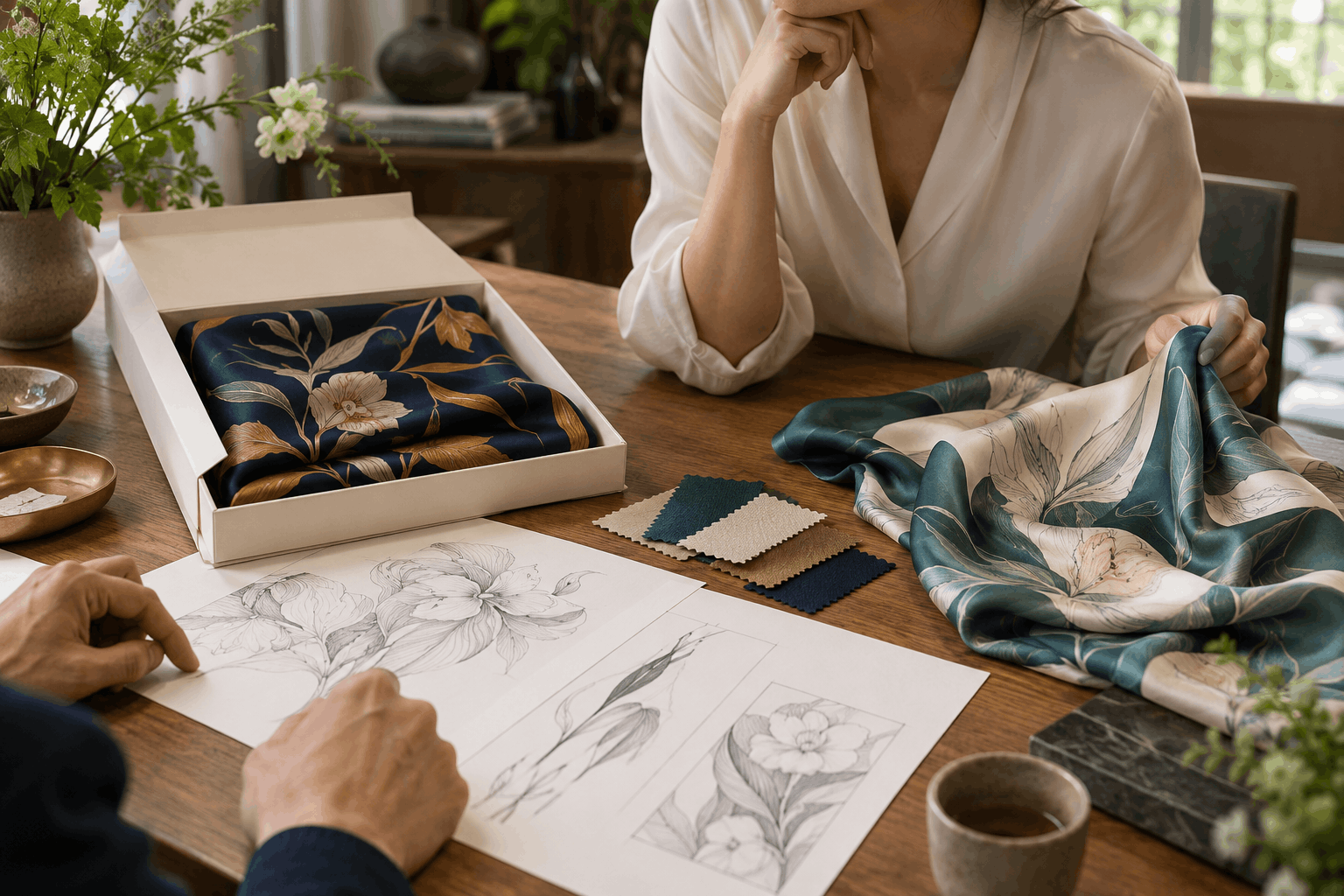
For this comparison, bespoke means developing an original product design around a specific organisation, place, collection or occasion.
For a silk scarf, that might involve researching a source story, creating artwork, selecting colours, reviewing samples and producing the approved design.
Suppliers sometimes use “bespoke,” “custom” and “personalized” differently. Ask exactly what will be developed and what will remain part of an existing specification.
Off-the-Shelf Premium Gifts
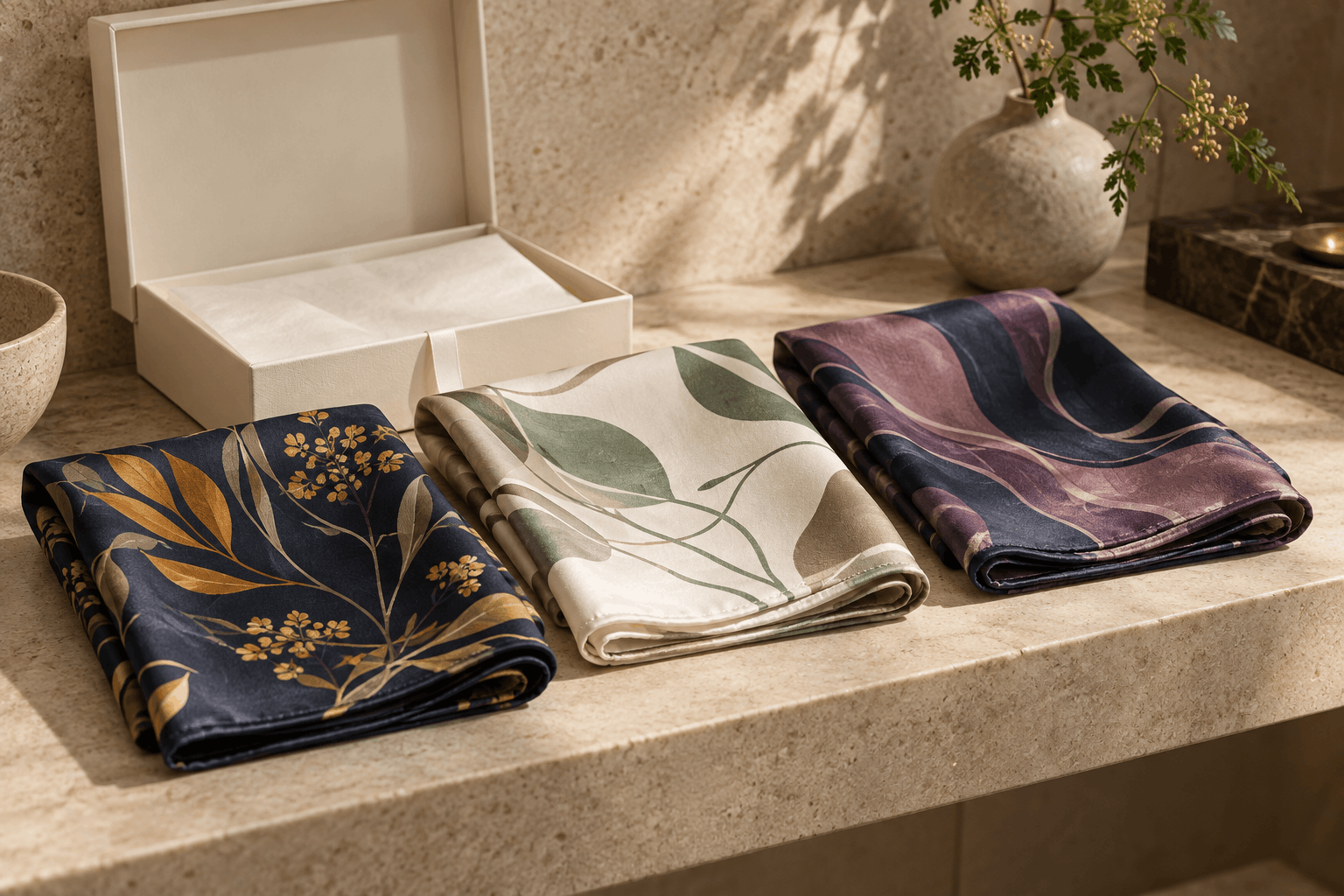
These are existing products selected from an established collection. Their design and specifications have already been developed.
They can still be distinctive, beautifully made and thoughtfully chosen. “Off-the-shelf” describes the buying route, not the quality of the gift.
It also does not necessarily mean immediate availability. Confirm stock in the required quantity, presentation options and delivery timing.
Adapted Presentation
This approach retains an existing product while tailoring selected elements around it, such as a message card or presentation sleeve.
It can establish a clear connection to the organisation without commissioning new product artwork.
Lanting Loom’s corporate gifting page introduces curated gifts, adapted presentation and bespoke scarf projects as three possible ways to work together.
Bespoke vs Off-the-Shelf: A Practical Comparison
| Consideration | Bespoke design | Existing premium product |
|---|---|---|
| Design | Developed around an agreed brief. | Selected from available designs. |
| Connection to the occasion | Can be built into the product itself. | Comes through selection, message and presentation. |
| Development work | May include research, artwork, revisions and custom samples. | Focuses on selection, product review and order details. |
| Timing | Must accommodate development, approvals and production. | Depends on stock, quantity, preparation and delivery. |
| Costs | May include one-off development and setup charges. | Usually avoids commissioning new product artwork. |
| Quantity | Production minimums may apply by design or variant. | Order minimums and stock limits may still apply. |
| Exclusivity | Must be defined and agreed. | The same product may be available to other buyers. |
| Best starting point | A clear story that needs an original expression. | A product that already fits the recipient and occasion. |
When Bespoke Corporate Gifts Make Sense
The Organisation Has a Specific Story to Tell
Bespoke development is worth considering when the gift needs to express something an existing collection cannot adequately represent.
Examples include a museum collection, a distinctive hotel garden, a university archive or an architectural feature associated with an important place.
The source should lead to a desirable product. A scarf still needs to work when folded and worn, even if the artwork carries a detailed institutional story.
The Product Will Have a Role Beyond One Event
An original design may serve several related purposes: a milestone gift, a visitor collection or an ongoing partner appreciation programme.
That potential can make development more useful, provided the intended uses and quantities are realistic. Do not justify a large order solely on an untested assumption that the product will sell later.
For place-inspired projects, our guide to destination gifts explains how to translate a specific source into a keepsake.
Your Team Can Support the Approval Process
Bespoke projects require decisions. Someone needs to approve the creative direction, consolidate comments, review the relevant sample and confirm production details.
If several departments are involved, agree who has final authority before commissioning work.
Lanting Loom’s bespoke silk scarf projects provide a starting point for discussing original designs and their development requirements.

When Off-the-Shelf Premium Gifts Are the Better Fit
An Existing Design Already Suits the Recipient
If you have found a beautiful product that reflects the recipient’s interests, commissioning something new may add little to the experience.
A scarf selected for its colours or cultural inspiration can feel personal when accompanied by a specific explanation of why it was chosen.
You Need to Make Fewer Design Decisions
An established product lets you review a finished design and concentrate on suitability, quantities, presentation and delivery.
This can help when the project team has limited capacity for artwork development. You should still inspect product information and, where appropriate, a physical sample.
The Quantity Is Small or Still Uncertain
For a small group, existing products may offer a practical route without spreading new design costs across a limited number of gifts.
However, confirm availability before assuming you can increase the order later. A retail listing does not establish that a supplier has enough units for a corporate programme.
Recipients Would Benefit from Different Choices
An existing collection may allow you to select several designs for different preferences, subject to stock and ordering terms.
This can be more useful than creating one original design that does not suit everyone.
Explore Lanting Loom’s luxury corporate gifting options for an introduction to curated silk gifts.
The Middle Option: Existing Gifts with Adapted Presentation
Many projects need a clear organisational connection rather than an entirely new product.
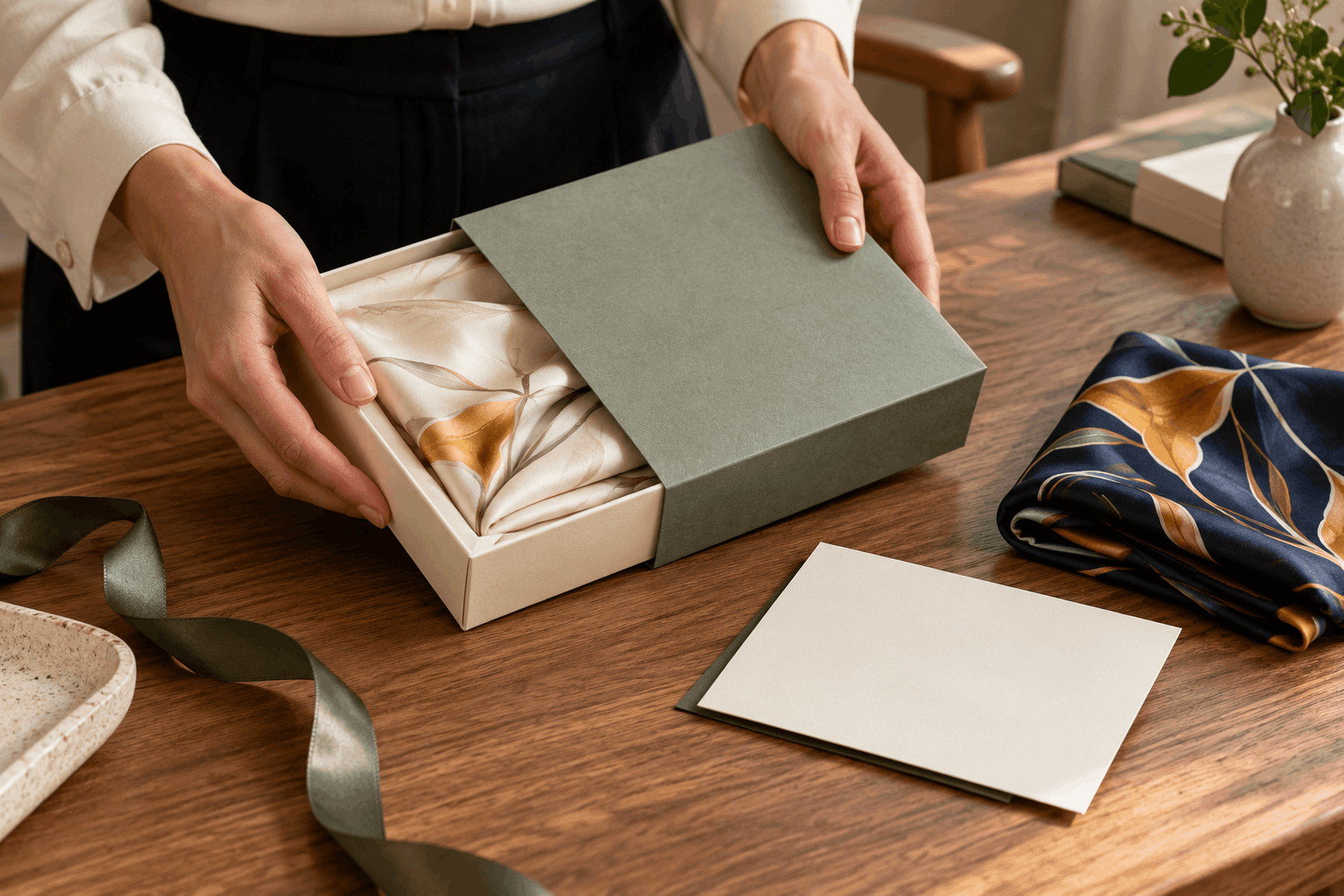
An existing scarf can be presented with an approved sleeve, a welcome message or a card acknowledging the occasion. Depending on feasibility, other presentation details may also be adapted.
This can suit:
- Conference speaker gifts.
- Client appreciation programmes.
- Company anniversaries.
- Hotel openings and guest welcomes.
- Visiting delegations.
Adapted presentation still involves work. Confirm minimum quantities, artwork requirements, proofs, assembly and timing. Custom boxes or individually printed messages can add complexity even when the main product is unchanged.
Describe the result accurately. An existing scarf selected for an event should not be presented as a design created exclusively for that event.
Compare the Complete Cost
Compare proposals on the same specification and delivery basis. A unit product price alone does not show the complete project cost.
Request separate figures for:
- Products and included accessories.
- Design, artwork adaptation and setup.
- Samples and revisions.
- Packaging, cards and personalization.
- Assembly and sorting.
- Freight and applicable destination costs.
One-off development costs have a larger per-gift effect on smaller orders. For illustration, a fictional £1,500 development charge adds £30 per gift across 50 units, or £5 across 300 units, before other costs. These figures explain the arithmetic; they are not a supplier quotation.
Ordering more reduces that cost allocation per unit but increases the overall commitment. Surplus stock is not a saving if it has no realistic use.
For international orders, agree who is responsible for delivery-related tasks and charges. The International Chamber of Commerce’s Incoterms rules provide a framework for allocating tasks, costs and risks between sellers and buyers. Where a rule is used, confirm how it applies to the quoted destination.
Compare the Full Schedule
Bespoke projects add development stages, but there is no universal lead time for either route.
Ask the supplier to distinguish:
- Product selection or design development.
- Artwork and sample approval.
- Production or stock preparation.
- Packaging and assembly.
- Shipping and receipt.
Also ask what starts the quoted production period. It may depend on final approval, an agreed payment or completion of other order requirements.
An existing product with complex packaging can take longer to prepare than expected. A bespoke project can also be delayed by unresolved artwork or slow internal feedback.
Work from the required arrival date and allow time for inspection and distribution. The date gifts leave the supplier is not the same as the date they are ready for your event.
Quality Depends on the Specification
Bespoke does not automatically mean better quality, and an existing product is not automatically less distinctive.
For a scarf, compare the actual fibre composition, fabric, dimensions, design execution, edge finish and care information.
Review the product as the recipient will use it. A striking flat artwork can lose its balance when tied. An attractive presentation box can conceal a product that does not feel right.
For bespoke work, clarify what the sample demonstrates and which details represent the intended production standard. For existing products, confirm that the sample matches the specification being quoted.
Clarify Exclusivity and Reorders
If exclusivity matters, specify what you mean and ask for the arrangement to be documented.
Questions worth resolving include:
- Can the same design be offered to other customers?
- Does any exclusivity apply to a territory, sales channel or period?
- Who can use the artwork and for which purposes?
- What permissions are needed for source images or logos?
- What quantities and charges apply to reorders?
Do not assume that commissioning a design automatically settles ownership or usage rights.
Likewise, an existing collection may change over time. If repeat availability is important, discuss it before building a long-term gifting programme around one product.
Three Example Decisions
These fictional examples illustrate how the purpose can guide the buying route.
A Small Group of Visiting Speakers
The organiser wants to thank speakers with a wearable gift and a personal note. An existing collection already offers suitable designs.
Likely direction: curated premium gifts, with an individual thank-you message. Confirm preferences, stock and delivery before ordering.
A Landmark Hotel’s Signature Collection
The hotel wants a design inspired by its gardens for guest gifting and potential retail use. The property story is central to the product.
Likely direction: explore bespoke development, supported by a clear design brief and a realistic quantity plan. Our hotel and hospitality gifting page introduces relevant possibilities.
A Company Anniversary Dinner
The company wants a coherent presentation and a message marking the milestone, but does not need original product artwork.
Likely direction: an existing premium product with adapted presentation. See our company anniversary gifting options.
A Simple Way to Make the Decision
Start with these questions in order:
- Does an existing product already suit the recipients? If yes, assess that route first.
- Can the occasion be expressed through a message or presentation? If yes, request an adapted-presentation option.
- Does the story need to become part of the product itself? If yes, explore bespoke design.
- Can the budget, quantity and schedule support development? Confirm feasibility before committing.
- Who will approve the work? Make sure the internal process can support the proposed route.
If the answer remains unclear, ask the supplier to quote one curated option and one bespoke option against the same audience, quantity and delivery requirement.
Our corporate gifting brief guide includes a template for preparing that enquiry.
Frequently Asked Questions
Are bespoke corporate gifts worth the extra development?
They can be when an original design is important to the occasion or an ongoing programme. If an existing product already achieves the goal, the additional development may not be necessary.
Can an off-the-shelf gift still feel personal?
Yes. Thoughtful selection, an accurate explanation of the choice and a specific personal message can make an existing product feel meaningful.
Is a logo on a box the same as a bespoke product?
No. It is an adaptation to the presentation. Ask suppliers to define their terminology so you understand what is being customized.
Which option is faster?
An available existing product avoids new product-design stages, but stock, packaging and delivery still determine timing. Request a confirmed project schedule rather than relying on the category alone.
Which option is better for smaller quantities?
Existing premium products are often a practical starting point because they avoid commissioning new artwork. Confirm order minimums and stock, and compare the complete cost before deciding.
Does bespoke mean exclusive?
Not automatically. Agree any exclusivity and artwork-use arrangements explicitly before development proceeds.
Choose the Route That Serves the Gift
The strongest choice is the one that produces an appropriate, desirable gift within a workable project plan.
Lanting Loom welcomes enquiries for curated silk gifts, adapted presentation and bespoke scarf projects. Quantities, pricing, samples and timing depend on the scope.
Visit our corporate gifting enquiry page and share your recipients, occasion, quantity, budget and required arrival date. These details help establish whether selection, presentation or original design should lead the project.
