

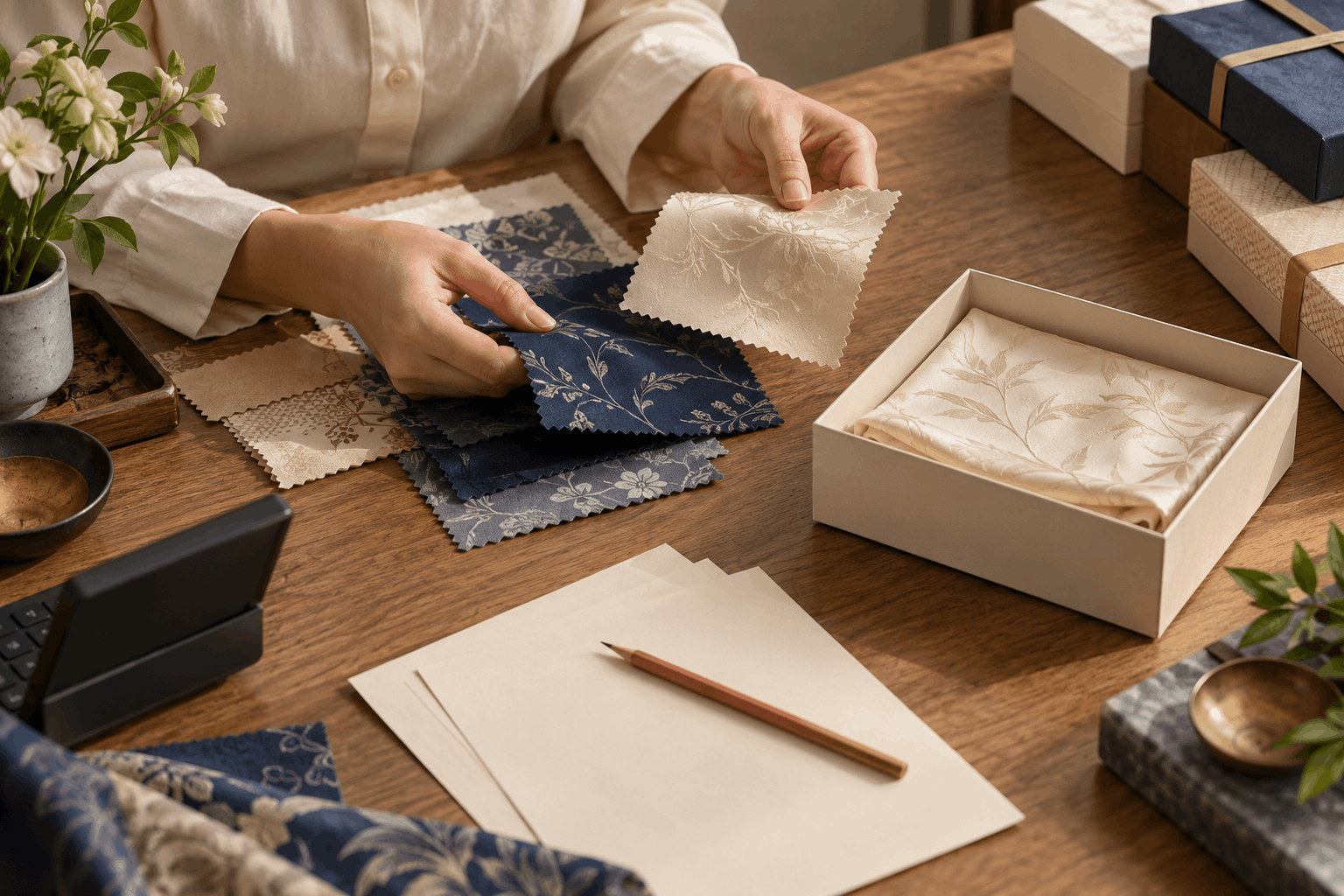
Choosing corporate gifts at different budget levels starts with deciding what the money needs to cover. The product, presentation, personalization and delivery all draw from the same project budget unless you allocate them separately.
At a smaller budget, prioritise one useful, well-chosen item. With more room to spend, consider stronger design, better materials, a coherent gift set or a meaningful connection to the occasion. A larger budget can support original development, but only when the quantity, schedule and purpose justify it.
This guide explains how to set corporate gift budgets, what to prioritise at different levels and how to compare proposals without confusing a product price with the complete cost.

Start with the Recipient and Occasion
Before setting a spending tier, define why you are giving the gift and who will receive it.
A conference welcome, a client anniversary and a retirement celebration have different purposes. Their budgets should reflect the occasion and the organisation’s policies, rather than simply the recipient’s seniority.
Ask:
- What contribution, relationship or occasion are we acknowledging?
- What would the recipient use or enjoy?
- Are there gift acceptance limits or restrictions?
- Will the gift be handed over or shipped?
- How many recipients need to be included?
A recipient’s acceptance policy can rule out an expensive gift even when your budget permits it. Confirm relevant requirements before selecting products.
For initial ideas, Lanting Loom’s corporate gifting options introduce curated silk gifts, adapted presentation and bespoke projects.
Define What Your Budget Includes
“We have $100 per person” is incomplete unless everyone understands what that amount covers.
Separate the following:
- Product: the principal gift and any included accessories.
- Presentation: boxes, sleeves, message cards and protective packaging.
- Development: artwork, samples and setup charges.
- Preparation: assembly, personalization and recipient sorting.
- Delivery: freight, individual shipments and applicable import costs.
- Taxes and contingency: amounts required under the project’s accounting basis and an allowance for changes.
State the currency and whether tax is included. Ask suppliers to identify exclusions so quotations can be compared fairly.
For international orders, clarify delivery responsibilities. The International Chamber of Commerce’s Incoterms rules provide a framework for allocating delivery-related tasks, costs and risks between buyers and sellers. Where a rule is used, confirm how it applies to the quoted destination.
Illustrative Corporate Gift Budget Levels
The bands below are planning examples in US dollars per recipient. They represent the intended complete allocation per person, including a share of project costs. They are not market averages, recommended gift-policy limits or Lanting Loom prices.
The amount available for the product will be lower after other costs are accounted for. The same gift may fall into a different band depending on quantity, customization and delivery arrangements.
| Illustrative allocation | Main priority | Approach to explore |
|---|---|---|
| Up to $50 | Usefulness and a clear message. | One available item with simple presentation. |
| Over $50–$100 | A stronger principal product. | A focused selection with restrained personalization. |
| Over $100–$200 | Design, materials and recipient fit. | An existing premium product with considered presentation. |
| Over $200–$350 | A more complete or distinctive gift. | A premium single piece or a coherent gift set. |
| Over $350 | Specific relevance and project value. | A significant gift or an assessment of bespoke development. |
Up to $50: Keep the Gift Focused
When the allocation is modest, avoid spreading it across several items that contribute little to the experience.
Explore an available notebook, a compact useful accessory, a selected book or another straightforward product that suits the audience. Actual options depend on supplier pricing and the remaining product allowance.
Prioritise:
- A practical use or a clear connection to the recipient.
- Reliable construction and accurate product information.
- Simple, protective presentation.
- A specific thank-you message.
- A manageable delivery arrangement.
This may not be a workable allocation for a premium silk scarf once presentation and international delivery are included. If the desired product does not fit, choose a different format rather than weakening the specification or implying a material quality the product does not have.
For a tight budget, a sincere message and one appropriate item can be enough.
Over $50–$100: Improve the Main Item First
Use additional room in the budget to improve the part the recipient will actually keep.
That might mean better construction, a more distinctive design or a product better suited to the person. It does not necessarily mean adding a larger box or several accessories.
Consider existing products and standard presentation before commissioning artwork or custom packaging. If a small accessory is proposed, confirm its dimensions and materials rather than judging it from a photograph.
Ask suppliers for a clear comparison: what changes if you spend more on the product, and what changes if you spend more on presentation?
For professional gifting, a discreet message card or sleeve may provide the organisational connection you need.
Over $100–$200: Assess Design and Material Quality
This allocation provides more room to investigate premium products, although the viable choices still depend on the complete cost.
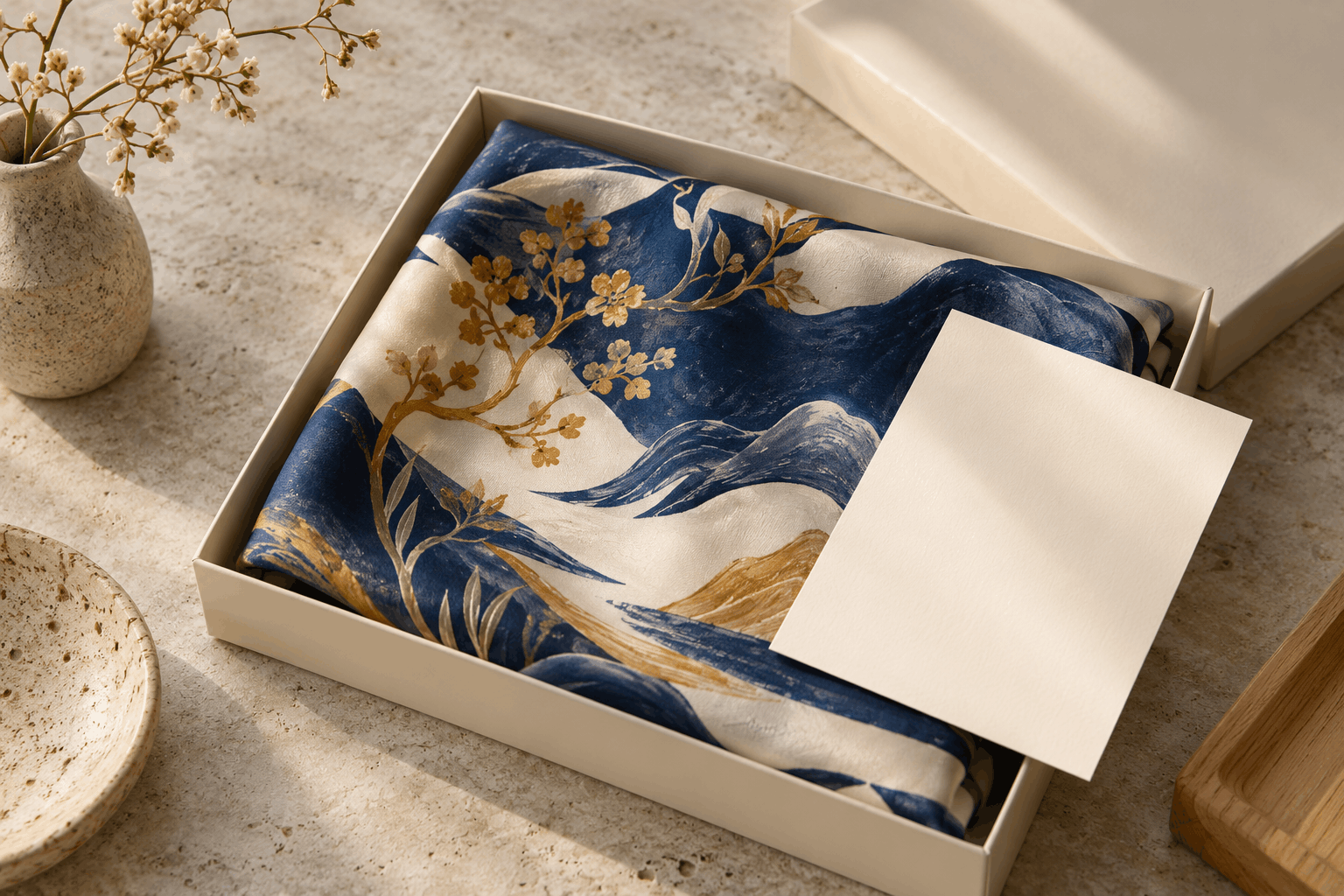
If a silk scarf is under consideration, ask for the actual specification:
- Fibre composition and fabric type.
- Dimensions.
- Print or woven design details.
- Edge finish.
- Care information.
- Included presentation.
Review how the scarf looks when worn, not only when displayed flat. A more expensive item is not automatically a better match for the recipient’s taste.
Where feasible, an existing design with a personal message can concentrate the budget on the gift itself. Lanting Loom’s luxury corporate gifting page offers a starting point for discussing suitable designs and project pricing.
Confirm the quotation before assuming that a particular scarf or gift format fits this band.
Over $200–$350: Choose Between a Better Piece and a Better Set
At a higher allocation, the useful question is whether the recipient would value one distinctive piece or several complementary elements.
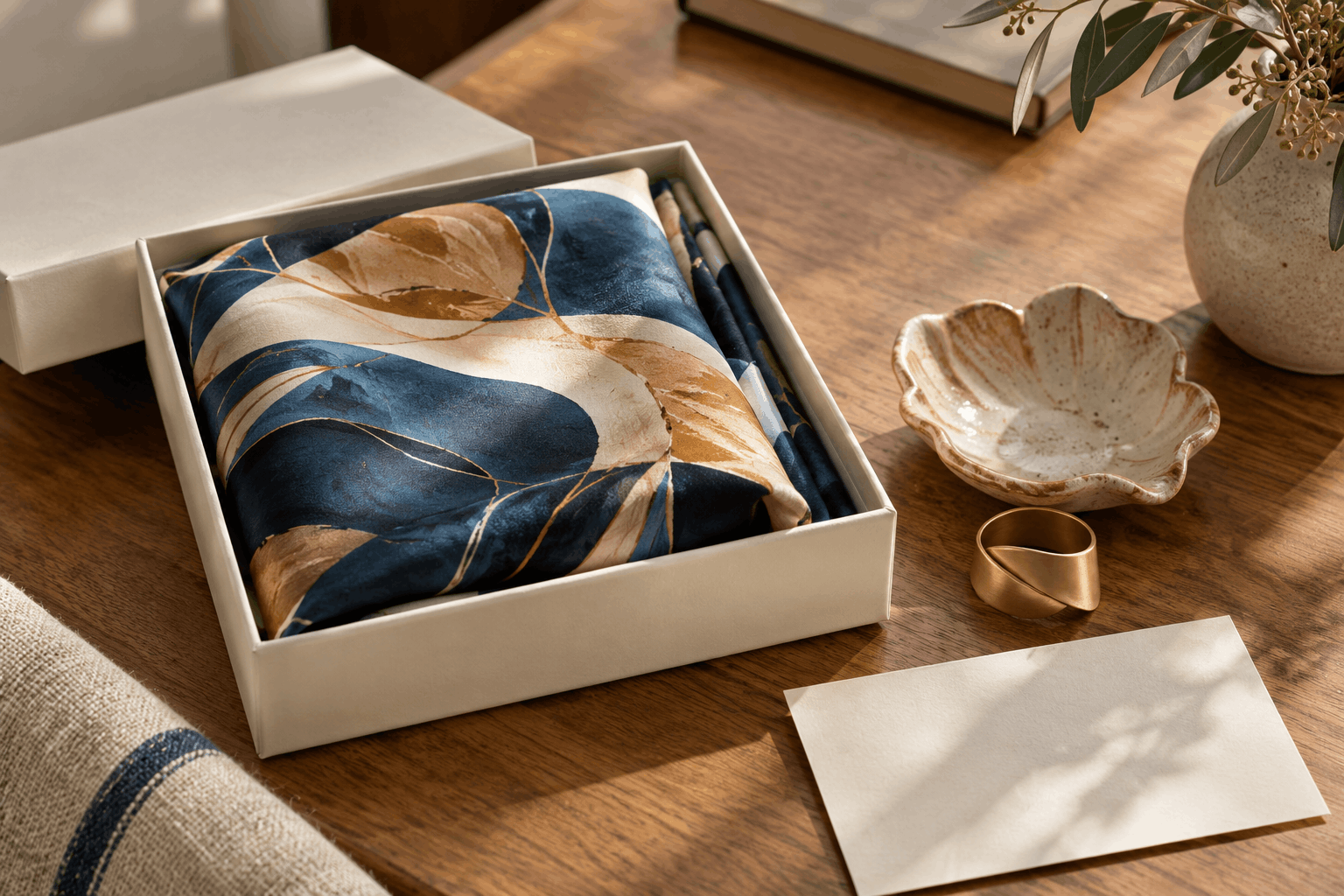
A gift set can work when the contents belong together. Possible directions include a scarf with a compatible scarf ring, or a scarf paired with a small ceramic item for someone whose interests suit that combination.
These are selection ideas rather than guaranteed packages at a stated price. Check the available components and full delivered cost.
Before adding an item, ask:
- Does it improve how the main gift is used or enjoyed?
- Does it suit the recipient?
- Does it introduce extra fragility or packing requirements?
- Would the money be better spent on the principal product?
A single well-chosen piece remains a strong option. More contents do not automatically create more value.
Over $350: Require a Clear Reason for the Additional Spend
A larger allocation can support a significant gift, more involved presentation or an exploration of original design. It should still have a clear purpose.
Possible reasons include a major institutional milestone, a carefully selected collector piece or a design intended for an ongoing programme.
For bespoke work, the total project budget matters as much as the amount per recipient. Ten gifts at $400 create a very different development budget from 300 gifts at the same allocation.
Do not assume a high per-gift budget guarantees that an original commission is feasible. Artwork, sampling, production minimums and approvals must all be assessed.
Explore Lanting Loom’s bespoke silk scarf projects when the organisation’s story needs to become part of the product itself.
For other occasions, an existing premium product may still be the best choice. Our comparison of bespoke and off-the-shelf corporate gifts explains when each route makes sense.
How to Calculate the Product Allowance
Begin with the approved total and subtract costs that will not be spent on the product. Then divide the remainder by the number of gifts you actually need to purchase.
Product allowance per gift = (total budget − other planned costs) ÷ total units ordered.
The following fictional example shows the method. All figures use one consistent project accounting basis and are illustrative, not a supplier quotation.
| Budget item | Illustrative amount |
|---|---|
| Total approved budget | $15,000 |
| Presentation and message cards | $1,200 |
| Delivery and estimated destination charges | $1,000 |
| Samples and setup | $300 |
| Contingency reserve | $500 |
| Remaining product budget | $12,000 |
For 100 gifts, the remaining product allowance is $120 each. If you order 105 gifts to include five spare units, it becomes approximately $114.29 each, assuming the other costs stay the same.
In practice, adding units may also change packaging and delivery costs, so update the quotation rather than relying only on the calculation.
If a product price already includes a box or card, avoid counting those costs twice. Confirm any applicable taxes not yet accounted for before approving the order.
Where to Spend More—and Where to Simplify
Protect Product Quality and Recipient Fit
Prioritise the features that affect use: materials, construction, comfort, finish and suitability. A beautifully printed scarf that does not suit the recipient is still a poor choice.
Simplify Packaging Before Adding Bulk
Choose packaging that protects the contents and opens neatly. An oversized box can increase cost and make the gift harder to carry without improving the product.
Use a Message Before Commissioning Artwork
If the purpose is to thank someone for a contribution, a specific message may establish the connection more effectively than a custom design.
Reduce Unnecessary Variations
Multiple colours, packaging formats and message versions can create extra setup and sorting work. Keep variations that serve recipients and remove those that add complexity without a clear benefit.
Plan Delivery Early
One business-address delivery and many individual international shipments are different projects. Confirm the distribution model before deciding how much is available for the gift.
Should Different Recipients Have Different Budgets?
Different occasions may justify different allocations, but the criteria should be clear and consistent.
A conference welcome gift and a long-service award serve different purposes. Within a comparable recognition programme, use consistent standards and provide alternatives of similar value where preferences differ.
Avoid organising gifts solely as a public hierarchy of importance. If several gift formats are used at the same event, plan distribution discreetly.
For professional milestones, Lanting Loom’s company anniversary gifting page offers relevant project directions.
Ask Suppliers for Options You Can Compare
A useful request might be: “Please propose three options within complete allocations of $100, $175 and $275 per recipient for the same audience, quantity and delivery plan.”
Ask each proposal to show:
- The product specification and included contents.
- The quantity and any minimum-order requirements.
- What presentation is included.
- One-off charges.
- Delivery assumptions and exclusions.
- The required approvals and schedule.
These figures are example briefing amounts, not recommended spending levels. The value of the exercise is seeing what the additional spend changes.
Use our corporate gifting brief template to organise the audience, budget and practical requirements.
Common Budgeting Mistakes
- Spending the full allowance on the product: leaving no room for presentation or delivery.
- Assuming quantity discounts: before checking the actual quotation and stock position.
- Adding items to make the box look fuller: without considering whether recipients want them.
- Ordering surplus stock for a lower unit price: without a realistic use for the extra gifts.
- Comparing unlike quotes: such as a product-only price against a fully assembled, delivered gift.
- Ignoring approval time: then relying on expensive last-minute changes or shipping.
A good budget protects the whole experience, from selection to receipt.
Frequently Asked Questions
How much should a company spend on corporate gifts?
There is no universal amount. Set the budget around the occasion, recipient suitability, applicable gift policies, quantity and complete delivery cost.
Can a lower-budget gift still feel premium?
A focused gift can feel considered through good design, reliable quality, simple presentation and a personal message. Avoid making premium material claims that the specification does not support.
Should packaging be included in the gift budget?
Yes, unless it has a separate approved allocation. Confirm whether the supplier’s product price already includes presentation so it is not counted twice.
Are gift sets better value than a single item?
Only when the additional items suit the recipient and justify their cost. One well-chosen product can be more useful than a larger assortment.
Does a larger order always reduce the total cost?
No. It may reduce the unit price or spread setup charges, but purchasing more units usually increases the total commitment. Compare the full cost and the need for the additional stock.
When should a company consider bespoke gifts?
When an original design serves a clear purpose and the total budget, quantity and schedule can support development. A personal message or adapted presentation may be sufficient for other projects.
Choose the Best Gift Within the Complete Budget
The strongest corporate gift budget supports an appropriate product, considered presentation and a dependable delivery plan. Additional spending should improve something the recipient will value.
Lanting Loom welcomes enquiries for curated silk scarves, gift sets, adapted presentation and bespoke projects. Product options, quantities, pricing and timing are confirmed according to the brief.
Visit our corporate gifting enquiry page
