

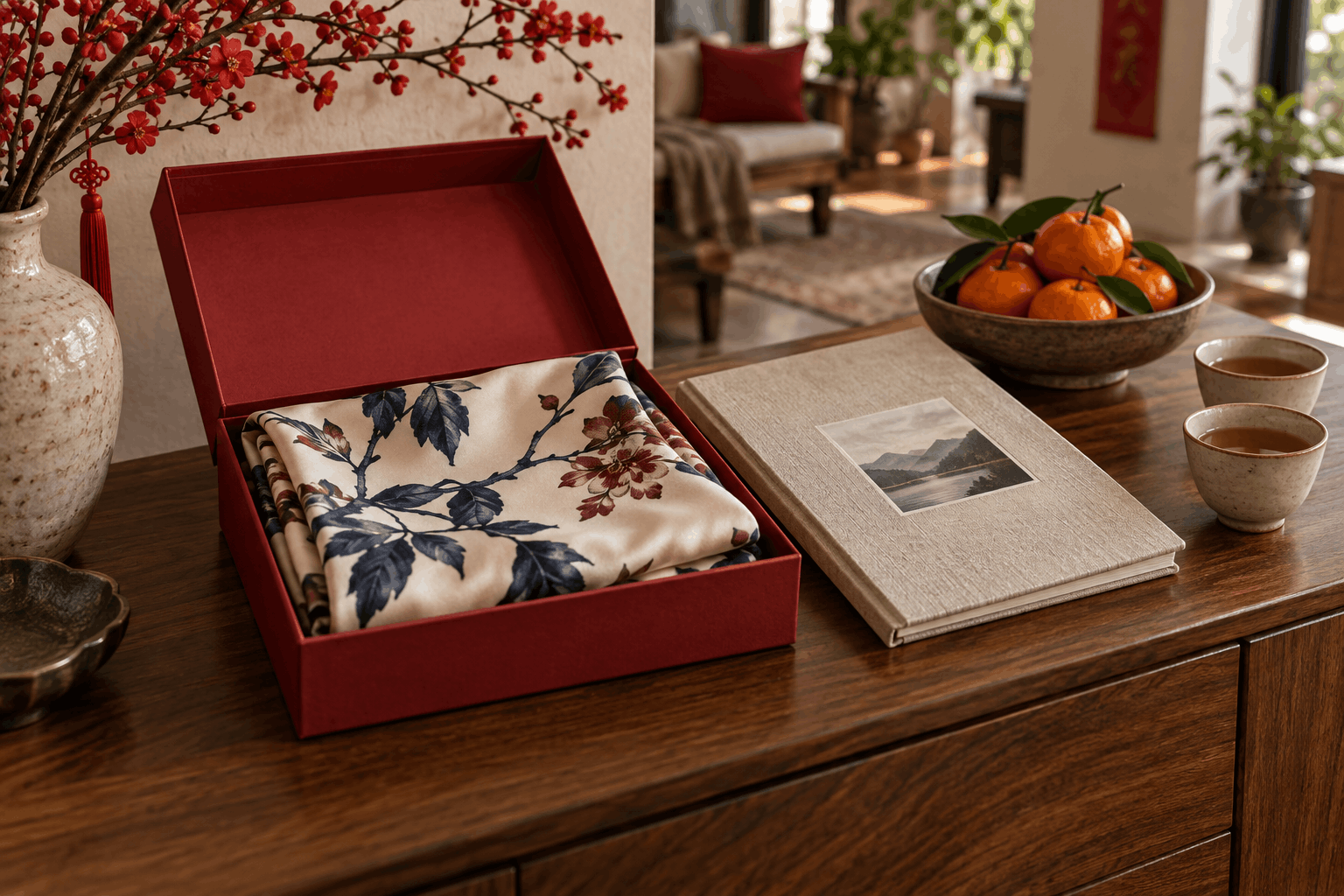
Choosing a New Year gift for a parent, grandparent or older relative is an opportunity to show that you notice what brings them pleasure. Perhaps it is a particular tea, a beautiful accessory, a favorite subject to read about or simply an afternoon with the family.
The most thoughtful Chinese New Year gifts for parents and elders combine that personal attention with good wishes for the year ahead. They fit the recipient’s taste, feel comfortable to receive and acknowledge the relationship you share.
Respect begins with seeing the person clearly. Age alone does not tell you whether someone prefers traditional designs, contemporary art, practical objects or experiences. Start with their preferences, then use cultural meaning and presentation to complete the gesture.
Before shopping, ask what would make the visit meaningful
Consider the household you are visiting and how your family usually exchanges gifts. Are you choosing something for both parents, a personal present for one relative or a contribution to a larger family gathering? Each calls for a slightly different approach.
For your own parents, recent conversations may provide clues. For parents-in-law or elders you know less well, ask someone close to them about their tastes and expectations. A little preparation can help you avoid giving something they already have or would find awkward to use.
Think about the visit itself as well. A carefully chosen gift feels warmer when there is time to talk, listen and share the celebration. If you cannot be there, arrange a call at a time that suits them and include a personal note with the delivery.
Our modern guide to Chinese gifts offers a broader starting point for choosing by occasion and cultural inspiration.
Gift ideas at a glance
| Their interest or preference | A thoughtful direction | What to check |
|---|---|---|
| Clothes, color and accessories | A silk scarf selected for their wardrobe | Preferred palette, size, drape and care |
| A daily tea ritual | A favorite tea or a small, familiar selection | Taste, preparation method and whether they want more teaware |
| Family memories | A photo album, framed photograph or personal letter | Which memories they would enjoy revisiting |
| Art, reading or cultural interests | A focused book or a small artwork | Subject, language, space and existing collection |
| Time with family | A meal or an outing planned together | Their schedule, preferred setting and practical arrangements |
| A shared household gift | A small food selection or coordinated gift set | Whether every recipient will enjoy the contents |
These are choices to adapt, not age-based rules. Someone in their seventies may love a bold scarf or an unfamiliar exhibition; someone much younger may prefer a traditional tea set. Let real knowledge guide you.
Six thoughtful Chinese New Year gifts for parents and elders
1. A silk scarf with a personal connection
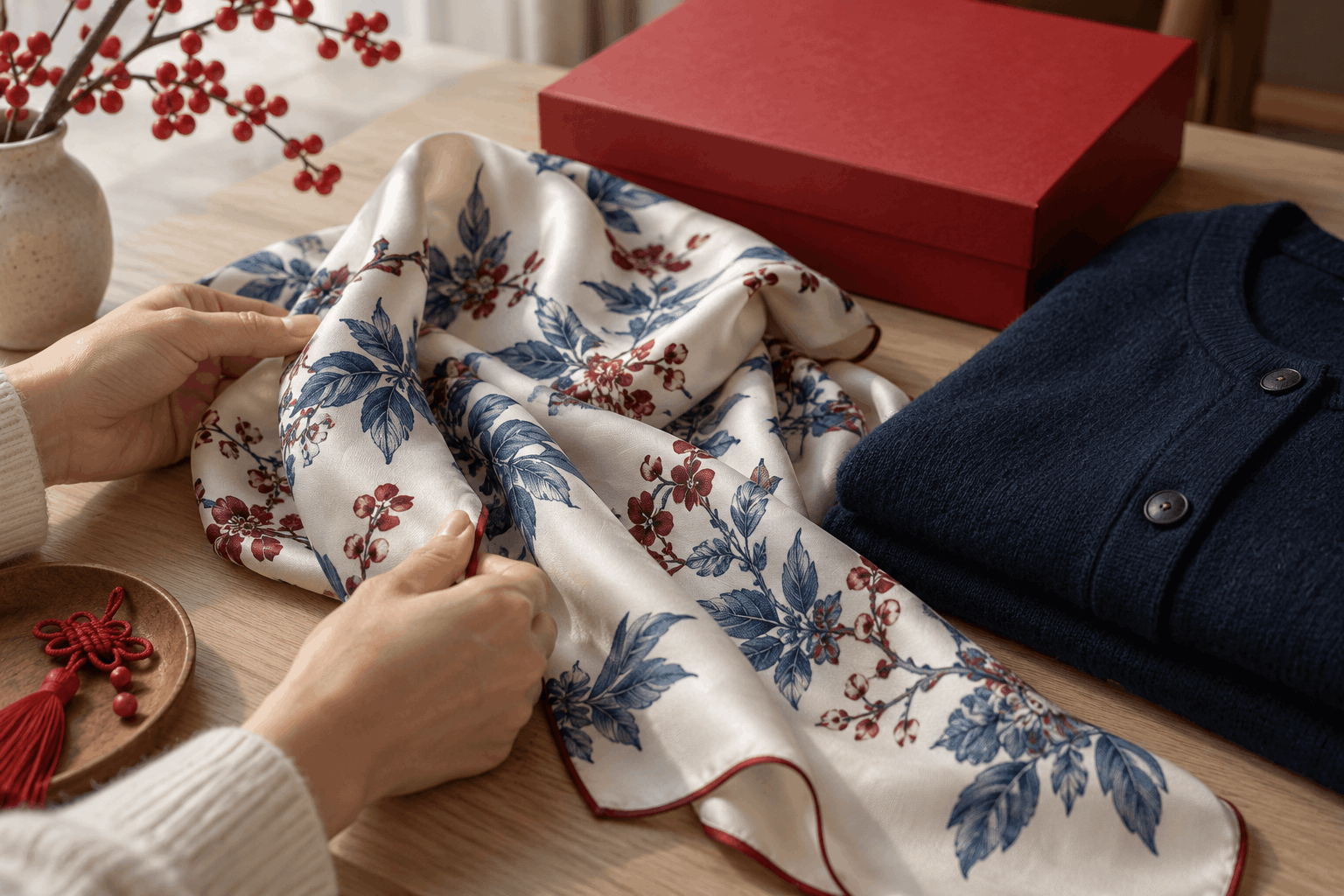
For a parent or relative who enjoys wearing scarves, silk can make a beautiful personal gift. Choose it around the clothes they already reach for: a favorite coat, a reliable cardigan or the colors they wear to family gatherings.
A design can also recall a place or interest. A garden-inspired composition might suit someone who loves plants, while an abstract pattern may appeal to a person who enjoys modern art. Read the individual design story instead of assuming every floral or landscape motif has the same meaning.
Explore Lanting Loom’s square scarves and long scarves with their preferred way of wearing an accessory in mind. The scarf size guide can help connect dimensions with styling.
Check the fiber and care information before choosing. Silk is an accessory to select for its feel, appearance and usefulness to the wearer; there is no need to attach health claims to make it meaningful.
2. Tea they already enjoy
A favorite tea can show close attention to an everyday pleasure. Find out what they drink, how they prepare it and whether they enjoy trying something new. Someone with a well-established preference may appreciate a good version of a familiar tea more than an elaborate tasting collection.
Choose clearly labeled, sealed packaging and keep the brewing information with the gift. If you are considering teaware as well, ask whether they would welcome it. A household that already has favorite cups may have little use for another full set.
The tea can be a gift to enjoy later. Avoid making its preparation another task for a host who is already busy welcoming family.
3. A modest selection of favorite foods
A food gift can be easy to share during a family visit, provided it reflects what the recipients actually eat. Choose familiar favorites in a manageable quantity rather than buying a large hamper for its appearance.
Ask about ingredients they avoid and any preferences they have already shared. Check labels, storage and use-by dates, especially if the gift will travel. If you are unsure, ask directly rather than guessing.
Present food as something enjoyable. Products marketed through broad promises about vitality or longevity are not necessary to express a wish for a good year. Your card can carry that sentiment plainly.
4. A family keepsake with a story
A photo album, a favorite family photograph or a letter recalling shared experiences can have lasting personal value. Choose memories the recipient enjoys and give them room to tell their side of the story.
For an album, a small, carefully edited selection often works better than hundreds of pictures. Use clear captions and a layout that is comfortable to read. You might include a family outing, a familiar home or a celebration they helped make special.
This kind of gift does not need to be presented as a traditional Chinese New Year custom. It becomes appropriate through the family connection and the way you share it during the celebration.
5. A book or artwork connected to a real interest
For someone who loves reading, gardening, history or art, a focused gift can recognize a part of their life beyond their role as a parent or grandparent. Choose a subject they have mentioned or an artist whose work they already enjoy.
Check the language and format of a book, and whether they own it. For artwork, consider available space and their taste before choosing anything large. Keep the maker’s or artist’s information with the piece.
A modest print or publication can be entirely sufficient. The gift becomes more personal when you explain the conversation or observation that led you to it.
6. A meal, visit or outing arranged around them
Time together can be the main gift. A meal at a place they enjoy, a visit to an exhibition or an afternoon exploring a garden may offer more pleasure than another object.
Ask about the plan rather than assuming that a busy surprise will be welcome. Choose a pace, setting and time they prefer, and take responsibility for the arrangements you offer to make.
If the holiday itself is full, plan something afterward. A card describing the outing gives them something to look forward to while leaving the date flexible.

Choosing auspicious meaning with care
Traditional imagery can add depth when the recipient appreciates it. The Metropolitan Museum of Art’s essay on longevity explains how peaches, the character shou, pine and cranes have expressed wishes for long life in Chinese art. These references extend beyond New Year and appear in other celebratory contexts too.
A clearly described motif can accompany a warm wish for the years ahead. Choose a design they would enjoy looking at or wearing, and keep the explanation brief. The image expresses a wish; it does not promise health or a particular outcome.
Some people love traditional longevity imagery, while others prefer a gift that focuses on their interests rather than their age. A contemporary garden or landscape design can work just as well when you explain your personal connection honestly.
Lanting Loom’s design stories describe how cultural sources can become contemporary compositions. Read the selected piece’s own story and choose the meaning that fits your relationship.
For your parents, parents-in-law or grandparents
For your own parents: notice what has changed
Preferences evolve. A parent may now have more time for travel, a new interest in art or less desire to accumulate things. Ask what they are enjoying this year rather than repeating a gift simply because it worked before.
If giving one present to both parents, make sure it belongs to both. You might choose a shared experience or household gift and add separate notes recognizing each person.
For parents-in-law: ask about the household’s habits
Your partner can help with preferred foods, gift customs and the level of formality that feels natural. A gift chosen together may be more thoughtful than trying to impress with something expensive.
Keep the introduction simple: explain why you chose it and offer your New Year wishes. Let the family guide whether presents are opened immediately or put aside for later.
For grandparents and other elders: preserve choice
Ask what they would enjoy and take the answer seriously. If they prefer a particular item, a visit or no additional belongings, that preference is useful guidance.
Practical convenience matters when it is relevant to the individual. Consider weight, storage and ease of use based on what you know about them, without assuming that every older person has the same needs.
Red envelopes, spending and respectful presentation
Chinese New Year gift practices include red envelopes and exchanges during visits, but expectations depend on family and relationship. There is no single rule that a physical gift should replace money, or that every adult child must give a particular amount.
Ask a family member if you are uncertain. Choose a budget you can comfortably afford and avoid making the exchange a comparison of prices. Several relatives can also agree on a joint gift if that suits the recipient.
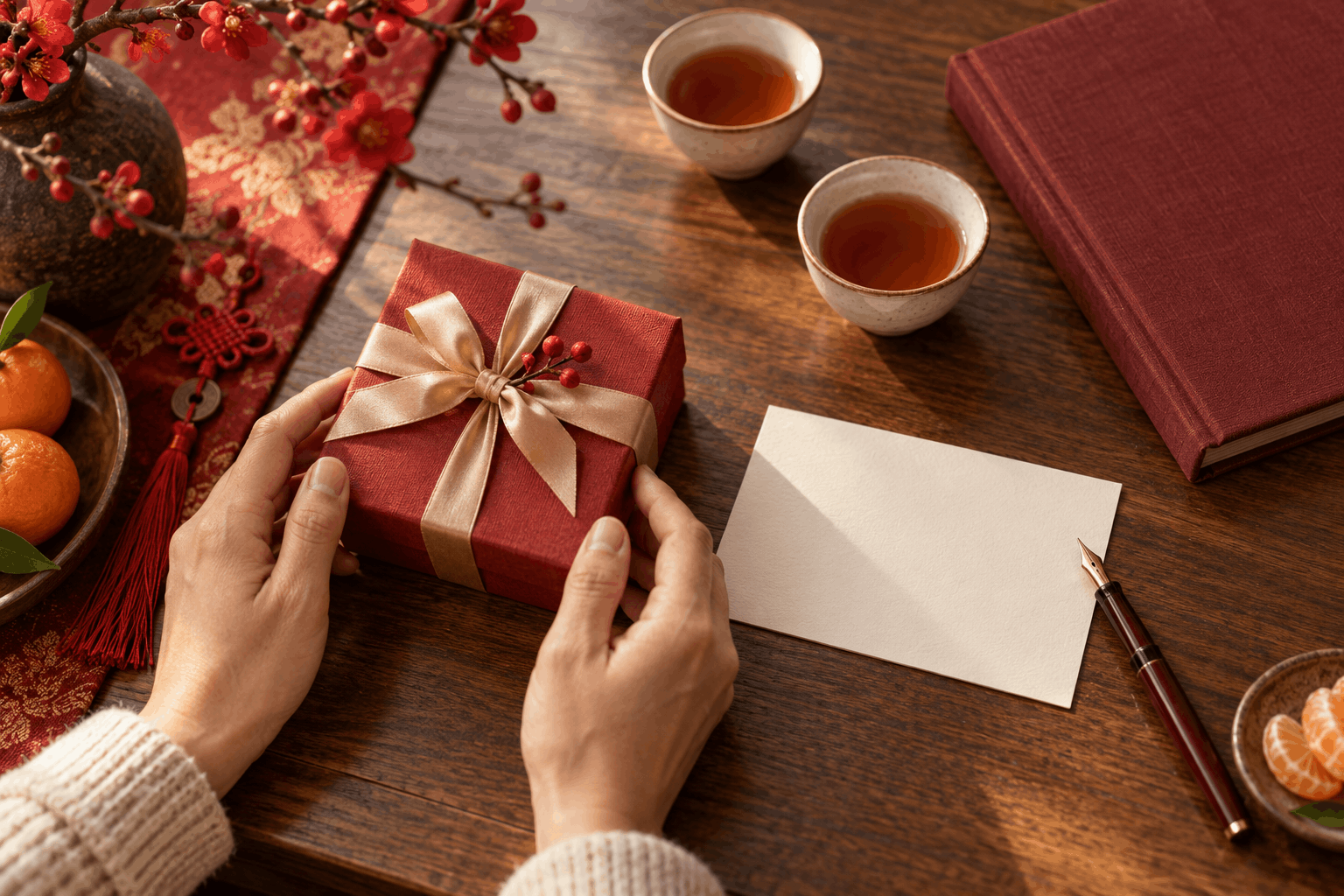
For wrapping, choose something neat, protective and easy to open. A festive red accent may suit the occasion, while the gift itself should reflect the recipient’s taste. If your family follows particular customs about objects, colors or numbers, use those preferences rather than a generic checklist.
What to write in a New Year card
Combine a good wish with a specific acknowledgment. Naming something you appreciate makes the message feel more personal than a long list of formal blessings.
- For parents: “Thank you for the care you give us throughout the year. Wishing you a happy New Year with plenty of time for the things you love.”
- For parents-in-law: “Thank you for making me feel so welcome. Wishing you a joyful New Year and many happy occasions together.”
- For grandparents: “I always look forward to our conversations. Wishing you a lovely year ahead, with more afternoons for us to spend together.”
- For a relative far away: “We are thinking of you as the New Year begins. I chose this with you in mind and look forward to hearing how you are celebrating.”
Write in the language you share comfortably. If you include Chinese wording you are unfamiliar with, have someone fluent check it before printing or personalizing the gift.
A few practical details before the celebration
Coordinate with other relatives where useful to avoid duplicate gifts. Confirm the date of the visit and check current shipping information and holiday notices before ordering. Leave time to write the card and arrange the presentation.
If sending a gift, confirm the address and a convenient delivery arrangement. For a scarf, include the relevant care details, such as the silk care guide. For food or tea, retain the original labels and directions.
Questions about Chinese New Year gifts for parents and elders
What is a good Chinese New Year gift for parents?
A favorite tea, personal accessory, family keepsake or shared experience can all work. Choose around their current interests and how your family celebrates.
Is a silk scarf suitable for an older relative?
Yes, if they enjoy wearing scarves. Consider their preferred colors, size and styling habits. Age does not determine whether a traditional or contemporary pattern will suit them.
Should I give one shared gift or separate presents?
A shared gift works when both people will enjoy it. Separate gifts can recognize different interests. Neither approach needs to be elaborate; the attention behind the choice matters.
Do I need to choose a longevity symbol?
No. Longevity imagery can be meaningful for someone who appreciates it, but a gift related to a hobby, personal style or family memory may feel more natural.
What if they say they do not need anything?
Respect that preference. A visit, a meal planned together or a thoughtful letter may be the best way to mark the celebration. Ask before arranging something substantial.
A gift that shows you know them
A respectful New Year gift recognizes the whole person: their taste, their interests and the relationship you share. Cultural meaning can enrich the gesture, while your attention makes it personal.
For a relative who enjoys wearable design, explore Lanting Loom’s silk scarves or gift sets. Choose something they will enjoy, then add your own words for the year ahead.
