

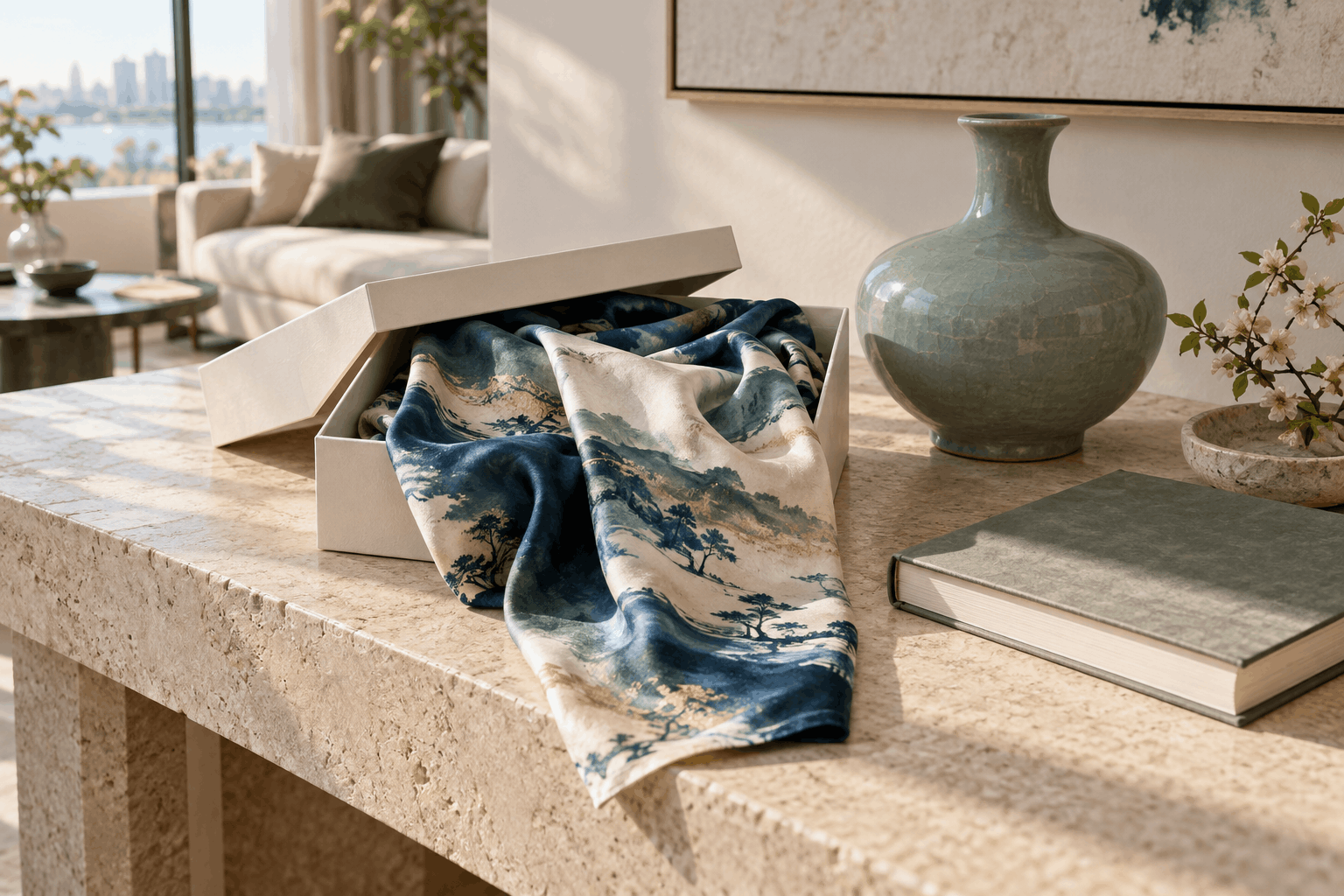
A meaningful gift begins with attention: to someone’s taste, to the occasion, and to the words you want the object to carry. Chinese culture offers a rich starting point, from painting and calligraphy to textiles, ceramics and symbols associated with wishes for a good life.
Chinese gifts can be traditional objects, contemporary designs inspired by Chinese art, or experiences that introduce someone to a new interest. A silk scarf, a carefully chosen tea, a small ceramic piece or an artist’s print can all make thoughtful presents when their story connects with the person receiving them.
This guide brings together practical ways to choose by occasion, recipient and cultural meaning. Begin with the section closest to your needs, then explore the detailed guides for birthdays, weddings, new homes, graduation and more.
What makes a Chinese gift meaningful?
The Chinese connection should be something you can describe specifically. It might come from a named artist, a material tradition, a documented motif, a place or a designer’s interpretation of a cultural source. Knowing that connection helps you choose with confidence and share the story accurately.
There is also a distinction between where an object is made and what it expresses. A product made in China may have no particular relationship to Chinese art. A contemporary design inspired by Chinese gardens may express that influence through color and composition rather than a literal image of a pavilion.
Both traditional and contemporary gifts can be beautiful. What matters is that the description fits the actual piece and that the recipient will enjoy it. A familiar symbol is one possible starting point, not a requirement for every gift.
Use three questions to narrow your choice: What would this person like? What is the object’s story? Why does it suit this moment? A strong gift usually has a clear answer to all three.
Chinese gift ideas at a glance
| Gift type | Especially suitable for | What to check |
|---|---|---|
| Silk scarf | Someone who enjoys accessories, color or textile design | Fiber, dimensions, palette, design story and care |
| Tea | A tea drinker, host or person who prefers consumable gifts | Taste, packaging, brewing directions and required equipment |
| Ceramics or teaware | Someone who enjoys useful objects or sculptural form | Maker, size, intended use, care and transport |
| Art or an artist’s print | An art enthusiast with a known visual preference | Artist, medium, edition details and framing |
| Art or design book | A curious reader, traveler or museum visitor | Subject, language, image quality and whether they own it |
| Curated gift set | A milestone occasion or a recipient whose preferences you know | The purpose of each item and the exact contents |
| Cultural experience | Someone who values discovery or prefers fewer possessions | Interest, dates, accessibility and booking flexibility |
These categories overlap. A scarf may be an art gift, a travel keepsake or a birthday present; tea may mark a thank-you or welcome someone into a new home. The personal reason for choosing it gives the category its meaning.
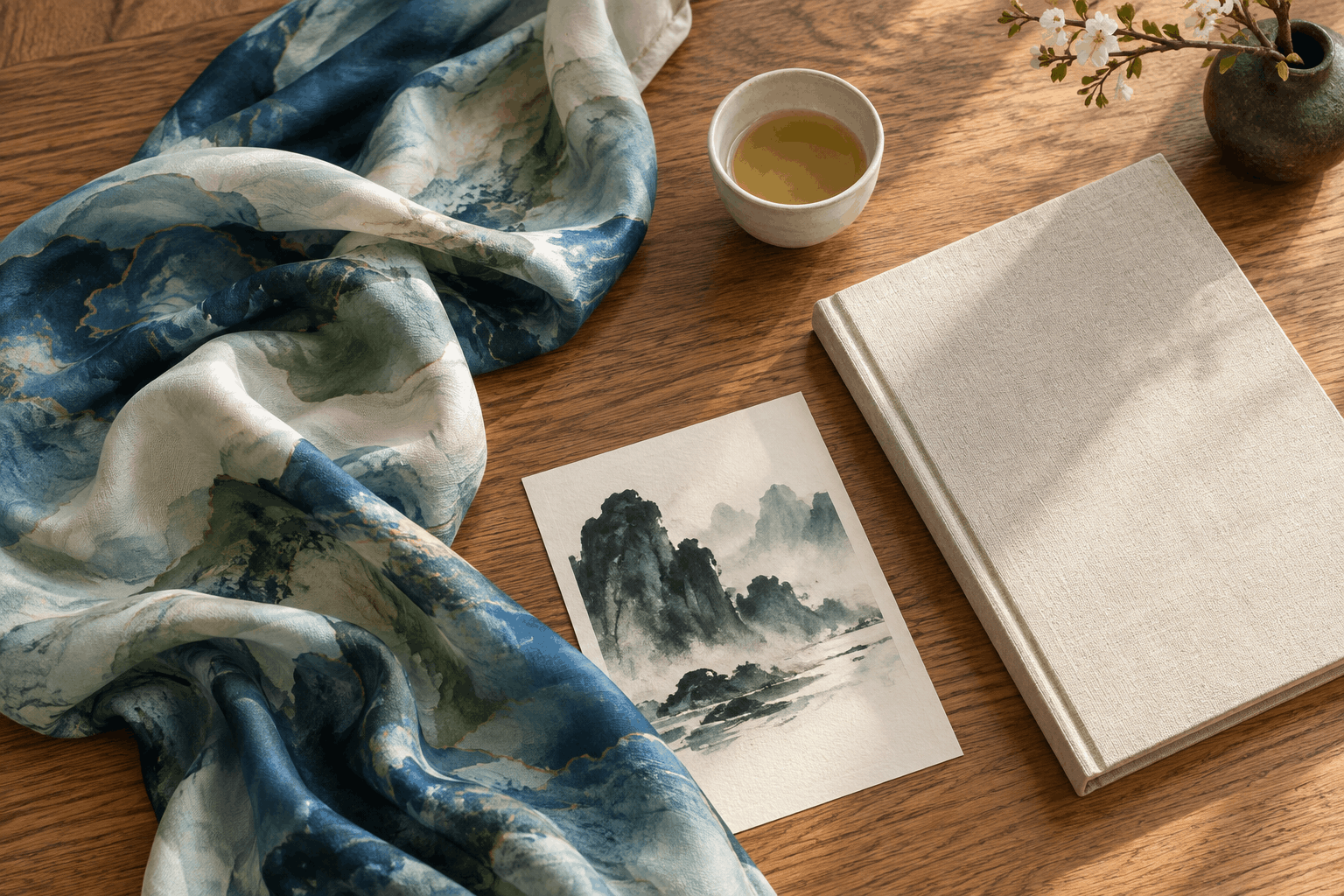
Silk scarves: cultural inspiration in a wearable form
A scarf brings line, color and movement into daily life. It can be especially thoughtful for someone who appreciates art but prefers a gift they can wear and take with them. The design changes as it is folded, allowing different details to emerge.
Choose the format around their habits. A square silk scarf and a long silk scarf offer different styling possibilities. Check the measurements and use the scarf size guide to make a practical choice.
For Lanting Loom, cultural inspiration becomes a contemporary design through considered choices of line, scale, color and space. Our design stories explain this approach. Read the individual piece’s description to understand its particular source and meaning.
Tea and ceramics: pleasure in everyday use
Tea works best when chosen for someone who actually enjoys drinking it. Start with their preferences and include clear brewing instructions. A modest selection they will use can be more welcome than an unfamiliar tea that requires equipment they do not own.
Ceramics can offer similar everyday pleasure. Think about a cup’s comfort, a vessel’s scale or the colors already present in the recipient’s home. Check the maker’s description and intended use; a decorative piece may require different care from functional tableware.
Art, books and experiences: room for discovery
A print, focused art book or exhibition visit can connect a gift with an existing interest. Choose a specific subject or creator rather than relying on a broad cultural label. Someone who enjoys contemporary photography may have very different tastes from someone who collects historical ceramics.
For an experience, offer enough flexibility that it feels like a pleasure to arrange. For a substantial artwork, selecting together may be the most thoughtful part of the gift.
Choose Chinese gifts by occasion
Birthday gifts: a wish shaped around the person
A birthday gift can celebrate someone’s character, interests or the years you have shared. Traditional wishes for long life provide one direction, while a favorite color or shared memory offers another. Let the recipient’s personality determine how formal or symbolic the gift should feel.
A scarf, book or artwork can work across generations when selected attentively. Avoid choosing solely by age: a parent or grandparent may prefer contemporary design, while a younger recipient may love historical art.
Explore Chinese birthday gifts by symbol and relationship for ideas and personal message examples.
Wedding gifts: something for the life they are building
Begin with the couple’s expressed wishes, including a registry or request for contributions. A culturally inspired gift can complement their plans through a useful object, shared experience or keepsake connected to their story.
Tea for two, a ceramic piece or art chosen around a shared interest may suit their home. A personal accessory can also be thoughtful when clearly intended for the person who will wear it; consider how the overall gesture acknowledges both partners.
Read Chinese wedding gifts for modern couples for guidance on auspicious motifs, shared keepsakes and presentation.
Housewarming gifts: a welcome with room to belong
A new home may need practical things, but it may also already have everything its owners want. Think about space, taste and how much the recipients are still organizing. A small useful object or consumable gift can be easier to receive than a large decoration.
Tea, a carefully chosen cup or an art book can make a warm gesture. If you know the host well, a personal silk keepsake may celebrate them as much as the home itself.
Our guide to Chinese housewarming gifts explores harmony, prosperity and new beginnings alongside practical gift choices.
Graduation gifts: acknowledge the effort behind the achievement
Graduation may lead to further study, work, travel or a period of deciding what comes next. Choose something that supports the graduate’s actual plans: a portable accessory, a book that encourages curiosity or a keepsake recognizing their perseverance.
Keep the message open and encouraging. Celebrate what they have accomplished without making the gift carry expectations about status or future earnings.
See Chinese graduation gifts for achievement and a new chapter for symbolic references and choices by relationship.
Thank-you gifts: name the kindness
The best thank-you gifts make the reason for giving clear. A host’s welcome, a friend’s support or a mentor’s advice each suggests a different message. Choose an object that feels proportionate to the relationship and comfortable to receive.
Tea, a small artwork or a scarf in a color the recipient loves can all work. A specific note about what their help meant often makes the greatest difference.
Find examples in Chinese thank-you gifts with cultural meaning.

Choose by the recipient’s interests
For a woman who loves art, travel and design
Begin with what she already enjoys. Does she wear expressive accessories, collect useful ceramics, visit exhibitions or talk about places she hopes to explore? These clues give a gift direction without assuming that one style suits every woman.
A scarf might recall a destination, while a book could open a new interest. A contemporary ceramic piece may suit someone who notices shape and texture in everyday objects. Think about how the gift will fit her life after the occasion.
Explore Chinese gifts for her for ideas organized around art, travel and design.
For an art lover
Pay attention to the kind of art they enjoy. Line, color, material, history and the work of particular artists can lead to very different choices. A scarf with a thoughtful composition may suit a textile enthusiast; a monograph may be better for someone following a particular artist.
For prints and artworks, keep the artist’s name and relevant details with the gift. If the recipient has strong collecting preferences, involve them in selecting anything substantial.
Read Chinese gifts for art lovers for contemporary ideas and advice on understanding a design’s source.
For someone who seems to have everything
Consider what they value beyond acquiring another object. A gift could recall a shared memory, introduce a creator or give you time together. If they prefer fewer possessions, tea or a flexible cultural experience may fit better than a decorative keepsake.
A scarf can still be thoughtful for someone who loves wearing them, provided it brings a color, format or story they would enjoy. If they have asked for no gifts, respect that preference.
Our guide to Chinese gifts for someone who has everything explores personal alternatives to familiar luxury presents.
How to understand Chinese cultural meaning
Symbols can enrich a gift, but their meaning depends on context. A motif may have several associations, and a combination of images can express something different from a single element. Use a reliable description of the actual design rather than treating every flower, bird or color as a fixed code.
Traditional symbolism
Peaches and the longevity character, shou, are examples of established references to long life. The Metropolitan Museum of Art’s essay on longevity explains their place in Chinese art and birthday-related objects. They offer one meaningful direction when your message is a wish for years ahead.
Bamboo has a different association. In its discussion of Xia Chang’s Windblown bamboo, The Met describes bamboo as a symbol of integrity and strength. A bamboo-inspired gift can therefore accompany a personal message of admiration.
Neither reference makes a particular object mandatory for an occasion. The recipient’s taste still matters, and a symbol should express a wish rather than a promise of health, wealth or success.
Artistic inspiration
Cultural depth can also come from the way a design is made. The Met’s introduction to Chinese calligraphy discusses the expressive possibilities of brush and ink. A contemporary designer may respond to the movement of a stroke through abstract lines without reproducing written characters.
A landscape or garden can similarly inspire choices of rhythm, color or open space. Look for a description that explains these choices. An interpretation should be presented as an interpretation, with any historical source identified accurately.
Your personal association
Your own memories can add another layer. “This reminded me of our visit to the garden” gives the object a meaning that belongs to your relationship. That connection does not need to be described as an ancient tradition to matter.
When explaining the gift, keep these layers clear: what is documented, what the designer has interpreted, and what the piece means to you personally.
How to choose a Chinese gift with confidence
Start with one reliable clue
A favorite color, a repeated interest or an object the recipient enjoys using can be enough. If you have little information, ask a small question about their taste or offer a choice. The aim is to make the gift feel attentive, not to prove that you can guess everything.
Read the product details as carefully as the story
Check materials, dimensions, production information and care. “Silk,” “handmade,” “limited edition” and references to particular craft traditions are specific claims that should be supported by the listing. A romantic description does not replace useful information about the object.
For a gift set, review each item. A smaller combination with a clear purpose may suit the recipient better than a larger box. You can explore Lanting Loom’s gift sets and compare the contents with what the person would actually enjoy.
Set a comfortable budget
Choose an amount appropriate to the occasion and relationship, including delivery, framing or other necessary extras. A higher price does not automatically make a gift more personal. A modest piece with a specific connection can feel complete on its own.
For teachers, colleagues or professional contacts, follow any relevant gift rules and keep the gesture easy to accept. A thoughtful card may be the most suitable choice in some settings.
Plan for the day after the gift is opened
Will it fit their space or wardrobe? Can they transport it easily? Does it require equipment, time or care they are comfortable with? These questions turn a beautiful idea into a gift that can be enjoyed.
Include helpful care information, such as the silk care guide, and check the current shipping information when ordering for a particular date.
Presentation and the personal message
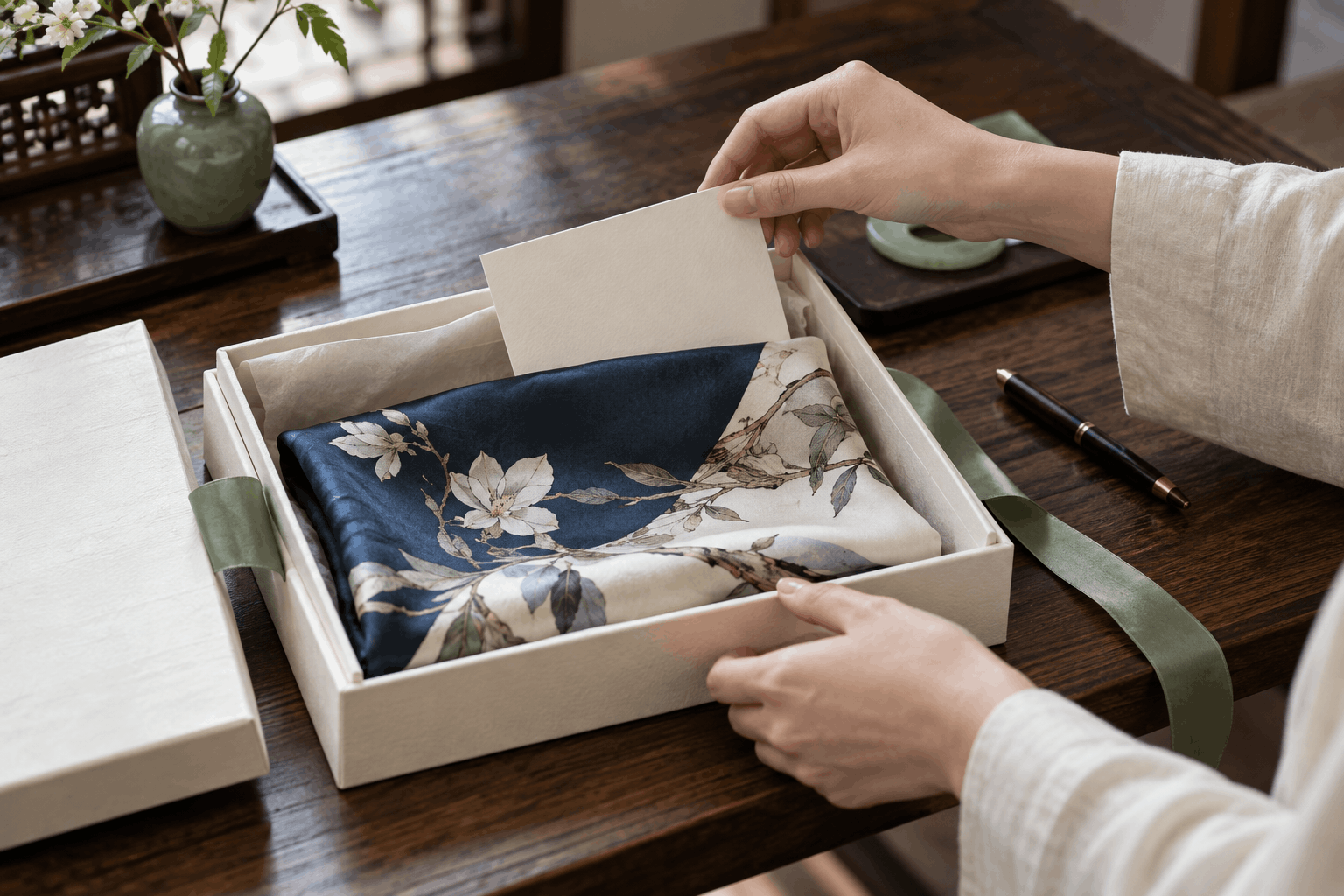
Choose neat, proportionate packaging that protects the gift and suits its character. A contemporary gift does not need every detail to carry symbolism. The object, a short design explanation and a personal note can be enough.
A useful message connects the occasion with your choice: “I chose this because…” Then name a quality, memory or hope that belongs to the recipient.
- For a birthday: “These colors reminded me of you. Wishing you a year with plenty of time for the things you love.”
- For a new home: “Something for the quiet mornings and good company ahead.”
- For an achievement: “A little beauty for your next chapter, and a reminder of everything it took to reach this one.”
- For gratitude: “Thank you for making time when I needed it. I chose this with those conversations in mind.”
Let family customs and individual preferences guide the exchange. If you are unsure about expectations for a particular celebration, ask someone close to the recipient. Their answer is more useful than assuming that every family approaches gifts in the same way.
Frequently asked questions about Chinese gifts
What are good Chinese gifts?
Silk scarves, tea, ceramics, art, books and cultural experiences can all be thoughtful choices. Match the category to the recipient and look for a specific, accurately described Chinese connection.
Can I give a Chinese-inspired gift to someone who is not Chinese?
Yes. An interest in art, travel, design or textiles can provide a natural connection. Share the object’s story clearly and choose it around the recipient’s taste.
Do Chinese gifts need to be red and gold?
No. A contemporary gift can use any palette that suits its design and recipient. If the occasion has particular family traditions, use those preferences to guide the presentation.
What makes a Chinese gift feel luxurious?
Consider the quality of the object, the thought in its design, the accuracy of its story and how well it suits the recipient. Material and presentation matter most when they contribute to something the person will enjoy using or keeping.
Should I give a scarf alone or a gift set?
A scarf alone works well when its design and your note make a complete gesture. Choose a set when the additional pieces have a clear purpose for the recipient. Check the exact contents before ordering.
What should I avoid when choosing?
Avoid guessing at strong preferences, buying objects that require unwanted space or maintenance, and repeating cultural claims you cannot explain. For an important family occasion, ask about expectations rather than relying on broad etiquette rules.
A gift whose story belongs to the recipient
Chinese culture offers many ways to express care through an object: an artistic reference, a meaningful motif, a material or a memory of place. The strongest choice brings that source together with the recipient’s taste and the moment you are celebrating.
For someone who enjoys wearable design, explore Lanting Loom’s silk scarves and curated gift sets. Choose a piece with a story you understand, then add the part only you can give: your own reason for choosing it for them.
