

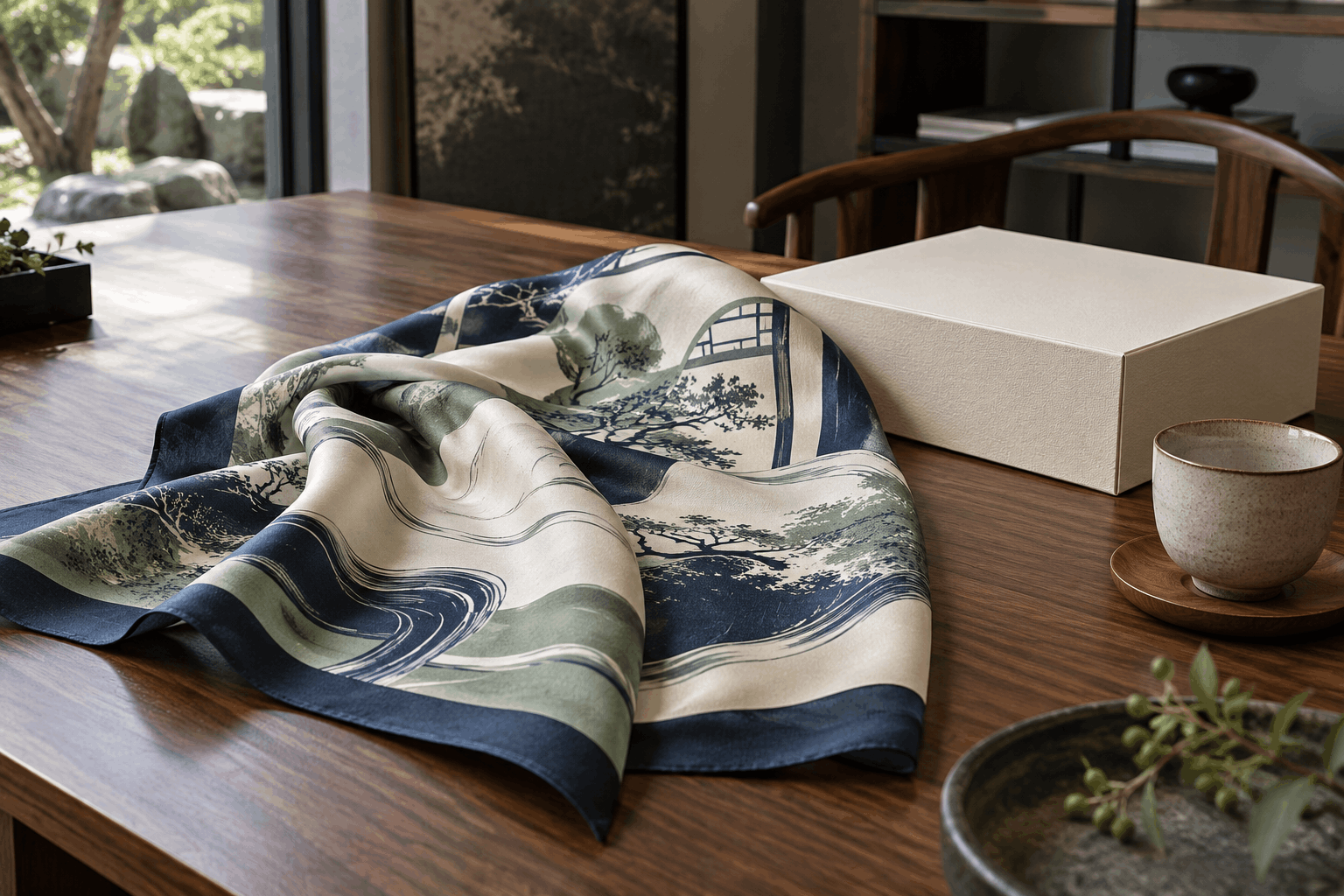
A corporate gift can express appreciation, introduce a place and give someone a lasting memory of an encounter. Chinese art offers rich starting points for that work: landscape, botanical painting, ceramics, calligraphy, gardens and contemporary artistic practice.
The challenge is turning a reference into an object people want to own. A collection of recognisable symbols may communicate a broad theme, yet say very little about the organisation, occasion or recipient.
The strongest corporate gifts inspired by Chinese art begin with a specific source, develop it into a useful design and explain the connection clearly. Branding, presentation and production should support that idea from the start.
What Makes a Cultural Gift Feel Clichéd?
A familiar motif is not inherently a cliché. Dragons, floral decoration, red and gold, or traditional landscape imagery can all belong in thoughtful designs. The problem arises when a motif is selected simply because it is recognisable, without a clear reason for its use.
Ask whether the same design could be given by almost any organisation at almost any event. If the answer is yes, the concept may need a more specific starting point.
Other signs of an underdeveloped brief include several unrelated symbols competing for attention, a large logo interrupting the composition, or a story card making claims the design does not support.
Contemporary interpretation also need not mean removing decoration or choosing neutral colours. The V&A’s Dimensions: Contemporary Chinese Studio Crafts explores innovation emerging from longstanding craft traditions. That relationship leaves room for expressive, restrained, traditional and experimental approaches.
Start with the Relationship and the Occasion
Before collecting reference images, define what the gift should do. Thank a speaker? Mark a partnership? Introduce international visitors to a place? Recognise supporters of a cultural institution?
Write one sentence that connects the organisation, recipient and purpose:
“We want visiting partners to remember the garden where our anniversary gathering took place, through a gift they can enjoy after the event.”
That sentence gives a designer a direction. “Make something Chinese and premium” leaves the important decisions unresolved.
Also consider whether the format suits the audience. A scarf can be a strong option for people who enjoy wearable accessories, but it should not be assumed to suit every recipient. For a varied group, consider a choice of formats or a coordinated alternative.
Choose One Source with a Clear Connection
A focused reference gives the project a stronger identity than a large collection of loosely connected images. Possible sources include:
- A particular artwork: its composition, palette, rhythm or selected details.
- A building or garden: window geometry, spatial framing, planting or the relationship between solid and open areas.
- A local landscape: distinctive contours, water patterns or a documented view.
- An institutional archive: a relevant drawing, object or visual record.
- A contemporary artist: a collaboration with a clearly defined creative contribution.
Record why the source matters and who can explain it accurately. A source connected to the organisation’s actual location or programme usually provides a more useful story than an unrelated symbol selected to represent an entire culture.
For broader guidance on making these connections, see our guide to Chinese cultural gifts rooted in art, symbolism and story.
Translate the Source into Design Decisions
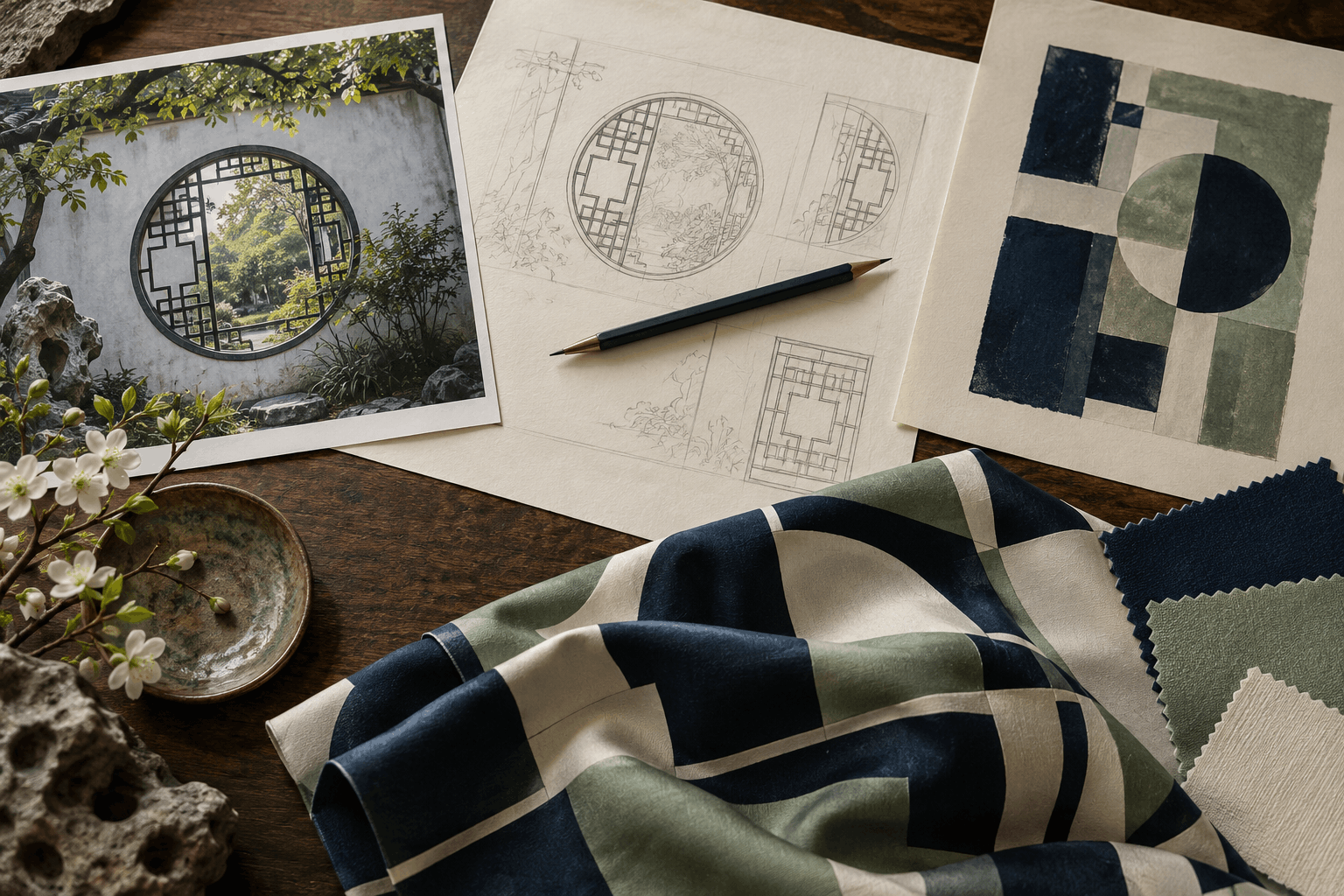
Translation means deciding what to retain, what to develop and what the new object needs. A painting is experienced differently from a folded scarf; an architectural detail changes character when repeated across a small surface.
| Starting point | Possible design translation | Question for review |
|---|---|---|
| Garden window | Use its proportions to organise a border or repeated pattern. | Is the connection visible without turning the object into a diagram? |
| Landscape composition | Develop its movement, spacing and colour relationships. | Does the design work at the gift’s actual scale? |
| Botanical painting | Explore the rhythm of branches, leaves or areas of open space. | Does the story describe the specific source accurately? |
| Ceramic decoration | Study the relationship between a border and a central field. | Has the design been resolved for the new material? |
| Calligraphy | Use an approved text or carefully considered brushwork reference. | Have wording, attribution and any alterations been reviewed? |
These are possible approaches, not instructions to alter every source. A faithful reproduction may be right for one project; an original interpretation may suit another. Agree which approach the project is taking.
For silk, review how the design behaves when folded and tied. A centre image may disappear, while a border becomes prominent. Colour, scale and placement need to work in those conditions.
Give Branding a Defined Role
Decide what recipients should notice first: the gift, its story or the organisation’s identity. For an appreciation gift intended for personal use, the object’s appeal deserves priority.
There are several ways to introduce the organisation:
- A discreet mark placed where it remains balanced when the object is used.
- A palette related to the brand, adjusted for the material and composition.
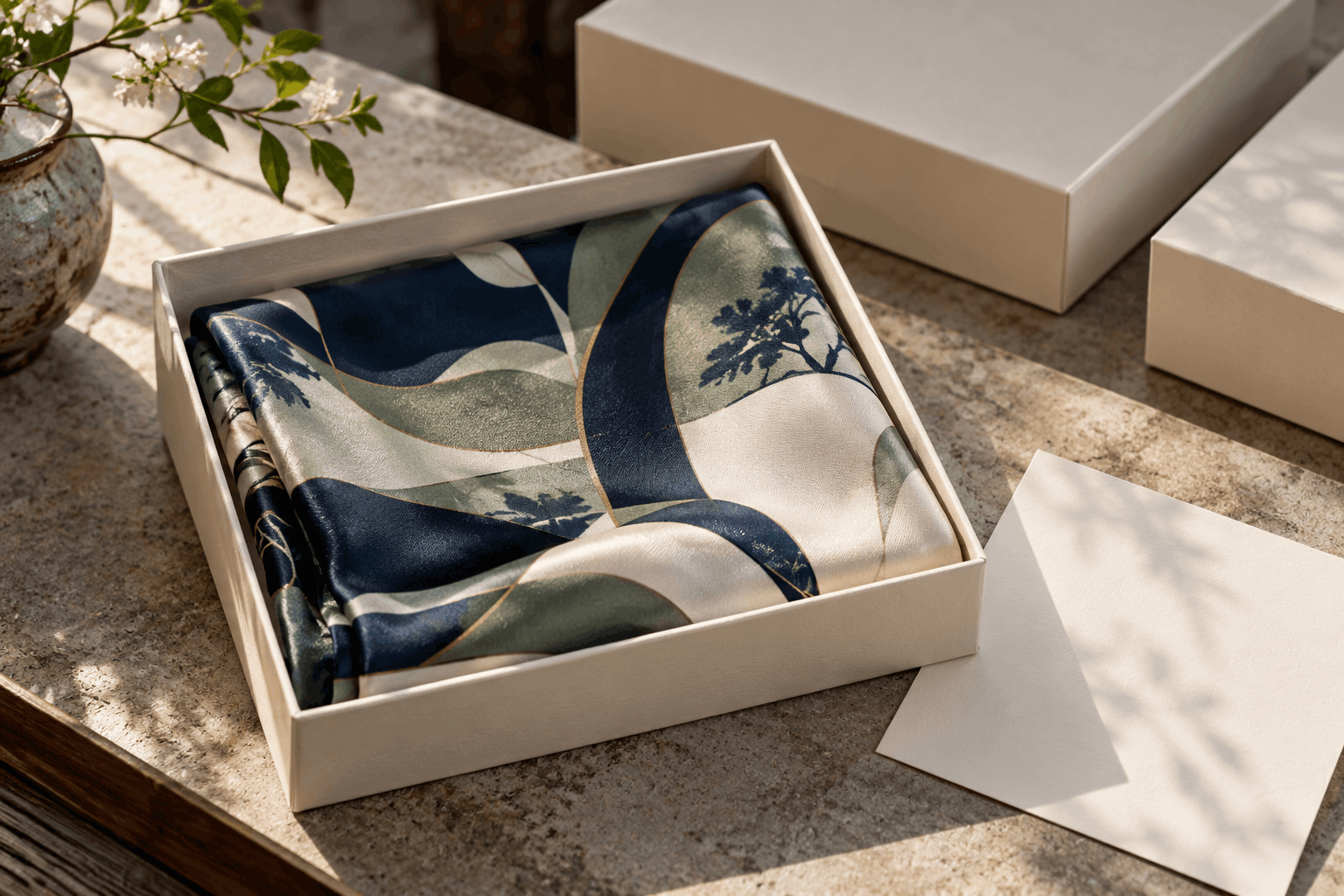
- A presentation sleeve carrying the event identity.
- A message card naming the occasion and explaining the source.
A sleeve or card can carry dates, sponsor details and event information while the main object remains useful beyond that moment. If a prominent logo is required, include it in the initial brief so the designer can build around it.
Test recognition separately from desirability. The gift can be unmistakably associated with the organisation at the moment of giving and still feel comfortable to wear or display later.
Choose the Right Level of Customisation
An original commission is one route, but it is not necessary for every cultural gifting project.
Curated existing design
Choose a finished piece with a relevant story and a suitable format. This can work well when the gift’s connection to the occasion is already clear.
Adapted presentation
Retain the main product and tailor the surrounding message or presentation. This may be appropriate when the organisation needs recognition without changing an established design.
Original design
Develop a composition around the organisation’s source material. Choose this route when a distinctive design is central to the project and the schedule and budget allow for development and review.
Lanting Loom’s corporate gifting service discusses these three approaches. Availability, quantities, presentation options and timing are confirmed for the individual project.
Three Illustrative Project Directions
The following examples show how a brief could develop; they are not descriptions of completed client commissions.
A museum supporter gift
Source: one approved work from an exhibition.
Direction: build a wearable composition around its visual rhythm, with a concise source credit and interpretation card. Ask the curatorial team to assess the relationship to the work and the gifting team to assess the recipient experience.
For institution-specific considerations, explore gifts for museums and cultural institutions.
A hotel’s visiting-partner gift
Source: a distinctive garden or architectural feature at the property.
Direction: develop a pattern that recalls the place through proportion and colour. Use the accompanying note to connect the gift to the visit, rather than expecting recipients to identify every reference unaided.
See silk gifts for hotels and hospitality for related project possibilities.
A company anniversary gift
Source: a place connected to the company’s history, or a relevant archival detail.
Direction: choose one strong visual idea and reserve the anniversary date and formal message for the presentation. Avoid asking a single object to display the entire company timeline.
Review the Physical Sample as a Gift
A digital visual is useful for discussing composition. A physical sample answers different questions: how the material feels, how the colours appear, how the edges are finished and how the item sits in its packaging.
For a scarf, review it open, folded, worn and packed. For a ceramic object, consider size, weight, handling and protection. For any format, inspect the gift as the recipient will encounter it.
Use separate review questions:
- Cultural: is the reference accurate and the interpretation clearly described?
- Design: does the composition work in use, including the branding?
- Product: does the sample meet the agreed material and finish requirements?
- Presentation: is the sequence of opening, reading and discovering the gift clear?
Assign one person to consolidate feedback. A single set of agreed comments is easier to resolve than conflicting instructions from several departments.

Write a Short, Specific Story Card
A useful story card explains the source, one design decision and the reason for the gift. It does not need to summarise Chinese art as a whole.
For the illustrative garden project, the wording might be:
“Inspired by the framed views of the garden where we gathered, this design brings its window geometry and flowing paths into a new composition. Offered with thanks for your partnership and in memory of our anniversary celebration.”
Use that wording only where it accurately describes the project. Replace broad claims such as “an ancient symbol of eternal success” with verified context or a clearly stated personal intention.
Where the card includes Chinese text, agree who will review its wording and translation. Treat names, dates, artwork titles and credits as part of the approval process, alongside the visual design.
Make the Brief Concrete Before Requesting a Proposal
A focused brief helps suppliers recommend a realistic route and makes proposals easier to compare. Include:
- Purpose and recipients: who receives the gift and what the gesture should express.
- Source: the reference material, its relevance and the person responsible for confirming approved use.
- Format: intended product, approximate size and expected use.
- Quantity and budget: include design, sampling, presentation and delivery in the discussion.
- Branding: required marks, colours, messages and areas open to interpretation.
- Review: decision-makers, sample requirements and the process for consolidated feedback.
- Delivery: required arrival date, destinations and distribution arrangements.
A practical starting brief might read:
“We are planning gifts for visiting partners at an anniversary event. Please propose a silk scarf concept inspired by the garden at our venue. Prioritise wearability and a clear connection to the site. Place the event name and date on the presentation sleeve, with a short story card. We will supply reference images and brand files for review. Please identify the information, sample stages, costs and schedule needed to confirm feasibility.”
Add the actual quantity, budget, destination and arrival date before sending it. For original artwork development, consult the bespoke silk scarves guide.
Frequently Asked Questions
Do corporate gifts inspired by Chinese art need traditional motifs?
No. A project can draw on composition, colour, material, spatial relationships or a specific artistic idea. A traditional motif can also work well when its use is relevant and considered.
Can an existing scarf become a meaningful corporate gift?
Yes. Select a design with a suitable connection and explain why it was chosen. Adapted presentation may provide the organisation-specific context without changing the scarf.
Should the logo appear on the gift or the packaging?
Choose according to the project’s purpose and the recipient’s likely use. Packaging can carry detailed event information; a mark on the object should be considered as part of the composition from the beginning.
What should we prepare before proposing an artwork as inspiration?
Identify the source, gather usable reference material and name the person responsible for confirming permitted use and required credits. Discuss the proposed treatment with the relevant artwork or institutional contact before design development.
How much time does a bespoke project need?
The schedule depends on the design scope, feedback, sampling, production and delivery. Ask for a project-specific timeline working back from the required arrival date. Include time for revisions rather than assuming the first sample will be final.
How do we know whether a concept has become too generic?
Ask what connects it to your organisation and whether a recipient could understand that connection from a short explanation. If the answer relies only on a broad cultural label, return to the source and the purpose of the gift.
Begin with a Story Your Organisation Can Explain
A strong cultural gift joins a relevant source with an appealing object and a clear expression of appreciation. The design carries the idea; the message explains why it is being shared.
To discuss a project with Lanting Loom, share your source, recipients, quantity, budget and required arrival date through our corporate gifting enquiry. A focused brief makes it easier to develop a gift with a life beyond the occasion.
