

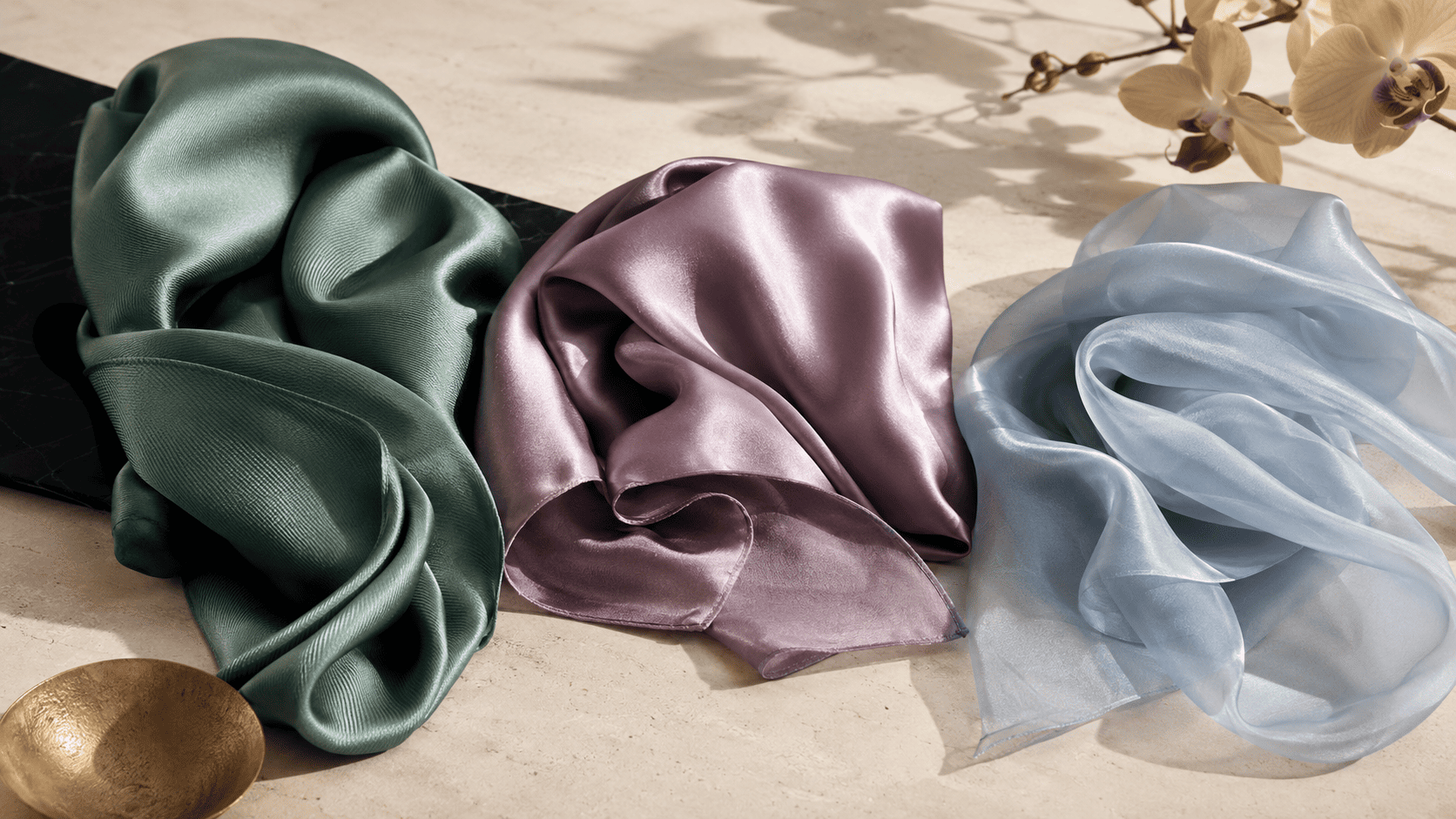
Silk twill, silk satin and silk habotai can all be made from the same natural fibre, yet they look and behave very differently because they are woven differently. Silk twill has a subtle diagonal structure, a controlled lustre and enough body to hold a polished knot. Silk satin has a smooth, highly luminous face and a fluid, glamorous drape. Silk habotai is a light plain-weave silk with a softer sheen and an airy fall.
For a versatile printed scarf that keeps its shape, twill is often the easiest choice. Satin suits occasions when shine and fluidity matter most, while habotai feels lighter and less structured. None is automatically “better”: the right fabric depends on how you want the scarf to look, move and feel.
Silk twill, satin and habotai at a glance
| Fabric | Weave and surface | Drape | Often chosen for |
|---|---|---|---|
| Silk twill | Fine diagonal ribs; softly lustrous | Controlled and sculptural | Printed squares, twillies and defined knots |
| Silk satin | Smooth, glossy face; quieter reverse | Fluid and light-catching | Evening scarves and elegant draping |
| Silk habotai | Fine plain weave; gentle sheen | Light, soft and airy | Lightweight scarves, linings and relaxed movement |
These are useful tendencies rather than absolute rules. Yarn quality, fabric weight, finishing, printing and washing can all change the result. When shopping, read the material, dimensions, weight and care information on the individual product page rather than judging by the fabric name alone.
First, understand fibre versus weave
“Silk” identifies the fibre. “Twill” and “satin” primarily describe weave structures—the way warp and weft yarns interlace. Habotai is a named lightweight fabric traditionally made with a plain weave. The Smithsonian describes plain, twill and satin as the three basic weave structures in its explanation of woven textile construction.
This distinction matters because satin is not necessarily silk. Satin can be woven from silk, polyester, acetate or other filament fibres. A label that says only “satin” does not confirm the fibre content; look for wording such as “100% silk satin.” In the same way, twill can be made from wool, cotton or synthetic fibres as well as silk.
What is silk twill?
Silk twill is woven so that fine diagonal lines appear across the surface. On a well-made scarf, those ribs may be subtle from a distance but become visible in close light. The construction gives the fabric more body and resistance to collapsing than many lighter plain weaves, while retaining silk’s softness and natural lustre.
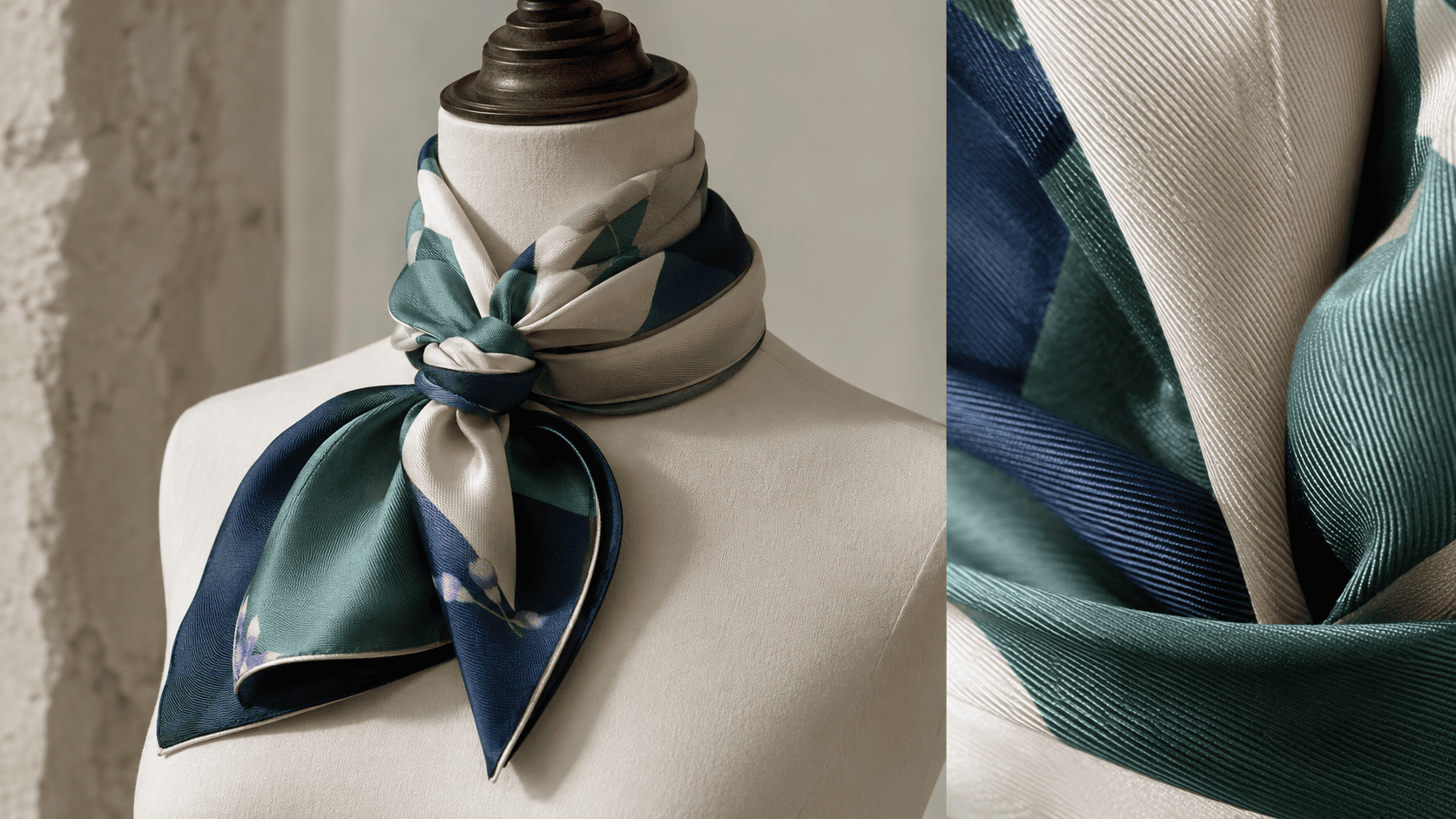
That balance explains why twill is widely associated with premium printed square scarves. It supports crisp folds, shows a composition clearly when opened, and creates neat points when tied. It also works well in narrow formats; browse Lanting Loom’s silk twillies for small accents that can be worn at the neck, wrist, hair or handbag.
Choose silk twill if you want a scarf that feels polished, holds a knot and can move between everyday styling and more formal dress. It is especially practical for medium and large squares. If you are deciding between formats, the silk scarf size guide explains how dimensions affect volume and styling options.
What is silk satin?
Satin weave uses longer yarn floats across the surface, reducing visible intersections and creating a smooth face that reflects light strongly. The reverse is usually less lustrous. This face-and-back contrast is one of satin’s most recognisable characteristics, although double-faced constructions also exist.
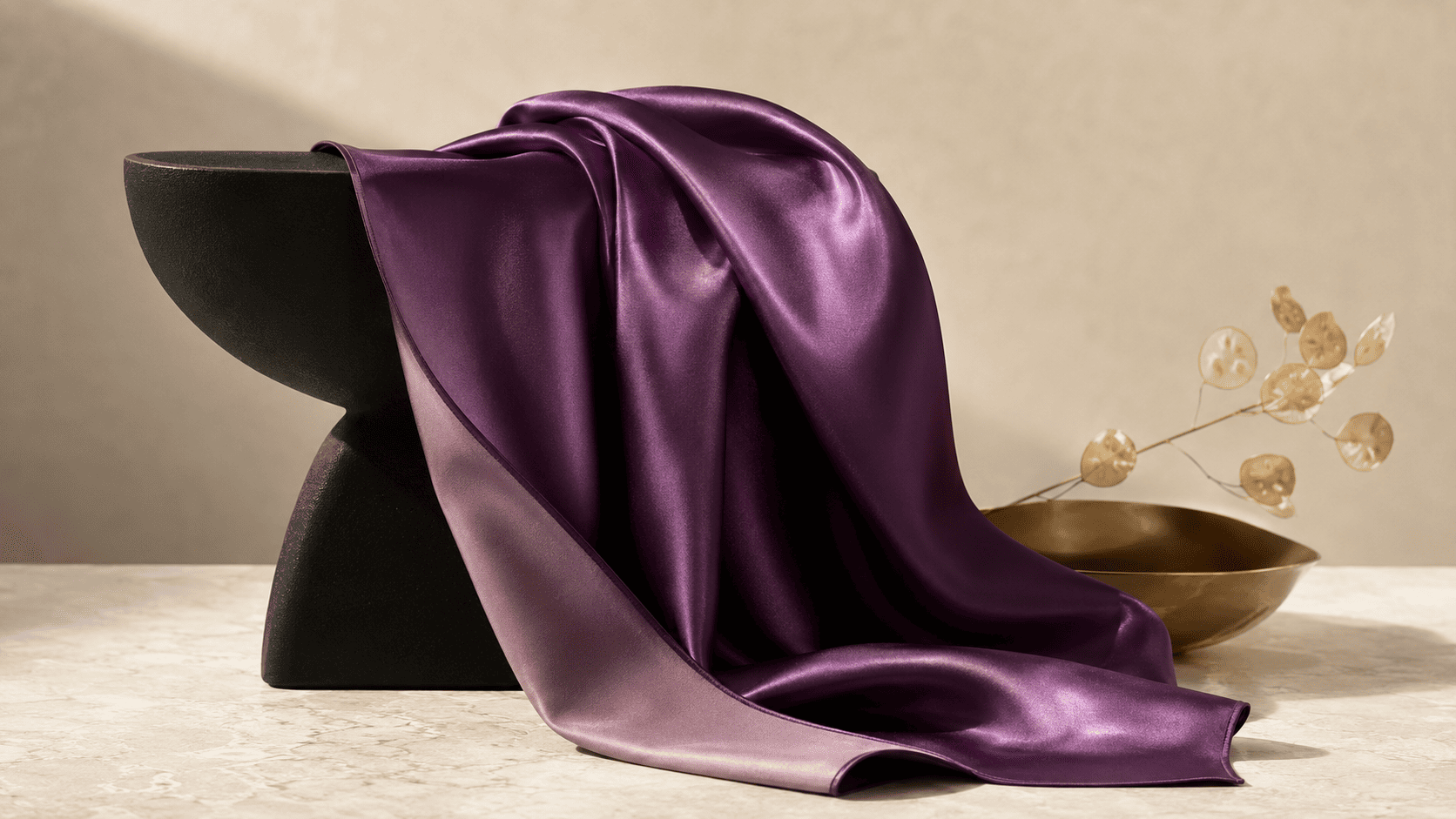
Compared with twill, satin usually looks more luminous and falls in smoother, more liquid curves. It can bring depth to rich colours and feels naturally suited to evening dressing, soft shoulder drapes and styles where movement matters more than a sharply defined knot.
The same floats that create satin’s glow can also make the surface more vulnerable to snagging and abrasion. Rough jewellery, textured handbag hardware and repeated friction deserve particular care. Satin is not inherently superior because it is shinier; a strong sheen is an aesthetic choice, not a universal measure of silk quality.
What is silk habotai?
Habotai—also written habutai or habutae—is a soft, plain-weave silk. In a plain weave, each yarn passes alternately over and under the next, producing a balanced, relatively even surface. The Museum of Fine Arts Boston’s CAMEO materials database defines habotai as a soft plain-weave silk and notes that it is sold in different weights.

Habotai is typically lighter and less sculptural than scarf-weight twill. It moves easily, folds into a compact space and can feel almost weightless around the neck. Thinner versions may be gently translucent, while heavier habotai has more substance. Its lustre tends to be softer and more evenly diffused than the pronounced shine of satin.
Choose habotai when you prefer softness, minimal bulk and an informal floating drape. It can be attractive for warm-weather scarves, relaxed neck styles and pieces intended to move freely. However, an especially light scarf may not hold a complex knot or display a large printed design as firmly as twill.
Which fabric makes the best silk scarf?
For an all-purpose luxury square, silk twill is often the most versatile: it balances softness, print clarity, structure and wearable lustre. Satin is a compelling choice when you want dramatic shine and fluid elegance. Habotai is best when lightness and effortless movement are the priorities.
- Choose twill for defined knots, printed artwork, day-to-evening versatility and a scarf with gentle structure.
- Choose satin for stronger shine, rich colour effects, smooth draping and an evening mood.
- Choose habotai for a featherlight feel, warm-weather comfort, compact packing and soft movement.
Your preferred style matters as much as the weave. A person who regularly ties compact neck knots may value twill’s body, while someone who wears scarves loosely over the shoulders may prefer satin or habotai. Explore seven elegant ways to wear a silk scarf, then match the fabric to the styles you would actually use.
Does momme weight change the comparison?
Yes. Momme is a traditional measure of silk fabric weight, and two fabrics with the same weave can feel different at different momme weights. A heavier habotai may feel more substantial than a very light twill; a heavier satin may drape with more richness than a thin one. Momme is therefore useful, but it should be read alongside weave, yarn, finish and intended use.
There is no single ideal number for every scarf. A narrow twilly, an everyday square and a large wrap have different needs. Check the exact specifications for each piece in the silk scarf collection, and consider how much structure or movement you want.
How should each silk fabric be cared for?
Always follow the care label supplied with the individual scarf. Fibre content alone does not determine safe cleaning: dyes, print methods, finishes, hems and embellishments also matter. Satin’s longer floats merit protection from snags, while lightweight habotai should be supported gently to avoid distortion. Twill may feel robust, but its printed surface and finished edges still require thoughtful handling.
Keep every silk scarf away from rough jewellery, perfume, prolonged direct sunlight and aggressive stain treatments. The Canadian Conservation Institute explains how light, handling, humidity and poor storage can affect textiles and costumes. For practical everyday instructions, use Lanting Loom’s silk care guide.
Frequently asked questions
Is silk twill better than silk satin?
Not universally. Twill is often better for defined knots and versatile printed squares; satin is better when a smooth, glossy face and fluid drape are the desired effect.
Is habotai real silk?
Traditional habotai is silk, but the name alone should not replace a fibre-content check. Read the label because imitation or blended fabrics may also be sold using similar terminology.
Which silk is least shiny?
Among these three, habotai usually has the quietest sheen, twill has a controlled lustre, and satin produces the strongest surface reflection. Weight and finishing can modify that appearance.
Which silk holds a scarf knot best?
Silk twill generally holds a defined knot most reliably because it has more body and surface grip than very fluid satin or lightweight habotai. The scarf’s size and weight also influence the result.
The best choice is the one that supports the way you want to wear the piece. Look beyond shine alone: consider fibre content, weave, weight, finish, dimensions and care. Those details reveal far more about a scarf than the word “silk” by itself.