

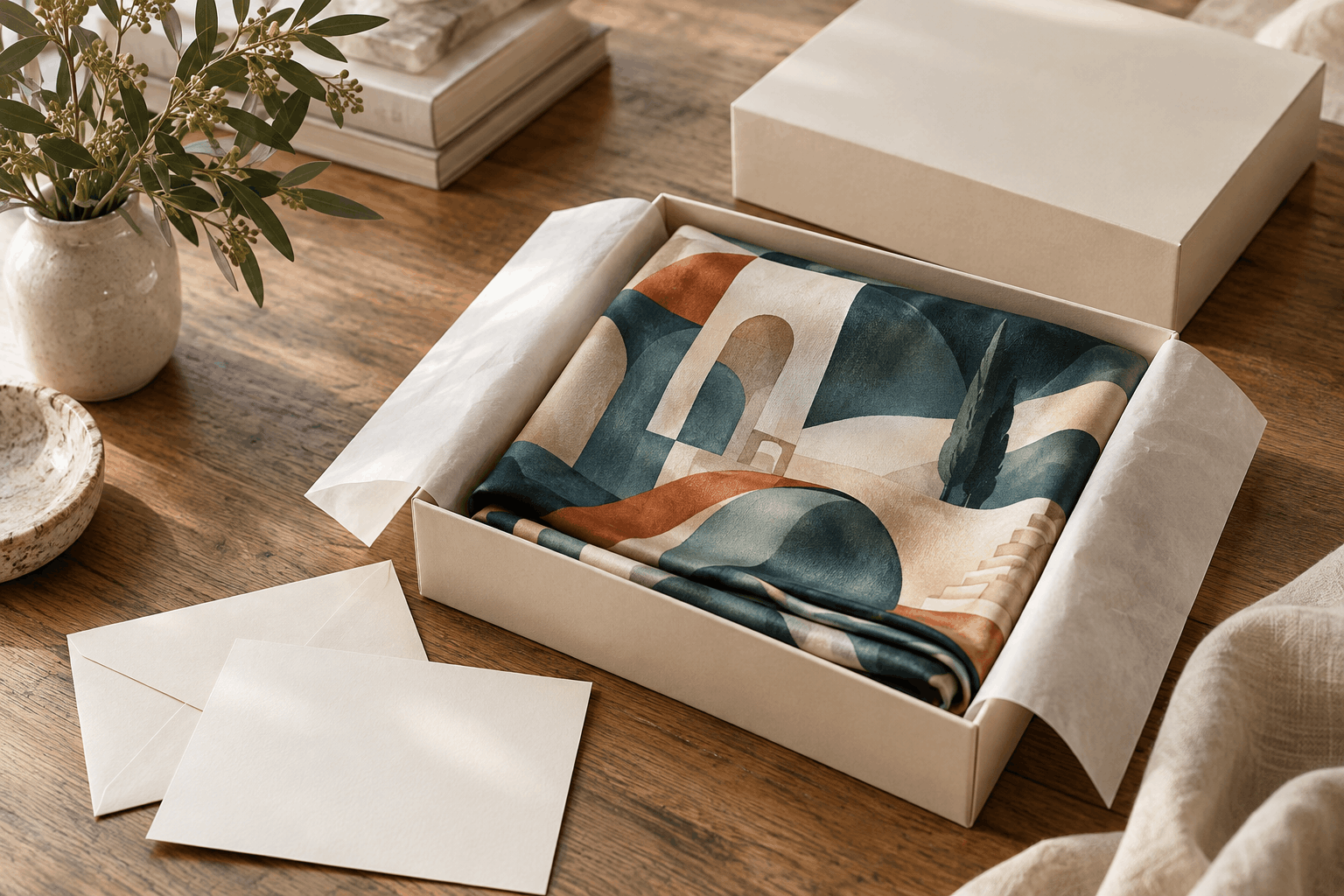
A bespoke corporate gift begins with an idea: a company milestone, a cultural story, an architectural detail or a message of appreciation. Turning that idea into a finished gift requires a series of design decisions, practical checks and clear approvals.
The bespoke gift design process usually moves through briefing, concept development, artwork refinement, sampling, packaging review and written production approval. Each stage answers a different question, from whether the creative direction feels appropriate to whether the physical product is ready to manufacture.
Understanding these stages helps buyers give useful feedback, coordinate internal stakeholders and avoid approving something before the important details have been checked.

The Bespoke Gift Design Process at a Glance
The exact workflow depends on the product and the extent of customisation. An existing gift with a personalised card requires fewer development steps than an original scarf design with custom packaging.
The following framework provides a practical starting point to discuss with your supplier.
| Stage | What you review | What your approval allows |
|---|---|---|
| Brief and scope | Audience, purpose, budget, quantity and deliverables. | The agreed design work to begin. |
| Creative concept | Story, visual direction, motifs and proposed colours. | The selected direction to be developed. |
| Detailed artwork | Layout, dimensions, branding and final wording. | Sample preparation using the identified artwork version. |
| Physical sample | Material, colour, print, construction and finish. | Acceptance of the specific features the sample represents. |
| Packaging and presentation | Box, inserts, cards, personalisation and packing arrangement. | The complete presentation specification to be finalised. |
| Production release | Approved references, quantities, costs and schedule. | Production to begin under the agreed order terms. |
Agree these approval boundaries before development starts. A positive reaction to an early sketch should not leave either party uncertain about whether manufacturing has been authorised.
1. Define the Brief and the Level of Customisation
A useful brief explains what the gift needs to achieve and who will receive it. It should also identify the decisions that have already been made and the areas where you want creative guidance.
For example, a museum may have selected an exhibition theme but need help translating it into a wearable design. A company may have a firm anniversary date and budget while remaining open to different gift formats.
Include the following information:
- The occasion and intended recipients.
- Approximate quantity and budget range.
- Preferred product type, size or material.
- Brand guidelines and relevant visual references.
- The story or message the gift should communicate.
- Packaging and personalisation requirements.
- Required arrival date and delivery destinations.
- The people responsible for feedback and final approval.
Our guide to what to include in a corporate gifting brief explains how to organise these inputs.
Clarify what “bespoke” means for your project. It might involve original artwork, adapting an existing design, selecting a special colour combination or developing a coordinated gift presentation. The quotation should describe the actual work included.
2. Agree the Commercial Scope Before Design Begins
Ask the supplier to explain design fees, sampling charges, included revision rounds and any separate packaging development costs. Confirm whether any charges are credited against a later order rather than assuming they will be.
It is also helpful to establish what happens if you change the product, introduce a new creative direction or decide not to proceed after sampling.
Discuss artwork usage, exclusivity and whether editable files are included in the agreed deliverables. Identify who will arrange permission for any supplied images, illustrations or other third-party material.
These discussions help both sides understand the scope before time is invested in development. If you are still deciding how much customisation the project needs, read our comparison of bespoke corporate gifts and off-the-shelf premium gifts.
3. Develop and Select a Creative Direction
The concept stage explores how the brief could become a design. Depending on the project, the presentation might include a mood board, sketches, colour studies or a preliminary product mock-up.
The aim is to agree the central idea before refining every detail. The Design Council’s Double Diamond framework describes a broader design approach that moves from understanding and defining a challenge to developing and testing possible solutions. Bespoke gifting benefits from that same habit of exploring before committing.
For a silk scarf, consider how the story becomes pattern, movement and colour. A building might inspire a border rhythm; a garden might suggest a flowing composition. The design should remain appealing when the scarf is folded or worn.
Review concepts against the brief:
- Does the design communicate the intended story?
- Will it appeal to the recipients?
- Does the branding feel proportionate to the gift?
- Can the idea work within the proposed material, budget and schedule?
Select a clear direction and record what should be retained. Combining every feature from several concepts can make the next version less coherent.

4. Refine the Artwork With Consolidated Feedback
Once the direction is agreed, the designer develops the layout and production details. This is the stage to review motif placement, border width, logo position, lettering and the relationship between different colours.
For scarves, request views that help you assess both the full artwork and how it may appear folded. For packaging, review the layout at its intended size so small text and crowded areas are easier to identify.
Nominate one project contact to combine comments from marketing, procurement, leadership and other reviewers. Resolve conflicting requests internally before sending instructions to the designer.
Specific feedback is easier to act on. Instead of “make it more elegant,” explain the desired change: “Please reduce the logo size, retain the border and leave more open space around the central motif.”
Use version numbers and refer to the exact file under review. Ask the supplier to summarise the changes in each new version so reviewers can check them without reopening settled decisions.
5. Understand What a Digital Proof Can Confirm
A digital proof is useful for checking composition, spelling, dates, proportions and branding placement. It also helps stakeholders review the same artwork before a physical sample is made.
It does not allow you to feel a material, inspect a hem or judge the fit of a gift inside its box. Colour also needs careful handling.
Adobe’s guidance on colour proofing explains that the reliability of an on-screen proof depends on the monitor, colour profiles and viewing conditions. A mock-up viewed on an ordinary screen should therefore be treated cautiously when approving colour-critical work.
Agree suitable colour references with the supplier and identify which physical sample will be used for final evaluation. If a particular brand colour is essential, raise that requirement before sampling.
Record artwork approval as approval for the next agreed step, such as sample development, with the file version clearly identified.
6. Review the Physical Sample Against Its Intended Purpose
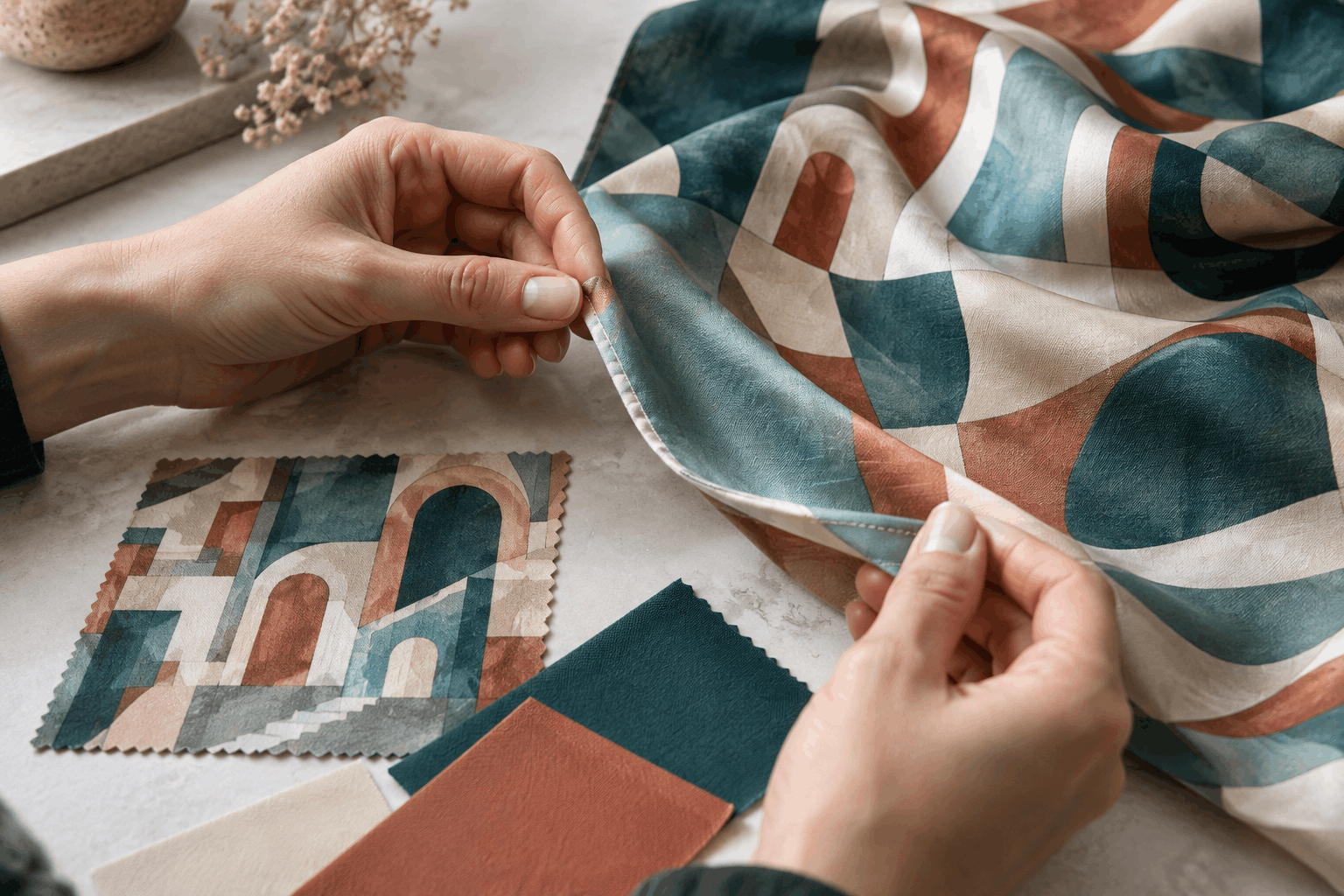
Ask what kind of sample you are receiving. A material swatch, a small print test and a complete finished gift answer different questions.
A print test on the proposed fabric can help assess colour and detail, but it cannot demonstrate the final scarf’s dimensions or finishing. An existing scarf may show material quality while using artwork unrelated to your order.
For a finished scarf sample, review:
- Material composition and the agreed fabric specification.
- Feel, weight and drape.
- Colour appearance and print clarity.
- Motif scale and placement.
- Finished dimensions and edge construction.
- Labels and any personalised details.
- Appearance when folded, worn and placed in the box.
Ask the supplier to identify any sample features that differ from the proposed production version. Record those differences explicitly rather than assuming they will be understood later.
If revisions affect the physical result, agree whether another sample is needed. A colour adjustment may require a new print test, while a change to construction may require a revised finished sample.
7. Approve the Complete Gift Presentation
Review the packaging alongside the product. The recipient experiences the box, opening sequence, message and gift as one presentation.
Check the box size, closure, internal fit, tissue, inserts and the placement of the story card. Confirm that the gift can be removed easily and that the proposed folding arrangement presents the design well.
Proofread every printed component separately. Names, anniversary dates, translated messages and website addresses deserve a final check in the actual layout.
Where individual personalisation is involved, approve the template and the method for matching each message to the correct recipient. A correct card design does not establish that every recipient’s details are correct.
Also distinguish presentation packaging from transport protection. If gifts will be shipped individually, confirm the outer packaging arrangement. Our guide to planning corporate gifts for recipients in multiple countries explores the delivery considerations.
8. Give a Clear Written Production Approval
Final approval should bring the agreed references together in one record. The person authorising production should be able to identify exactly what will be made.
Confirm:
- The order reference and quantity for each version.
- The approved artwork filenames and version numbers.
- The approved sample reference and date.
- Materials, dimensions, finishes and agreed tolerances.
- Packaging, printed inserts and personalisation details.
- Any documented differences from the reviewed sample.
- The agreed price, payment conditions and delivery schedule.
- The inspection arrangements and person authorised to approve.
Retain the approved sample and specifications as production references. Ask the supplier how these will be shared with the people responsible for manufacturing and inspection.
If something remains unresolved, state which component is on hold and what can proceed. Avoid broad approval wording that could be interpreted as permission to manufacture an unfinished specification.
What Happens if You Request Changes After Approval?
A change after approval may still be possible, but its impact depends on what has already been purchased, printed or manufactured.
Ask for written confirmation of feasibility, additional cost and any revised delivery date before accepting the change. The supplier should also identify which approved files or specifications will be replaced.
If the modification affects appearance, construction or fit, decide whether renewed sampling is necessary. Update the approval record so an earlier version cannot accidentally remain the production reference.
After production, inspection should compare the goods with the agreed specifications and sample references. Sample approval and inspection of the finished order serve separate purposes.
Frequently Asked Questions
Do we need finished artwork before contacting a supplier?
No. You can begin with an occasion, audience, story and visual references. Explain how much creative development you need so the supplier can confirm the scope and quote appropriately.
How many design revisions are included?
This depends on the supplier and quotation. Agree the number of rounds, what counts as a revision and how a new creative direction would be charged before work begins.
Can a bespoke gift be approved entirely online?
Artwork and wording can be reviewed online. Where material, colour or construction is important, discuss physical sampling. If you proceed using photographs or digital proofs alone, record which features have not been assessed in person.
How long does the design and approval process take?
The schedule depends on the design scope, sampling requirements, revision rounds and the speed of internal decisions. Ask for separate milestones for concept review, artwork approval, sample review and production release, including sample shipping time.
Begin With a Clear Story and a Shared Approval Plan
A well-managed bespoke gift project gives each decision its proper place. The brief establishes the purpose, the design develops the story, physical samples test the result and written approval defines what will be produced.
To explore a project with Lanting Loom, share your occasion, recipient group, approximate quantity, budget and required arrival date. Visit our bespoke silk scarves page or explore our corporate gifting options to discuss an appropriate design and presentation direction.
