

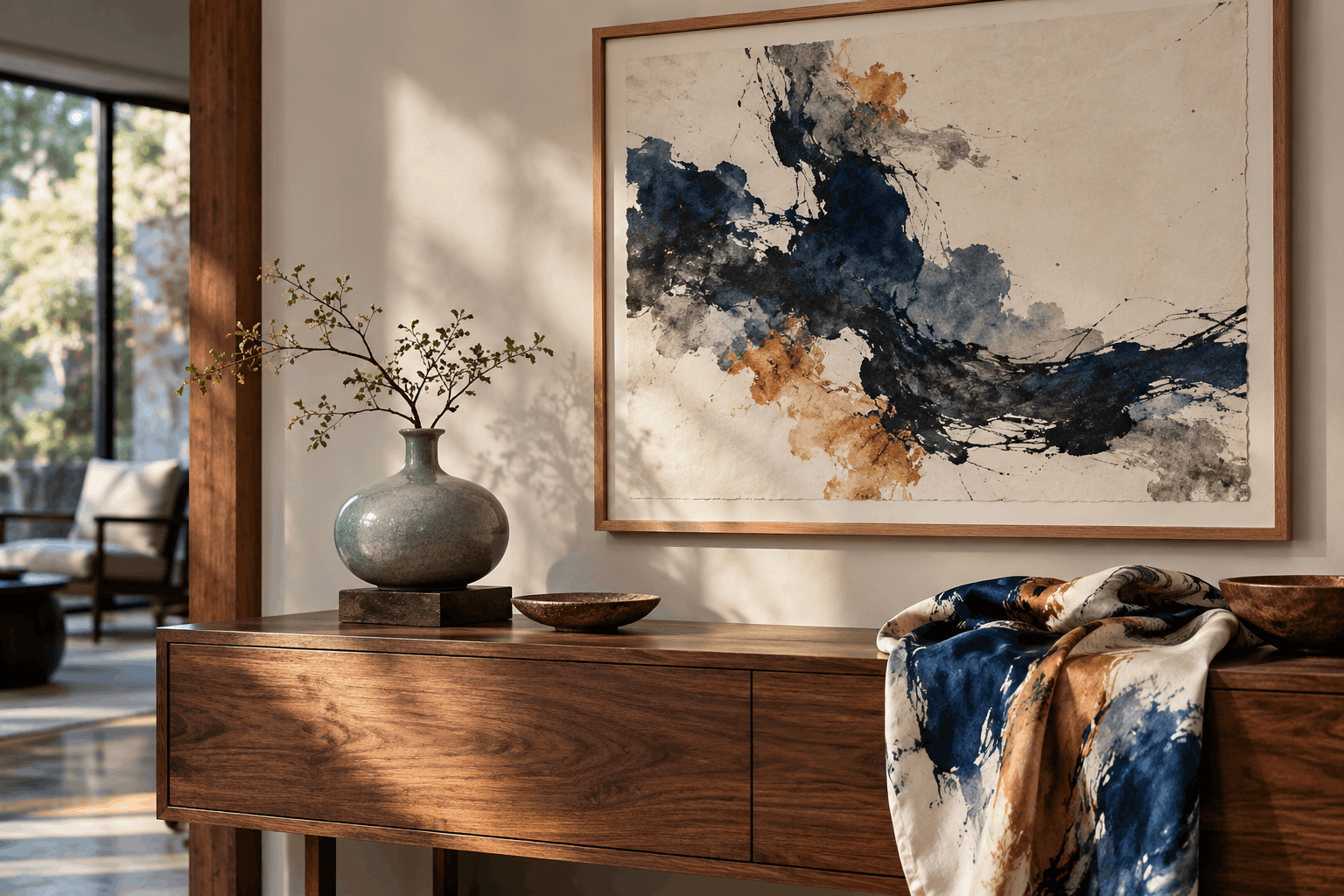
Choosing a gift for someone who loves art begins with noticing how they enjoy it. They may collect a particular artist, spend weekends in galleries, fill their home with sculptural objects or express their interest through the clothes they wear.
Good Chinese art gifts connect with that specific interest. For a collector, the right choice may be a work selected together or a specialist publication. For a design lover, it could be a contemporary ceramic, an artistic silk scarf or an object whose form and story invite closer attention.
The aim is to give them something they will enjoy living with. Start with their taste, then consider the artist or designer, the material, the practical details and the reason the gift feels personal.
First, distinguish a collector from a design lover
These interests often overlap, but they create different gift choices. A collector may follow a particular period, medium, artist or body of work. A design lover may be more interested in colour, texture, proportion and how an object works in everyday life.
Someone who collects Chinese ceramics may have very specific preferences about makers and forms. Someone who simply enjoys beautiful ceramics may welcome a contemporary vase chosen for their room. Knowing which kind of interest you are responding to helps you choose with confidence.
| Their interest | A promising gift direction | What to establish first |
|---|---|---|
| Collecting a specific artist or medium | A work chosen together or a relevant publication | Their collecting focus and what they already own |
| Contemporary interiors | A ceramic, glass or other sculptural object | Scale, display space and preferred materials |
| Fashion and visual art | An artistic silk scarf or textile accessory | Wearable colours, dimensions and personal style |
| Learning about Chinese art | A focused book, exhibition catalogue or guided visit | Subject, reading language and level of detail |
| Shared cultural experiences | An exhibition visit or studio event | Their availability and genuine interest in the programme |
For an important artwork purchase, asking is often the thoughtful choice. You can make the occasion special while allowing the recipient to choose the piece.
1. A contemporary artwork selected with the collector
A work on paper, photograph or small painting can be a meaningful gift when it connects with an artist the recipient follows. Start with that connection rather than a broad label such as “Chinese style.”
Look at the artist’s practice and the particular work. Does the recipient enjoy this subject or approach? Have they mentioned this series? Would the piece add something to their collection?
If you do not know, plan a gallery visit together or offer to contribute towards a piece they choose. This respects the personal decisions involved in collecting and lets the selection become part of the memory.
Ask for information that identifies the work
- Artist and title: who made it and how the work is identified.
- Date and medium: when it was made and the materials or process used.
- Dimensions: the work’s size and the framed size, if applicable.
- Condition: any damage, repairs or other relevant observations.
- Documentation: the invoice, available ownership history and supporting records.
- Practical terms: delivery arrangements, framing and the seller’s return conditions.
For an older work or a significant attribution, involve a qualified specialist rather than relying on appearance or a decorative certificate. Keep the accompanying records with the gift so the recipient can retain them.
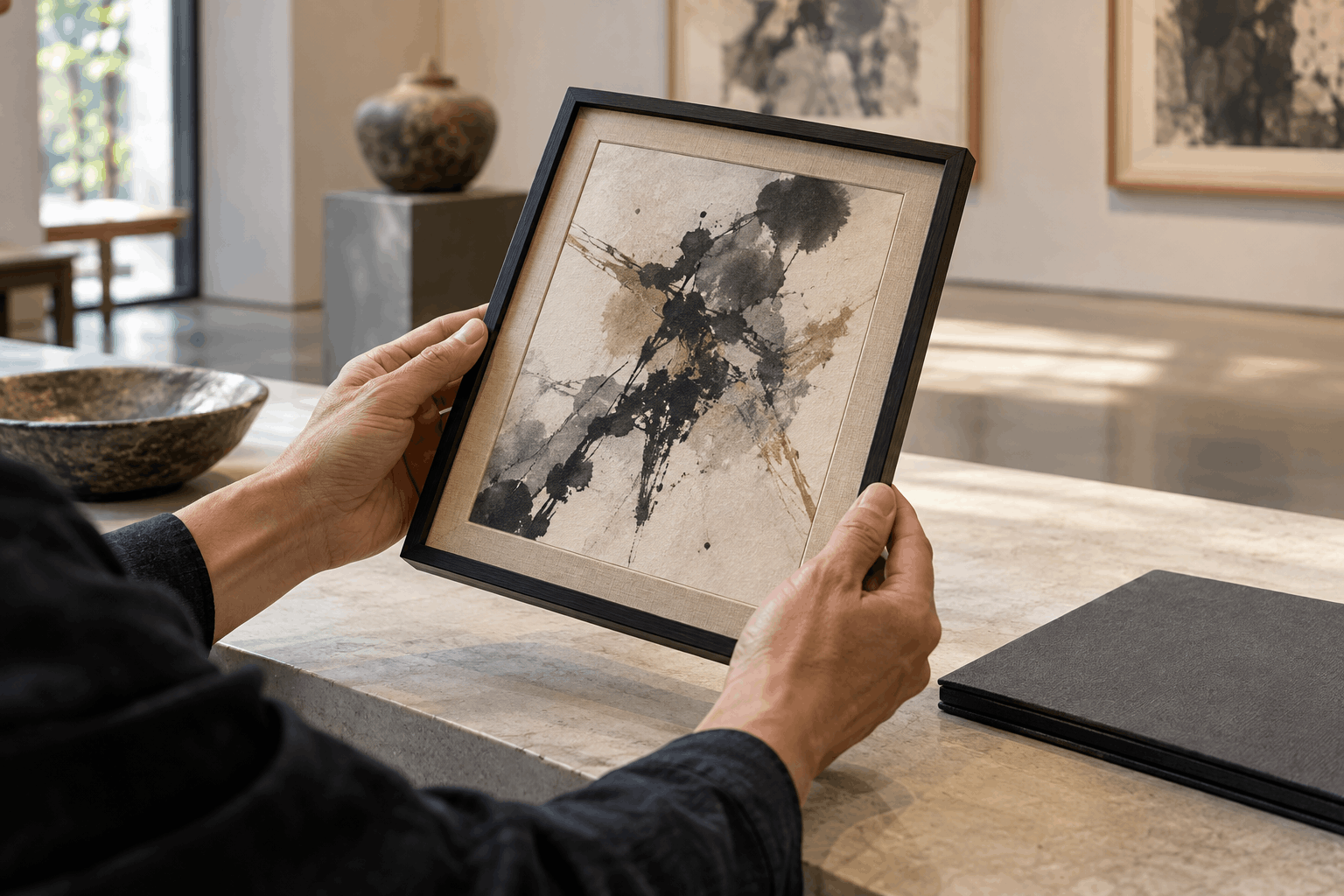
2. A print or edition with clear descriptions
A print can offer a way to give work by an artist the recipient admires. Before buying, ask the seller to explain exactly what is being offered: the printing process, the artist’s involvement and whether the image was conceived as a print or reproduces another work.
If it is sold as a limited edition, confirm the edition size, the numbering and any accompanying information. A signature or number is a detail to understand, not a substitute for knowing what the object is.
A reproduction can also be an enjoyable gift when it is accurately described and well chosen. What matters is that the recipient receives what you intended to buy.
Leave room in the budget for suitable framing if needed. A collector may prefer to choose the frame and mounting themselves, particularly when the work will sit beside other pieces.
3. Contemporary ceramics and studio objects
For someone who enjoys interiors, a ceramic vessel or small sculptural object can offer daily pleasure through shape, surface and light. Choose the maker and object with the same attention you would give a work on paper.
The V&A’s Dimensions: Contemporary Chinese Studio Crafts explores the innovations that have grown from China’s longstanding craft traditions. It provides a useful starting point for discovering how broad contemporary practice can be.
Let the recipient’s preferences guide the format. A compact vessel may fit naturally on a shelf; a large sculpture asks for a more deliberate place. Consider how the object will look from different angles, not only in the seller’s main photograph.
Ask about the maker, material, dimensions and care. If you intend it to hold flowers or serve food, confirm that it is suitable for that use. An object can be intended purely for display, even when its form resembles a familiar vessel.
For more ideas across contemporary objects and accessories, explore our contemporary Chinese luxury gifts guide.
4. An artistic silk scarf for someone who enjoys wearable design
A silk scarf can appeal to a person who brings an interest in art into their wardrobe. It offers colour, composition and movement in an object they can wear, rather than requiring another place on the wall.
Choose the visual qualities they respond to. Someone who enjoys expressive brushwork may like a fluid composition. A person drawn to botanical subjects may prefer a garden-inspired design. Another may enjoy geometric structure or strong contrasts.
Look at the design both flat and worn
Folding changes a scarf’s composition. A border may become the most visible detail, while a central motif may almost disappear. Look for worn photographs and imagine the scarf with clothing the recipient already owns.
Check the exact dimensions, fibre composition, finishing and care instructions. A beautiful image alone cannot tell you how much fabric someone will be wearing or whether the format suits their habits.
Understand what “artistic” describes
A scarf may carry an original design, a documented collaboration or a reproduction of an artwork. Those are different relationships, and the product description should explain which applies. If an artist’s name is part of the appeal, look for clear attribution and collaboration or licensing information.
An art-inspired scarf does not need to be presented as a collectible artwork to be a thoughtful gift. Its value can lie in the quality of the composition and the pleasure of wearing it.
Explore Lanting Loom’s design stories alongside the silk scarf collection. Our Chinese silk gifts guide offers more context on material, cultural meaning and personal choice.

5. A book that takes their interest further
A well-chosen art book can be especially welcome when you know someone’s interests but would not choose an artwork for their collection. Look for a subject they already care about: a particular artist, exhibition, ceramic tradition or textile practice.
Compare the contents as well as the cover. A scholarly catalogue, a visual introduction and an artist’s monograph serve different purposes. Check the author or editor, publisher, language and whether the recipient already owns it.
For an experienced collector, a focused publication may be more useful than a broad survey. For someone beginning to explore Chinese art, an accessible museum publication can provide a good entry point.
Add a note explaining the connection: “You mentioned wanting to learn more about this artist, and I thought you would enjoy spending time with these works.”
6. Time to experience art together
A museum visit, exhibition ticket or studio event can suit someone who prefers experiences or already has a carefully edited home. The gift may be the time to look slowly, discuss what you see and enjoy the day together.
Check the actual programme, dates, access arrangements and booking terms before purchasing. If their schedule is uncertain, a flexible invitation can be easier to enjoy than a fixed commitment.
You could pair the experience with a relevant catalogue or a scarf chosen for their style. Keep any physical addition modest and purposeful; the visit can be a complete gift on its own.
Make the Chinese cultural connection specific
Chinese art encompasses many periods, regions, media and individual practices. Contemporary Chinese artists do not need to use traditional imagery, and a familiar motif alone does not establish where an object was made or who designed it.
Look for a story that names its source. It might explain an artist’s ideas, a maker’s material choices or a designer’s interpretation of a particular landscape. Specific information gives the recipient something worth discovering.
Keep three questions separate: Who created it? What informed the design? How and where was it made? Clear answers are more helpful than a general claim of cultural authenticity.
For broader gift ideas, our guide to meaningful Chinese gifts explores choices across interests and occasions.
Plan for the gift’s life after it is opened
Art and design gifts become part of someone’s surroundings. Check that the dimensions, display needs and care requirements fit the space or routine you have in mind.
Ask the seller for suitable packing and handling guidance for fragile pieces. For works needing framing or specialist display, leave the final decisions to the recipient if you are unsure of their preferences.
Keep documentation separate from decorative wrapping and make it easy to retain. For textiles, include the supplied care instructions. For a book or experience, the useful details may simply be the edition information or booking confirmation.
Your personal note can stay brief: “The balance of colour reminded me of the pieces you always stop to look at.” The recipient does not need a long explanation to recognise your attention.
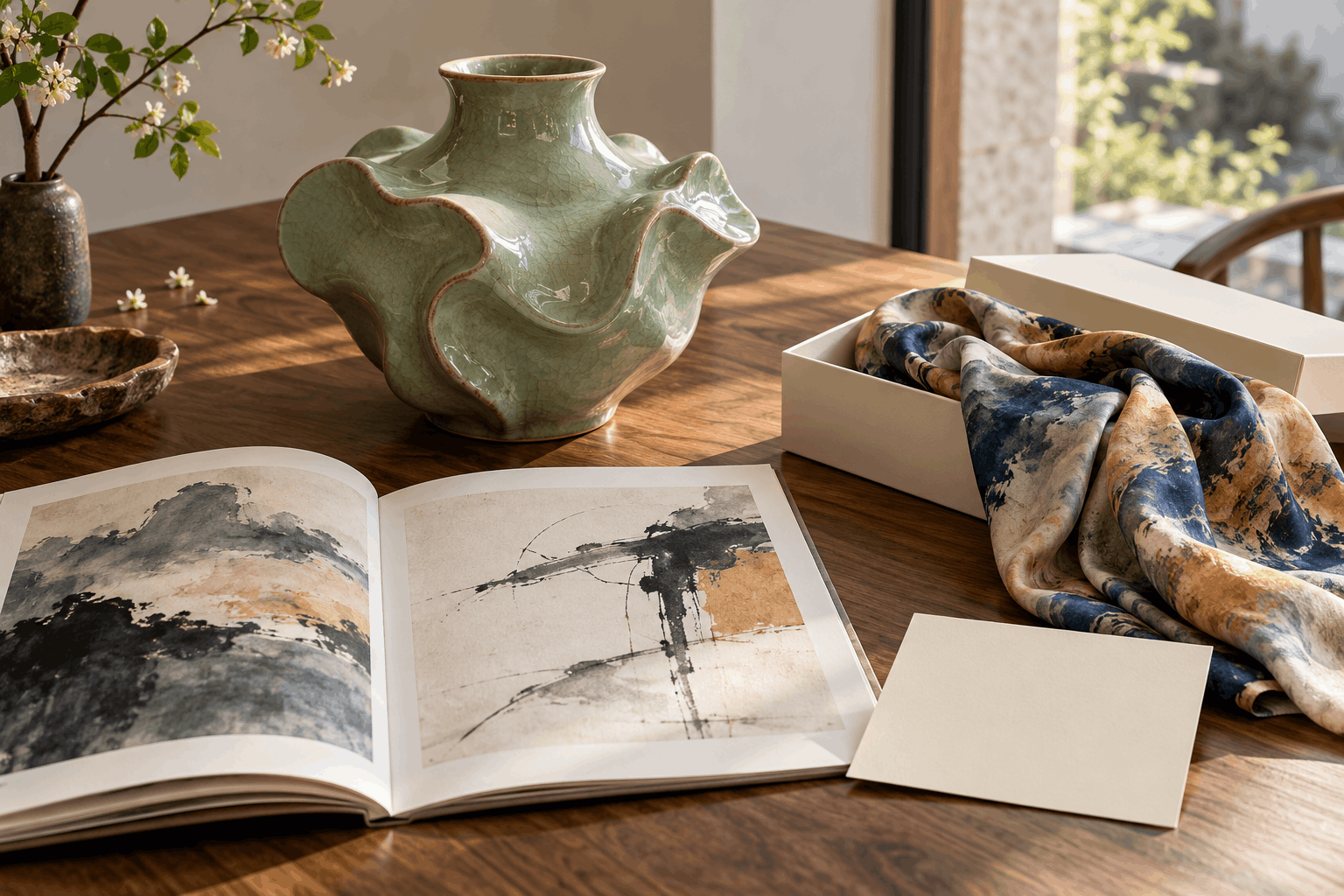
When to keep the gift a surprise
A surprise works best when you have a specific reason to believe the gift suits the person. A book they have mentioned, a scarf in a format they wear or an exhibition they want to see gives you a sound starting point.
For an important addition to a collection, a large display object or a commission, involve them before committing. You can still arrange the presentation and occasion with care.
If you are choosing a ready-made presentation, our guide to personal Chinese gift sets explains how to build around one main object and a meaningful message.
Frequently asked questions
What are good Chinese art gifts for a collector?
Consider a work they help select, a publication relevant to their collecting focus or an experience connected with an artist or medium they follow. Establish what they already own and how specific their preferences are before choosing.
Is an artistic silk scarf a suitable gift for an art lover?
Yes, if they enjoy wearing scarves. Choose a composition and palette that suit their style, then check the dimensions and material details. Explain the design accurately without assuming that every art-inspired accessory is a collectible edition.
Should I buy an original work or a reproduction?
Choose according to the recipient’s interests and your budget, with a clear description of what you are buying. A collector may have specific requirements; someone seeking an image for their home may appreciate a well-produced reproduction.
Does a limited edition make a better gift?
Only when the work itself appeals to the recipient. Ask what is limited, how the edition is documented and who produced it. An edition number alone does not establish quality or suitability.
What if I do not know enough about their collection?
Choose together or give something that supports their interest, such as a relevant book or gallery experience. Avoid guessing about an important acquisition.
How should I present an art gift?
Use protective packaging appropriate to the object, include its documentation and care information, and add a short personal note. Confirm framing or display preferences before making permanent presentation choices.
Choose for the way they enjoy art
The strongest art gift reflects something you have noticed: an artist they follow, a material they love, a colour they wear or a subject they want to understand more deeply.
For someone who enjoys art through personal style, explore Lanting Loom’s silk scarves and curated gift sets. Let the design begin the conversation, and let your reason for choosing it make the gift personal.
