

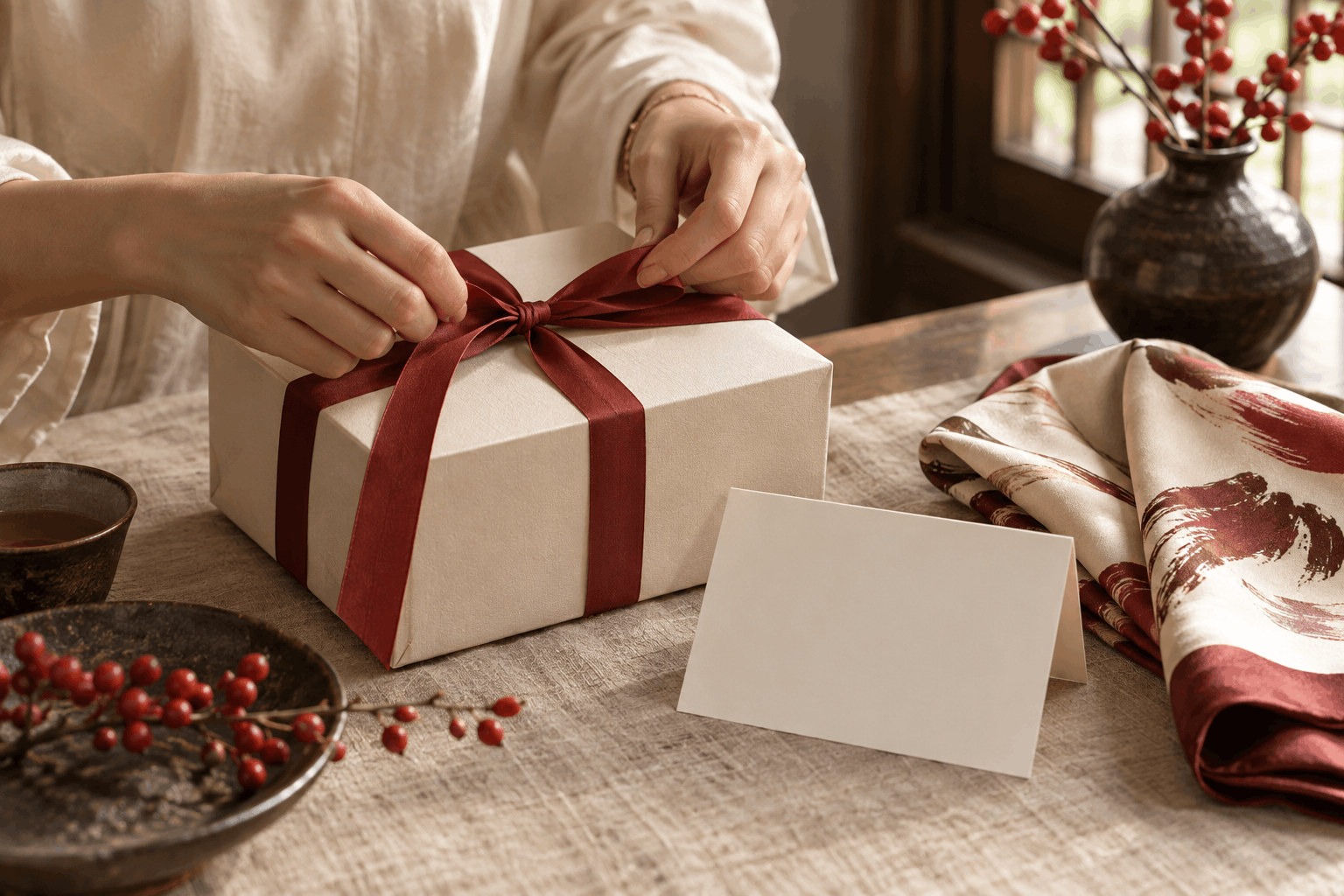
Choosing a Chinese New Year gift can feel complicated when every guide seems to offer another rule. Should you bring fruit? Is a personal accessory appropriate? Must everything be red? And what happens if you choose something with an unintended meaning?
Good Chinese New Year gift etiquette begins with attention to the person and the occasion. Choose something they can enjoy, check customs you do not know and present it without creating pressure. Tea, suitable food gifts and personal keepsakes can all work; the right choice depends on your relationship.
Traditional associations are useful to understand, especially for a first visit or a gift to an elder. They are a starting point for consideration, not a test that every family applies in the same way.
Begin with the household, not a universal rulebook
This guide concerns Chinese New Year. Lunar New Year is also celebrated in other cultural traditions, so use your host’s terminology and avoid assuming that one set of customs applies to everyone.
Before buying, ask the person who invited you a simple question: “Is there anything your family would particularly enjoy, or anything I should avoid bringing?” A partner or close friend can often give you more useful guidance than a long list of generic dos and don’ts.
Think about who will receive the gift. A present for the household is different from a personal gift for your friend, and both are different from money given to a child. Also ask whether gifts are welcome at all. Respect a clear request for no gifts.
For the broader approach behind this guide, read our modern guide to meaningful Chinese gifts.
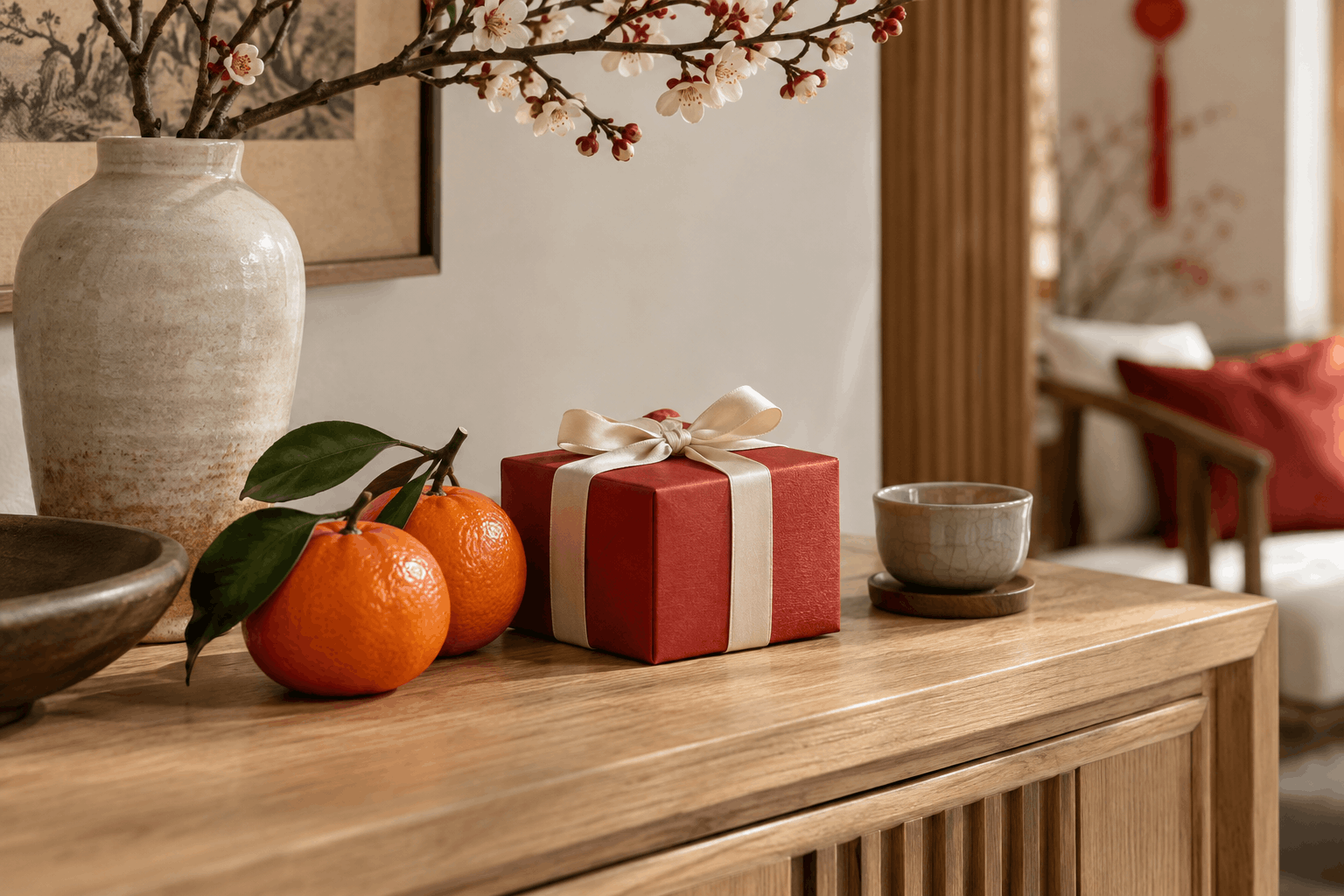
What to give: thoughtful choices and what to check
| Gift idea | When it suits the occasion | Check before buying |
|---|---|---|
| Tea | A recipient who enjoys it regularly | Preferred type, caffeine preferences and brewing equipment |
| Oranges or mandarins | A household visit where fruit is welcome | Quantity, freshness and any specific exchange custom |
| Packaged biscuits or other treats | A small gift for a household or group | Ingredients, dietary preferences and storage needs |
| A silk scarf | Someone whose style you know | Colors, dimensions, material and care requirements |
| A small ceramic piece | Someone who enjoys useful design | Available space, intended use and taste |
| A carefully chosen gift set | A closer relationship or more substantial gesture | Whether every item is suitable and the value feels comfortable |
Tea and food: choose for enjoyment
Oranges, sweets and other food gifts have a familiar place in Chinese New Year gift exchanges. Mandarins also carry associations with wealth and good luck. That cultural connection works best alongside a practical choice the household will actually enjoy.
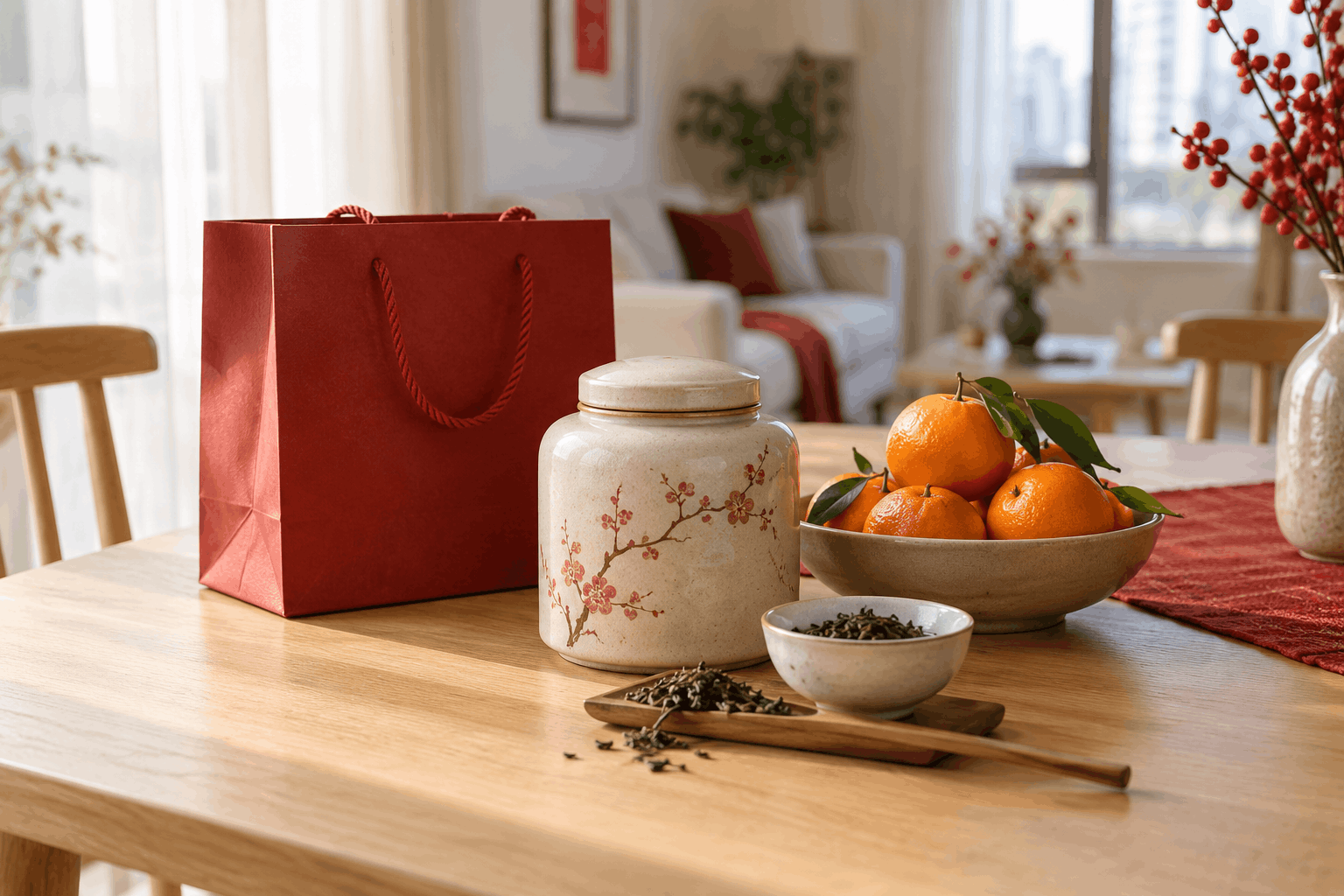
For tea, choose a type the recipient likes in a format they can use. A beautiful loose-leaf selection may be less convenient for someone who makes every cup with a tea bag. For treats, retain ingredient labels and tell the host if anything needs refrigeration.
Keep quantities manageable. A compact gift can be easier to receive than a large hamper, especially when the family is already hosting several visits. Do not expect the host to serve your gift immediately; they may have planned the menu carefully.
Personal gifts: let familiarity guide you
A scarf can be a thoughtful choice for a parent, partner or close friend whose wardrobe you know. Look at the colors and shapes they already wear. Festive accents can be lovely, but their everyday preferences matter more than making the gift match a seasonal display.
Compare square scarves and long scarves according to how the recipient might wear them. Check the actual product details, and use our silk scarf size guide if you are unsure about proportions.
For a more distant acquaintance, a less personal gift may be easier to choose. Fragrance, jewelry and clothing can require detailed knowledge of someone’s taste. A modest tea or food gift may leave less room for uncertainty, provided you have checked their preferences.
What to avoid, and why some gifts can be sensitive
Some traditional cautions arise from similar-sounding words; others concern mourning or separation. Understanding the association helps you make a considerate choice without assuming that every recipient holds the same belief.
| Item or detail | Traditional concern | Practical approach |
|---|---|---|
| Clocks | In Mandarin, “giving a clock” sounds like an expression connected with attending someone at death or their funeral. | Avoid a surprise clock gift when you do not know the recipient’s views. |
| Pears | The word for pear sounds like a word for separation in Mandarin. | Choose another fruit for an unfamiliar household. |
| Groups of four | Four sounds similar to death in Mandarin. | Check preferences about quantities and money amounts. |
| Knives and scissors | Sharp objects can suggest cutting a relationship. | Save specialist tools for a clearly requested gift. |
| Mourning-style flowers or presentation | Some flowers and white or black arrangements can evoke funerals. | Ask a local florist for a festive arrangement appropriate to the household. |
The clock, pear and number associations illustrate wordplay in Chinese gift customs. Watches are not treated identically to clocks everywhere, so avoid turning the clock caution into a universal ban on all timepieces. The other examples appear among documented New Year gift cautions.
If someone has specifically requested an item, their expressed preference is more useful than a generic taboo list. When in doubt, ask privately before buying. There is no need to explain an unwanted association to the whole gathering or turn another guest’s present into an etiquette lesson.
Does a Chinese New Year gift have to be red?
Red and gold are familiar festive wrapping colors associated with good luck. They can be an easy starting point when you are unsure how formal or traditional the presentation should feel.
You do not need to buy a red product if the recipient would prefer another color. A festive ribbon or gift bag can acknowledge the season while the object itself suits their taste. If the household follows particular color customs, let those guide the wrapping.
Keep the packaging easy to open and carry. Remove price labels, protect fragile pieces and include care instructions where useful. If there is a gift receipt, tuck it discreetly into the box rather than discussing the price during the exchange.
A gift set should feel coherent. Choose a combination because the recipient will enjoy the items together, not because a larger box appears more impressive. Browse Lanting Loom gift sets and check each listing’s contents before deciding.
Red envelope etiquette: ask about the relationship first
Red envelope customs vary by region, age, marital status and relationship. A common pattern involves older or married people giving to younger or unmarried recipients, but that is not a universal instruction for every guest.
Ask your host or partner whether you are expected to give any, and to whom. Check a suitable amount privately rather than choosing a figure from a global online chart. Fresh notes are often preferred, and amounts involving four are commonly avoided.
If you receive an envelope, thank the giver and avoid opening it to count the money in front of them. Do not compare amounts with other recipients.
There is no need to add cash to every personal present. A gift for the household and an envelope for a child serve different purposes. At work, follow the organization’s current rules and established practice; personal gifting should not be confused with an employer’s bonus or red-envelope arrangements.
How to give and receive a gift gracefully
Choose a calm moment
Confirm the visit time and hand over your gift when the host has a moment to receive it. If they are balancing coats, children and arriving guests, wait rather than creating another task at the doorway.
Offer the gift with both hands when practical, accompanied by a warm greeting. Treat this as a considerate gesture, not a performance. A simple “Happy Chinese New Year, and thank you for inviting me” is enough.
Make it easy to accept
For something edible, you can say, “This is for you to enjoy later; there is no need to serve it today.” For a personal gift, explain your choice briefly: “I remembered how much you liked these colors.”
A recipient may say that you should not have gone to the trouble. Respond warmly, but do not use etiquette advice as a reason to insist after a clear refusal. If a workplace rule or personal preference prevents acceptance, respect it.
Do not demand an immediate reaction
Let the recipient decide when to open the present. Avoid asking them to try it on, pose for a photograph or praise it in front of everyone. The gesture should leave them room to respond naturally.
When receiving, thank the giver for thinking of you. If you are unsure whether to open the package now, ask: “Would you like me to open it, or shall I save it for later?” A short message afterward can acknowledge the care behind the choice.

Adjust your approach to the recipient
Parents and elders: choose around their actual interests and routines. Age alone does not tell you what someone enjoys. Avoid unsolicited products that make the occasion feel like a comment on their health. See our gift ideas for parents and elders.
Hosts: distinguish a present for later from a contribution to the meal. Ask before bringing a dish that needs reheating or serving. Our Chinese New Year host gift guide explores that choice.
Friends and colleagues: match the scale and personal nature of the gift to the relationship. Keep workplace participation optional and check any relevant gift policy. Explore our gift ideas for friends and colleagues for suitable options.
Frequently asked questions
How much should I spend on a Chinese New Year gift?
Choose an amount you can comfortably afford and that the recipient can comfortably accept. The relationship and local expectations matter more than a universal price range. Ask a family member for guidance if you are entering an unfamiliar gift exchange.
Can I give one scarf, or must gifts come in pairs?
A single carefully chosen scarf can be a complete present. Do not turn advice about particular fruit exchanges or money amounts into a requirement to buy two of every object. Check any household-specific expectation if you are unsure.
What if I accidentally choose an unsuitable gift?
If the recipient expresses concern, acknowledge it briefly and offer an exchange. Avoid debating the custom or asking them to reassure you repeatedly. A calm correction keeps the focus on the relationship.
Is an expensive gift more respectful?
Not necessarily. An unexpectedly lavish present can create pressure to reciprocate. A proportionate gift with a specific, sincere message is often easier to receive.
Give with attention and a clear intention
The best etiquette makes the exchange feel comfortable. Ask when you are uncertain, choose for the person receiving the gift and leave room for their customs and preferences.
For someone who enjoys wearable design, explore Lanting Loom silk scarves and add a personal note explaining your choice. A thoughtful design, a useful object or a favorite tea becomes meaningful through the attention behind it.
