

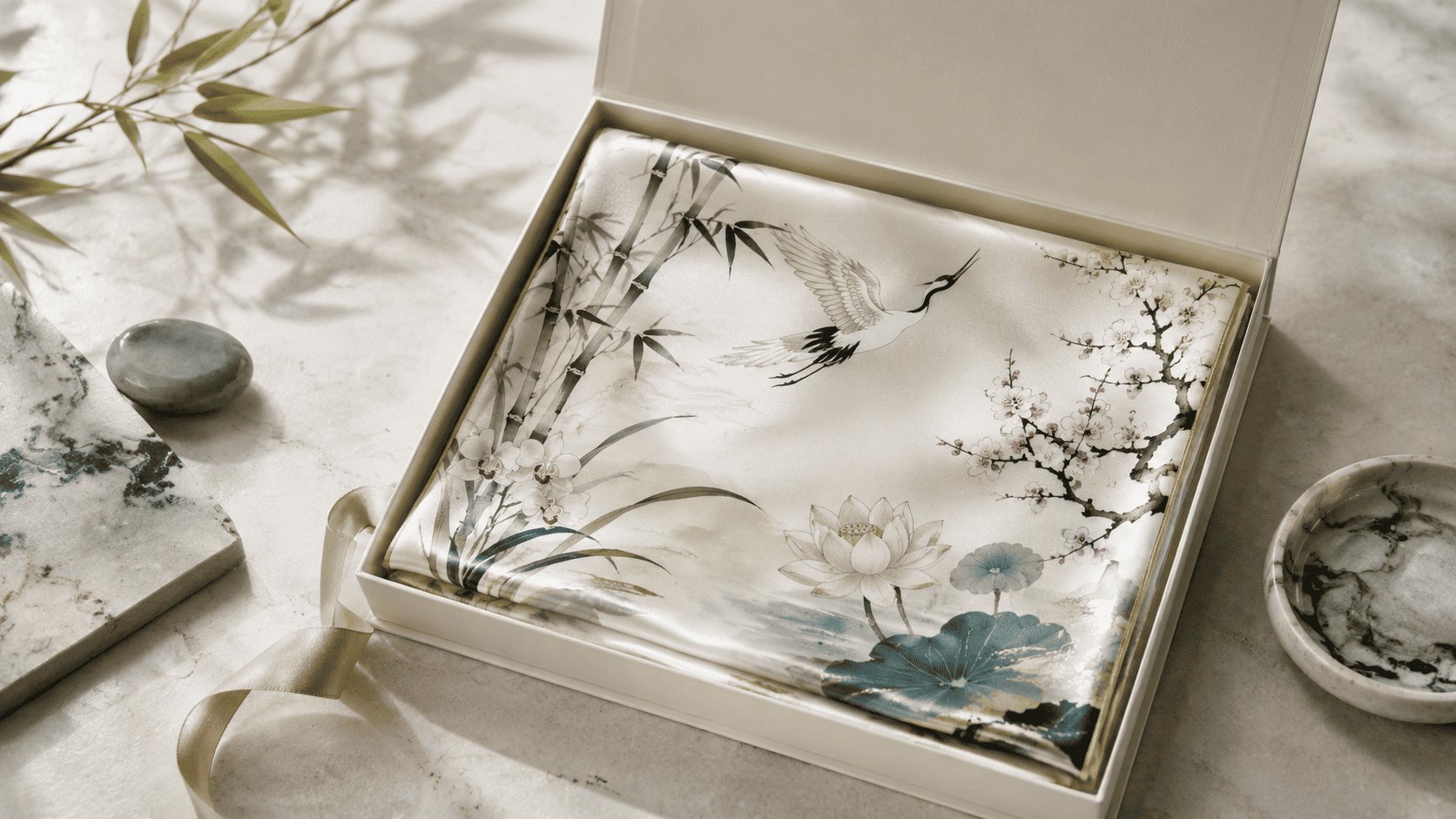
A meaningful gift does more than mark an occasion: it tells the recipient what you admire, hope or remember about them. Chinese art offers a rich visual language for expressing those sentiments. An orchid may honour quiet integrity, a plum blossom can recognise courage through difficulty, and a crane can carry a wish for a long and fulfilling life.
These meanings are not universal codes with only one translation. They developed through poetry, painting, philosophy, religion, wordplay and changing social customs. The surrounding motifs—and the relationship between giver and recipient—also shape the message. The most thoughtful approach is therefore to choose a beautiful object first, understand its story, and explain why that particular symbol made you think of the person receiving it.
Five meaningful Chinese gift symbols at a glance
| Symbol | Common associations | Especially thoughtful for |
|---|---|---|
| Orchid | Integrity, refinement, friendship and loyalty | Mentors, close friends, hosts and respected colleagues |
| Plum blossom | Resilience, courage, renewal and hope | New chapters, recovery, graduation and encouragement |
| Bamboo | Integrity, endurance, flexibility and composure | Leaders, graduates, entrepreneurs and anyone meeting change |
| Lotus | Purity, renewal, elegance and rising above difficulty | Weddings, personal milestones and fresh beginnings |
| Crane | Longevity, wisdom and an auspicious life | Important birthdays, anniversaries, parents and grandparents |
1. Orchid: cultivated character and sincere friendship
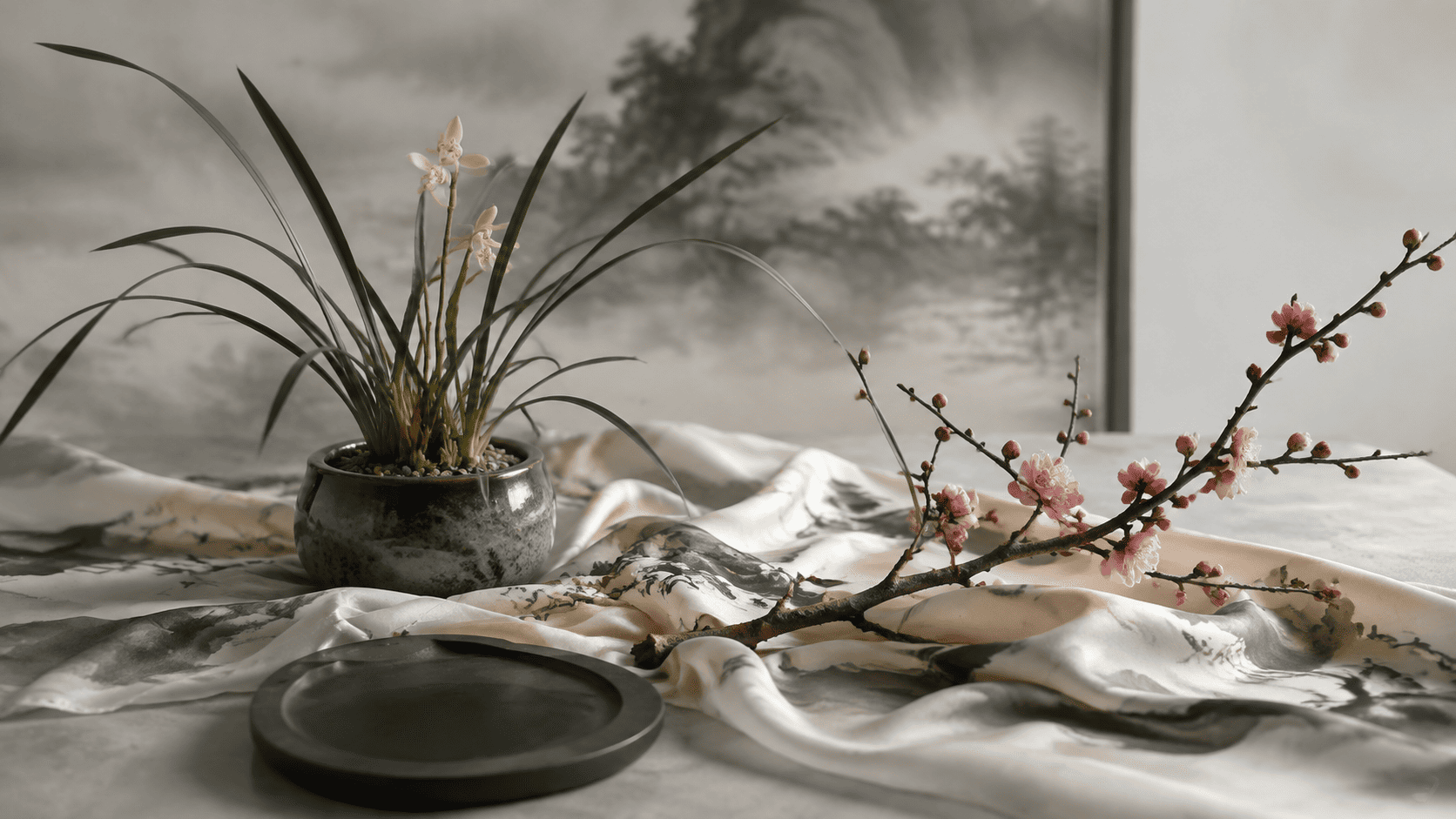
In Chinese painting, the orchid is often the understated choice. Traditional ink orchids are recognised by long, calligraphic leaves and modest blooms rather than the large, showy flowers common in modern gift shops. Their fragrance may be imagined before it is seen, which helped the plant become associated with character that remains valuable even without public recognition.
The Smithsonian’s National Museum of Asian Art explains that the cymbidium orchid became linked with principled gentlemen and later acquired associations including friendship, loyalty and patriotism in Chinese art. That history makes an orchid-inspired gift especially suitable for a mentor, teacher, close friend or colleague whose quiet standards you respect.
Its message need not be formal. A note such as “I chose the orchid for its quiet strength and the friendship it represents” gives the symbol a personal voice. For a fuller account of how the motif developed, read the meaning of the orchid in Chinese art and gifting.
2. Plum blossom: courage before spring
The Chinese plum blossom, or Prunus mume, flowers on dark, leafless branches in the cold of late winter. That contrast—delicate petals appearing before the season becomes easy—is central to its emotional power. It can express resilience without hardness and hope without pretending that hardship did not exist.
A Smithsonian collection record notes that plum blossoms have represented purity of character, courage in adversity, the transience of beauty and the rebirth of hope. Explore the museum’s birds, plum blossoms and bamboo for an example of these associations in Chinese art.
A plum-blossom gift can be deeply appropriate for someone beginning again: moving home, graduating, changing career, recovering from a difficult period or entering a new season of life. It should feel encouraging rather than corrective. Instead of telling someone to “be strong,” acknowledge the strength they have already shown. Our guide to plum-blossom symbolism in Chinese culture explores the motif’s relationship with winter, painting and the promise of renewal.
3. Bamboo: integrity that can bend
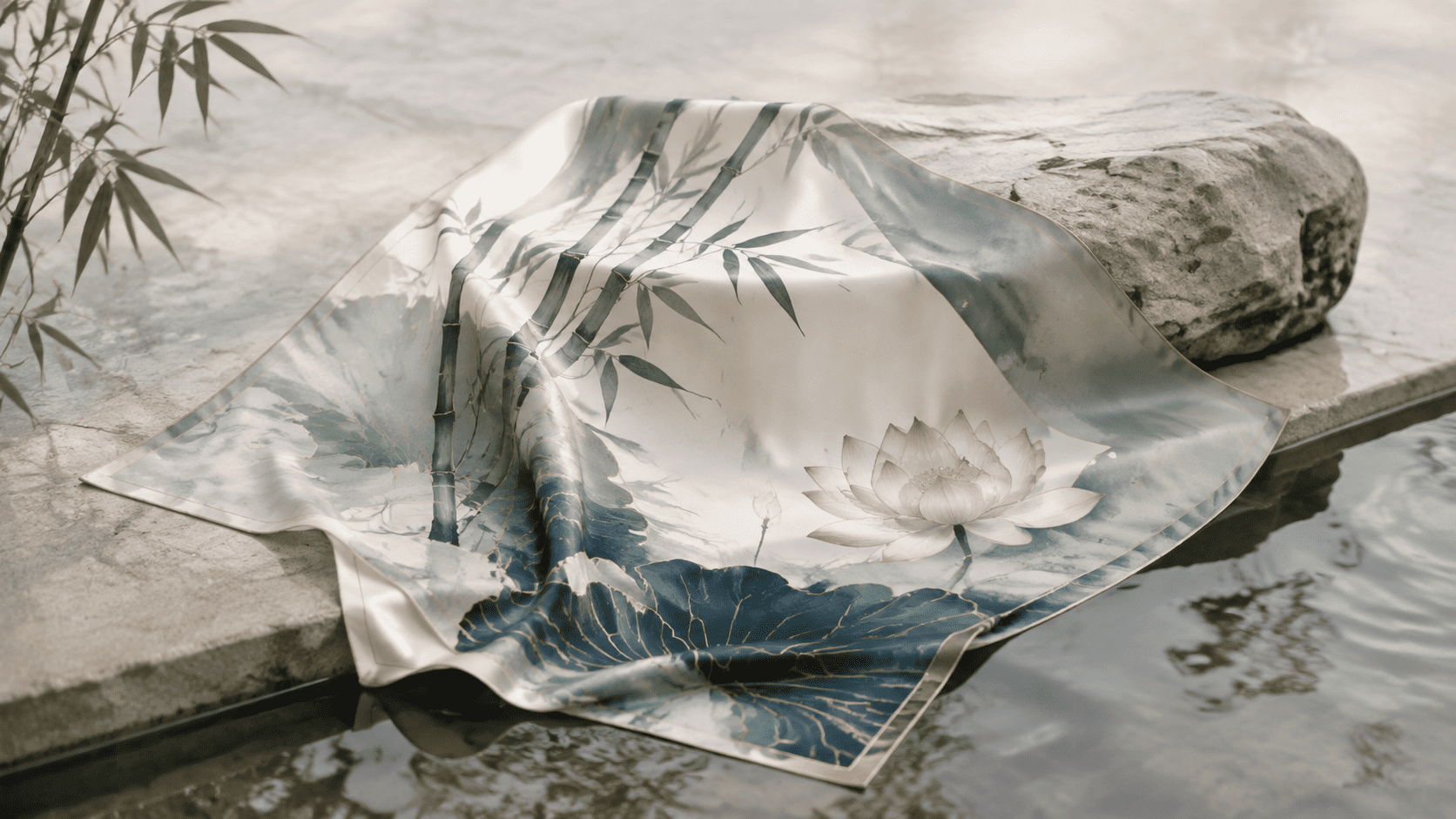
Bamboo grows upright but moves with wind and weather. In art, that combination of strength and flexibility has made it a compelling image of moral character. It does not remain rigid at all costs; it yields without losing its essential form. The Cleveland Museum of Art describes bamboo that “bends but does not break” as representing moral integrity, endurance and loyalty.
This makes bamboo a thoughtful gift for someone carrying responsibility or adapting to change: a graduate, founder, team leader, new parent or friend navigating an unfamiliar path. It can communicate confidence in their composure without implying that they must face everything alone.
Bamboo is also one of the Four Gentlemen of Chinese painting, alongside orchid, plum blossom and chrysanthemum, and one of the Three Friends of Winter with pine and plum. Those groupings add context, but a contemporary design does not need to reproduce an old painting literally. The Bamboo After Rain silk scarf, for example, interprets resilience and renewal through a modern wearable composition.
4. Lotus: purity without separation from the world
The lotus roots in mud and rises through water before opening cleanly above the surface. In Buddhist art it became an important image of purity and rebirth; in Chinese visual culture it also gathered associations with elegance, summer and longevity. The Metropolitan Museum of Art describes the lotus as a symbol of purity and other virtues in Chinese art.
As a gift, the lotus can recognise someone who has retained clarity, kindness or dignity through complicated circumstances. It also suits a wedding, a new home, a personal transformation or a calmer chapter after upheaval. Its message is not that life must be untouched by difficulty; it is that beauty and integrity can emerge within it.
Context matters here. The lotus has meanings across several Asian religious and artistic traditions, so avoid treating one simplified definition as universal. A design story should identify its source and explain how it has been reinterpreted, especially when the motif appears on a contemporary fashion object.
5. Crane: a wish for longevity and wisdom
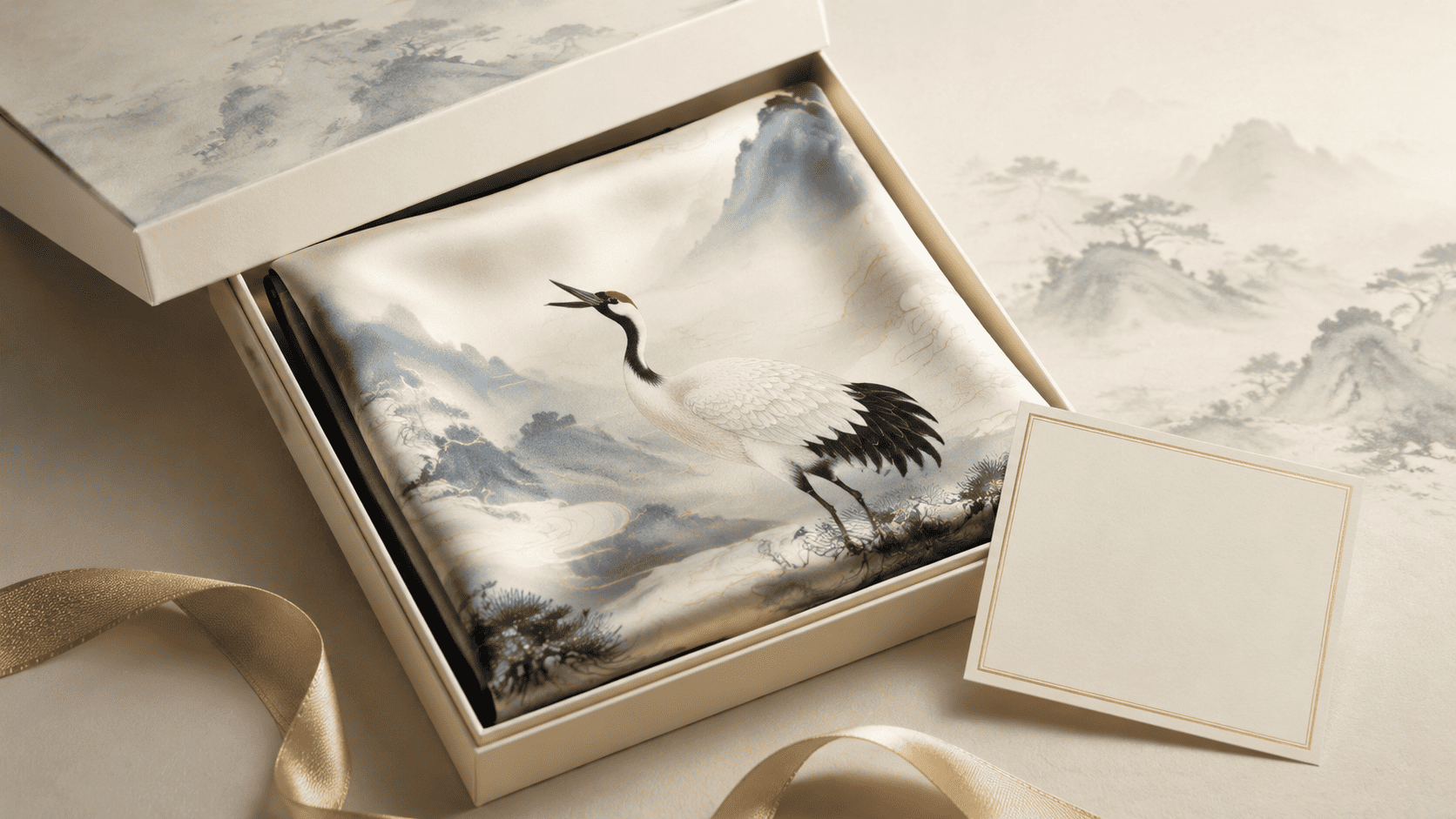
In Chinese art, cranes are closely connected with long life and the world of Daoist immortals. Their white feathers also invited comparison with the hair of an elder, and paired cranes could allude to an elderly couple. The Met’s overview of longevity in Chinese art explains how the bird became part of a wider vocabulary of wishes for long life.
A crane motif is therefore well suited to a significant birthday, retirement, anniversary or gift for a parent or grandparent. It can also honour wisdom accumulated over time. For a younger recipient, frame the message around a long, meaningful path rather than age itself—for example, wishing a newly married couple a life of shared growth.
Pay attention to accompanying imagery. Crane with pine, peaches, clouds or an immortal may intensify or alter the longevity theme. A single crane moving through mist can feel quieter and more contemporary while still drawing respectfully from the historical association.
How to choose the right symbol
Begin with what you genuinely want to say. If you are honouring a mentor, orchid may feel more precise than a general good-luck motif. For someone who has overcome difficulty, plum blossom or lotus can acknowledge different aspects of that journey. Bamboo suits adaptability and principled strength, while crane is most natural when the occasion invites a wish for longevity or an enduring shared life.
Then consider whether the recipient will enjoy the object even before reading its meaning. Symbolism should deepen good design, not compensate for something they would never wear or use. Colour, scale, material and personal style still matter. Our guide to choosing a meaningful scarf gift offers a practical recipient-first checklist.
Finally, include a short story card or personal message. Avoid claiming that a symbol guarantees luck, health or success. One honest sentence—why this image recalled the recipient—is more meaningful than a list of grand promises. Explore the Lanting Loom silk gift sets for wearable designs presented with story and meaning.
Frequently asked questions
Which Chinese symbol is best for a birthday gift?
For a milestone birthday, the crane is a traditional and elegant expression of longevity. Plum blossom can suit a birthday marking renewal, while orchid may be more personal for someone admired for their character. Choose according to the recipient, not age alone.
Which symbol is appropriate for a friend?
Orchid is especially meaningful because friendship is among its historical associations. Bamboo can also suit a loyal friend whose flexibility and integrity you admire. Explain the connection in your own words so the gift feels personal rather than ceremonial.
Can several Chinese symbols appear together?
Yes. Chinese art often combines motifs, and their meanings can reinforce or reshape one another. Plum, pine and bamboo form the Three Friends of Winter, for example. When buying a contemporary design, read the maker’s story rather than assuming every combination has one fixed interpretation.
Is red always necessary for a meaningful Chinese gift?
No. Red is auspicious in many celebratory settings, but meaningful Chinese design is not limited to red and gold. Ink, jade, ivory, mineral blue, orchid tones and seasonal colours can express cultural depth with greater relevance to the motif and the recipient’s wardrobe.