

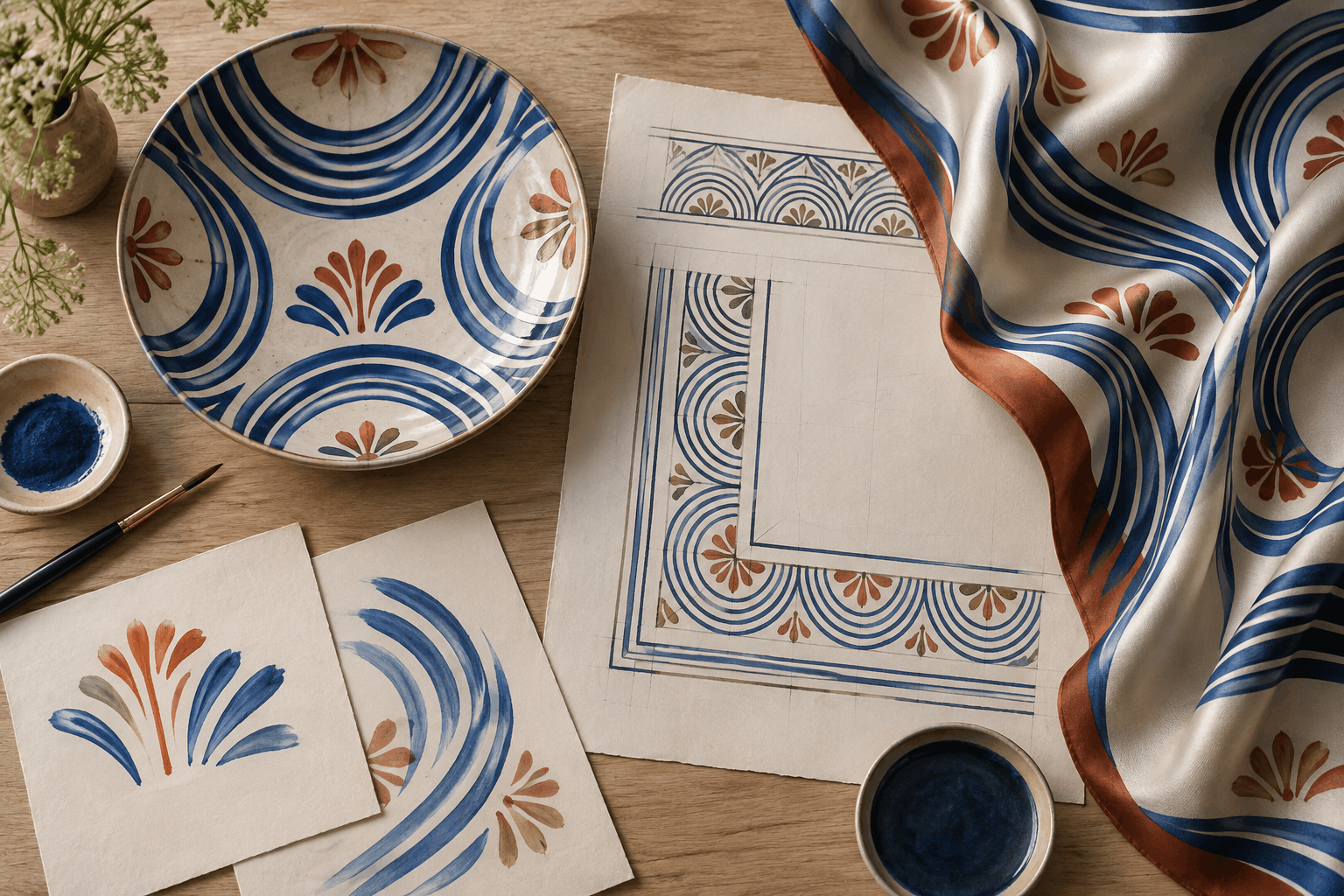
A detail from a ceramic, a rhythm from a textile or a line from a drawing can take on a new life in silk. For a museum, the opportunity is to create an accessory that carries a clear collection connection while feeling natural in a visitor’s wardrobe.
Successful custom silk scarves for museums bring together a well-chosen source, an agreed interpretation, thoughtful textile design and careful sample approval. The finished scarf should work as a wearable object, with a concise story that helps its owner understand what inspired it.
The process begins before printing. It starts with deciding what the museum wants to share and how that meaning can survive the move from collection object to fabric.
1. Define the Scarf’s Purpose and Audience
Decide whether the scarf is intended for the museum shop, an exhibition launch, a membership initiative or a particular gifting occasion. These uses may call for different quantities, presentation and price expectations.
For retail, identify the likely customer and target selling price before developing an elaborate concept. Consider whether the visitor wants a compact keepsake, an expressive fashion accessory or a gift for someone else.
Agree on the budget, approximate quantity and required arrival date. A clear commercial brief helps the creative team explore options that can become a viable finished product.
Our guide to choosing museum gift shop merchandise considers how a scarf can fit within a wider assortment.
2. Select a Source With Visual and Interpretive Potential
Choose a focused reference rather than asking one scarf to represent the entire collection. A recognisable object may be suitable, but an overlooked detail can also offer a compelling starting point.
Possible sources include the structure of a woven border, the curves of a ceramic decoration, a botanical study or the architecture of a gallery. Look for forms that remain interesting when enlarged, repeated or partly hidden by a fold.
Build a source pack with approved images, an object reference, relevant background and the features that matter most. Explain which elements carry meaning and which visual changes would be inappropriate.
Collection-inspired retail is an established approach: The Met Store describes its products as drawing inspiration from the museum’s collection. The challenge for an individual project is to make that connection specific and intelligible.
3. Agree on the Type of Translation
Reproduction and interpretation are different creative choices. Decide which approach serves the source and the scarf before reviewing detailed layouts.
| Approach | Design direction | Main review question |
|---|---|---|
| Faithful reproduction | Retain the source image with agreed adjustments for the scarf format | Does the crop, colour and scale preserve the intended reading? |
| Motif development | Extract selected forms and build a new border, repeat or composition | Is the source recognisable without misrepresenting its details? |
| Broader interpretation | Develop original artwork from the source’s rhythm, palette or spatial idea | Can the museum clearly explain the relationship and the changes? |
For example, a ceramic rim might suggest sweeping curves around a scarf’s edge. The design could retain a characteristic colour pairing while giving the centre more open space. This is a hypothetical design exercise, not a description of a particular museum object or commission.
Give the designer room to solve the wearable composition within agreed boundaries. A museum scarf needs both a meaningful source and a convincing visual result.
4. Set Permissions, Credits and Approval Responsibilities
Before artwork development progresses, have the appropriate museum team confirm the permitted source images, uses and adaptations. Record the credit wording and any restrictions that must follow the design into packaging, photography or online listings.
Where source material has cultural or community sensitivities, bring the relevant voices into the review at the outset. Commercial appeal alone should not decide how a meaningful motif is transformed.
Agree who approves interpretation, visual design and the final physical product. Clarify ownership or licensed use of the new artwork, any exclusivity, and the arrangements for future reorders. Keep these decisions in the project agreement.
5. Design for Folds, Movement and Everyday Clothing
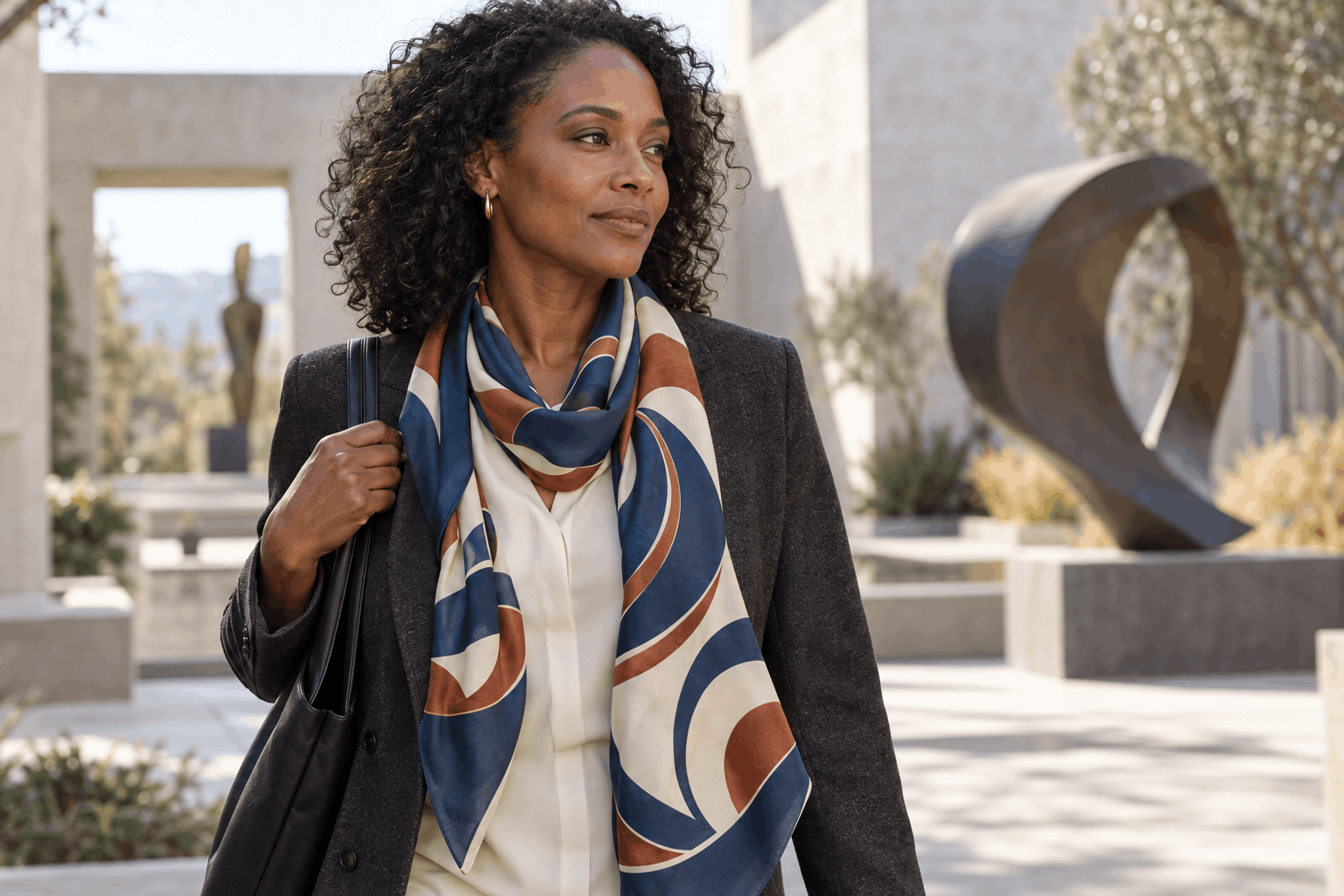
A scarf rarely stays flat. A central image can disappear into a knot while a small corner becomes the most visible detail. Review the composition in several plausible wearing positions.
A square format offers diagonal folds, corners and a border that can frame the neck. A long format creates flowing ends and space for a design to develop along its length. Choose dimensions for the intended use, then adapt the artwork to them.
- Balance: Do the colours remain appealing when only part of the design shows?
- Scale: Are important details still legible at the finished size?
- Placement: What happens to the main motif, border and any museum mark when tied?
- Versatility: Can the scarf work with ordinary clothing beyond the exhibition visit?
Paper layouts and digital mock-ups help explore these questions. A physical sample is still needed to assess the actual drape and appearance.
6. Match Fabric and Printing to the Artwork
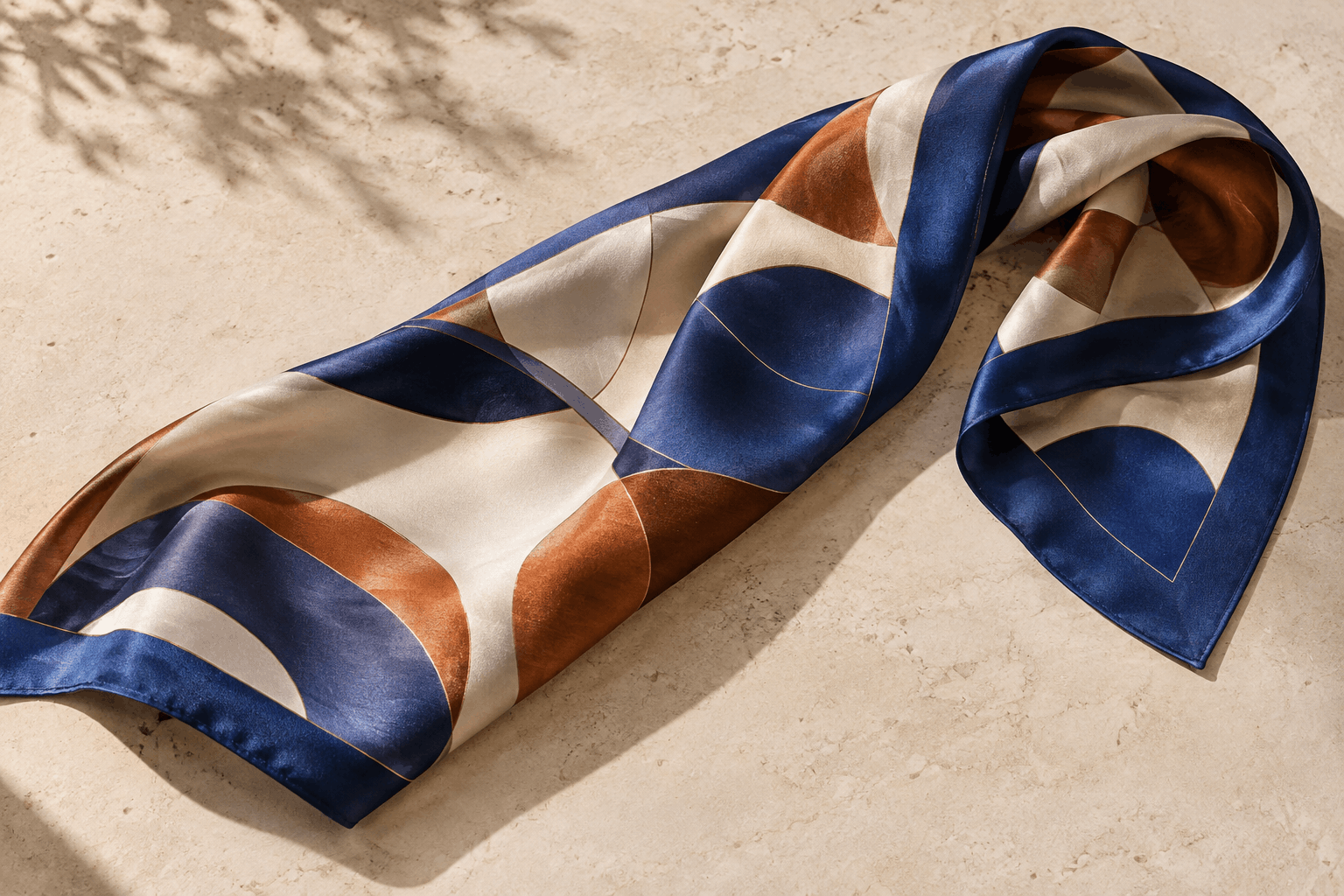
Specify fibre composition, fabric construction, weight, finished dimensions and hem treatment. Silk twill, silk satin and lighter plain-weave silk can give the same artwork different surface and movement.
Satin describes a weave, so the term alone does not establish silk content. Momme describes fabric weight; it should be considered alongside feel, print and finishing.
Discuss the intended appearance of the reverse, particularly if both sides will show when worn. A paler reverse is not automatically a fault, but it should match the agreed expectation.
Review colour against agreed physical references under consistent lighting. Fine lines, subtle shades and dark borders deserve particular attention on the proposed fabric. Ask about achievable results before approving a colour-critical design.
7. Approve the Scarf and Its Story Together
Use a representative finished sample to check dimensions, print placement, drape, edges, corners and labels. Identify the sample and artwork version clearly so everyone is approving the same result.
Review the accompanying story at the same time. Include the source, the relevant creator or collection credit and a short explanation of the design approach. Distinguish an adapted composition from a direct reproduction.
Keep the text concise enough to read while browsing. Care information and a simple styling suggestion can help visitors decide whether the scarf suits them and use it confidently after purchase.
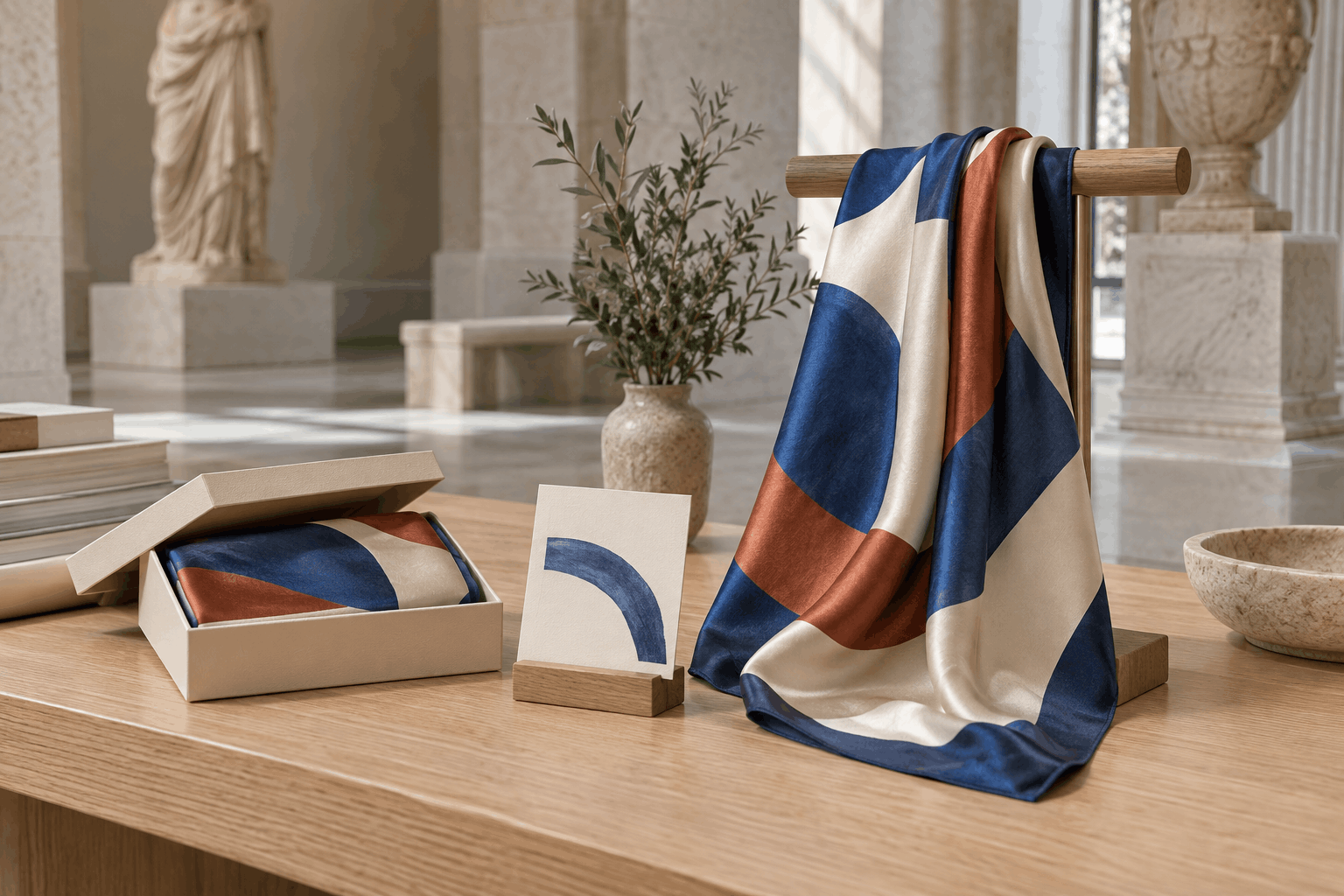
Approve the packed presentation too. The box should protect the scarf without making a portable accessory unnecessarily bulky.
8. Prepare the Retail Launch and Reorder Plan
Confirm the complete project cost, minimum quantities by design or colourway, and the schedule for delivery before launch. Avoid multiplying variants before establishing demand for the central design.
Allow time for product photography showing the scarf both open and worn. Give shop staff a short explanation of the source and a clear description of the material, size and care requirements.
Agree whether the design is tied to a temporary exhibition or intended for ongoing sale. Record the approved files, sample reference and permissions needed for a reorder, and confirm any later sampling requirements with the supplier.
For planning support, see our guides to custom scarf minimum orders and scheduling bespoke gift projects.
What to Include in a Museum Scarf Brief
- The intended audience, purpose and target retail price where relevant.
- Approved source images, object references and interpretive background.
- The preferred design approach and any restrictions on adaptation.
- Approximate dimensions, fabric expectations and quantity.
- Credits, packaging, care information and branding requirements.
- The approval contacts, budget and required arrival date.
Frequently Asked Questions
Must a museum scarf reproduce an entire artwork?
No. A project can use an approved detail, motif or broader interpretation when that approach suits the source. Agree on the changes and explain the relationship accurately.
Should the museum logo appear on the scarf?
It can, if its placement suits the composition and audience. The museum connection can also be communicated through the artwork, labels and story card.
Can one scarf design serve retail and institutional gifting?
Potentially, if the audience, permissions and commercial arrangements allow both uses. The scarf may remain the same while the accompanying message or presentation changes.
Begin With the Collection Story
Explore Lanting Loom’s page for museums and cultural institutions to discuss a scarf project. Share your source, intended audience and practical requirements so the conversation can begin with both the collection’s meaning and the finished accessory in view.
