

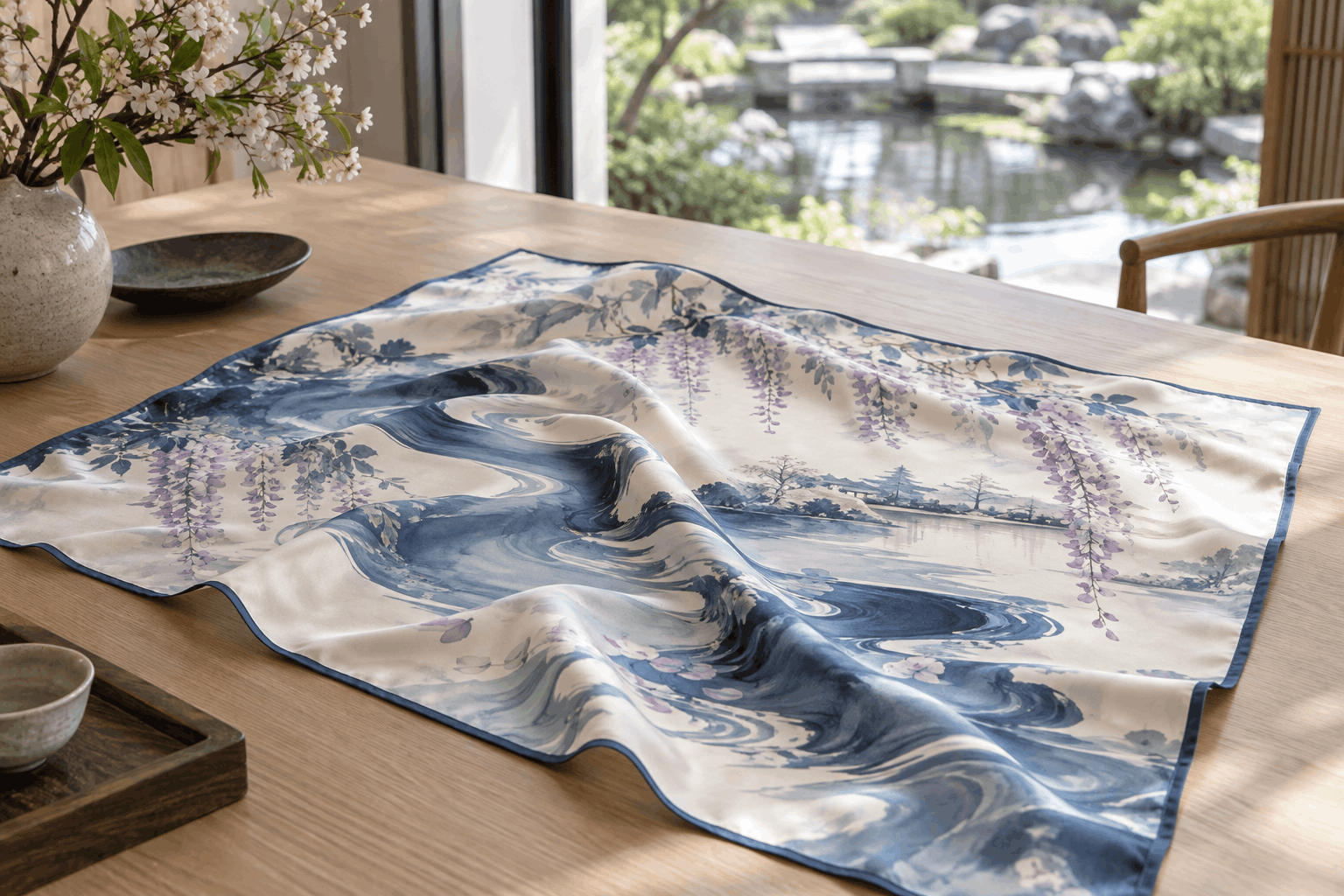
A place can stay with someone through a small detail: the curve of a garden path, light moving across water or the pattern of windows above a familiar entrance. Those details can become the starting point for a bespoke silk scarf.
Turning a place into a bespoke silk scarf means selecting a meaningful story, translating its visual details into an original composition and testing that composition as something to wear. The finished piece should connect to its source while offering color, movement and proportions that work in everyday life.
For a hotel, museum, university or destination, the process begins with a clear decision about what the scarf should help people remember.
Begin with one story about the place
A location may offer more material than a single design can carry. Trying to include every building, landmark, flower and historical reference can make the composition crowded and the meaning difficult to explain.
Choose one central idea. It might be the experience of arriving through a courtyard, the changing light of a waterfront or the relationship between a library and its surrounding garden.
Write the idea in one or two sentences before discussing individual motifs. This gives everyone reviewing the design a shared point of reference.
For an imagined lakeside garden, the brief might be: “Capture the quiet movement of water beneath hanging spring blossoms, with the pale stone walkway providing a sense of structure.” That is a design direction with room for interpretation.
Define the intended audience at the same time. A hotel guest keepsake, a museum retail scarf and a university recognition gift may draw on similar sources, but their presentation, quantity and preferred format can differ.
Gather references that explain the details
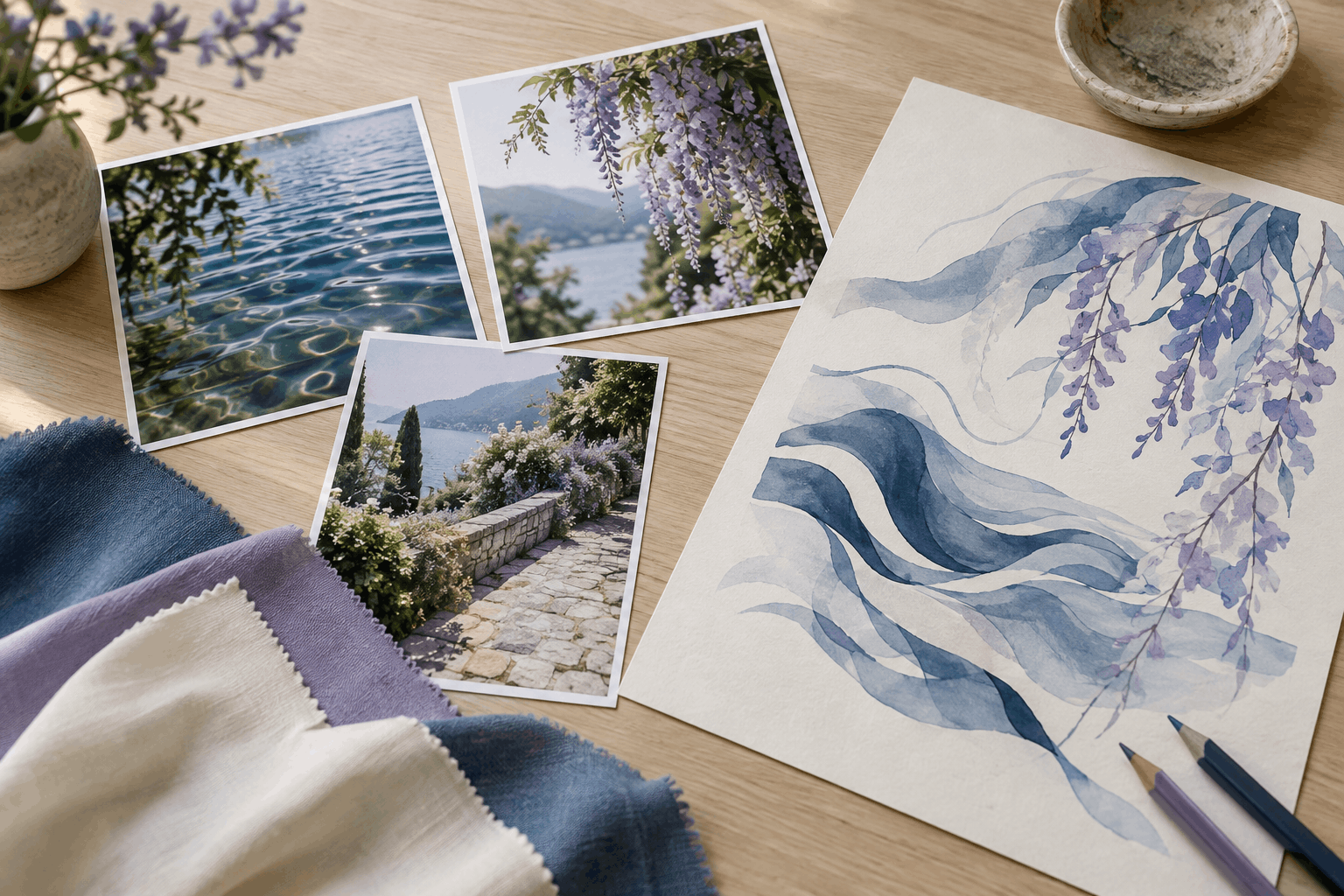
A useful reference collection shows both the whole place and the elements that make it distinctive. Include broad views, close details, relevant historical material and a short explanation of why each source matters.
For the lakeside garden, photographs might show the water’s surface, the shape of blossom clusters, the line of the walkway and the contrast between shade and pale stone. A designer can use those observations to build a visual language.
Label the references internally so the project team knows what they depict and where they came from. Keep essential historical facts separate from personal impressions or creative interpretation.
Confirm which photographs, artworks, archive materials and institutional marks can be used for the intended project. Agree who will review the source interpretation and any credit wording. Where a place has sensitive cultural or commemorative significance, involve the people responsible for that context early.
Translate the references into color, shape and movement
At this stage, consider what each detail contributes to the design. A physical feature can suggest a line, a rhythm, a border or a color relationship without needing to appear as a literal illustration.
| Place detail | Possible design translation | What to preserve |
|---|---|---|
| Ripples across a lake | Flowing curves that guide the eye through the composition | The sense of movement and changing light |
| Hanging blossoms | Botanical shapes grouped at different scales | The plant’s recognizable character and lightness |
| A pale stone walkway | An ivory ground or a structured border | The contrast between solid form and flowing water |
| Repeated windows or arches | A geometric rhythm or framing element | The proportions that make the architecture distinctive |
These are possibilities rather than fixed rules. A recognizable landscape composition can also work when it is designed for the scarf’s format. The important decision is how much detail the piece needs to communicate its story.
For the imagined garden, ink blue, soft lavender and warm ivory could connect water, blossom and stone. Leave space between the motifs so the eye can follow the design.
Choose the scarf format before finalizing the artwork
A square scarf and a long scarf offer different spaces to compose within. Decide on the intended shape and dimensions early enough for the artwork to respond to them.
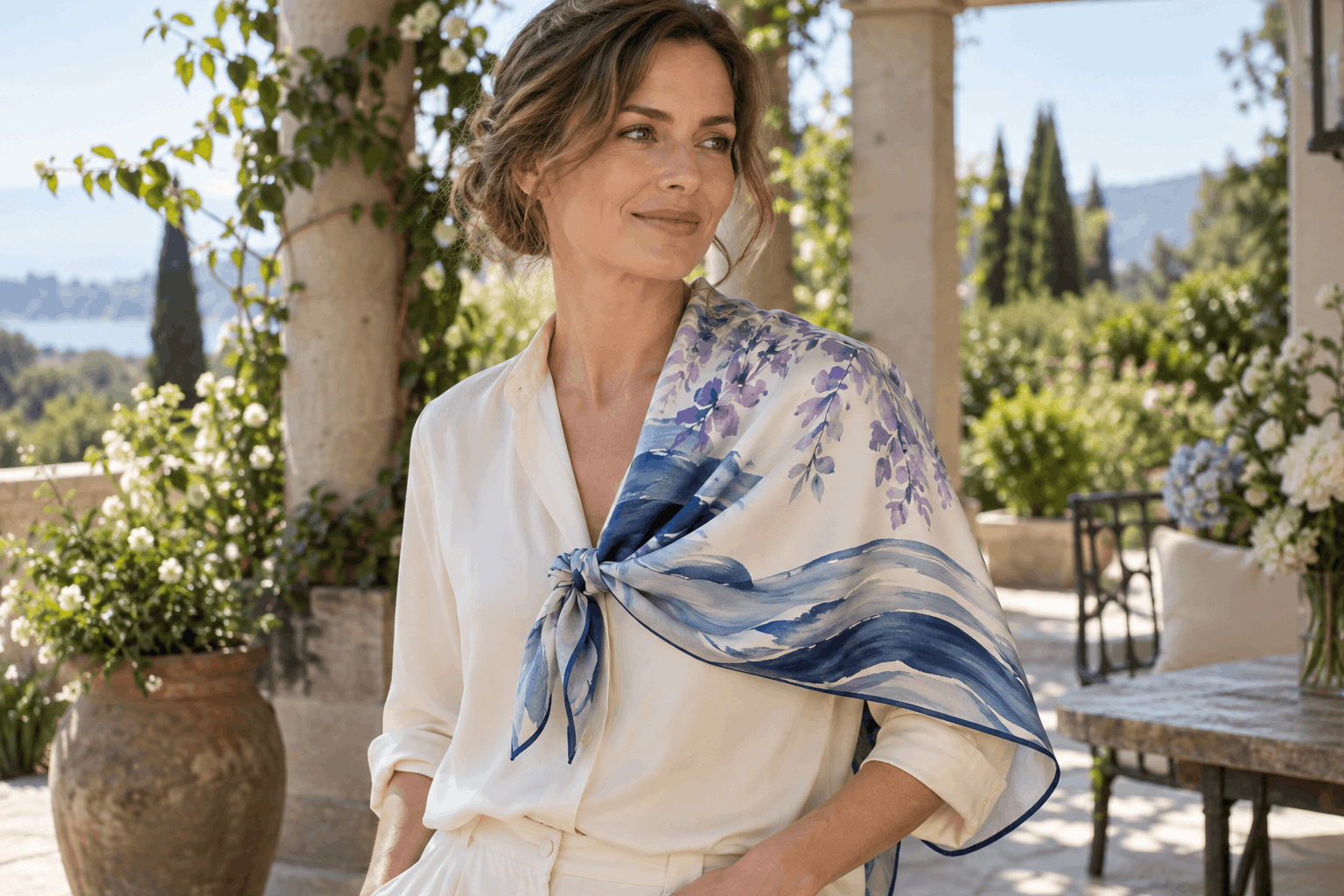
A square can support a central scene, a framed composition or a design with interest distributed toward the corners. When folded diagonally, different parts become visible. A long scarf invites attention to the ends, the length of the pattern and the areas likely to sit near the face.
Discuss fabric options alongside the format. Compare physical samples for surface appearance, softness, body and movement. The material should suit how the recipient is expected to wear the piece.
A screen presentation can help compare layouts, but it cannot replace handling the proposed fabric. If several formats are being considered, treat them as separate design decisions rather than simply stretching the same artwork to fit.
Review the design in folds
A scarf is rarely seen as a complete flat image once it is being worn. This makes the border, corners and distribution of color important parts of the design.
Ask to see how the composition behaves when folded into a narrow band, tied loosely or draped over the shoulders. Early paper layouts or digital styling views can help identify problems, followed by a physical sample when available.
Look for:
- Visible color balance: whether an appealing mix remains visible in common folds.
- Motif placement: whether important details disappear completely inside a knot.
- Border behavior: whether the edge frames the design attractively when worn.
- Orientation: whether directional elements still make sense when the scarf turns.
- Everyday appeal: whether the piece works with clothing beyond the presentation setting.
If the story depends on one tiny central landmark remaining visible, consider distributing related details more widely. A scarf can carry a place through its overall character even when the full composition is hidden.
Use the physical sample to make the final decisions
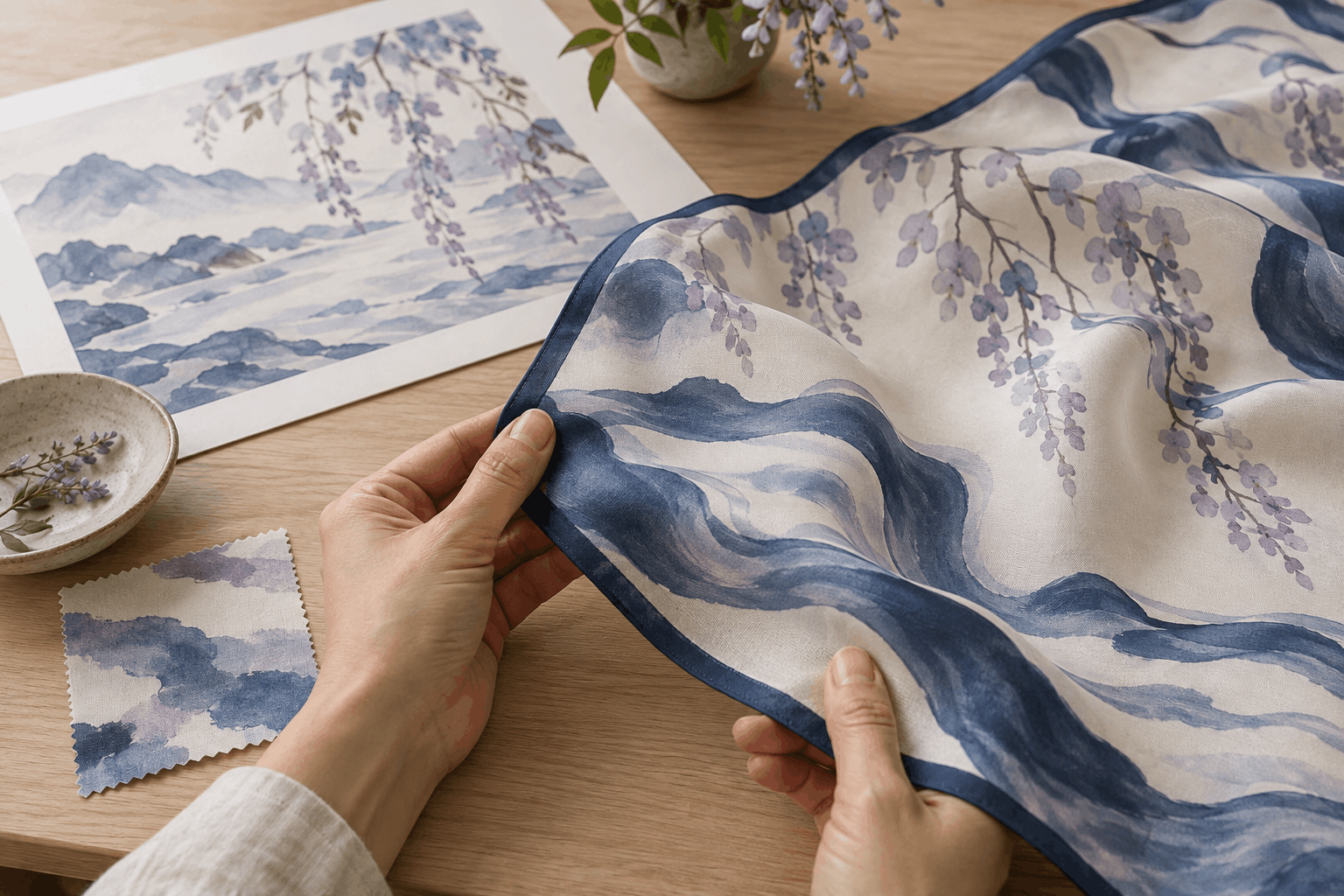
Review the actual scarf before approving production. Check the printed colors, clarity of fine details, fabric feel, drape, dimensions, edges and corners together.
View both sides and confirm what appearance is expected on the reverse. Look at the sample in daylight and the lighting relevant to its presentation or retail setting. Screen images and paper artwork alone do not establish how color will appear on the chosen fabric.
Ask the supplier to confirm production artwork requirements, including any allowance needed around the edge for printing, cutting and finishing. Keep essential details clear of areas that may be affected.
Record agreed changes in one consolidated response. The approved artwork, specifications and sample should be clearly identified so everyone knows which version production will follow. If a revision changes an important color or design feature, agree how it will be checked.
Our guide to custom silk scarves for corporate gifts covers the wider project considerations around design, samples and presentation.
Explain the place through a short design story
The accompanying card can identify the source, explain the interpretation and connect the scarf to the occasion. Keep the wording specific enough to be interesting and short enough to be read.
For the imagined garden design, the story could describe flowing blue lines drawn from the lake, lavender forms inspired by spring blossoms and an ivory ground recalling the stone walkway.
Distinguish inspiration from reproduction, and place of inspiration from place of manufacture. A scarf inspired by a destination should not be described as locally made unless that is accurate.
Institutional names and event dates can sit on the card or presentation sleeve where appropriate. Our guide to subtle branding explores how to identify the sender while keeping the scarf easy to wear.
Prepare a brief that makes the project practical
Bring the creative direction and purchasing requirements together. Share the place and its central story, intended recipients or retail audience, preferred format, approximate quantity, budget and required delivery date.
Include the reference material, any essential marks or wording and the people responsible for approving the source interpretation and finished design. Ask for a schedule that includes research, artwork, sampling, revisions, production and delivery, with the scope and costs of each stage made clear.
Lanting Loom approaches cultural design through contemporary interpretation, translating source, movement, color and meaning into silk intended to be worn. Explore bespoke silk scarf projects to discuss how a place could become the starting point for an original piece.
A successful scarf lets someone recognize the place in the design and discover new ways to wear it. The story gives it a connection; the design gives that connection a life beyond the visit.
