

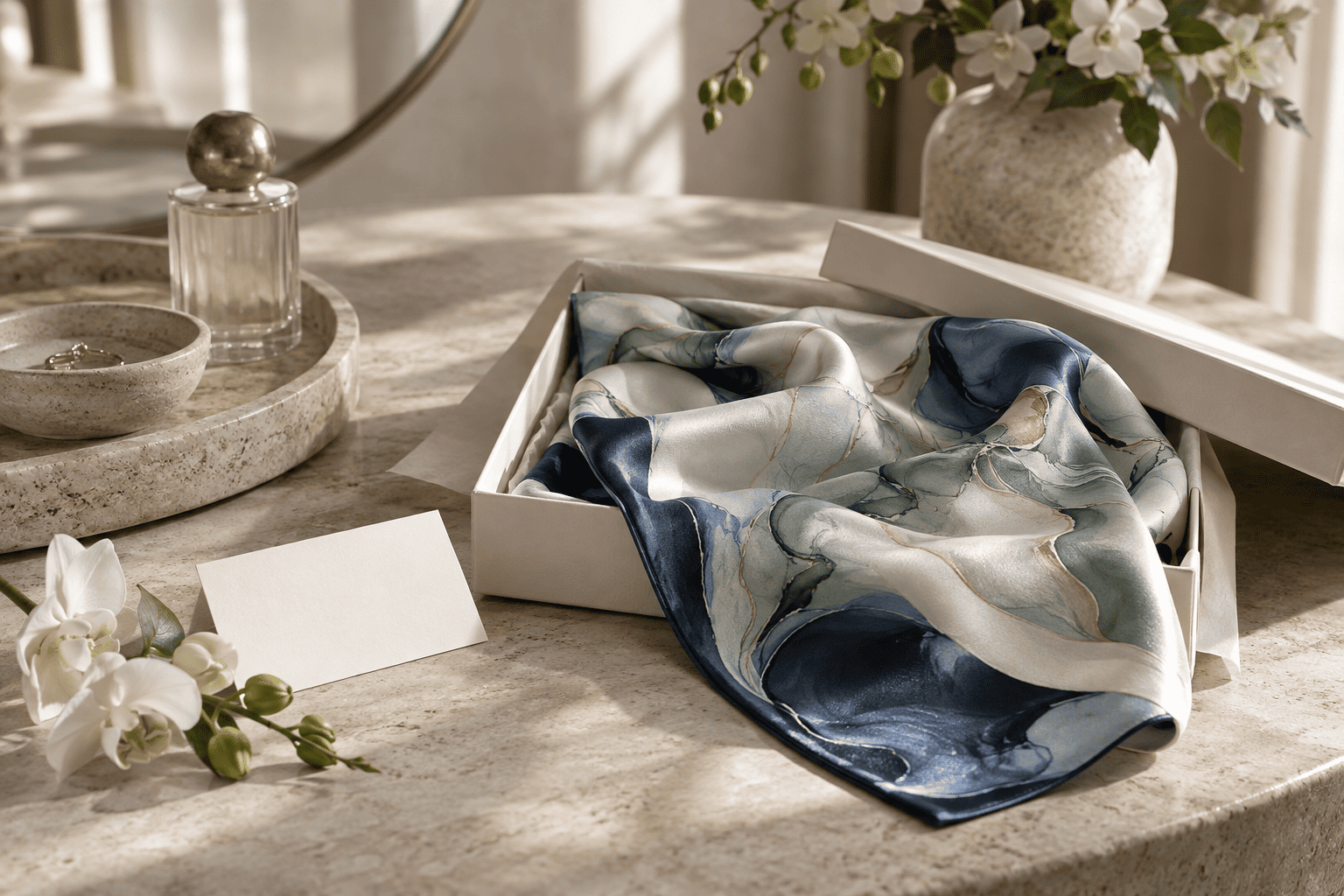
Yes, a silk scarf can be an excellent gift—especially for someone who enjoys fashion, colour, art, travel or beautifully made personal objects. It feels special without depending on conventional clothing sizes, and it can be worn in several ways. The qualification is important, however: a scarf is not automatically thoughtful simply because it is silk. The best choice reflects how the recipient dresses, what colours they enjoy and whether they are likely to use it.
Before buying, consider the recipient first and the prestige of the scarf second. A well-chosen piece can become a frequently worn reminder of a person or occasion; a poorly chosen one may remain beautiful but untouched.
Why can a silk scarf make a good gift?
A scarf sits between a fashion accessory and a small work of wearable art. Unlike fitted clothing, it does not require an exact size. Depending on its dimensions, it can be tied at the neck, worn in the hair, wrapped around a handbag handle or draped over the shoulders.
Silk brings its own sensory character. Its lightness, lustre and ability to hold rich colour make the act of opening and touching the gift part of the experience. A considered design can add another layer. It may recall a place, a flower, a shared memory or a quality you admire in the recipient.
This combination suits birthdays, anniversaries, graduations, professional milestones, holidays, thank-you gifts and moments of encouragement. It can feel personal without being overly intimate.
When might a silk scarf be the wrong gift?
A thoughtful gift should suit the recipient’s life, not an abstract idea of elegance. If the person never wears accessories, dislikes caring for delicate materials or has a highly specific minimalist wardrobe, a patterned silk scarf may not be the most natural choice. The same applies if you know very little about their colour preferences and the seller does not accept returns.
Someone with a uniform requirement, sensitivity to fabric around the neck or a routine involving frequent contact with liquids may also have fewer opportunities to wear silk. Suitability matters more than category.
What should you consider before buying?
1. Begin with the recipient’s existing style
Look for evidence in what they already wear. Do they favour quiet neutrals, saturated colour, botanical patterns, graphic lines or almost no pattern at all? Do they wear small accents or expressive statement pieces? Their wardrobe, jewellery, handbags and even interior style can offer useful clues.
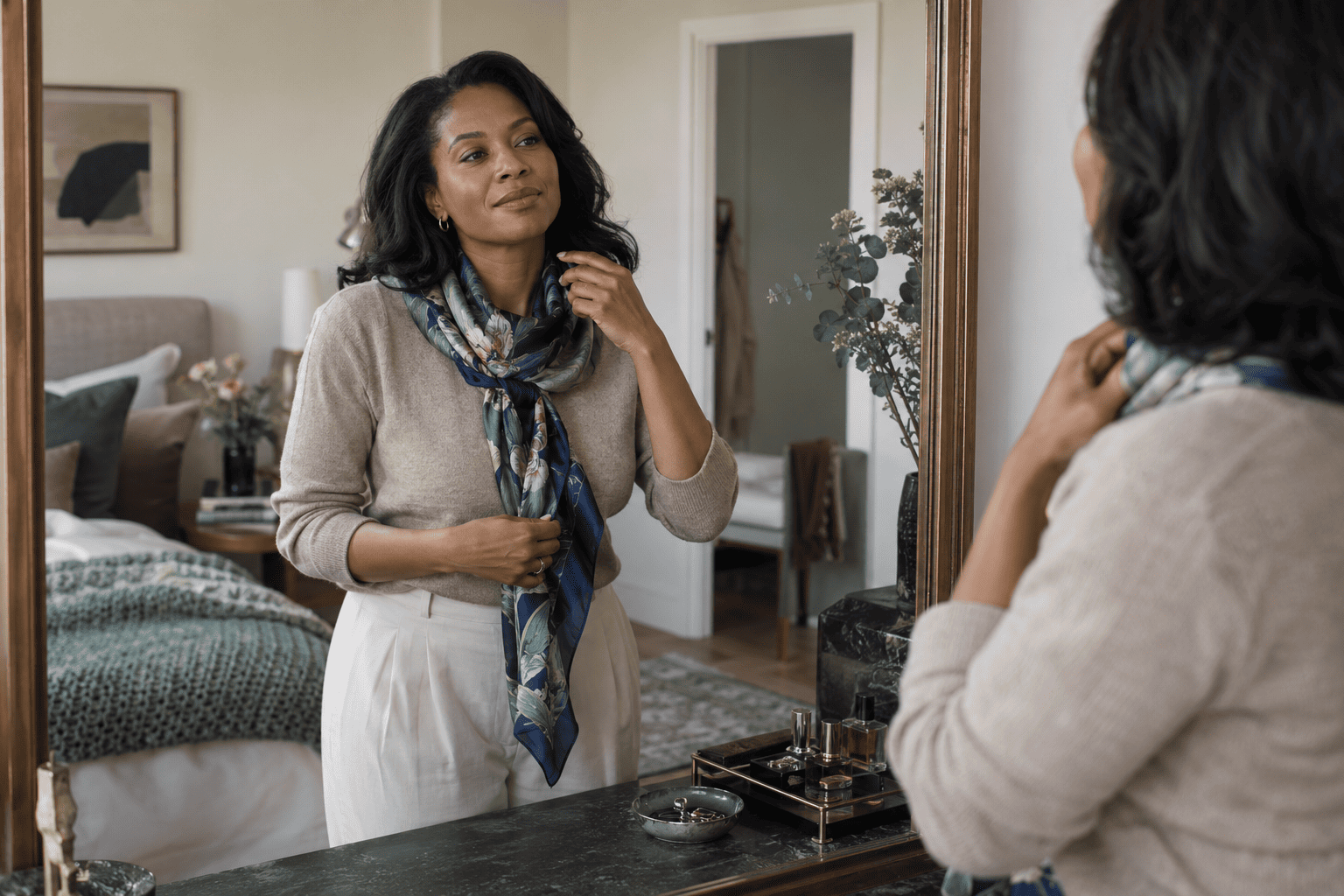
A common mistake is choosing the scarf you would most like to receive. Instead, imagine it with three outfits the recipient owns. If that is easy, the design probably belongs in their wardrobe. When uncertain, choose a balanced ground colour with several secondary tones.
2. Choose a useful format and size
Scarf dimensions change both appearance and ease of use. A narrow silk twilly is approachable for someone new to scarves and can be worn at the neck, wrist, hair or handbag. A medium square offers more styling possibilities while remaining manageable. A large square or signature scarf creates greater impact and can be folded, draped or worn over outerwear. A long scarf may feel most familiar to someone who already wears rectangular scarves.
Larger or more expensive is not always better. A first-time wearer may use a compact format more often; a confident collector may appreciate a generous composition. Lanting Loom’s guide to choosing a meaningful scarf gift explores recipient, format and symbolism in greater depth.
3. Verify what the scarf is made from
Read the product information rather than relying on words such as “silky,” “satin” or “silk-feel.” Satin is a type of weave, not a fibre, and a satin scarf may be made from silk, polyester or another material. If you intend to give pure silk, look for a clear fibre statement such as “100% silk.”
In the United States, the Federal Trade Commission explains that most textile products must disclose their fibre content, country of origin and the identity of the manufacturer or responsible business. Its apparel-labelling guidance is a useful reminder that transparent specifications matter more than vague luxury language.
Also check the weave. Silk twill often holds crisp folds and knots; satin tends to look smoother and more fluid; habotai is usually lighter and softer. The right construction depends on the intended use. For a fuller comparison, read the complete guide to silk scarves.
4. Look beyond the flat artwork
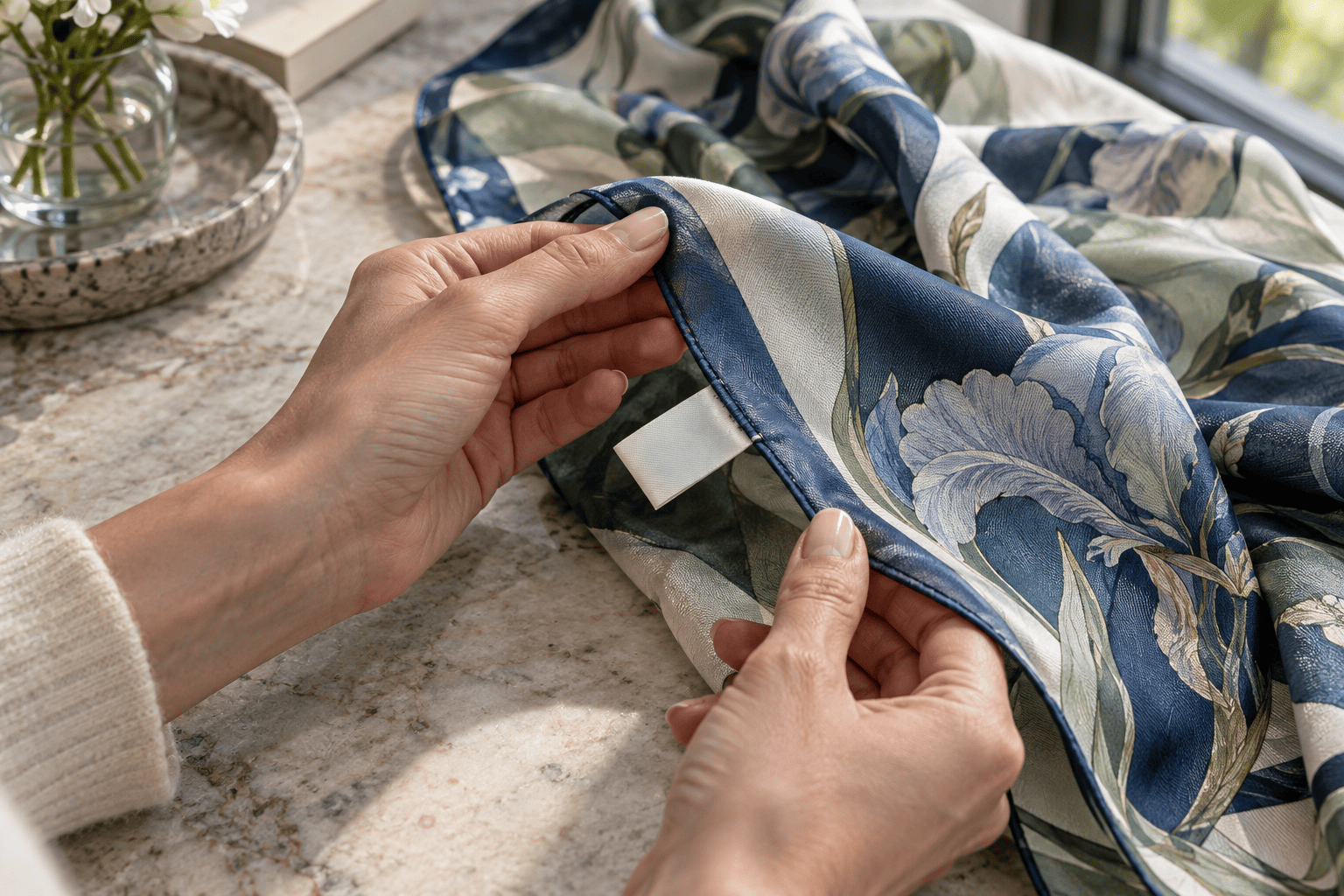
A scarf may be photographed as a complete square, but it will usually be seen in folds. Examine product images showing the full composition and the scarf being worn. Consider which colours and motifs remain visible when the design is folded into a band, triangle or loose drape.
Print definition, colour balance and edge finishing also contribute to the finished impression. Look for honest close-ups and precise product details. Be cautious when a listing relies only on distant lifestyle photography, does not show the full design or makes claims about hand-finishing and craftsmanship without explanation.
5. Let meaning add depth—not pressure
A symbolic story can make a scarf more personal. Bamboo may suggest resilience and adaptability; plum blossom can evoke perseverance and renewal; an orchid may express cultivated character, friendship or quiet elegance. Such meanings should be presented as cultural context rather than rigid codes.
The strongest symbolism connects naturally with the relationship or occasion. A design associated with renewal may suit a graduation or new beginning, while a garden-inspired composition may delight someone who loves art and nature. If the story requires a long explanation before the recipient can appreciate the scarf visually, however, the design may not be doing enough on its own. At Lanting Loom, beauty comes first; cultural meaning adds depth and something to discover.
6. Consider care before giving
Silk rewards gentle handling. The recipient should be comfortable following the sewn-in care label, keeping perfume and cosmetics from direct contact, avoiding rough jewellery and storing the scarf clean, dry and untied. Care instructions vary with dyes, printing, finishing and embellishment, so there is no single cleaning method for every silk scarf.
The Canadian Conservation Institute notes that textiles can be affected by light, physical forces, water, pollutants, heat and humidity. Its collection guidance on caring for textiles and costumes supports the principles of clean handling, limited light and gentle support. For everyday advice, consult Lanting Loom’s silk scarf care guide.
7. Judge the complete gifting experience
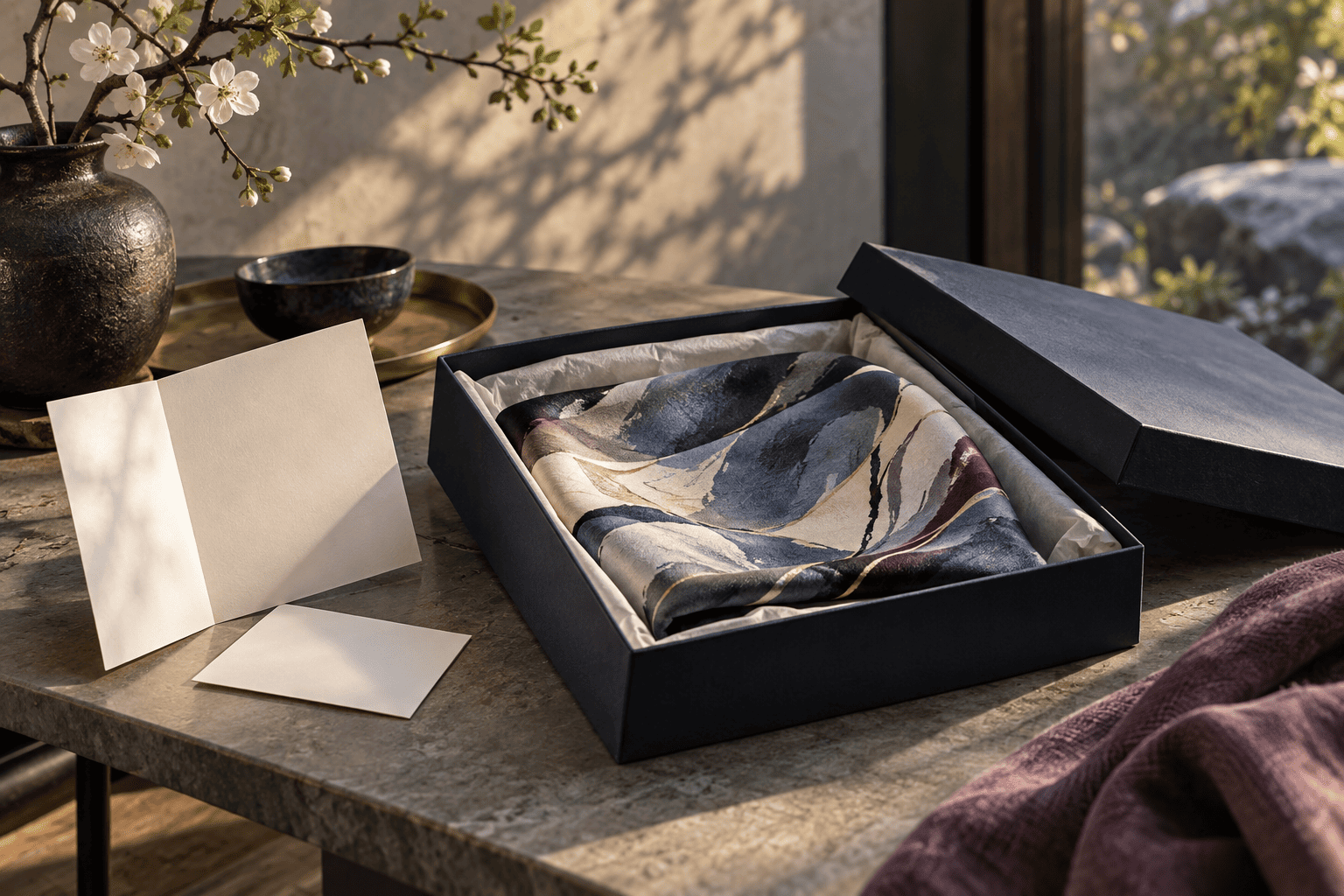
Presentation should protect the scarf and feel intentional. A well-designed box, design-story card and personal message can add emotional value. For direct delivery, check whether prices are omitted and a message can be included.
Before ordering, confirm processing time, estimated delivery, duties or taxes, return conditions and what happens if the parcel arrives damaged. This is especially important for international gifting or date-sensitive occasions. Lanting Loom’s gift services, shipping information and returns policy explain these details before purchase.
A quick silk scarf gift checklist
Before completing the order, ask:
- Can I imagine the recipient wearing this design with clothes they own?
- Does the size suit their experience and preferred way of dressing?
- Is the fibre content stated clearly rather than implied?
- Are the weave, dimensions, finish and care instructions explained?
- Does the design still work when folded and worn?
- Does its story connect naturally with the person or occasion?
- Is the presentation appropriate, and can I add a personal message?
- Will it arrive in time, and are the delivery and return terms clear?
If most answers are yes, a silk scarf is likely to be a thoughtful and lasting choice. Explore Lanting Loom’s silk scarf gift sets or browse the complete collection with the recipient—not simply the product—at the centre of the decision.
Frequently asked questions
Is a silk scarf a suitable gift for someone who does not usually wear scarves?
It can be. Start with a twilly or compact square in colours already found in their wardrobe. If they rarely wear accessories, another gift may be more useful.
Is a silk scarf an old-fashioned gift?
No. Contemporary artwork, fresh colours and versatile formats can feel modern at any adult age. Choose according to personal style, not assumptions about age.
What does giving a silk scarf symbolize?
There is no universal meaning. The message may come from the chosen design, its cultural story, the occasion or your personal note. Explain a symbolic association as an invitation to discover the design, not as a fixed rule the recipient must accept.
How much should you spend on a silk scarf gift?
Choose a budget appropriate to the relationship and occasion, then compare material transparency, design originality, finishing, presentation and service within that range. A more expensive or larger scarf is not automatically the more thoughtful gift.
