


When planning a corporate gift, one design decision often attracts more discussion than expected: should the company logo appear on the product, the packaging or both?
For gifts intended for personal use, placing the main corporate branding on the packaging is a useful starting point. It identifies the giver at the moment of presentation while allowing the recipient to enjoy the product in their own way. A discreet product mark can also be appropriate when membership, institutional identity or a lasting connection to the occasion is part of the gift’s appeal.
The more elegant approach depends on the recipient, the purpose of the gift and how the branding sits within the design. This guide explains how to make that choice for silk scarves, premium accessories and curated gift sets.
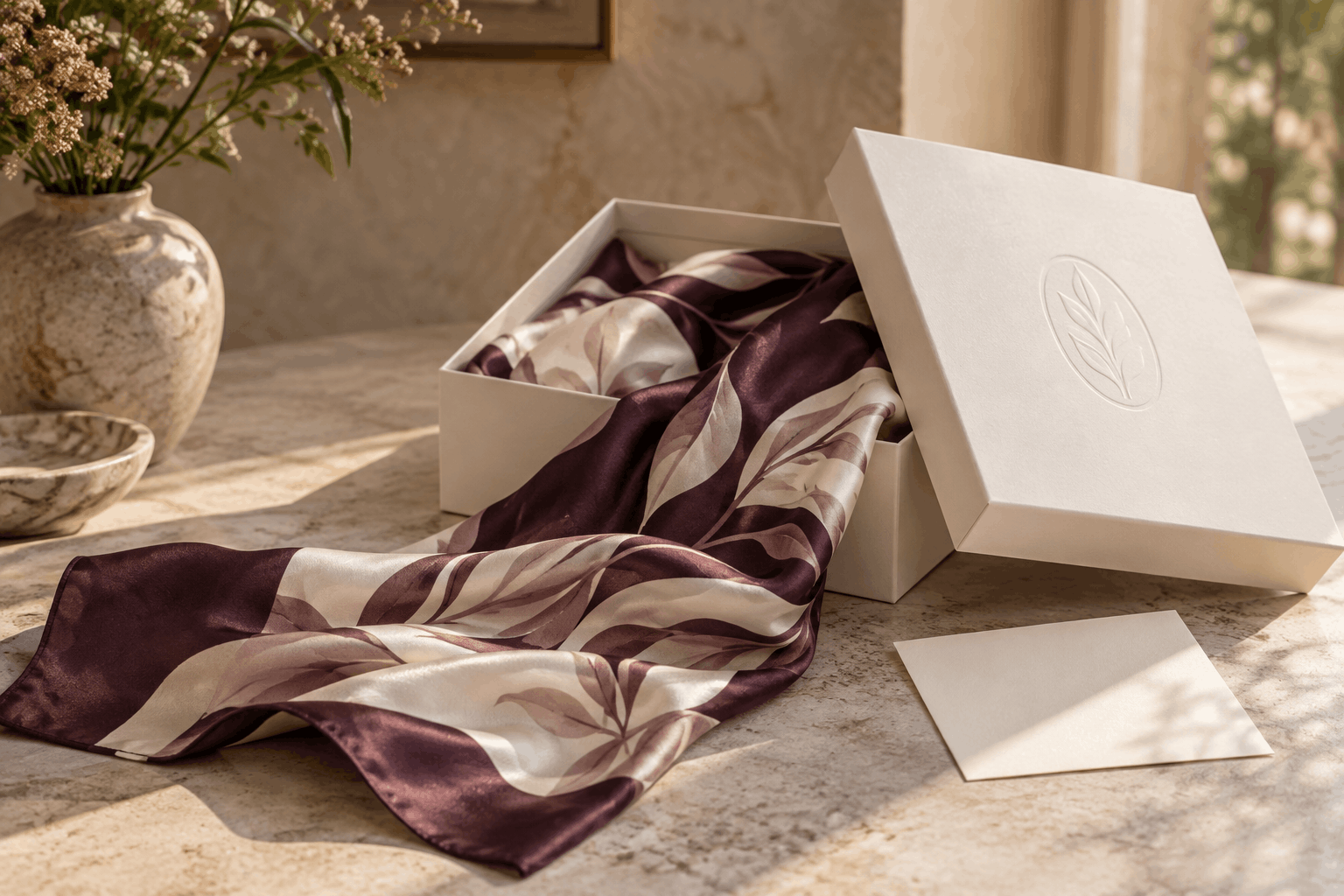
Start With the Recipient’s Relationship to Your Brand
Before deciding where to place a logo, consider why the recipient would want it on an object they will use.
An employee celebrating a long career may value a discreet company reference. An alumnus may welcome an institutional emblem. A client receiving a thank-you gift may appreciate more freedom to use the item without displaying a supplier’s identity.
These are starting points for discussion, rather than fixed rules. People within the same audience can have different preferences.
Ask three questions:
- Is the gift primarily an expression of appreciation, a symbol of belonging or a promotional item?
- Will the recipient use it in personal settings, professional settings or mainly at an event?
- Does the logo add meaning to the product itself?
A clear answer helps the design team decide how much prominence the corporate identity needs. Include this thinking in your corporate gifting brief before requesting artwork.
Product Branding and Packaging Branding Serve Different Purposes
A logo on the product stays with the object. A logo on the packaging introduces the gift and its giver, but that connection may become less visible once the box or card is put away.
Both approaches have advantages. The decision is about which role matters most for your project.
| Approach | Main advantage | Main consideration |
|---|---|---|
| Logo on the product | Keeps a visible connection to the organisation during use. | The mark becomes part of the recipient’s personal object and should suit that role. |
| Logo on the packaging | Clearly identifies the giver during presentation while preserving the product’s versatility. | The corporate reference may be separated from the gift later. |
| Discreet product mark with branded packaging | Combines a clear introduction with a lasting, restrained reference. | The two applications need a clear hierarchy to avoid repetition. |
| Logo on a card or removable sleeve | Allows occasion-specific messaging without permanently marking the main product or box. | The message must be strong enough to establish the connection during handover. |
For this discussion, “unbranded product” means a product without the gifting organisation’s promotional logo. It may still carry the designer’s identity and relevant product information.
When a Logo on the Product Makes Sense
Product branding works best when the identity has a meaningful relationship with the recipient or the object.
Examples might include an institutional scarf for alumni, a commemorative piece for a company milestone or a gift designed around a long-standing partnership. In these cases, the mark can act as a reminder of participation or belonging.
The logo should still be considered as part of the complete design. Its size, contrast and placement influence how prominent it feels.
For Scarves, Review the Mark When Worn
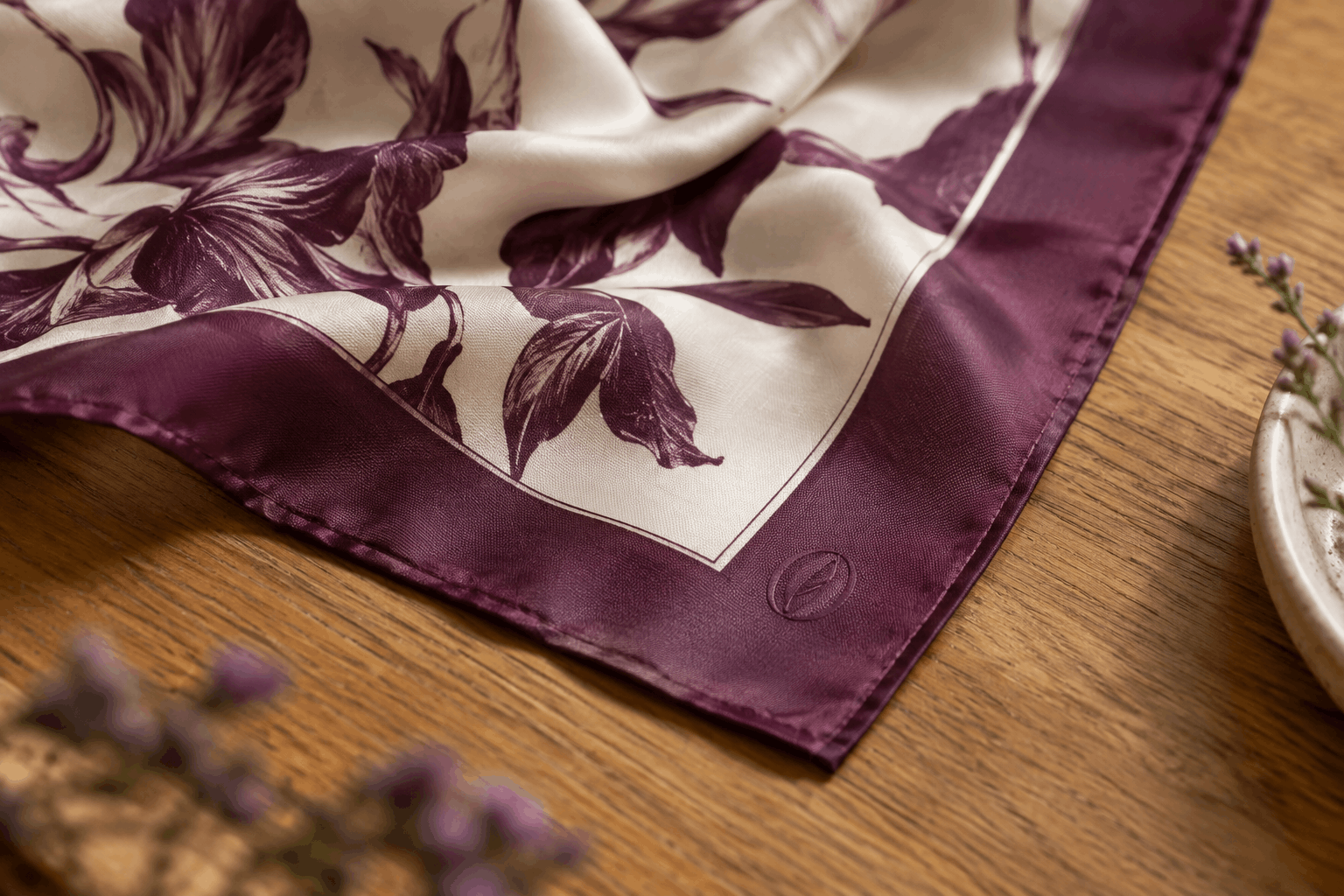
A scarf is rarely seen as a completely flat square or rectangle. Folding and draping change which parts of the design are visible.
A mark near a corner may appear when the scarf hangs loosely, disappear in a narrow fold or become more noticeable when tied. Review several realistic arrangements before approving its position.
Possible approaches to discuss with your supplier include a small mark within the border, a restrained signature near an edge or a motif developed from an approved element of the organisation’s visual identity.
The right treatment depends on the artwork and the production method. Avoid adding a mark to an already finished composition without considering how it affects balance.
Make Subtlety Deliberate
A small logo is not automatically discreet. A bright mark against a dark background may attract more attention than a larger mark in a closely related colour.
Likewise, reducing a detailed emblem too far can make it difficult to reproduce clearly. Ask the supplier to show the proposed application at its actual size and confirm whether the details will remain legible.
Any alternative logo treatment should be checked against the organisation’s brand guidelines before development proceeds.
When Packaging Is the More Elegant Choice
Packaging branding is especially worth considering when the gift is personal, wearable or intended for use beyond the business relationship.
The box, sleeve or card can make the giver unmistakable while leaving the main product visually independent. This can suit client appreciation gifts, speaker gifts, hospitality gifts and mixed recipient groups.
For a scarf, the recipient can choose how to wear the design without also deciding whether to display a corporate identity. For a gift set, the packaging can connect several pieces without requiring the same logo on every component.
There is a trade-off: packaging may be stored separately or discarded. If a permanent institutional connection is essential, consider whether a discreet product reference would serve that purpose.
Choose One Main Branded Surface
Start by selecting the surface that should introduce the organisation. This might be the box lid, a removable sleeve or the message card.
Then decide whether any secondary branding is necessary. Repeating the logo on the lid, ribbon, tissue, card and product can make the presentation feel crowded.
A simpler arrangement could use a small mark on the lid and a personal message inside. Alternatively, a branded sleeve could carry the event identity while the underlying box remains suitable for later use.
Let the Finish Support the Design
Printed marks, foil details and impressions pressed into the packaging surface can produce different visual effects. None is automatically the most elegant choice.
Consider the logo’s complexity, the packaging material, the colour contrast and the overall composition. Request a physical sample where the finish matters to the decision, especially if you are considering a subtle treatment that may be difficult to judge in a digital mock-up.
Ask the supplier which options are feasible for the selected box and order quantity.
Can You Brand Both Without Overdoing It?
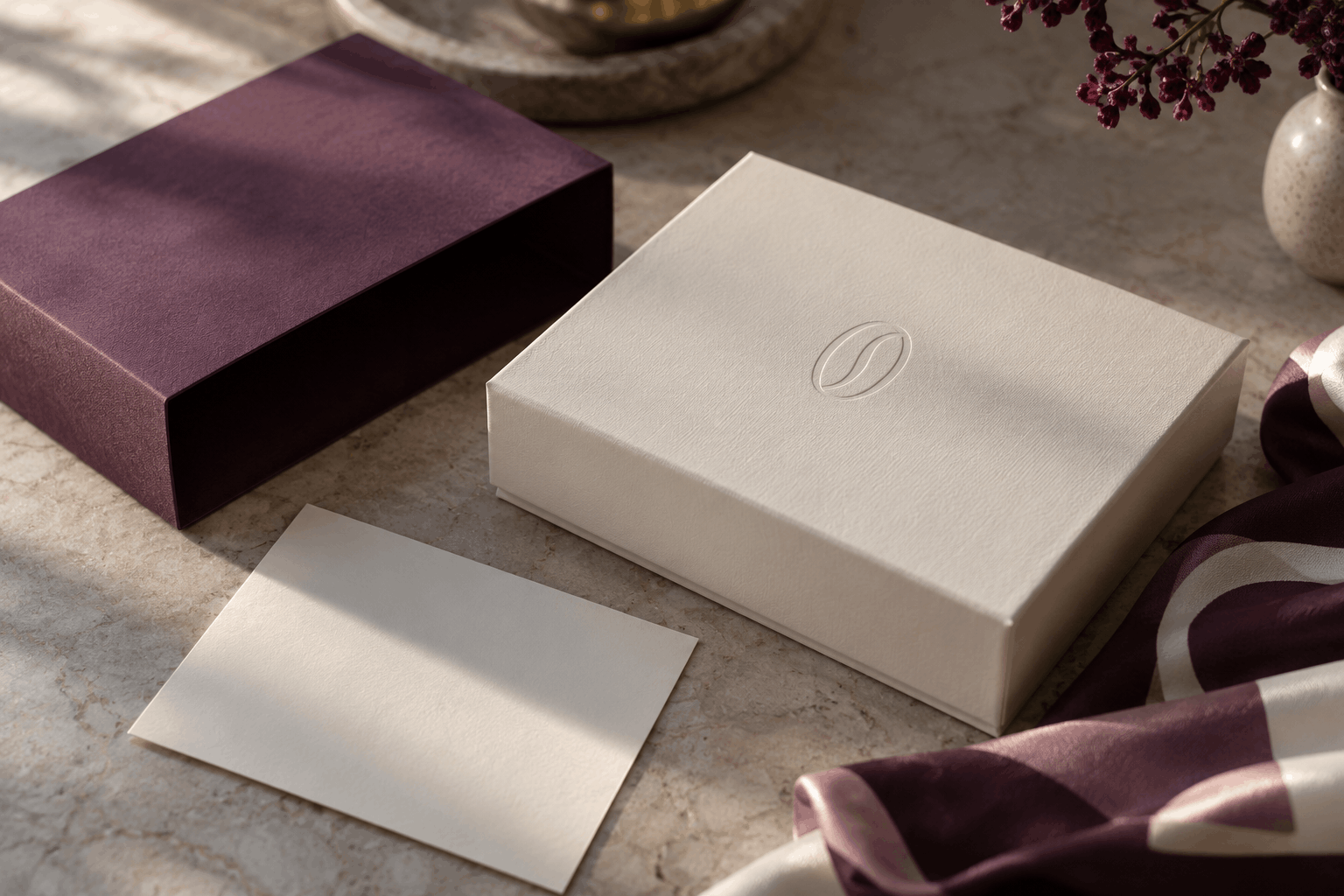
Yes. The key is to give each application a distinct role.
The packaging can provide clear recognition of the giver, while a smaller product mark carries a quieter connection into everyday use. The message card can explain the occasion and why the gift was chosen.
For example, a university gift might use the institution’s full identity on the presentation card and a small approved emblem within the scarf border. A company anniversary gift might place the anniversary wording on the sleeve while keeping the product’s design less time-specific.
Avoid making every surface compete for attention. Review the closed box, the opening moment and the product outside its packaging as three separate views.
For more on reviewing these details before production, see our guide to the bespoke gift design and approval process.
A Gift Can Express Your Identity Without a Prominent Logo
Corporate identity can also appear through an original story, a considered colour palette or a design inspired by a meaningful place.
For a hotel, this might involve architectural details or a garden associated with the property. For a museum, an approved exhibition theme could guide the composition. For a company, a milestone or shared value might inspire the design direction.
These connections need explanation. A short design-story card can tell recipients why particular forms or colours were chosen and how the gift relates to the occasion.
This approach is particularly relevant to bespoke silk scarves, where the artwork itself offers room to express a story.
Keep the interpretation selective. Trying to include every building, value, date and brand colour in one design can weaken the result. Choose the idea that matters most and give it enough space.
How to Choose for Different Gifting Situations
Client Appreciation
Begin with a strong message and branded presentation. Add a product logo only if there is a clear reason the recipient would value the permanent association.
A shared project or long-standing partnership may support a discreet commemorative detail, but the gift should still feel suitable for the recipient’s own use.
Employee and Anniversary Gifts
A lasting company reference may be appropriate when the gift recognises belonging or achievement. Consider separating event-specific information from the main design: the date can appear on a card while a more enduring emblem remains on the product.
Museums and Cultural Institutions
Let the artwork and cultural connection lead. An institutional mark can provide context, while a story card explains the design and any relevant credits.
Decide whether the recipient is choosing the item because of its institutional association, its visual appeal or both.
Hotels and Hospitality
Packaging can connect the gift clearly to the property. A product inspired by the destination may then work as a keepsake beyond the stay.
A permanent hotel mark may still suit some projects, particularly when the property identity is central to the intended souvenir or commemorative experience.
Curated Gift Sets
Use the presentation to connect the components. A scarf and teacup do not necessarily need matching corporate logos to feel like a considered set.
Coordinated colours, proportion and a clear explanation can establish the relationship. Review the set as a whole before deciding which individual pieces require customisation.
Test the Gift Beyond the Presentation Moment
Place the sample outside its box and imagine it in the recipient’s daily life. Would it suit their wardrobe, desk or home? Does the mark still feel appropriate in that setting?
For a scarf, view it with ordinary clothing as well as in a styled gift photograph. For a keepsake box, consider how it looks on a shelf after the event card has been removed.
Where practical, ask a few people who resemble the intended audience to review the options. The Design Council’s design framework emphasises understanding the people affected by a design and testing possible solutions. Applied here, that means checking the recipient experience before committing to a branding treatment.
This review can help separate internal enthusiasm for logo visibility from the recipient’s reasons for using the gift.
What to Confirm Before Approving the Branding
Ask the supplier to show the product and packaging together, with every proposed mark visible at its intended size.
- Which logo version will be used?
- Where will it appear, and at what dimensions?
- Does the treatment follow the approved brand guidelines?
- How will it look when the product is worn or used?
- Which surface provides the main recognition of the giver?
- Are event dates better placed on removable elements?
- What sample will demonstrate the proposed finish?
- How do the options affect cost and production timing?
Compare quotations for the actual alternatives. Packaging-only branding is not always the least expensive option, particularly if it involves a newly developed box. An existing product with a personalised card may have a very different cost structure from custom artwork and packaging.
Our guide to corporate gifts at different budget levels can help you consider where additional spending will contribute most to the finished gift.
Frequently Asked Questions
Is a logo on the packaging enough for a corporate gift?
It can be, especially when the main purpose is appreciation. A clear message and branded presentation can identify the giver without permanently marking the product. Consider a product reference if a lasting visible association is part of the brief.
Does a product logo make a gift look less premium?
Not necessarily. The effect depends on design, scale, contrast, execution and the recipient’s relationship with the organisation. A meaningful, well-integrated mark can suit a premium gift.
Where should a logo go on a silk scarf?
A corner or border may be worth exploring, but the placement should be assessed within the full design and in realistic folds. There is no single position that works for every scarf.
Can an existing gift feel personal without custom product branding?
Yes. Thoughtful selection, an appropriate presentation and a specific personal message can create a strong connection to the recipient and occasion.
Choose the Branding That Belongs With the Gift
The most elegant approach gives the organisation appropriate recognition while preserving the recipient’s enjoyment of the object. For some projects, that means branded packaging and an independent product design. For others, a discreet permanent mark adds meaning.
To discuss the options with Lanting Loom, share your recipient group, occasion, quantity and preferred level of branding. Explore our corporate gifting options to consider how the product, presentation and message can work together.
