


A close friend and a colleague may both deserve your warmest New Year wishes, but the same present will not always suit both relationships. One might love a silk scarf chosen around their favorite colors. The other might feel more comfortable receiving a small box of tea to enjoy during the working week.
The most thoughtful Chinese New Year gifts for friends and colleagues reflect how well you know the recipient, what they enjoy and how they celebrate. Tea, well-chosen treats, useful design objects and personal accessories can all work beautifully when the scale of the gesture feels right.
Going beyond red envelopes gives you room to acknowledge a shared interest, thank someone for their kindness or wish them well in a more individual way. Start with the relationship, then let the gift carry the message.
When is a gift beyond a red envelope appropriate?
Red envelopes have an established place in Chinese New Year celebrations, and their exchange varies with family, community and relationship. They are not simply interchangeable with any other present. If you are joining a celebration with familiar customs, ask someone who knows the household what is expected.
A small non-cash gift can be a thoughtful choice for a friend or peer when you want to offer personal good wishes and there is no customary cash exchange between you. In a workplace, distinguish an optional gift between colleagues from any established employer red-envelope or bonus practice; a personal present should not be presented as a substitute for compensation.
This guide focuses on Chinese New Year. Lunar New Year also includes other cultural celebrations with their own traditions. Use the language your friend or colleague uses, and do not assume that someone celebrates because of their name or background.
For a broader approach to symbolism, taste and occasion, explore our modern guide to meaningful Chinese gifts.
Choose the gift by relationship
| Recipient | Thoughtful starting point | Keep in mind |
|---|---|---|
| A close friend | A silk scarf, art book or shared experience | Choose around an interest or preference you actually know |
| A newer friend | Tea, a compact box of treats or a useful small object | A modest gesture leaves room for the relationship to grow naturally |
| A colleague you know well | Tea, stationery or a small interest-based gift | Keep the value comfortable and the message appropriate to work |
| A whole team | Clearly labeled packaged treats or an optional tea break | Consider ingredients, remote colleagues and people who do not celebrate |
| A manager or business contact | A warm greeting, or a modest permitted group gesture | Check the applicable workplace gift policy before spending |
There is no need to match a universal gift budget. A useful question is whether the recipient can accept comfortably without feeling expected to spend a similar amount in return.
Personal Chinese New Year gifts for close friends
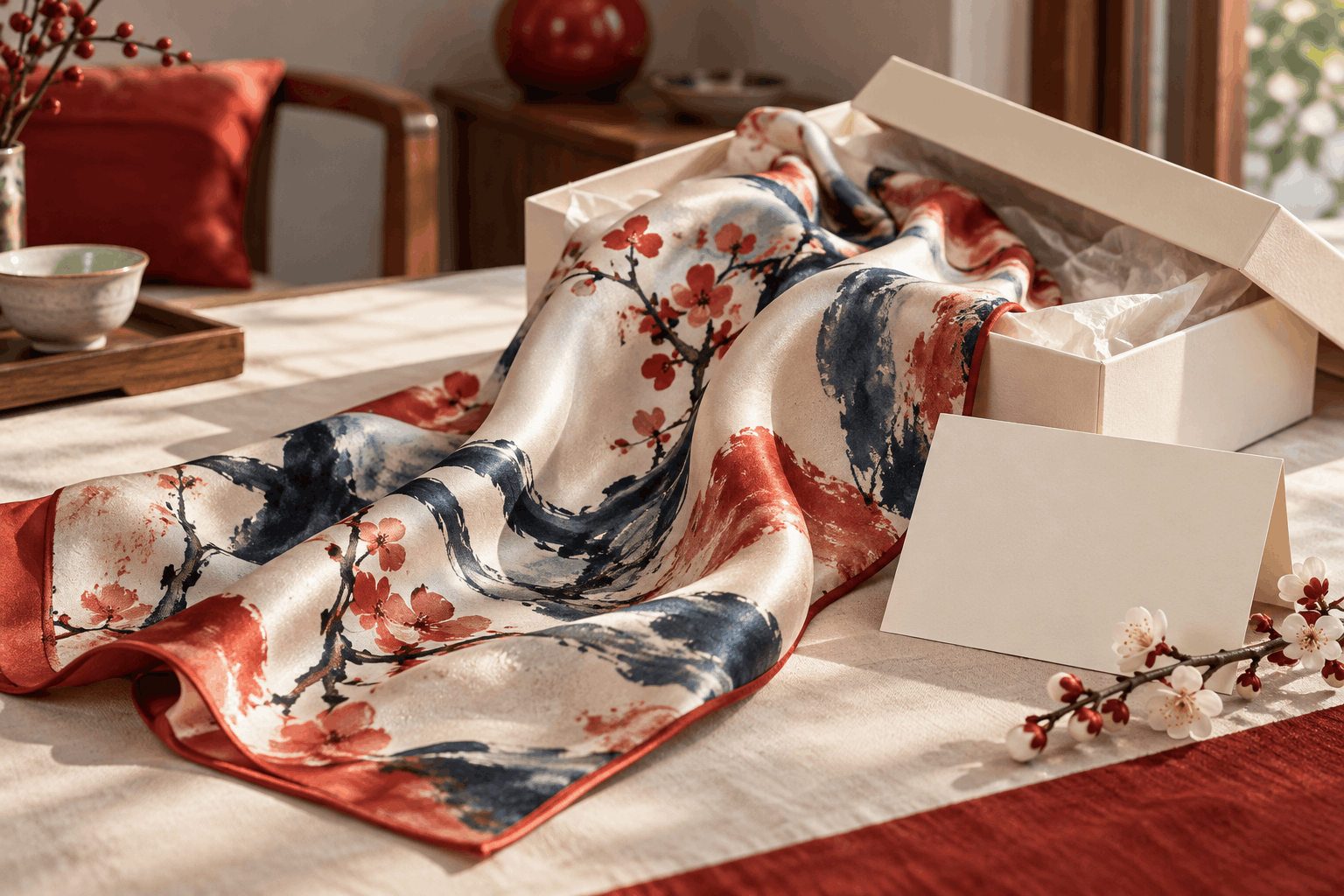
A silk scarf selected around their style
A scarf can feel particularly personal when the choice reflects how your friend already dresses. Think about the colors they repeat, the coats they wear and whether they prefer expressive patterns or quiet details. Festive red may be welcome, but it need not override their everyday taste.
A red accent within a balanced design can suggest the season while remaining easy to wear afterward. If your friend usually chooses blue, ivory or soft neutrals, those preferences are a stronger starting point than an obligation to buy something bright.
Explore Lanting Loom square scarves or long scarves, then compare the actual dimensions, composition and care instructions. Our silk scarf size guide can help you think through how the recipient might wear it.
Let the note explain the personal connection: “These colors reminded me of the exhibition we visited together.” A specific memory gives the design meaning without requiring you to invent a traditional story about its pattern.
An art book or useful design object
For a friend who loves art, choose a book about an artist, medium or place they have mentioned. A publication on contemporary Chinese photography, ceramics or painting can open a new conversation, provided it matches their interests and is in a language they enjoy reading.
A small ceramic cup or other useful object can also be a good choice. Check its size, intended use and care needs. The cultural connection can come from the maker or subject; it does not need to depend on a bold decorative symbol.
For more ways to connect a present with someone’s creative interests, see our guide to Chinese gifts for art lovers.
Time together in the new year
A gallery visit, tea tasting or meal at a place you both want to try can make a lovely gift for a friend who already owns plenty of things. Offer a specific idea while leaving the date open until you know their plans.
Avoid booking a non-refundable activity without checking availability. You can write, “I would love to take you to that exhibition when you are back. Let’s choose a day together.” The gift is an invitation to spend time together, with enough flexibility to remain enjoyable.
Thoughtful Chinese New Year gifts for colleagues
Tea they can actually prepare
Tea works best when you know a little about the recipient’s habits. Someone who has a teapot at home may enjoy loose-leaf tea. Someone who makes drinks at an office kettle may find individually wrapped tea bags more convenient.
Choose a manageable quantity with clear product information. If you do not know their preferences, ask casually whether they enjoy tea before buying it. A gift should fit their routine rather than create a need for new equipment.
Packaged treats with clear ingredients
A small box of biscuits or other treats can be easy to receive, share or take home. Keep the original ingredient and storage information attached, and consider dietary preferences you already know.
For a shared office gift, sealed portions can be practical. Leave the food in an agreed communal space with an optional invitation to enjoy it. Avoid requiring colleagues to taste something immediately, explain why they decline or take part in a public gift-opening moment.
Stationery with a clear purpose
A well-made notebook, bookmark or small desk accessory can suit a colleague who uses those things regularly. Choose a design you can connect to their interests, rather than buying a generic object simply because it has a festive motif.
Keep personalization restrained. Initials, jokes and messages can be difficult to change once printed, and a decorative desk object may not suit a shared or uncluttered workspace. A simple useful item often leaves more room for the recipient’s own taste.

Keep workplace gifting comfortable and optional
Before organizing a team exchange or giving to a manager, check your workplace’s current rules. Some organizations restrict gifts or their value, especially where clients, suppliers or reporting relationships are involved. If a gift is unsuitable, a sincere greeting is enough.
For an optional team exchange, agree on a modest spending limit before anyone buys anything. Make it easy to decline without explanation. Avoid collecting contributions in a way that publicly reveals who paid or how much they gave.
If you manage others, consider how a gift could be received within the team. A consistent approach can help avoid the appearance of favorites. Do not ask employees to contribute to a present for you or make participation part of being a “good team member.”
A close workplace friendship may justify a more personal gift, but exchange it privately outside a team celebration. This allows the gesture to belong to the friendship without turning it into a comparison with everyone else’s gifts.
For distributed teams, think about access before choosing a shared activity. A brief optional greeting that includes remote colleagues may be more thoughtful than an elaborate office-only exchange. Nobody needs to explain their cultural identity or lead a celebration unless they wish to.
Add cultural meaning without making assumptions
Color, design and a short message can connect a gift with the season. Red has a familiar association with good luck in Chinese New Year giving, but there is no need to turn every choice into a rigid rule about color, number or packaging.
If you choose a motif for its meaning, check how the maker describes it and whether that interpretation fits the recipient. A contemporary floral design can simply be beautiful; not every flower needs to be assigned a traditional blessing.
Lanting Loom’s design stories offer a place to explore the ideas behind its visual approach. When writing your own note, keep the distinction clear between a documented design inspiration and a personal association, such as a landscape that reminds you of a shared trip.
The safest source for a family-specific custom is someone within that family. Ask a quiet question when needed, then follow their lead rather than presenting broad etiquette advice as a rule for every Chinese household.
Presentation and a personal note
Choose packaging that protects the gift and is easy to carry. A small box, simple paper wrapping or reusable gift bag can be enough. A restrained red ribbon adds a seasonal accent without overwhelming a contemporary design.
Check how you will hand over the present. For a visit to a friend’s home, something portable is helpful; for the office, avoid fragile or bulky packaging that becomes another thing to manage on the journey home. If your friend is hosting a gathering, our Chinese New Year host gift guide covers that situation in more detail.
A short note brings the focus back to the person. Use words that sound natural in your relationship:
- For a close friend: “Wishing you a joyful new year, with more little adventures for us to share.”
- For a colleague: “Thank you for your kindness and support this past year. Wishing you a happy Chinese New Year.”
- For a work friend who helped you: “I really appreciated your help when I joined the team. I hope the new year brings you plenty to look forward to.”
- For a friend beginning something new: “Here’s to your next chapter, and to making time to celebrate it together.”
If you want to include a greeting in Chinese, use wording you understand and verify unfamiliar characters before printing. A clear, sincere message in a shared language is perfectly thoughtful.

Frequently asked questions
Do I need to give a red envelope to a colleague?
Do not assume a cash gift is expected between peers. Ask about any established practice if you are unsure. An optional small present or warm greeting may suit your relationship, while employer red-envelope traditions belong to a different context.
Is a silk scarf appropriate for a colleague?
It can be appropriate for someone who is also a close friend, especially when you know their style. For a more formal working relationship, a modest, less personal gift may feel easier to accept. Check workplace rules and consider the value and context.
What if I do not know whether someone celebrates?
Ask naturally about their plans rather than assuming. You might say, “Do you celebrate Lunar New Year?” Let their answer guide whether a seasonal gift or greeting would be welcome.
Can a thank-you note be enough?
Yes. A specific expression of appreciation can be more meaningful than an object chosen in a hurry. It is especially useful when a gift would create an obligation or be unsuitable at work.
Choose a gift that feels right for the relationship
A thoughtful New Year present reflects attention: the tea your colleague enjoys, the colors your friend wears or the afternoon you have been meaning to spend together. The meaning comes from the fit between the person, the gesture and your wishes for them.
For a friend who enjoys art and personal style, explore Lanting Loom silk scarves and gift sets. Choose a design they will enjoy beyond the celebration, then add a note that makes the reason for your choice clear.
